
Building Panels Market Report 2026
Global Outlook – By Panel Type (Precast Concrete Panels, Vacuum Insulated Panels, Structural Insulated Panels (SIP), Wood-Based Panels, Other Panel Type), By Material Type (Concrete, Plastics, Metal, Wood, Silica), By Application (Commercial Construction, Residential, Non-Residential ), By End User (Floors And Roofs, Walls, Columns And Beams, Staircases) – Market Size, Trends, Strategies, and Forecast to 2030
Building Panels Market Overview
• Building Panels market size has reached to $240.75 billion in 2025 • Expected to grow to $339.91 billion in 2030 at a compound annual growth rate (CAGR) of 7.1% • Growth Driver: Building Panels Market Growth Fueled By Increasing Construction Activities • Market Trend: Revolutionizing Architectural Applications In The Building Panel Market • Asia-Pacific was the largest region in 2025.Market Gains By 2030 – Top Opportunities By Segment
Market Gain identifies the most promising market opportunities by highlighting the segments or products expected to generate the highest incremental revenue growth over the next five years.
What Is Covered Under Building Panels Market?
Building panels are high-performance building systems that are superior and cost-effective as they are easy to install, take less time and energy to create, reduce material waste, and offer spectacular insulation capabilities. The building panels construct a structure's interior and exterior features. The main panel types of building panels are precast concrete panels, vacuum insulated panels, structural insulated panels (SIP), wood-based panels, and other panels. The precast concrete panel type of building panels are used to build large buildings and structures that provide sturdy structural support. Precast concrete panels are a type of building product created by pouring concrete into a reusable mold and providing a single cladding assembly. The building panel material are concrete, plastics, metal, wood, and silica that are applied in the commercial construction, residential, and non-residential, used for floors and roofs, walls, columns and beams, and staircases.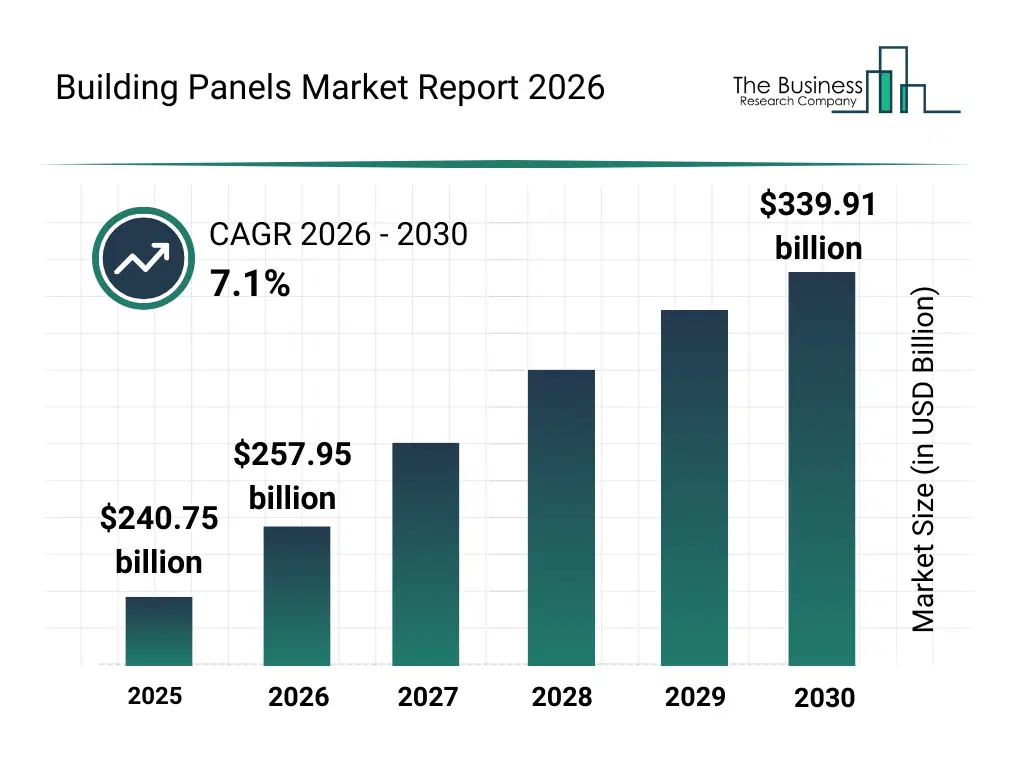
What Is The Building Panels Market Size and Share 2026?
The building panels market size has grown strongly in recent years. It will grow from $240.75 billion in 2025 to $257.95 billion in 2026 at a compound annual growth rate (CAGR) of 7.1%. The growth in the historic period can be attributed to rise in demand for modular construction, growth in precast concrete usage, adoption of insulated panels for energy savings, increased use of metal and silica panels, expansion of commercial building activity.What Is The Building Panels Market Growth Forecast?
The building panels market size is expected to see strong growth in the next few years. It will grow to $339.91 billion in 2030 at a compound annual growth rate (CAGR) of 7.1%. The growth in the forecast period can be attributed to increasing shift toward sustainable building materials, rising adoption of vacuum insulated panels, growth in automated panel manufacturing, expansion of residential prefabrication, demand for faster and cost-efficient construction systems. Major trends in the forecast period include rising adoption of high-performance insulated panels, growth in use of lightweight and durable construction materials, increasing preference for precast and modular building components, expansion of building panels in residential and commercial applications, shift toward faster, cost-effective construction techniques.
Global Building Panels Market Segmentation
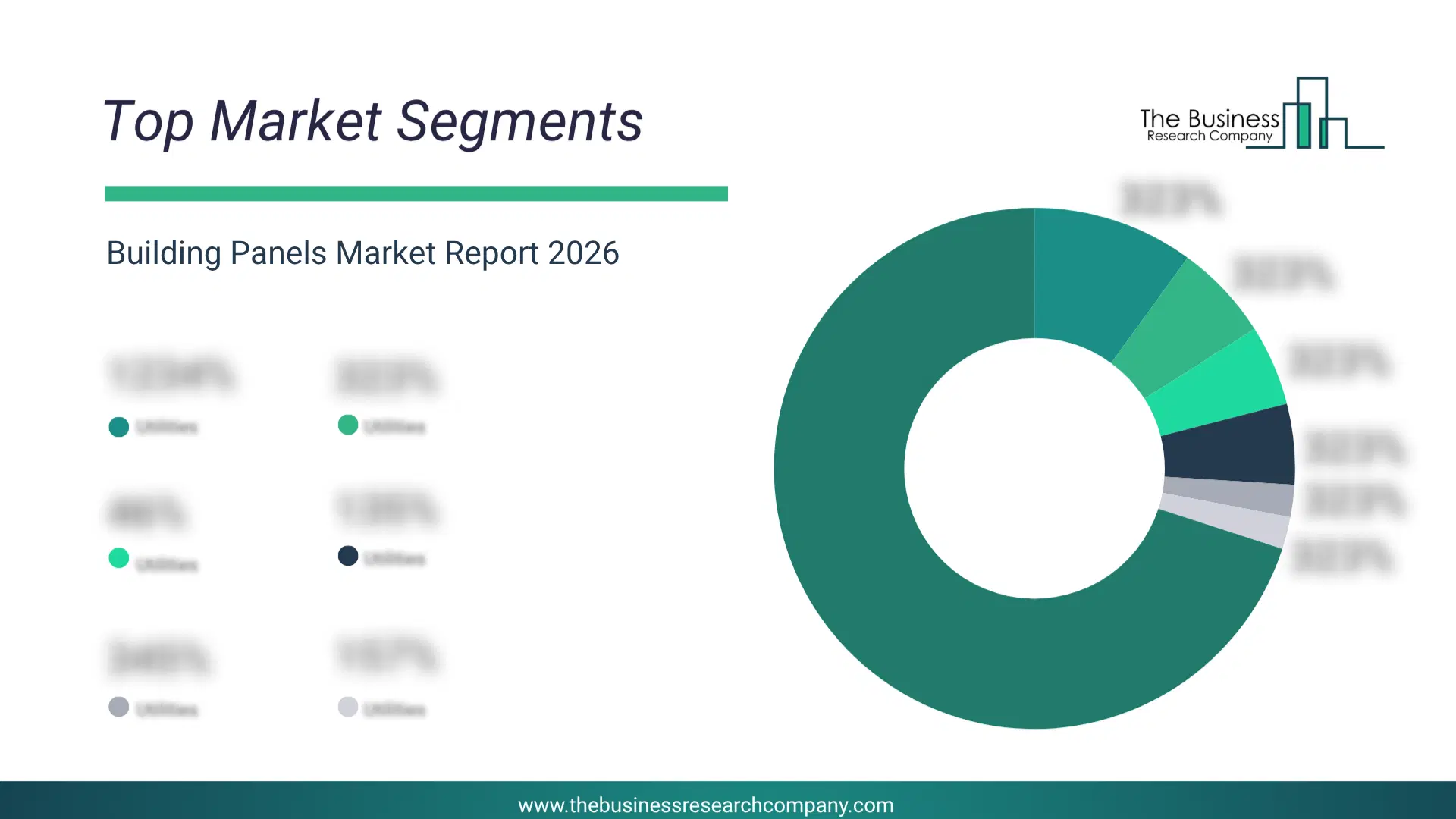
1) By Panel Type: Precast Concrete Panels, Vacuum Insulated Panels, Structural Insulated Panels (SIP), Wood-Based Panels, Other Panel Type 2) By Material Type: Concrete, Plastics, Metal, Wood, Silica 3) By Application: Commercial Construction, Residential, Non-Residential 4) By End User: Floors And Roofs, Walls, Columns And Beams, Staircases Subsegments: 1)By Precast Concrete Panels: Solid Precast Panels, Insulated Precast Panels 2) By Vacuum Insulated Panels: Standard Vacuum Panels, Custom Vacuum Panels 3) By Structural Insulated Panels (SIP): EPS (Expanded Polystyrene) SIPs, XPS (Extruded Polystyrene) SIPs 4) By Wood-Based Panels: Plywood Panels, Particleboard Panels 5) By Other Panel Type: Fiber Cement Panels, Metal Panels The top segments in the building panels market will be: • Precast Concrete Panels will reach $142 Billion by 2030. • Wood-Based Panels will reach $97 Billion by 2030. • Structural Insulated Panels (SIP) will reach $53 Billion by 2030. • Vacuum Insulated Panels will reach $27 Billion by 2030. • Other Panel Type will reach $20 Billion by 2030.What Is The Driver Of The Building Panels Market?
The increase in construction activities is expected to propel the building panels market forward. Construction involves the action of building large structures by putting together materials. Building panel market expansion is aided by rising construction activity for both residential and non-residential structures. Building panels offer a range of benefits that contribute to efficient, cost-effective, and sustainable construction practices. For instance in July 2024, according to the US Census Bureau, a US-based government agency, the value of construction operations rose from $2.01 trillion in May 2023 to $2.14 trillion in May 2024. Therefore, the increasing construction activities will drive the building panels’ market growth.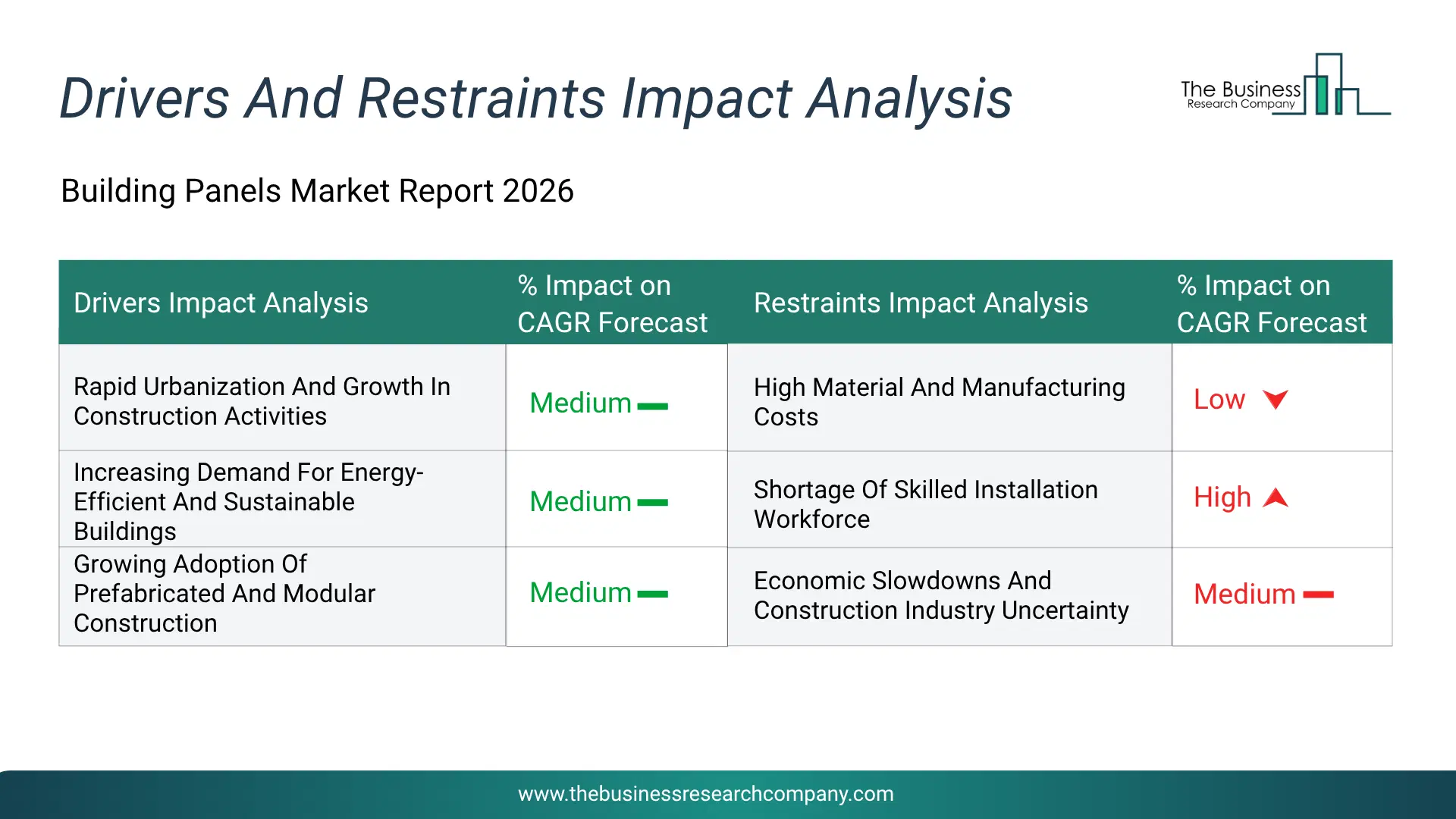
Infographic Chart Showing Key Market Drivers Analysis And Restraints For Building Panels Market
The chart presents an impact analysis of key drivers and restraints, quantifying their relative influence on the market's growth rate and helping assess the balance between growth enablers and limiting factors. This chart offers a high-level perspective; the full report contains more detailed insights.
How Will The Drivers Impact Growth In The Global Building Panels Market?
• Rapid Urbanization And Growth In Construction Activities (Medium) – During the forecast period, the rapid urbanization and growth in construction activities are expected to emerge as a major factor driving the expansion of the building panels market by 2030. increasing urban populations and large-scale investments in residential housing, commercial buildings, transportation infrastructure, healthcare facilities, educational institutions, and smart city projects are generating sustained demand for modern construction materials. building panels enable faster installation, lower labor requirements, improved construction quality, and shorter project completion times, making them an increasingly preferred solution for large-scale infrastructure development. • Increasing Demand For Energy-Efficient And Sustainable Buildings (Medium) – During the forecast period, the increasing demand for energy-efficient and sustainable buildings is expected to emerge as a major factor driving the expansion of the building panels market by 2030. stricter building energy regulations and growing emphasis on green construction are encouraging the use of insulated panel systems that improve thermal performance, reduce energy consumption, and support environmentally responsible building practices. manufacturers are also introducing recyclable and low-carbon panel materials that help property developers achieve sustainability objectives while lowering long-term operating costs. • Growing Adoption Of Prefabricated And Modular Construction (Medium) – During the forecast period, the growing adoption of prefabricated and modular construction is expected to act as a key growth catalyst for the building panels market by 2030. factory-manufactured building panels enable rapid on-site assembly, minimize construction waste, improve quality consistency, and reduce dependence on skilled labor, making them well suited for time-sensitive construction projects. ongoing innovations in panel engineering and digital manufacturing technologies are further enhancing the efficiency and appeal of modular building systems.How Will The Restraints Impact Growth In The Global Building Panels Market?
• High Material And Manufacturing Costs (Medium) – During the forecast period, high Material And Manufacturing Costs continue to restrain the Building Panels market because advanced panel systems require premium-quality raw materials, sophisticated manufacturing technologies, and stringent quality assurance processes. Products such as insulated sandwich panels, composite panels, structural insulated panels, and engineered concrete panels involve specialized insulation cores, protective coatings, precision fabrication, and advanced bonding technologies that increase production expenses. Additionally, fluctuations in the prices of steel, aluminum, cement, polyurethane foam, mineral wool, fiberglass, and other construction materials further elevate manufacturing costs and reduce profit margins for producers. Transportation expenses can also be significant because many building panels are large, heavy, and require specialized handling during delivery. These higher overall costs often discourage smaller builders and price-sensitive customers from adopting advanced building panel solutions, especially in developing regions where conventional construction materials remain comparatively less expensive and more widely available. • Shortage Of Skilled Installation Workforce (Medium) – During the forecast period, shortage Of Skilled Installation Workforce is a significant challenge limiting the wider adoption of building panels across several regions. Although prefabricated panels simplify construction, their installation requires trained professionals who understand structural alignment, sealing systems, thermal insulation techniques, moisture protection, fastening methods, and compliance with local building regulations. Improper installation can reduce structural integrity, create thermal bridges, increase water leakage risks, and negatively affect the long-term performance of the building. Many developing countries continue to face shortages of workers with specialized expertise in modular and panelized construction systems. Construction companies may therefore need to invest in workforce training, technical certification, and specialized installation equipment, increasing overall project costs. These labor-related challenges can delay project completion, reduce contractor confidence, and slow the adoption of advanced building panel technologies despite their long-term operational advantages. • Economic Slowdowns And Construction Industry Uncertainty (Medium) – During the forecast period, economic Slowdowns And Construction Industry Uncertainty remain major restraints because the Building Panels market is directly dependent on investments in new construction and infrastructure development. During periods of economic recession, inflation, rising interest rates, tighter lending conditions, or geopolitical uncertainty, developers frequently postpone or cancel residential, commercial, and industrial construction projects. Reduced investments in real estate and infrastructure immediately decrease demand for building materials, including building panels. In addition, fluctuations in raw material prices, supply chain disruptions, transportation costs, and project financing create uncertainty for manufacturers, distributors, and contractors. Delays in obtaining construction permits, reduced government spending on infrastructure, and weaker consumer confidence further slow market growth. Since building panel demand closely follows construction activity, prolonged economic instability can significantly reduce production volumes, delay capacity expansion, and weaken overall market performance until construction investments recover.Key Players In The Global Building Panels Market
Major companies operating in the building panels market are Panasonic Corporation, Compagnie de Saint-Gobain SA, Nippon Steel & Sumitomo Metal Corporation, CRH plc., BMC Inc., Evonik Industries AG, Huntsman International LLC, Dow Corning Corporation, Fletcher Building Limited, Boral Limited, Armstrong World Industries Inc., Kingspan Group PLC, OCI Company Ltd, Lg Hausys Ltd, Mueller Inc, Owens Corning, PFB Corporation, Alubel SpA, Alumil Aluminium Industry SA, Alutech United Inc., ArcelorMittal, The Murus Company Inc., Rautaruukki Corporation, The Steel Network Inc., U.S. Lumber Group LLC, USG Corporation, VELUX Group, Weyerhaeuser Company, Xella Group, Sika AG, Tata Steel Limited, The Dow Chemical Company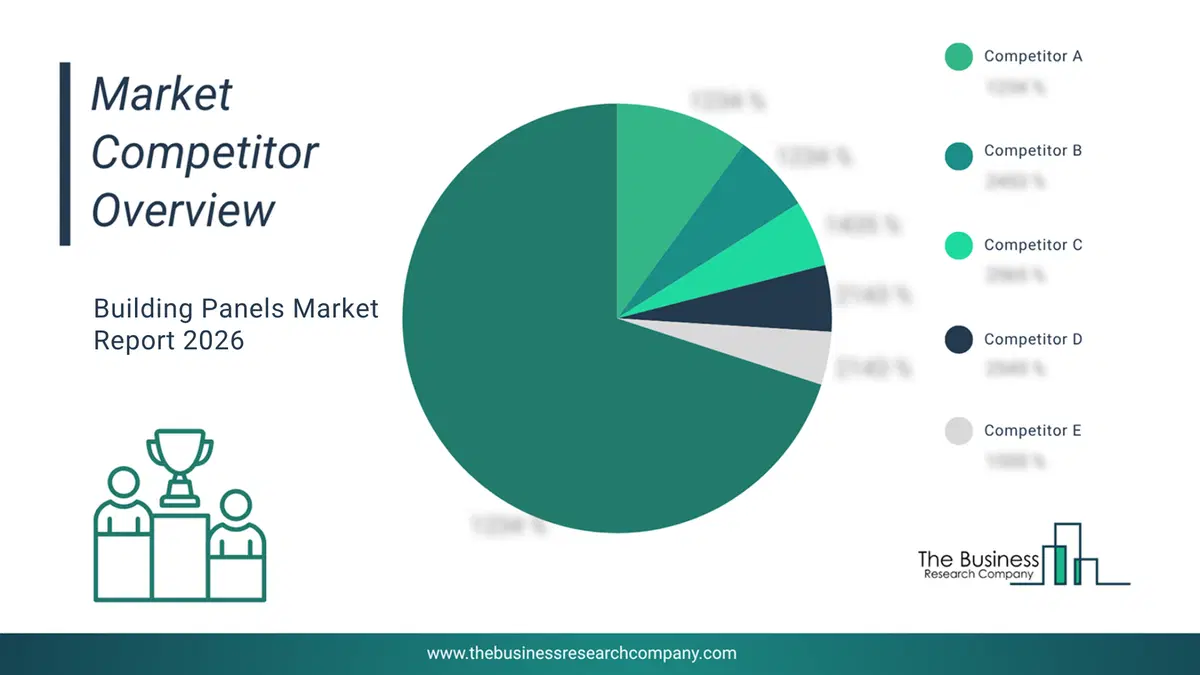
This chart is for illustrative purposes; the full report includes a detailed competitor analysis and comprehensive overview of the top 10 companies in the market.
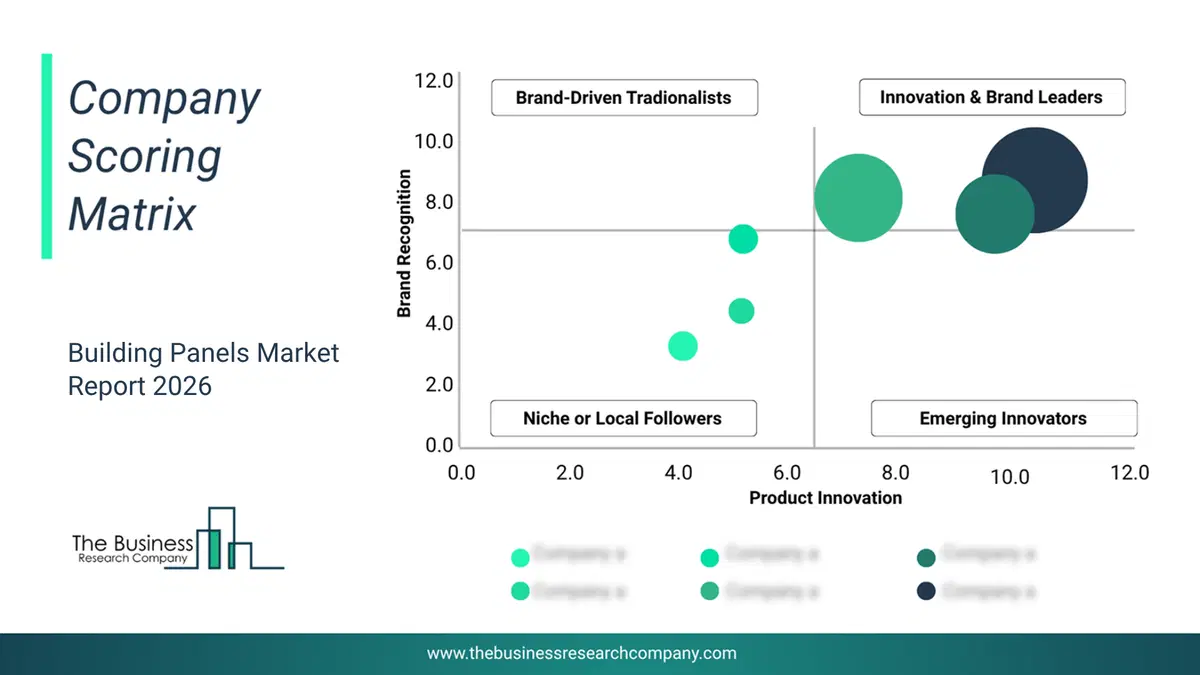
This chart maps companies by product innovation and brand strength, with bubble size indicating relative revenue, helping identify market leaders, challengers, and niche players. This is an illustrative chart; the full report provides a complete and accurate competitive analysis.
Global Building Panels Market Trends and Insights
Major companies operating in the building panel market are focused on developing innovative technologies, such as innovative Fronto V Black Panels, to strengthen their market position. Innovative Fronto V Black Panels refer to a specific type of building panel designed for architectural applications, particularly in exterior and interior wall systems. For instance, in September 2024, Vox Inida, an Indian-based home furnishing company, launched Fronto V Black Panels, an innovative addition to its Fronto series of exterior slat panels. These panels are designed for both façade and ceiling applications, offering a modern aesthetic while being resistant to mechanical damage and sunlight. The Fronto V Black Panels are lightweight, waterproof, and require no maintenance, making them an ideal alternative to traditional wooden façades. The new panels utilize advanced thermal printing technology to replicate the appearance of natural wood, featuring a varied grain pattern that enhances visual appeal.What Are Latest Mergers And Acquisitions In The Building Panels Market?
In March 2024, Carlisle, a US-based manufacturing company, acquired MTL Holdings for $410 million. This acquisition aims to enhance Carlisle's position as a comprehensive provider of architectural metal products, particularly in the commercial roofing sector. MTL Holdings is a US-based leader in performance-driven metal roof edge systems and commercial building panels.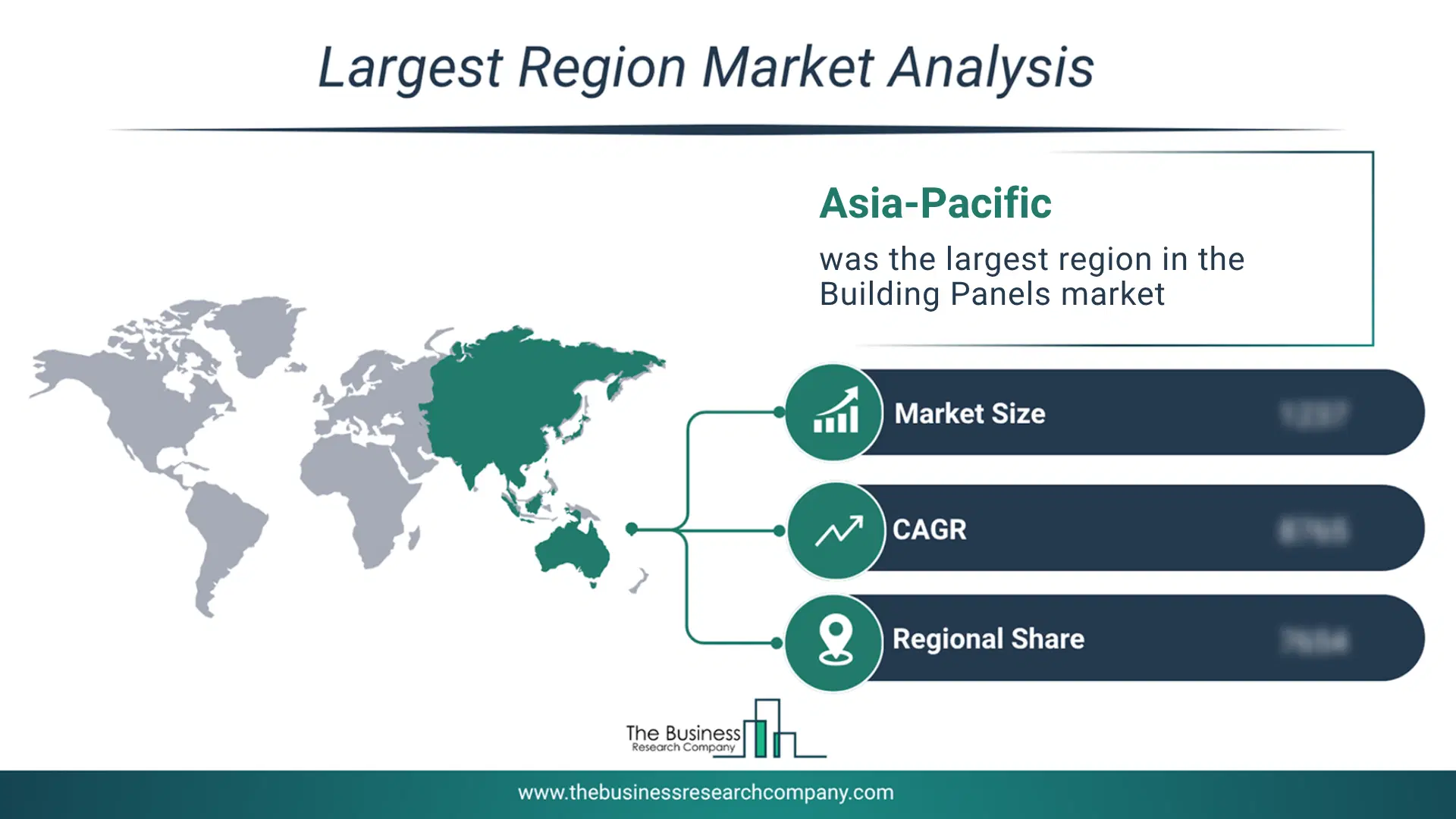
Regional Insights
Asia-Pacific was the largest region in the building panels market in 2025. The regions covered in this market report are Asia-Pacific, South East Asia, Western Europe, Eastern Europe, North America, South America, Middle East, Africa. The countries covered in this market report are Australia, Brazil, China, France, Germany, India, Indonesia, Japan, Taiwan, Russia, South Korea, UK, USA, Canada, Italy, Spain.What Defines the Building Panels Market?
The building panels market consists of sales of silica and metal building panels. Values in this market are ‘factory gate’ values, that is the value of goods sold by the manufacturers or creators of the goods, whether to other entities (including downstream manufacturers, wholesalers, distributors and retailers) or directly to end customers. The value of goods in this market includes related services sold by the creators of the goods.How is Market Value Defined and Measured?
The market value is defined as the revenues that enterprises gain from the sale of goods and/or services within the specified market and geography through sales, grants, or donations in terms of the currency (in USD unless otherwise specified). The revenues for a specified geography are consumption values that are revenues generated by organizations in the specified geography within the market, irrespective of where they are produced. It does not include revenues from resales along the supply chain, either further along the supply chain or as part of other products.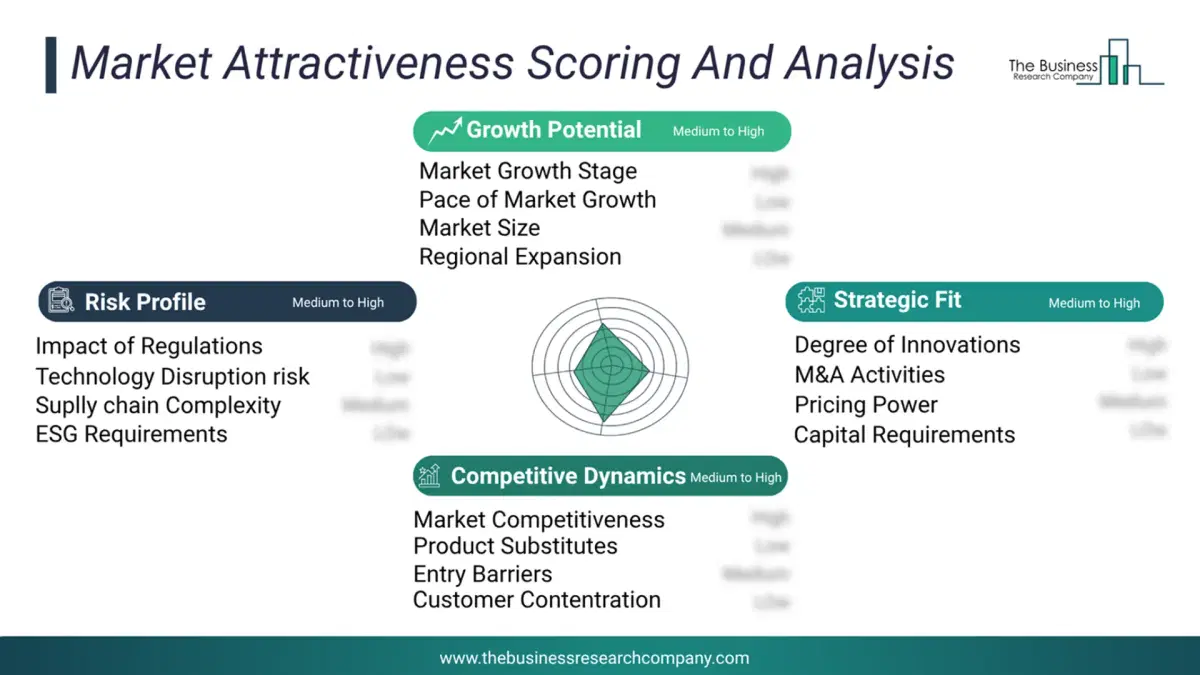
This chart presents market attractiveness based on a quantitative evaluation of growth, competition, strategic alignment, and risk, offering a clear view of opportunity areas for decision-making. This chart is for illustrative purposes; the full report contains the complete analysis.
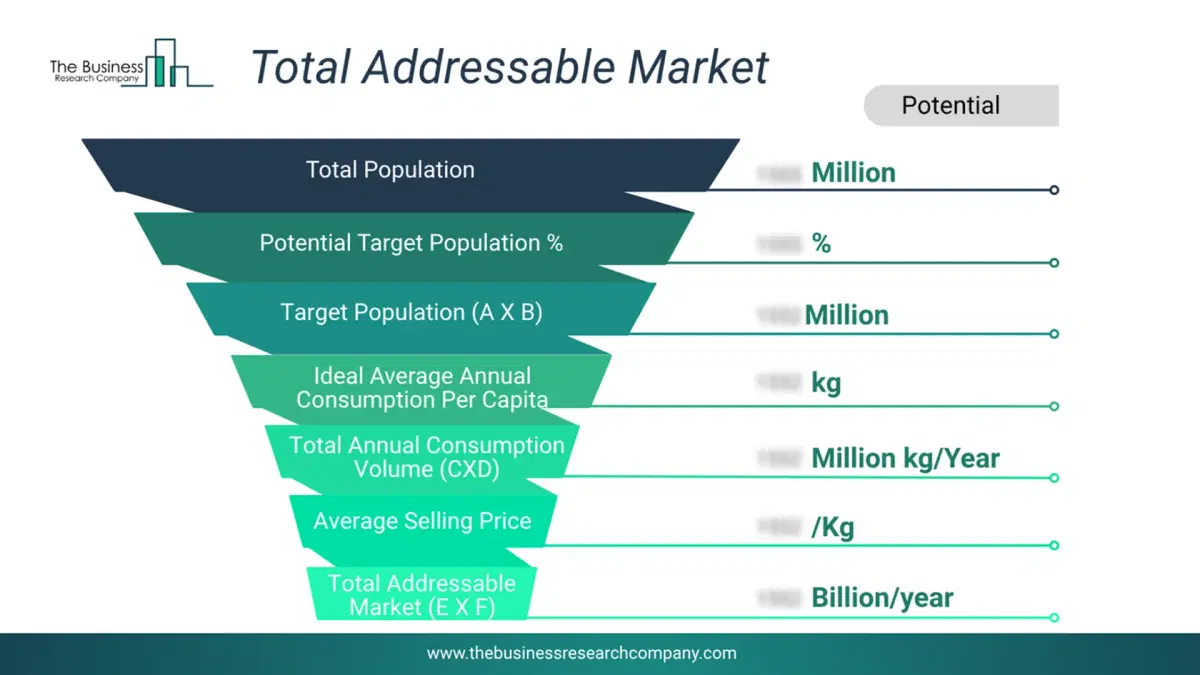
This chart highlights the Total Addressable Market (TAM) by estimating the maximum revenue opportunity using an assumption-driven approach, supporting strategic planning and opportunity sizing across markets. The chart is illustrative; the full report provides a more comprehensive analysis.
What Key Data and Analysis Are Included in theBuilding Panels Market Report 2026?
The building panels market research report is one of a series of new reports from The Business Research Company that provides market statistics, including industry global market size, regional shares, competitors with the market share, detailed market segments, market trends and opportunities, and any further data you may need to thrive in the building panels industry. The market research report delivers a complete perspective of everything you need, with an in-depth analysis of the current and future state of the industry.Building Panels Market Report Forecast Analysis
| Report Attribute | Details |
|---|---|
| Market Size Value In 2026 | $257.95 billion |
| Revenue Forecast In 2030 | $339.91 billion |
| Growth Rate | CAGR of 7.1% from 2026 to 2030 |
| Base Year For Estimation | 2025 |
| Actual Estimates/Historical Data | 2020-2025 |
| Forecast Period | 2026 - 2030 |
| Market Representation | Revenue in USD Billion and CAGR from 2026 to 2030 |
| Segments Covered | Panel Type, Material Type, Application, End User |
| Regional Scope | Asia-Pacific, Western Europe, Eastern Europe, North America, South America, Middle East, Africa |
| Country Scope | The countries covered in the report are Australia, Brazil, China, France, Germany, India, Indonesia, Japan, Taiwan, Russia, South Korea, UK, USA, Canada, Italy, Spain. |
| Key Companies Profiled | Panasonic Corporation, Compagnie de Saint-Gobain SA, Nippon Steel & Sumitomo Metal Corporation, CRH plc., BMC Inc., Evonik Industries AG, Huntsman International LLC, Dow Corning Corporation, Fletcher Building Limited, Boral Limited, Armstrong World Industries Inc., Kingspan Group PLC, OCI Company Ltd, Lg Hausys Ltd, Mueller Inc, Owens Corning, PFB Corporation, Alubel SpA, Alumil Aluminium Industry SA, Alutech United Inc., ArcelorMittal, The Murus Company Inc., Rautaruukki Corporation, The Steel Network Inc., U.S. Lumber Group LLC, USG Corporation, VELUX Group, Weyerhaeuser Company, Xella Group, Sika AG, Tata Steel Limited, The Dow Chemical Company |
| Customization Scope | Request for Customization |
| Pricing And Purchase Options | Explore Purchase Options |