

Construction Adhesives Market Report 2026
Global Outlook – By Type (Water-based, Solvent-based, Hot-melt, Reactive), By Resin Type (Acrylic Adhesive, Polyurethane (PU), Polyvinyl Acetate (PVA), Epoxy), By Application (Residential, Commercial) – Market Size, Trends, Strategies, and Forecast to 2030
Construction Adhesives Market Overview
• Construction Adhesives market size has reached to $12.95 billion in 2025 • Expected to grow to $19.85 billion in 2030 at a compound annual growth rate (CAGR) of 8.8% • Growth Driver: Elevated Construction Activities Driving Growth In The Construction Adhesives Market • Market Trend: Advancements in Bio-Based Polyurethane Adhesives for Sustainable Load-Bearing Timber Construction • Asia-Pacific was the largest region and fastest growing region.Market Gains By 2030 – Top Opportunities By Segment
Market Gain identifies the most promising market opportunities by highlighting the segments or products expected to generate the highest incremental revenue growth over the next five years.
What Is Covered Under Construction Adhesives Market?
The construction adhesives are used for waterproofing, roofing, carpet laying, cladding, and insulation applications. Construction adhesives are materials that can permanently bind diverse materials together with better efficiency and design flexibility. These are used to attach drywall, tile, holdings, and fixtures to walls, ceilings, and floors during construction activities. The main types of construction adhesives are water-based, solvent-based, hot-melt, and reactive. Water-based adhesives are used for fast action and to create high-strength bonds in construction activities. These use water as a solvent to create the coating. The various resin types used in construction are acrylic adhesive, polyurethane (PU), polyvinyl acetate (PVA), and epoxy, and they offer various applications such as residential, commercial, and industrial.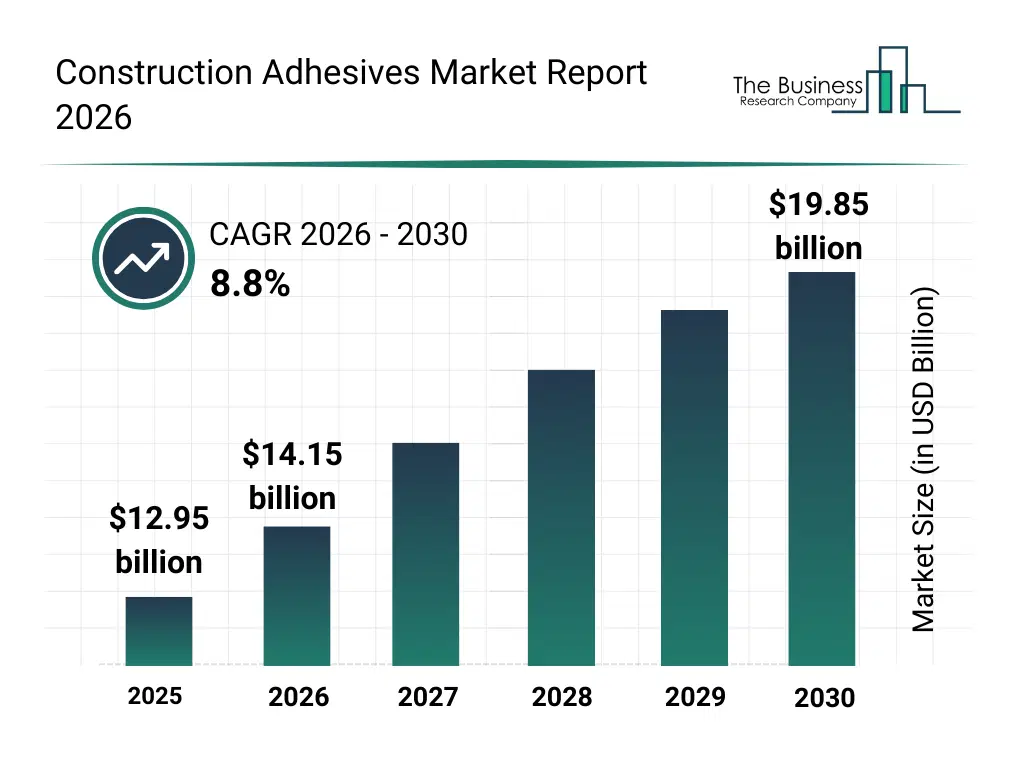
What Is The Construction Adhesives Market Size and Share 2026?
The construction adhesives market size has grown strongly in recent years. It will grow from $12.95 billion in 2025 to $14.15 billion in 2026 at a compound annual growth rate (CAGR) of 9.3%. The growth in the historic period can be attributed to expansion of residential and commercial construction, rising use of adhesives in interior applications, increasing demand for waterproofing solutions, growth of infrastructure development projects, availability of advanced polymer adhesives.What Is The Construction Adhesives Market Growth Forecast?
The construction adhesives market size is expected to see strong growth in the next few years. It will grow to $19.85 billion in 2030 at a compound annual growth rate (CAGR) of 8.8%. The growth in the forecast period can be attributed to increasing focus on sustainable construction materials, rising adoption of prefabricated building systems, expansion of green building standards, growing demand for high-strength adhesives, increasing investments in urban infrastructure. Major trends in the forecast period include growing adoption of high-performance bonding solutions, rising use of eco-friendly adhesive formulations, increased demand for lightweight construction materials, expansion of modular construction practices, enhanced focus on long-term structural durability.
Global Construction Adhesives Market Segmentation
1) By Type: Water-based, Solvent-based, Hot-melt, Reactive 2) By Resin Type: Acrylic Adhesive, Polyurethane (PU), Polyvinyl Acetate (PVA), Epoxy 3) By Application: Residential, Commercial Subsegments: 1) By Water-based: Acrylic Adhesives, Polyvinyl Acetate (PVA) Adhesives, Latex Adhesives 2) By Solvent-based: Polyurethane Adhesives, Epoxy Adhesives, Contact Adhesives 3) By Hot-melt: Ethylene Vinyl Acetate (EVA) Adhesives, Polyamide Adhesives, Polyolefin Adhesives 4) By Reactive: Polyurethane Reactive Adhesives, Silane Modified Polymer Adhesives, Epoxy Reactive Adhesives The top segments in the construction adhesives market will be: • Water-based will reach $8 Billion by 2030. • Reactive will reach $6 Billion by 2030. • Solvent-based will reach $3 Billion by 2030. • Hot-melt will reach $2 Billion by 2030.What Is The Driver Of The Construction Adhesives Market?
The increase in construction activities is expected to propel the growth of the construction adhesives market going forward. Construction adhesives are specialized bonding agents designed to join a wide range of building materials, providing structural strength, durability, and resistance to environmental conditions. The demand for construction adhesives is rising as builders and contractors increasingly prefer solutions that reduce reliance on mechanical fasteners, save time, and enhance project efficiency. These adhesives improve construction quality by ensuring strong bonds, reducing material wastage, and supporting faster assembly of structures, making them essential in modern building practices. For instance, in August 2024, a data from the U.S. Census Bureau, a U.S-based federal statistical system agency indicates that the pace of new residential construction has slowed down significantly compared to previous years. In July 2024, there were 1.54 million housing starts, a 6.5% decrease from the previous month, and a 20% decrease compared to July 2023. Therefore, the increase in construction activities is fueling the construction adhesives industry growth.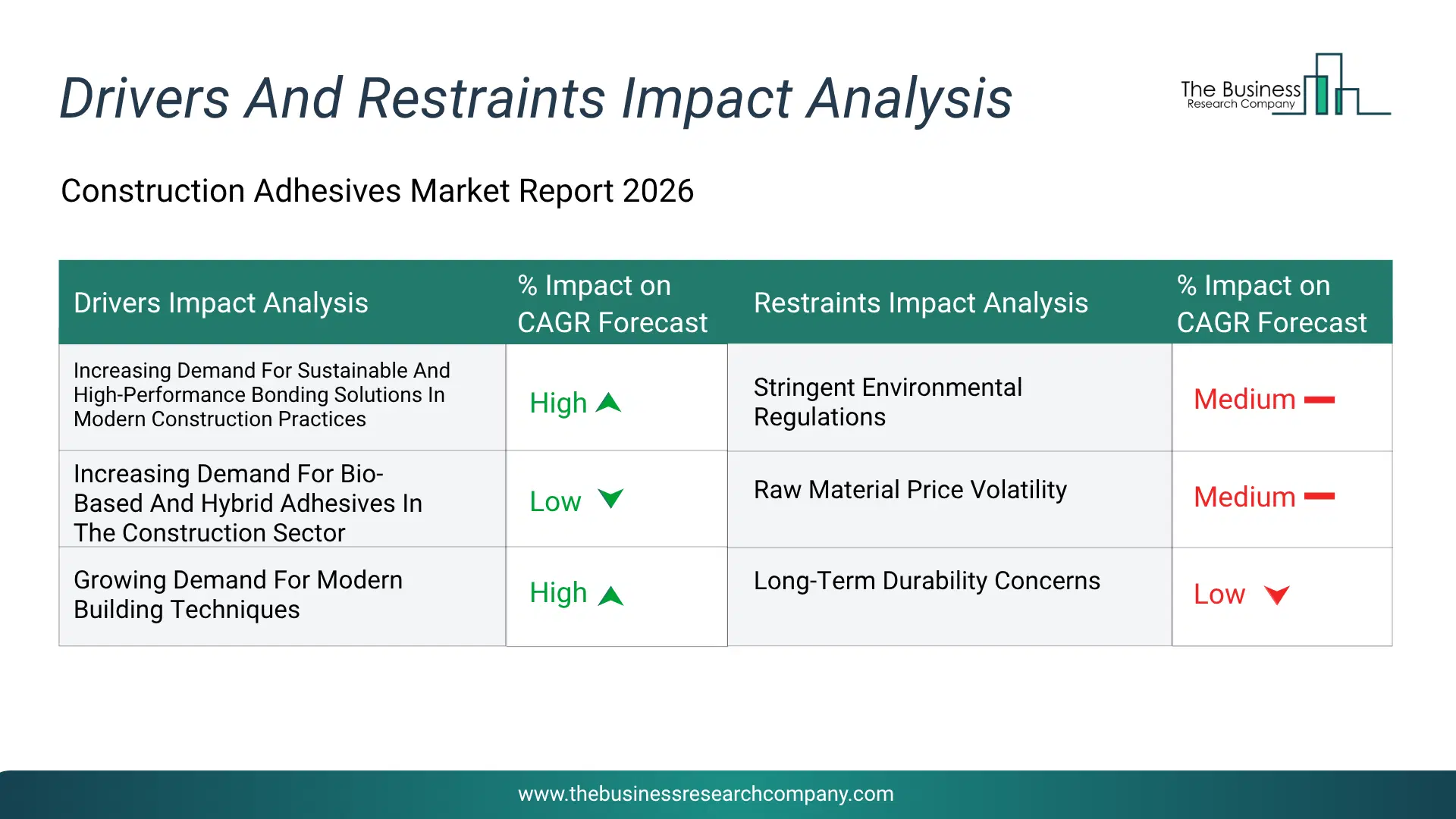
Infographic Chart Showing Key Market Drivers Analysis And Restraints For Construction Adhesives Market
The chart presents an impact analysis of key drivers and restraints, quantifying their relative influence on the market's growth rate and helping assess the balance between growth enablers and limiting factors. This chart offers a high-level perspective; the full report contains more detailed insights.
How Will The Drivers Impact Growth In The Global Construction Adhesives Market?
• Increasing Demand For Sustainable And High-Performance Bonding Solutions In Modern Construction Practices (High) – During the forecast period, the increasing demand for sustainable and high-performance bonding solutions in modern construction practices is expected to become a key growth driver for the construction adhesives market by 2030. Increasing demand for sustainable and high-performance bonding solutions is a major driver for the construction adhesives market as builders increasingly prioritize durability alongside environmental compliance. Adhesives that offer strong bonding with low emissions enable safer indoor environments and help meet green building standards. This shift reduces reliance on mechanical fasteners, improving structural efficiency and design flexibility. High-performance adhesives also enhance resistance to moisture, heat, and chemicals, making them suitable for demanding applications such as roofing and cladding. As construction projects become more complex, the need for reliable bonding solutions rises significantly. Regulatory pressures around VOC emissions further accelerate adoption of eco-friendly adhesive systems. • Increasing Demand For Bio-Based And Hybrid Adhesives In The Construction Sector (Low) – During the forecast period, the increasing demand for bio-based and hybrid adhesives in the construction sector is expected to emerge as a major factor driving the expansion of the construction adhesives market by 2030. Increasing demand for bio-based and hybrid adhesives is driving the construction adhesives market by encouraging the transition toward renewable and environmentally friendly materials. These adhesives reduce dependency on petrochemical sources while maintaining effective bonding performance across diverse substrates. Hybrid formulations combine the strengths of different chemistries, offering improved flexibility, durability, and curing efficiency. This makes them highly suitable for applications such as insulation, flooring, and panel bonding. Growing awareness of environmental impact among builders and developers is accelerating the adoption of such advanced materials. In addition, government policies promoting sustainable construction practices are supporting this shift. • Growing Demand For Modern Building Techniques (High) – During the forecast period, the growing demand for modern building techniques is expected to act as a key growth catalyst for the construction adhesives market by 2030. Growing demand for modern building techniques is significantly driving the construction adhesives market as the industry shifts toward faster, more efficient construction methods. Techniques such as prefabrication and modular construction rely heavily on adhesives for quick and reliable bonding. Adhesives enable lightweight material integration, which is essential for improving energy efficiency and reducing structural load. They also simplify installation processes, reducing labor costs and construction time. Compared to traditional fastening methods, adhesives provide better stress distribution and improved aesthetic outcomes. The increasing adoption of advanced construction technologies further amplifies the need for specialized adhesive solutions.How Will The Restraints Impact Growth In The Global Construction Adhesives Market?
• Stringent Environmental Regulations (High) – During the forecast period, the stringent environmental regulations act as a major restraint on the construction adhesives market by limiting the use of formulations that contain high levels of volatile organic compounds. Compliance with these regulations requires manufacturers to reformulate products, which increases research, development, and production costs. Smaller players often struggle to adapt quickly to evolving standards, creating barriers to market participation. In addition, regulatory approvals can delay product launches and slow down innovation cycles. Certain high-performance solvent-based adhesives face restrictions, reducing their adoption in key applications. This regulatory pressure also forces shifts toward alternative technologies that may not always match performance expectations. As a result, overall market growth is constrained by compliance complexity and cost burdens. • Raw Material Price Volatility (Low) – During the forecast period, the raw material price volatility restrains the construction adhesives market by creating uncertainty in production costs and profit margins. Key inputs such as petrochemical derivatives experience frequent price fluctuations due to supply chain disruptions and global economic conditions. This instability makes it difficult for manufacturers to maintain consistent pricing strategies in a competitive market. Sudden cost increases are often difficult to pass on to end users, leading to reduced profitability. It also affects long-term contract planning and investment decisions within the industry. Manufacturers may delay expansion or innovation initiatives due to unpredictable input costs. Consequently, market growth is hindered by financial instability and operational challenges. • Long-Term Durability Concerns (High) – During the forecast period, the long-term durability concerns act as a restraint on the construction adhesives market by raising doubts about performance over extended periods. In critical applications such as structural bonding, waterproofing, and insulation, any degradation can lead to safety and maintenance issues. Builders and contractors may prefer traditional mechanical fastening methods when reliability is uncertain. Environmental exposure such as moisture, temperature fluctuations, and chemical interactions can impact adhesive longevity. This creates hesitation in adopting adhesives for high-load or permanent installations. In addition, the lack of standardized long-term performance data in some cases limits confidence among end users. As a result, these concerns slow down widespread adoption and restrict market expansion.Key Players In The Global Construction Adhesives Market
Major companies operating in the construction adhesives market are Minnesota Mining and Manufacturing Company (3M), Adhesives Technology Corporation, Arkema SA, DAP Products Inc., H.B. Fuller Company, Henkel AG & Co. KGaA, ITW Performance Polymers, MAPEI S.p.A., Sika AG, Wacker Chemie AG, Ashland Inc., Don Construction Products Limited, Franklin International Group Ltd., LORD Corp., RPM International Inc., BASF SE, ARDEX AMERICAS Inc., Huntsman International LLC, Bostik SA, Jowat SE, Pidilite Industries Limited, Royal Adhesives & Sealants LLC, The Dow Chemical Company, Akzo Nobel N.V., Collano Adhesives AG, Delo Industrial Adhesives LLC, Hexion Inc., Master Bond Inc., Parson Adhesives Inc.
This chart is for illustrative purposes; the full report includes a detailed competitor analysis and comprehensive overview of the top 10 companies in the market.
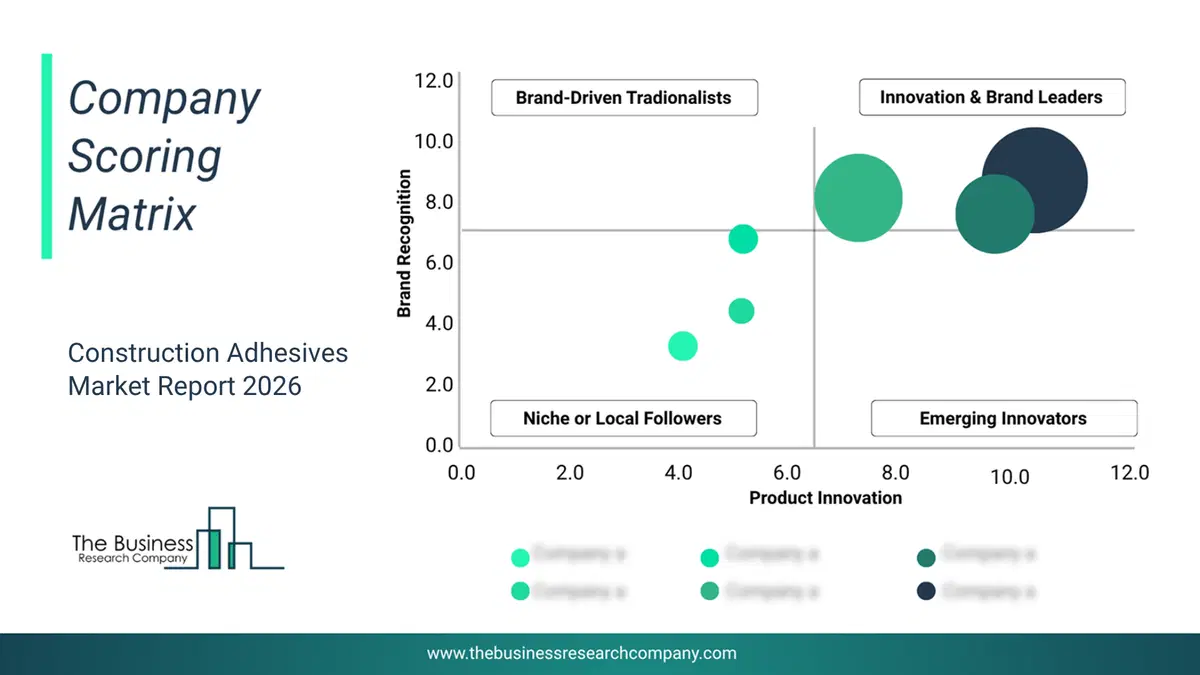
This chart maps companies by product innovation and brand strength, with bubble size indicating relative revenue, helping identify market leaders, challengers, and niche players. This is an illustrative chart; the full report provides a complete and accurate competitive analysis.
Global Construction Adhesives Market Trends and Insights
Major companies are operating in the construction adhesives market, focusing on development of bio-based adhesives such as bio-based polyurethane structural adhesive to enhance load-bearing timber construction performance and sustainability. Bio-based polyurethane structural adhesive refers to a type of adhesive formulated from renewable biological sources, designed specifically to bond timber and other construction materials for load-bearing applications. For instance, in November 2023, Henkel, a Germany-based specialty chemicals company, introduced its first bio-based polyurethane adhesives for load-bearing timber construction, Loctite HB S ECO and Loctite CR 821 ECO, designed to address key challenges in sustainable mass-timber bonding. Loctite HB S ECO is a one-component PUR adhesive with 63% bio-based content and zero volatile organic compounds (VOCs), while Loctite CR 821 ECO is a two-component PUR resin containing 71% bio-based material. Both adhesives provide high mechanical strength, excellent durability, and performance comparable to conventional fossil-based adhesives making them ideal for eco-friendly structural timber applications and reducing CO₂ emissions in construction projects.What Are Latest Mergers And Acquisitions In The Construction Adhesives Market?
In June 2023, Holcim AG a Switzerland-based building materials company, acquired Minerales y Agregados for an undisclosed amount. Through this acquisition, Holcim aims to expand its Solutions and Products offerings in Latin America and strengthen its presence in the construction and agriculture materials sector. Minerales y Agregados S.A is a Guatemala-based company specializing in the production of dry mortars, adhesives, and related solutions for construction and agricultural applications, supporting enhanced product performance and sustainable building practices in the region.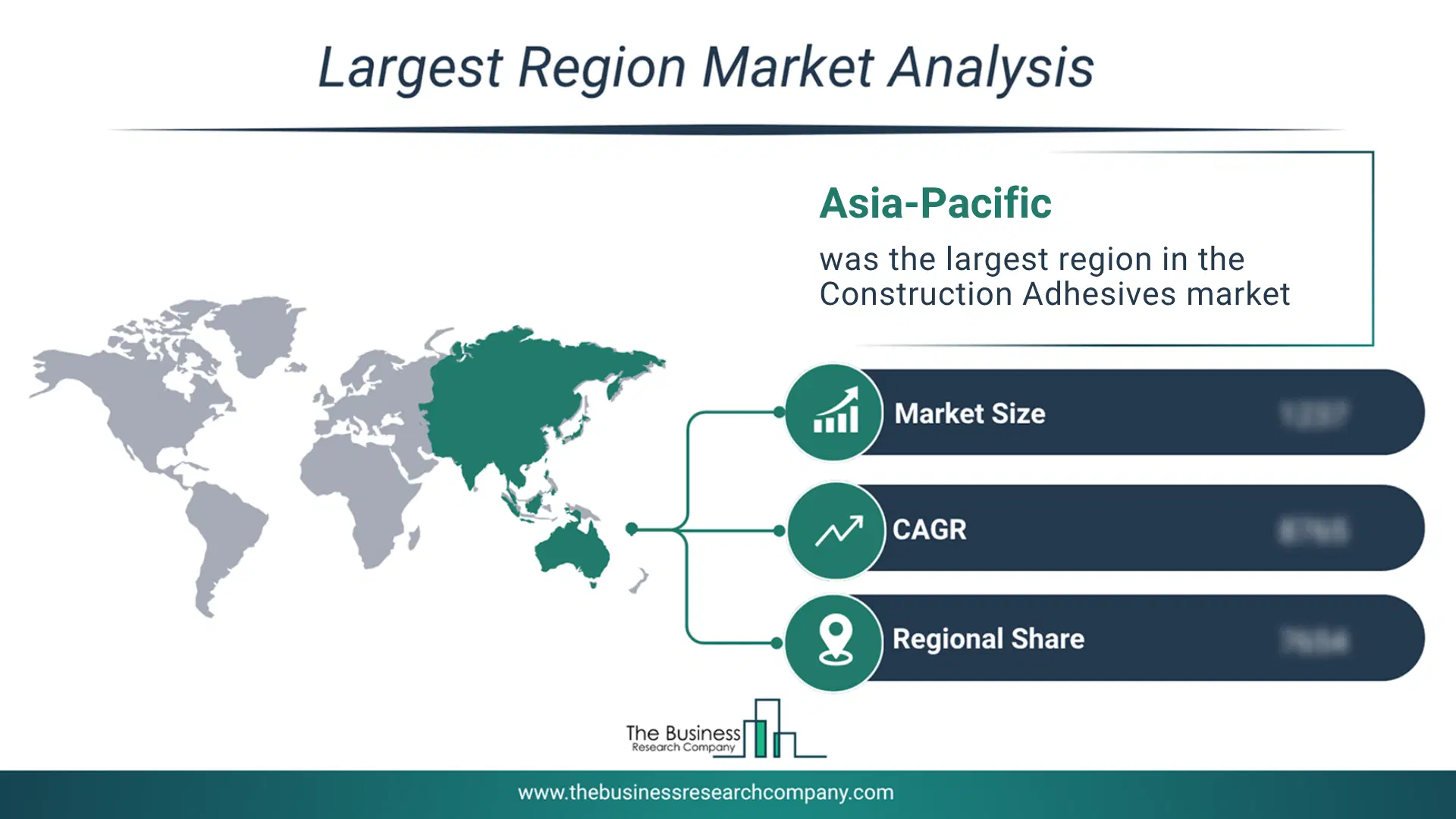
Regional Insights
Asia-Pacific was the largest region in the construction adhesives market in 2025. Asia-Pacific is expected to be the fastest-growing region in the forecast period. The regions covered in this market report are Asia-Pacific, South East Asia, Western Europe, Eastern Europe, North America, South America, Middle East, Africa The countries covered in this market report are Australia, Brazil, China, France, Germany, India, Indonesia, Japan, Taiwan, Russia, South Korea, UK, USA, Canada, Italy, SpainWhat Defines the Construction Adhesives Market?
The construction adhesive market consists of sales of construction adhesives by chemistry, such as acrylic adhesives, polyurethanes, and silicones. Values in this market are ‘factory gate’ values, that is, the value of goods sold by the manufacturers or creators of the goods, whether to other entities (including downstream manufacturers, wholesalers, distributors, and retailers) or directly to end customers. The value of goods in this market includes related services sold by the creators of the goods.How is Market Value Defined and Measured?
The market value is defined as the revenues that enterprises gain from the sale of goods and/or services within the specified market and geography through sales, grants, or donations in terms of the currency (in USD unless otherwise specified). The revenues for a specified geography are consumption values that are revenues generated by organizations in the specified geography within the market, irrespective of where they are produced. It does not include revenues from resales along the supply chain, either further along the supply chain or as part of other products.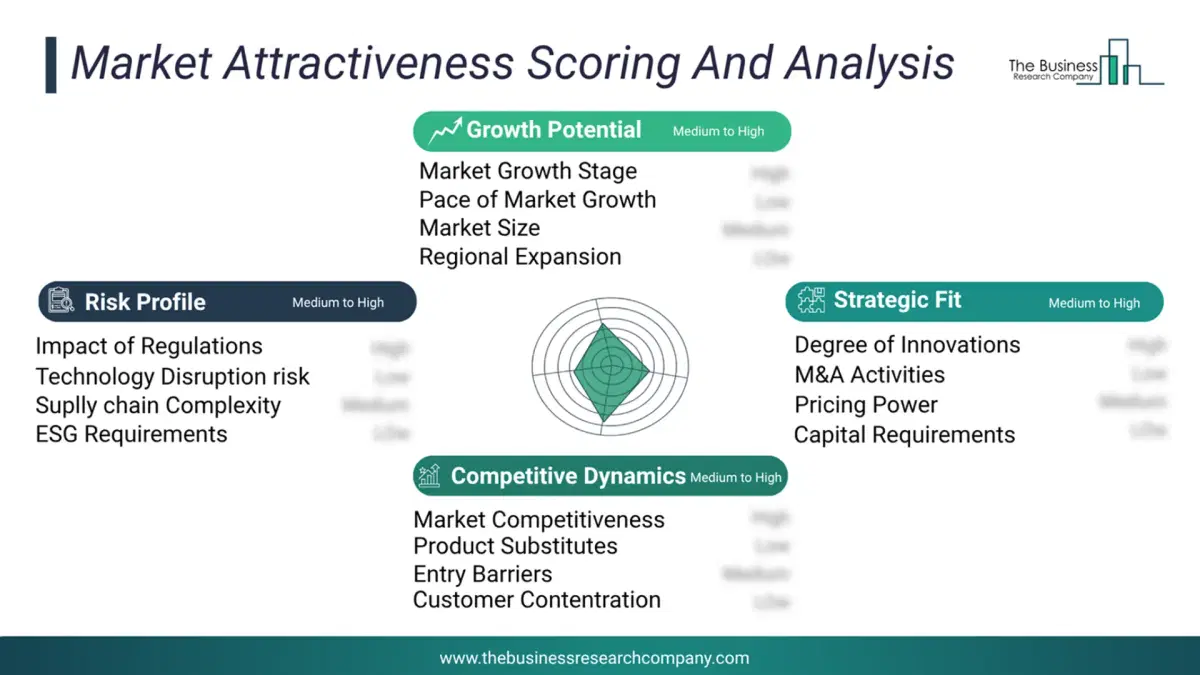
This chart presents market attractiveness based on a quantitative evaluation of growth, competition, strategic alignment, and risk, offering a clear view of opportunity areas for decision-making. This chart is for illustrative purposes; the full report contains the complete analysis.
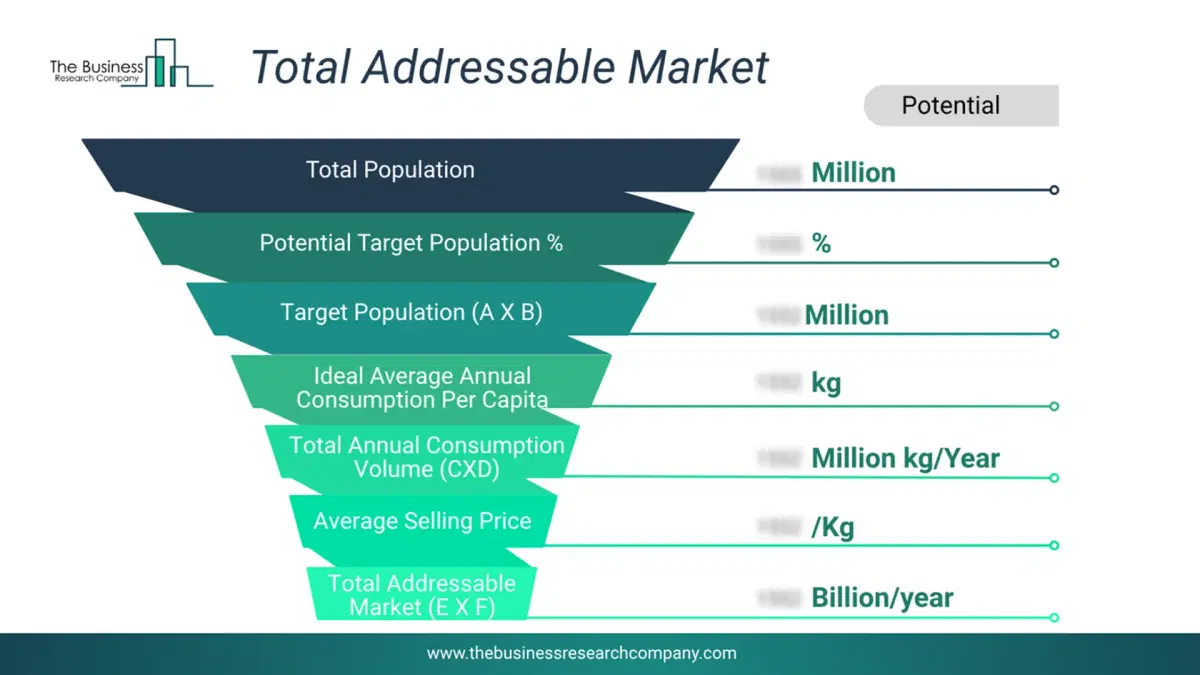
This chart highlights the Total Addressable Market (TAM) by estimating the maximum revenue opportunity using an assumption-driven approach, supporting strategic planning and opportunity sizing across markets. The chart is illustrative; the full report provides a more comprehensive analysis.
What Key Data and Analysis Are Included in the Construction Adhesives Market Report 2026?
The construction adhesives market research report is one of a series of new reports from The Business Research Company that provides market statistics, including industry global market size, regional shares, competitors with the market share, detailed market segments, market trends and opportunities, and any further data you may need to thrive in the construction adhesives industry. The market research report delivers a complete perspective of everything you need, with an in-depth analysis of the current and future state of the industry.Construction Adhesives Market Report Forecast Analysis
| Report Attribute | Details |
|---|---|
| Market Size Value In 2026 | $14.15 billion |
| Revenue Forecast In 2030 | $19.85 billion |
| Growth Rate | CAGR of 8.8% from 2026 to 2030 |
| Base Year For Estimation | 2025 |
| Actual Estimates/Historical Data | 2020-2025 |
| Forecast Period | 2026 - 2030 |
| Market Representation | Revenue in USD Billion and CAGR from 2026 to 2030 |
| Segments Covered | Type, Resin Type, Application |
| Regional Scope | Asia-Pacific, Western Europe, Eastern Europe, North America, South America, Middle East, Africa |
| Country Scope | The countries covered in the report are Australia, Brazil, China, France, Germany, India, Indonesia, Japan, Taiwan, Russia, South Korea, UK, USA, Canada, Italy, Spain. |
| Key Companies Profiled | Minnesota Mining and Manufacturing Company (3M), Adhesives Technology Corporation, Arkema SA, DAP Products Inc., H.B. Fuller Company, Henkel AG & Co. KGaA, ITW Performance Polymers, MAPEI S.p.A., Sika AG, Wacker Chemie AG, Ashland Inc., Don Construction Products Limited, Franklin International Group Ltd., LORD Corp., RPM International Inc., BASF SE, ARDEX AMERICAS Inc., Huntsman International LLC, Bostik SA, Jowat SE, Pidilite Industries Limited, Royal Adhesives & Sealants LLC, The Dow Chemical Company, Akzo Nobel N.V., Collano Adhesives AG, Delo Industrial Adhesives LLC, Hexion Inc., Master Bond Inc., Parson Adhesives Inc. |
| Customization Scope | Request for Customization |
| Pricing And Purchase Options | Explore Purchase Options |