
Digital Mental Health Market Report 2026
Global Outlook – By Component (Software, Services, Hardware), By Application (Depression And Anxiety Management, Meditation Management, Stress Management, Wellness Management), By End Users (Hospitals, Mental Healthcare Centers, Research Institutes) – Market Size, Trends, Strategies, and Forecast to 2030
Digital Mental Health Market Overview
• Digital Mental Health market size has reached to $27.55 billion in 2025 • Expected to grow to $58.67 billion in 2030 at a compound annual growth rate (CAGR) of 16.3% • Growth Driver: Digital Mental Health Market Gains Momentum Amidst Escalating Mental Health Challenges • Market Trend: Innovations in AI And Machine Learning Algorithms To Gain A Competitive Edge In The Market • North America was the largest region in 2025 and Asia-Pacific is the fastest growing region.Market Gains By 2030 – Top Opportunities By Segment
Market Gain identifies the most promising market opportunities by highlighting the segments or products expected to generate the highest incremental revenue growth over the next five years.
What Is Covered Under Digital Mental Health Market?
Digital mental health refers to the utilization of digital health technology for the assessment, support, prevention, and treatment of mental health issues. It is used to enhance health results by providing accessible, patient-centered access to mental health support and self-management resources. The main components of digital mental health are software, services, and hardware. Digital mental health software is used by users to generate and safely store electronic patient records. The various applications include depression and anxiety management, meditation management, stress management, and wellness management, and are used by various end-users such as hospitals, mental healthcare centers, and research institutes.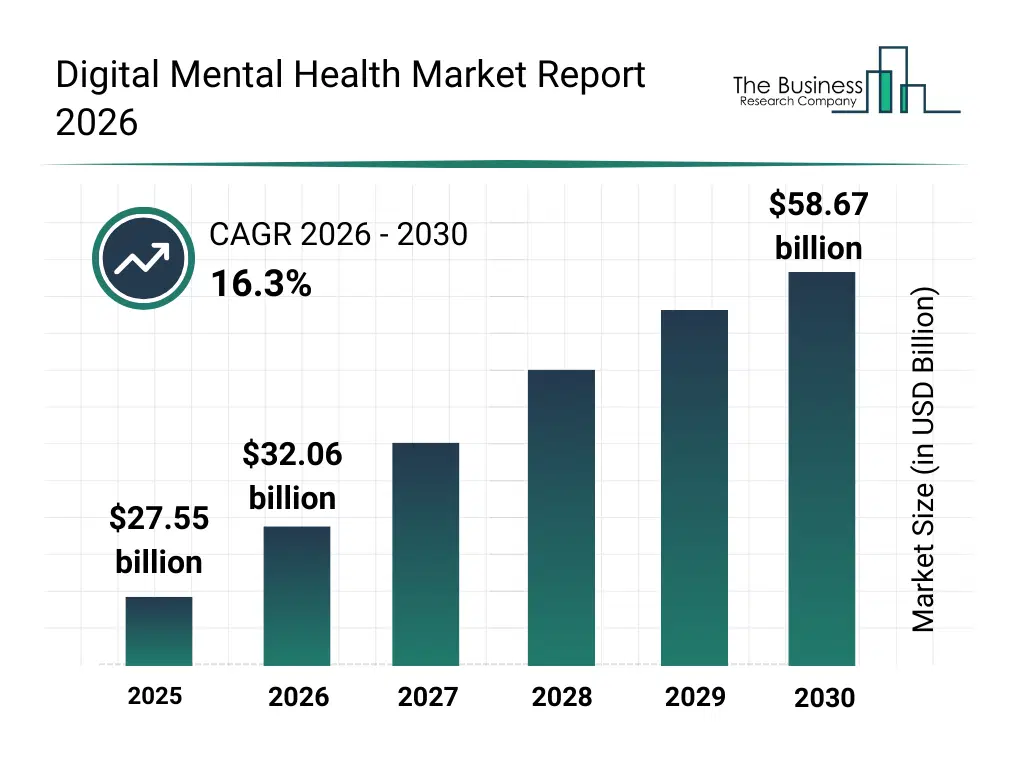
What Is The Digital Mental Health Market Size and Share 2026?
The digital mental health market size has grown rapidly in recent years. It will grow from $27.55 billion in 2025 to $32.06 billion in 2026 at a compound annual growth rate (CAGR) of 16.4%. The growth in the historic period can be attributed to increasing awareness of mental health, adoption of telehealth services, limited accessibility to traditional therapy, rise in smartphone usage, development of early digital mental health tools.What Is The Digital Mental Health Market Growth Forecast?
The digital mental health market size is expected to see rapid growth in the next few years. It will grow to $58.67 billion in 2030 at a compound annual growth rate (CAGR) of 16.3%. The growth in the forecast period can be attributed to integration of AI and ml in mental health apps, expansion of virtual reality therapy, growth in wearable devices for mental health monitoring, increased adoption by hospitals and healthcare centers, rising demand for personalized mental wellness solutions. Major trends in the forecast period include mobile mental health applications, virtual therapy platforms, online counseling services, behavioral health monitoring services, wearable biofeedback devices.
Global Digital Mental Health Market Segmentation
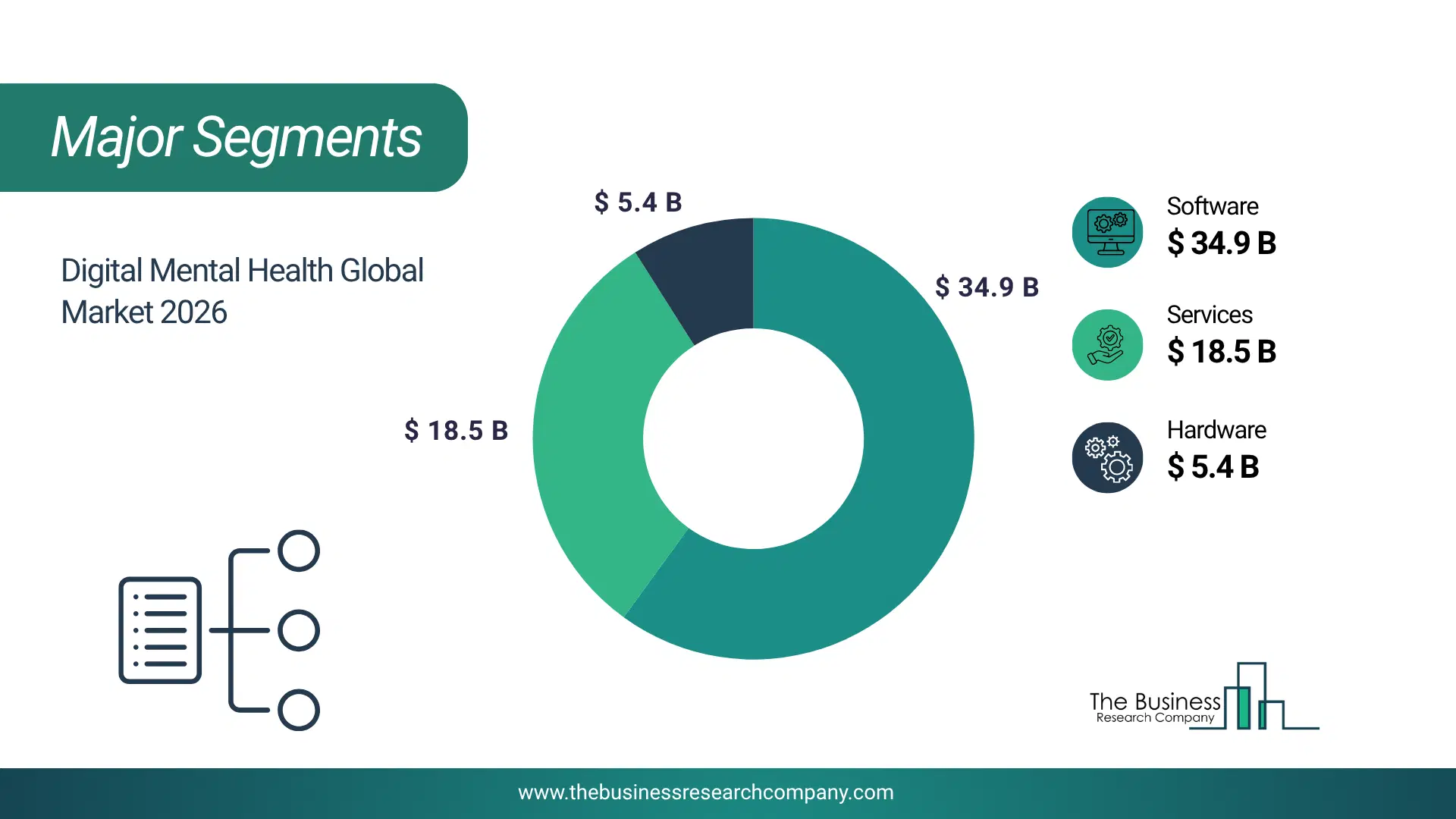
1) By Component: Software, Services, Hardware 2) By Application: Depression And Anxiety Management, Meditation Management, Stress Management, Wellness Management 3) By End Users: Hospitals, Mental Healthcare Centers, Research Institutes Subsegments: 1) By Software: Mobile Applications, Web-Based Platforms, Virtual Therapy Platforms 2) By Services: Teletherapy Services, Online Counseling Services, Behavioral Health Monitoring Services 3) By Hardware: Wearables for Mental Health Monitoring, Biofeedback Devices, Virtual Reality (VR) Devices For Therapy The top segments in the digital mental health market will be: • Software will reach $34.9 billion by 2030. • Services will reach $18.1 billion by 2030. • Hardware will reach $5.4 billion by 2030.What Is The Driver Of The Digital Mental Health Market?
The growing prevalence of mental disorders is expected to propel the growth of the digital mental health market going forward. A mental disorder refers to a significant disruption in an individual's cognition, emotional regulation, or behavior that holds clinical significance. Digital mental health technology solutions serve various purposes, including promoting mental health, preventing issues, self-care, early intervention, and treating mental disorders. For instance, in May 2024, according to the American Psychiatric Association, a US-based non-profit organization, 43% of adults report feeling more anxious than they did the year before, an increase from 37% in 2023 and 32% in 2022. Therefore, the growing prevalence of mental disorders drives the digital mental health industry.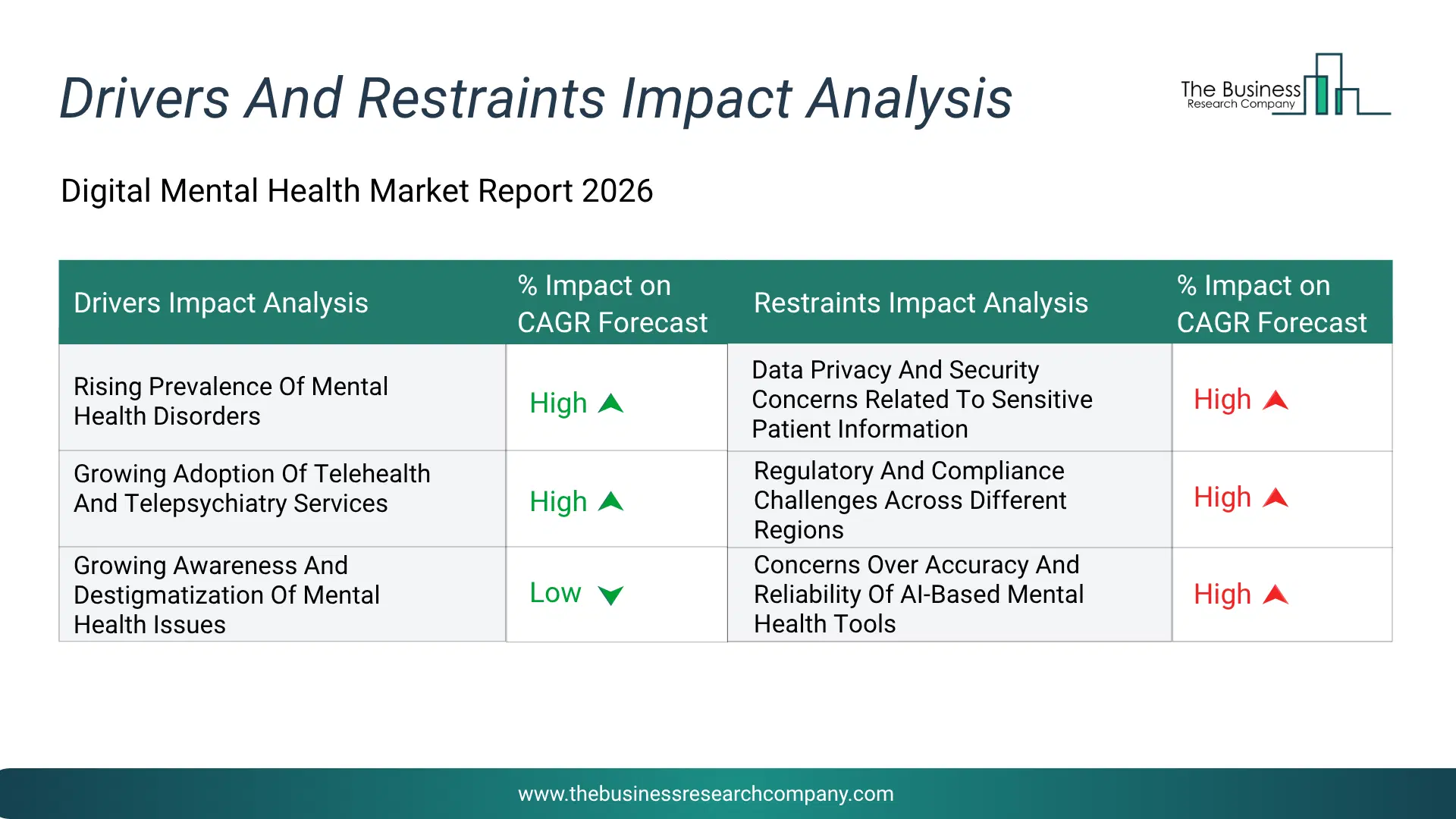
Infographic Chart Showing Key Market Drivers Analysis And Restraints For Digital Mental Health Market
The chart presents an impact analysis of key drivers and restraints, quantifying their relative influence on the market's growth rate and helping assess the balance between growth enablers and limiting factors. This chart offers a high-level perspective; the full report contains more detailed insights.
How Will The Drivers Impact Growth In The Global Digital Mental Health Market?
• Rising Prevalence Of Mental Health Disorders (High) – During the forecast period, the rising prevalence of mental health disorders is expected to become a key growth driver for the digital mental health market by 2030. Increasing incidence of conditions such as depression, anxiety, stress -related disorders, and substance abuse is driving demand for accessible and scalable mental health solutions. Changing lifestyles, work -related stress, social isolation, and the long -term psychological impacts of global crises are further contributing to the growing mental health burden. Digital platforms are therefore emerging as effective tools to bridge treatment gaps and provide continuous care. • Growing Adoption Of Telehealth And Telepsychiatry Services (High) – During the forecast period, the growing adoption of telehealth and telepsychiatry services is expected to emerge as a major factor driving the expansion of the digital mental health market by 2030. The increasing use of virtual consultations, remote therapy sessions, and digital monitoring tools is improving access to mental healthcare, particularly in underserved and remote areas. Telehealth platforms offer convenience, cost-effectiveness, and flexibility for both patients and providers, leading to higher engagement and treatment adherence. Additionally, advancements in secure communication technologies and regulatory support are accelerating adoption. • Growing Awareness And Destigmatization Of Mental Health Issues (Low) – During the forecast period, the growing awareness and destigmatization of mental health issues is expected to act as a key growth catalyst for the digital mental health market by 2030. Public awareness campaigns, corporate wellness initiatives, and social media advocacy are encouraging individuals to seek mental health support without hesitation. The reduction of stigma associated with mental health conditions is leading to increased utilization of digital platforms that offer privacy and anonymity. Furthermore, employers and educational institutions are increasingly integrating mental health solutions into their support systems.How Will The Restraints Impact Growth In The Global Digital Mental Health Market?
• Data Privacy And Security Concerns Related To Sensitive Patient Information (High) – During the forecast period, the data privacy and security concerns act as a restraint for the digital mental health market because these platforms handle highly sensitive personal and psychological health data. Users may hesitate to adopt digital mental health services if they fear that their confidential information could be exposed, misused, or accessed by unauthorized parties. Since digital mental health solutions rely on online platforms, mobile apps, and connected technologies, they are more vulnerable to cybersecurity risks and data breaches. This lack of trust in data protection measures can slow the adoption of digital assessment tools, telepsychiatry services, and mental health applications, thereby limiting market growth. • Regulatory And Compliance Challenges Across Different Regions (High) – During the forecast period, the regulatory and compliance challenges across different regions act as a restraint for the digital mental health market because digital health services must follow strict healthcare regulations, data protection laws, and medical licensing requirements. These rules often vary significantly between countries and even across states, making it difficult for service providers to scale their platforms globally. Companies offering telepsychiatry, digital therapeutics, and mental health applications must invest significant time and resources to meet regulatory approvals and compliance standards. Such complexities can slow product launches, limit cross-border service delivery, and reduce the speed at which digital mental health solutions expand into new markets. • Concerns Over Accuracy And Reliability Of AI-Based Mental Health Tools (High) – During the forecast period, the concerns regarding the accuracy and reliability of ai-based mental health tools also limit the growth of the digital mental health market. Many digital platforms rely on artificial intelligence and machine learning to assess symptoms, provide recommendations, or support clinical decision-making. However, if these systems provide incorrect assessments or fail to capture the complexity of mental health conditions, it may lead to mistrust among healthcare professionals and patients. As a result, hesitation in relying on ai-driven diagnostics and therapeutic tools can slow the adoption of advanced digital mental health technologies.Key Players In The Global Digital Mental Health Market
Major companies operating in the digital mental health market are Teladoc Health Inc.; Calm Health; American Well Corporation; Ginger.io Inc.; Headspace Health; Talkspace Inc.; Virgin Pulse Inc.; Quartet Health Inc.; Array Behavioral Care; Cerebral Inc.; Woebot Health; NeuroFlow Inc.; Even Health LLC; Sanvello Health Inc.; Twill Inc.; Wysa Inc.; HealthRhythms; Likeminded GmbH; Mantra Health Inc.; MindDoc Health GmbH; TheraPlatform; Youper Inc.; Spring Care Inc.; Excel At Life LLC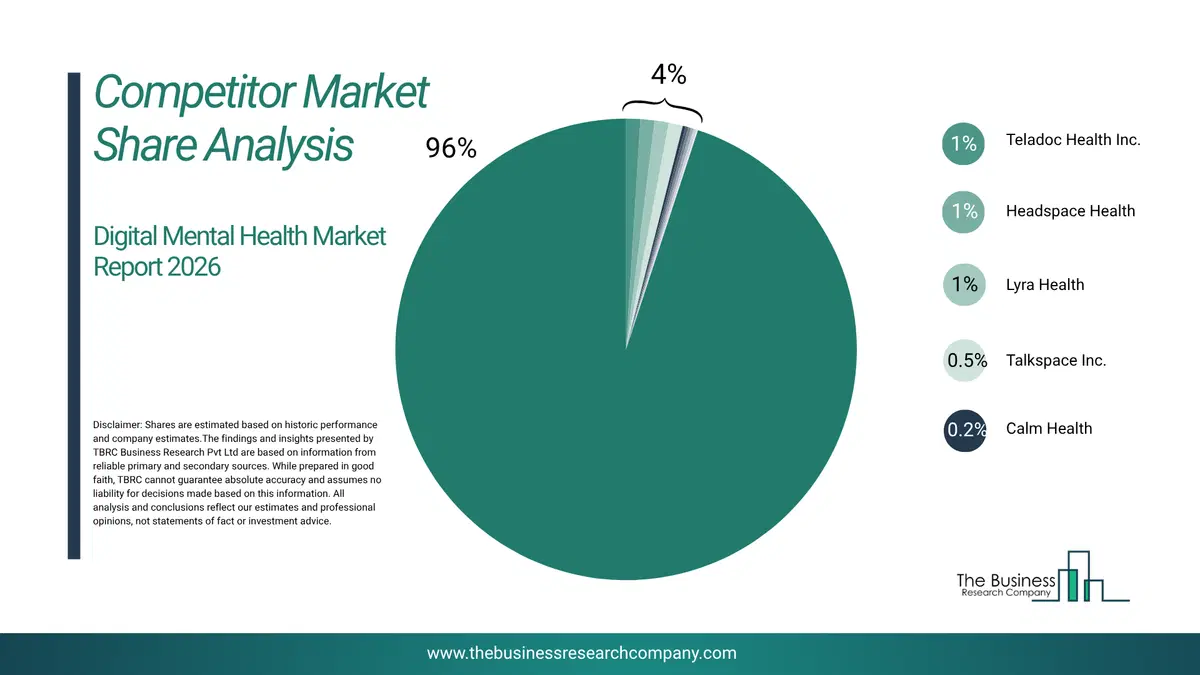
This chart is for illustrative purposes; the full report includes a detailed competitor analysis and comprehensive overview of the top 10 companies in the market.
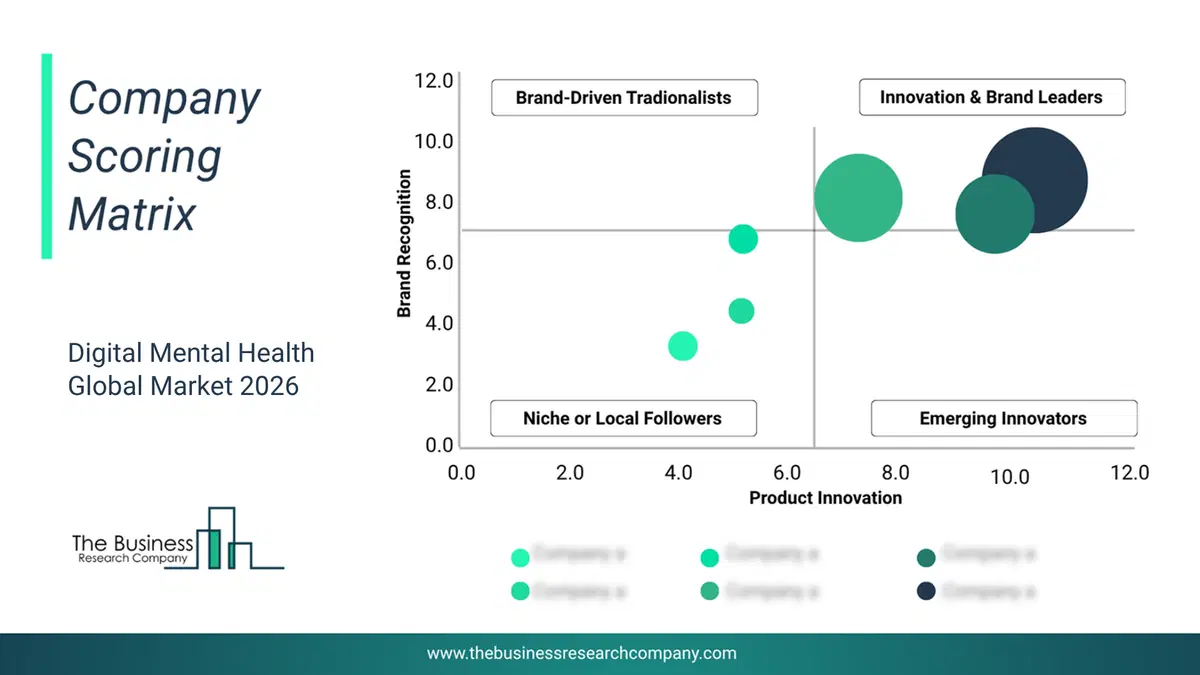
This chart maps companies by product innovation and brand strength, with bubble size indicating relative revenue, helping identify market leaders, challengers, and niche players. This is an illustrative chart; the full report provides a complete and accurate competitive analysis.
Global Digital Mental Health Market Trends and Insights
Major companies operating in the digital mental health market are increasing their focus on innovations in AI and machine learning algorithms to gain a competitive edge in the market. Innovations in AI and machine learning algorithms refer to the integration of artificial intelligence in digital mental health solutions, for organizing mental health services and detecting, along with analyzing mental health issues. For instance, in August 2023, Aiberry, a US-based, AI-enabled mental health screening platform, launched a new version of the Aiberry platform, designed to cater to the needs of corporate wellness platform users. Aiberry seamlessly integrates with major corporate wellness platforms and employs an AI-driven therapeutic technology assistant, Botberry, which engages in conversations to identify mental health disorders, by analyzing speech patterns and even subtle shifts in facial expressions. The Aiberry corporate wellness platform involves enhanced analytics features, to monitor how and track the wellness progress of employees over time.What Are Latest Mergers And Acquisitions In The Digital Mental Health Market?
In July 2023, Big Health, a US-based, mental healthcare company, offering digital health and digital medicines, acquired Limbix, for an undisclosed amount. With this acquisition, Big Health aims to expand its portfolio, which strengthened its daylight therapeutic for anxiety and Sleepio for insomnia, solution segment and planned to prioritize the development of initial-line digital therapeutics targeting various mental health conditions. Limbix is a US-based company that has developed SparkRx, digital therapeutics for adolescent mental health.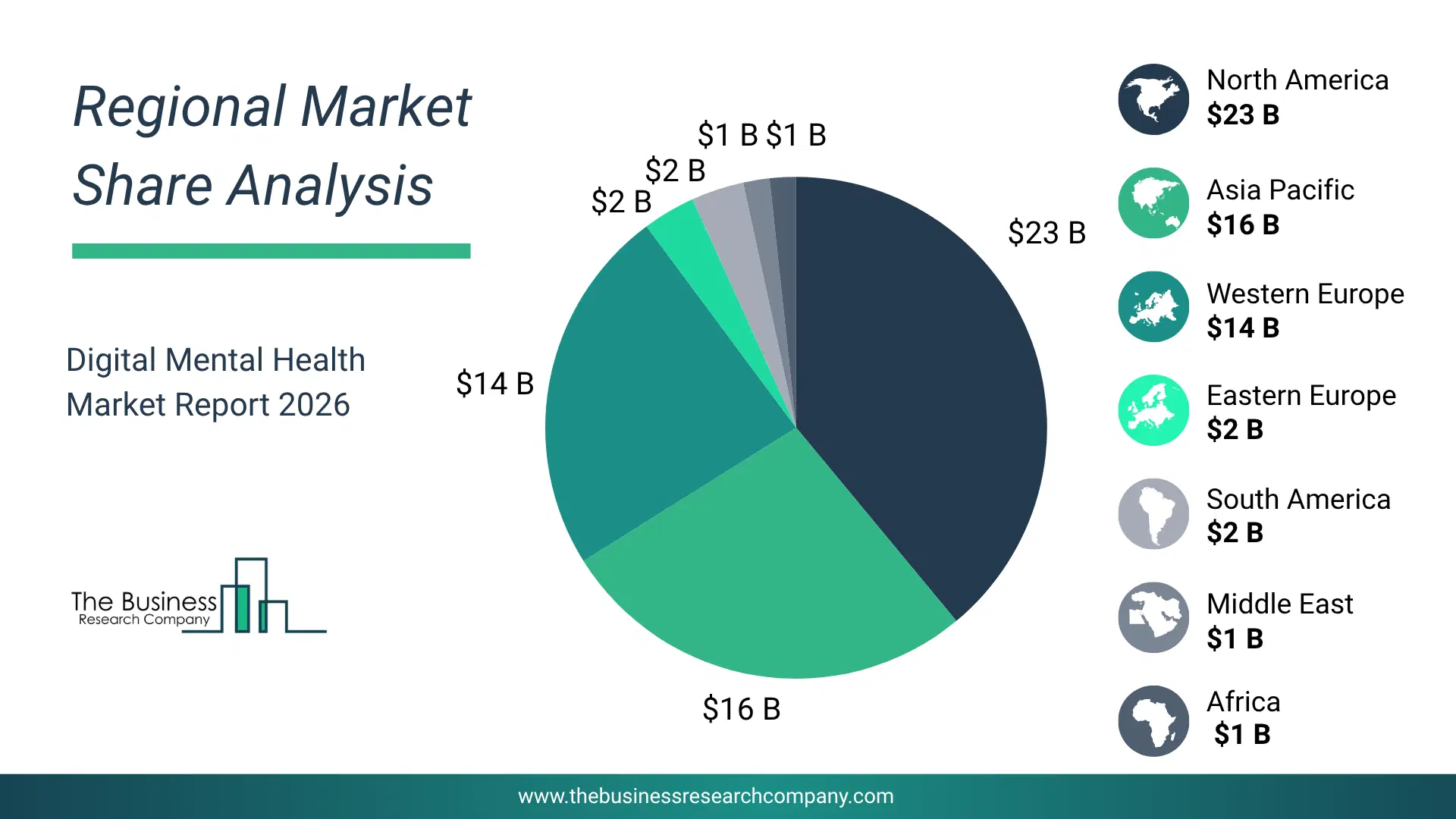
Regional Insights
North America was the largest region in the Digital Mental Health market in 2025. Asia-Pacific is expected to be the fastest-growing region in the forecast period. The regions covered in this market report are Asia-Pacific, South East Asia, Western Europe, Eastern Europe, North America, South America, Middle East, Africa. The countries covered in this market report are Australia, Brazil, China, France, Germany, India, Indonesia, Japan, Taiwan, Russia, South Korea, UK, USA, Canada, Italy, SpainWhat Defines the Digital Mental Health Market?
The digital mental health market consists of revenue earned by entities by providing digital mental health services such as telepsychiatry, teleconsultation, mental health apps and games, digital assessment, digital therapeutic approaches, virtual training, and clinical support. The market value includes the value of related goods sold by the service provider or included within the service offering. The digital mental health market also includes sales of tele-mental health, the internet of medical things (IoMT), mental health data management and communication tools, and AI And ML solutions. Values in this market are ‘factory gate’ values, that is the value of goods sold by the manufacturers or creators of the goods, whether to other entities (including downstream manufacturers, wholesalers, distributors, and retailers) or directly to end customers. The value of goods in this market includes related services sold by the creators of the goods.How is Market Value Defined and Measured?
The market value is defined as the revenues that enterprises gain from the sale of goods and/or services within the specified market and geography through sales, grants, or donations in terms of the currency (in USD unless otherwise specified). The revenues for a specified geography are consumption values that are revenues generated by organizations in the specified geography within the market, irrespective of where they are produced. It does not include revenues from resales along the supply chain, either further along the supply chain or as part of other products.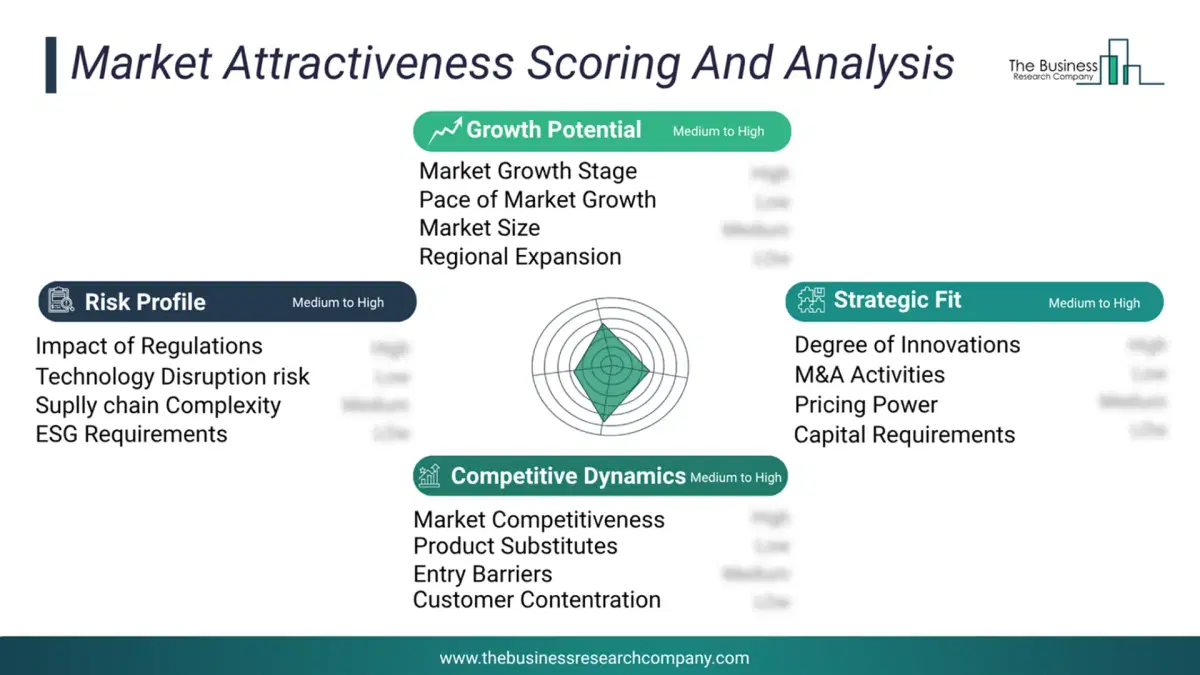
This chart presents market attractiveness based on a quantitative evaluation of growth, competition, strategic alignment, and risk, offering a clear view of opportunity areas for decision-making. This chart is for illustrative purposes; the full report contains the complete analysis.
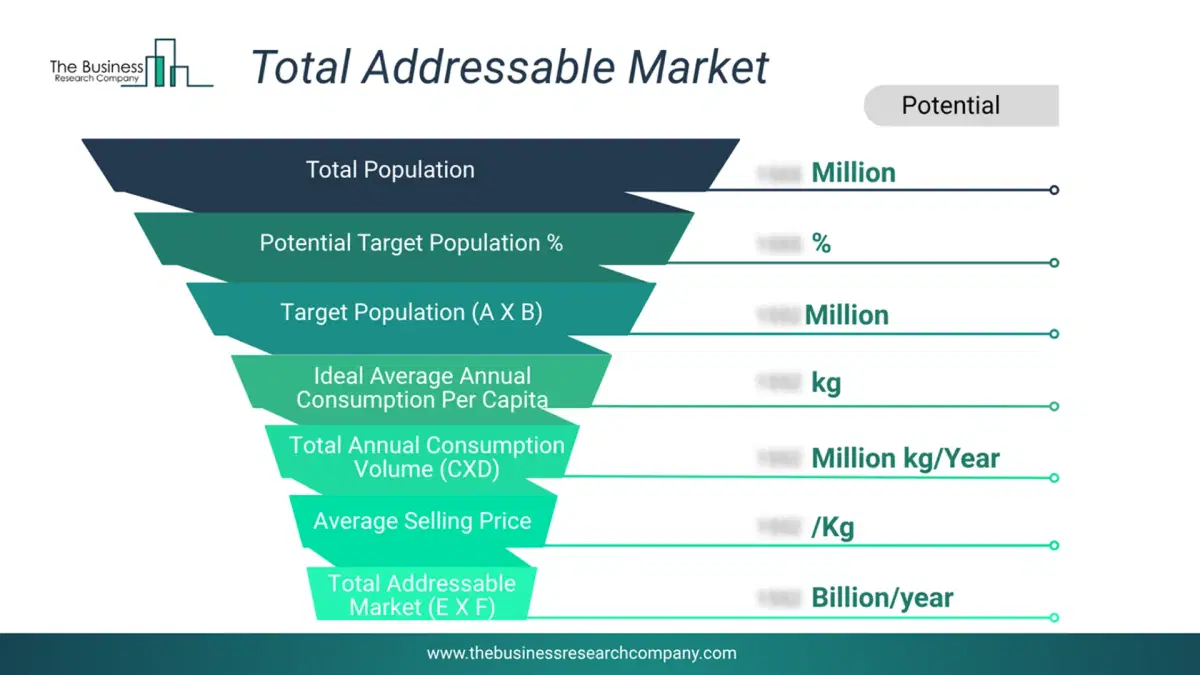
This chart highlights the Total Addressable Market (TAM) by estimating the maximum revenue opportunity using an assumption-driven approach, supporting strategic planning and opportunity sizing across markets. The chart is illustrative; the full report provides a more comprehensive analysis.
What Key Data and Analysis Are Included in the Digital Mental Health Market Report 2026?
The digital mental health market research report is one of a series of new reports from The Business Research Company that provides market statistics, including industry global market size, regional shares, competitors with the market share, detailed market segments, market trends and opportunities, and any further data you may need to thrive in the digital mental health industry. The market research report delivers a complete perspective of everything you need, with an in-depth analysis of the current and future state of the industry.Digital Mental Health Market Report Forecast Analysis
| Report Attribute | Details |
|---|---|
| Market Size Value In 2026 | $32.06 billion |
| Revenue Forecast In 2030 | $58.67 billion |
| Growth Rate | CAGR of 16.4% from 2026 to 2030 |
| Base Year For Estimation | 2025 |
| Actual Estimates/Historical Data | 2020-2025 |
| Forecast Period | 2026 - 2030 |
| Market Representation | Revenue in USD Billion and CAGR from 2026 to 2030 |
| Segments Covered | Component, Application, End Users |
| Regional Scope | Asia-Pacific, Western Europe, Eastern Europe, North America, South America, Middle East, Africa |
| Country Scope | The countries covered in the report are Australia, Brazil, China, France, Germany, India, Indonesia, Japan, Taiwan, Russia, South Korea, UK, USA, Canada, Italy, Spain. |
| Key Companies Profiled | Teladoc Health Inc.; Calm Health; American Well Corporation; Ginger.io Inc.; Headspace Health; Talkspace Inc.; Virgin Pulse Inc.; Quartet Health Inc.; Array Behavioral Care; Cerebral Inc.; Woebot Health; NeuroFlow Inc.; Even Health LLC; Sanvello Health Inc.; Twill Inc.; Wysa Inc.; HealthRhythms; Likeminded GmbH; Mantra Health Inc.; MindDoc Health GmbH; TheraPlatform; Youper Inc.; Spring Care Inc.; Excel At Life LLC |
| Customization Scope | Request for Customization |
| Pricing And Purchase Options | Explore Purchase Options |