
Environmental Impact Assessments Market Report 2026
Global Outlook – By Type (Hydrogeology, Hydrology, Contaminated Land, Geo-Conservation, Geotechnical Engineering), By Assessment Method (Screening, Scoping, Environmental Impact Assessments (EIA) Report, Review, Monitoring), By Application (Governmental, Industrial, Commercial, Residential, Infrastructure) – Market Size, Trends, Strategies, and Forecast to 2030
Environmental Impact Assessments Market Overview
• Environmental Impact Assessments market size has reached to $15.17 billion in 2025 • Expected to grow to $20.87 billion in 2030 at a compound annual growth rate (CAGR) of 6.6% • Growth Driver: Increasing Investments In Renewable Energy Drive Growth Of Environmental Impact Assessment Market • Market Trend: Sustainability Takes Centre Stage In Environmental Impact Assessment Initiatives • North America was the largest region in 2025.Market Gains By 2030 – Top Opportunities By Segment
Market Gain identifies the most promising market opportunities by highlighting the segments or products expected to generate the highest incremental revenue growth over the next five years.
What Is Covered Under Environmental Impact Assessments Market?
Environmental impact assessment (EIA) is a systematic process used to evaluate the potential ecological effects of a proposed project or development before any decisions are made. The primary goal of EIA is to ensure that decision-makers consider environmental impacts alongside economic and social factors during project planning and design stages. The main types of environmental impact assessments are hydrogeology, hydrology, contaminated land, geo-conservation, and geotechnical engineering. Hydrogeology is the branch of geology that deals with the distribution and movement of groundwater in the soil and rocks of the Earth’s crust. The various assessment methods include screening, scoping, environmental impact assessments (EIA) reports, review, and monitoring. These are used in various applications such as governmental, industrial, commercial, residential, and infrastructure.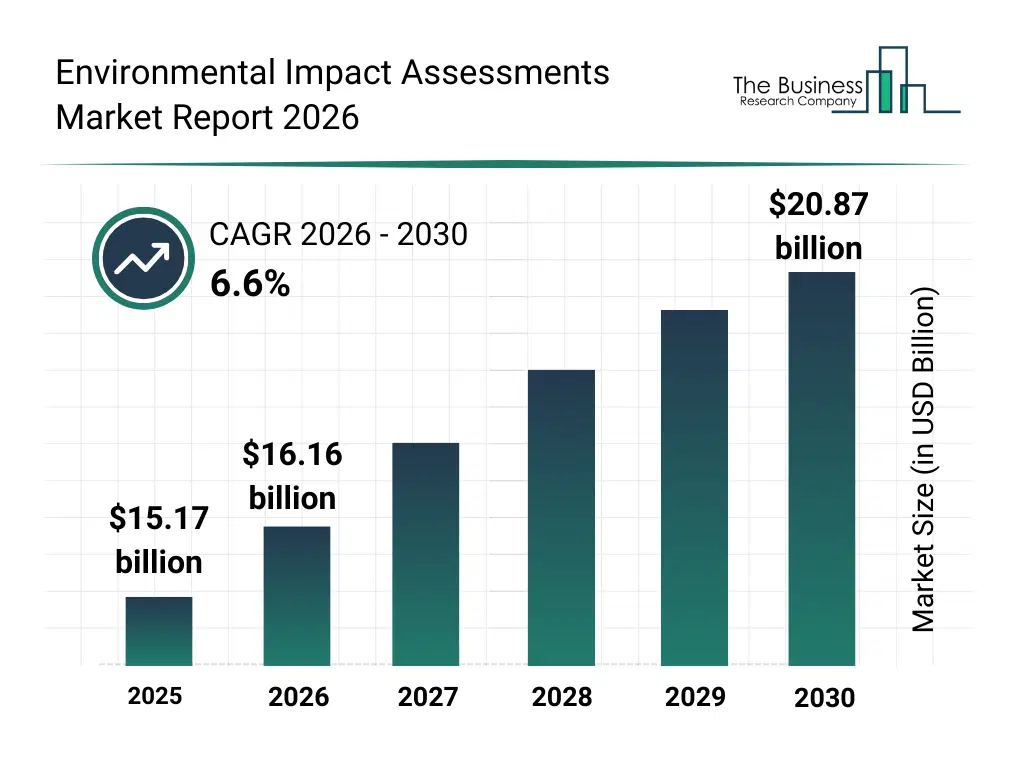
What Is The Environmental Impact Assessments Market Size and Share 2026?
The environmental impact assessments market size has grown strongly in recent years. It will grow from $15.17 billion in 2025 to $16.16 billion in 2026 at a compound annual growth rate (CAGR) of 6.5%. The growth in the historic period can be attributed to expansion of infrastructure and urban development projects, strengthening environmental regulations, growth in industrial project approvals, increasing public environmental awareness, rising demand for risk mitigation planning.What Is The Environmental Impact Assessments Market Growth Forecast?
The environmental impact assessments market size is expected to see strong growth in the next few years. It will grow to $20.87 billion in 2030 at a compound annual growth rate (CAGR) of 6.6%. The growth in the forecast period can be attributed to increasing integration of ai-driven assessment models, growing focus on climate resilience planning, expansion of sustainable infrastructure projects, rising demand for continuous environmental monitoring, increasing adoption of data-driven decision-making tools. Major trends in the forecast period include increasing adoption of digital eia tools, rising integration of gis and remote sensing data, growing demand for real-time environmental monitoring, expansion of climate impact assessment scope, enhanced focus on regulatory transparency.
Global Environmental Impact Assessments Market Segmentation
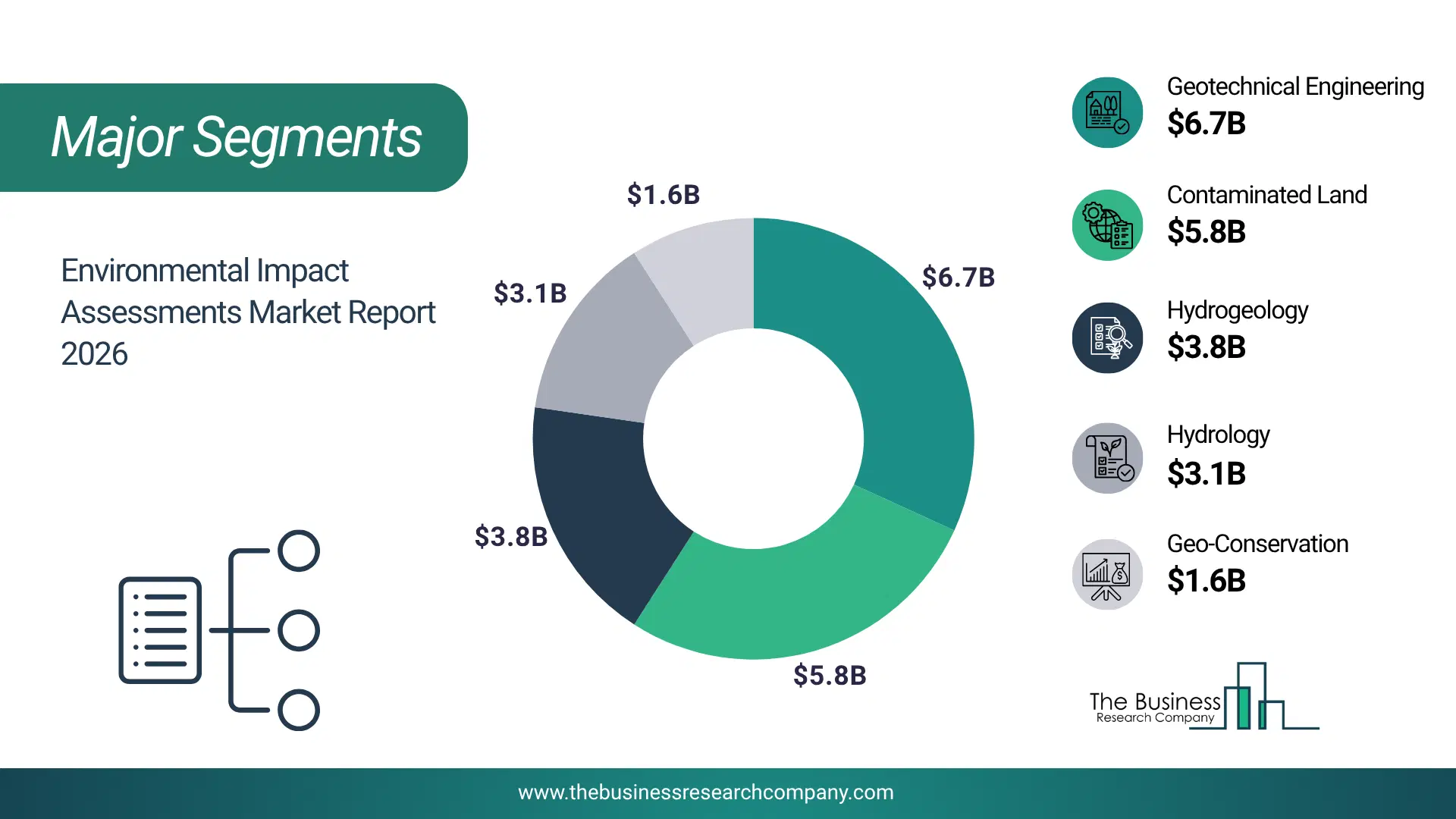
1) By Type: Hydrogeology, Hydrology, Contaminated Land, Geo-Conservation, Geotechnical Engineering 2) By Assessment Method: Screening, Scoping, Environmental Impact Assessments (EIA) Report, Review, Monitoring 3) By Application: Governmental, Industrial, Commercial, Residential, Infrastructure Subsegments: 1) By Hydrogeology: Groundwater Flow Analysis, Aquifer Testing And Characterization, Contaminant Transport Modeling, Groundwater Resource Management, Water Quality Assessment 2) By Hydrology: Flood Risk Assessment, Stormwater Management Studies, Watershed And River Basin Modeling, Hydrological Impact On Infrastructure, Water Availability And Resource Management 3) By Contaminated Land: Site Contamination Risk Assessment, Soil Remediation And Cleanup Studies, Toxicology And Hazardous Materials Analysis, Landfill And Waste Disposal Impact Studies, Brownfield Site Assessments 4) By Geo-conservation: Geological Site Protection And Management, Biodiversity And Ecosystem Preservation, Assessment Of Natural Heritage Sites, Geological Hazard Mitigation (Landslides, Erosion), Conservation Of Geological Resources 5) By Geotechnical Engineering: Soil And Rock Mechanics Analysis, Ground Stability And Landslide Risk Assessment, Foundation Design And Engineering, Slope Stability Studies, Seismic Hazard And Earthquake Risk Assessment The top segments in the environmental impact assessments market will be: • Geotechnical Engineering will reach $6.67 billion by 2030. • Contaminated Land will reach $5.79 billion by 2030. • Hydrogeology will reach $3.74 billion by 2030. • Hydrology will reach $3.07 billion by 2030. • Geo-Conservation will reach $1.59 billion by 2030.What Is The Driver Of The Environmental Impact Assessments Market?
The increasing investments in renewable energy are expected to propel the growth of the environmental impact assessment market going forward. Renewable energy refers to energy derived from natural sources that are replenished constantly. The increase in investments in renewable energy is due to Increasing awareness and urgency around climate change, the increasing cost of renewable energy technologies, and the rise of green bonds and other financial instruments. Environmental impact assessment plays a crucial role in renewable energy projects by evaluating the potential environmental effects of proposed developments. This process helps ensure that projects are environmentally sustainable, socially acceptable, and compliant with regulatory requirements. For instance, in June 2024, according to the World Energy Investment 2024 report by the International Energy Agency (IEA), a France-based autonomous intergovernmental organization, global energy investment is projected to surpass $3 trillion for the first time in 2024, with around $2 trillion dedicated to clean energy technologies. Further, China is anticipated to lead clean energy investments, contributing an estimated $675 billion. Other significant contributors include Europe, with $370 billion, and the United States, with $315 billion. Therefore, increasing investments in renewable energy is driving the growth of the environmental impact assessment industry.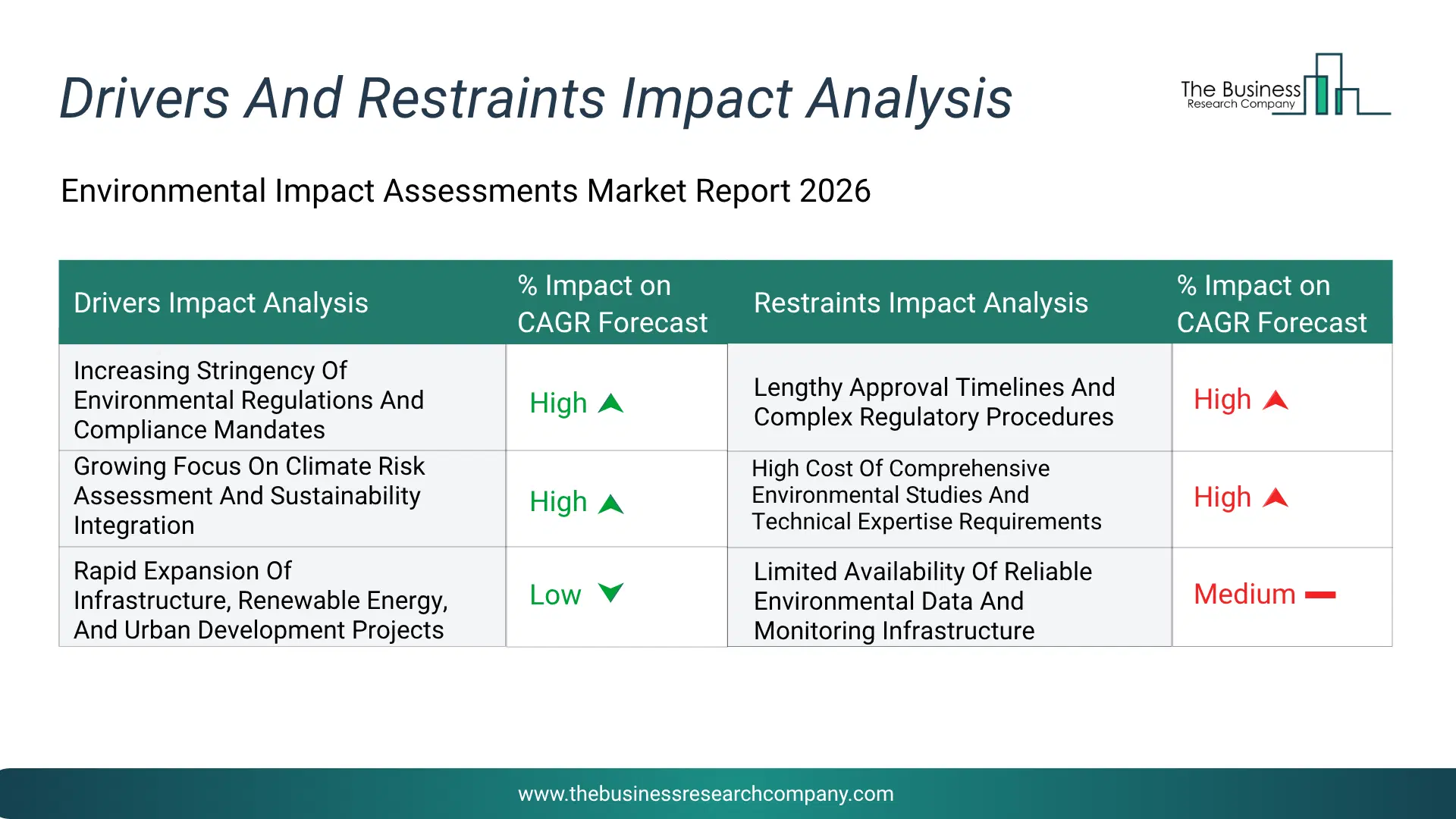
Infographic Chart Showing Key Market Drivers Analysis And Restraints For Environmental Impact Assessments Market
The chart presents an impact analysis of key drivers and restraints, quantifying their relative influence on the market's growth rate and helping assess the balance between growth enablers and limiting factors. This chart offers a high-level perspective; the full report contains more detailed insights.
How Will The Drivers Impact Growth In The Global Environmental Impact Assessments Market?
• Increasing Stringency Of Environmental Regulations And Compliance Mandates (High) – During the forecast period, the increasing stringency of environmental regulations and compliance mandates is expected to become a key growth driver for the environmental impact assessments market by 2030. Governments enforce stricter approval processes for infrastructure, mining, energy, and urban development projects. Regulatory authorities require comprehensive baseline studies, cumulative impact evaluations, and public consultations before project clearance. This compels project developers to engage specialized eia service providers to ensure timely approvals and avoid legal penalties. As environmental governance frameworks continue to tighten globally, demand for structured and high -quality assessment services steadily rises. • Growing Focus On Climate Risk Assessment And Sustainability Integration (High) – During the forecast period, the growing focus on climate risk assessment and sustainability integration is expected to emerge as a major factor driving the expansion of the environmental impact assessments market by 2030. Organizations increasingly incorporate carbon footprint analysis, biodiversity protection, and climate resilience planning into project design. Financial institutions and investors now require environmental due diligence aligned with esg standards before funding large-scale projects. This expands the scope of eias beyond regulatory compliance toward strategic sustainability planning. As climate-related disclosures and net-zero commitments intensify, demand for advanced environmental assessment solutions continues to strengthen. • Rapid Expansion Of Infrastructure, Renewable Energy, And Urban Development Projects (Low) – During the forecast period, the rapid expansion of infrastructure, renewable energy, and urban development projects is expected to act as a key growth catalyst for the environmental impact assessments market by 2030. Large-scale transportation corridors, smart cities, wind farms, solar parks, and water management systems require mandatory environmental clearance prior to execution. Each project phase demands detailed site investigations, hydrological studies, and ecological impact evaluations. As global investments in sustainable infrastructure accelerate, the volume and complexity of eia engagements continue to increase.How Will The Restraints Impact Growth In The Global Environmental Impact Assessments Market?
• Lengthy Approval Timelines And Complex Regulatory Procedures (High) – During the forecast period, the multi-layered review frameworks can delay project execution. Extended public consultations, revisions, and cross-agency evaluations increase project uncertainty and administrative costs. Developers may postpone or scale down projects due to prolonged clearance cycles. These procedural complexities can moderate the pace of new assessment contracts, slightly restraining overall market growth • High Cost Of Comprehensive Environmental Studies And Technical Expertise Requirements (High) – During the forecast period, the advanced field surveys, laboratory testing, geospatial modeling, and multidisciplinary expert consultations significantly increase assessment expenses. Budget constraints may lead to reduced project pipelines in certain regions. Additionally, the shortage of highly skilled environmental professionals can elevate service costs, limiting faster expansion of eia activities • Limited Availability Of Reliable Environmental Data And Monitoring Infrastructure (Medium) – During the forecast period, the limited availability of reliable environmental data and monitoring infrastructure acts as a restraint for the environmental impact assessments market by reducing the accuracy and efficiency of assessment processes. In many developing and remote regions, inadequate baseline environmental data and weak monitoring systems make it difficult to conduct comprehensive studies. This leads to longer project timelines, increased reliance on primary data collection, and higher operational costs. Inconsistent or missing data can also reduce regulatory confidence in reports, resulting in repeated assessments and delays in approvals. Overall, these challenges hinder smooth project execution and slow down market growth.Key Players In The Global Environmental Impact Assessments Market
Major companies operating in the environmental impact assessments market are AECOM Technology Corporation, Bureau Veritas SA, Stantec Inc., GHD Group, Bidwells LLP, BRE Group, BMT Group Ltd., JBA Consulting, OCA Global Corporate Service S.A., Intertek Group PLC, Aspen Environmental Group, KERAMIDA Inc., Millennium EMS Solutions Ltd., Cholamandalam MS Risk Services Ltd., CSA Ocean Sciences Inc., Japan NUS Co. Ltd., EnviroCentre Limited, NGH Environmental Pty Ltd., Enviro-Sciences Inc., WRA Inc.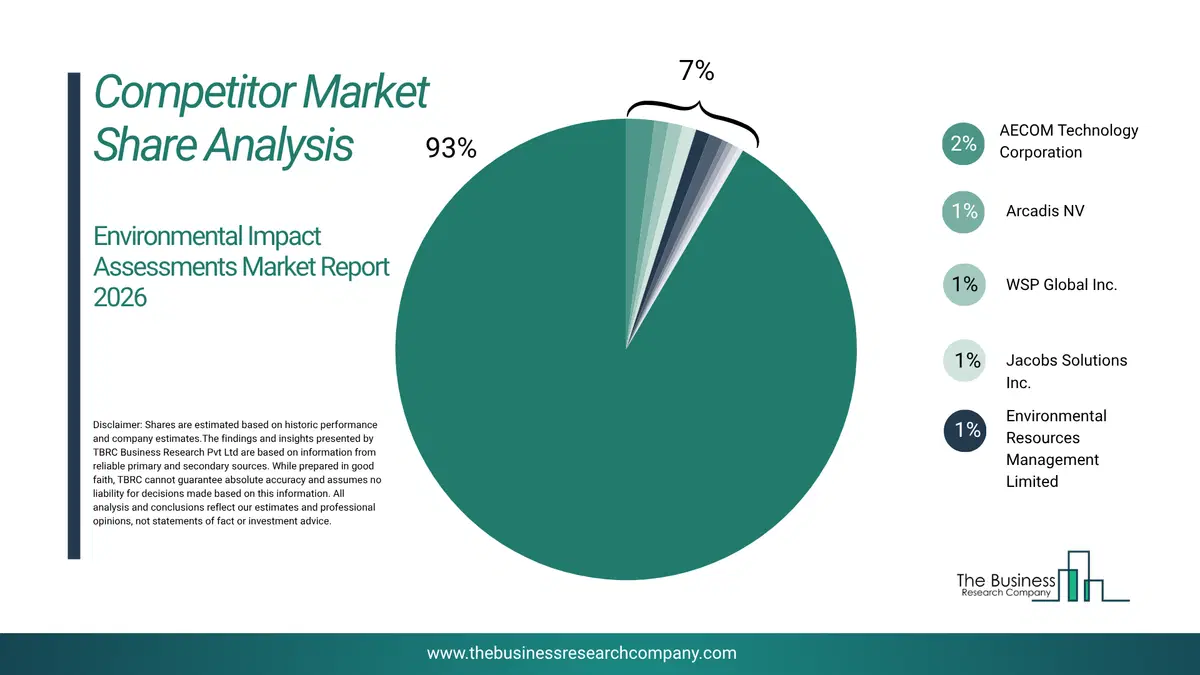
This chart is for illustrative purposes; the full report includes a detailed competitor analysis and comprehensive overview of the top 10 companies in the market.
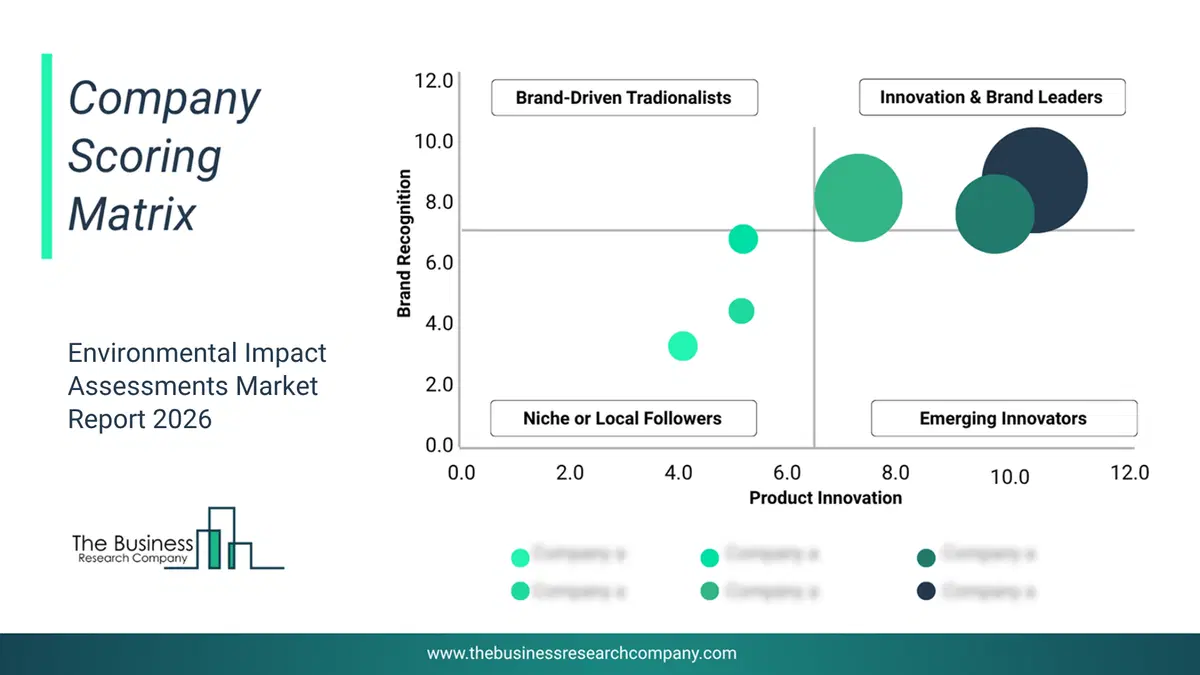
This chart maps companies by product innovation and brand strength, with bubble size indicating relative revenue, helping identify market leaders, challengers, and niche players. This is an illustrative chart; the full report provides a complete and accurate competitive analysis.
Global Environmental Impact Assessments Market Trends and Insights
Major companies operating in the environmental impact assessment market are focusing on developing innovative initiatives, such as proactive environmental impact strategy, to proactively assess and mitigate environmental impacts of strategic projects, supporting sustainable development. Proactive environmental impact strategy refers to the implementation of practices and initiatives that exceed basic legal compliance, aiming to enhance environmental performance while anticipating and addressing potential environmental challenges before they arise. For instance, in April 2023, Environment Agency Abu Dhabi (EAD), a UAE-based principal environmental authority, launched the Strategic Environmental Assessment (SEA) program. The SEA program includes structured phases like screening, scoping, impact assessment, stakeholder engagement, and ongoing monitoring, ensuring environmental considerations are integrated from the start of strategic projects. It promotes sustainable development by guiding mitigation strategies, protecting sensitive habitats, and offering early warnings of cumulative impacts, supporting the UAE's environmental and Net Zero goals.What Are Latest Mergers And Acquisitions In The Environmental Impact Assessments Market?
In July 2023, DNV, a Norway-based quality assurance and risk management company, acquired Enviroguide Consulting for an undisclosed amount. This acquisition aims to strengthen DNV's presence in the region and expand its portfolio of environmental solutions, particularly in response to increasing sustainability challenges. Enviroguide Consulting is an Ireland-based environmental consultancy offering environmental impact assessments.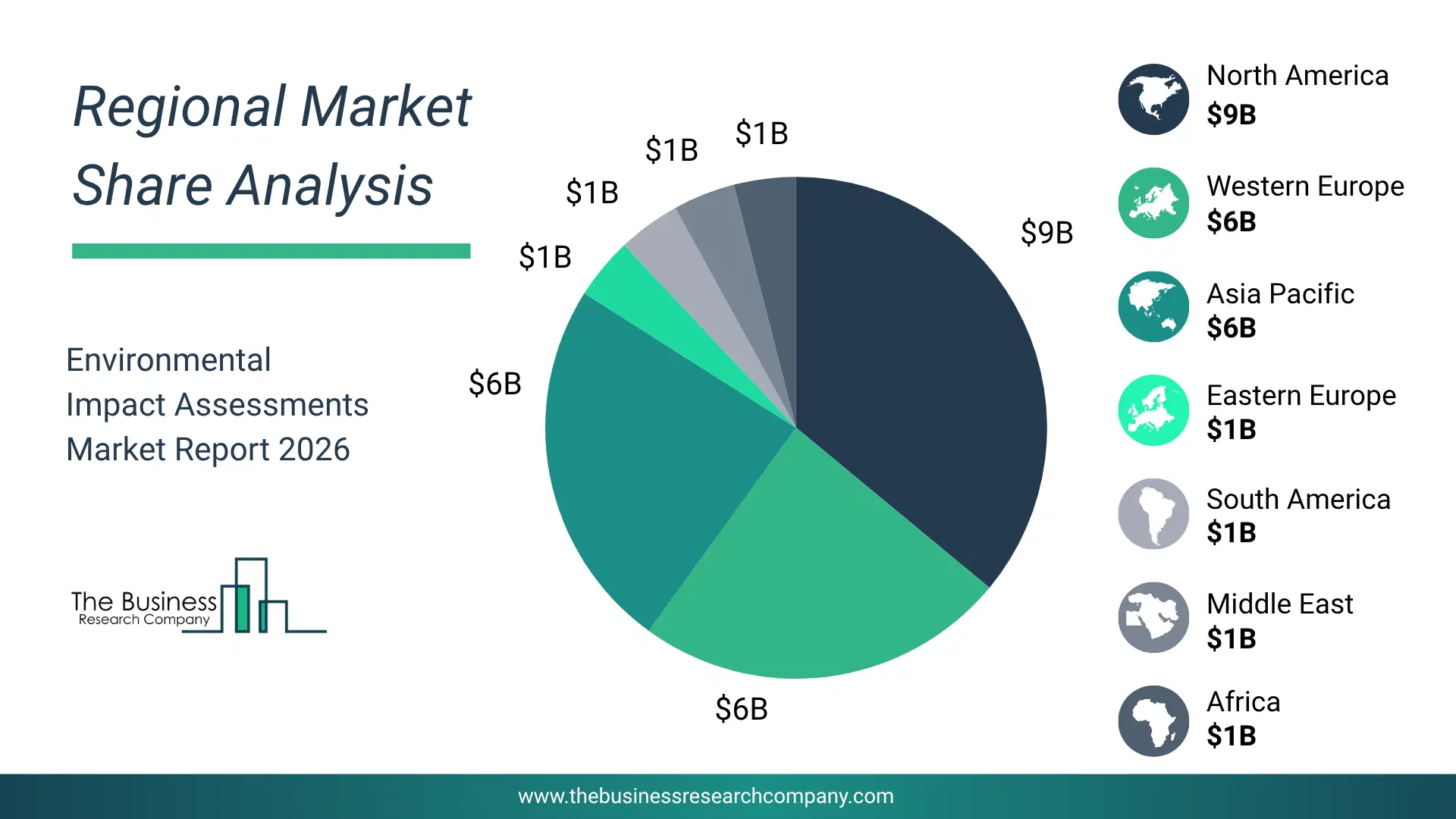
Regional Insights
North America was the largest region in the environmental impact assessments market in 2025. The regions covered in this market report are Asia-Pacific, South East Asia, Western Europe, Eastern Europe, North America, South America, Middle East, Africa. The countries covered in this market report are Australia, Brazil, China, France, Germany, India, Indonesia, Japan, Taiwan, Russia, South Korea, UK, USA, Canada, Italy, Spain.What Defines the Environmental Impact Assessments Market?
The environmental impact assessments market includes revenues earned by entities by strategic environmental assessment, cumulative environmental assessment, regional environmental assessment, project-level environmental impact assessment, environmental site assessment, and social impact assessment. The market value includes the value of related goods sold by the service provider or included within the service offering. Only goods and services traded between entities or sold to end consumers are included.How is Market Value Defined and Measured?
The market value is defined as the revenues that enterprises gain from the sale of goods and/or services within the specified market and geography through sales, grants, or donations in terms of the currency (in USD unless otherwise specified). The revenues for a specified geography are consumption values that are revenues generated by organizations in the specified geography within the market, irrespective of where they are produced. It does not include revenues from resales along the supply chain, either further along the supply chain or as part of other products.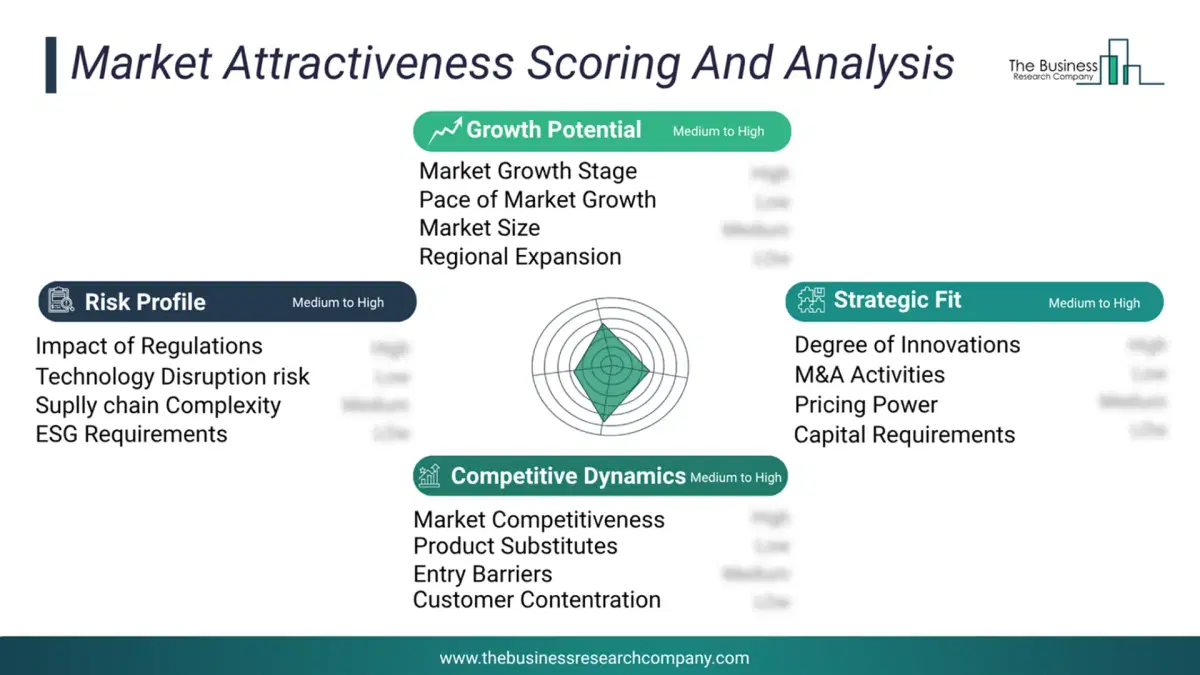
This chart presents market attractiveness based on a quantitative evaluation of growth, competition, strategic alignment, and risk, offering a clear view of opportunity areas for decision-making. This chart is for illustrative purposes; the full report contains the complete analysis.
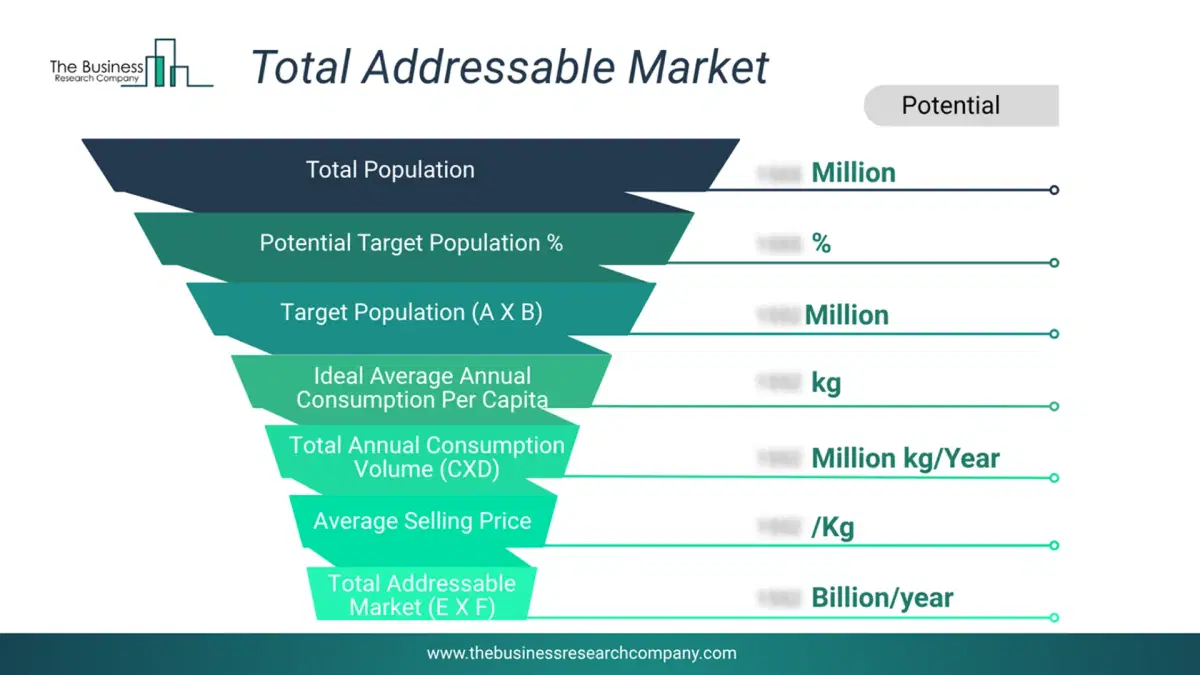
This chart highlights the Total Addressable Market (TAM) by estimating the maximum revenue opportunity using an assumption-driven approach, supporting strategic planning and opportunity sizing across markets. The chart is illustrative; the full report provides a more comprehensive analysis.
What Key Data and Analysis Are Included in the Environmental Impact Assessments Market Report 2026?
The environmental impact assessments market research report is one of a series of new reports from The Business Research Company that provides market statistics, including industry global market size, regional shares, competitors with the market share, detailed market segments, market trends and opportunities, and any further data you may need to thrive in the environmental impact assessments industry. The market research report delivers a complete perspective of everything you need, with an in-depth analysis of the current and future state of the industry.Environmental Impact Assessments Market Report Forecast Analysis
| Report Attribute | Details |
|---|---|
| Market Size Value In 2026 | $16.16 billion |
| Revenue Forecast In 2030 | $20.87 billion |
| Growth Rate | CAGR of 6.6% from 2026 to 2030 |
| Base Year For Estimation | 2025 |
| Actual Estimates/Historical Data | 2020-2025 |
| Forecast Period | 2026 - 2030 |
| Market Representation | Revenue in USD Billion and CAGR from 2026 to 2030 |
| Segments Covered | Type, Assessment Method, Application |
| Regional Scope | Asia-Pacific, Western Europe, Eastern Europe, North America, South America, Middle East, Africa |
| Country Scope | The countries covered in the report are Australia, Brazil, China, France, Germany, India, ... |
| Key Companies Profiled | AECOM Technology Corporation, Bureau Veritas SA, Stantec Inc., GHD Group, Bidwells LLP, BRE Group, BMT Group Ltd., JBA Consulting, OCA Global Corporate Service S.A., Intertek Group PLC, Aspen Environmental Group, KERAMIDA Inc., Millennium EMS Solutions Ltd., Cholamandalam MS Risk Services Ltd., CSA Ocean Sciences Inc., Japan NUS Co. Ltd., EnviroCentre Limited, NGH Environmental Pty Ltd., Enviro-Sciences Inc., WRA Inc. |
| Customization Scope | Request for Customization |
| Pricing And Purchase Options | Explore Purchase Options |