
Fatty Methyl Ester Sulfonate Market Report 2026
Global Outlook – By Packaging (Barrel, Bag, Drum, Other Packagings), By Form (Powder, Flakes, Paste), By Application (Detergents, Personal Care Products, Industrial Cleaners, Other Applications), By End-Use (Cosmetics And Personal Care, Home And Industrial Cleaning, Other End-Users) – Market Size, Trends, Strategies, and Forecast to 2030
Fatty Methyl Ester Sulfonate Market Overview
• Fatty Methyl Ester Sulfonate market size has reached to $1.9 billion in 2025 • Expected to grow to $3.73 billion in 2030 at a compound annual growth rate (CAGR) of 14.1% • Growth Driver: Driving Factors Behind The Growth Of The Fatty Methyl Ester Sulfonate Market In Relation To The Cosmetics Industry • Asia-Pacific was the largest region in 2025.What Is Covered Under Fatty Methyl Ester Sulfonate Market?
Fatty methyl ester sulfonate (FMES) is a class of anionic surfactants derived from renewable resources, typically vegetable oils. They are created by the sulfonation of fatty acid methyl esters, which are produced through the esterification of fatty acids with methanol. It is used in various household and personal care products due to its cleaning and foaming properties. The main packaging of fatty methyl ester sulfonate is barrel, bag, drum, and other packaging. A barrel is a large cylindrical container used to store and transport fatty methyl ester sulfonate (FMES) in bulk. The various forms include powder, flakes, and paste and various applications involved are detergents, personal care products, industrial cleaners and other application. The various end-users include pharmaceuticals, cosmetics and personal care, home and industrial cleaning, and other end-users.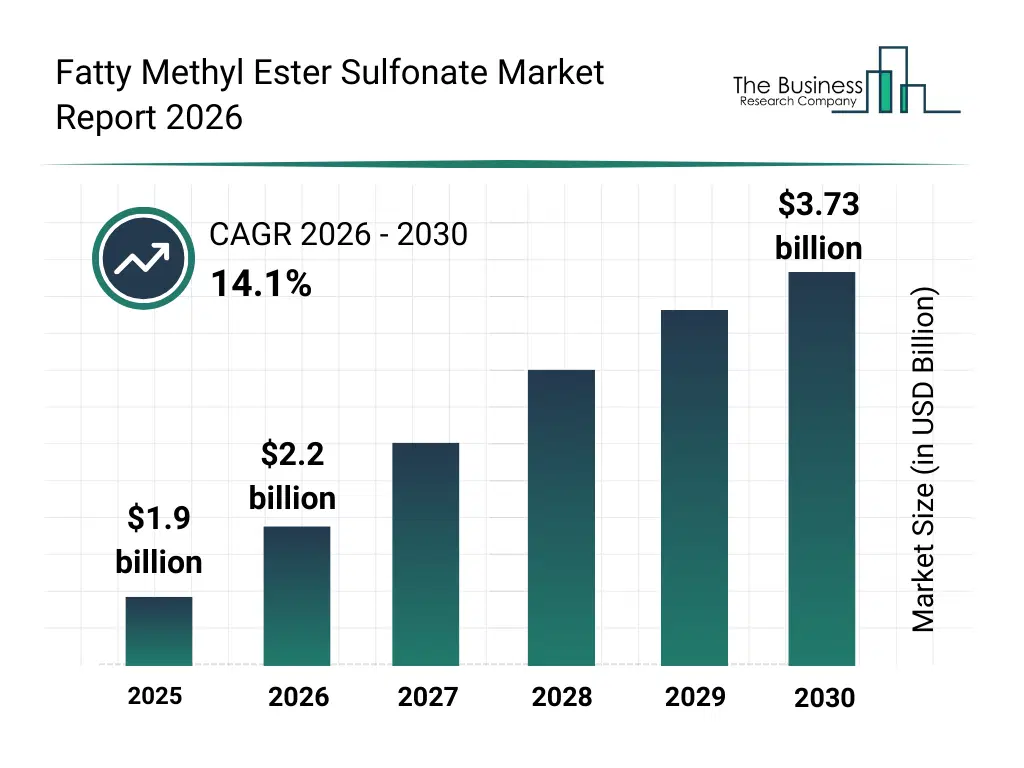
What Is The Fatty Methyl Ester Sulfonate Market Size and Share 2026?
The fatty methyl ester sulfonate market size has grown rapidly in recent years. It will grow from $1.9 billion in 2025 to $2.2 billion in 2026 at a compound annual growth rate (CAGR) of 15.9%. The growth in the historic period can be attributed to growth of detergent consumption, availability of vegetable oil feedstocks, demand for effective surfactants, expansion of home cleaning products, regulatory support for biodegradability.What Is The Fatty Methyl Ester Sulfonate Market Growth Forecast?
The fatty methyl ester sulfonate market size is expected to see rapid growth in the next few years. It will grow to $3.73 billion in 2030 at a compound annual growth rate (CAGR) of 14.1%. The growth in the forecast period can be attributed to shift toward sustainable surfactants, growth of green detergents, innovation in sulfonation processes, rising personal care demand, stricter environmental regulations. Major trends in the forecast period include increasing adoption of bio based surfactants, rising demand for eco friendly detergent ingredients, growth of natural cleaning product formulations, expansion of personal care applications, higher focus on renewable raw materials.

Global Fatty Methyl Ester Sulfonate Market Segmentation
1) By Packaging: Barrel, Bag, Drum, Other Packagings 2) By Form: Powder, Flakes, Paste 3) By Application: Detergents, Personal Care Products, Industrial Cleaners, Other Applications 4) By End-Use: Cosmetics And Personal Care, Home And Industrial Cleaning, Other End-Users Subsegments: 1) By Barrel: Small Barrels (10-20 liters), Large Barrels (50-200 liters) 2) By Bag: Small Bags (1-10 kg), Large Bags (20-50 kg) 3) By Drum: Standard Drums (100-250 kg), Heavy Duty Drums 4) By Other Packagings: Bulk Containers (IBC Totes), Canisters And Pails, Custom Packaging SolutionsWhat Are The Drivers Of The Fatty Methyl Ester Sulfonate Market?
The rapid development of the cosmetics industry is expected to propel the growth of the fatty methyl ester sulfonate market going forward. The cosmetics industry refers to the sector that produces and sells beauty and personal care products such as makeup, skincare, haircare, and fragrances. The cosmetics industry is rising due to several key factors, such as the growing demand for cosmetics, eco-friendliness and sustainability, skin-friendly properties, e-commerce, and digital marketing. Fatty methyl ester sulfonate contributes to the rapid development of the cosmetics industry due to its effective cleansing properties, mildness, eco-friendliness, formulation flexibility, and regulatory compliance. For instance, in July 2024, according to a report The Value of Beauty published by the British Beauty Council, a UK-based beauty industry organization, the personal care industry contributed $35.93 billion (£27.2 billion) to GDP in 2023, marking an 11% increase over 2022. In 2024, this contribution is expected to reach $37.12 billion (£28.1 billion), reflecting a 3% rise from 2023 and a 15% increase since 2022. Additionally, in August 2024, according to the Cosmetics Design Europe, a UK-based online news source for the cosmetics and personal care industry, the beauty industry workforce grew by 10% in 2023, reaching over 603,000 employees. Therefore, the rapid development of the cosmetics industry is driving the growth of the fatty methyl ester sulfonate industry. The increasing environmental concerns are expected to propel the growth of the fatty methyl ester sulfonate market going forward. Environmental concerns refer to issues, challenges, and threats related to the natural world and its ecosystems, often stemming from human activities. Environmental concerns are on the rise for a variety of reasons, including the adoption of sustainable habits, investments in clean technologies, support for renewable energy sources, preservation of ecosystems, and promotion of international cooperation. Fatty methyl ester sulfonate (FMES) has the potential to mitigate environmental effects through the use of renewable feedstocks, biodegradability, reduced environmental effects, preservation of aquatic habitats, and ease of regulatory compliance. For instance, March 2025, according to GOV.UK, UK-based government agency, reportd that the official England waste from households recycling rate was 44.0 per cent in 2023, up 0.6 percentage points from 43.4 per cent in 2022. Further, the total amount of waste recycled increased from 9.3 million tonnes in 2022 to 9.5 million tonnes in 2023,an increase of 2.4 per cent. Therefore, increasing environmental concerns are driving the growth of the fatty methyl ester sulfonate industry.Key Players In The Global Fatty Methyl Ester Sulfonate Market
Major companies operating in the fatty methyl ester sulfonate market are KLK OLEO, Wilmar International Ltd., Stepan Company, Clariant AG, Kao Corporation, Lion Corporation, Emery Oleochemicals, Godrej Industries, ISU Chemical, Lasenor Emul, FENCHEM, Jinchang Chemicals, Zanyu Technology Group, Guangzhou Tinci Materials Technology, Galaxy Surfactants, IOI Oleochemical, Musim Mas, Oleon NV, PT Ecogreen Oleochemicals, Vantage Specialty Chemicals.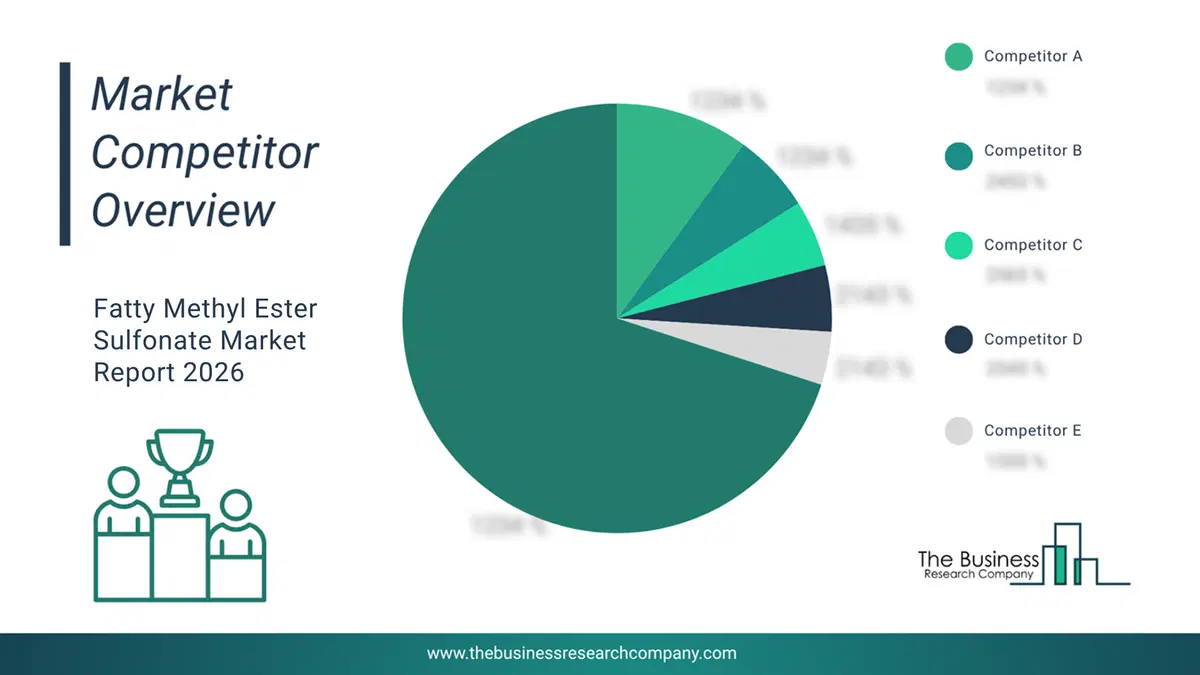
This chart is for illustrative purposes; the full report includes a detailed competitor analysis and comprehensive overview of the top 10 companies in the market.
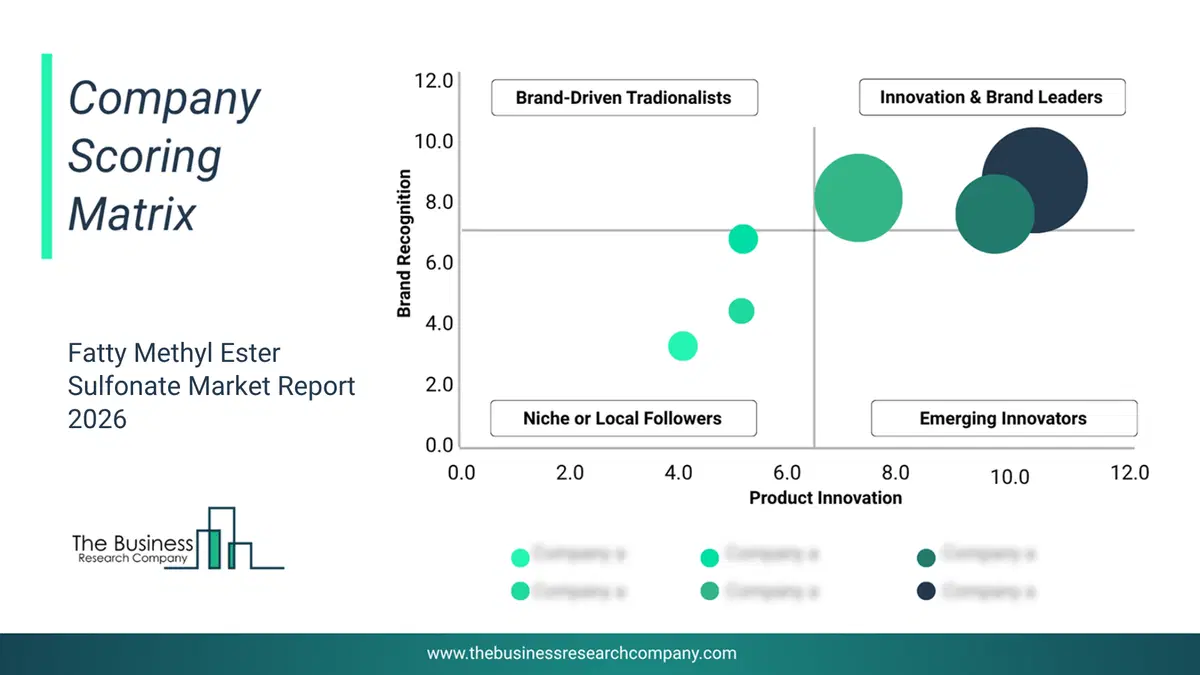
This chart maps companies by product innovation and brand strength, with bubble size indicating relative revenue, helping identify market leaders, challengers, and niche players. This is an illustrative chart; the full report provides a complete and accurate competitive analysis.
What Are Latest Mergers And Acquisitions In The Fatty Methyl Ester Sulfonate Market?
In April 2023, KLK Emmerich GmbH, a Germany-based oleochemical producer company, acquired Temix Oleo for an undisclosed amount. Through this acquisition, KLK Emmerich GmbH aims to strategically enhance its product portfolio and geographic presence in the oleochemical industry, with a focus on sustainability and innovation. Temix Oleo SpA is an Italy-based oleochemical company that provides fatty methyl ester sulfonates.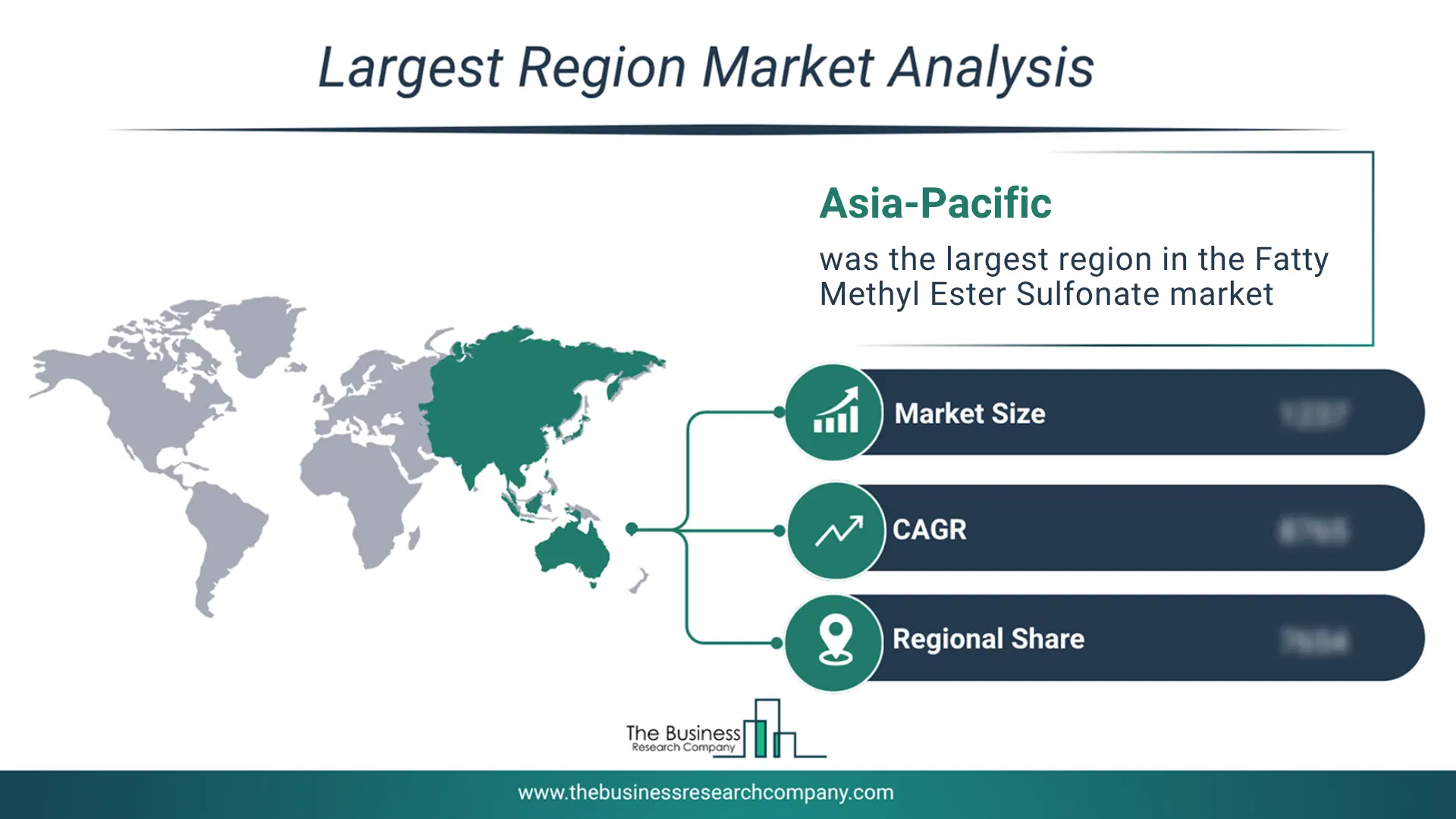
Regional Insights
Asia-Pacific was the largest region in the fatty methyl ester sulfonate market in 2025. The regions covered in this market report are Asia-Pacific, South East Asia, Western Europe, Eastern Europe, North America, South America, Middle East, Africa The countries covered in this market report are Australia, Brazil, China, France, Germany, India, Indonesia, Japan, Taiwan, Russia, South Korea, UK, USA, Canada, Italy, SpainWhat Defines the Fatty Methyl Ester Sulfonate Market?
The fatty methyl ester sulfonate market consists of sales of laundry detergents, softening agents, household cleaners, and viscosity modifiers. Values in this market are ‘factory gate’ values, that is the value of goods sold by the manufacturers or creators of the goods, whether to other entities (including downstream manufacturers, wholesalers, distributors and retailers) or directly to end customers. The value of goods in this market includes related services sold by the creators of the goods.How is Market Value Defined and Measured?
The market value is defined as the revenues that enterprises gain from the sale of goods and/or services within the specified market and geography through sales, grants, or donations in terms of the currency (in USD unless otherwise specified). The revenues for a specified geography are consumption values that are revenues generated by organizations in the specified geography within the market, irrespective of where they are produced. It does not include revenues from resales along the supply chain, either further along the supply chain or as part of other products.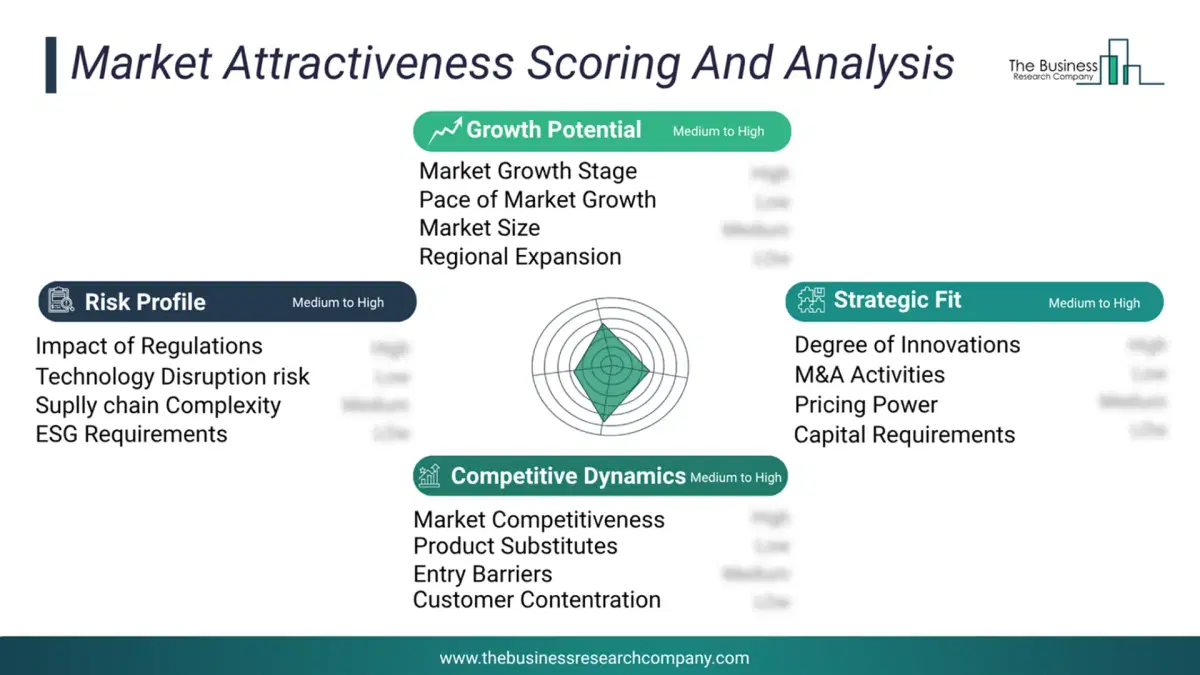
This chart presents market attractiveness based on a quantitative evaluation of growth, competition, strategic alignment, and risk, offering a clear view of opportunity areas for decision-making. This chart is for illustrative purposes; the full report contains the complete analysis.
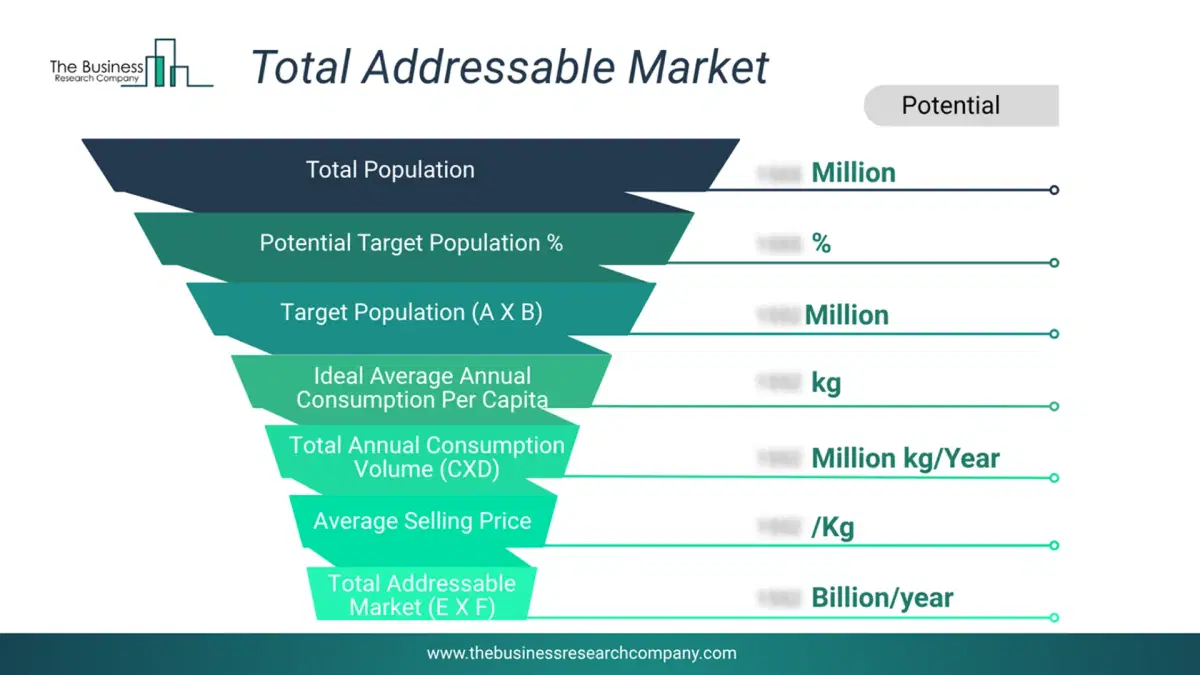
This chart highlights the Total Addressable Market (TAM) by estimating the maximum revenue opportunity using an assumption-driven approach, supporting strategic planning and opportunity sizing across markets. The chart is illustrative; the full report provides a more comprehensive analysis.
What Key Data and Analysis Are Included in the Fatty Methyl Ester Sulfonate Market Report 2026?
The fatty methyl ester sulfonate market research report is one of a series of new reports from The Business Research Company that provides market statistics, including industry global market size, regional shares, competitors with the market share, detailed market segments, market trends and opportunities, and any further data you may need to thrive in the fatty methyl ester sulfonate industry. The market research report delivers a complete perspective of everything you need, with an in-depth analysis of the current and future state of the industry.Fatty Methyl Ester Sulfonate Market Report Forecast Analysis
| Report Attribute | Details |
|---|---|
| Market Size Value In 2026 | $2.2 billion |
| Revenue Forecast In 2030 | $3.73 billion |
| Growth Rate | CAGR of 15.9% from 2026 to 2030 |
| Base Year For Estimation | 2025 |
| Actual Estimates/Historical Data | 2020-2025 |
| Forecast Period | 2026 - 2030 |
| Market Representation | Revenue in USD Billion and CAGR from 2026 to 2030 |
| Segments Covered | Packaging, Form, Application, End-Use |
| Regional Scope | Asia-Pacific, Western Europe, Eastern Europe, North America, South America, Middle East, Africa |
| Country Scope | The countries covered in this market report are Australia, Brazil, China, France, Germany, India, Indonesia, Japan, Taiwan, Russia, South Korea, UK, USA, Canada, Italy, Spain |
| Key Companies Profiled | KLK OLEO, Wilmar International Ltd., Stepan Company, Clariant AG, Kao Corporation, Lion Corporation, Emery Oleochemicals, Godrej Industries, ISU Chemical, Lasenor Emul, FENCHEM, Jinchang Chemicals, Zanyu Technology Group, Guangzhou Tinci Materials Technology, Galaxy Surfactants, IOI Oleochemical, Musim Mas, Oleon NV, PT Ecogreen Oleochemicals, Vantage Specialty Chemicals. |
| Customization Scope | Request for Customization |
| Pricing And Purchase Options | Explore Purchase Options |