
Flooring Adhesive Market Report 2026
Global Outlook – By Type (Urethane, Epoxy, Acrylic, Vinyl, Other Types), By Technology (Water-Based Adhesive, Solvent-Based Adhesive, Hot-Melt Based Adhesive ), By Application (Tile And Stone, Carpet, Wood, Laminate, Other Applications), By End User (Residential, Commercial, Industrial) – Market Size, Trends, Strategies, and Forecast to 2030
Flooring Adhesive Market Overview
• Flooring Adhesive market size has reached to $9.13 billion in 2025 • Expected to grow to $12.81 billion in 2030 at a compound annual growth rate (CAGR) of 6.8% • Growth Driver: Construction Sector’S Ascendance Fuelling The Surge In The Flooring Adhesive Market • Market Trend: Advancements In Eco-Friendly Single-Component Wood Flooring Adhesives • Asia-Pacific was the largest region and fastest growing region.Market Gains By 2030 – Top Opportunities By Segment
Market Gain identifies the most promising market opportunities by highlighting the segments or products expected to generate the highest incremental revenue growth over the next five years.
What Is Covered Under Flooring Adhesive Market?
Flooring adhesive refers to a strong, long-lasting glue that is used to hold the flooring components to the subfloor or underlayment. The adhesive must hold the floor tiles in place and connect them to the underlying floor. It is a sticky substance used to secure the floor. The main types of flooring adhesives include urethane, epoxy, acrylic, vinyl, and others. Urethane adhesive is a thermoplastic polymer-based glue. It is formed by a chemical reaction between the polymers. Epoxies are created by polymerizing a mixture of two starting compounds, the resin and the hardener. An acrylic adhesive is a resin-based adhesive that is made up of acrylic or methylacrylic polymers. Vinyl adhesive is the perfect solution to rips and tears. It is commonly used as a floor tile adhesive. Flooring adhesives have applications in tile and stone, carpets, wood, laminates, and others. By technology, types of flooring adhesives include water-based adhesives, solvent-based adhesives, and hot-melt-based adhesives. Flooring adhesives are used in residential, commercial, and industrial areas.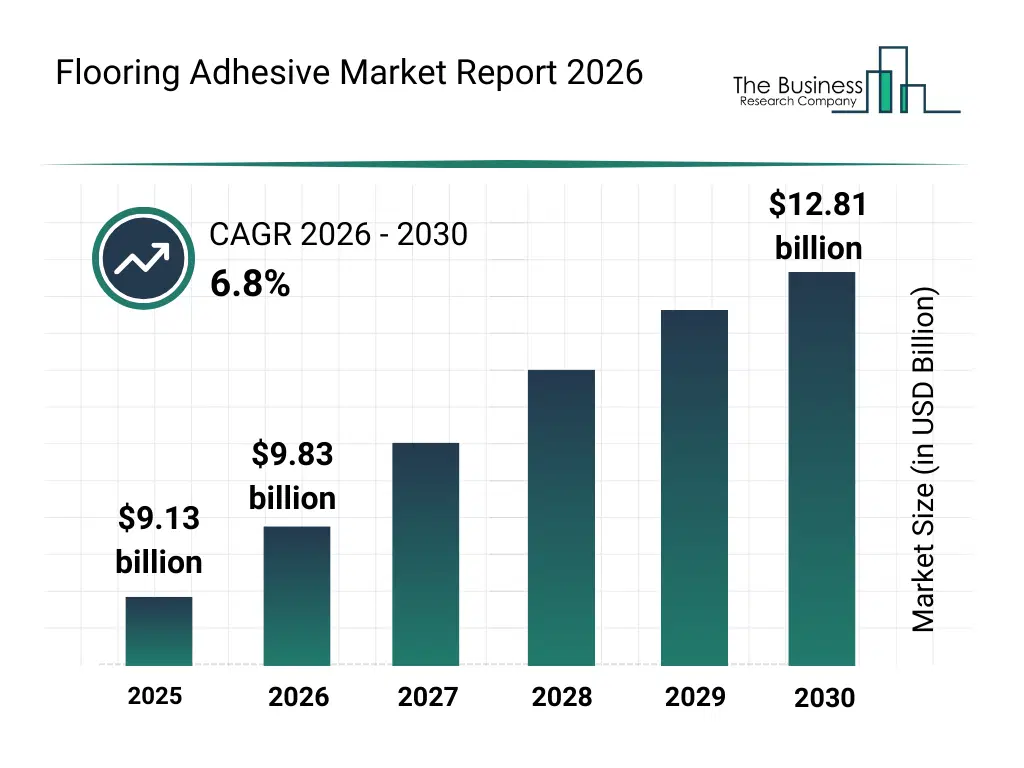
What Is The Flooring Adhesive Market Size and Share 2026?
The flooring adhesive market size has grown strongly in recent years. It will grow from $9.13 billion in 2025 to $9.83 billion in 2026 at a compound annual growth rate (CAGR) of 7.6%. The growth in the historic period can be attributed to growth of residential and commercial construction, rising demand for durable flooring solutions, increasing adoption of modular flooring systems, expansion of urban infrastructure projects, availability of diverse adhesive formulations.What Is The Flooring Adhesive Market Growth Forecast?
The flooring adhesive market size is expected to see strong growth in the next few years. It will grow to $12.81 billion in 2030 at a compound annual growth rate (CAGR) of 6.8%. The growth in the forecast period can be attributed to increasing focus on sustainable building materials, rising adoption of green construction practices, expansion of commercial real estate development, growing demand for moisture-resistant flooring adhesives, increasing innovation in polymer-based adhesives. Major trends in the forecast period include increasing adoption of low-voc flooring adhesives, rising demand for water-based adhesive technologies, growing use of high-performance adhesives in commercial spaces, expansion of renovation and remodeling activities, enhanced focus on adhesive durability and bond strength.
Global Flooring Adhesive Market Segmentation
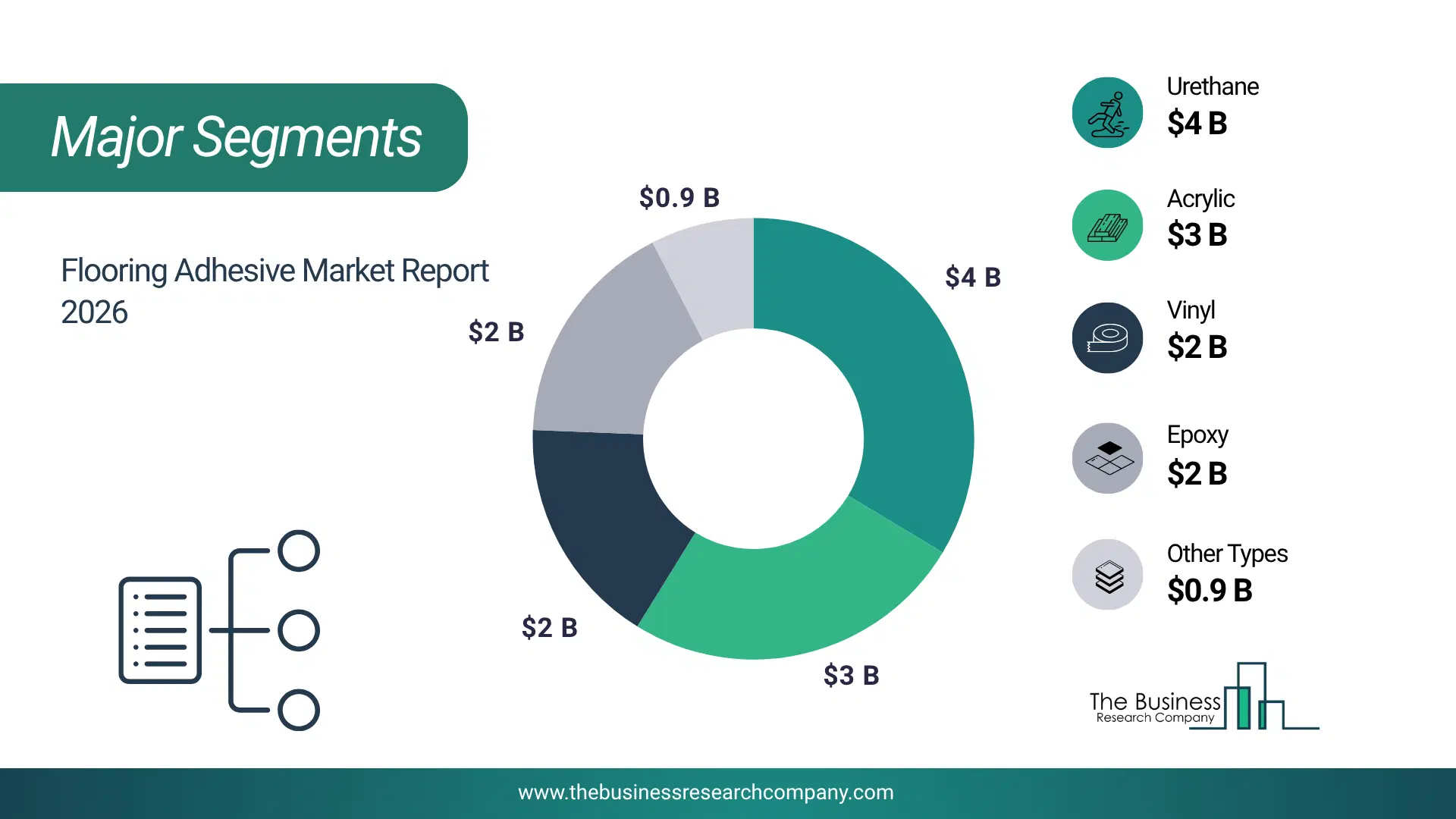
1) By Type: Urethane, Epoxy, Acrylic, Vinyl, Other Types 2) By Technology: Water-Based Adhesive, Solvent-Based Adhesive, Hot-Melt Based Adhesive 3) By Application: Tile And Stone, Carpet, Wood, Laminate, Other Applications 4) By End User: Residential, Commercial, Industrial Subsegments: 1) By Urethane: Moisture-Cured Urethane, Pre-Cured Urethane 2) By Epoxy: Two-Part Epoxy, One-Part Epoxy 3) By Acrylic: Water-Based Acrylic, Solvent-Based Acrylic 4) By Vinyl: Pressure-Sensitive Adhesives, Hot Melt Adhesives 5) By Other Types: Contact Adhesives, Polymer-Based Adhesives The top segments in the flooring adhesive market will be: • Urethane will reach $4 Billion by 2030. • Acrylic will reach $3 Billion by 2030. • Vinyl will reach $2 Billion by 2030. • Epoxy will reach $2 Billion by 2030. • Other Types will reach $0.88 Billion by 2030.What Is The Driver Of The Flooring Adhesive Market?
The rise in construction sector is expected to propel the growth of the flooring adhesive market going forward. The construction sector, also known as the construction industry, is a broad and diverse industry encompassing all activities related to the planning, design, development, construction, renovation, and maintenance of buildings and infrastructure. Flooring adhesive plays a crucial role in construction projects, providing both practical and aesthetic benefits by ensuring the proper installation, stability, and longevity of various types of floor coverings in residential, commercial, and industrial spaces. For instance, in June 2023, Construction Digital, a UK-based company that connects all construction brands published that the construction industry in the UK is projected to grow by 12% in 2024, followed by a further increase of 3% in 2025. Therefore, the rise in construction sector is driving the growth of the flooring adhesive industry.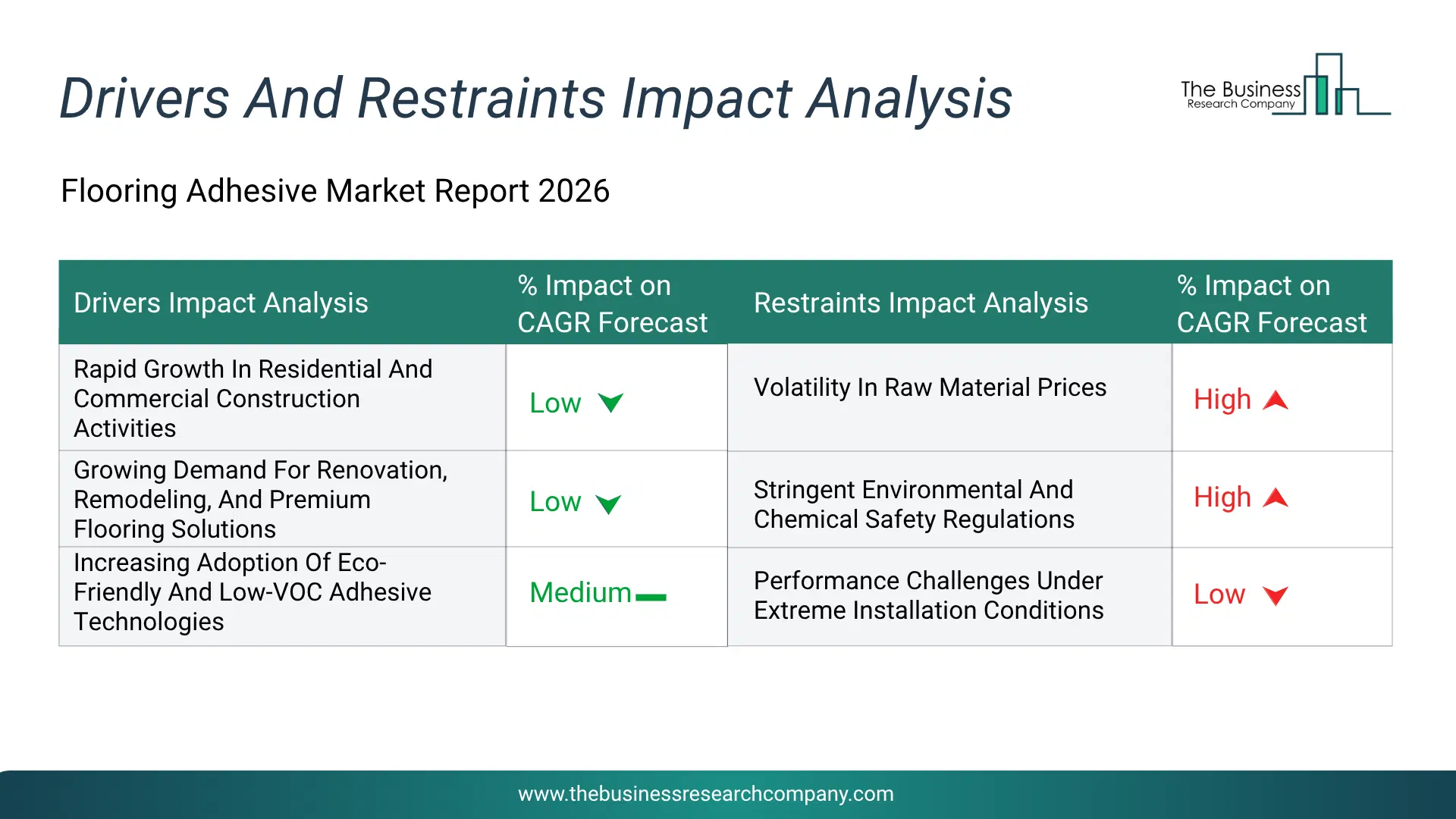
Infographic Chart Showing Key Market Drivers Analysis And Restraints For Flooring Adhesive Market
The chart presents an impact analysis of key drivers and restraints, quantifying their relative influence on the market's growth rate and helping assess the balance between growth enablers and limiting factors. This chart offers a high-level perspective; the full report contains more detailed insights.
How Will The Drivers Impact Growth In The Global Flooring Adhesive Market?
• Rapid Growth In Residential And Commercial Construction Activities (Low) – During the forecast period, the rapid growth in residential and commercial construction activities is expected to emerge as a major factor driving the expansion of the flooring adhesive market by 2030. rising investments in housing developments, office buildings, healthcare facilities, retail spaces, airports, and educational institutions are increasing the installation of ceramic tiles, vinyl flooring, engineered wood, laminates, carpets, and other floor coverings that require high-performance bonding solutions. the continued expansion of urban infrastructure and affordable housing initiatives is further supporting demand for durable flooring adhesives across global construction projects. • Growing Demand For Renovation, Remodeling, And Premium Flooring Solutions (Low) – During the forecast period, the growing demand for renovation, remodeling, and premium flooring solutions is expected to emerge as a major factor driving the expansion of the flooring adhesive market by 2030. homeowners and commercial property owners are increasingly upgrading existing spaces with modern flooring materials to improve aesthetics, functionality, and property value. these renovation projects require advanced adhesives that offer superior bonding strength, faster installation, and long-lasting performance, supporting greater adoption across residential, hospitality, healthcare, retail, and corporate environments. • Increasing Adoption Of Eco-Friendly And Low-VOC Adhesive Technologies (Medium) – During the forecast period, the increasing adoption of eco-friendly and low-VOC adhesive technologies is expected to act as a key growth catalyst for the flooring adhesive market by 2030. rising emphasis on sustainable construction and indoor air quality is encouraging manufacturers to develop water-based, solvent-free, and bio-based adhesive formulations that comply with green building standards. the growing preference for environmentally responsible building materials among architects, contractors, and consumers is accelerating the use of these advanced adhesive technologies across a wide range of flooring applications.How Will The Restraints Impact Growth In The Global Flooring Adhesive Market?
• Volatility In Raw Material Prices (Low) – During the forecast period, volatility In Raw Material Prices remains one of the most significant restraints affecting the flooring adhesive market because the production of adhesives depends heavily on petrochemical-derived raw materials such as polyurethane resins, acrylic polymers, epoxy resins, vinyl acetate monomers, solvents, plasticizers, and specialty additives. Price fluctuations caused by crude oil volatility, geopolitical conflicts, supply chain disruptions, transportation costs, inflation, and fluctuations in global chemical production directly increase manufacturing expenses. These unpredictable cost variations reduce manufacturers' profit margins and make pricing strategies more challenging. Small and medium-sized adhesive producers are particularly vulnerable because they have limited purchasing power and lower ability to absorb rising raw material costs. Consequently, unstable raw material pricing creates uncertainty throughout the supply chain, discourages long-term investment, and restrains overall market growth. • Stringent Environmental And Chemical Safety Regulations (Low) – During the forecast period, stringent Environmental And Chemical Safety Regulations present a considerable challenge for flooring adhesive manufacturers by increasing compliance costs and extending product development timelines. Traditional solvent-based adhesives often contain volatile organic compounds (VOCs) and other chemicals that are subject to increasingly strict environmental regulations across North America, Europe, and several Asia-Pacific countries. To comply with these standards, manufacturers must invest in extensive research and development, reformulate existing products, conduct comprehensive safety testing, obtain environmental certifications, and continuously monitor regulatory updates. These activities significantly increase production costs and require ongoing capital investment. Smaller manufacturers may struggle to meet these evolving requirements, reducing their competitiveness and limiting market participation. While these regulations encourage innovation in sustainable products, they also create financial and operational challenges that can slow overall market expansion. • Performance Challenges Under Extreme Installation Conditions (Medium) – During the forecast period, performance Challenges Under Extreme Installation Conditions act as a restraint because flooring adhesives must maintain reliable bonding performance under a wide range of environmental and installation conditions. Factors such as excessive moisture, high humidity, temperature fluctuations, uneven or contaminated subfloors, heavy foot traffic, and incompatible flooring materials can reduce adhesive effectiveness and lead to bond failure, curling, bubbling, cracking, or delamination. These installation failures increase maintenance expenses, repair costs, project delays, and warranty claims for contractors, flooring manufacturers, and building owners. To overcome these issues, installers often require specialized adhesives, additional surface preparation, moisture barriers, or advanced installation techniques, all of which increase overall project costs. These technical and cost-related challenges can discourage adoption, particularly in cost-sensitive construction projects and developing markets.Key Players In The Global Flooring Adhesive Market
Major companies operating in the flooring adhesive market are Mapei S.p.A., Sika AG, Henkel AG & Co. KGaA, Bostik SA, Forbo Holding AG, Pidilite Industries Limited, H.B. Fuller, LATICRETE International Inc., Ardex GmbH, Franklin Adhesives and Polymers, Ashland Inc., Akzo Nobel N.V., BASF SE, Bona AB, DAP Products Inc., Jowat SE, RPM International Inc., Soudal Holding NV, Huntsman Corporation, Wacker Chemie AG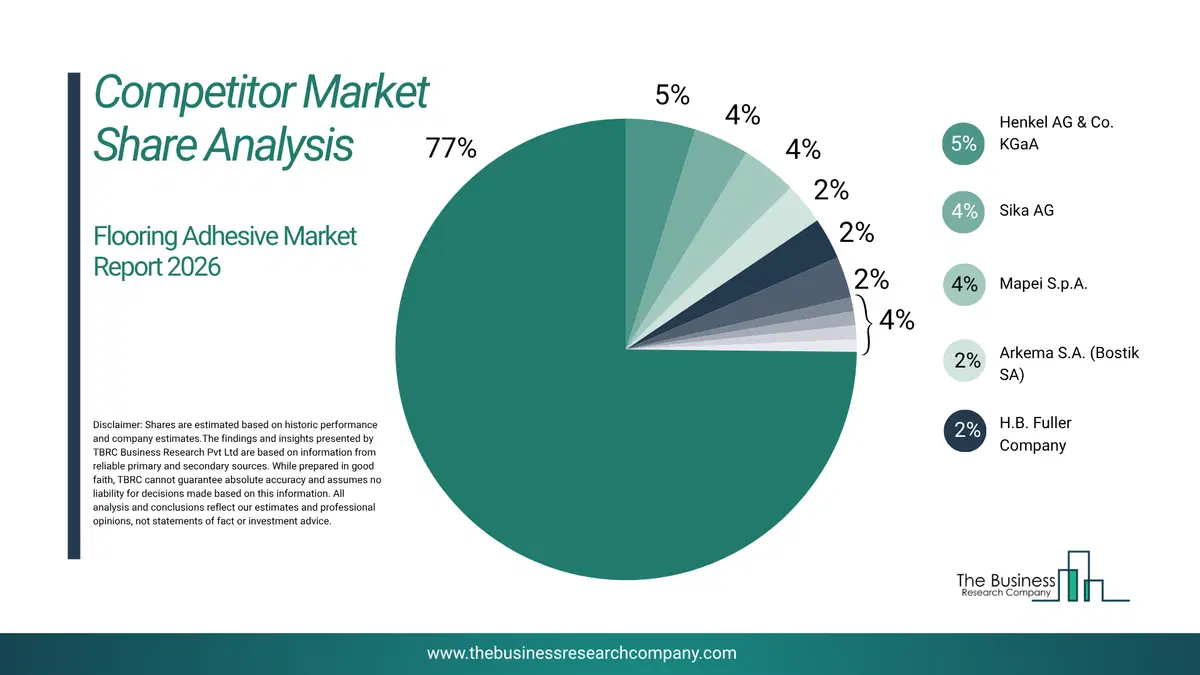
This chart is for illustrative purposes; the full report includes a detailed competitor analysis and comprehensive overview of the top 10 companies in the market.
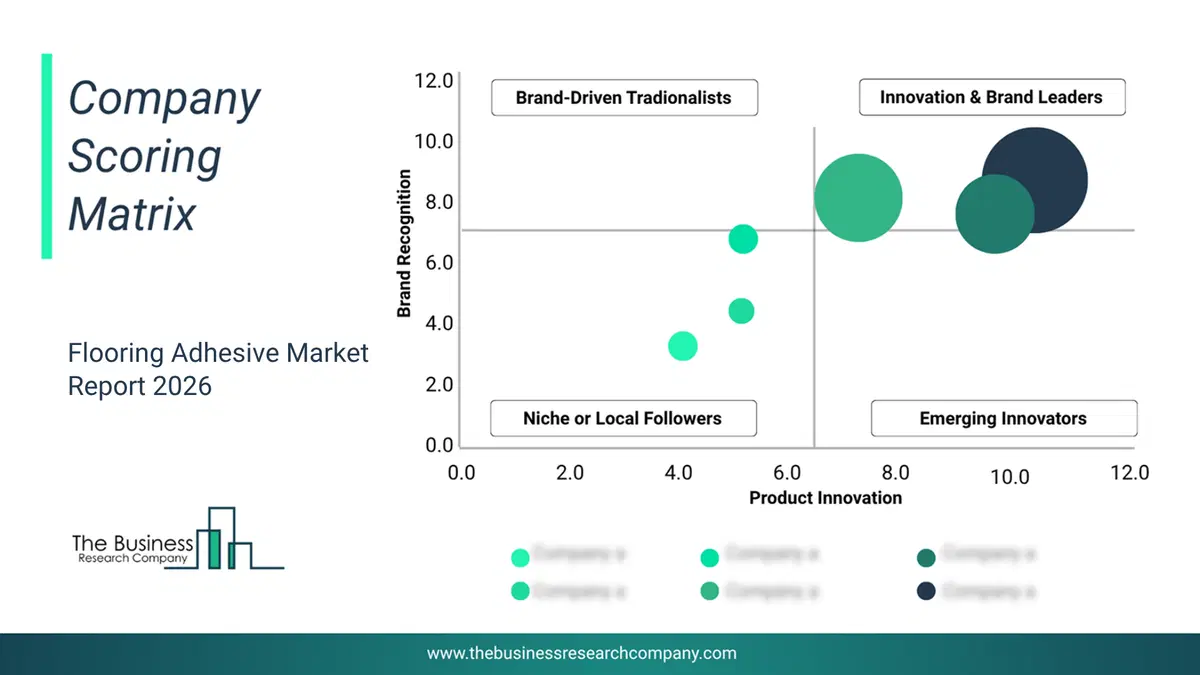
This chart maps companies by product innovation and brand strength, with bubble size indicating relative revenue, helping identify market leaders, challengers, and niche players. This is an illustrative chart; the full report provides a complete and accurate competitive analysis.
Global Flooring Adhesive Market Trends and Insights
Major companies operating in the Flooring Adhesive market are focusing on developing innovative solutions, such as single-component eco-friendly wood flooring adhesives, to meet the rising demand for sustainable and low-VOC construction materials driven by stricter environmental regulations and growing consumer awareness. Single-component eco-friendly wood flooring adhesives are designed to simplify installation by eliminating the need for mixing multiple components, while reducing harmful emissions compared to traditional multi-component or solvent-based adhesives. For instance, in February 2025, Mapei, an Italy-based multinational chemical company, launched Ultrabond Eco 987, a single-component wood flooring adhesive. This adhesive features a water-based composition that provides strong initial grab and long-term bonding strength, while being environmentally responsible with very low VOC emissions. It is easy to apply, reduces installation time, and is suitable for a variety of wooden flooring types including parquet and engineered wood. Ultrabond Eco 987 combines high-performance adhesion with user safety and environmental sustainability, offering a practical upgrade over conventional adhesives that often require mixing, generate higher emissions, or contain hazardous solvents.What Are Latest Mergers And Acquisitions In The Flooring Adhesive Market?
In March 2024, Bostik, a France-based global adhesive manufacturer, acquired Arc Building Products for an undisclosed amount. Through this acquisition, Bostik aims to expand in innovative adhesive solutions across various industries, including construction, packaging, and automotive also, enhance its market presence and product portfolio in the Oceania region. Arc Building Products is an Australia -based manufacturer of flooring adhesives.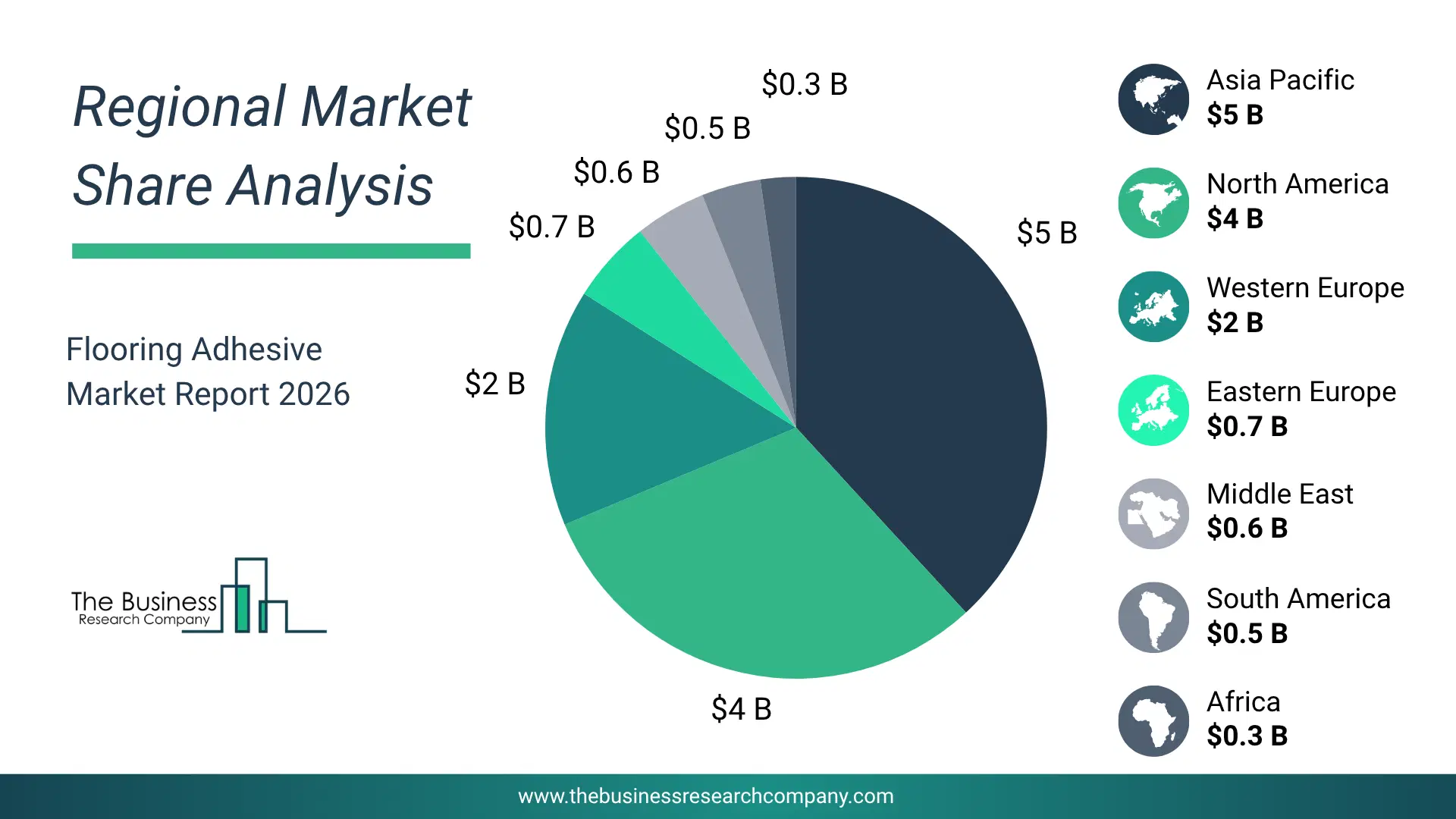
Regional Insights
Asia-Pacific was the largest region in the flooring adhesives market in 2025. Asia-Pacific is expected to be the fastest-growing region in the forecast period. The regions covered in this market report are Asia-Pacific, South East Asia, Western Europe, Eastern Europe, North America, South America, Middle East, Africa The countries covered in this market report are Australia, Brazil, China, France, Germany, India, Indonesia, Japan, Taiwan, Russia, South Korea, UK, USA, Canada, Italy, SpainWhat Defines the Flooring Adhesive Market?
The flooring adhesives market consists of sales of polymeric adhesives and dispersion adhesives. Values in this market are ‘factory gate’ values, that is the value of goods sold by the manufacturers or creators of the goods, whether to other entities (including downstream manufacturers, wholesalers, distributors, and retailers) or directly to end customers. The value of goods in this market includes related services sold by the creators of the goods.How is Market Value Defined and Measured?
The market value is defined as the revenues that enterprises gain from the sale of goods and/or services within the specified market and geography through sales, grants, or donations in terms of the currency (in USD unless otherwise specified). The revenues for a specified geography are consumption values that are revenues generated by organizations in the specified geography within the market, irrespective of where they are produced. It does not include revenues from resales along the supply chain, either further along the supply chain or as part of other products.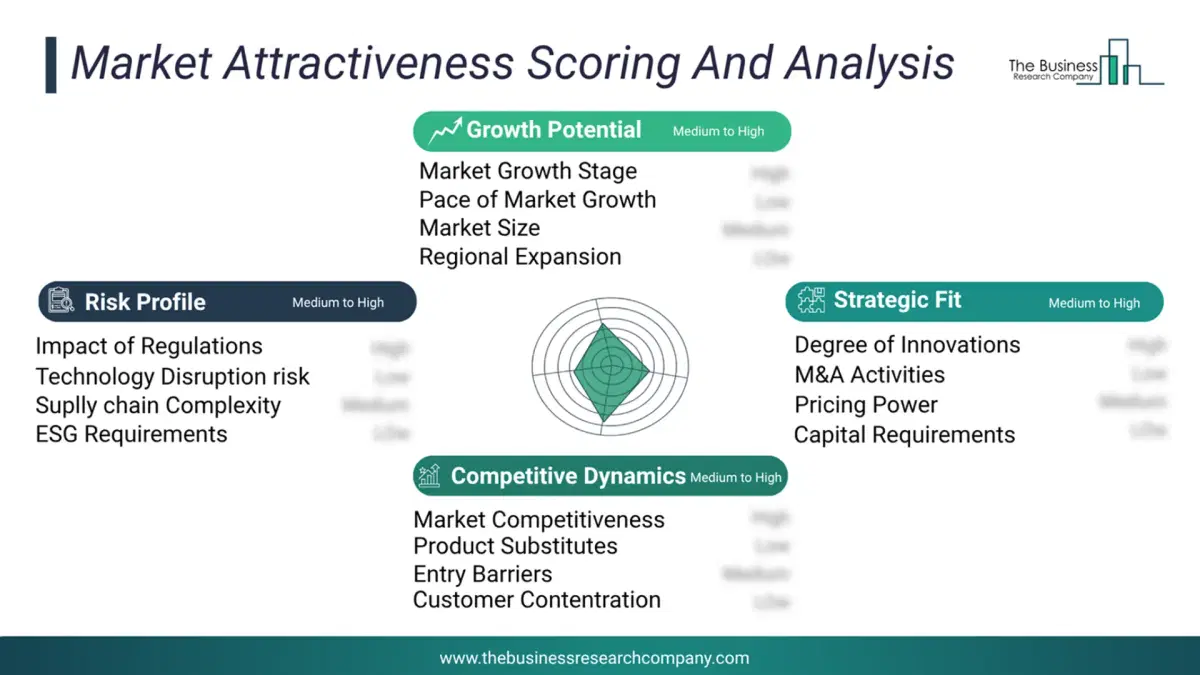
This chart presents market attractiveness based on a quantitative evaluation of growth, competition, strategic alignment, and risk, offering a clear view of opportunity areas for decision-making. This chart is for illustrative purposes; the full report contains the complete analysis.
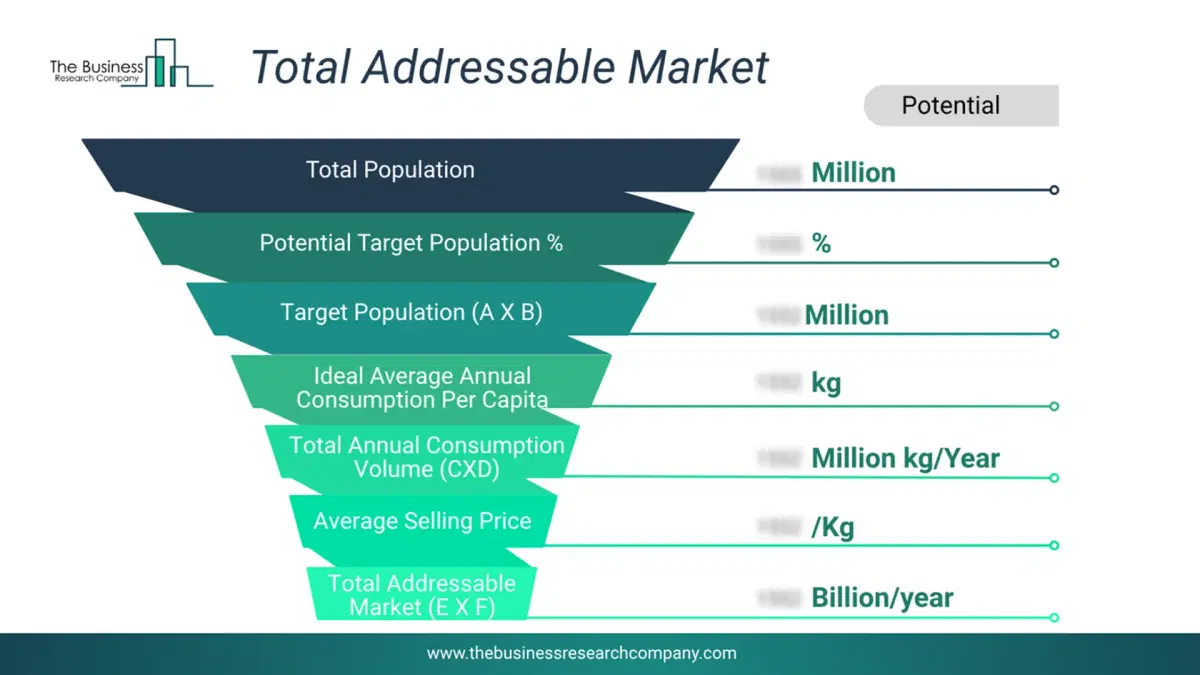
This chart highlights the Total Addressable Market (TAM) by estimating the maximum revenue opportunity using an assumption-driven approach, supporting strategic planning and opportunity sizing across markets. The chart is illustrative; the full report provides a more comprehensive analysis.
What Key Data and Analysis Are Included in the Flooring Adhesive Market Report 2026?
The flooring adhesive market research report is one of a series of new reports from The Business Research Company that provides market statistics, including industry global market size, regional shares, competitors with the market share, detailed market segments, market trends and opportunities, and any further data you may need to thrive in the flooring adhesive industry. The market research report delivers a complete perspective of everything you need, with an in-depth analysis of the current and future state of the industry.Flooring Adhesive Market Report Forecast Analysis
| Report Attribute | Details |
|---|---|
| Market Size Value In 2026 | $9.83 billion |
| Revenue Forecast In 2030 | $12.81 billion |
| Growth Rate | CAGR of 6.8% from 2026 to 2030 |
| Base Year For Estimation | 2025 |
| Actual Estimates/Historical Data | 2020-2025 |
| Forecast Period | 2026 - 2030 |
| Market Representation | Revenue in USD Billion and CAGR from 2026 to 2030 |
| Segments Covered | Type, Technology, Application, End User |
| Regional Scope | Asia-Pacific, Western Europe, Eastern Europe, North America, South America, Middle East, Africa |
| Country Scope | The countries covered in the report are Australia, Brazil, China, France, Germany, India, Indonesia, Japan, Taiwan, Russia, South Korea, UK, USA, Canada, Italy, Spain. |
| Key Companies Profiled | Mapei S.p.A., Sika AG, Henkel AG & Co. KGaA, Bostik SA, Forbo Holding AG, Pidilite Industries Limited, H.B. Fuller, LATICRETE International Inc., Ardex GmbH, Franklin Adhesives and Polymers, Ashland Inc., Akzo Nobel N.V., BASF SE, Bona AB, DAP Products Inc., Jowat SE, RPM International Inc., Soudal Holding NV, Huntsman Corporation, Wacker Chemie AG |
| Customization Scope | Request for Customization |
| Pricing And Purchase Options | Explore Purchase Options |