
Flower and Ornamental Plant Market Report 2026
Global Outlook – By Type (Potted Plants, Cut Flowers), By Distribution Channel (Offline, Online), By End-Users (Commercial, Residential) – Market Size, Trends, Strategies, and Forecast to 2030
Flower and Ornamental Plant Market Overview
• Flower and Ornamental Plant market size has reached to $50.54 billion in 2025 • Expected to grow to $83.47 billion in 2030 at a compound annual growth rate (CAGR) of 10.7% • Growth Driver: The Surging Demand For Indoor Plants And Flowers Transforms The Flower And Ornamental Plant Market • Market Trend: Innovative Pot Cultivation Strategies Is A Competitive Edge In The Flower And Ornamental Plant Market • Asia-Pacific was the largest region in 2025.Market Gains By 2030 – Top Opportunities By Segment
Market Gain identifies the most promising market opportunities by highlighting the segments or products expected to generate the highest incremental revenue growth over the next five years.
What Is Covered Under Flower and Ornamental Plant Market?
A flower and ornamental plant refer to a plant that is planted primarily for aesthetic purposes, such as screening, accent, specimen, color, or aesthetics. They are typically grown in flower gardens so that their flowers can be seen. It is a plant that is primarily produced for aesthetic purposes, such as screening, accentuation, specimen, color, or aesthetics. The main types of flowers and ornamental plants are potted plants and cut flowers. Potted plants refer to those plants that are planted and grown in containers instead of the ground. The major distribution channels include offline and online and are used by various end-users such as commercial and residential.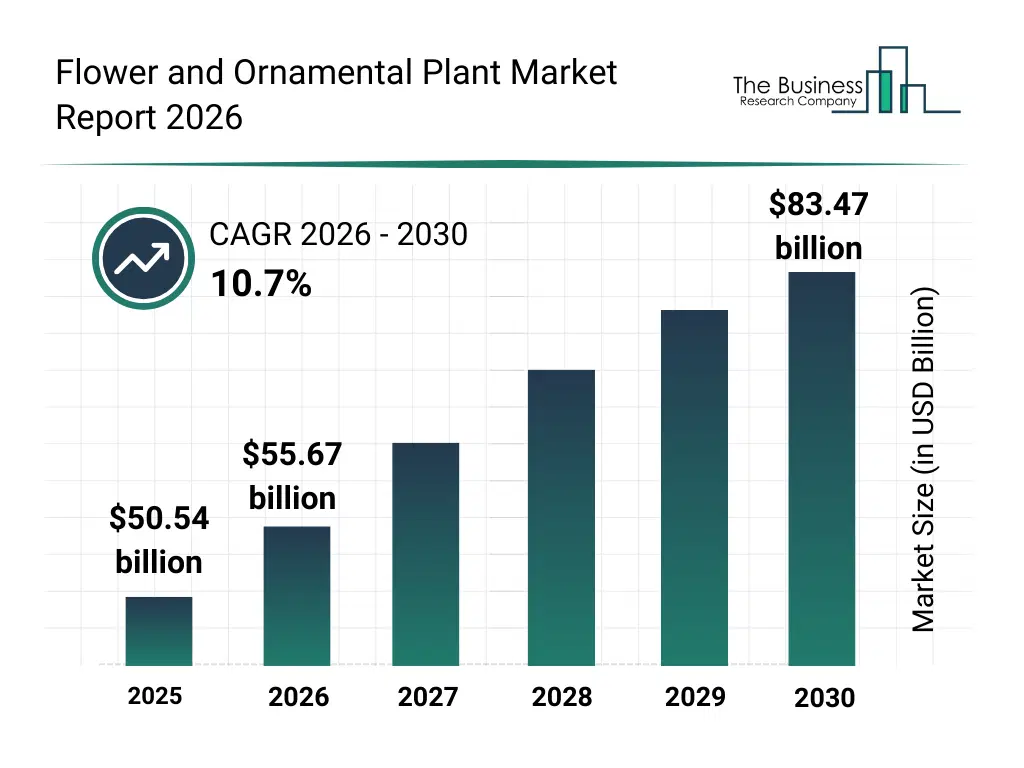
What Is The Flower and Ornamental Plant Market Size and Share 2026?
The flower and ornamental plant market size has grown rapidly in recent years. It will grow from $50.54 billion in 2025 to $55.67 billion in 2026 at a compound annual growth rate (CAGR) of 10.1%. The growth in the historic period can be attributed to long-standing cultural use of flowers, growth of traditional floriculture markets, increasing household gardening, expansion of greenhouse cultivation, rising demand for ornamental landscaping.What Is The Flower and Ornamental Plant Market Growth Forecast?
The flower and ornamental plant market size is expected to see rapid growth in the next few years. It will grow to $83.47 billion in 2030 at a compound annual growth rate (CAGR) of 10.7%. The growth in the forecast period can be attributed to rising trend of indoor greenery, increasing use of ornamental plants in corporate spaces, expansion of online flower retailing, growing demand for eco-friendly décor, rising preference for curated floral arrangements. Major trends in the forecast period include rising popularity of indoor and decorative plants, increasing demand for seasonal and exotic cut flowers, growing use of plants for aesthetic landscaping and urban greening, rising preference for low-maintenance plants such as succulents, expansion of flower gifting culture across residential and commercial settings.
Global Flower and Ornamental Plant Market Segmentation
1) By Type: Potted Plants, Cut Flowers 2) By Distribution Channel: Offline, Online 3) By End-Users: Commercial, Residential Subsegments: 1) By Potted Plants: Indoor Plants, Outdoor Plants, Perennials, Succulents And Cacti 2) By Cut Flowers: Roses, Tulips, Lilies, Carnations, Other Seasonal Flowers The top segments in the flower and ornamental plant market will be: • Cut Flowers will reach $51 Billion by 2030. • Potted Plants will reach $31 Billion by 2030.What Is Driver Of The Flower and Ornamental Plant Market?
The rising demand for indoor plants and flowers in the residential sector is expected to propel the growth of the flower and ornamental plant market going forward. Indoor flowers and plants refer to plants that are grown indoors in places such as residences and offices. Ornamental plants can be grown indoors year-round as warm-weather plants. Indoor plants have many advantages, such as reducing stress and boosting creativity, productivity, and focus. These plants can be kept indoors as long as they get plenty of sunlight. For instance, in April 2023, according to the National Gardening Association, a US-based gardening association, more than one-third of households expect to spend more on lawn and gardening products in 2023 than they did in 2022. Therefore, the rising demand for indoor plants and flowers in the residential sector is driving the growth of the flower and ornamental plant industry.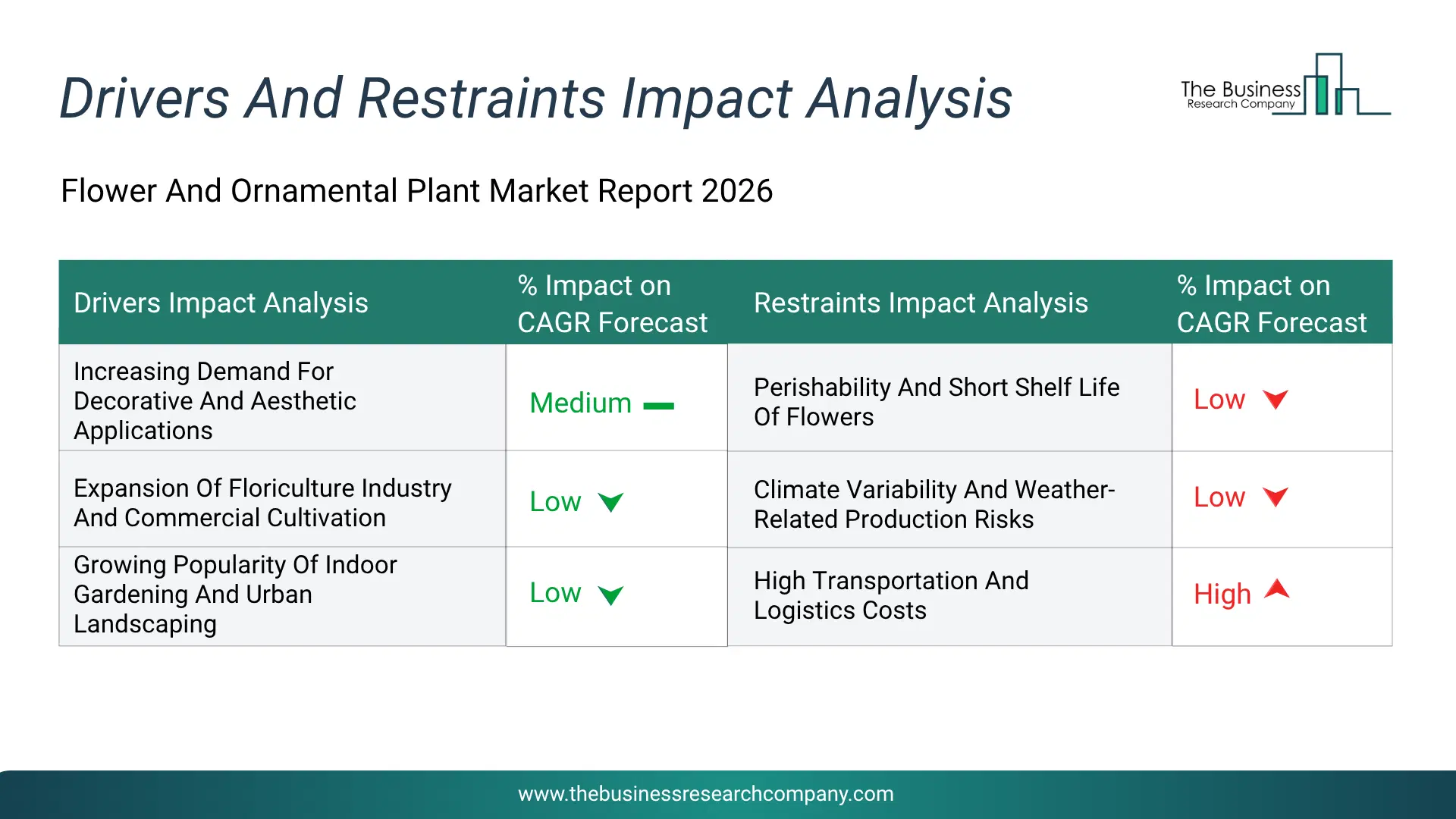
Infographic Chart Showing Key Market Drivers Analysis And Restraints For Flower And Ornamental Plant Market
The chart presents an impact analysis of key drivers and restraints, quantifying their relative influence on the market's growth rate and helping assess the balance between growth enablers and limiting factors. This chart offers a high-level perspective; the full report contains more detailed insights.
How Will The Drivers Impact Growth In The Global Flower And Ornamental Plant Market?
• Increasing Demand For Decorative And Aesthetic Applications (Medium) – During the forecast period, the increasing demand for decorative and aesthetic applications is expected to emerge as a major factor driving the expansion of the flower and ornamental plant market by 2030. rising consumer spending on home décor, landscaping, and floral arrangements is boosting the use of flowers and ornamental plants across residential, commercial, hospitality, and public spaces. strong demand from weddings, festivals, corporate events, religious ceremonies, and gifting occasions is further supporting year-round consumption, while investments in landscaping by the tourism and real estate sectors continue to strengthen market expansion. • Expansion Of Floriculture Industry And Commercial Cultivation (Low) – During the forecast period, the expansion of floriculture industry and commercial cultivation is expected to emerge as a major factor driving the expansion of the flower and ornamental plant market by 2030. growing investments in greenhouse farming, controlled-environment agriculture, tissue culture, precision irrigation, and advanced breeding technologies are improving flower quality, productivity, and year-round supply. expanding export-oriented cultivation, supported by stronger logistics networks and international trade, is also increasing global availability of premium flower varieties. • Growing Popularity Of Indoor Gardening And Urban Landscaping (Low) – During the forecast period, the growing popularity of indoor gardening and urban landscaping is expected to act as a key growth catalyst for the flower and ornamental plant market by 2030. consumers are increasingly adopting ornamental plants to enhance indoor environments and support biophilic living, while municipalities and governments continue investing in urban greening, public landscaping, and smart city initiatives. the expansion of online gardening platforms and home delivery services is further improving product accessibility and encouraging wider adoption across residential and institutional users.How Will The Restraints Impact Growth In The Global Flower And Ornamental Plant Market?
• Perishability And Short Shelf Life Of Flowers (Medium) – During the forecast period, perishability And Short Shelf Life Of Flowers remains one of the biggest challenges for the Flower and Ornamental Plant market because fresh flowers rapidly lose quality if not stored and transported under controlled conditions. Cut flowers require uninterrupted cold-chain logistics, specialized packaging, refrigerated transportation, and careful handling from growers to wholesalers and retailers. Even small delays in harvesting, transportation, or customs clearance can significantly reduce freshness, color, fragrance, and vase life, leading to substantial product wastage. Maintaining these cold-chain systems increases operational costs for producers and distributors, especially in developing countries where logistics infrastructure is less developed. Retailers also experience inventory losses due to unsold flowers nearing the end of their shelf life. These challenges reduce profitability and create barriers for expanding distribution into distant or emerging markets. • Climate Variability And Weather-Related Production Risks (Low) – During the forecast period, climate Variability And Weather-Related Production Risks continue to restrict market growth because flower cultivation is highly dependent on stable environmental conditions. Extreme weather events such as droughts, floods, heatwaves, frost, irregular rainfall, and storms can damage crops, reduce flowering quality, delay harvest cycles, and decrease overall yields. Climate change has also increased the frequency of pest infestations and plant diseases, requiring growers to spend more on crop protection and greenhouse technologies. Small and medium-sized growers are particularly vulnerable because they often lack the financial resources needed to invest in climate-controlled cultivation systems. These production uncertainties increase supply fluctuations, raise production costs, and create pricing volatility across domestic and international flower markets, limiting overall industry growth. • High Transportation And Logistics Costs (Low) – During the forecast period, high Transportation And Logistics Costs significantly restrain the Flower and Ornamental Plant market because flowers are delicate and require fast, temperature-controlled transportation throughout the supply chain. Rising fuel prices, refrigerated freight charges, packaging expenses, labor costs, and international shipping rates increase the overall cost of delivering flowers to domestic and export markets. Exporters must also comply with phytosanitary regulations, quality inspections, customs procedures, and certification requirements, adding further operational expenses. These higher logistics costs reduce profit margins for growers, wholesalers, and retailers while making premium flowers more expensive for consumers. In price-sensitive markets, rising transportation expenses can reduce purchasing volumes and limit international trade expansion, thereby slowing the overall growth of the market.Key Players In The Global Flower and Ornamental Plant Market
Major companies operating in the flower and ornamental plant market are Syngenta Flowers, Selecta Klemm GmbH & Co. KG, Monrovia Nursery Co., Kurt Weiss Greenhouses Inc., Ball Horticultural Company, Suntory Flowers Ltd., Sakata Seed, Beekenkamp Group., Dümmen Orange, Florensis, Karuturi Global Ltd., Tagawa Greenhouses, Van Belle Nursery, KP Holland, Color Spot Nurseries, Oserian Development Company, Volmary GmbH, HilverdaFlorist, Ernst Benary Samenzucht GmbH, Florexpo LLC., Afriflora Sher Ethiopia, Butters Group, Chrysal International, Marginpar B.V., Arcangeli Giovanni and Figlio, Belaya Dacha Flowers, Fides Oro, Danziger Dan Flower Farm, Kapiteyn horticulture BV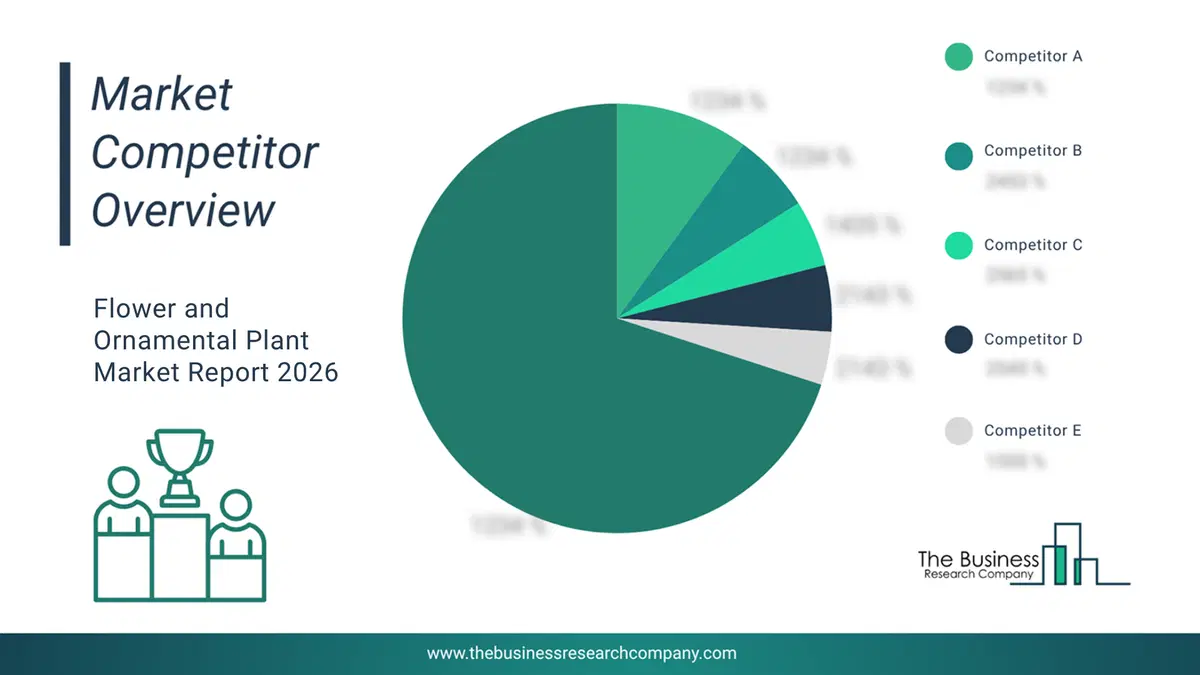
This chart is for illustrative purposes; the full report includes a detailed competitor analysis and comprehensive overview of the top 10 companies in the market.
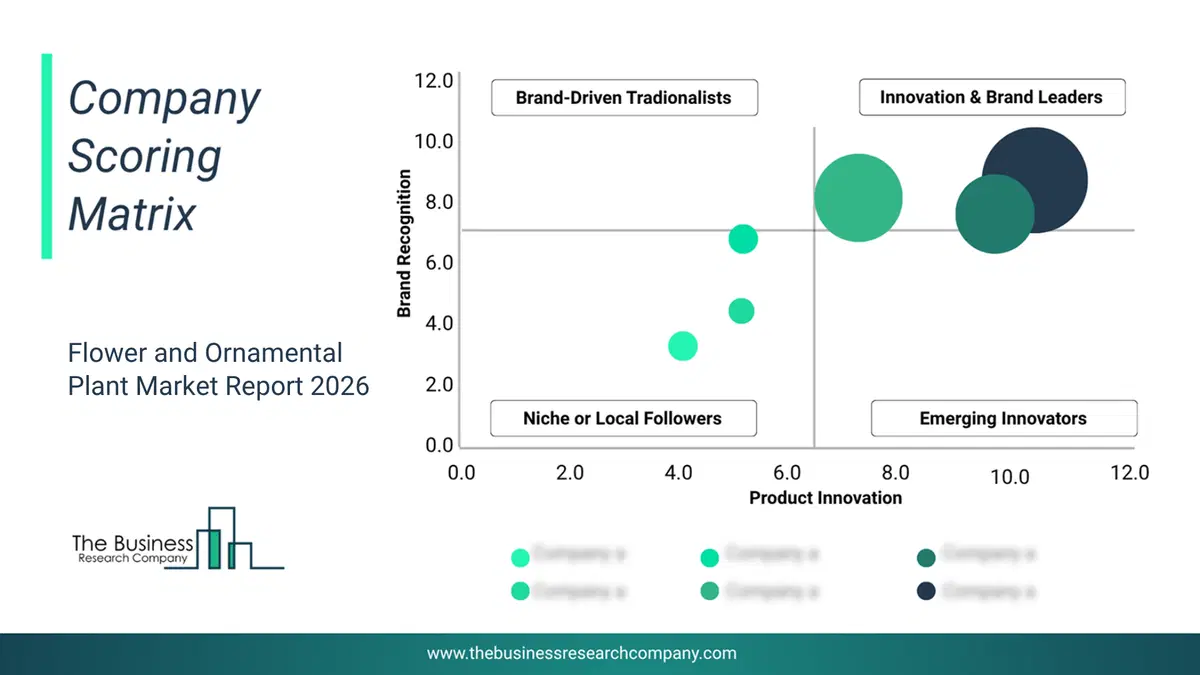
This chart maps companies by product innovation and brand strength, with bubble size indicating relative revenue, helping identify market leaders, challengers, and niche players. This is an illustrative chart; the full report provides a complete and accurate competitive analysis.
Global Flower and Ornamental Plant Market Trends and Insights
Major companies operating in the flower and ornamental plant market are developing new products such as advanced pot cultivation to gain a competitive edge in the market. Pot cultivation typically refers to cultivation that can use a variety of tools and procedures to maximize plant development and productivity and is frequently utilized for growing plants indoors or in controlled surroundings. For instance, in October 2023, Dummen Orange Holding B.V., a Netherlands-based company specializing in the breeding and development of flowers and plants, launched the new Suntaste Pot chrysanthemum series. The Suntaste line is an extension of Dummen Orange's continuous endeavors to provide cutting-edge and superior plant varieties to the market, thereby reinforcing its standing as a preeminent Dutch plant breeder and propagator. In order to satisfy the tastes of producers and buyers, this series aims to offer distinctive and colorful options for potted chrysanthemums. This series is perfect for year-round production in several pot sizes in four appealing hues because it has petite, anemone-like flowers and comes in a range of vivid colors.What Are Latest Mergers And Acquisitions In The Flower and Ornamental Plant Market? Hasfarm Holdings Acquires Lynch Group Holdings To Form Regional Floriculture Leader
In August 2025, Hasfarm Holdings Limited, a Hong Kong-based floriculture company, acquired Lynch Group Holdings Limited for $178.1 million (A$270 million). With this acquisition, Hasfarm aims to create a leading, vertically integrated floriculture company in the Asia-Pacific region by expanding production, distribution, and logistics capabilities and gaining greater access to premium flower markets in China, Japan, and Australia. Lynch Group Holdings Limited is an Australia-based flower company engaged in the growing, wholesaling, and retailing of floral and plant products.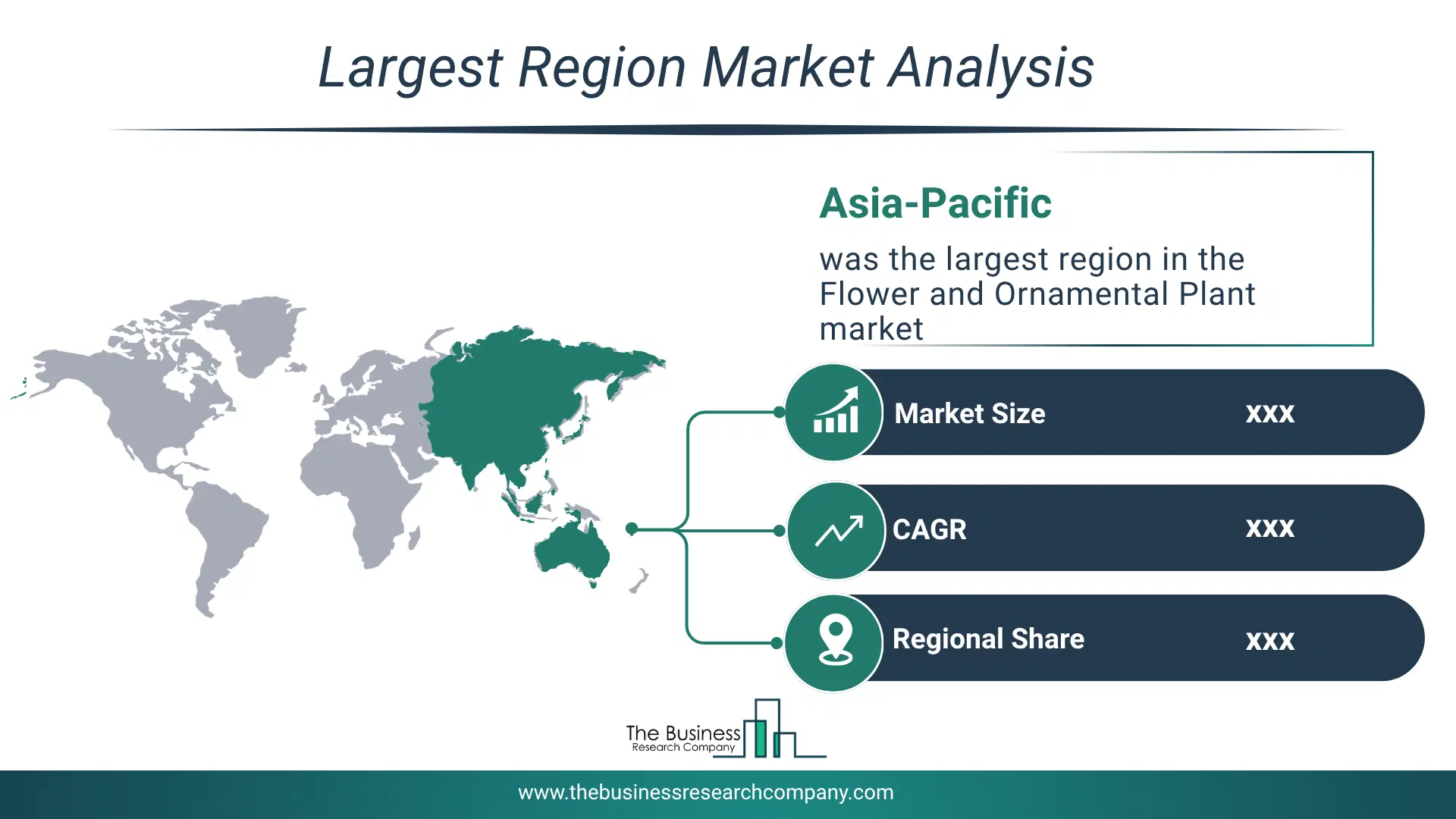
Regional Outlook
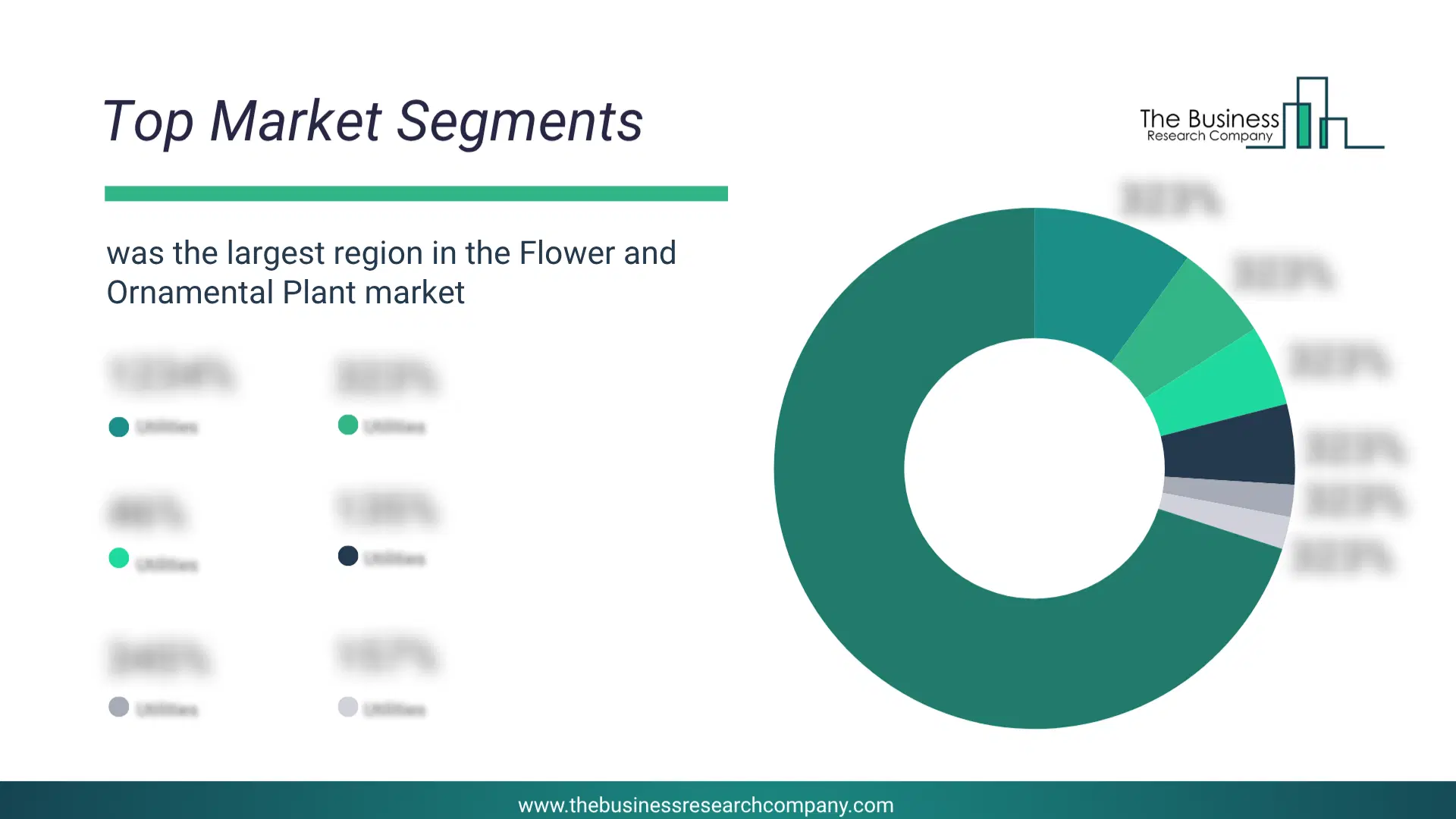
Asia-Pacific was the largest region in the flowers and ornamental market in 2025. The regions covered in this market report are Asia-Pacific, South East Asia, Western Europe, Eastern Europe, North America, South America, Middle East, Africa. The countries covered in this market report are Australia, Brazil, China, France, Germany, India, Indonesia, Japan, Taiwan, Russia, South Korea, UK, USA, Canada, Italy, SpainWhat Defines the Flower and Ornamental Plant Market?
The flower and ornamental plant market consists of sales of aquatic, perennial, and annual plants. alues in this market are ‘factory gate’ values, that is the value of goods sold by the manufacturers or creators of the goods, whether to other entities (including downstream manufacturers, wholesalers, distributors and retailers) or directly to end customers. The market value includes the value of related goods sold by the service provider or included within the service offering.How is Market Value Defined and Measured?
The market value is defined as the revenues that enterprises gain from the sale of goods and/or services within the specified market and geography through sales, grants, or donations in terms of the currency (in USD unless otherwise specified). The revenues for a specified geography are consumption values that are revenues generated by organizations in the specified geography within the market, irrespective of where they are produced. It does not include revenues from resales along the supply chain, either further along the supply chain or as part of other products.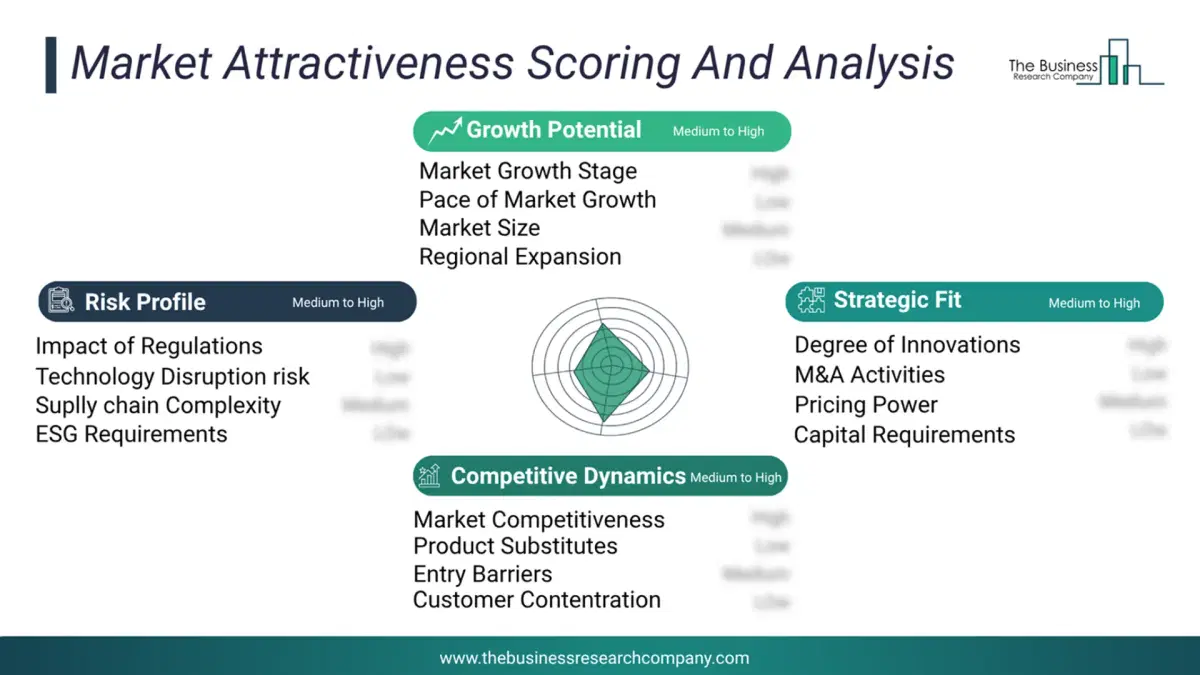
This chart presents market attractiveness based on a quantitative evaluation of growth, competition, strategic alignment, and risk, offering a clear view of opportunity areas for decision-making. This chart is for illustrative purposes; the full report contains the complete analysis.
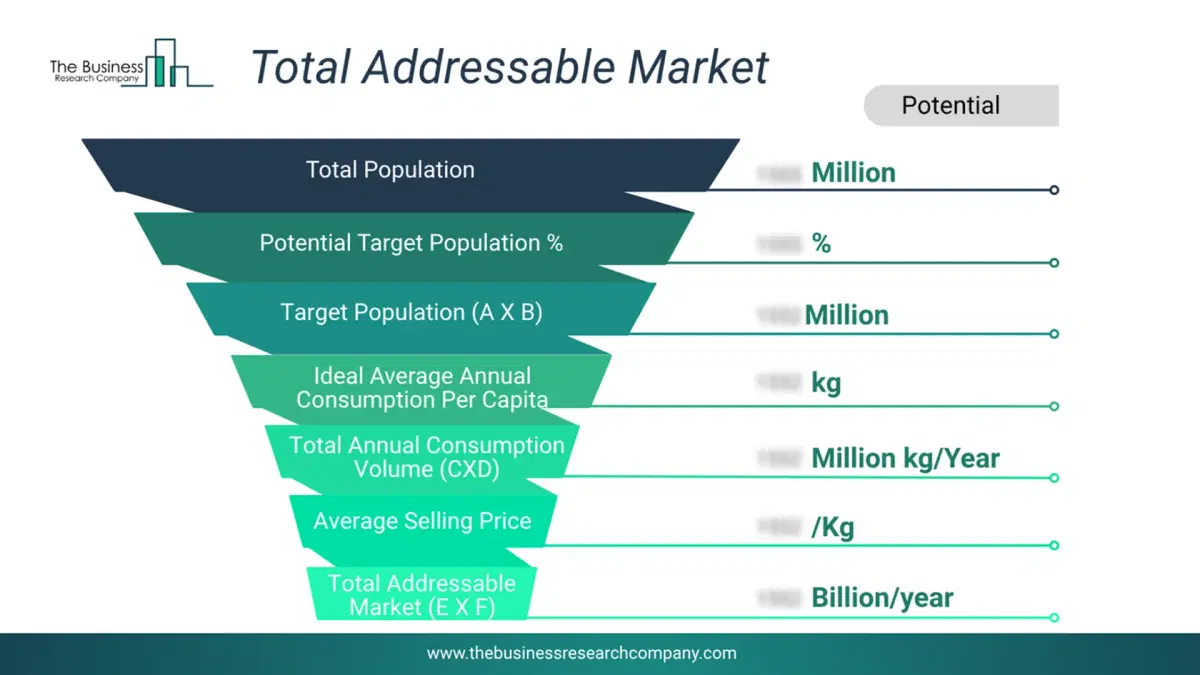
This chart highlights the Total Addressable Market (TAM) by estimating the maximum revenue opportunity using an assumption-driven approach, supporting strategic planning and opportunity sizing across markets. The chart is illustrative; the full report provides a more comprehensive analysis.
What Key Data and Analysis Are Included in the Flower and Ornamental Plant Market Report 2026?
The flower and ornamental plant market research report is one of a series of new reports from The Business Research Company that provides market statistics, including industry global market size, regional shares, competitors with the market share, detailed market segments, market trends and opportunities, and any further data you may need to thrive in the flower and ornamental plant industry. The market research report delivers a complete perspective of everything you need, with an in-depth analysis of the current and future state of the industry.Flower and Ornamental Plant Market Report Forecast Analysis
| Report Attribute | Details |
|---|---|
| Market Size Value In 2026 | $55.67 billion |
| Revenue Forecast In 2030 | $5.72 billion |
| Growth Rate | CAGR of 10.7% from 2026 to 2030 |
| Base Year For Estimation | 2025 |
| Actual Estimates/Historical Data | 2020-2025 |
| Forecast Period | 2026 - 2030 |
| Market Representation | Revenue in USD Billion and CAGR from 2026 to 2030 |
| Segments Covered | Type, Distribution Channel, End-Users |
| Regional Scope | Asia-Pacific, Western Europe, Eastern Europe, North America, South America, Middle East, Africa |
| Country Scope | The countries covered in the report are Australia, Brazil, China, France, Germany, India, Indonesia, Japan, Taiwan, Russia, South Korea, UK, USA, Canada, Italy, Spain. |
| Key Companies Profiled | Syngenta Flowers, Selecta Klemm GmbH & Co. KG, Monrovia Nursery Co., Kurt Weiss Greenhouses Inc., Ball Horticultural Company, Suntory Flowers Ltd., Sakata Seed, Beekenkamp Group., Dümmen Orange, Florensis, Karuturi Global Ltd., Tagawa Greenhouses, Van Belle Nursery, KP Holland, Color Spot Nurseries, Oserian Development Company, Volmary GmbH, HilverdaFlorist, Ernst Benary Samenzucht GmbH, Florexpo LLC., Afriflora Sher Ethiopia, Butters Group, Chrysal International, Marginpar B.V., Arcangeli Giovanni and Figlio, Belaya Dacha Flowers, Fides Oro, Danziger Dan Flower Farm, Kapiteyn horticulture BV |
| Customization Scope | Request for Customization |
| Pricing And Purchase Options | Explore Purchase Options |