

Food Extrusion Market Report 2026
Global Outlook – By Extruder (Single Screw, Twin Screw), By Process (Cold, Hot), By End-Product Category (Savory Snacks, Breakfast Cereals, Breads, Flours And Starches, Textured Protein, Functional Ingredients, Other By End-Product Categories) – Market Size, Trends, Strategies, and Forecast to 2030
Food Extrusion Market Overview
• Food Extrusion market size has reached to $97.19 billion in 2025 • Expected to grow to $149.76 billion in 2030 at a compound annual growth rate (CAGR) of 9.1% • Growth Driver: Processed Food Consumption Fuels Food Extrusion Market Growth • Market Trend: Innovative All-in-One Forming Systems Transform Food Extrusion Market • Europe was the largest region in 2025.Market Gains By 2030 – Top Opportunities By Segment
Market Gain identifies the most promising market opportunities by highlighting the segments or products expected to generate the highest incremental revenue growth over the next five years.
What Is Covered Under Food Extrusion Market?
The food extrusion improves the digestibility of various plant components, such as starch and proteins, which results in improved quality and digestibility of the food products. Food extrusion is a technique that involves applying a force to a material, causing it to flow through a polished plate or dye opening, resulting in food products of the required size, texture, and shape. The main types of extruders in food extrusion are single screw, twin screw, and contra-twin screw. Single screw extruders provide to manufacture pasta, processed meats, and fillings. They are used to produce dry and semi-moist pet foods, expanded snacks, cereals, puddings, soup, drink bases, gelatinized starch, and texturized vegetable proteins. The different processes used include cold, hot, and various product types such as savory snacks, breakfast cereals, bread, flours and starches, textured protein, functional ingredients, and others.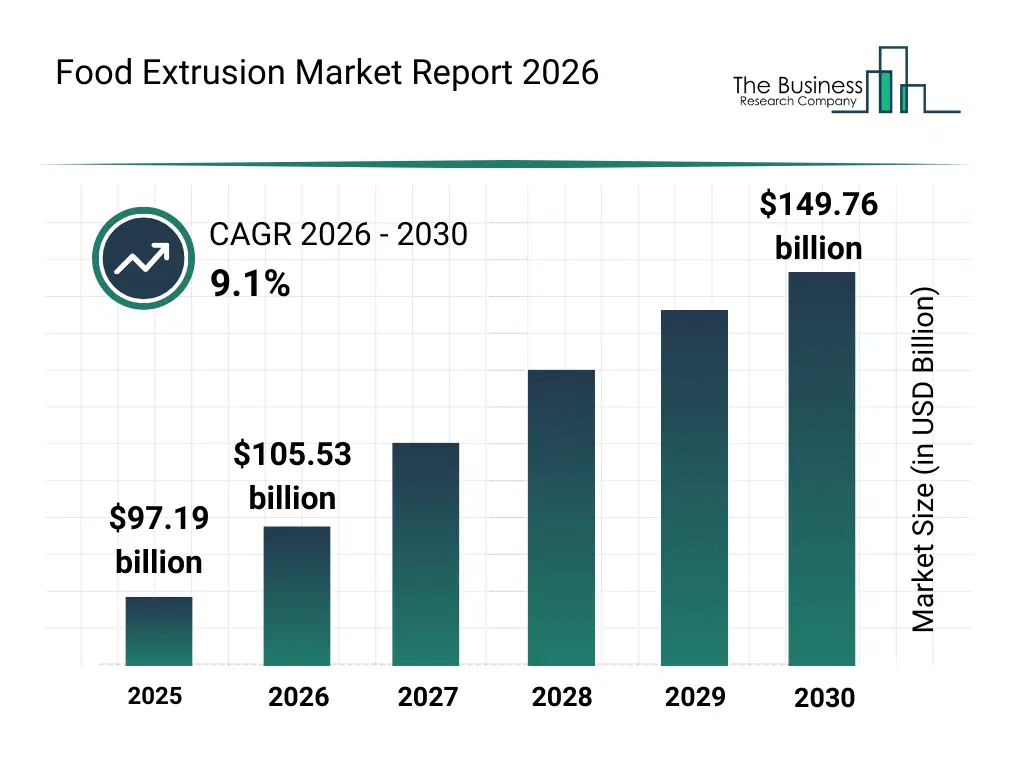
What Is The Food Extrusion Market Size and Share 2026?
The food extrusion market size has grown strongly in recent years. It will grow from $97.19 billion in 2025 to $105.53 billion in 2026 at a compound annual growth rate (CAGR) of 8.6%. The growth in the historic period can be attributed to expansion of ready-to-eat food production, growth of breakfast cereal consumption, increasing use of extrusion in snack manufacturing, improvements in extrusion equipment design, rising demand for processed foods.What Is The Food Extrusion Market Growth Forecast?
The food extrusion market size is expected to see strong growth in the next few years. It will grow to $149.76 billion in 2030 at a compound annual growth rate (CAGR) of 9.1%. The growth in the forecast period can be attributed to increasing demand for plant-based protein products, rising investments in functional food development, expansion of sustainable food processing methods, growing adoption of high-capacity extrusion systems, increasing demand for customized food textures. Major trends in the forecast period include increasing adoption of twin-screw extrusion systems, rising demand for textured plant proteins, growing use of extrusion in functional foods, expansion of high-efficiency extrusion lines, enhanced focus on product consistency.
Global Food Extrusion Market Segmentation
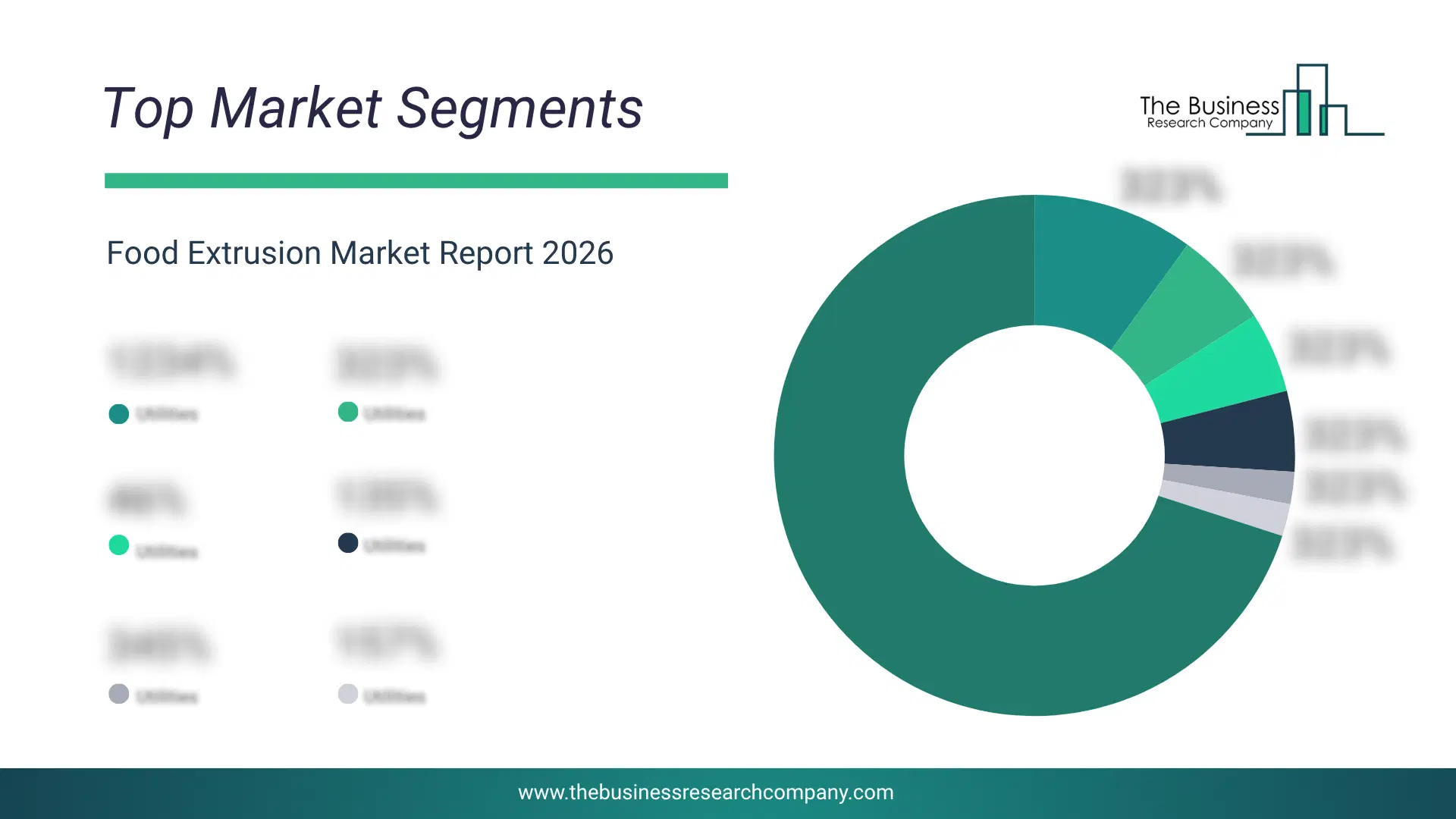
1) By Extruder: Single Screw, Twin Screw 2) By Process: Cold, Hot 3) By End-Product Category: Savory Snacks, Breakfast Cereals, Breads, Flours And Starches, Textured Protein, Functional Ingredients, Other By End-Product Categories Subsegments: 1) By Single Screw: Low-Pressure Extruders, High-Pressure Extruders 2) By Twin Screw: Co-rotating Twin Screw, Counter-rotating Twin Screw The top segments in the food extrusion market will be: • Twin Screw will reach $103 Billion by 2030. • Single Screw will reach $46 Billion by 2030.What Are The Drivers Of The Food Extrusion Market?
The rapid growth in the consumption of processed food is expected to propel the growth of the food extrusion market going forward. Processed products refer to products that are cooked and packed. It is a process of converting agricultural products into food, they are also called ready-to-eat food. The food extrusion process in packaged and processed food improves the digestibility of proteins and starches and destroys the anti-nutritional factors in food. The changing lifestyles and increased disposable incomes for the people are leading to the increasing demand for ready-to-eat products as they reduce time and effort for the people. For instance, in April 2024, according to the National Association of Convenience Stores, a US-based trade association, reported that in 2023, foodservice sales, including prepared foods, commissary items, and dispensed beverages, accounted for 26.9% of in-store sales, up from 25.6% in 2022. Additionally, sales of prepared foods per store per month rose by 12.2% in 2023 compared to 2022. Therefore, the rapid growth in the consumption of processed food is significantly contributing to the growth of the food extrusion industry. The increasing adoption of vegan diets is expected to drive the growth of the food extrusion market. Embracing a vegan diet involves refraining from consuming animal products and prioritizing plant-based foods for nutritional sustenance. Food extrusion is a key manufacturing process used to produce a variety of plant-based foods, including meat alternatives, snacks, cereals, and pasta. For instance, in January 2023, according to Food Manufacture, a UK-based internet publishing company focused on the food and drink processing industry, a new study reveals that the number of vegans in the UK grew by 1.1 million between 2023 and 2024. Therefore, the rising adoption of vegan diets will drive the growth of the food extrusion industry.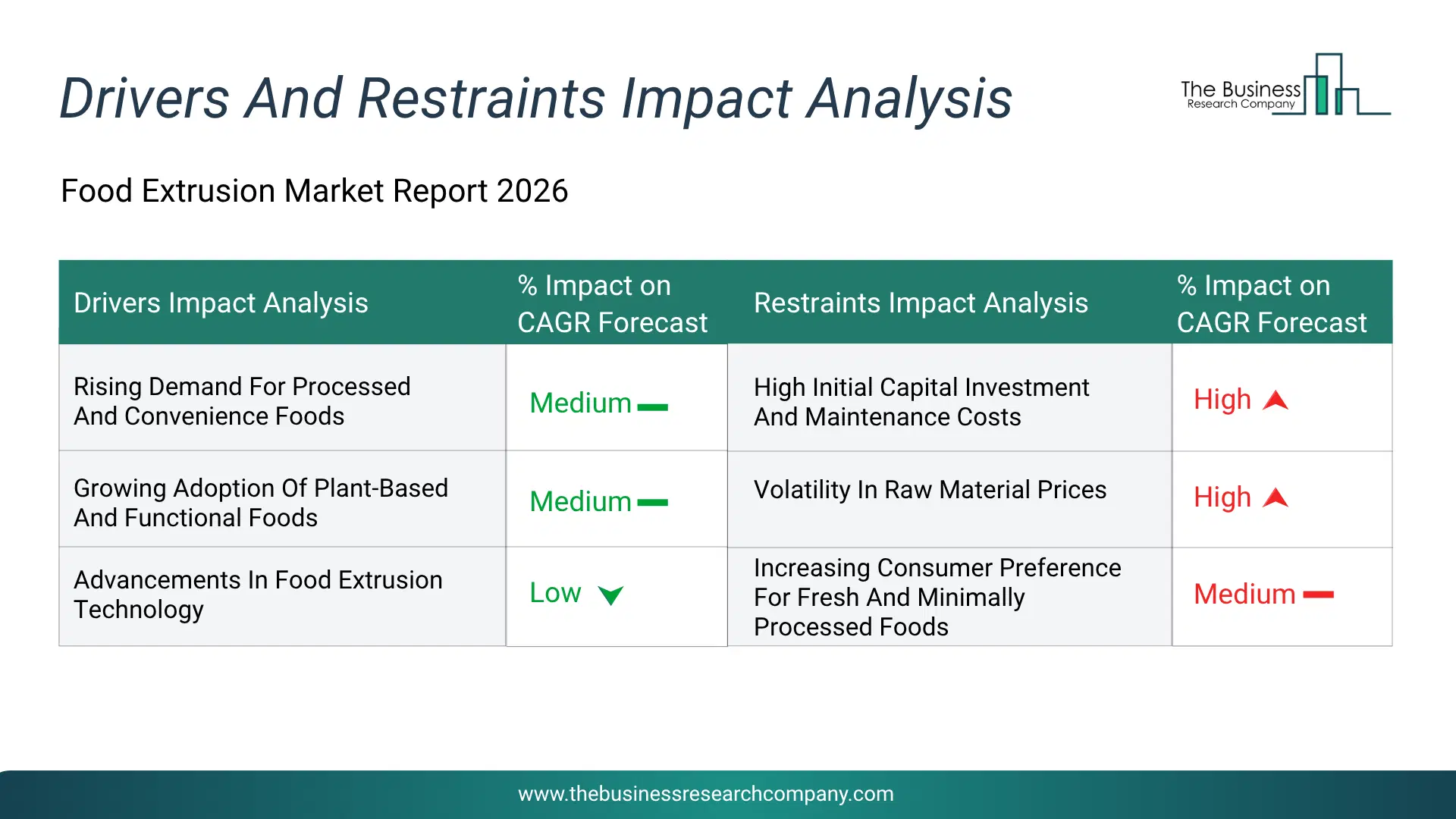
Infographic Chart Showing Key Market Drivers Analysis And Restraints For Food Extrusion Market
The chart presents an impact analysis of key drivers and restraints, quantifying their relative influence on the market's growth rate and helping assess the balance between growth enablers and limiting factors. This chart offers a high-level perspective; the full report contains more detailed insights.
How Will The Drivers Impact Growth In The Global Food Extrusion Market?
• Rising Demand For Processed And Convenience Foods (Medium) – During the forecast period, the rising demand for processed and convenience foods is expected to emerge as a major factor driving the expansion of the food extrusion market by 2030. changing consumer lifestyles, rapid urbanization, and increasing preference for ready-to-eat meals, breakfast cereals, snacks, and instant food products are encouraging manufacturers to expand production capacity using efficient extrusion processes. food extrusion supports high-volume manufacturing while ensuring consistent product quality, extended shelf life, and reduced production waste, making it a preferred processing technology across the packaged food industry. • Growing Adoption Of Plant-Based And Functional Foods (Medium) – During the forecast period, the growing adoption of plant-based and functional foods is expected to emerge as a major factor driving the expansion of the food extrusion market by 2030. increasing consumer interest in healthier diets, sustainable nutrition, and alternative protein sources is boosting demand for extrusion technologies capable of producing meat substitutes, textured vegetable proteins, fortified cereals, gluten-free foods, and high-protein snacks. advanced extrusion systems enable precise ingredient processing and product customization, supporting the development of innovative food formulations. • Advancements In Food Extrusion Technology (Low) – During the forecast period, the advancements in food extrusion technology are expected to act as a key growth catalyst for the food extrusion market by 2030. modern extrusion equipment featuring advanced automation, energy-efficient operation, digital process monitoring, and improved screw configurations enables manufacturers to increase productivity while producing a wider variety of food products with consistent quality and optimized nutritional characteristics. continuous technological innovation is also reducing operational costs and accelerating new product development across the food processing industry.How Will The Restraints Impact Growth In The Global Food Extrusion Market?
• High Initial Capital Investment And Maintenance Costs (Medium) – During the forecast period, high Initial Capital Investment And Maintenance Costs remain one of the major restraints limiting the widespread adoption of advanced food extrusion systems. Establishing an extrusion production line requires substantial upfront investment in sophisticated machinery, automated control systems, plant infrastructure, installation, and operator training. Beyond the initial purchase, manufacturers must also incur ongoing expenses related to equipment maintenance, spare parts replacement, energy consumption, calibration, and system upgrades to ensure efficient operation. Twin-screw extruders, in particular, involve higher acquisition and maintenance costs than conventional processing equipment. These financial requirements can discourage small and medium-sized enterprises from investing in advanced extrusion technologies, particularly in developing regions where capital availability is limited. Consequently, the high total cost of ownership slows market penetration and delays equipment modernization across certain segments of the food processing industry. • Volatility In Raw Material Prices (Medium) – During the forecast period, volatility In Raw Material Prices poses a significant challenge to food extrusion manufacturers because agricultural commodities represent the primary inputs used in extrusion-based food production. Raw materials such as corn, wheat, rice, soybeans, potatoes, pulses, and tapioca are highly susceptible to fluctuations caused by adverse weather conditions, climate change, geopolitical tensions, trade restrictions, transportation disruptions, and changing global supply-demand dynamics. Rising commodity prices directly increase production costs and reduce profit margins for food manufacturers, particularly those operating under fixed-price supply agreements. Frequent fluctuations also complicate procurement planning, inventory management, and long-term production forecasting. These uncertainties often force manufacturers to adjust product pricing or absorb higher costs, thereby affecting overall market growth and operational stability. • Increasing Consumer Preference For Fresh And Minimally Processed Foods (Low) – During the forecast period, increasing Consumer Preference For Fresh And Minimally Processed Foods is restraining growth in certain segments of the food extrusion market as consumer purchasing behavior continues to evolve. Rising awareness regarding healthy eating, clean-label products, natural ingredients, and reduced food processing has encouraged many consumers to limit consumption of highly processed packaged foods. This trend particularly affects traditional extruded snack foods that are often perceived as containing artificial additives, preservatives, or excessive sodium. In response, food manufacturers are investing in reformulating products with healthier ingredients, improved nutritional profiles, and cleaner labels. While extrusion technology itself can support healthier product development, changing consumer perceptions toward processed foods continue to present challenges for conventional extrusion-based food categories and may moderate market growth over the long term.Key Players In The Global Food Extrusion Market
Major companies operating in the food extrusion market are Bühler Holding AG, Clextral Inc., Coperion GmbH, GEA Group AG, Wenger Manufacturing Inc., Baker Perkins Ltd, Pavan SPA, Amandus Kahl GmbH & Co. KG, Diamond America Inc., American Extrusion International, FBF Italia Srl, Shandong Light M&E Co. Ltd, Snactek Food Machines Pvt. Ltd., Hiwant International Inc., Techtronics Machinery Pvt. Ltd., Snacks Développement SAS, The Bonnot Company, Zhengzhou Longer Machinery Co. Ltd, Grace Food Processing & Packaging Machinery, Doering Systems Inc.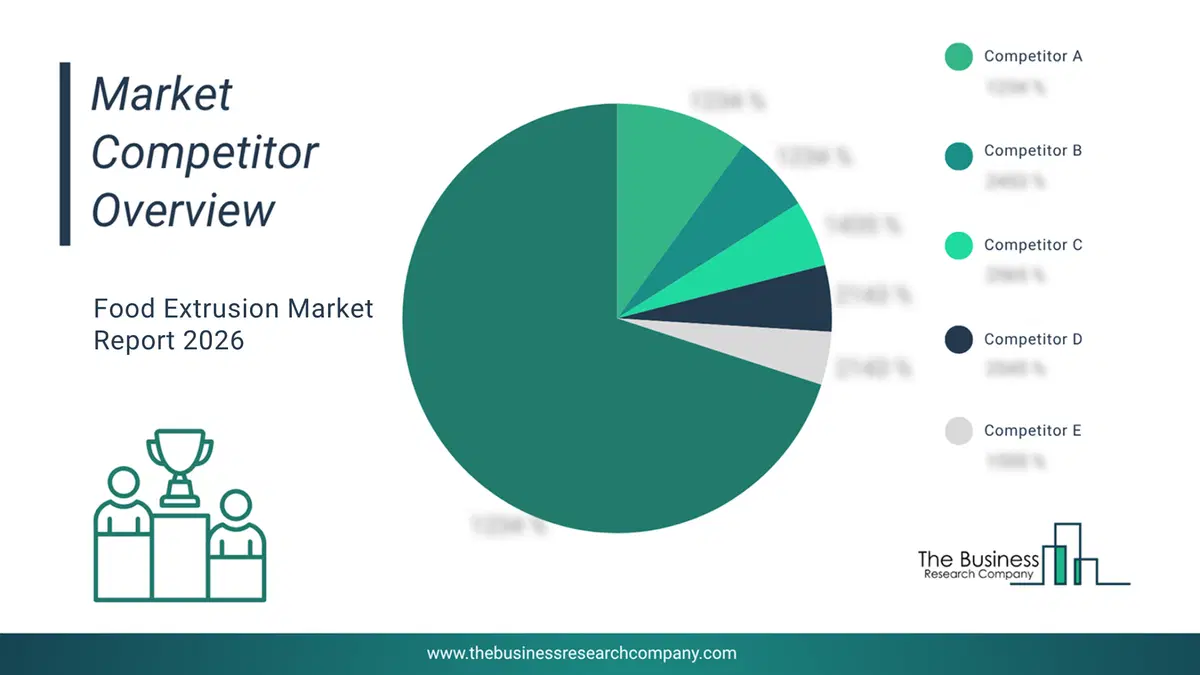
This chart is for illustrative purposes; the full report includes a detailed competitor analysis and comprehensive overview of the top 10 companies in the market.
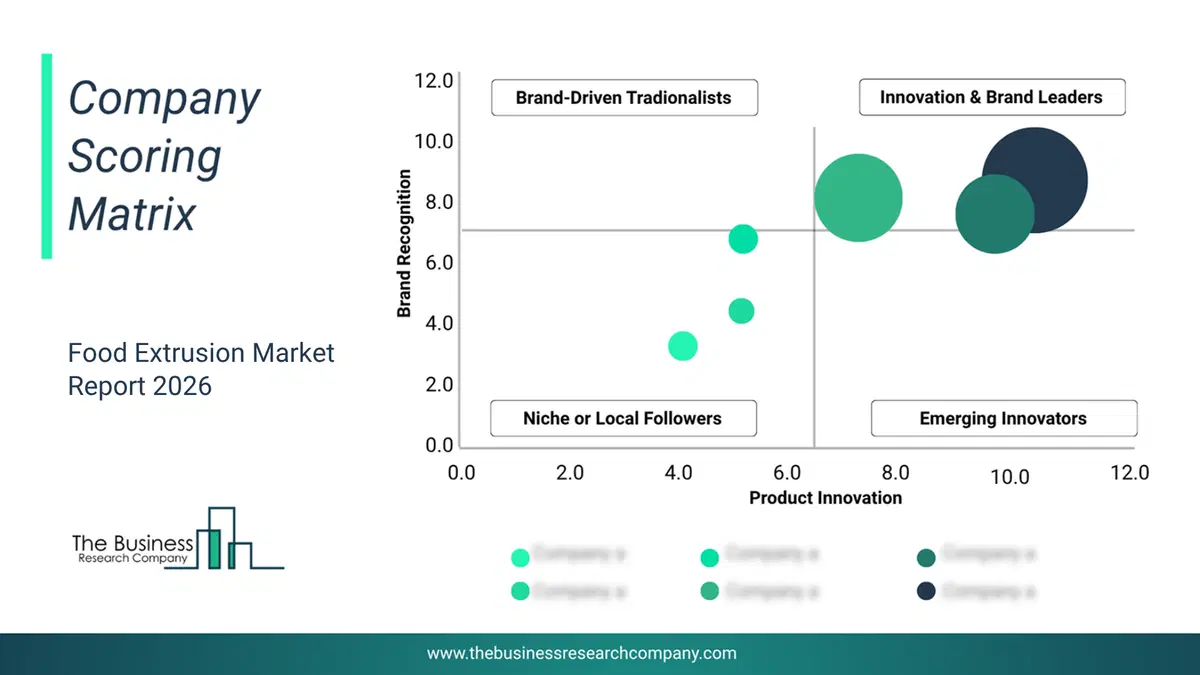
This chart maps companies by product innovation and brand strength, with bubble size indicating relative revenue, helping identify market leaders, challengers, and niche players. This is an illustrative chart; the full report provides a complete and accurate competitive analysis.
What Are Latest Mergers And Acquisitions In The Food Extrusion Market?
Regional Outlook
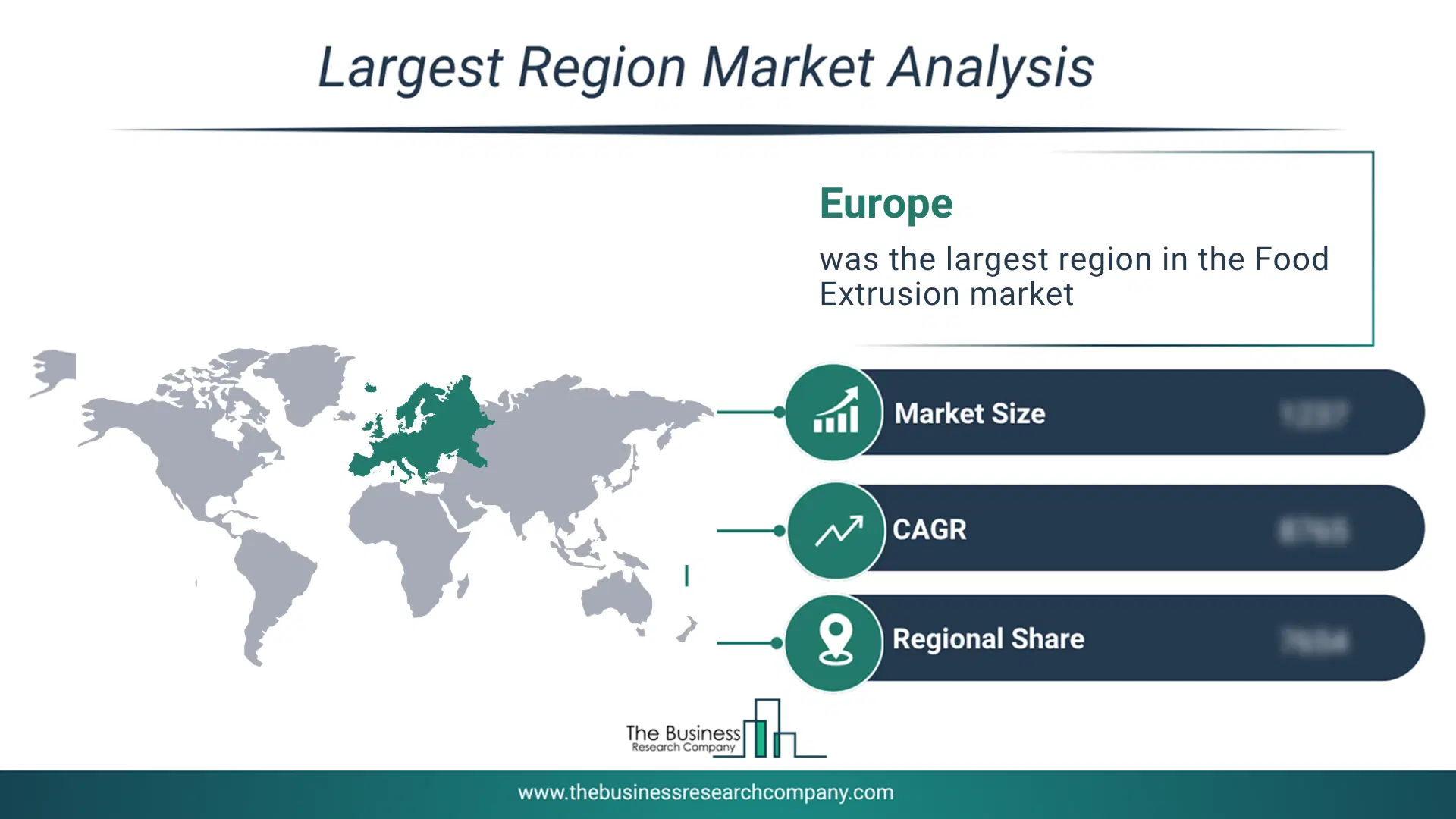
Europe was the largest region in the food extrusion market in 2025. The regions covered in this market report are Asia-Pacific, South East Asia, Western Europe, Eastern Europe, North America, South America, Middle East and Africa. The countries covered in this market report are Australia, Brazil, China, France, Germany, India, Indonesia, Japan, Taiwan, Russia, South Korea, UK, USA, Italy, Spain, CanadaWhat Defines the Food Extrusion Market?
The food extrusion market includes revenues earned by entities by providing mixing soft ingredients, dyeing, twin-screw co-rotating services. The market value includes the value of related goods sold by the service provider or included within the service offering. Only goods and services traded between entities or sold to end consumers are included.How is Market Value Defined and Measured?
The market value is defined as the revenues that enterprises gain from the sale of goods and/or services within the specified market and geography through sales, grants, or donations in terms of the currency (in USD unless otherwise specified). The revenues for a specified geography are consumption values that are revenues generated by organizations in the specified geography within the market, irrespective of where they are produced. It does not include revenues from resales along the supply chain, either further along the supply chain or as part of other products.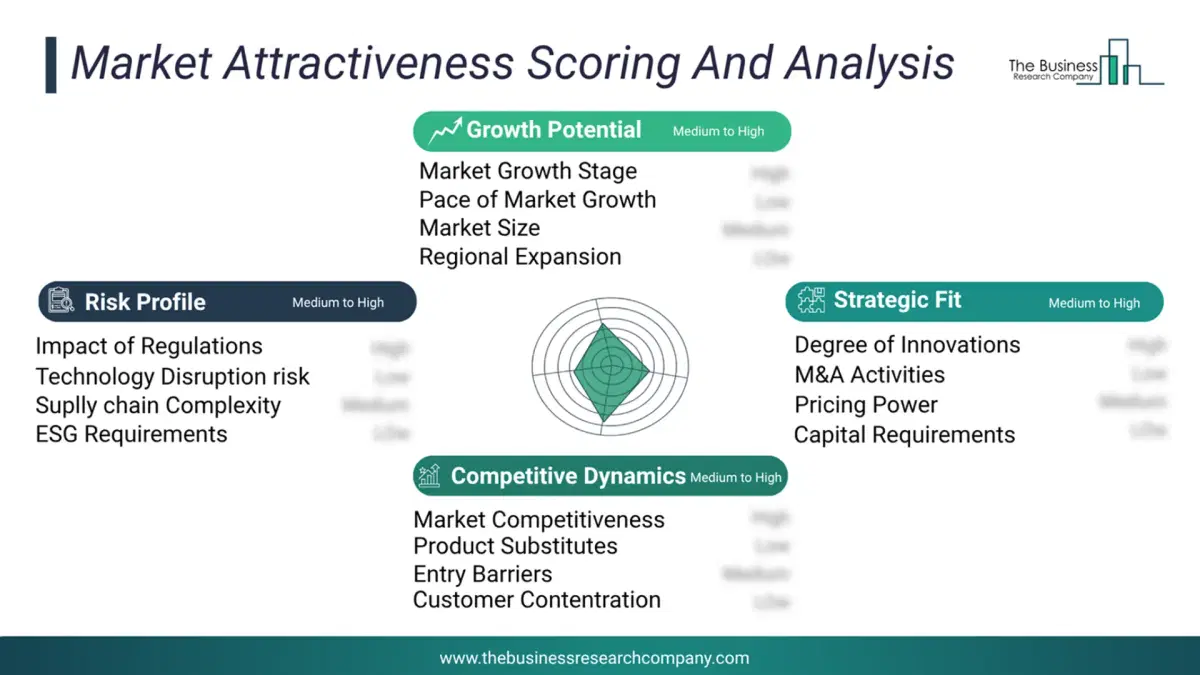
This chart presents market attractiveness based on a quantitative evaluation of growth, competition, strategic alignment, and risk, offering a clear view of opportunity areas for decision-making. This chart is for illustrative purposes; the full report contains the complete analysis.
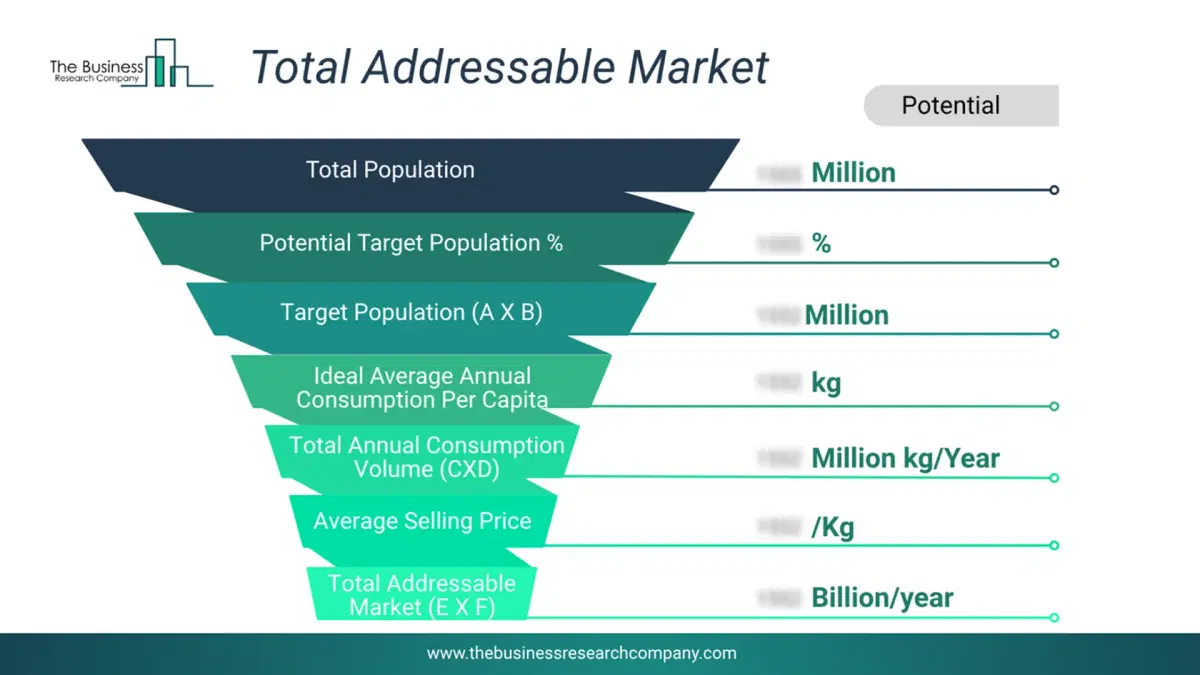
This chart highlights the Total Addressable Market (TAM) by estimating the maximum revenue opportunity using an assumption-driven approach, supporting strategic planning and opportunity sizing across markets. The chart is illustrative; the full report provides a more comprehensive analysis.
What Key Data and Analysis Are Included in the Food Extrusion Market Report 2026?
The food extrusion market research report is one of a series of new reports from The Business Research Company that provides market statistics, including industry global market size, regional shares, competitors with the market share, detailed market segments, market trends and opportunities, and any further data you may need to thrive in the food extrusion industry. The market research report delivers a complete perspective of everything you need, with an in-depth analysis of the current and future state of the industry.Food Extrusion Market Report Forecast Analysis
| Report Attribute | Details |
|---|---|
| Market Size Value In 2026 | $105.53 billion |
| Revenue Forecast In 2030 | $149.76 billion |
| Growth Rate | CAGR of 9.1% from 2026 to 2030 |
| Base Year For Estimation | 2025 |
| Actual Estimates/Historical Data | 2020-2025 |
| Forecast Period | 2026 - 2030 |
| Market Representation | Revenue in USD Billion and CAGR from 2026 to 2030 |
| Segments Covered | Extruder, Process, End-Product Category |
| Regional Scope | Asia-Pacific, Western Europe, Eastern Europe, North America, South America, Middle East, Africa |
| Country Scope | The countries covered in the report are Australia, Brazil, China, France, Germany, India, Indonesia, Japan, Taiwan, Russia, South Korea, UK, USA, Canada, Italy, Spain. |
| Key Companies Profiled | Bühler Holding AG, Clextral Inc., Coperion GmbH, GEA Group AG, Wenger Manufacturing Inc., Baker Perkins Ltd, Pavan SPA, Amandus Kahl GmbH & Co. KG, Diamond America Inc., American Extrusion International, FBF Italia Srl, Shandong Light M&E Co. Ltd, Snactek Food Machines Pvt. Ltd., Hiwant International Inc., Techtronics Machinery Pvt. Ltd., Snacks Développement SAS, The Bonnot Company, Zhengzhou Longer Machinery Co. Ltd, Grace Food Processing & Packaging Machinery, Doering Systems Inc. |
| Customization Scope | Request for Customization |
| Pricing And Purchase Options | Explore Purchase Options |