
Freight Forwarding Market Report 2026
Global Outlook – By Services (Transportation And Warehousing; Packaging And Documentation; Insurance; Value-Added Services), By Logistics Model (First Party Logistics; Second Party Logistics; Third Party Logistics), By Mode Of Transport (Air Freight Forwarding; Ocean Freight Forwarding; Road Freight Forwarding; Rail Freight Forwarding), By Customer Type (Business-to-Consumer (B2C); Business-To-Business (B2B)), By Application (Industrial And Manufacturing; Retail; Healthcare; Media And Entertainment; Military; Oil And Gas; Food And Beverages; Other Applications) – Market Size, Trends, Strategies, and Forecast to 2030
Freight Forwarding Market Overview
• Freight Forwarding market size has reached to $213.94 billion in 2025 • Expected to grow to $279.18 billion in 2030 at a compound annual growth rate (CAGR) of 5.4% • Growth Driver: Rise Of E-Commerce Industry To Drive Market Growth • Market Trend: Integrating Digital Technologies To Streamlining Supply Chain Operations • North America was the largest region in 2025.Market Gains By 2030 – Top Opportunities By Segment
Market Gain identifies the most promising market opportunities by highlighting the segments or products expected to generate the highest incremental revenue growth over the next five years.
What Is Covered Under Freight Forwarding Market?
Freight forwarding refers to logistics planning, coordination, and flow of shipment for the movement of goods throughout international borders. The freight forwarder carries out freight rate negotiations, customs documentation, container tracking, and freight consolidation. Freight forwarding involves the international movement of goods via single or multiple carriers. The main types of services in freight forwarding are transportation and warehousing, packaging and documentation, insurance, and value-added services. Warehousing means storing goods that will be sold later. Warehousing and freight forwarding are interconnected as the warehouses increase the reliability of the freight forwarding company. The different logistics models include first-party logistics, second-party logistics, and third-party logistics and involve various modes of transport such as air freight forwarding, ocean freight forwarding, road freight forwarding, rail freight forwarding. The several types of customers include B2B, B2C. These are used in various applications such as industrial and manufacturing, retail, healthcare, media and entertainment, military, oil and gas, food and beverages, and others.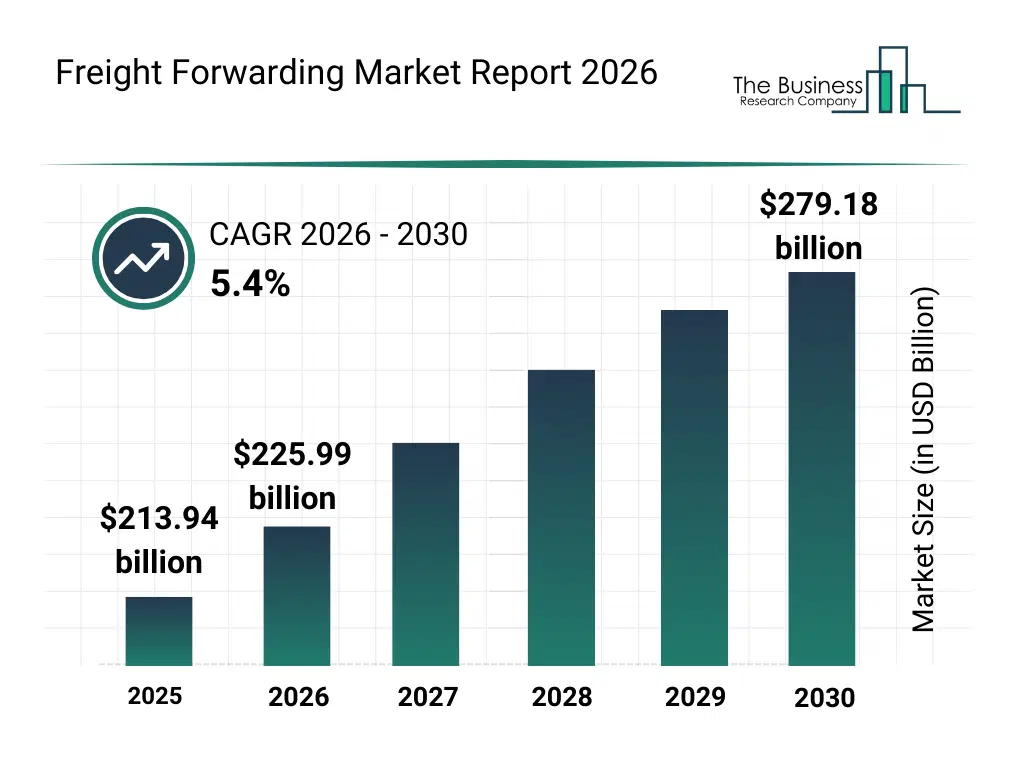
What Is The Freight Forwarding Market Size and Share 2026?
The freight forwarding market size has grown strongly in recent years. It will grow from $213.94 billion in 2025 to $225.99 billion in 2026 at a compound annual growth rate (CAGR) of 5.6%. The growth in the historic period can be attributed to expansion of international trade flows, rising complexity of customs regulations, growing demand for freight consolidation services, increased reliance on third-party logistics providers, expansion of global manufacturing networks.What Is The Freight Forwarding Market Growth Forecast?
The freight forwarding market size is expected to see strong growth in the next few years. It will grow to $279.18 billion in 2030 at a compound annual growth rate (CAGR) of 5.4%. The growth in the forecast period can be attributed to increasing investments in digital forwarding solutions, rising focus on carbon-efficient shipping routes, expansion of cross-border e-commerce logistics, growing demand for real-time tracking and analytics, increasing adoption of integrated logistics platforms. Major trends in the forecast period include increasing adoption of digital freight platforms, rising demand for end-to-end shipment visibility, growing integration of customs automation solutions, expansion of sustainable freight forwarding practices, enhanced focus on supply chain transparency.
Global Freight Forwarding Market Segmentation
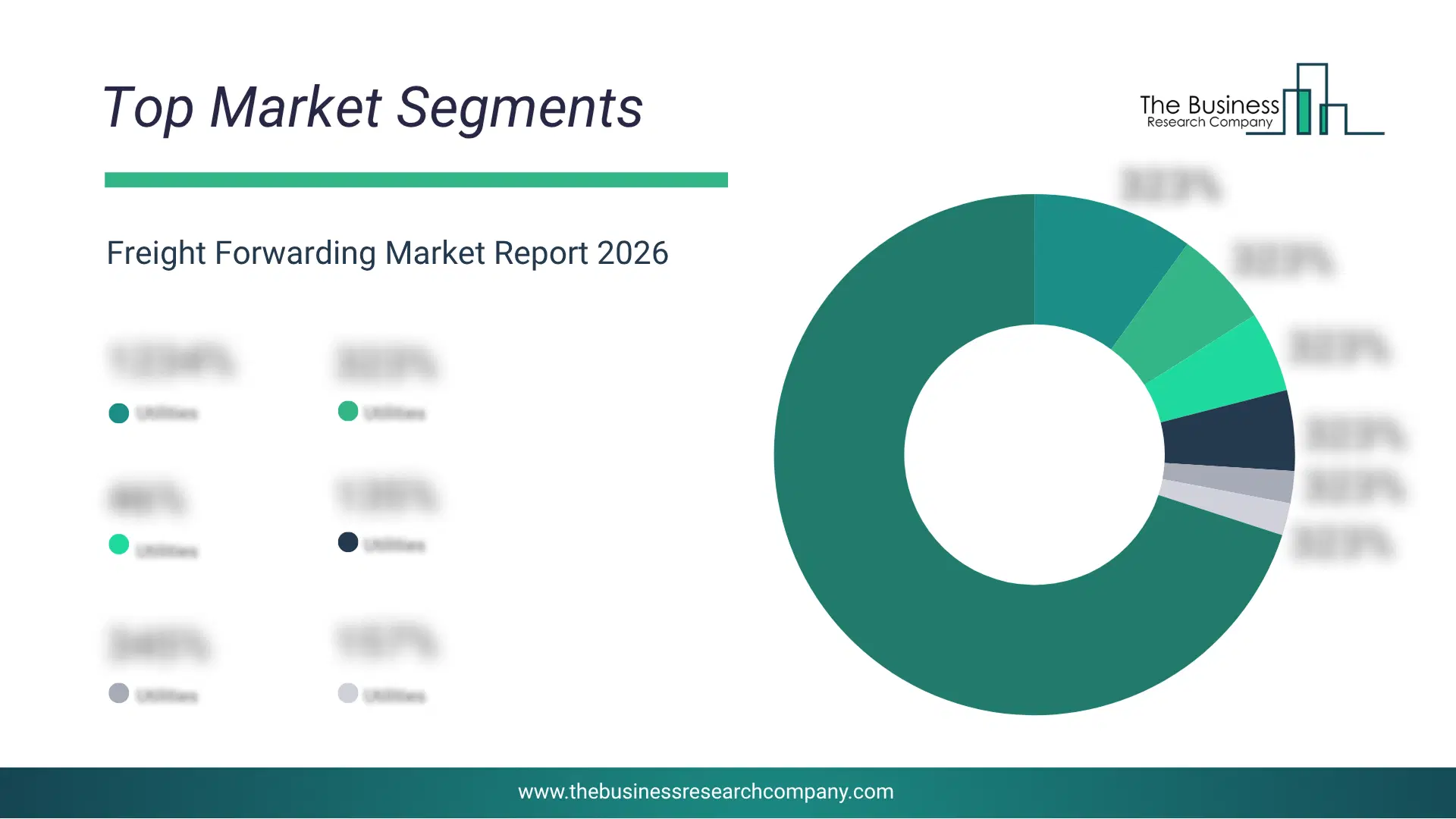
1) By Services: Transportation And Warehousing, Packaging And Documentation, Insurance, Value-Added Services 2) By Logistics Model: First Party Logistics, Second Party Logistics, Third Party Logistics 3) By Mode Of Transport: Air Freight Forwarding, Ocean Freight Forwarding, Road Freight Forwarding, Rail Freight Forwarding 4) By Customer Type: Business-to-Consumer (B2C), Business-To-Business (B2B) 5) By Application: Industrial And Manufacturing, Retail, Healthcare, Media And Entertainment, Military, Oil And Gas, Food And Beverages, Other Applications Subsegments: 1) By Transportation And Warehousing: Land Freight Services, Ocean Freight Services, Air Freight Services 2) By Packaging And Documentation: Custom Packaging Solutions, Documentation And Customs Clearance 3) By Insurance: Cargo Insurance, Liability Insurance 4) By Value-Added Services: Inventory Management, Order Fulfillment, Supply Chain Consulting The top segments in the freight forwarding market will be: • Transportation And Warehousing will reach $164 Billion by 2030. • Packaging And Documentation will reach $47 Billion by 2030. • Value-added Services will reach $43 Billion by 2030. • Insurance will reach $23 Billion by 2030.What Is The Driver Of The Freight Forwarding Market?
The increasing expansion of e-commerce industry is expected to propel the growth of freight forwarding market going forward. The e-commerce industry, short for electronic commerce, refers to the buying and selling of goods and services over the internet. Freight forwarding in the e-commerce sector involves the management and coordination of the international shipment of goods, including customs clearance, documentation, and transportation, to ensure efficient and timely deliveries for online retailers and their customers. For instance, in August 2023, according to Shopify Inc., a Canada-based e-commerce company, the projected valuation of the worldwide e-commerce sector will be $6.3 trillion by 2023. Over the next few years, that amount is anticipated to rise, making 21.2% of all retail purchases online by 2024. Therefore, the increasing expansion of e-commerce industry is driving the growth of freight forwarding industry.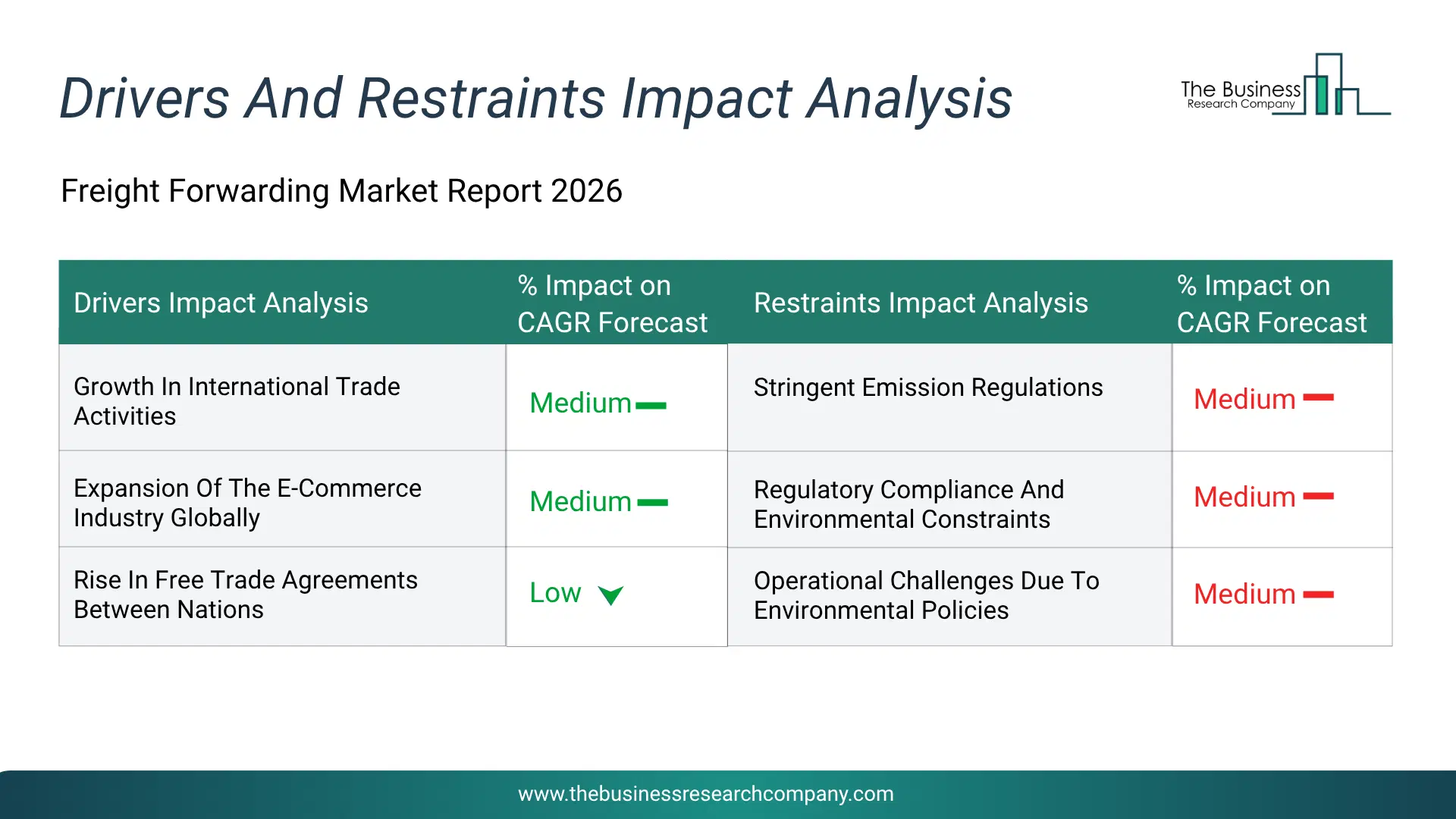
Infographic Chart Showing Key Market Drivers Analysis And Restraints For Freight Forwarding Market
The chart presents an impact analysis of key drivers and restraints, quantifying their relative influence on the market's growth rate and helping assess the balance between growth enablers and limiting factors. This chart offers a high-level perspective; the full report contains more detailed insights.
How Will The Drivers Impact Growth In The Global Freight Forwarding Market?
• Growth In International Trade Activities (Medium) – During the forecast period, the growth in international trade activities is expected to emerge as a major factor driving the expansion of the freight forwarding market by 2030. The growth in international trade activities is driving the freight forwarding market as rising cross-border trade increases demand for efficient logistics coordination, customs clearance, documentation management, and multimodal transportation while businesses increasingly rely on freight forwarders to support complex global supply chains. • Expansion Of The E-Commerce Industry Globally (Medium) – During the forecast period, the expansion of the e-commerce industry globally is expected to emerge as a major factor driving the expansion of the freight forwarding market by 2030. This is because the rapid growth of online retail is increasing shipment volumes across domestic and international markets, creating higher demand for freight forwarding services to support inventory movement, order fulfillment, cross-border shipping, and efficient customs handling. • Rise In Free Trade Agreements Between Nations (Low) – During the forecast period, the rise in free trade agreements between nations is expected to act as a key growth catalyst for the freight forwarding market by 2030. This is supporting the freight forwarding market as reduced trade barriers, lower tariffs, and simplified customs procedures encourage higher trade volumes between participating countries, increasing the need for efficient international logistics and freight forwarding services.How Will The Restraints Impact Growth In The Global Freight Forwarding Market?
• Stringent Emission Regulations (Medium) – During the forecast period, the stringent emission regulations act as a major restraint on the freight forwarding market, as governments impose strict limits on greenhouse gas emissions from transportation activities. Compliance with these regulations requires logistics providers to invest in cleaner technologies, fuel-efficient vehicles, and alternative energy solutions, increasing operational costs. Additionally, regulatory restrictions can limit the use of certain transport modes or routes, affecting efficiency and delivery timelines. Smaller freight operators may struggle to meet these compliance requirements due to financial constraints. As a result, strict emission norms hinder market growth and operational flexibility in freight forwarding. • Regulatory Compliance And Environmental Constraints (Medium) – During the forecast period, the regulatory compliance and environmental constraints act as a significant restraint on the freight forwarding market, as companies must adhere to a wide range of international trade laws, customs regulations, and environmental policies. Meeting these requirements increases administrative workload and operational complexity for logistics providers. Compliance often involves additional documentation, inspections, and adherence to sustainability standards, which can slow down shipment processes. It also leads to higher operational costs due to investments in compliance systems and environmentally friendly practices. As a result, these constraints can reduce efficiency and limit the growth potential of freight forwarding services. • Operational Challenges Due To Environmental Policies (Low) – During the forecast period, the operational challenges due to environmental policies act as a restraint on the freight forwarding market, as stricter sustainability rules impact transportation planning and execution. Logistics providers must adjust routes, adopt cleaner fuels, and comply with emission limits, which can reduce operational flexibility. These changes often lead to higher costs and potential delays in shipment timelines. In some cases, restrictions on certain transport modes or regions further complicate logistics operations. As a result, environmental policies create inefficiencies that hinder the smooth functioning and growth of freight forwarding services.Key Players In The Global Freight Forwarding Market
Major companies operating in the freight forwarding market are Savino Del Bene S.p.A., A.P. Moller-Maersk Group, CMA CGM Group, Deutsche Bahn AG, DSV Panalpina A/S, DHL Global Forwarding, C.H. Robinson Worldwide Inc., Nippon Express Co. Ltd., Expeditors International of Washington Inc., Sinotrans Limited, GEODIS SA, Kuehne + Nagel International AG, Kerry Logistics Network Limited, UPS Supply Chain Solutions Inc., CJ Logistics Corporation, DACHSER SE, Bolloré Logistics, Hellmann Worldwide Logistics GmbH & Co. KG, Agility Public Warehousing Company K.S.C.P., Yusen Logistics Inc., Kintetsu World Express Inc., CTS International Logistics Corporation, LX Holding, Yusen Logistics Co. Ltd., Dimerco Express Group, Ceva Logistics LLC, Logisteed Co. Ltd., Seko Logistics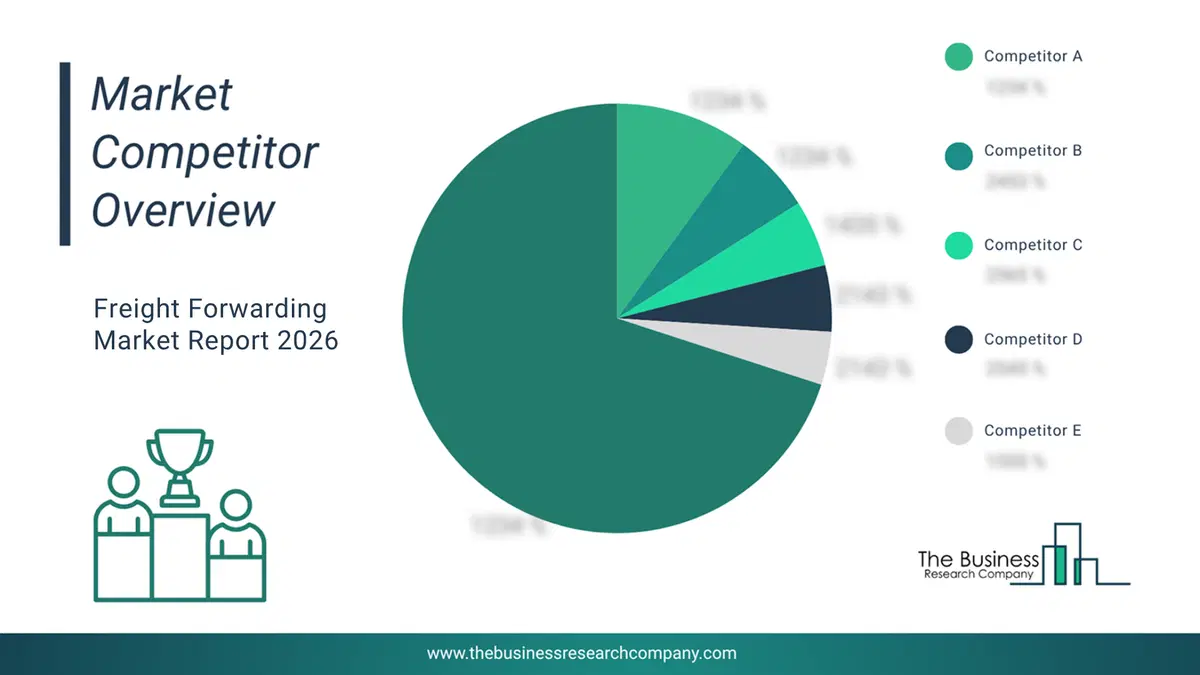
This chart is for illustrative purposes; the full report includes a detailed competitor analysis and comprehensive overview of the top 10 companies in the market.
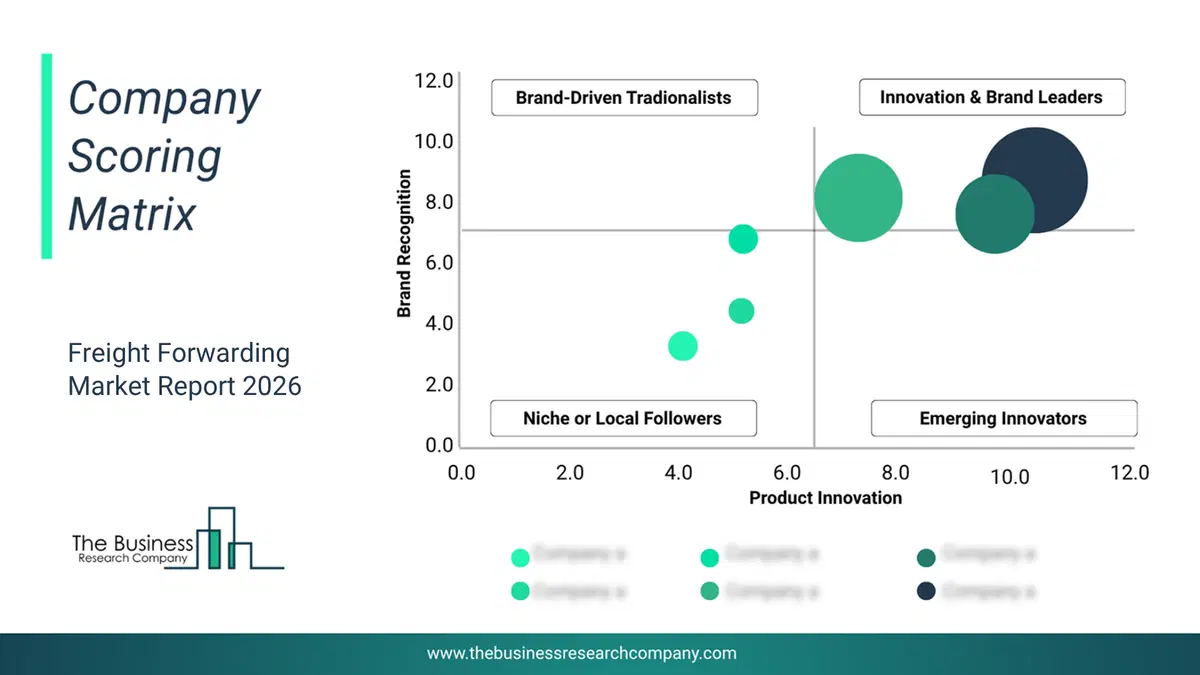
This chart maps companies by product innovation and brand strength, with bubble size indicating relative revenue, helping identify market leaders, challengers, and niche players. This is an illustrative chart; the full report provides a complete and accurate competitive analysis.
Global Freight Forwarding Market Trends and Insights
Major companies operating in the freight forwarding market are integrating digital technologies solutions to enhance operational efficiency, improve customer experience, and adapt to changing market demands. Digital technology solutions encompass a range of tools and platforms designed to enhance business processes and improve customer experiences. For instance, in March 2024, DP World, a UAE-based logistics company, launched a global freight forwarding network aimed at integrating advanced digital solutions into its logistics operations. This initiative includes over 100 new offices worldwide, providing a comprehensive range of services such as order management, customs, and last-mile delivery.What Are Latest Mergers And Acquisitions In The Freight Forwarding Market?
In March 2024, Mediterranean Shipping Company, a Switzerland-based transport and logistics company, acquired Clasquin for an undisclosed amount. This strategic acquisition is aimed at enhancing MSC's position in the logistics and supply chain management sector, allowing the company to offer more comprehensive services to its clients. Clasquin is a French-based logistics firm that specializes in freight forwarding.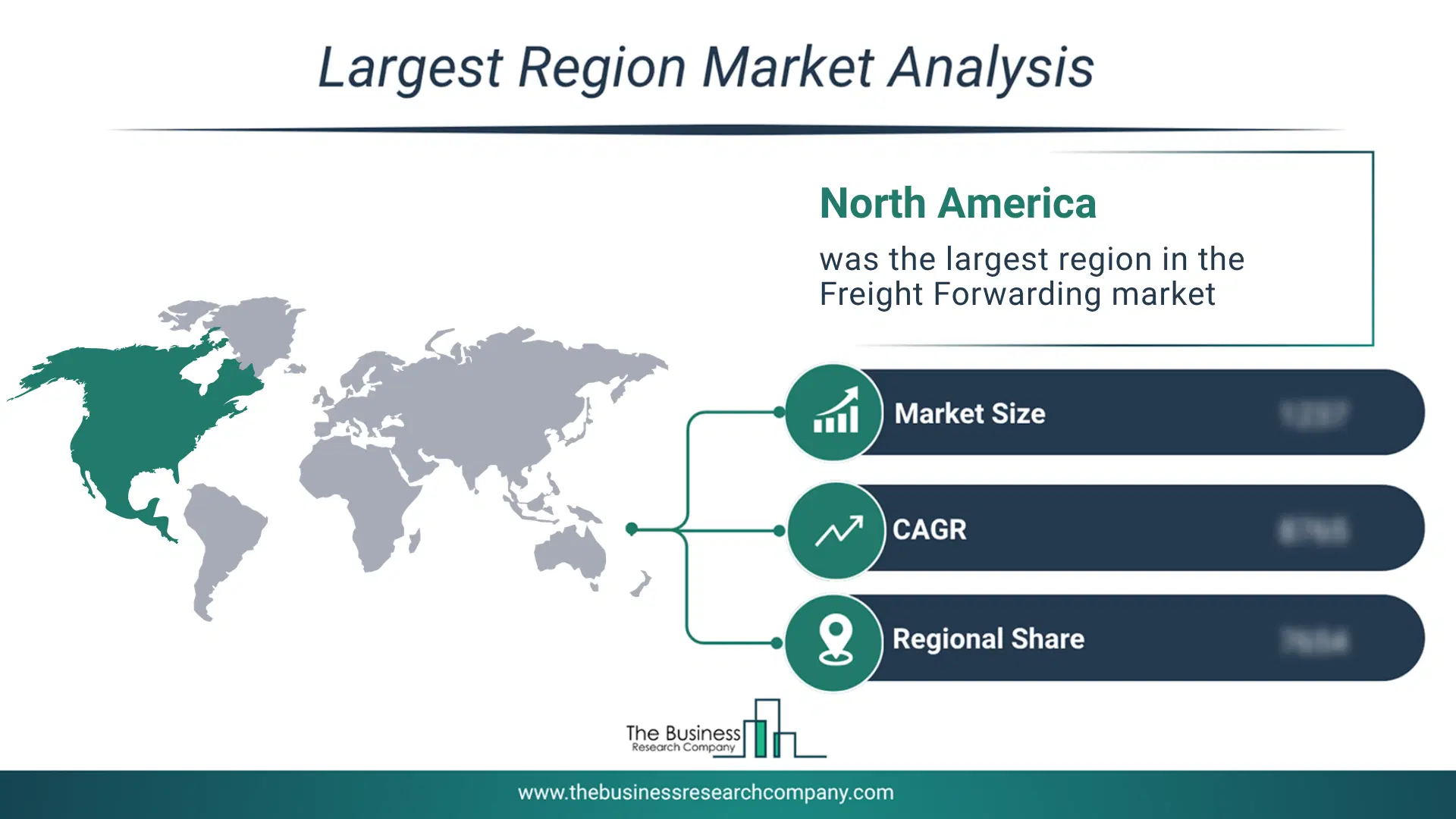
Regional Outlook
North America was the largest region in the freight forwarding market in 2025. The regions covered in this market report are Asia-Pacific, South East Asia, Western Europe, Eastern Europe, North America, South America, Middle East, Africa. The countries covered in this market report are Australia; Brazil; China; France; Germany; India; Indonesia; Japan; Taiwan; Russia; South Korea; UK; USA; Canada; Italy; Spain.What Defines the Freight Forwarding Market?
The freight forwarding market includes revenues earned by entities by planning and coordinating of the movement of commodities across international borders. The market value includes the value of related goods sold by the service provider or included within the service offering. Only goods and services traded between entities or sold to end consumers are included.How is Market Value Defined and Measured?
The market value is defined as the revenues that enterprises gain from the sale of goods and/or services within the specified market and geography through sales, grants, or donations in terms of the currency (in USD unless otherwise specified). The revenues for a specified geography are consumption values that are revenues generated by organizations in the specified geography within the market, irrespective of where they are produced. It does not include revenues from resales along the supply chain, either further along the supply chain or as part of other products.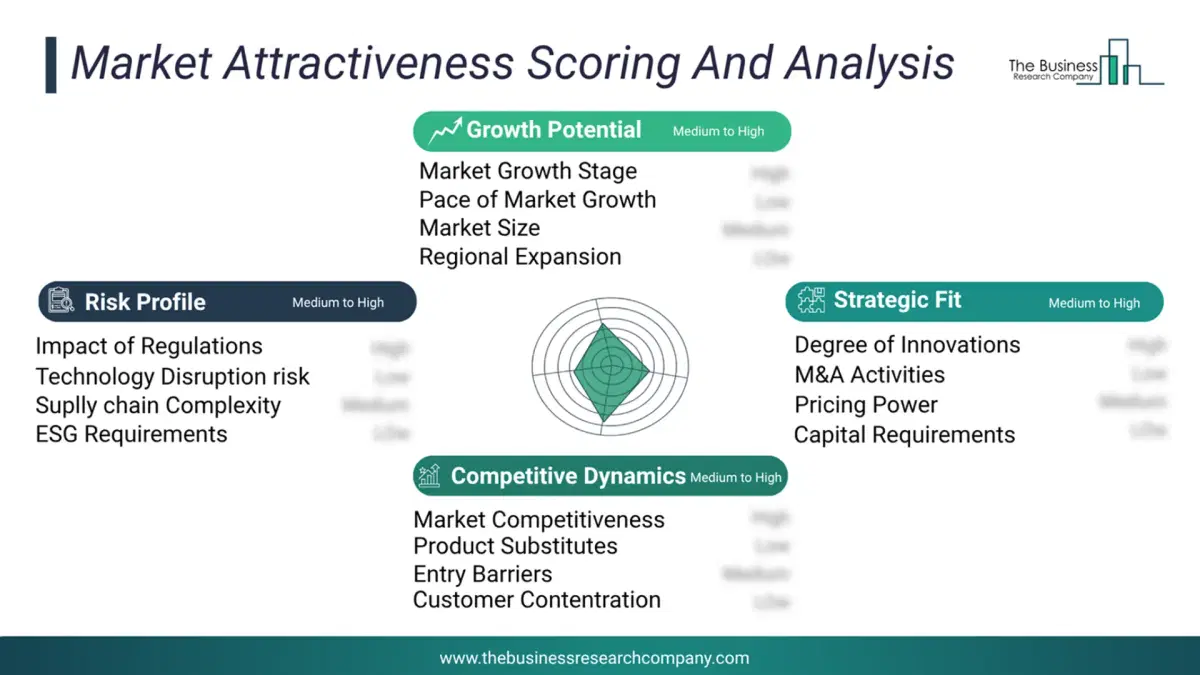
This chart presents market attractiveness based on a quantitative evaluation of growth, competition, strategic alignment, and risk, offering a clear view of opportunity areas for decision-making. This chart is for illustrative purposes; the full report contains the complete analysis.
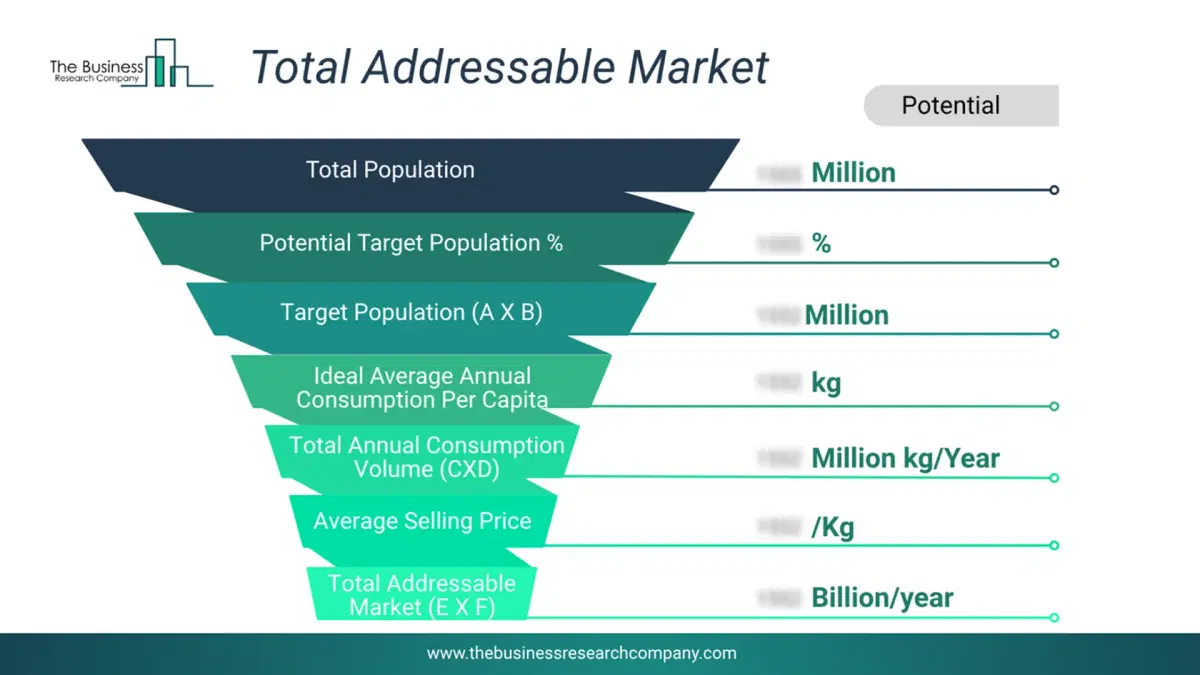
This chart highlights the Total Addressable Market (TAM) by estimating the maximum revenue opportunity using an assumption-driven approach, supporting strategic planning and opportunity sizing across markets. The chart is illustrative; the full report provides a more comprehensive analysis.
What Key Data and Analysis Are Included in the Freight Forwarding Market Report 2026?
The freight forwarding market research report is one of a series of new reports from The Business Research Company that provides market statistics, including Market Report 2026?global market size, regional shares, competitors with the market share, detailed market segments, market trends and opportunities, and any further data you may need to thrive in the freight forwarding Market Report 2026? The market research report delivers a complete perspective of everything you need, with an in-depth analysis of the current and future state of the Market Report 2026?Freight Forwarding Market Report Forecast Analysis
| Report Attribute | Details |
|---|---|
| Market Size Value In 2026 | $225.99 billion |
| Revenue Forecast In 2030 | $279.18 billion |
| Growth Rate | CAGR of 5.4% from 2026 to 2030 |
| Base Year For Estimation | 2025 |
| Actual Estimates/Historical Data | 2020-2025 |
| Forecast Period | 2026 - 2030 |
| Market Representation | Revenue in USD Billion and CAGR from 2026 to 2030 |
| Segments Covered | Services, Logistics Model, Mode Of Transport, Customer Type, Application |
| Regional Scope | Asia-Pacific, Western Europe, Eastern Europe, North America, South America, Middle East, Africa |
| Country Scope | The countries covered in the report are Australia, Brazil, China, France, Germany, India, Indonesia, Japan, Taiwan, Russia, South Korea, UK, USA, Canada, Italy, Spain. |
| Key Companies Profiled | Savino Del Bene S.p.A., A.P. Moller-Maersk Group, CMA CGM Group, Deutsche Bahn AG, DSV Panalpina A/S, DHL Global Forwarding, C.H. Robinson Worldwide Inc., Nippon Express Co. Ltd., Expeditors International of Washington Inc., Sinotrans Limited, GEODIS SA, Kuehne + Nagel International AG, Kerry Logistics Network Limited, UPS Supply Chain Solutions Inc., CJ Logistics Corporation, DACHSER SE, Bolloré Logistics, Hellmann Worldwide Logistics GmbH & Co. KG, Agility Public Warehousing Company K.S.C.P., Yusen Logistics Inc., Kintetsu World Express Inc., CTS International Logistics Corporation, LX Holding, Yusen Logistics Co. Ltd., Dimerco Express Group, Ceva Logistics LLC, Logisteed Co. Ltd., Seko Logistics |
| Customization Scope | Request for Customization |
| Pricing And Purchase Options | Explore Purchase Options |