
Hyperscale Data Centers Market Report 2026
Global Outlook – By Type (Cloud Providers, Colocation Providers, Enterprises), By Component (Solution, Service), By Application (Government Utilities, BFSI, IT And Telecommunication) – Market Size, Trends, Strategies, and Forecast to 2030
Hyperscale Data Centers Market Overview
• Hyperscale Data Centers market size has reached to $120.92 billion in 2025 • Expected to grow to $281.16 billion in 2030 at a compound annual growth rate (CAGR) of 18.4% • Growth Driver: Cloud-Based Services Fueling The Expansion Of Hyperscale Data Centers • Market Trend: Hyperscale Data Center Companies Invest In New Sustainable Facilities • Asia-Pacific was the largest region and fastest growing region.Market Gains By 2030 – Top Opportunities By Segment
Market Gain identifies the most promising market opportunities by highlighting the segments or products expected to generate the highest incremental revenue growth over the next five years.
What Is Covered Under Hyperscale Data Centers Market?
Hyperscale data centers refer to large-scale facilities designed to efficiently support vast amounts of data storage, processing, and networking, used by major tech companies and cloud service providers. These data centers are characterized by their massive infrastructure, scalability, and high-performance capabilities, allowing them to handle enormous workloads and large volumes of traffic. Hyperscale data centers are critical for cloud computing, big data, and digital services, providing the backbone for online platforms and services used globally. The various user types of hyperscale data centers are cloud providers, colocation providers, and enterprises. The component of hyperscale data centers is solution and service. Cloud providers are software infrastructures that store data on remote servers. The various type of data center sizes is small and medium-sized data centers, and large data centers. The data can be accessed through the Internet. The different applications are manufacturing, government utilities, BFSI, IT and telecommunication, healthcare, and energy.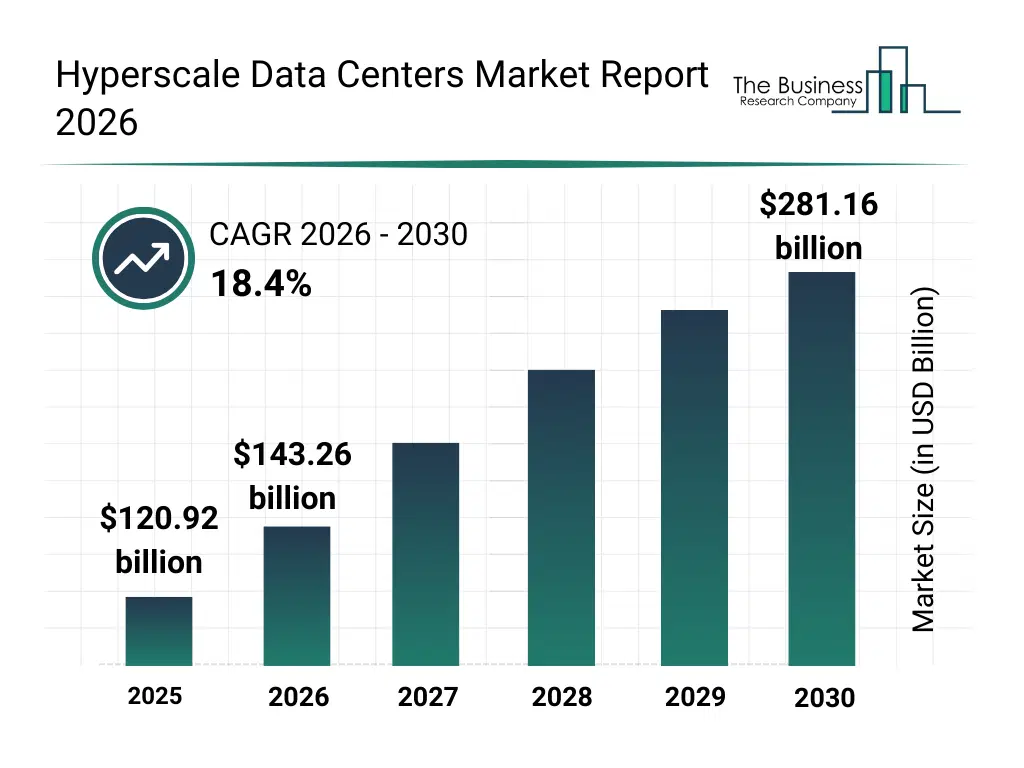
What Is The Hyperscale Data Centers Market Size and Share 2026?
The hyperscale data centers market size has grown rapidly in recent years. It will grow from $120.92 billion in 2025 to $143.26 billion in 2026 at a compound annual growth rate (CAGR) of 18.5%. The growth in the historic period can be attributed to growth of cloud computing adoption, rising internet usage globally, expansion of digital services, demand for scalable data storage, growth of hyperscale technology companies.What Is The Hyperscale Data Centers Market Growth Forecast?
The hyperscale data centers market size is expected to see rapid growth in the next few years. It will grow to $281.16 billion in 2030 at a compound annual growth rate (CAGR) of 18.4%. The growth in the forecast period can be attributed to increasing AI and big data workloads, rising demand for sustainable data centers, expansion of edge computing, growth of cloud service providers, investment in next generation networking. Major trends in the forecast period include expansion of cloud infrastructure, energy efficient data center design, high density computing architectures, automation driven data center operations, edge and core data center integration.
Global Hyperscale Data Centers Market Segmentation
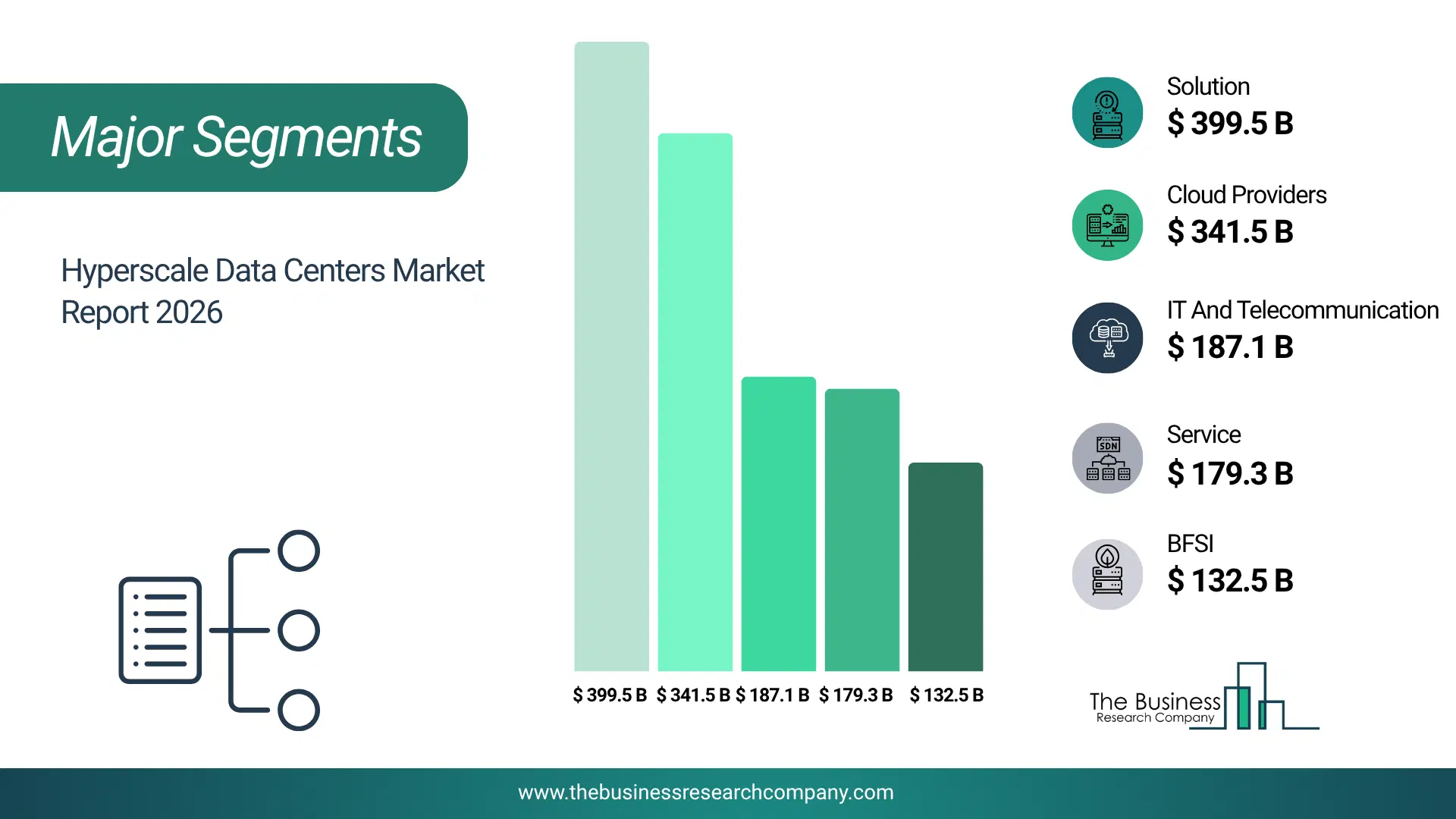
1) By Type: Cloud Providers, Colocation Providers, Enterprises 2) By Component: Solution, Service 3) By Application: Government Utilities, BFSI, IT And Telecommunication Subsegments: 1) By Cloud Providers: Public Cloud Providers, Private Cloud Providers, Hybrid Cloud Providers 2) By Colocation Providers: Retail Colocation, Wholesale Colocation 3) By Enterprises: Large Enterprises, Small and Medium Enterprises (SMEs) The top segments in the hyperscale data centers market will be: • Solution will reach $399553.43 Million by 2030. • Cloud Providers will reach $341544.82 Million by 2030. • Service will reach $179382.6 Million by 2030. • IT And Telecommunication will reach $187118.46 Million by 2030. • BFSI will reach $132568.3 Million by 2030.What Is The Driver Of The Hyperscale Data Centers Market?
The growth of cloud-based services is expected to propel the growth of the hyperscale data center market going forward. Cloud-based services refer to a variety of services and resources that are delivered over the Internet from remote data centers or cloud providers. Cloud services play an important role in hyperscale data centers by consuming their extensive computing and storage resources to deliver scalable and on-demand services to users. For instance, in December 2023, according to Eurostat, a Luxembourg-based intergovernmental organization, a total of 45.2% of EU enterprises utilized cloud computing services in 2023. These services encompass access to software, computing power, storage capacity, and more over the internet. Therefore, the growth of cloud-based services is driving the growth of the hyperscale data center industry.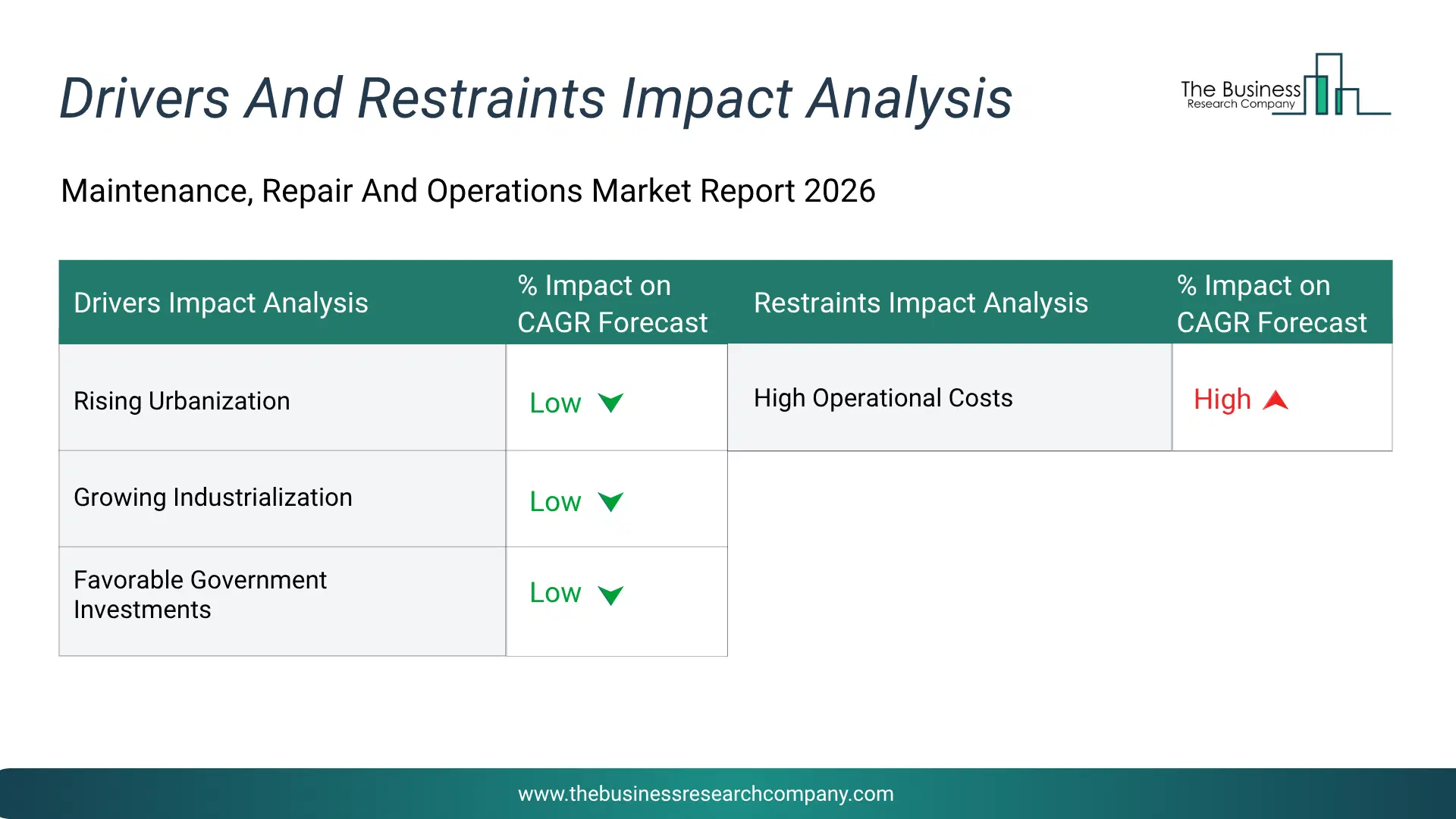
Infographic Chart Showing Key Market Drivers Analysis And Restraints For Hyperscale Data Centers Market
The chart presents an impact analysis of key drivers and restraints, quantifying their relative influence on the market's growth rate and helping assess the balance between growth enablers and limiting factors. This chart offers a high-level perspective; the full report contains more detailed insights.
How Will The Drivers Impact Growth In The Global Hyperscale Data Centers Market?
• Increasing Deployment of High-Performance Computing (HPC) Infrastructure (Medium) – During the forecast period, the growth in high-performance computing (hpc) infrastructure will become a key driver of growth in the hyperscale data centers market by 2030. as compute-intensive workloads expand across research and advanced digital services, demand is projected to rise for large, power-dense hyperscale facilities that can host high-performance clusters with high-throughput networking and resilient cooling. a growing hpc footprint increases the need for new hyperscale campuses and expansion phases designed around high-density compute halls and scalable utility infrastructure. as a result, hyperscale operators are increasingly prioritizing high-density readiness, modular scaling plans, and accelerated commissioning to support rising hpc-class capacity requirements. as a result, the growth in high-performance computing (hpc) infrastructure is anticipated to contributing to a 2.0% annual growth in the market. • Government-Led Digital Infrastructure Development Programs (Medium) – During the forecast period, the government-led digital infrastructure development programs will emerge as a major factor driving the hyperscale data centers market by 2030. as governments promote strategic digital infrastructure buildouts under structured capacity, sustainability, and economic criteria, hyperscale deployments are projected to expand in regulated hubs where large-scale compute is treated as national infrastructure. a policy-driven infrastructure base increases the pace of hyperscale capacity releases, incentivizing operators to design for measurable energy performance, grid integration, and scalable site execution. as a result, hyperscale developers are strengthening permitting readiness, green energy pathways, and compliance-led design to align with government-driven infrastructure programs. consequently, the government-led digital infrastructure development programs is projected to contributing to a 1.5% annual growth in the market. • Increasing Adoption of Artificial Intelligence and Generative AI Workloads (Medium) – During the forecast period, the increasing adoption of artificial intelligence and generative ai workloads as a major factor driving the expansion of the hyperscale data centers market by 2030. as enterprises and platforms scale model training and inference deployments, demand is projected to increase for hyperscale facilities that can deliver high-density compute, accelerated interconnect, and resilient power-and-cooling architectures optimized for ai workloads. a growing ai workload base increases the frequency of hyperscale campus expansions, capacity reservations, and new region rollouts to ensure performance, uptime, and scaling economics. as a result, hyperscale operators are increasingly expanding gpu/accelerator-ready capacity, upgrading thermal management, and hardening operational resiliency to sustain long-term ai-driven growth. therefore, increasing adoption of artificial intelligence and generative ai workloads is projected to contributing to a 1.3% annual growth in the market. • Growing Focus on Software Security and Compliance (Low) – During the forecast period, the growing focus on software security and compliance is expected to be a key driver supporting growth in the hyperscale data centers market. As hyperscale operators are increasingly treated as critical digital infrastructure, stronger cyber-resilience expectations are projected to push faster adoption of standardized security controls, audit-ready processes, and continuous monitoring across multi-site environments. A tighter compliance posture increases demand for hyperscale platforms that can demonstrate consistent governance, incident readiness, and verifiable operational controls to enterprise and regulated-industry customers. As a result, hyperscale developers are expected to expand security-by-design architecture, compliance engineering, and control assurance capabilities to sustain long-term growth in the hyperscale data centers market. The growing focus on software security and compliance growth contribution during the forecast period in 2025 is 0.8%.How Will The Restraints Impact Growth In The Global Hyperscale Data Centers Market?
• Regulatory and Compliance Challenges (Medium) – During the forecast period, regulatory and compliance challenges are expected to be a key restraint slowing growth in the hyperscale data centers market. As governments and standards bodies tighten expectations for environmental performance, security hardening, and operational transparency, operators will face more complex requirements around certification, reporting, and ongoing compliance for large-scale facilities. A stricter compliance environment increases the time and processes needed to secure approvals and implement standardized controls across multi-site portfolios, especially on sustainability, energy use, and data integrity. As a result, hyperscale developers are increasingly investing in governance, risk, and compliance frameworks that can lengthen development cycles and constrain near-term expansion in regulated regions. Growth affected by the regulatory and compliance challenges during the forecast period in 2025 is -2.5%. • Land and Location Limitations (Medium) – During the forecast period, land and location limitations are expected to be a key restraint on growth in the hyperscale data centers market. As available land parcels suitable for high-power, low-latency, and infrastructure-ready capacity become scarcer in major hubs, hyperscale developers will face increased competition for zoned sites, rising acquisition costs, and local opposition in densely developed regions. Limited site availability and land use constraints can push operators toward longer lead times, more complex permitting, and secondary markets with trade-offs in connectivity or power access. As a result, hyperscale operators are increasingly pursuing strategic land banking, region diversification, and adaptive reuse strategies to mitigate site scarcity, which can slow new capacity roll-outs. Growth affected by the land and location limitations during the forecast period in 2025 is -1.8%. • Impact of Trade War and Tariffs (Medium) – During the forecast period, the impact of trade war dynamics and tariffs is expected to be a key restraint slowing growth in the hyperscale data centers market. As hyperscale builds rely on globally sourced servers, networking systems, and electrical and mechanical infrastructure, tariff-driven uncertainty can increase procurement complexity and disrupt equipment availability for large-scale expansions. A more volatile sourcing environment is projected to force repricing, requalification of suppliers, and schedule re-sequencing, which can delay fit-outs and reduce near-term capacity rollouts. As a result, hyperscale operators are expected to diversify sourcing, hedge procurement timing, and redesign bills of materials to reduce tariff exposure, which can add friction to expansion plans. Growth affected by the impact of trade war dynamics and tariffs during the forecast period in 2025 is -0.3%.Key Players In The Global Hyperscale Data Centers Market
Major companies operating in the hyperscale data centers market are NVIDIA Corporation, Cisco Systems Inc., Huawei Technologies Co. Ltd., International Business Machines Corporation, Hewlett-Packard Company, Dell Inc., Cavium Inc., Lenovo Group Ltd., Intel Corporation, Western Digital Corporation, Oracle Corporation, OVHcloud Company, Tencent Holdings Limited, Alibaba Group Holding Limited, Apple Inc., Microsoft Corporation, Meta Platforms Inc., Equinix Inc., Digital Realty Trust Inc., CyrusOne Inc., NTT Communications Corporation, Interxion Holding N.V., Global Switch Holdings Limited, CoreSite Realty Corporation, QTS Realty Trust Inc., Switch Inc., Cologix Inc., Cyxtera Technologies Inc.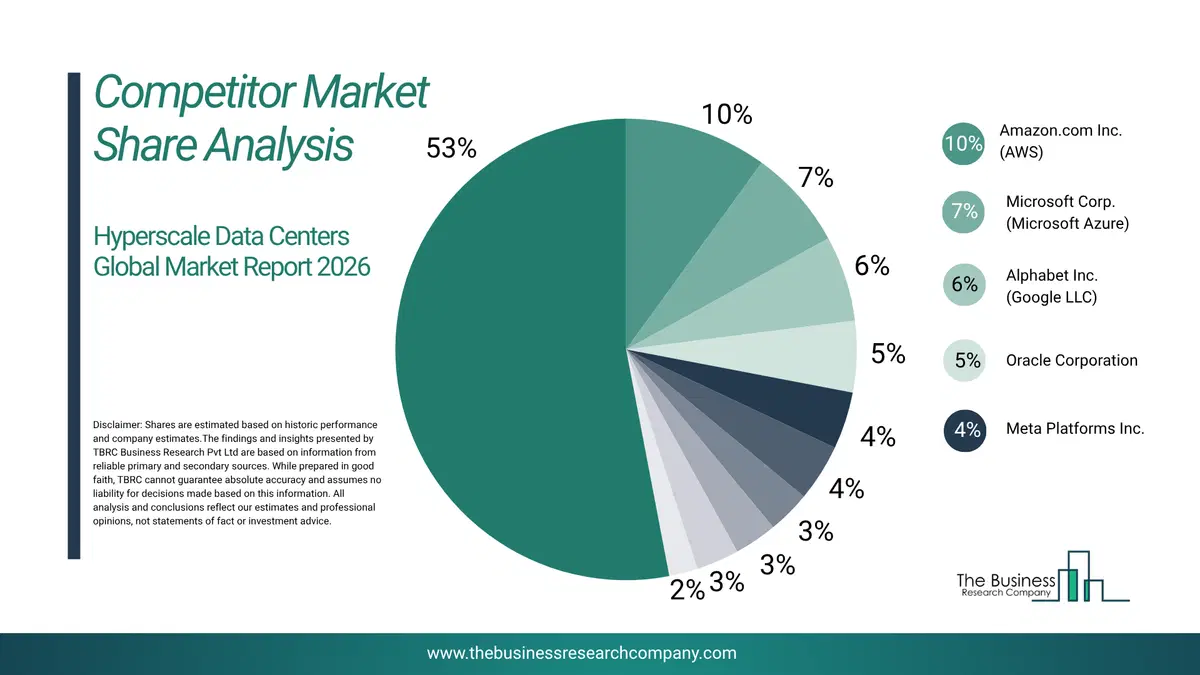
This chart is for illustrative purposes; the full report includes a detailed competitor analysis and comprehensive overview of the top 10 companies in the market.
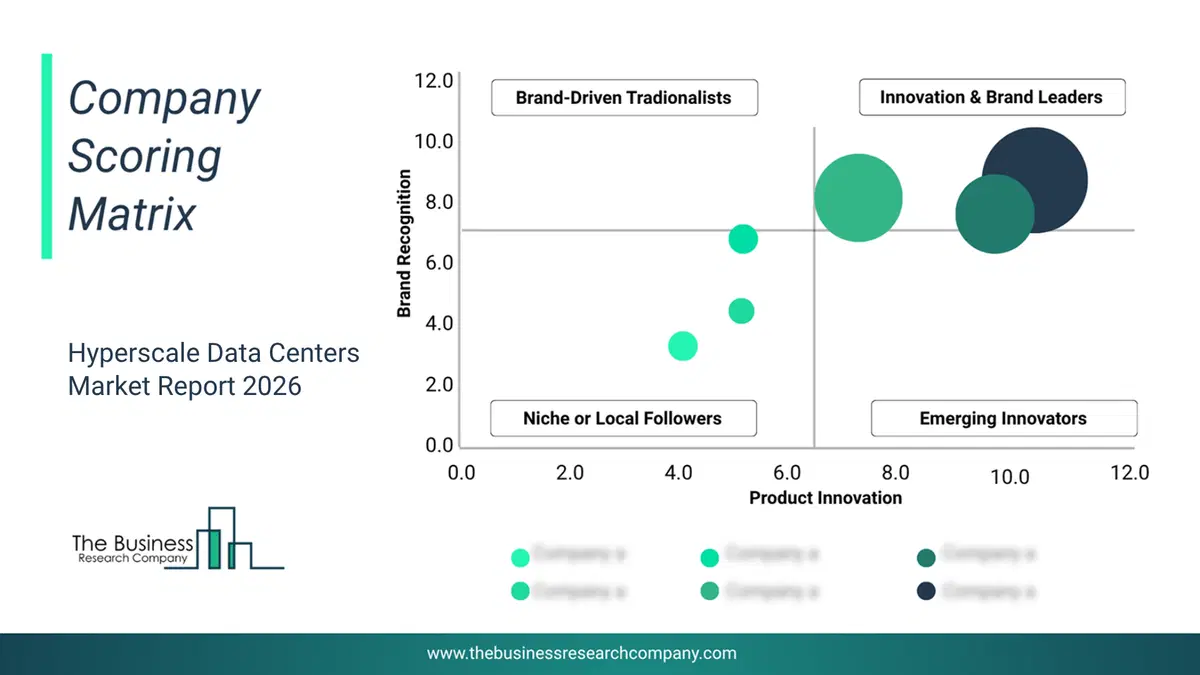
This chart maps companies by product innovation and brand strength, with bubble size indicating relative revenue, helping identify market leaders, challengers, and niche players. This is an illustrative chart; the full report provides a complete and accurate competitive analysis.
Global Hyperscale Data Centers Market Trends and Insights
Major companies operating in hyperscale data centers are increasing their focus on introducing new data centers, such as SGRUTB05, to gain a competitive edge in the market. SGRUTB05 is exclusively powered by certified renewable energy and designed to operate with a PUE (power usage effectiveness) of less than 1.4. For instance, in May 2023, Scala Data Centers, a US-based data center provider, launched the second-largest vertical data center in Latin America, called SGRUTB05. It is located on the Tamboré Campus in Barueri City, São Paulo State, Brazil. SGRUTB05 adds 6 MW of IT capacity to the Tamboré Campus, which is the largest data center complex in Latin America and among the five largest worldwide. With a total built area of 6,700 sq m, SGRUTB05 is 35.5 meters high and has five floors, three of which are dedicated to data halls, which together have a high density of approximately 400 racks with almost 9 MW of total power.What Are Latest Mergers And Acquisitions In The Hyperscale Data Centers Market?
In May 2025, Super Micro Computer, Inc., a US-based information technology company, entered into a multi-year memorandum of understanding (MOU) with DataVolt to build hyperscale AI campuses in Saudi Arabia. The partnership aims to jointly develop large-scale hyperscale AI campuses by integrating Supermicro’s advanced GPU, storage, and liquid-cooling technologies with DataVolt’s green, net-zero infrastructure capabilities, enabling rapid deployment of high-performance, energy-efficient AI systems. DataVolt is a Saudi Arabia-based provider of hyperscale data center infrastructure.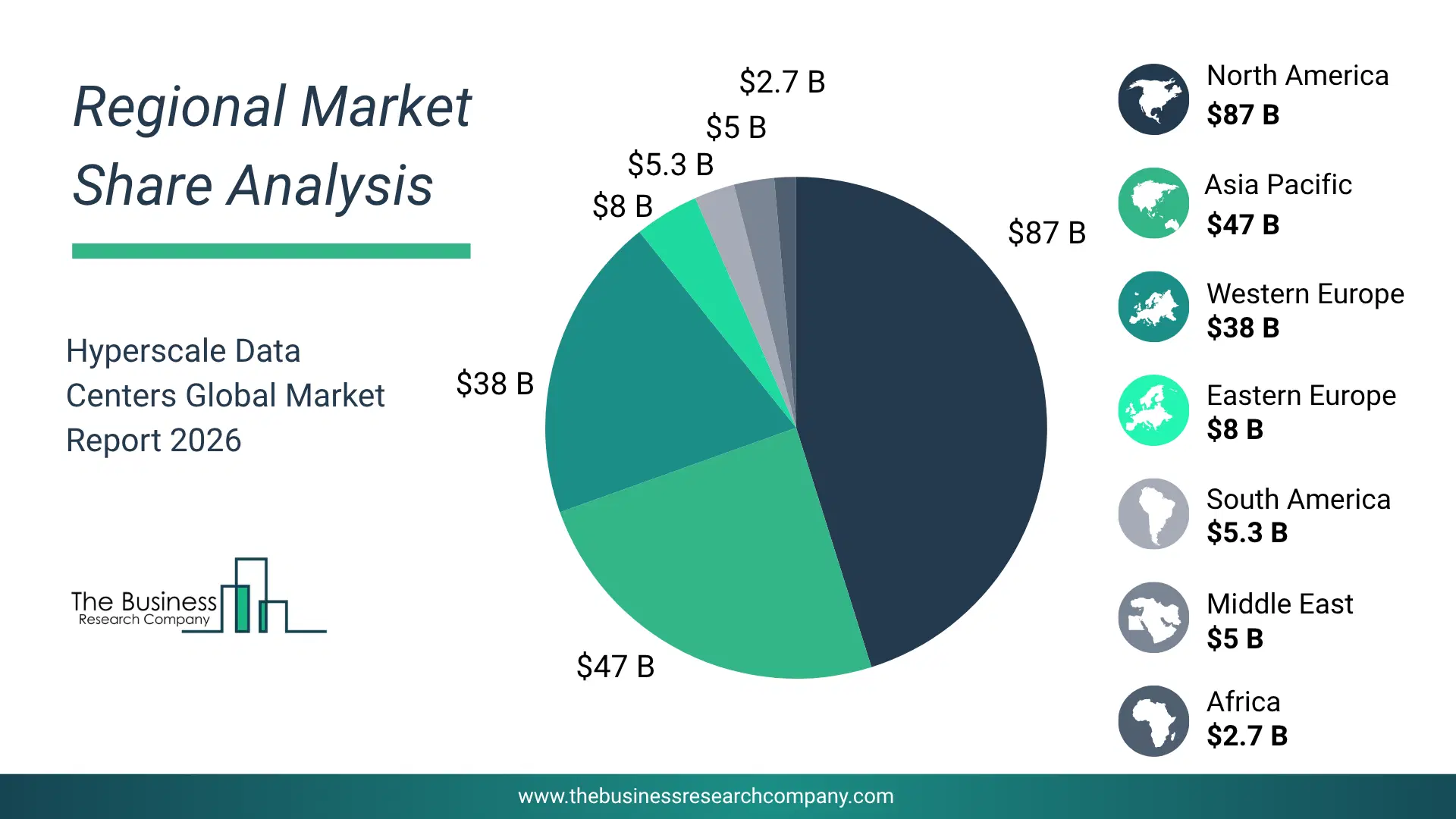
Regional Insights
Asia-Pacific was the largest region in the hyperscale data centers market in 2025. Asia-Pacific is expected to be the fastest-growing region in the hyperscale data centers market report analysis during the forecast period. The regions covered in this market report are Asia-Pacific, South East Asia, Western Europe, Eastern Europe, North America, South America, Middle East, Africa. The countries covered in this market report are Australia, Brazil, China, France, Germany, India, Indonesia, Japan, Taiwan, Russia, South Korea, UK, USA, Canada, Italy, Spain.What Defines the Hyperscale Data Centers Market?
The hyperscale data centers market consists of revenues earned by entities by providing hyper scale data centers which support a large number of physical and virtual servers at the same time. This industry includes companies with distributed data warehouses that focus on maintaining the data's scalability and managing a large amount of data. Hyperscale data centers operate in buildings or dedicated space within a building, or a group of buildings that house computer systems and related components, such as telecommunications and storage systems on large scale with thousands of individual servers operating together through a high-speed network. The market value includes the value of related goods sold by the service provider or included within the service offering. Only goods and services traded between entities or sold to end consumers are included.How is Market Value Defined and Measured?
The market value is defined as the revenues that enterprises gain from the sale of goods and/or services within the specified market and geography through sales, grants, or donations in terms of the currency (in USD unless otherwise specified). The revenues for a specified geography are consumption values that are revenues generated by organizations in the specified geography within the market, irrespective of where they are produced. It does not include revenues from resales along the supply chain, either further along the supply chain or as part of other products.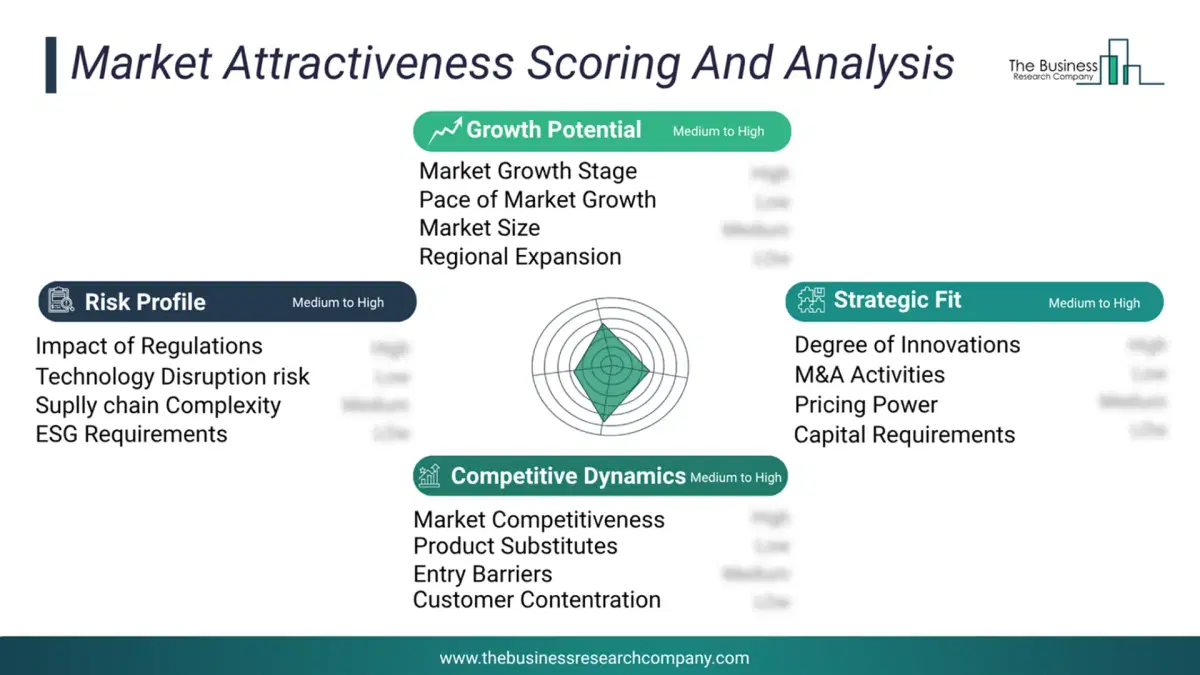
This chart presents market attractiveness based on a quantitative evaluation of growth, competition, strategic alignment, and risk, offering a clear view of opportunity areas for decision-making. This chart is for illustrative purposes; the full report contains the complete analysis.
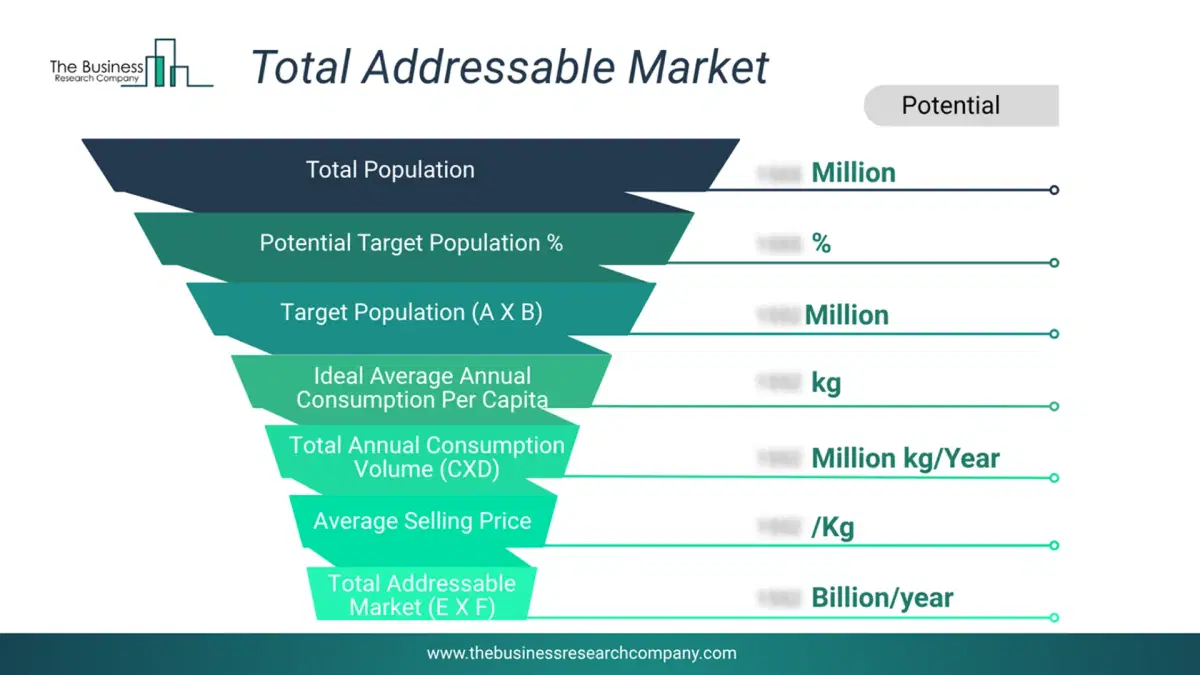
This chart highlights the Total Addressable Market (TAM) by estimating the maximum revenue opportunity using an assumption-driven approach, supporting strategic planning and opportunity sizing across markets. The chart is illustrative; the full report provides a more comprehensive analysis.
What Key Data and Analysis Are Included in the Hyperscale Data Centers Market Report 2026?
The hyperscale data centers market research report is one of a series of new reports from The Business Research Company that provides market statistics, including industry global market size, regional shares, competitors with the market share, detailed market segments, market trends and opportunities, and any further data you may need to thrive in the hyperscale data centers industry. The market research report delivers a complete perspective of everything you need, with an in-depth analysis of the current and future state of the industry.Hyperscale Data Centers Market Report Forecast Analysis
| Report Attribute | Details |
|---|---|
| Market Size Value In 2026 | $143.26 billion |
| Revenue Forecast In 2030 | $281.16 billion |
| Growth Rate | CAGR of 18.5% from 2026 to 2030 |
| Base Year For Estimation | 2025 |
| Actual Estimates/Historical Data | 2020-2025 |
| Forecast Period | 2026 - 2030 - 2035 |
| Market Representation | Revenue in USD Billion and CAGR from 2026 to 2030 |
| Segments Covered | Type, Component, Application |
| Regional Scope | Asia-Pacific, Western Europe, Eastern Europe, North America, South America, Middle East, Africa |
| Country Scope | The countries covered in the report are Australia, Brazil, China, France, Germany, India, Indonesia, Japan, Taiwan, Russia, South Korea, UK, USA, Canada, Italy, Spain. |
| Key Companies Profiled | NVIDIA Corporation, Cisco Systems Inc., Huawei Technologies Co. Ltd., International Business Machines Corporation, Hewlett-Packard Company, Dell Inc., Cavium Inc., Lenovo Group Ltd., Intel Corporation, Western Digital Corporation, Oracle Corporation, OVHcloud Company, Tencent Holdings Limited, Alibaba Group Holding Limited, Apple Inc., Microsoft Corporation, Meta Platforms Inc., Equinix Inc., Digital Realty Trust Inc., CyrusOne Inc., NTT Communications Corporation, Interxion Holding N.V., Global Switch Holdings Limited, CoreSite Realty Corporation, QTS Realty Trust Inc., Switch Inc., Cologix Inc., Cyxtera Technologies Inc. |
| Customization Scope | Request for Customization |
| Pricing And Purchase Options | Explore Purchase Options |