
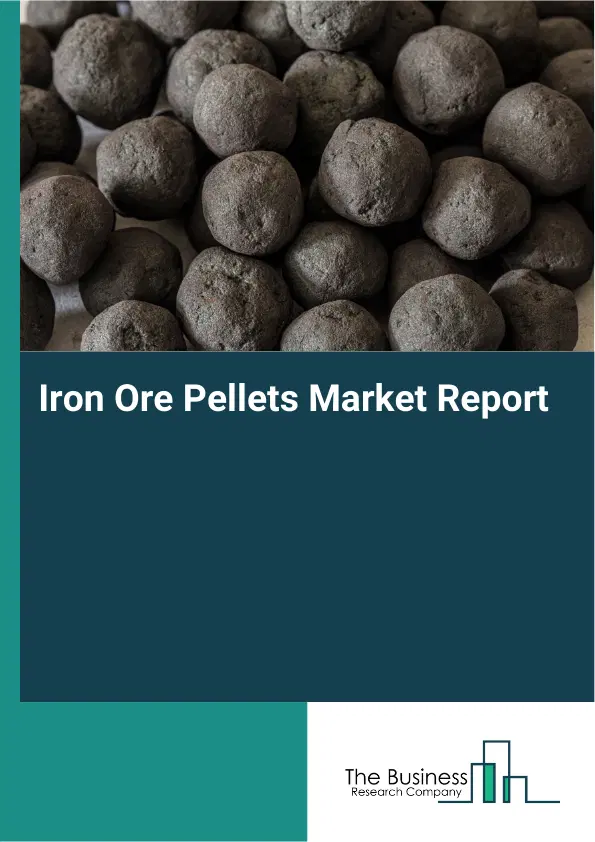
Iron Ore Pellets Market Report 2026
Global Outlook – By Product (Blast Furnace Iron Ore Pellet, Direct Reduced ), By Technology (Oxygen-Based or Blast Furnace, Electric Arc Furnace), By Application (Blast Furnace Steelmaking, Direct Reduction Iron (DRI) Production, Electric Arc Furnace (EAF) Steelmaking) – Market Size, Trends, Strategies, and Forecast to 2035
Iron Ore Pellets Market Overview
• Iron Ore Pellets market size has reached to $62.01 billion in 2025 • Expected to grow to $81.35 billion in 2030 at a compound annual growth rate (CAGR) of 5.5% • Growth Driver: The Surge In Iron Ore Pellets Market Fueled By Escalating Steel Demand In Global Construction • Market Trend: Innovations In Iron Ore Pellet Production With Metso's Hydrogen-Powered Low NOx Burners For Sustainable And Decarbonized Steel Manufacturing • Asia-Pacific was the largest region in 2025.Market Gains By 2030 – Top Opportunities By Segment
Market Gain identifies the most promising market opportunities by highlighting the segments or products expected to generate the highest incremental revenue growth over the next five years.
What Is Covered Under Iron Ore Pellets Market?
The iron ore pellets refer to iron ore pellets created from iron-bearing material collected from mining regions by palletization, advanced reduction, or other advanced treatment techniques. Pellets are little iron ore balls used in the steelmaking process. They're developed employing technology that makes use of the powder that's produced during the ore extraction process and was previously deemed trash. Iron ore pellets are used in a variety of industries. Various technologies, such as oxygen-based/blast furnaces, electric induction furnaces, and others, are used to make iron ore pellets. The main products of iron ore pellets are blast furnace iron ore pellets and direct reduction. The term ‘blast furnace’ refers to blast furnaces that are used to extract pig iron from iron ore and process it into steel, as well as to process lead, copper, and other metals. The technologies include oxygen-based/blast furnaces, electric arc furnaces, and electric induction furnaces that are applied in iron-based chemicals and steel production.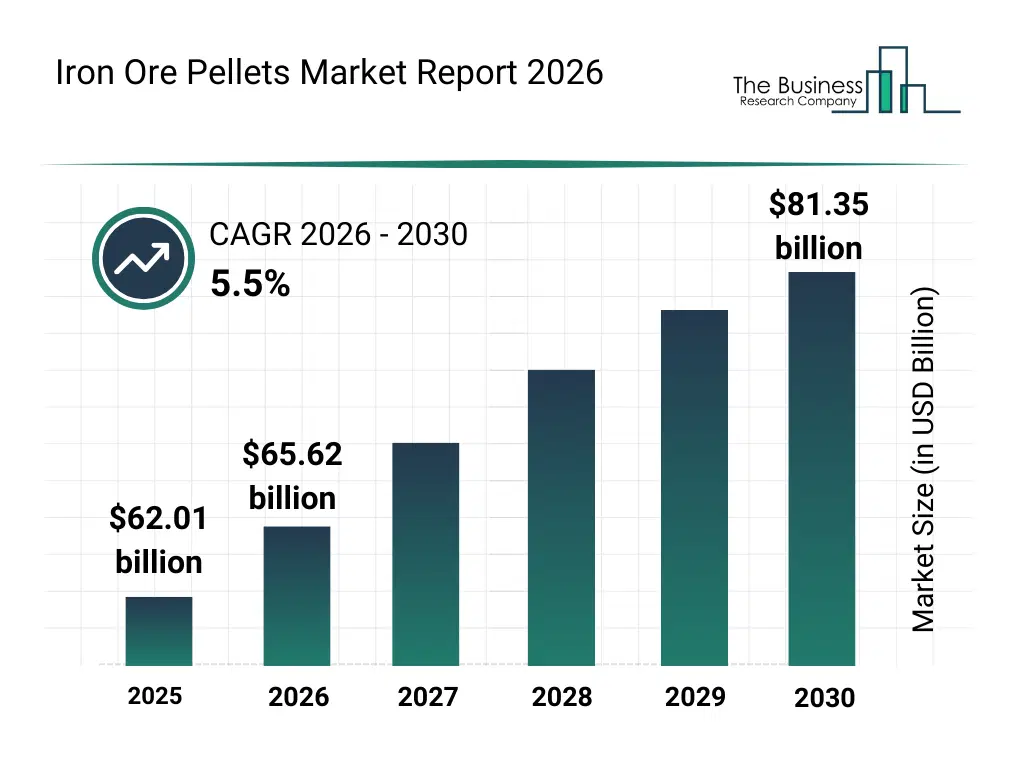
What Is The Iron Ore Pellets Market Size and Share 2026?
The iron ore pellets market size has grown strongly in recent years. It will grow from $62.01 billion in 2025 to $65.62 billion in 2026 at a compound annual growth rate (CAGR) of 5.8%. The growth in the historic period can be attributed to growing demand from steel production, increasing use in blast furnace processes, expansion of iron-based chemical industry, rise in global steel consumption, adoption of oxygen-based pelletization technologies.What Is The Iron Ore Pellets Market Growth Forecast?
The iron ore pellets market size is expected to see strong growth in the next few years. It will grow to $81.35 billion in 2030 at a compound annual growth rate (CAGR) of 5.5%. The growth in the forecast period can be attributed to increasing demand for direct reduced iron pellets, growth in electric arc furnace applications, expansion of high-grade pellet production, adoption of sustainable and energy-efficient pellet technologies, growth in emerging markets for steel and iron-based chemicals. Major trends in the forecast period include increasing adoption of dri and blast furnace pellets, rising integration of automation in pellet production, growing development of high-grade iron ore pellets, enhancing energy efficiency in iron ore pellet manufacturing, expanding applications in iron-based chemicals and steel production.
Global Iron Ore Pellets Market Segmentation
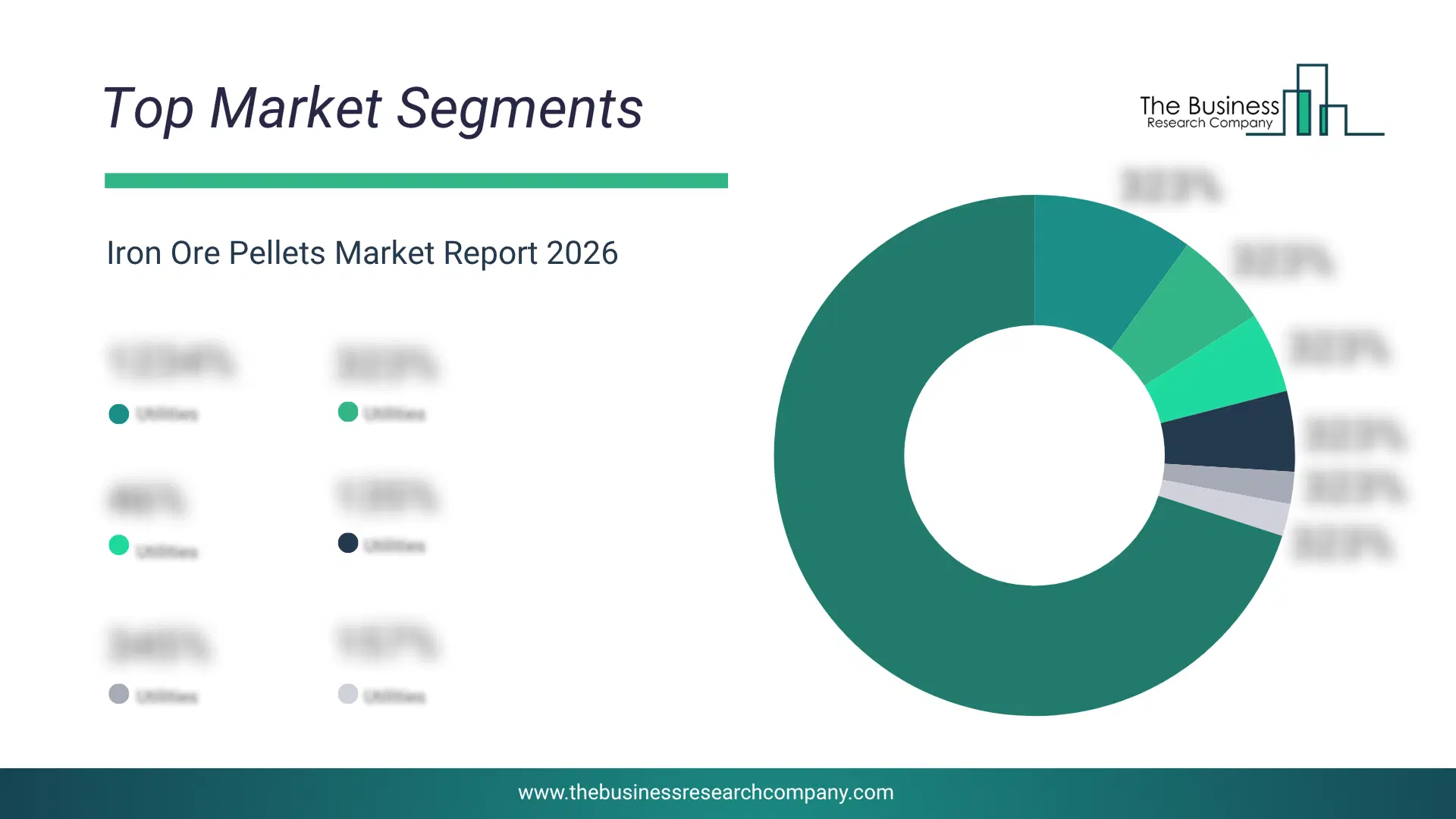
1) By Product: Blast Furnace Iron Ore Pellet, Direct Reduced 2) By Technology: Oxygen-Based or Blast Furnace, Electric Arc Furnace 3) By Application: Blast Furnace Steelmaking, Direct Reduction Iron (DRI) Production, Electric Arc Furnace (EAF) Steelmaking Subsegments: 1) By Blast Furnace Iron Ore Pellet: Standard Blast Furnace Pellets, High-Grade Blast Furnace Pellets 2) By Direct Reduced: DRI Pellets For Electric Arc Furnaces, DRI Pellets For Direct Reduction Processes The top segments in the iron ore pellets market will be: • Steel Production will reach $55458 Million by 2025. • Oxygen Based/Blast Furnace will reach $36140.9 Million by 2025. • Blast Furnace Iron Ore Pellet will reach $34592.8 Million by 2025. • Direct Reduced will reach $27232 Million by 2025. • Electric Arc Furnace will reach $23382 Million by 2025.What Is The Driver Of The Iron Ore Pellets Market?
Proliferating steel demand in the construction sector is expected to propel the growth of the iron ore pellets market going forward. Construction is one of the most significant steel-using industries, accounting for more than 50% of world steel demand. The iron ore pellets are used to make steel products that are used heavily in construction. For instance, in April 2024, according to the World Steel Association, a Belgium-based non-profit industry association, global steel demand was projected to grow by 1.7% in 2024, reaching approximately 1,793 million tonnes (Mt). Therefore, proliferating steel demand in the construction sector is expected to propel the growth of the iron ore pellets industry.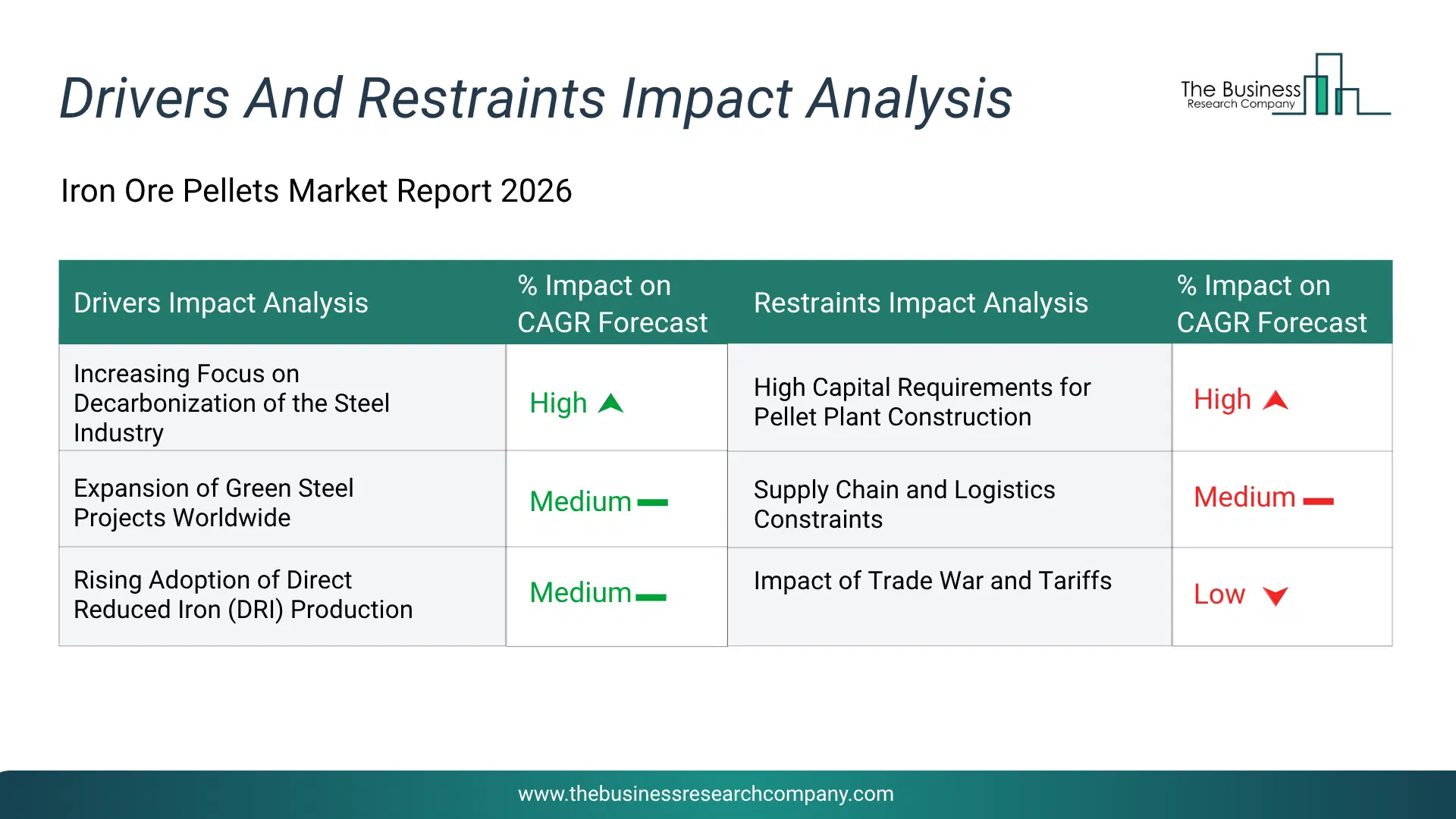
Infographic Chart Showing Key Market Drivers Analysis And Restraints For Iron Ore Pellets Market
The chart presents an impact analysis of key drivers and restraints, quantifying their relative influence on the market's growth rate and helping assess the balance between growth enablers and limiting factors. This chart offers a high-level perspective; the full report contains more detailed insights.
How Will The Drivers Impact Growth In The Global Iron Ore Pellets Market?
• Increasing Focus on Decarbonization of the Steel Industry (High) – The increasing focus on decarbonization of the steel industry will become a key driver of growth in the iron ore pellets market by 2030. Steel producers are under increasing pressure to reduce greenhouse gas emissions and comply with stricter environmental regulations. This has accelerated the adoption of cleaner production routes that require high-grade iron-bearing feedstocks with lower impurity levels. Such materials improve process efficiency, reduce energy consumption and support lower-emission steelmaking operations. Many companies are also investing in technologies that minimize carbon intensity across the production chain. As sustainability targets become more ambitious, demand grows for inputs that help achieve environmental performance goals. This trend is further reinforced by government policies, carbon reduction commitments and customer demand for low-emission steel products. As a result, increasing focus on decarbonization of the steel industry is anticipated to contributing to a 2.0% annual growth in the market. • Expansion of Green Steel Projects Worldwide (Medium) – The expansion of green steel projects worldwide will emerge as a major factor driving the expansion of the market by 2030. Green steel initiatives are being developed across multiple regions to reduce the environmental impact of steel production. These projects commonly utilize advanced production methods that require premium-quality iron inputs to ensure efficient operation and consistent output. High-grade feedstocks support lower energy consumption and improved metallurgical performance in emerging low-carbon processes. Significant investments from governments, steelmakers and industrial partners are accelerating project development and capacity additions. As more facilities move from planning to commercial operation, procurement requirements for suitable raw materials continue to increase. This creates sustained demand from newly established low-emission steelmaking ecosystems. Consequently, the expansion of green steel projects worldwide is projected to contributing to a 1.3% annual growth in the market. • Rising Adoption of Direct Reduced Iron (DRI) Production (Medium) – The rising adoption of direct reduced iron (DRI) production will serve as a key growth catalyst for the market by 2030. Direct reduction technology is gaining traction because it offers a lower-emission alternative to traditional blast furnace-based steelmaking. These processes typically require high-grade iron inputs with consistent chemical characteristics to achieve efficient reduction performance. Premium feedstocks help improve productivity, enhance metallurgical quality and reduce operational challenges within direct reduction facilities. Many new steelmaking projects are integrating direct reduction units as part of broader decarbonization strategies. Growing investment in natural gas- and hydrogen-based production routes is further increasing the use of this technology. As additional direct reduction capacity is commissioned globally, demand for suitable iron-bearing materials continues to rise. Therefore, this growth in rising adoption of direct reduced iron (DRI) production is projected to supporting to a 1.0% annual growth in the market. • Growing Renewable Energy Infrastructure Projects (Low) – The growing renewable energy infrastructure projects will become a significant driver contributing to the growth of the market by 2030 The deployment of renewable energy infrastructure requires substantial quantities of steel for wind turbines, solar mounting structures, transmission systems and related equipment. Expanding investments in clean energy projects increase overall steel consumption across multiple end-use sectors. To meet this demand, steel producers often raise production levels and secure reliable sources of high-quality iron-bearing materials. Large-scale renewable energy developments also support long-term steel demand visibility, encouraging capacity utilization and production growth. As countries accelerate energy transition strategies, steel requirements continue to expand. This strengthens the need for efficient upstream feedstocks that support growing manufacturing activity. Consequently, the growing renewable energy infrastructure projects is projected to contributing to a 0.5% annual growth in the market.How Will The Restraints Impact Growth In The Global Iron Ore Pellets Market?
• High Capital Requirements for Pellet Plant Construction (High) – High capital requirements for pellet plant construction is expected to restrain market growth during the forecast period. It creates operational, financial, regulatory, or commercial challenges that can increase costs, delay projects, reduce investments, or discourage purchasing decisions depending on the market. These challenges can reduce product adoption, affect business confidence, and limit the ability of companies to expand efficiently across key regions. This can disrupt long-term growth strategies and reduce the ability of companies to capitalize on emerging market opportunities. • Supply Chain and Logistics Constraints (Medium) – During the forecast period, supply chain and logistics constraints is likely to limit market expansion. It creates operational, financial, regulatory, or commercial challenges that can increase costs, delay projects, reduce investments, or discourage purchasing decisions depending on the market. These challenges can reduce product adoption, affect business confidence, and limit the ability of companies to expand efficiently across key regions. As a result, organizations may postpone purchasing decisions, limiting demand across both established and emerging markets. • Impact of Trade War and Tariffs (Medium) – The market is expected to face challenges due to impact of trade war and tariffs over the forecast period. It creates operational, financial, regulatory, or commercial challenges that can increase costs, delay projects, reduce investments, or discourage purchasing decisions depending on the market. These challenges can reduce product adoption, affect business confidence, and limit the ability of companies to expand efficiently across key regions. This may reduce production efficiency, extend project timelines, and create challenges in meeting evolving customer requirements.Key Players In The Global Iron Ore Pellets Market
Major companies operating in the iron ore pellets market report are Vale SA, Rio Tinto PLC, BHP Group Limited, Fortescue Metals Group Limited, Anglo American PLC, Cleveland-Cliffs Inc., Ferrexpo PLC, Luossavaara-Kiirunavaara AB, Metalloinvest Management Company LLC, Samarco Mineracao SA, Bahrain Steel BSC, Kudremukh Iron Ore Company Limited, ArcelorMittal SA, Tata Steel Limited, JSW Steel Limited, Nippon Steel Corporation, Pohang Iron and Steel Company, China Baowu Steel Group Corporation Limited, United States Steel Corporation, Gerdau SA, Thyssenkrupp AG, Kobe Steel Ltd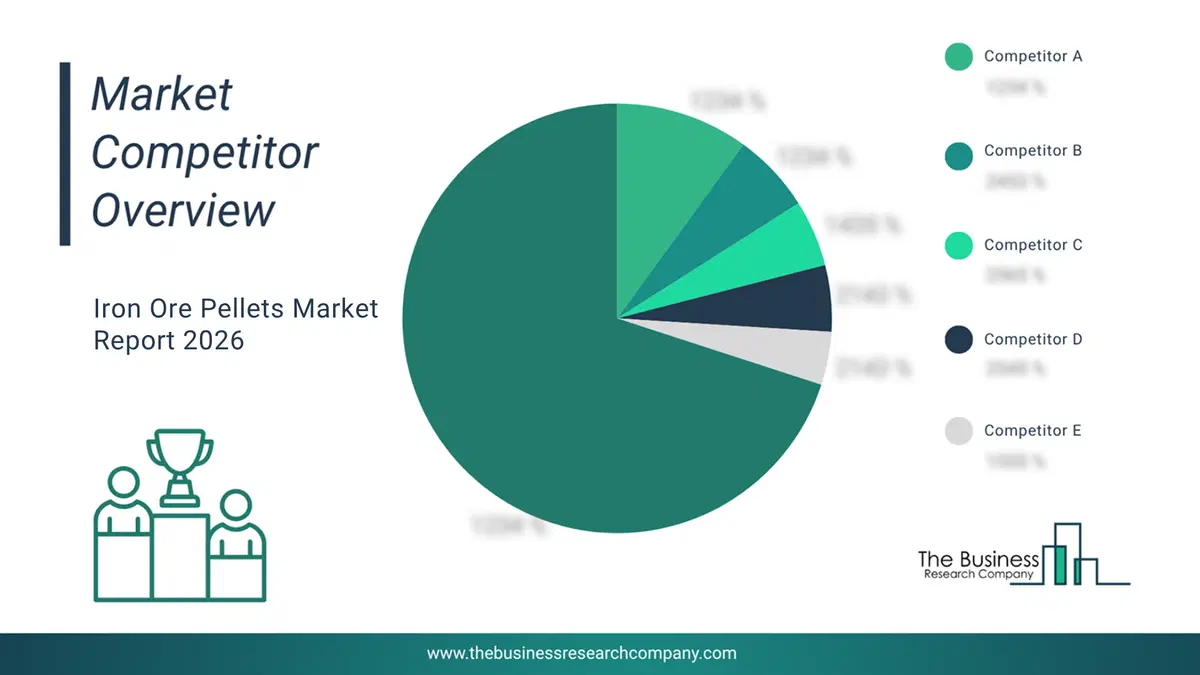
This chart is for illustrative purposes; the full report includes a detailed competitor analysis and comprehensive overview of the top 10 companies in the market.
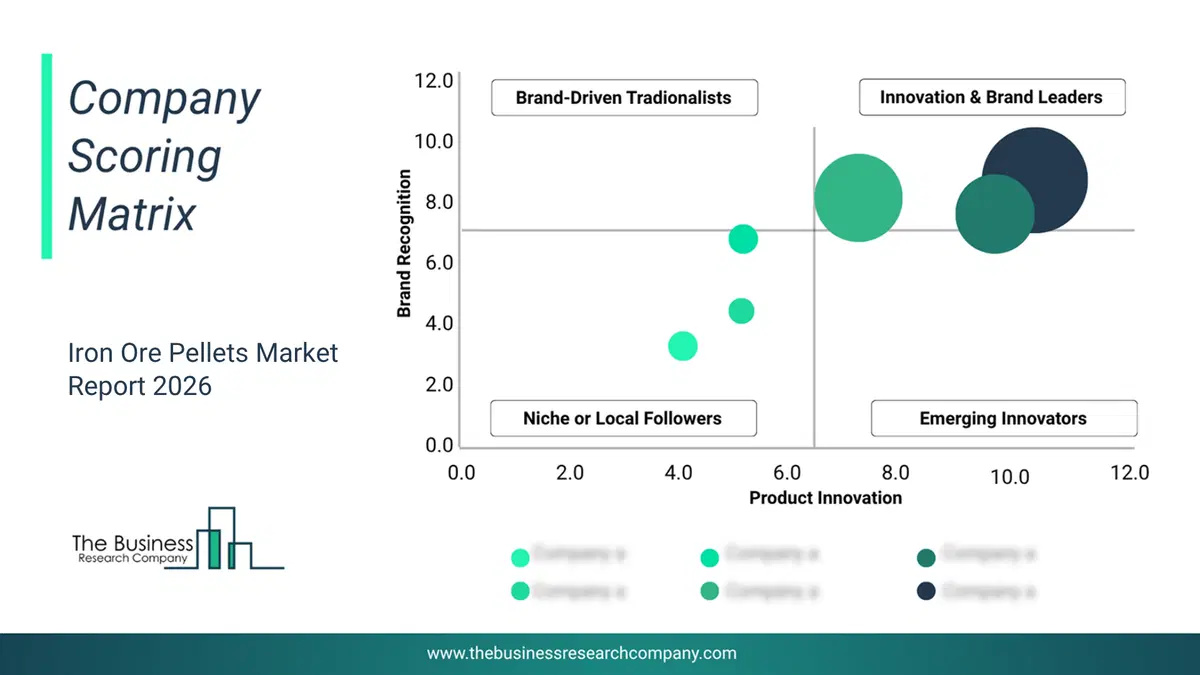
This chart maps companies by product innovation and brand strength, with bubble size indicating relative revenue, helping identify market leaders, challengers, and niche players. This is an illustrative chart; the full report provides a complete and accurate competitive analysis.
Global Iron Ore Pellets Market Trends and Insights
Major companies operating in the iron ore pellets market are launching innovative products such as low NOx burners to sustain their position in the market. Low NOx burners are a type of combustion technology designed to minimize the formation of nitrogen oxides (NOx) during the combustion process. For instance, in October 2023, Metso, a Finland-based mining, metals refining and recycling solutions company launched a hydrogen variant of its low NOx burners, the Ferroflame LowNox burner for iron ore pellet production. This new burner has laboratory-proven functionality and performance and shows that hydrogen can be implemented in pelletizing plants and can help customers in meeting CO2 and NOx targets. These burners are a stepping-stone towards decarbonization of the pelletizing industry. This new product can help in reducing the emissions of steel manufacturing.What Are Latest Mergers And Acquisitions In The Iron Ore Pellets Market?
In September 2024, Vale, a Brazil-based mining company, manufactured iron ore pellets and partnered with Midrex. The partnership aims to develop eco-friendly solutions that reduce CO2 emissions in steel production. Vale's briquetting process cuts production costs and CO2 emissions by about 80% compared to traditional pelletizing methods. Midrex is a US-based provider of direct reduction ironmaking technology.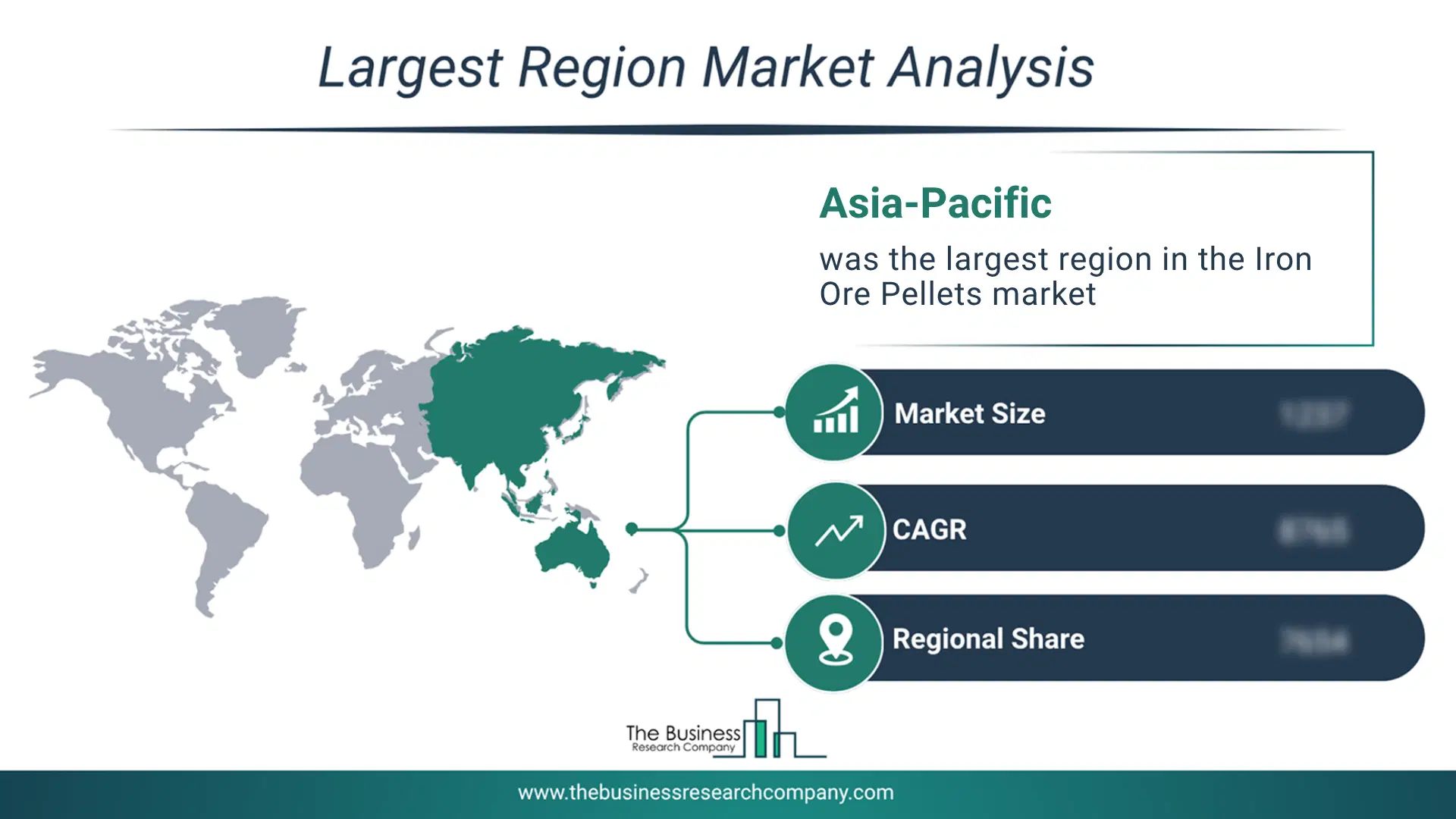
Regional Outlook
Asia-Pacific was the largest region in the iron ore pellets market in 2025. The regions covered in the iron ore pellets market are Asia-Pacific, South East Asia, Western Europe, Eastern Europe, North America, South America, Middle East, Africa. The countries covered in the iron ore pellets market are Australia, Brazil, China, France, Germany, India, Indonesia, Japan, Taiwan, Russia, South Korea, UK, USA, Canada, Italy, Spain.What Defines the Iron Ore Pellets Market?
The iron ore pellets market consists of sales of iron ore pellets such as magnetite, and hematite. Values in this market are ‘factory gate’ values, that is, the value of goods sold by the manufacturers or creators of the goods, whether to other entities (including downstream manufacturers, wholesalers, distributors, and retailers) or directly to end customers. The value of goods in this market includes related services sold by the creators of the goods.How is Market Value Defined and Measured?
The market value is defined as the revenues that enterprises gain from the sale of goods and/or services within the specified market and geography through sales, grants, or donations in terms of the currency (in USD unless otherwise specified). The revenues for a specified geography are consumption values that are revenues generated by organizations in the specified geography within the market, irrespective of where they are produced. It does not include revenues from resales along the supply chain, either further along the supply chain or as part of other products.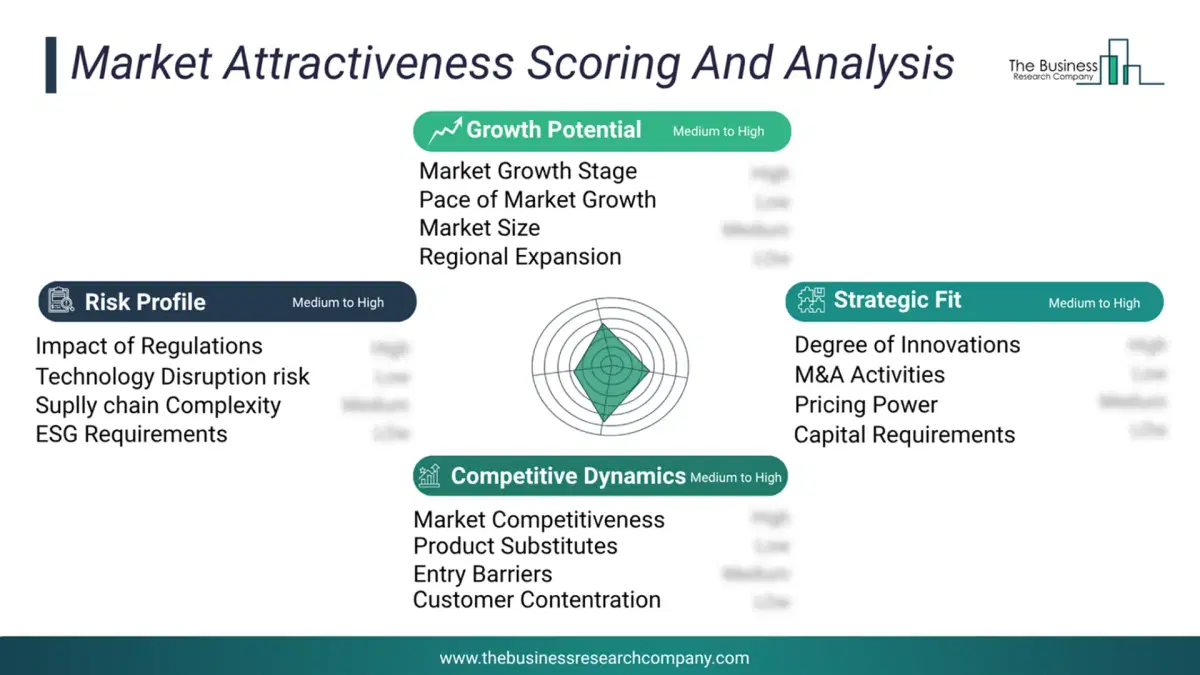
This chart presents market attractiveness based on a quantitative evaluation of growth, competition, strategic alignment, and risk, offering a clear view of opportunity areas for decision-making. This chart is for illustrative purposes; the full report contains the complete analysis.
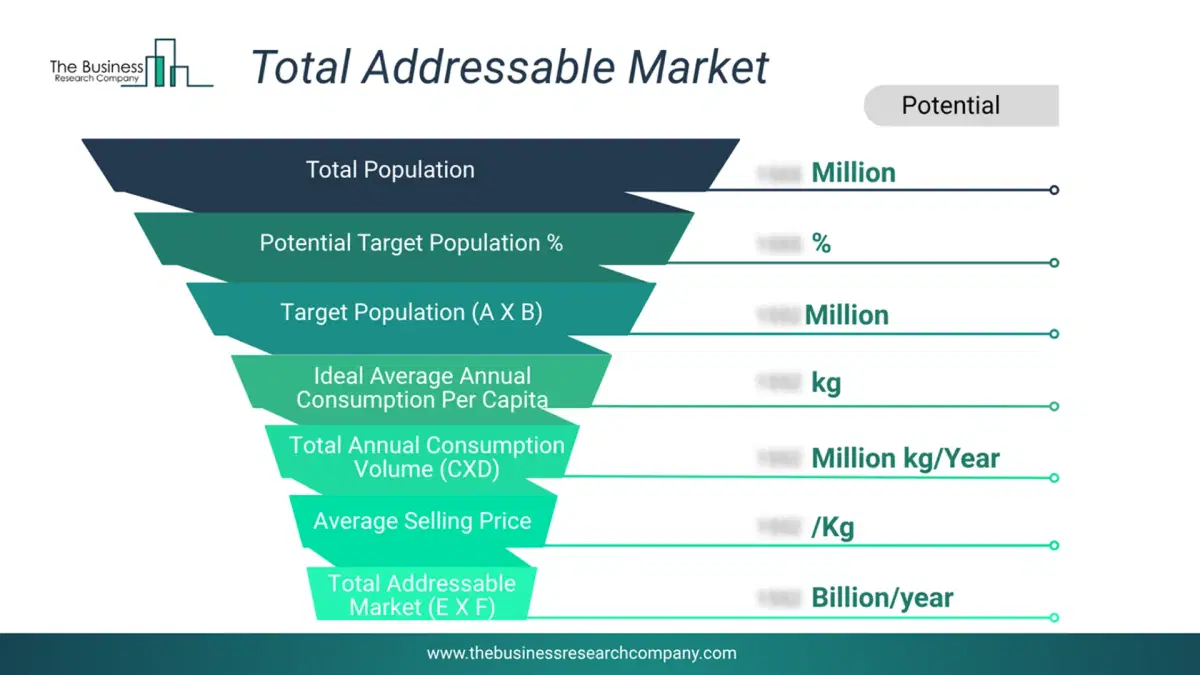
This chart highlights the Total Addressable Market (TAM) by estimating the maximum revenue opportunity using an assumption-driven approach, supporting strategic planning and opportunity sizing across markets. The chart is illustrative; the full report provides a more comprehensive analysis.
What Key Data and Analysis Are Included in the Iron Ore Pellets Market Report 2026?
The iron ore pellets market research report is one of a series of new reports from The Business Research Company that provides market statistics, including Market Report 2026?global market size, regional shares, competitors with the market share, detailed market segments, market trends and opportunities, and any further data you may need to thrive in the iron ore pellets Market Report 2026? The market research report delivers a complete perspective of everything you need, with an in-depth analysis of the current and future state of the Market Report 2026?Iron Ore Pellets Market Report Forecast Analysis
| Report Attribute | Details |
|---|---|
| Market Size Value In 2026 | $65.62 billion |
| Revenue Forecast In 2035 | $81.35 billion |
| Growth Rate | CAGR of 5.8% from 2026 to 2035 |
| Base Year For Estimation | 2025 |
| Actual Estimates/Historical Data | 2020-2025 |
| Forecast Period | 2026 - 2030 - 2035 |
| Market Representation | Revenue in USD Billion and CAGR from 2026 to 2035 |
| Segments Covered | Product, Technology, Application |
| Regional Scope | Asia-Pacific, Western Europe, Eastern Europe, North America, South America, Middle East, Africa |
| Country Scope | The countries covered in the report are Australia, Brazil, China, France, Germany, India, ... |
| Key Companies Profiled | Vale SA, Rio Tinto PLC, BHP Group Limited, Fortescue Metals Group Limited, Anglo American PLC, Cleveland-Cliffs Inc., Ferrexpo PLC, Luossavaara-Kiirunavaara AB, Metalloinvest Management Company LLC, Samarco Mineracao SA, Bahrain Steel BSC, Kudremukh Iron Ore Company Limited, ArcelorMittal SA, Tata Steel Limited, JSW Steel Limited, Nippon Steel Corporation, Pohang Iron and Steel Company, China Baowu Steel Group Corporation Limited, United States Steel Corporation, Gerdau SA, Thyssenkrupp AG, Kobe Steel Ltd |
| Customization Scope | Request for Customization |
| Pricing And Purchase Options | Explore Purchase Options |