
Jet Fuel Market Report 2026
Global Outlook – By Fuel Type (Conventional Fuel-Air Turbine Fuel, Avgas, Sustainable Fuel-Biofuel, Power-To-Liquid, Gas-To-Liquid), By Fuel Grade (Jet A, Jet A1, Jet B, TS-1), By Aircraft Type (Fixed Wing, Rotary Wing, Unmanned Aerial Vehicle), By Application (Commercial, Defense, General Aviation, Private) – Market Size, Trends, Strategies, and Forecast to 2030
Jet Fuel Market Overview
• Jet Fuel market size has reached to $212.78 billion in 2025 • Expected to grow to $276.1 billion in 2030 at a compound annual growth rate (CAGR) of 5.6% • Growth Driver: The Surging Passenger Numbers Fueling Jet Fuel Market Growth • Market Trend: Strategic Partnerships Boost The Jet Fuel Market • North America was the largest region in 2025.Market Gains By 2030 – Top Opportunities By Segment
Market Gain identifies the most promising market opportunities by highlighting the segments or products expected to generate the highest incremental revenue growth over the next five years.
What Is Covered Under Jet Fuel Market?
Jet fuel is one of the important petroleum products produced from crude oil and processed in petroleum refineries. Jet fuel is mainly used in the transportation sector. Specifically, jet fuel is used in aircraft. The same jet fuel, of lower quality, is sold as kerosene for non-aircraft purposes. The main types of jet fuels are conventional fuel (air turbine fuel), avgas, sustainable fuel (biofuel), power-to-liquid, and gas-to-liquid. Conventional jet fuels are a combination of hydrocarbons, mostly normal and iso-paraffins, cycloparaffins, and aromatics. They are available in different fuel grades such as Jet A, Jet A1, Jet B, and TS-1 for various aircraft such as fixed-wing, rotary-wing, and unmanned aerial vehicles. It is used for commercial applications, defense applications, general aviation applications, and private applications.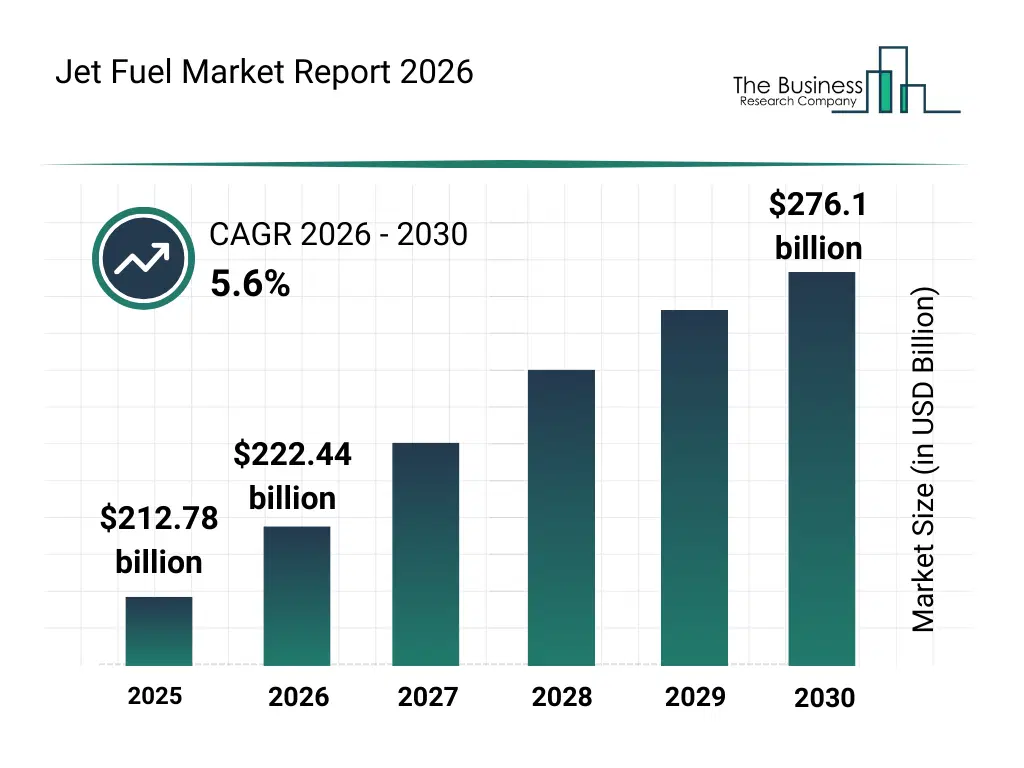
What Is The Jet Fuel Market Size and Share 2026?
The jet fuel market size has grown steadily in recent years. It will grow from $212.78 billion in 2025 to $222.44 billion in 2026 at a compound annual growth rate (CAGR) of 4.5%. The growth in the historic period can be attributed to growth in global air passenger traffic, expansion of airline fleets, military aviation fuel demand, development of refinery infrastructure, rise in international trade.What Is The Jet Fuel Market Growth Forecast?
The jet fuel market size is expected to see strong growth in the next few years. It will grow to $276.1 billion in 2030 at a compound annual growth rate (CAGR) of 5.6%. The growth in the forecast period can be attributed to sustainable aviation fuel mandates, growth of low cost carriers, modernization of aircraft fleets, expansion of unmanned aerial vehicles, investment in alternative jet fuels. Major trends in the forecast period include rising adoption of sustainable aviation fuel, growth in commercial air travel demand, expansion of defense aviation fuel consumption, increasing use of synthetic jet fuels, fuel efficiency and emission reduction focus.
Global Jet Fuel Market Segmentation
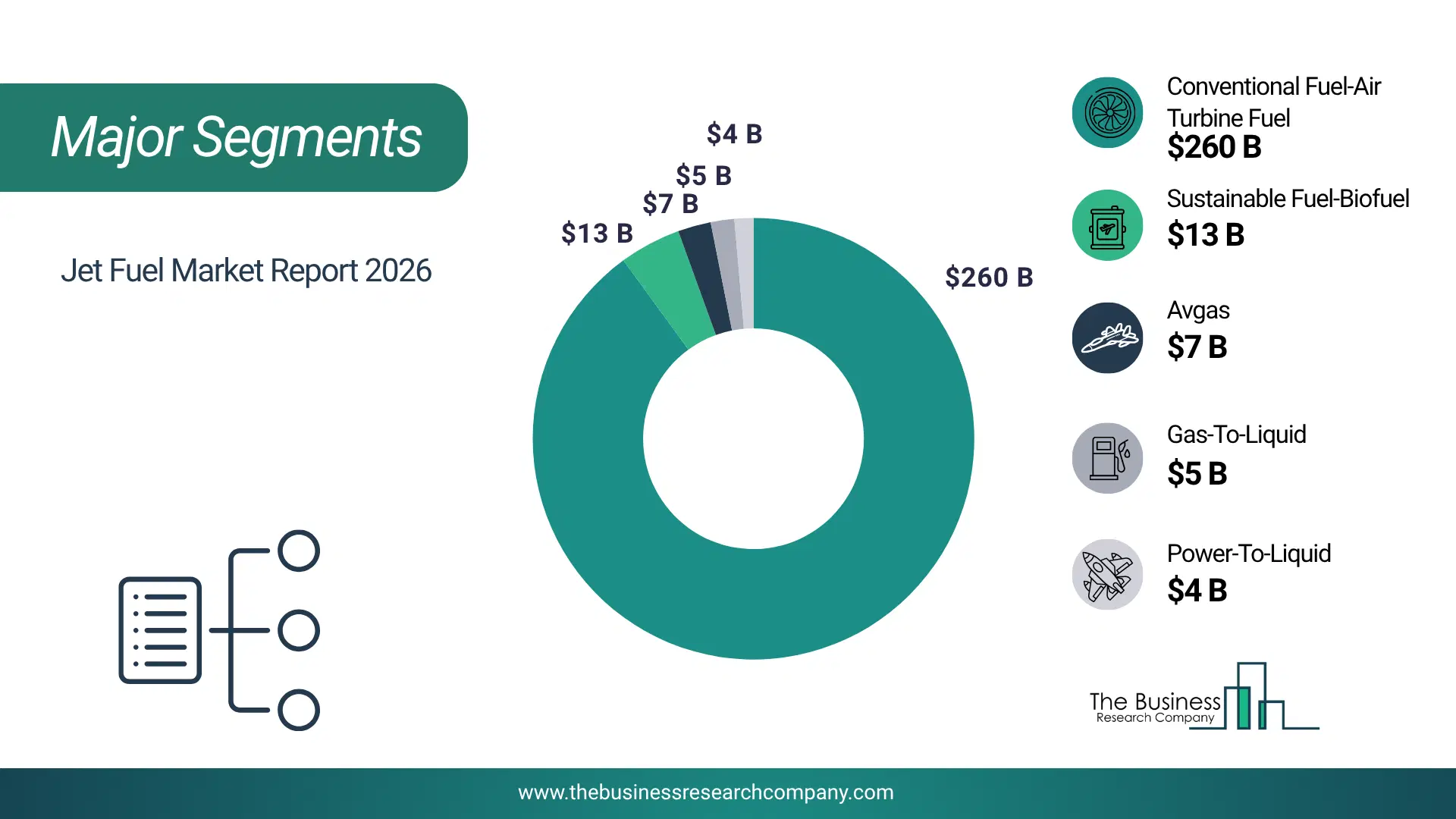
1) By Fuel Type: Conventional Fuel-Air Turbine Fuel, Avgas, Sustainable Fuel-Biofuel, Power-To-Liquid, Gas-To-Liquid 2) By Fuel Grade: Jet A, Jet A1, Jet B, TS-1 3) By Aircraft Type: Fixed Wing, Rotary Wing, Unmanned Aerial Vehicle 4) By Application: Commercial, Defense, General Aviation, Private Subsegments: 1) By Conventional Fuel-Air Turbine Fuel: Jet A, Jet A-1, Jet B 2) By Avgas: Avgas 100LL, Avgas 100, Avgas 87 3) By Sustainable Fuel-Biofuel: Hydroprocessed Esters And Fatty Acids (HEFA), Alcohol-To-Jet (ATJ), Fischer-Tropsch Synthetic Paraffinic Kerosene (FT-SPK) 4) By Power-To-Liquid: Synthetic Jet Fuel From Renewable Energy Sources 5) By Gas-To-Liquid: GTL Synthetic Jet Fuel The top segments in the jet fuel market will be: • Conventional Fuel-Air Turbine Fuel will reach $260.36 Billion by 2030. • Sustainable Fuel-Biofuel will reach $12.67 Billion by 2030. • Avgas will reach $7.06 Billion by 2030. • Gas-To-Liquid will reach $5.16 Billion by 2030. • Power-To-Liquid will reach $4.26 Billion by 2030.What Is The Driver Of The Jet Fuel Market?
The surge in air passengers is expected to propel the growth of the jet fuel market going forward. Air passengers are individuals who travel by air on commercial airlines or private airplanes, and globalization has contributed to the increase in air travel. The rise in passenger numbers is prompting airlines to schedule more domestic and international flights, thereby increasing jet fuel consumption. Jet fuel consumption supports the aviation industry by enabling continuous flight operations, optimizing airline scheduling, and contributing to the global transportation network. For instance, in August 2025, according to the International Air Transport Association (IATA), a Canada-based trade association, in 2024, the US remained the world’s largest aviation market with 876 million passengers, growing 5.2% year-on-year, while China was the second-largest passenger market with 741 million passengers, marking an 18.7% increase compared to 2023. Therefore, the surge in air passengers is driving the growth of the jet fuel industry.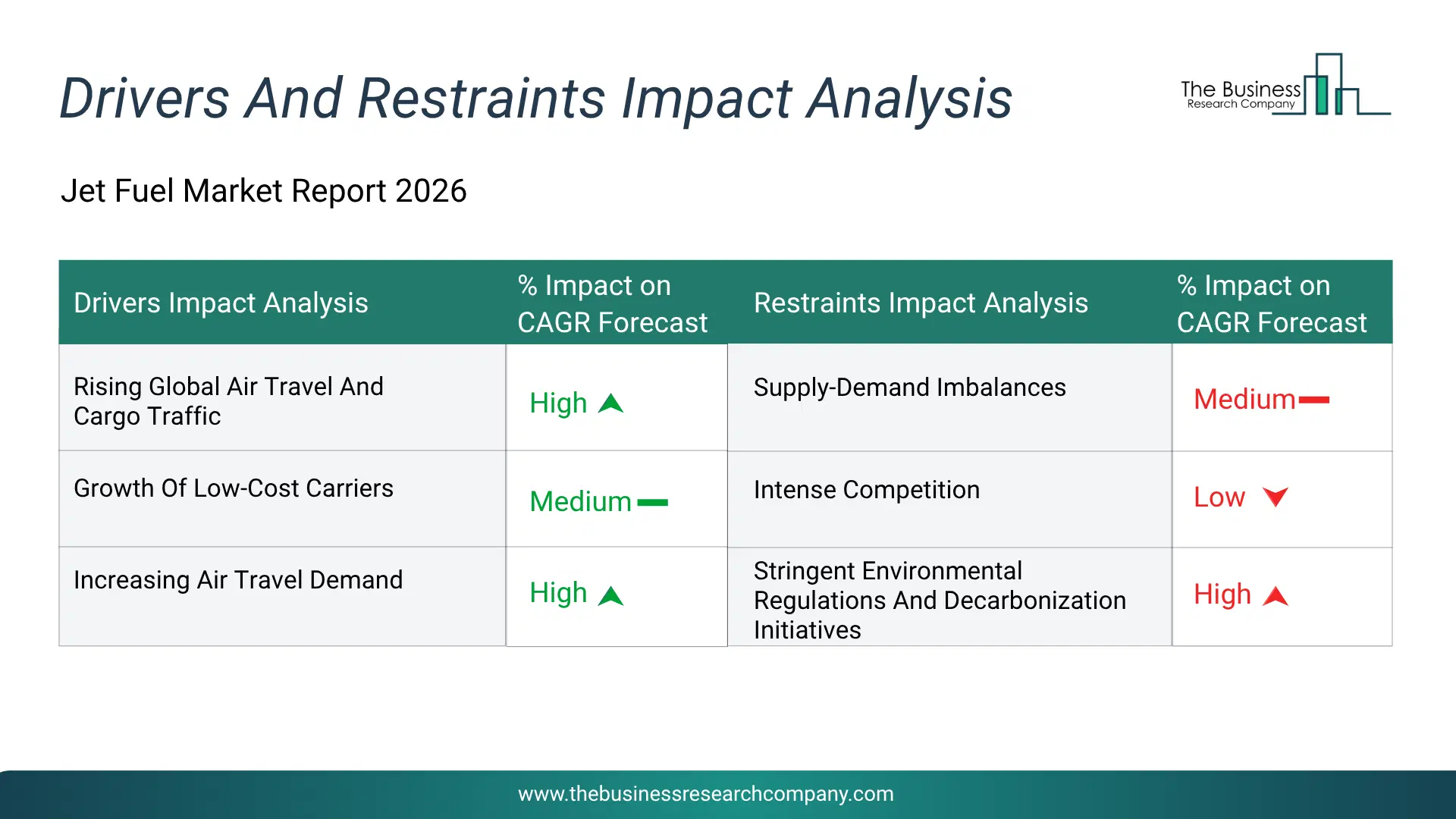
Infographic Chart Showing Key Market Drivers Analysis And Restraints For Jet Fuel Market
The chart presents an impact analysis of key drivers and restraints, quantifying their relative influence on the market's growth rate and helping assess the balance between growth enablers and limiting factors. This chart offers a high-level perspective; the full report contains more detailed insights.
How Will The Drivers Impact Growth In The Global Jet Fuel Market?
• Rising Global Air Travel And Cargo Traffic (High) – During the forecast period, the rising global air travel and cargo traffic is expected to become a key growth driver for the jet fuel market by 2030. Increasing passenger movement and freight transportation are encouraging airlines to expand flight operations, increase route connectivity, and improve fleet utilization rates. Growth in international trade and e-commerce activities is further boosting air cargo operations, leading to greater demand for long-haul and dedicated freight aircraft services. Emerging economies are experiencing strong aviation growth due to expanding airport networks, increasing tourism activities, and improved accessibility to air transport services. This continuous expansion of passenger and cargo aviation is strengthening global jet fuel consumption. • Growth Of Low-Cost Carriers (Medium) – During the forecast period, the rising global air travel and cargo traffic is expected to become a key growth driver for the jet fuel market by 2030. Increasing passenger movement and freight transportation are encouraging airlines to expand flight operations, increase route connectivity, and improve fleet utilization rates. Growth in international trade and e-commerce activities is further boosting air cargo operations, leading to greater demand for long-haul and dedicated freight aircraft services. Emerging economies are experiencing strong aviation growth due to expanding airport networks, increasing tourism activities, and improved accessibility to air transport services. This continuous expansion of passenger and cargo aviation is strengthening global jet fuel consumption. • Increasing Air Travel Demand (High) – During the forecast period, the increasing air travel demand is expected to act as a key growth catalyst for the jet fuel market by 2030. Rising disposable incomes, population expansion, and improved global connectivity are driving higher domestic and international passenger volumes. Airlines are increasing aircraft deliveries and expanding route networks to meet growing transportation needs across developed and emerging markets. Growth in business travel, tourism activities, and cross-border mobility is further increasing flight frequencies worldwide. Additionally, investments in airport infrastructure are enabling greater aviation capacity and supporting higher fuel usage.How Will The Restraints Impact Growth In The Global Jet Fuel Market?
• Supply-Demand Imbalances (High) – During the forecast period, supply-demand imbalances act as a significant restraint on the jet fuel market by creating uncertainty in fuel availability and pricing. Fluctuations in crude oil production, refinery output, and aviation fuel demand can disrupt market stability. During periods of high demand and limited supply, jet fuel prices rise sharply, increasing operational costs for airlines. Conversely, excess supply can lead to inventory management challenges and reduced profitability for fuel producers. Geopolitical tensions, natural disasters, and supply chain disruptions often exacerbate these imbalances. Such volatility makes long-term planning and budgeting more difficult for aviation stakeholders. As a result, persistent supply-demand mismatches can hinder the steady growth of the jet fuel market. • Intense Competition (Medium) – During the forecast period, the intense competition restrains the jet fuel market by placing significant pressure on profit margins across the fuel supply chain. Numerous fuel suppliers, refiners, and distributors compete to secure contracts with airlines and airports, often leading to aggressive pricing strategies. This competitive environment can limit revenue growth despite rising fuel consumption. Companies may be forced to invest heavily in operational efficiency and infrastructure upgrades to maintain market share. Smaller market participants often face challenges in competing with large integrated energy companies that benefit from economies of scale. Additionally, competition from alternative aviation fuel providers increases market complexity. Therefore, intense competition can reduce profitability and create barriers to sustainable expansion within the jet fuel market. • Stringent Environmental Regulations And Decarbonization Initiatives (High) – During the forecast period, stringent environmental regulations and decarbonization initiatives act as a significant restraint on the jet fuel market because governments and aviation authorities are implementing stricter carbon emission standards to reduce the environmental impact of air travel. Airlines are increasingly encouraged or required to adopt sustainable aviation fuels (SAF), improve fuel efficiency, and comply with carbon offset programs, reducing long-term reliance on conventional jet fuel. Compliance with evolving environmental regulations often requires substantial investments in cleaner technologies and operational changes, increasing costs across the aviation value chain. In addition, policy measures such as carbon taxes and emission trading schemes can further raise operating expenses for airlines and fuel suppliers. These regulatory pressures may gradually limit demand growth for conventional jet fuel and accelerate the transition toward lower-carbon alternatives. Consequently, stringent environmental regulations and decarbonization initiatives can restrain the growth of the jet fuel market.Key Players In The Global Jet Fuel Market
Major companies operating in the jet fuel market are Exxon Mobil Corporation, BP plc, Chevron Corporation, Valero Energy Corporation, Shell plc, TotalEnergies SE, Gazprom Neft PJSC, Indian Oil Corporation, Bharat Petroleum Corp. Ltd., Honeywell International Inc., World Fuel Service Corp., Neste Oyj, World Energy LLC, Rosneft Deutschland GmbH, China Aviation Oil Corporation Ltd., Qatar Jet Fuel Company, Allied Aviation Services Inc., Sinopec Corp., Oman Oil Company SAOC, Marathon Petroleum Corporation, Hess Corporation, National Refinery Limited, CNOOC Limited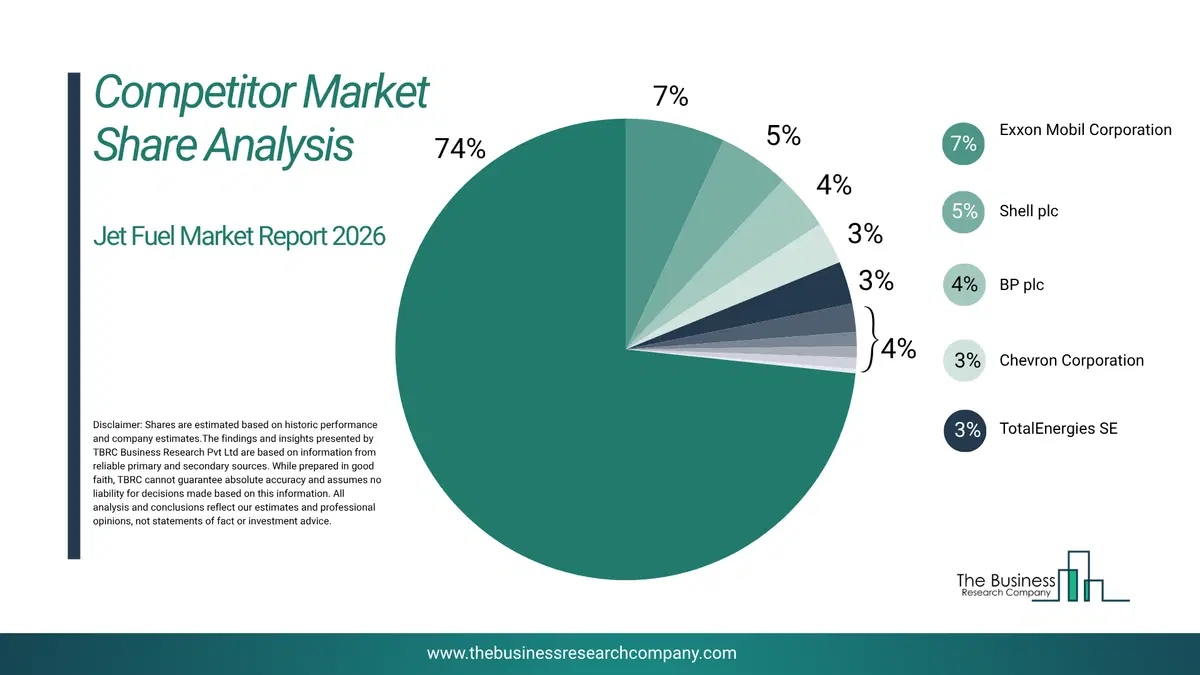
This chart is for illustrative purposes; the full report includes a detailed competitor analysis and comprehensive overview of the top 10 companies in the market.
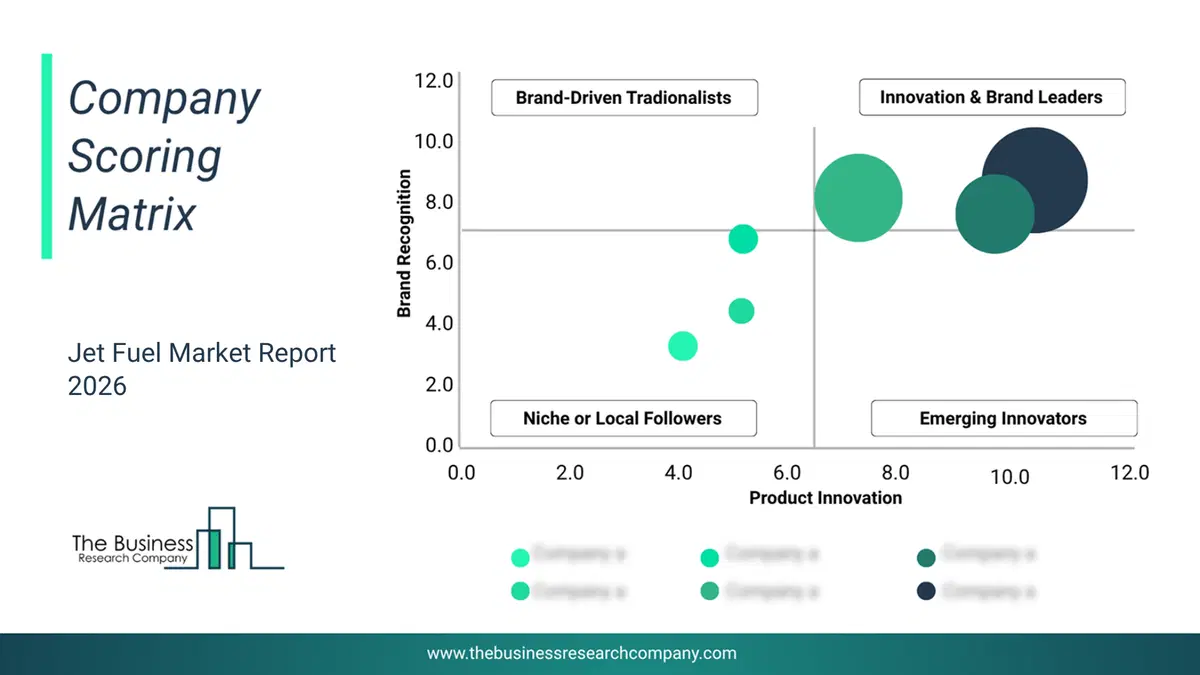
This chart maps companies by product innovation and brand strength, with bubble size indicating relative revenue, helping identify market leaders, challengers, and niche players. This is an illustrative chart; the full report provides a complete and accurate competitive analysis.
Global Jet Fuel Market Trends and Insights
Major companies operating in the jet fuel market are adopting a strategic partnership approach to produce green jet fuel. Strategic partnerships refer to a process in which companies leverage each other's strengths and resources to achieve mutual benefits and success. For instance, in May 2023, Alfanar Group, a Saudi Arabia-based manufacturer of electrical construction products partnered with N+P Group, a Netherlands-based environmental solutions company. The collaboration will involve processing an annual amount of waste equivalent to that produced by Birmingham and the broader West Midland Metropolitan Area. This waste will be utilized to generate feedstock pellets, subsequently employed in the production of green jet fuel, commonly known as Sustainable Aviation Fuel (SAF). To manage the waste, up to three additional processing facilities will be established throughout the country, with their locations contingent on the origin of the waste.What Are Latest Mergers And Acquisitions In The Jet Fuel Market?
In February 2023, Indian Oil Corporation Limited, an India-based oil producer, partnered with LanzaJet Inc. to explore the development of sustainable aviation fuel (SAF) in India. Through this partnership, Indian Oil and LanzaJet aim to support India’s transition to cleaner fuels and contribute to the country’s carbon reduction objectives. LanzaJet Inc. is a US-based aviation fuel manufacturer that captures waste gas emissions and utilizes microorganisms to convert them into usable ethanol fuel for sustainable aviation applications.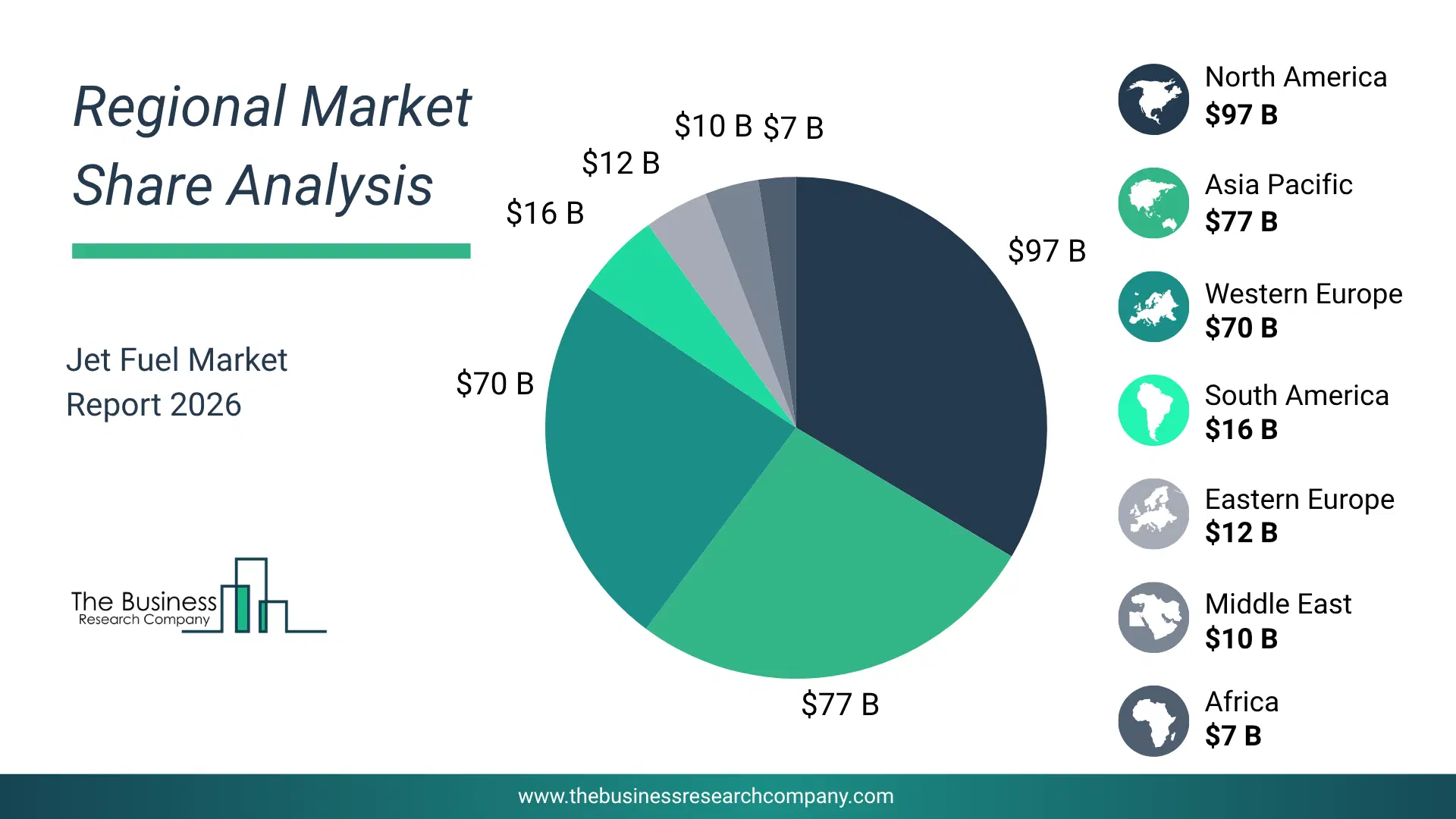
Regional Outlook
North America was the largest region in the jet fuel market in 2025. The regions covered in this market report are Asia-Pacific, South East Asia, Western Europe, Eastern Europe, North America, South America, Middle East, Africa. The countries covered in this market report are Australia, Brazil, China, France, Germany, India, Indonesia, Japan, Taiwan, Russia, South Korea, UK, USA, Canada, Italy, SpainWhat Defines the Jet Fuel Market?
The jet fuel market consists of sales of naphtha-type jet fuel, and aviation kerosene. Values in this market are ‘factory gate’ values, that is the value of goods sold by the manufacturers or creators of the goods, whether to other entities (including downstream manufacturers, wholesalers, distributors and retailers) or directly to end customers. The value of goods in this market includes related services sold by the creators of the goods.How is Market Value Defined and Measured?
The market value is defined as the revenues that enterprises gain from the sale of goods and/or services within the specified market and geography through sales, grants, or donations in terms of the currency (in USD unless otherwise specified). The revenues for a specified geography are consumption values that are revenues generated by organizations in the specified geography within the market, irrespective of where they are produced. It does not include revenues from resales along the supply chain, either further along the supply chain or as part of other products.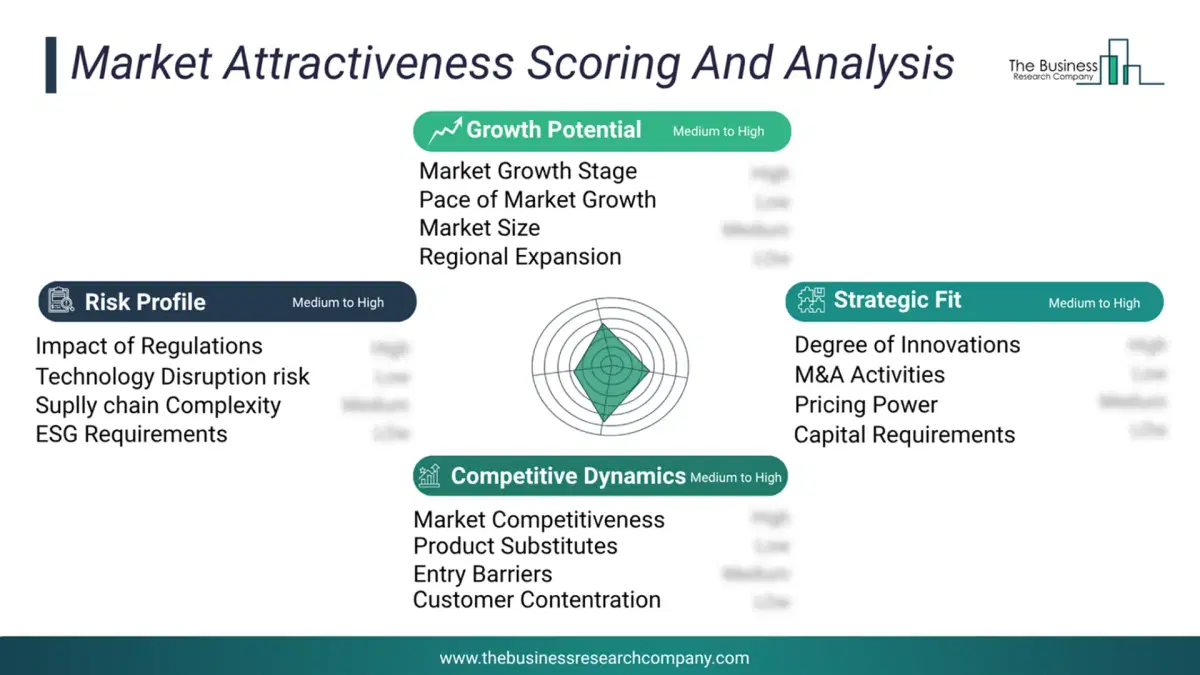
This chart presents market attractiveness based on a quantitative evaluation of growth, competition, strategic alignment, and risk, offering a clear view of opportunity areas for decision-making. This chart is for illustrative purposes; the full report contains the complete analysis.
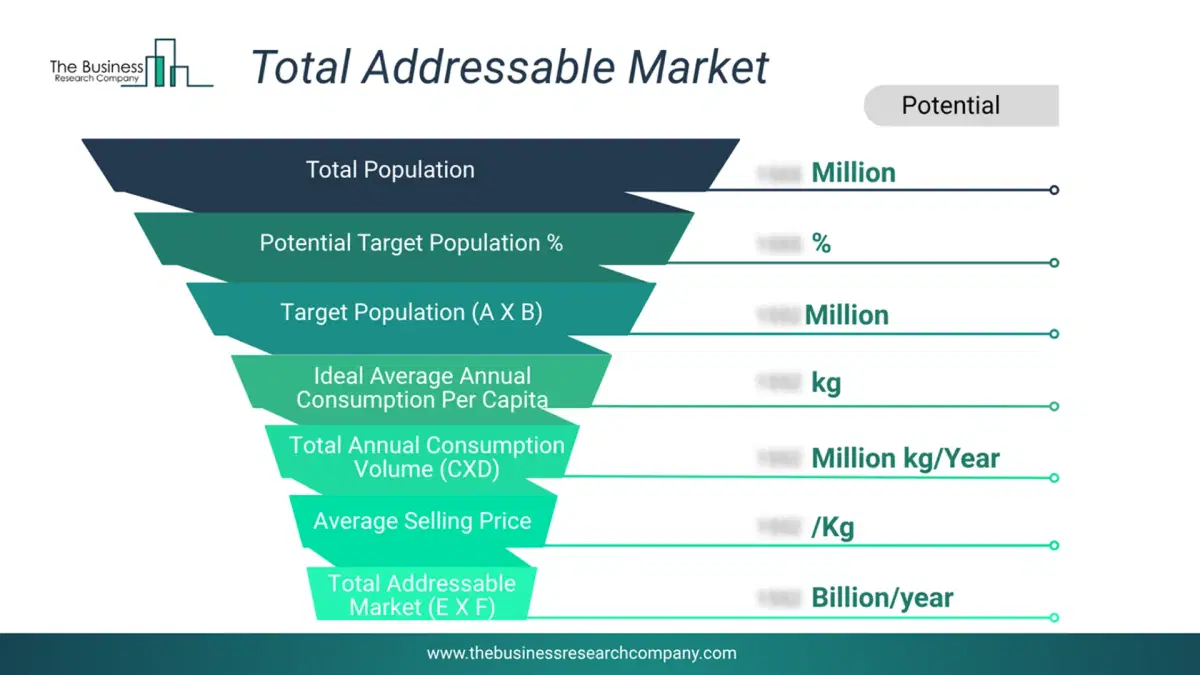
This chart highlights the Total Addressable Market (TAM) by estimating the maximum revenue opportunity using an assumption-driven approach, supporting strategic planning and opportunity sizing across markets. The chart is illustrative; the full report provides a more comprehensive analysis.
What Key Data and Analysis Are Included in the Jet Fuel Market Report 2026?
The jet fuel market research report is one of a series of new reports from The Business Research Company that provides market statistics, including industry global market size, regional shares, competitors with the market share, detailed market segments, market trends and opportunities, and any further data you may need to thrive in the jet fuel industry. The market research report delivers a complete perspective of everything you need, with an in-depth analysis of the current and future state of the industry.Jet Fuel Market Report Forecast Analysis
| Report Attribute | Details |
|---|---|
| Market Size Value In 2026 | $222.44 billion |
| Revenue Forecast In 2030 | $276.1 billion |
| Growth Rate | CAGR of 5.6% from 2026 to 2030 |
| Base Year For Estimation | 2025 |
| Actual Estimates/Historical Data | 2020-2025 |
| Forecast Period | 2026 - 2030 |
| Market Representation | Revenue in USD Billion and CAGR from 2026 to 2030 |
| Segments Covered | Fuel Type, Fuel Grade, Aircraft Type, Application |
| Regional Scope | Asia-Pacific, Western Europe, Eastern Europe, North America, South America, Middle East, Africa |
| Country Scope | The countries covered in the report are Australia, Brazil, China, France, Germany, India, ... |
| Key Companies Profiled | Exxon Mobil Corporation, BP plc, Chevron Corporation, Valero Energy Corporation, Shell plc, TotalEnergies SE, Gazprom Neft PJSC, Indian Oil Corporation, Bharat Petroleum Corp. Ltd., Honeywell International Inc., World Fuel Service Corp., Neste Oyj, World Energy LLC, Rosneft Deutschland GmbH, China Aviation Oil Corporation Ltd., Qatar Jet Fuel Company, Allied Aviation Services Inc., Sinopec Corp., Oman Oil Company SAOC, Marathon Petroleum Corporation, Hess Corporation, National Refinery Limited, CNOOC Limited |
| Customization Scope | Request for Customization |
| Pricing And Purchase Options | Explore Purchase Options |