
Luxury Footwear Market Report 2026
Global Outlook – By Product Type (Shoes, Sandals, Other Product Types), By Distribution Channel (Online, Offline), By End User (Men, Women, Children) – Market Size, Trends, Strategies, and Forecast to 2030
Luxury Footwear Market Overview
• Luxury Footwear market size has reached to $31.91 billion in 2025 • Expected to grow to $44.04 billion in 2030 at a compound annual growth rate (CAGR) of 6.5% • Growth Driver: Rise Of E-Commerce Industry To Drive Luxury Footwear Market Growth • Market Trend: Strategic Collaborations Reshaping The Luxury Footwear Market • North America was the largest region in 2025 and Western Europe is the fastest growing region.Market Gains By 2030 – Top Opportunities By Segment
Market Gain identifies the most promising market opportunities by highlighting the segments or products expected to generate the highest incremental revenue growth over the next five years.
What Is Covered Under Luxury Footwear Market?
The luxury footwear is a type of luxury product manufactured using premium quality materials and provide greater durability, uniqueness, and comfort. Price, quality, rarity, beauty, extraordinariness, and symbolism are all common qualities of luxury footwear. Luxury footwear products usually have characteristics that include higher price, premium quality, rarity, aesthetics, extraordinariness, and symbolism. The main luxury footwear products include shoes, sandals, and other product types. Luxury shoes are manufactured using premium quality materials and provide greater durability, uniqueness, and comfort. Some of the qualities which differentiate luxury shoes from the rest are their uncommon quality of rarity, sophisticated design, extraordinary craftsmanship, longevity, and timelessness. The different distribution channels for luxury footwear include online and offline for end-users including men, women, and children.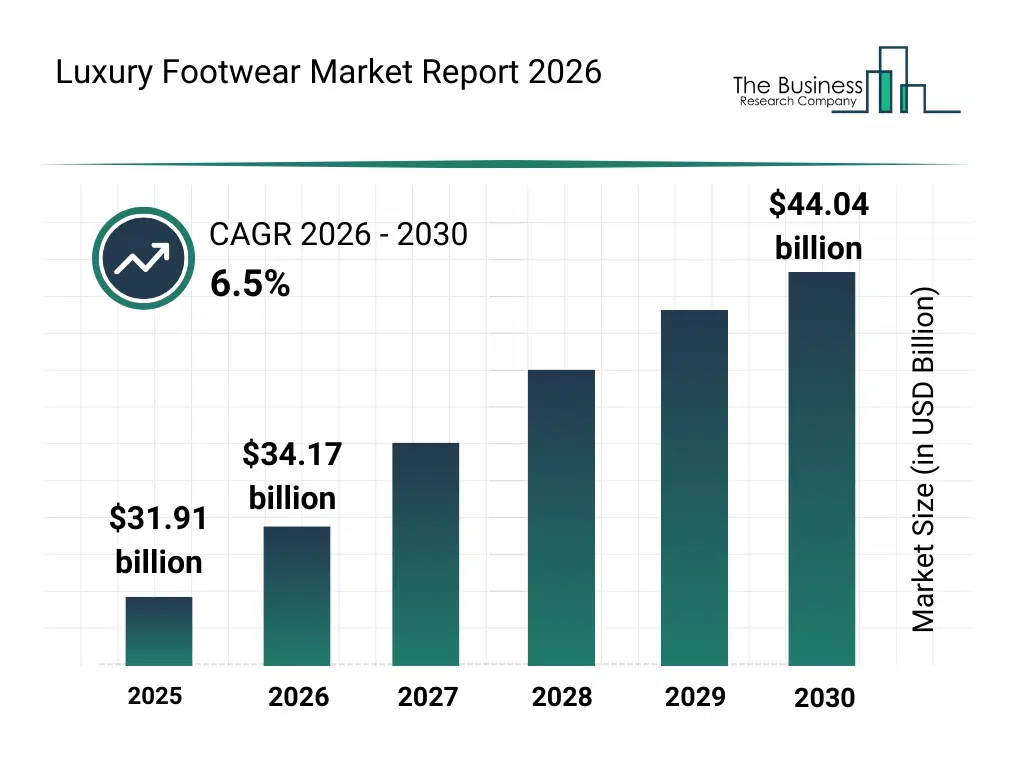
What Is The Luxury Footwear Market Size and Share 2026?
The luxury footwear market size has grown strongly in recent years. It will grow from $31.91 billion in 2025 to $34.17 billion in 2026 at a compound annual growth rate (CAGR) of 7.1%. The growth in the historic period can be attributed to rising disposable income, increasing demand for premium fashion, expansion of luxury retail stores, growing brand awareness, influence of fashion magazines and media.What Is The Luxury Footwear Market Growth Forecast?
The luxury footwear market size is expected to see strong growth in the next few years. It will grow to $44.04 billion in 2030 at a compound annual growth rate (CAGR) of 6.5%. The growth in the forecast period can be attributed to rising e-commerce adoption, growing interest in sustainable materials, integration of smart technologies in footwear, increasing influencer marketing, expansion into emerging markets. Major trends in the forecast period include personalized luxury footwear design, adoption of premium and rare materials, limited edition and exclusive collections, celebrity and influencer collaborations, premium in-store experience.
Global Luxury Footwear Market Segmentation
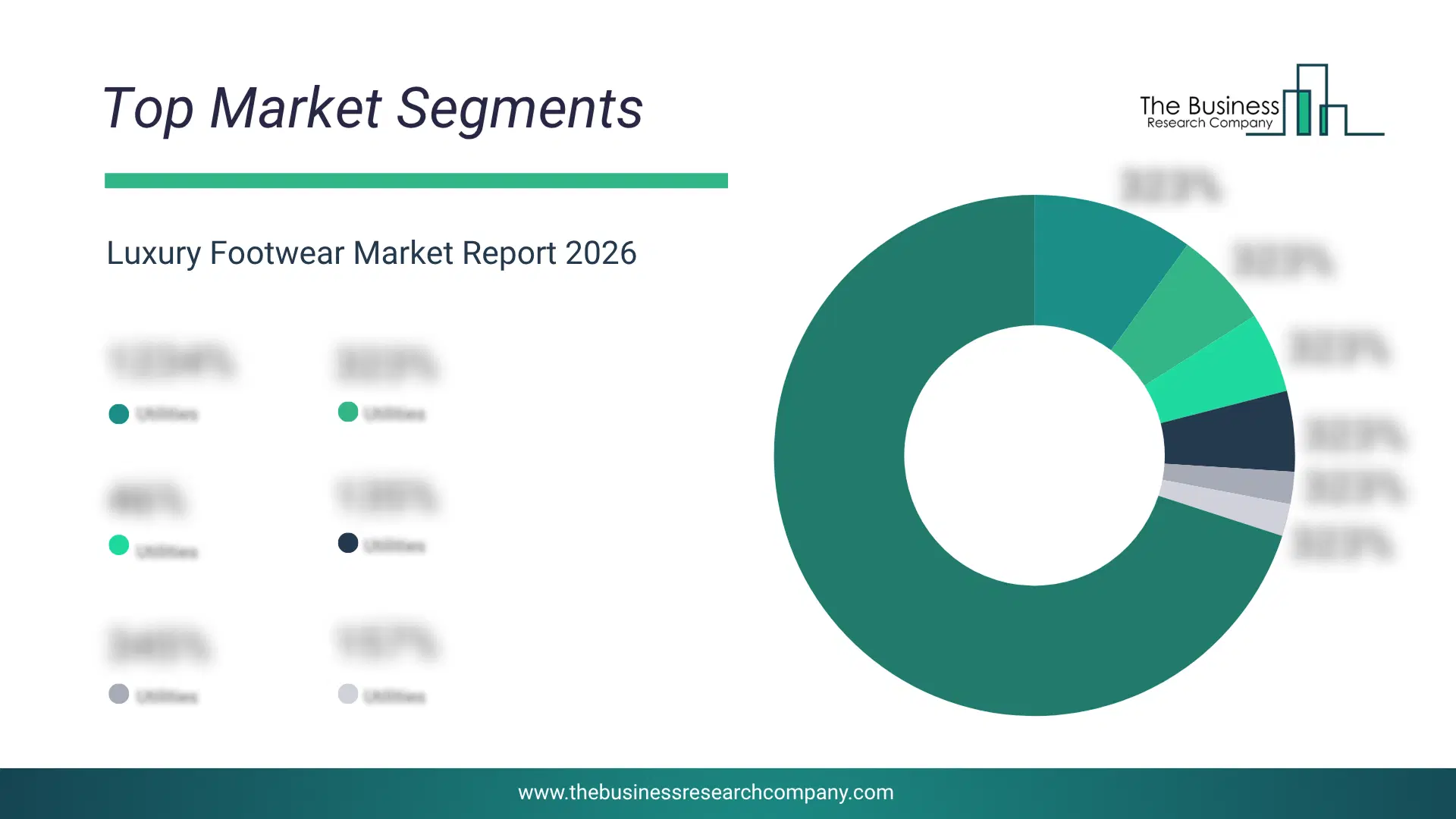
1) By Product Type: Shoes, Sandals, Other Product Types 2) By Distribution Channel: Online, Offline 3) By End User: Men, Women, Children Subsegments: 1) By Shoes: Luxury Dress Shoes, Luxury Casual Shoes, Luxury Sneakers 2) By Sandals: Designer Sandals, High-End Flip-Flops, Platform Sandals 3) By Other Product Types: Luxury Boots, Specialty Footwear The top segments in the luxury footwear market will be: • Shoes will reach $27.17 Billion by 2030. • Sandals will reach $10.37 Billion by 2030. • Other Product Types will reach $6.18 Billion by 2030.What Is The Driver Of The Luxury Footwear Market?
The increasing expansion of e-commerce industry is expected to propel the growth of luxury footwear market going forward. E-commerce industry, short for electronic commerce, refers to the buying and selling of goods and services over the internet. Online platforms enable luxury footwear retailers to showcase their products, engage with a wider audience, offer a convenient and accessible shopping experience, and attract customers. For instance, in May 2024, in the according to the Census Bureau, a US-based government agent first quarter of 2024, e-commerce sales grew by 8.5% compared to the same period in 2023, comprising 15.6% of total retail sales, which increased by 2.8% year over year. Therefore, the increasing expansion of e-commerce industry is driving the growth of luxury footwear industry.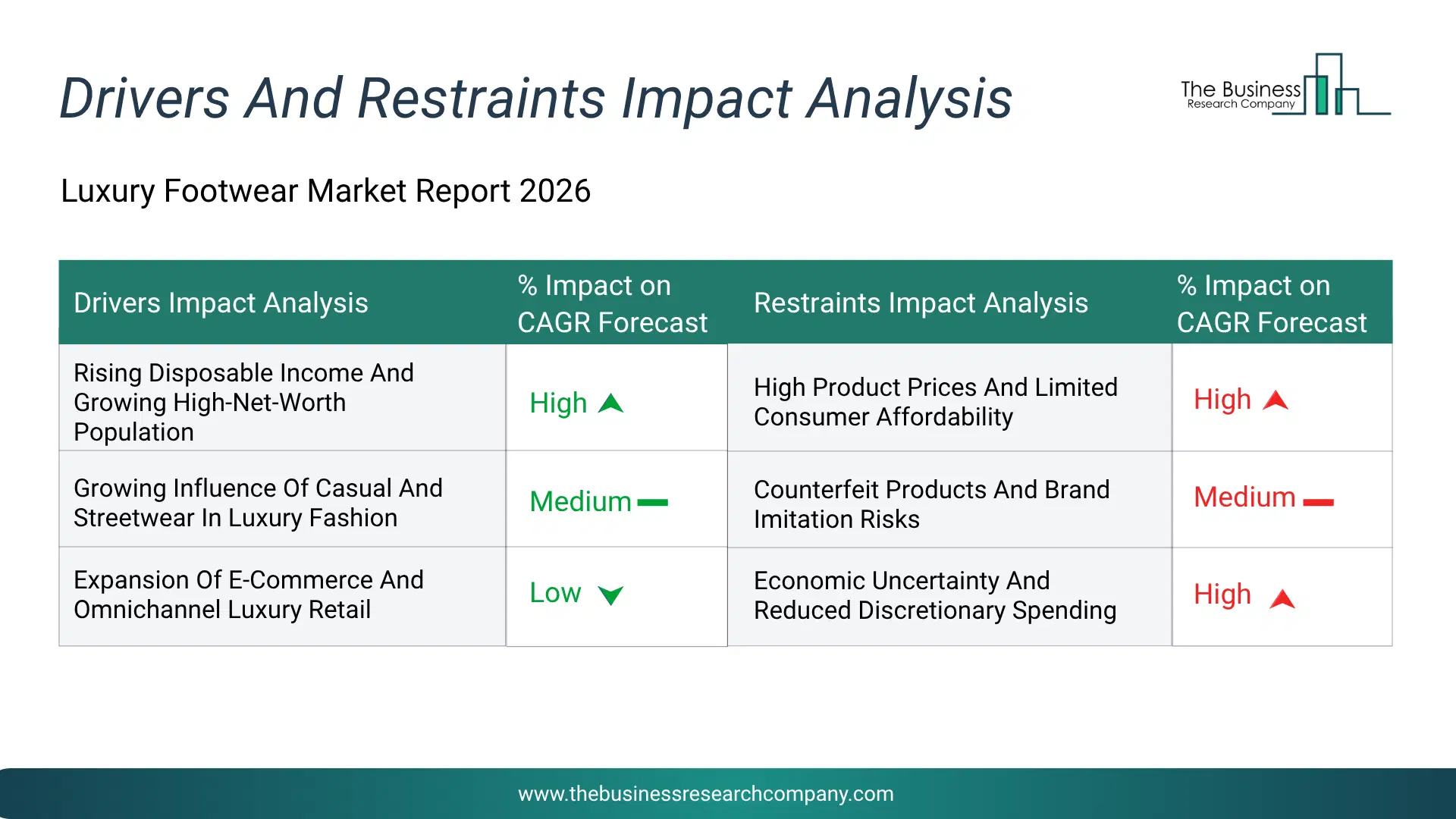
Infographic Chart Showing Key Market Drivers Analysis And Restraints For Luxury Footwear Market
The chart presents an impact analysis of key drivers and restraints, quantifying their relative influence on the market's growth rate and helping assess the balance between growth enablers and limiting factors. This chart offers a high-level perspective; the full report contains more detailed insights.
How Will The Drivers Impact Growth In The Global Luxury Footwear Market?
• Rising Disposable Income And Growing High-Net-Worth Population (High) – During the forecast period, the rising disposable income and the growing high-net-worth population are expected to become key growth drivers for the luxury footwear market by 2030. Expanding wealth levels across developed and emerging economies are enabling consumers to increase spending on premium fashion products and exclusive footwear collections. Affluent consumers are increasingly seeking luxury brands that reflect status, craftsmanship, and individuality. The growing concentration of high-net-worth individuals in major urban centers is also supporting demand for designer footwear across multiple price tiers. This strengthening purchasing power is reinforcing steady market expansion. • Growing Influence Of Casual And Streetwear In Luxury Fashion (Medium) – During the forecast period, the growing influence of casual and streetwear in luxury fashion is expected to emerge as a major factor driving the expansion of the luxury footwear market by 2030. Luxury brands are increasingly incorporating contemporary streetwear aesthetics and casual designs into their footwear portfolios to appeal to younger consumers. Premium sneakers and fashion-forward casual shoes have become central to luxury wardrobes, creating new opportunities for product differentiation and brand engagement. Collaborations between luxury houses and streetwear designers are further strengthening consumer interest and broadening market reach. • Expansion Of E-Commerce And Omnichannel Luxury Retail (Low) – During the forecast period, the expansion of e-commerce and omnichannel luxury retail is expected to act as a key growth catalyst for the luxury footwear market by 2030. Luxury brands are enhancing digital storefronts and integrating online and offline shopping experiences to improve accessibility and customer convenience. Advanced personalization tools, virtual consultations, and seamless purchasing journeys are encouraging higher consumer engagement and conversion rates. Additionally, wider geographic reach through digital channels enables luxury footwear brands to access previously underserved consumer segments. As omnichannel retail strategies continue to evolve globally, luxury footwear sales are expected to accelerate.How Will The Restraints Impact Growth In The Global Luxury Footwear Market?
• High Product Prices And Limited Consumer Affordability (High) – During the forecast period, the high product prices and limited consumer affordability are major restraints for the luxury footwear market. Luxury footwear is typically priced at a premium due to brand value, exclusive designs, high-quality materials, and skilled craftsmanship. These high prices restrict the customer base mainly to affluent consumers and reduce accessibility for middle-income buyers. During periods of inflation or economic uncertainty, consumers may postpone or avoid discretionary luxury purchases. As a result, limited affordability can constrain broader market growth. • Counterfeit Products And Brand Imitation Risks (Medium) – During the forecast period, the counterfeit products and brand imitation risks are major restraints for the luxury footwear market. The availability of fake luxury footwear through online platforms, unauthorized sellers, and informal markets can reduce sales of genuine branded products. Counterfeit goods may also damage brand reputation by lowering perceived exclusivity and customer trust. Luxury companies often incur additional costs for legal action, anti-counterfeit technology, and brand protection measures. As a result, counterfeit activity can negatively impact profitability and long-term market growth. • Economic Uncertainty And Reduced Discretionary Spending (Low) – During the forecast period, the economic uncertainty and reduced discretionary spending are major restraints for the luxury footwear market. During periods of inflation, recession concerns, or weaker consumer confidence, buyers tend to prioritize essential purchases over premium fashion products. Luxury footwear is often considered a discretionary item, making demand sensitive to changes in economic conditions. Reduced spending by middle-income aspirational consumers can particularly affect sales volumes. As a result, economic instability can slow market growth and weaken demand for luxury footwear products.Key Players In The Global Luxury Footwear Market
Major companies operating in the luxury footwear market are LVMH Moet Hennessy Louis Vuitton SE, Kering SA, Chanel Limited, Hermes International SA, Guccio Gucci SpA, Burberry Group plc, Prada SpA, Armani Group SpA, J Choo USA Inc, Stuart Weitzman LLC, Aldo Brue Inc, A Testoni and C SpA, Paraboot SAS, Tricker's Shoes Ltd, Furla SpA, Grenson Shoes Ltd, John Lobb Bootmaker Ltd, Longchamp SAS, Lottusse SA, Moreschi SpA, Mulberry Group plc, Scarosso Srl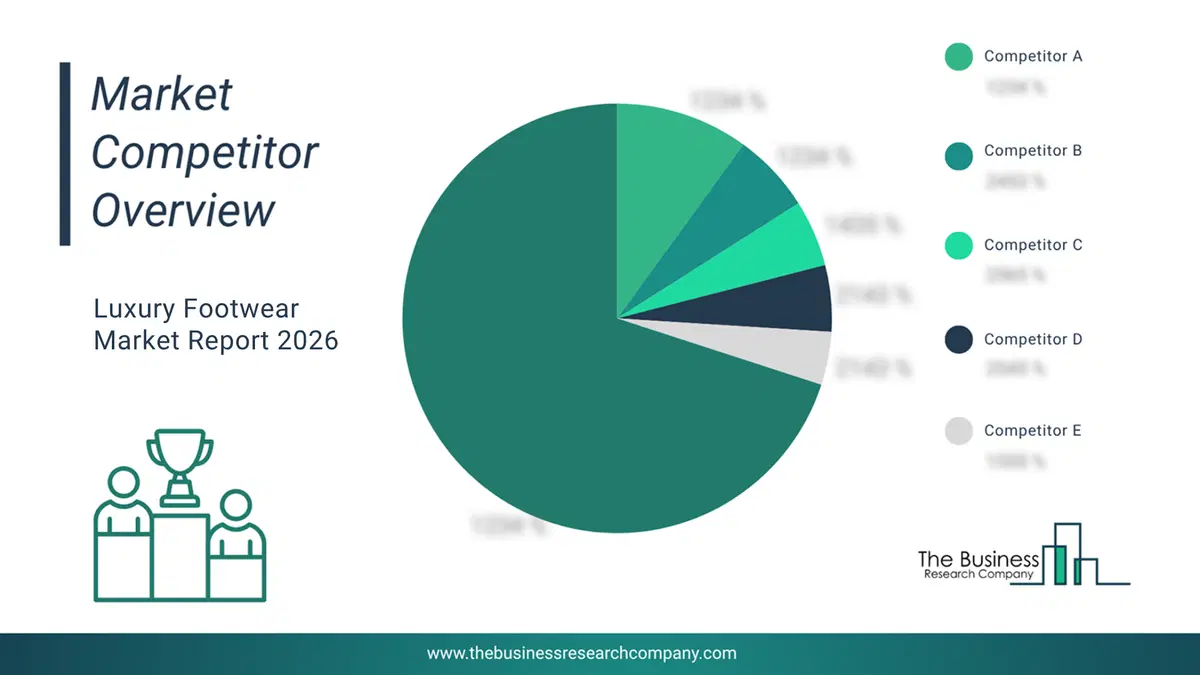
This chart is for illustrative purposes; the full report includes a detailed competitor analysis and comprehensive overview of the top 10 companies in the market.
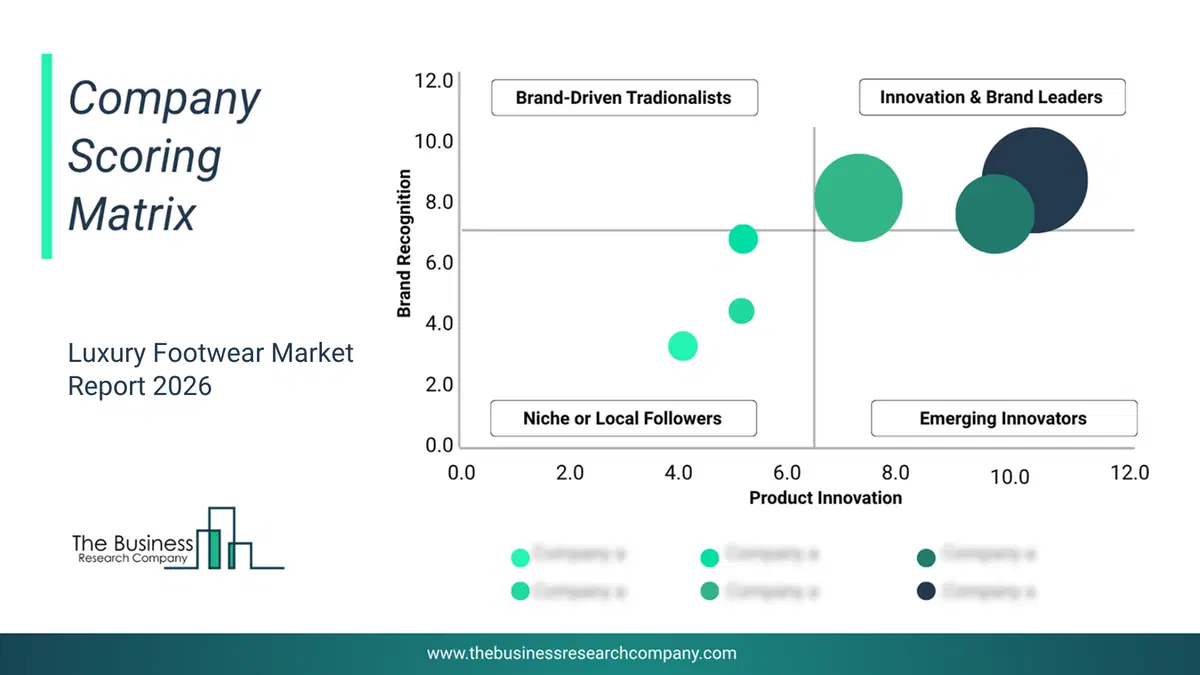
This chart maps companies by product innovation and brand strength, with bubble size indicating relative revenue, helping identify market leaders, challengers, and niche players. This is an illustrative chart; the full report provides a complete and accurate competitive analysis.
Global Luxury Footwear Market Trends and Insights
Major companies operating in the luxury footwear market are adopting strategic partnerships approach to enhance their offerings and provide exclusive collaborations with high-end designers or brands. Strategic partnerships refer to a process in which companies leverage each other's strengths and resources to achieve mutual benefits and success. For instance, in December 2023, Aditya Birla Fashion and Retail, an India-based fashion retail company, partnered with Christian Louboutin S.A., a France-based footwear and accessories company, for Christian’s iconic red-soled shoes. This strategic collaboration involves the establishment of a new subsidiary under ABFRL, where both partners will hold an equal stake, signaling a shared commitment to shaping and elevating the luxury footwear market in India. Together, ABFRL and Christian Louboutin aim to bring unparalleled elegance and style to the discerning Indian audience, uniting the strengths of a leading Indian fashion conglomerate with an iconic name in global luxury footwear.What Are Latest Mergers And Acquisitions In The Luxury Footwear Market?
In July 2023, Kering SA, a France-based luxury goods company, acquired Valentino for $1.87 billion. With this acquisition, Kering aims to expand its portfolio by incorporating Valentino's expertise in providing luxury footwear. Valentino LLC is an Italy-based company that manufactures luxury footwear.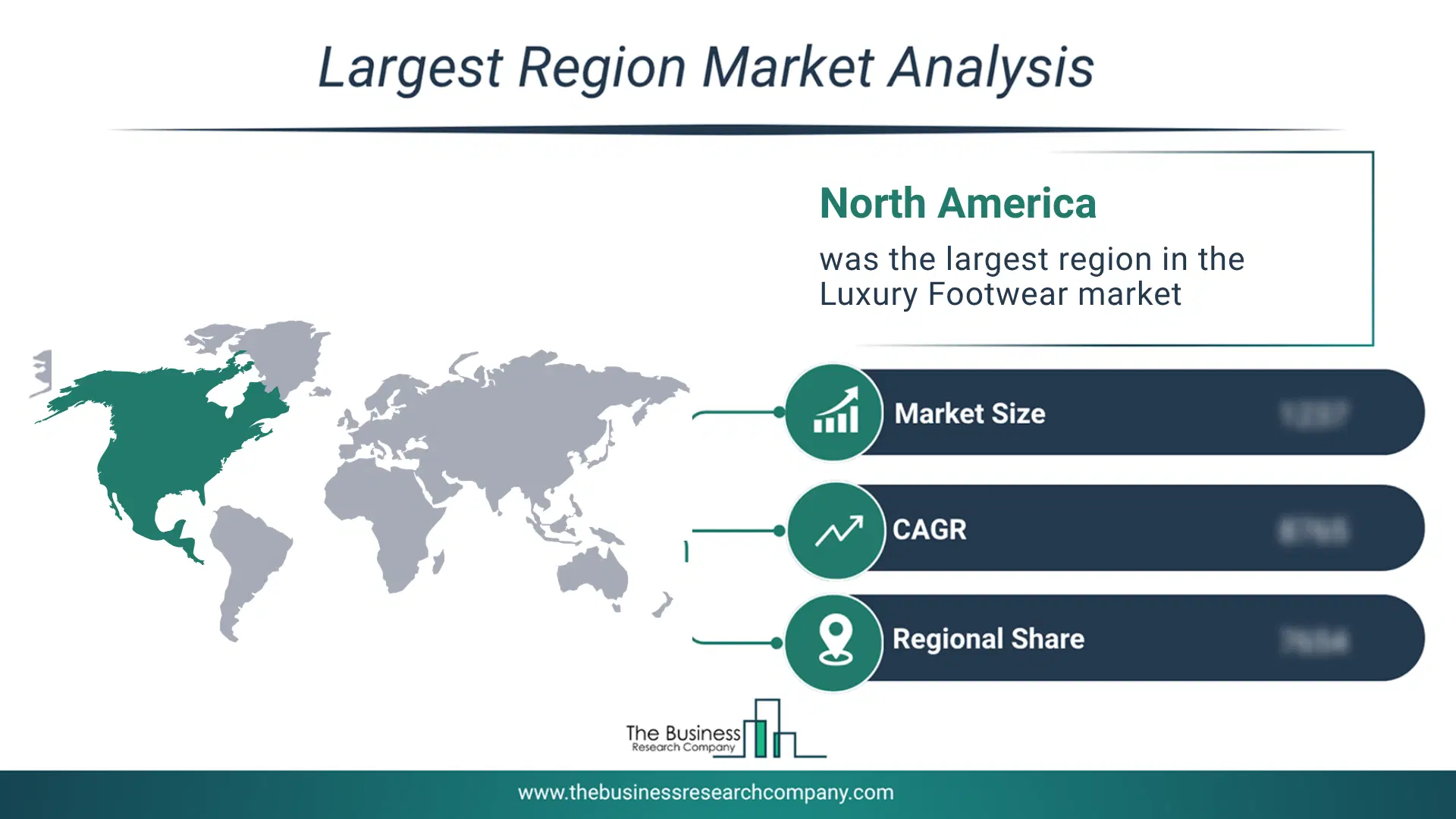
Regional Outlook
North America was the largest region in the luxury footwear market in 2025. Western Europe was the second largest region in the luxury footwear market share in 2025. The regions covered in this market report are Asia-Pacific, South East Asia, Western Europe, Eastern Europe, North America, South America, Middle East and Africa. The countries covered in this market report are Australia; Brazil; China; France; Germany; India; Indonesia; Japan; Taiwan; Russia; South Korea; UK; USA; Canada; Italy; Spain.What Defines the Luxury Footwear Market?
The luxury footwear market consists of sales of fashion boots, cowboy boots, hiking boots, sneakers and heels. Values in this market are ‘factory gate’ values, that is the value of goods sold by the manufacturers or creators of the goods, whether to other entities (including downstream manufacturers, wholesalers, distributors and retailers) or directly to end customers. The value of goods in this market includes related services sold by the creators of the goods.How is Market Value Defined and Measured?
The market value is defined as the revenues that enterprises gain from the sale of goods and/or services within the specified market and geography through sales, grants, or donations in terms of the currency (in USD unless otherwise specified). The revenues for a specified geography are consumption values that are revenues generated by organizations in the specified geography within the market, irrespective of where they are produced. It does not include revenues from resales along the supply chain, either further along the supply chain or as part of other products.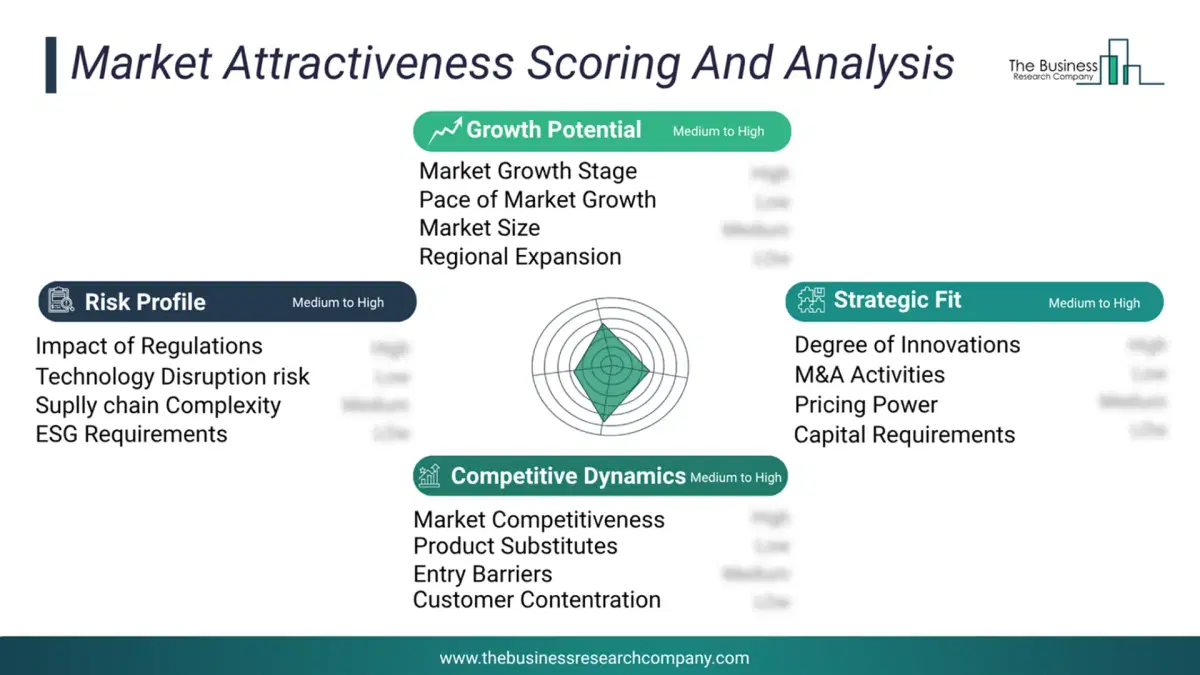
This chart presents market attractiveness based on a quantitative evaluation of growth, competition, strategic alignment, and risk, offering a clear view of opportunity areas for decision-making. This chart is for illustrative purposes; the full report contains the complete analysis.
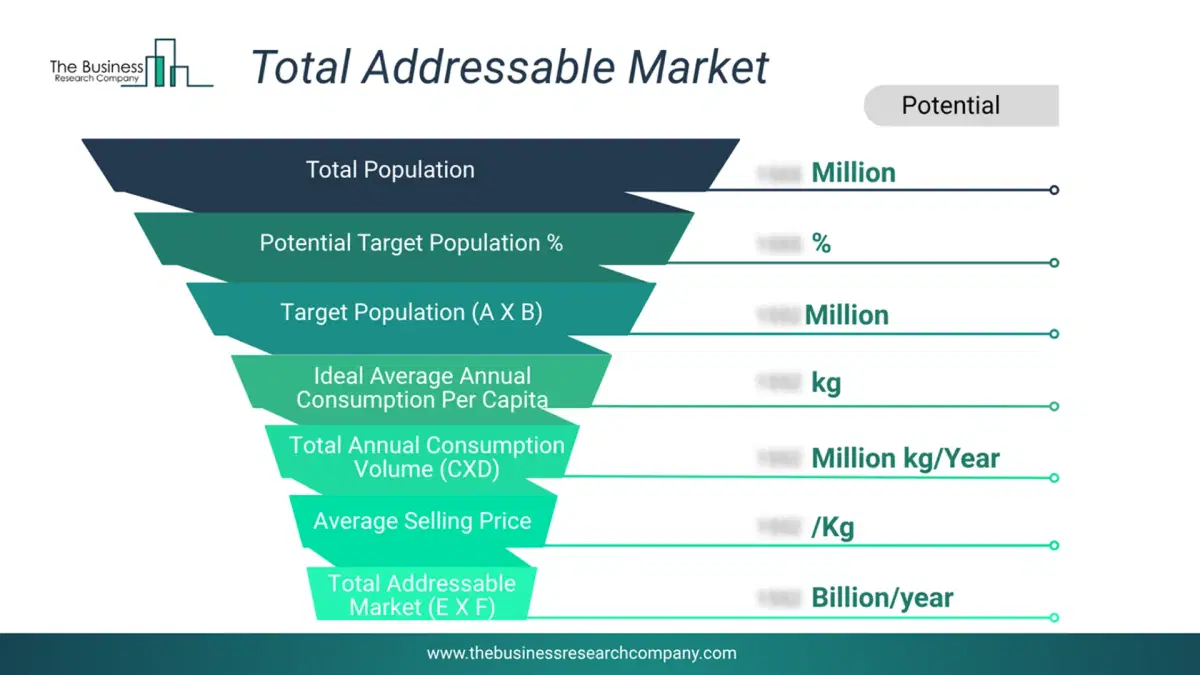
This chart highlights the Total Addressable Market (TAM) by estimating the maximum revenue opportunity using an assumption-driven approach, supporting strategic planning and opportunity sizing across markets. The chart is illustrative; the full report provides a more comprehensive analysis.
What Key Data and Analysis Are Included in the Luxury Footwear Market Report 2026?
The luxury footwear market research report is one of a series of new reports from The Business Research Company that provides market statistics, including industry global market size, regional shares, competitors with the market share, detailed market segments, market trends and opportunities, and any further data you may need to thrive in the luxury footwear industry. The market research report delivers a complete perspective of everything you need, with an in-depth analysis of the current and future state of the industry.Luxury Footwear Market Report Forecast Analysis
| Report Attribute | Details |
|---|---|
| Market Size Value In 2026 | $2.79 billion |
| Revenue Forecast In 2030 | $3.86 billion |
| Growth Rate | CAGR of 7.0% from 2026 to 2030 |
| Base Year For Estimation | 2025 |
| Actual Estimates/Historical Data | 2020-2025 |
| Forecast Period | 2026 - 2030 |
| Market Representation | Revenue in USD Billion and CAGR from 2026 to 2030 |
| Segments Covered | Product Type, Distribution Channel, End User |
| Regional Scope | Asia-Pacific, Western Europe, Eastern Europe, North America, South America, Middle East, Africa |
| Country Scope | The countries covered in the report are Australia, Brazil, China, France, Germany, India, Indonesia, Japan, Taiwan, Russia, South Korea, UK, USA, Canada, Italy, Spain. |
| Key Companies Profiled | LVMH Moet Hennessy Louis Vuitton SE, Kering SA, Chanel Limited, Hermes International SA, Guccio Gucci SpA, Burberry Group plc, Prada SpA, Armani Group SpA, J Choo USA Inc, Stuart Weitzman LLC, Aldo Brue Inc, A Testoni and C SpA, Paraboot SAS, Tricker's Shoes Ltd, Furla SpA, Grenson Shoes Ltd, John Lobb Bootmaker Ltd, Longchamp SAS, Lottusse SA, Moreschi SpA, Mulberry Group plc, Scarosso Srl |
| Customization Scope | Request for Customization |
| Pricing And Purchase Options | Explore Purchase Options |