

Microlending Market Report 2026
Global Outlook – By Provider (Banks, Micro Finance Institute (MFI), NBFC (Non-Banking Financial Institutions), Other Providers), By Loan Type (Working Capital Loans, Term Loans, Emergency/Unsecured Loans, Project‑based Loan, Instant Microloans), By End-User (Small Enterprises, Micro Enterprises, Solo entrepreneurs And Self-Employed) – Market Size, Trends, Strategies, and Forecast to 2030
Microlending Market Overview
• Microlending market size has reached to $240.64 billion in 2025 • Expected to grow to $434.2 billion in 2030 at a compound annual growth rate (CAGR) of 12.5% • Growth Driver: The Increasing Adoption Of Smartphones Fueling The Growth Of The Microlending Market Due To Enhanced Digital Financial Accessibility • Market Trend: Product Innovation Drives The Microlending Market • Asia-Pacific was the largest region in 2025.Market Gains By 2030 – Top Opportunities By Segment
Market Gain identifies the most promising market opportunities by highlighting the segments or products expected to generate the highest incremental revenue growth over the next five years.
What Is Covered Under Microlending Market?
Microlending refers to microfinance that supports enterprises by lending small amounts for business expansion. The primary advantage of microlending is that it allows borrowers to take loan who do not have the sufficient assets to act as a guarantee or simply do not want to risk their assets. The main providers of microlending are banks, microfinance institutes (MFI), nbfc (non-banking financial institutions), and other providers. A bank refers to a financial institution regulated at the federal level, state level, or both. Borrower usually uses micro-finance if they have poor credit, or if they want a loan smaller than what their bank would allow. These are used by various end-users such as small enterprises, micro-enterprises, solo entrepreneurs, and self-employed.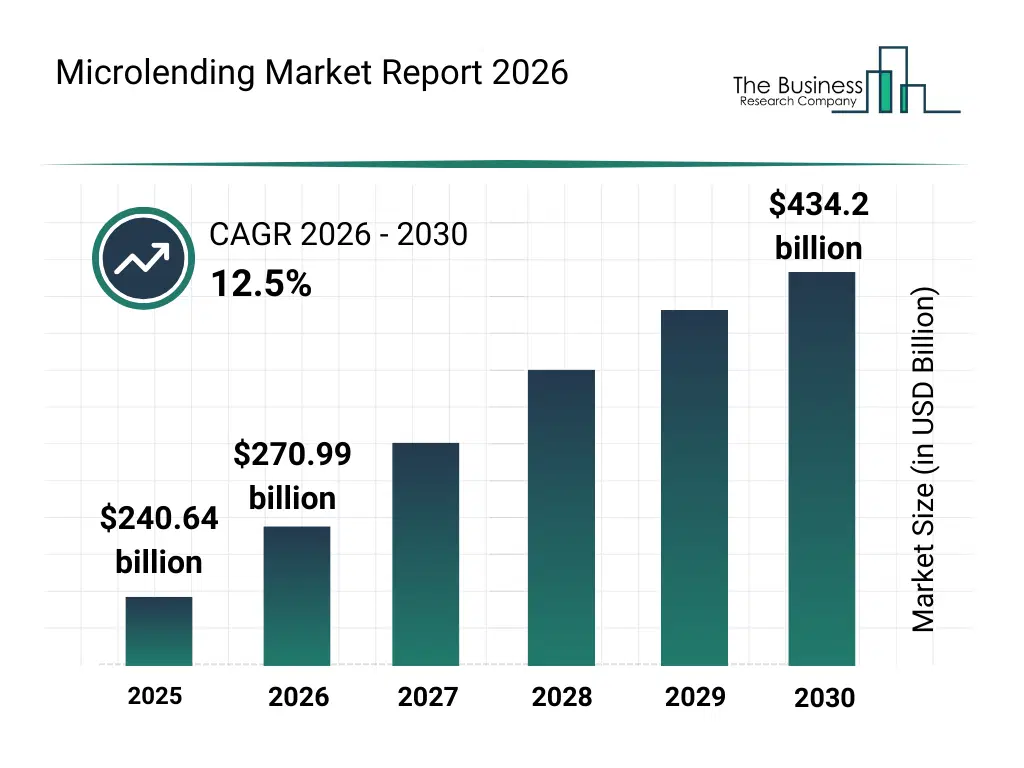
What Is The Microlending Market Size and Share 2026?
The microlending market size has grown rapidly in recent years. It will grow from $240.64 billion in 2025 to $270.99 billion in 2026 at a compound annual growth rate (CAGR) of 12.6%. The growth in the historic period can be attributed to limited access to traditional banking services, growth of micro and small enterprises, expansion of microfinance institutions, increasing demand for collateral-free loans, penetration of mobile financial services.What Is The Microlending Market Growth Forecast?
The microlending market size is expected to see rapid growth in the next few years. It will grow to $434.2 billion in 2030 at a compound annual growth rate (CAGR) of 12.5%. The growth in the forecast period can be attributed to rising fintech adoption in underserved regions, increasing use of ai-driven credit assessment, expansion of digital financial inclusion programs, growing support for small business financing, increasing smartphone penetration. Major trends in the forecast period include increasing adoption of digital microlending platforms, rising use of alternative credit scoring models, growing integration of mobile-based loan disbursement, expansion of peer-to-peer microlending ecosystems, enhanced focus on financial inclusion.
Global Microlending Market Segmentation
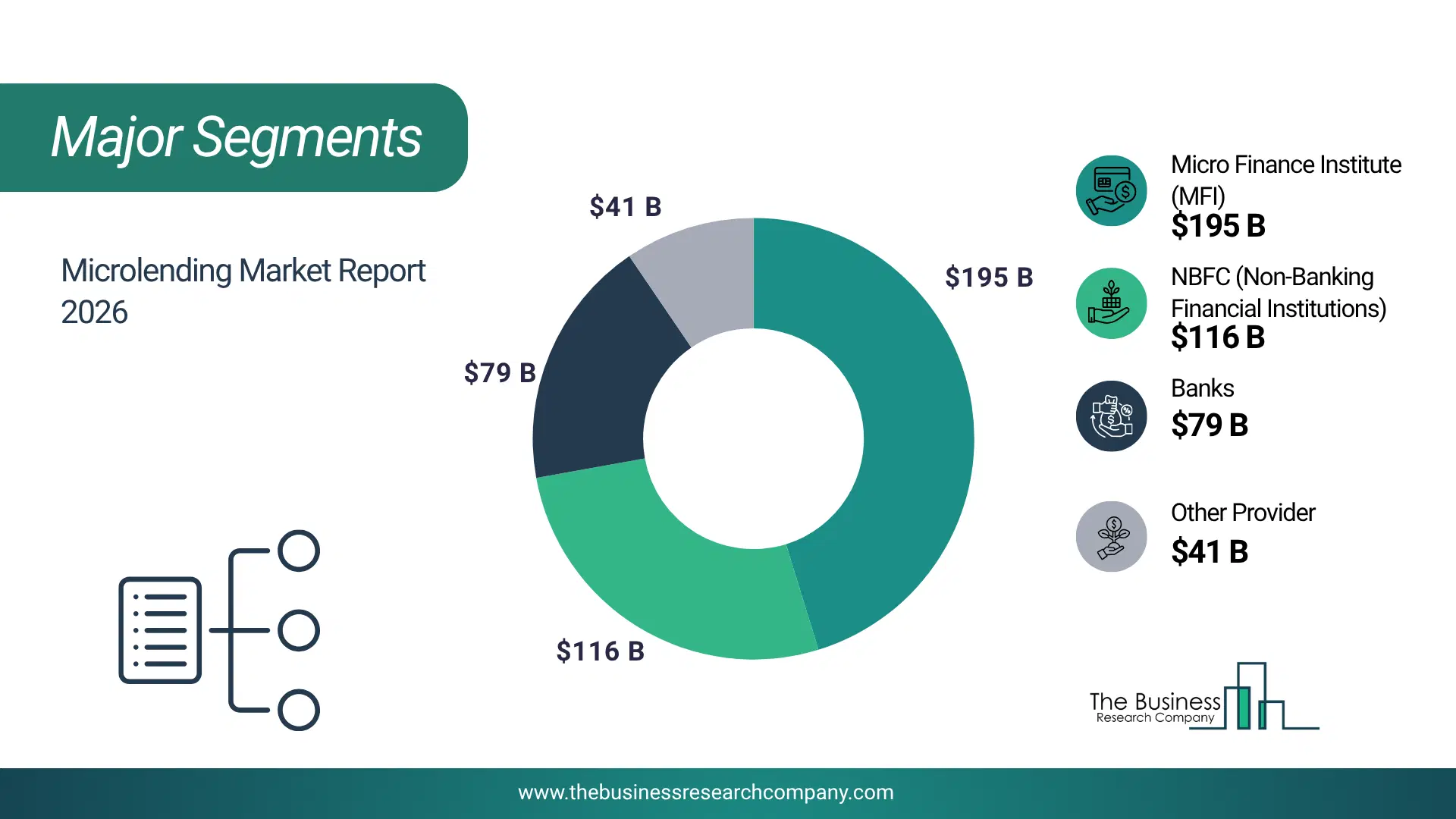
1) By Provider: Banks, Micro Finance Institute (MFI), NBFC (Non-Banking Financial Institutions), Other Providers 2) By Loan Type: Working Capital Loans, Term Loans, Emergency/Unsecured Loans, Project?based Loan, Instant Microloans 3) By End-User: Small Enterprises, Micro Enterprises, Solo entrepreneurs And Self-Employed Subsegments: 1) By Banks: Traditional Banks, Online Banks 2) By Micro Finance Institutions (MFI): Non-Governmental Organizations (NGOs) Offering MFIs, Cooperative Microfinance Institutions 3) By Non-Banking Financial Institutions (NBFC): Private NBFCs, Public NBFCs 4) By Other Providers: Peer-to-Peer Lending Platforms, Community Lending Groups, Fintech Companies Offering Microlending Solutions The top segments in the microlending market will be: • Micro Finance Institute (MFI) will reach $195 Billion by 2030. • NBFC (Non-Banking Financial Institutions) will reach $116 Billion by 2030. • Banks will reach $79 Billion by 2030. • Other Provider will reach $41 Billion by 2030.What Is The Driver Of The Microlending Market?
The increasing adoption of smartphones is expected to propel the growth of the microlending market going forward. A smartphone is a mobile communication device that combines the functionalities of a mobile phone with those of a handheld computer, enabling users to access apps, mobile internet, and digital services. The rise in smartphone adoption is due to greater device availability, improved mobile connectivity, and expanding digital infrastructure, which allows individuals in remote or underserved areas to access financial services. Microlending platforms leverage this widespread smartphone penetration to provide small loans, promote financial inclusion, and expand digital credit access. For instance, in October 2023, according to the Global System for Mobile Communications Association (GSMA), a UK-based global industry organization, 54% of the global population, some 4.3 billion people, owned a smartphone. Therefore, the increasing adoption of smartphones is driving the growth of the microlending industry.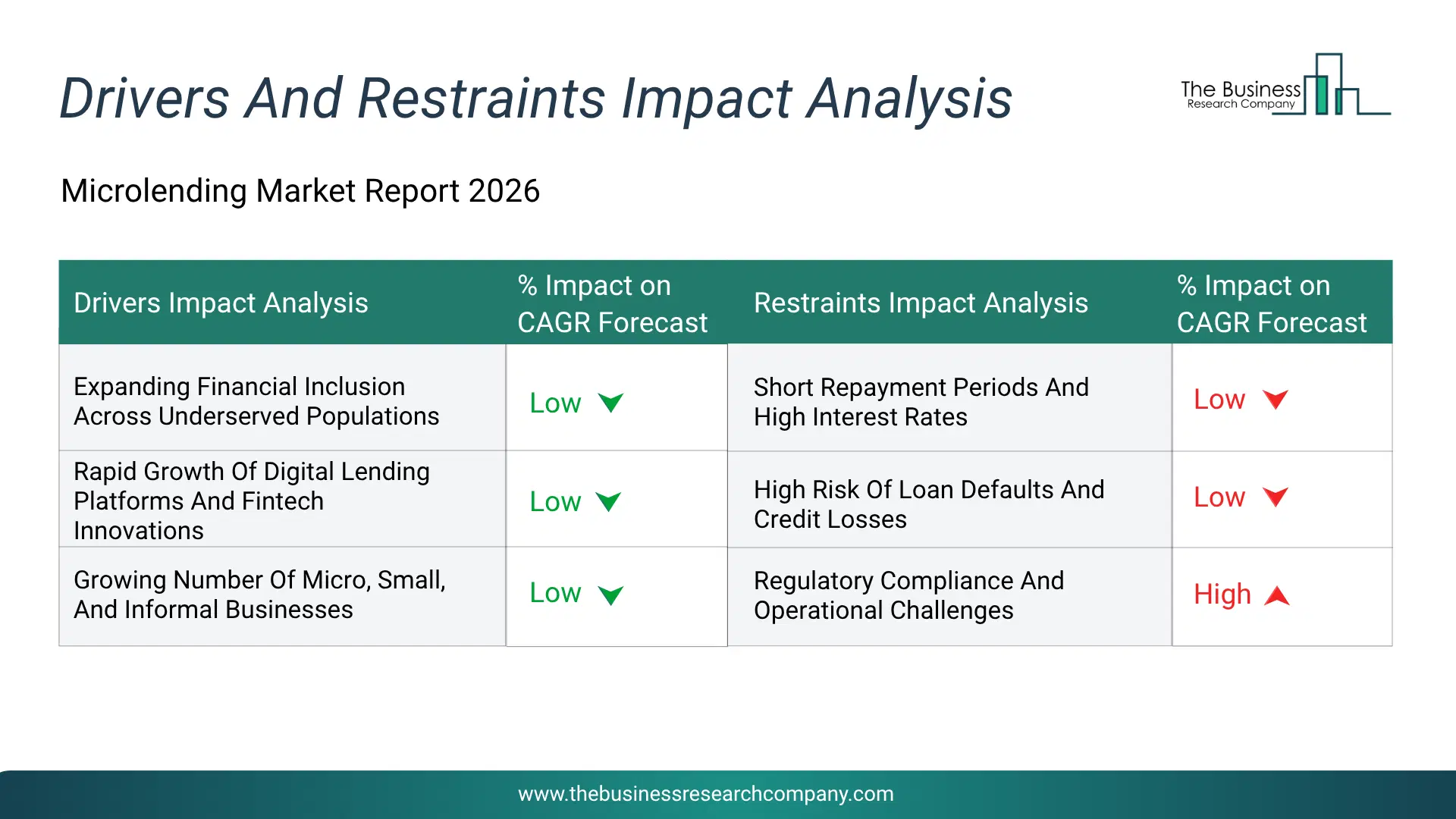
Infographic Chart Showing Key Market Drivers Analysis And Restraints For Microlending Market
The chart presents an impact analysis of key drivers and restraints, quantifying their relative influence on the market's growth rate and helping assess the balance between growth enablers and limiting factors. This chart offers a high-level perspective; the full report contains more detailed insights.
How Will The Drivers Impact Growth In The Global Microlending Market?
• Expanding Financial Inclusion Across Underserved Populations (Low) – During the forecast period, the expanding financial inclusion across underserved populations is expected to emerge as a major factor driving the expansion of the microlending market by 2030. governments, financial institutions, and fintech providers are increasing access to formal credit for unbanked and underbanked individuals through inclusive lending programs and digital financial services. small-value loans help low-income households, rural communities, and micro-entrepreneurs address personal and business financing needs while improving economic participation. • Rapid Growth Of Digital Lending Platforms And Fintech Innovations (Low) – During the forecast period, the rapid growth of digital lending platforms and fintech innovations is expected to emerge as a major factor driving the expansion of the microlending market by 2030. artificial intelligence, alternative credit assessment models, mobile banking applications, and digital identity verification technologies are streamlining loan origination, approval, and disbursement while improving accessibility and reducing operating costs. these advancements enable lenders to reach a broader customer base and deliver faster, more efficient financial services. • Growing Number Of Micro, Small, And Informal Businesses (Low) – During the forecast period, the growing number of micro, small, and informal businesses is expected to act as a key growth catalyst for the microlending market by 2030. increasing entrepreneurial activity and self-employment are generating higher demand for accessible working capital among businesses that often lack sufficient collateral or formal credit histories. microlending provides a practical financing solution that supports business expansion, income generation, and local economic development.How Will The Restraints Impact Growth In The Global Microlending Market?
• Short Repayment Periods And High Interest Rates (Low) – During the forecast period, short Repayment Periods And High Interest Rates act as a major restraint on the microlending market because many borrowers belong to low-income groups with irregular or seasonal sources of income. Although microloans are designed to provide quick financial assistance, the relatively short repayment schedules can create repayment pressure, particularly for borrowers whose businesses require longer periods to generate stable revenue. Additionally, microlenders often charge higher interest rates than conventional banks to offset operational costs, administrative expenses, and elevated credit risks associated with unsecured lending. These higher borrowing costs may discourage potential customers from seeking loans, reduce affordability, and increase the likelihood of loan defaults. As a result, lenders face higher credit risk while borrowers experience greater financial strain, limiting overall market growth. • High Risk Of Loan Defaults And Credit Losses (Low) – During the forecast period, high Risk Of Loan Defaults And Credit Losses remains a significant restraint because microlending institutions primarily serve individuals and businesses with limited credit histories, unstable income streams, or no formal financial records. These borrowers are generally more vulnerable to economic downturns, inflation, natural disasters, market fluctuations, or unexpected personal emergencies that may affect their repayment capacity. Higher default rates increase financial losses for lenders, requiring them to allocate larger loan-loss reserves and invest more heavily in risk management, borrower monitoring, and credit assessment systems. This increases operating expenses while reducing profitability and lending capacity. Consequently, lenders may tighten lending criteria or increase interest rates, both of which can slow market expansion and reduce access to credit for financially underserved populations. • Regulatory Compliance And Operational Challenges (Low) – During the forecast period, regulatory Compliance And Operational Challenges restrain the growth of the microlending market because financial institutions and fintech lenders must comply with diverse regulatory frameworks governing lending practices, consumer protection, interest rate caps, anti-money laundering (AML) requirements, know-your-customer (KYC) procedures, and data privacy regulations. Regulatory requirements vary considerably across countries and are frequently updated, requiring continuous investments in compliance systems, employee training, cybersecurity, and legal oversight. Smaller microfinance institutions and fintech startups often face greater financial pressure in meeting these requirements, increasing operational complexity and limiting scalability. Additionally, challenges related to fraud prevention, borrower verification, cybersecurity risks, and maintaining customer trust further increase operational costs, making it more difficult for providers to expand efficiently into new markets.Key Players In The Global Microlending Market
Major companies operating in the microlending market are ICICI Bank Ltd., Bajaj Finserv Ltd., HDB Financial Services Ltd., Bandhan Bank Ltd., Equitas Small Finance Bank Ltd., ESAF Small Finance Bank, Fincare Small Finance Bank Ltd., Ujjivan Small Finance Bank Ltd., Fusion Micro Finance Ltd., Satin Creditcare Network Ltd., Spandana Sphoorty Financial Ltd., CreditAccess Grameen Ltd., Arohan Financial Services Ltd., Annapurna Finance Pvt Ltd., Asirvad Micro Finance Ltd., Grameen America Inc., BRAC Microfinance, FINCA Microfinance Holding, Faulu Microfinance Bank Limited, Opportunity International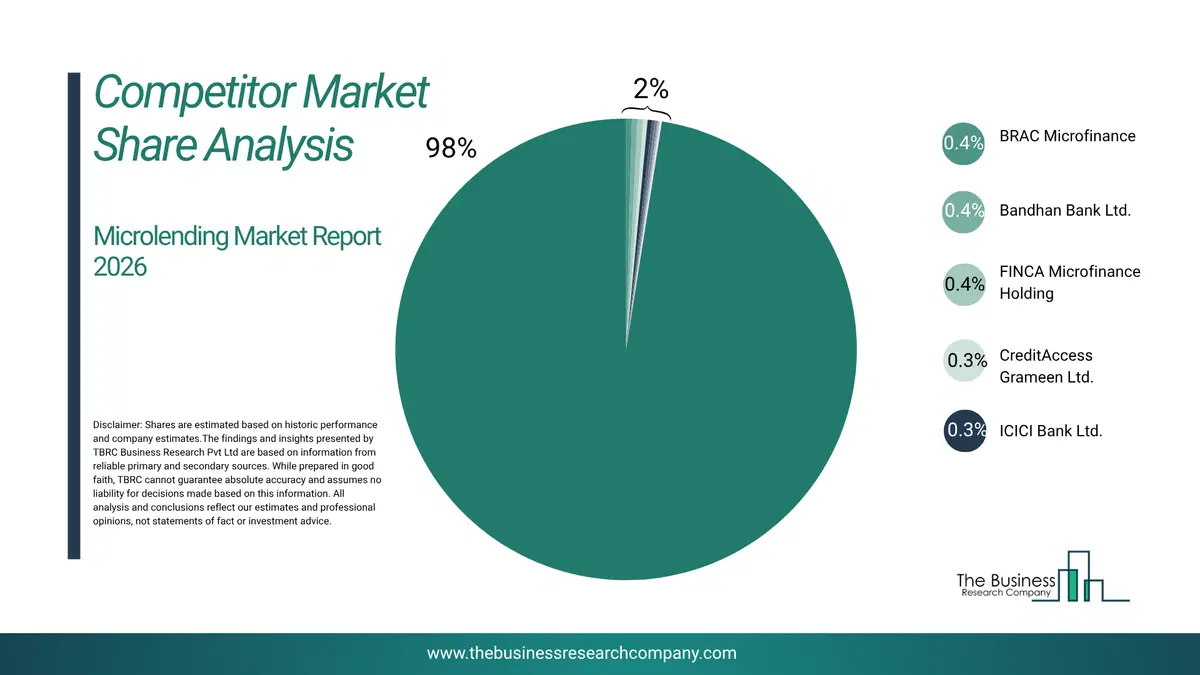
This chart is for illustrative purposes; the full report includes a detailed competitor analysis and comprehensive overview of the top 10 companies in the market.
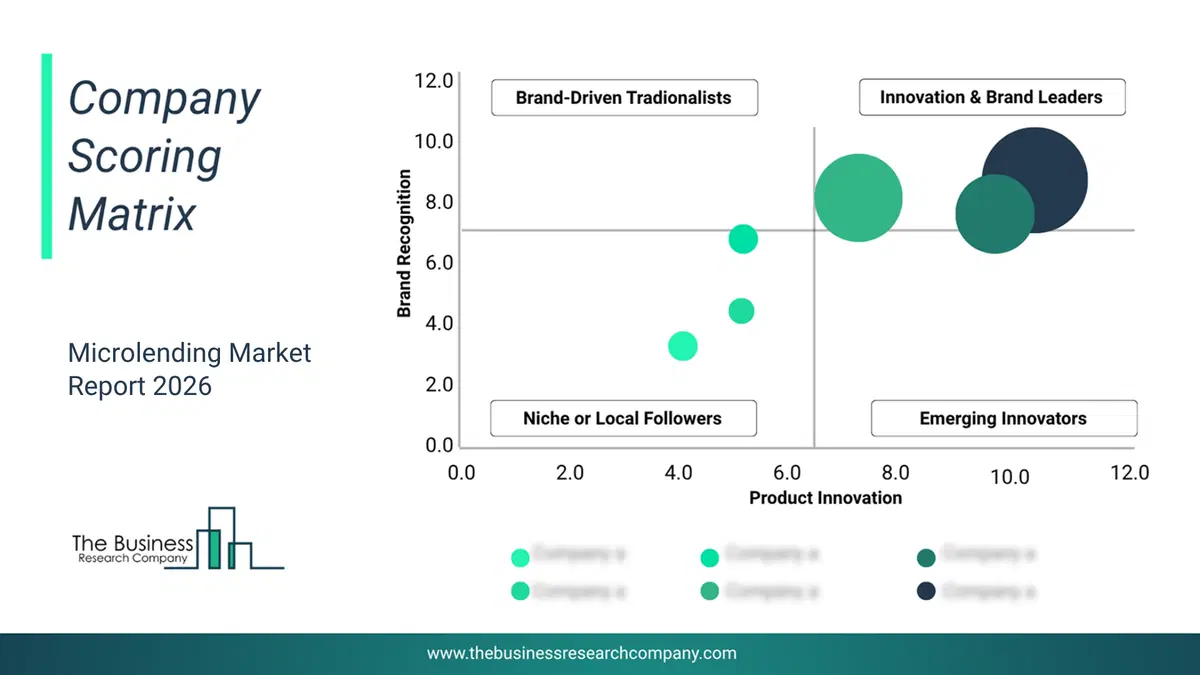
This chart maps companies by product innovation and brand strength, with bubble size indicating relative revenue, helping identify market leaders, challengers, and niche players. This is an illustrative chart; the full report provides a complete and accurate competitive analysis.
Global Microlending Market Trends and Insights
Major companies operating in the microlending market are developing innovative products, such as online platforms, to meet larger customer bases, increase sales, and increase revenue. An online platform refers to a digital environment or space accessible over the internet that facilitates the exchange of information, services, or products between users or between users and the platform itself. For instance, in June 2023, TMEDE, a Greece-based microlending institution, launched the Microlending Platform. The Microlending Platform, accessible through mobile or web applications, uniquely empowers users to seamlessly apply for loans directly from their mobile devices or PCs with just a few clicks. Distinguishing itself with rapid processing, approvals, and disbursements, TMEDE Microfinance Solutions ensures loans up to 25,000 Euros ($27,000) are provided in less than 24 hours. This distinctive feature addresses diverse financial needs, including investment requirements, working capital, or settling outstanding debts, with unparalleled speed and convenience.What Are Latest Mergers And Acquisitions In The Microlending Market?
In November 2023, Svatantra Microfin Private Limited, an India-based financial services company, acquired Chaitanya India Fin Credit Private Limited for an undisclosed amount. With this acquisition, Svatantra Microfin aimed to significantly expand its scale and geographic presence in India’s microfinance sector, strengthen its customer base among underserved borrowers, and enhance operational efficiencies through consolidation. Chaitanya India Fin Credit Private Limited is an India-based financial services company that specializes in providing microloans and group-based lending solutions to low-income and rural customers to promote financial inclusion.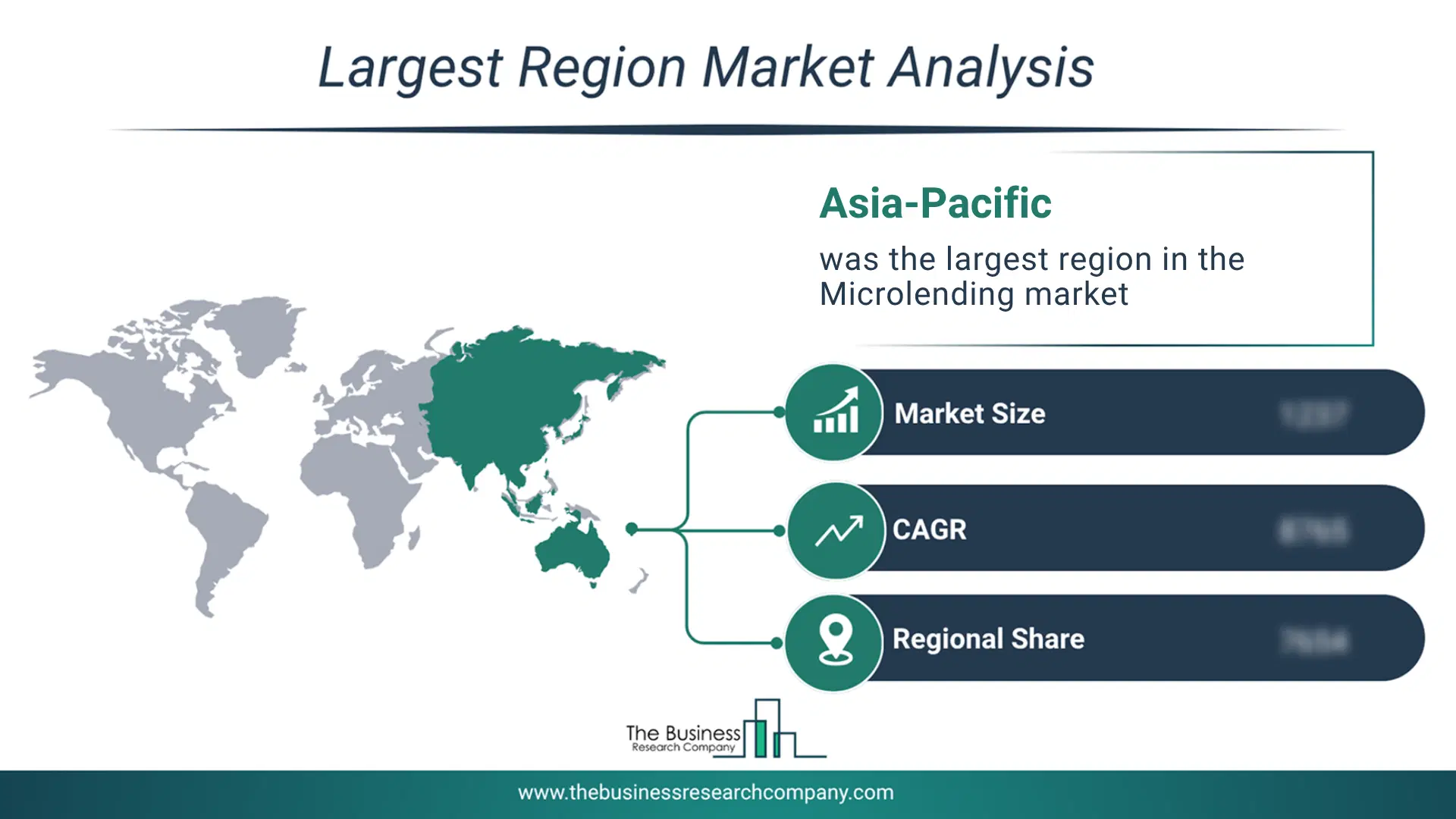
Regional Outlook
Asia-Pacific was the largest region in the microlending market in 2025. The regions covered in this market report are Asia-Pacific, South East Asia, Western Europe, Eastern Europe, North America, South America, Middle East, Africa. The countries covered in this market report are Australia, Brazil, China, France, Germany, India, Indonesia, Japan, Taiwan, Russia, South Korea, UK, USA, Canada, Italy, Spain.What Defines the Microlending Market?
The microlending market includes revenues earned by entities by providing loans and funds through group lending and individual lending. The market value includes the value of related goods sold by the service provider or included within the service offering. Only goods and services traded between entities or sold to end consumers are included.How is Market Value Defined and Measured?
The market value is defined as the revenues that enterprises gain from the sale of goods and/or services within the specified market and geography through sales, grants, or donations in terms of the currency (in USD unless otherwise specified). The revenues for a specified geography are consumption values that are revenues generated by organizations in the specified geography within the market, irrespective of where they are produced. It does not include revenues from resales along the supply chain, either further along the supply chain or as part of other products.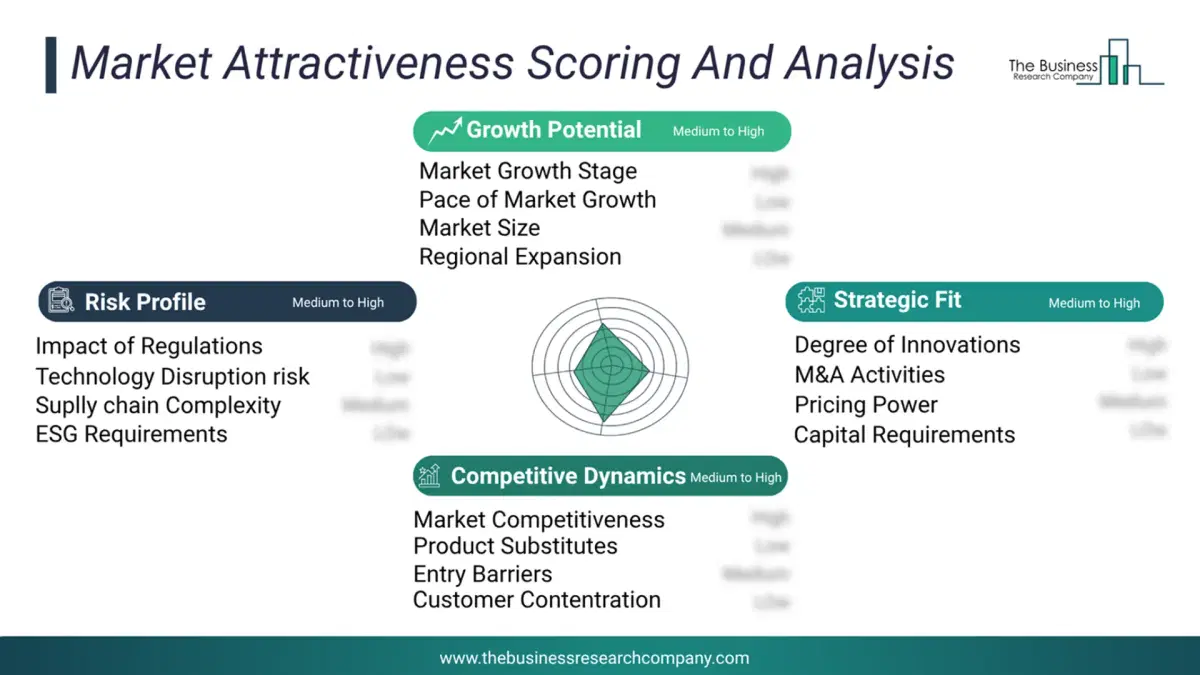
This chart presents market attractiveness based on a quantitative evaluation of growth, competition, strategic alignment, and risk, offering a clear view of opportunity areas for decision-making. This chart is for illustrative purposes; the full report contains the complete analysis.
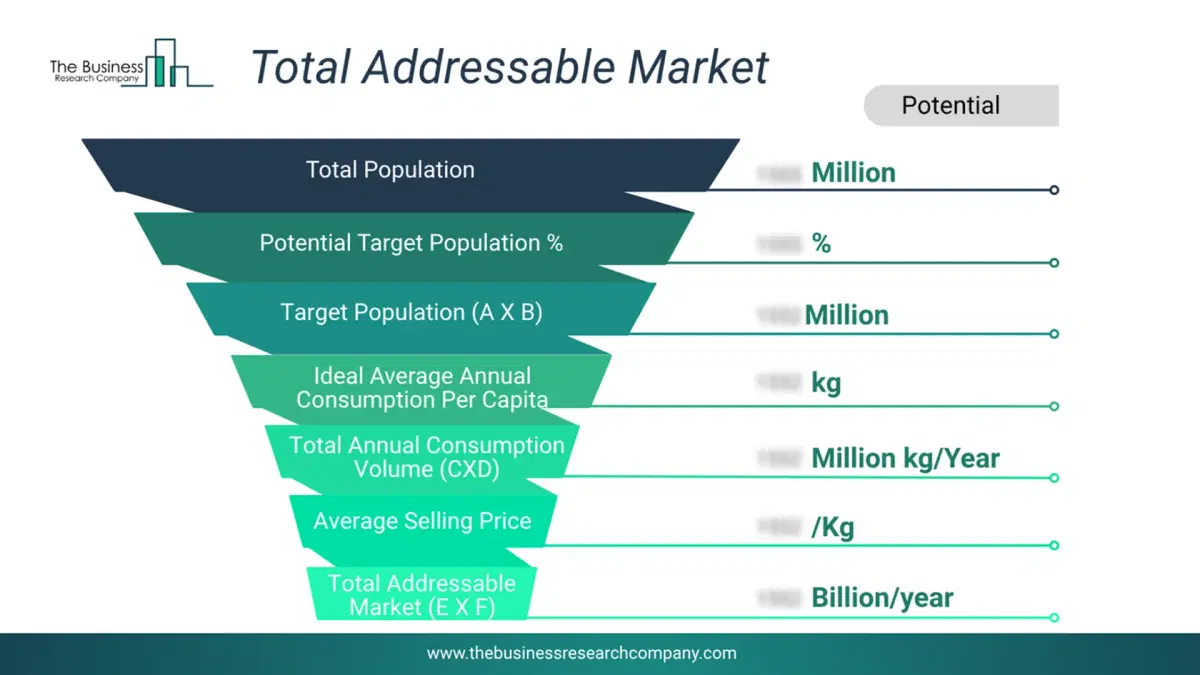
This chart highlights the Total Addressable Market (TAM) by estimating the maximum revenue opportunity using an assumption-driven approach, supporting strategic planning and opportunity sizing across markets. The chart is illustrative; the full report provides a more comprehensive analysis.
What Key Data and Analysis Are Included in the Microlending Market Report 2026?
The microlending market research report is one of a series of new reports from The Business Research Company that provides market statistics, including Market Report 2026?global market size, regional shares, competitors with the market share, detailed market segments, market trends and opportunities, and any further data you may need to thrive in the microlending Market Report 2026? The market research report delivers a complete perspective of everything you need, with an in-depth analysis of the current and future state of the Market Report 2026?Microlending Market Report Forecast Analysis
| Report Attribute | Details |
|---|---|
| Market Size Value In 2026 | $270.99 billion |
| Revenue Forecast In 2030 | $434.2 billion |
| Growth Rate | CAGR of 12.5% from 2026 to 2030 |
| Base Year For Estimation | 2025 |
| Actual Estimates/Historical Data | 2020-2025 |
| Forecast Period | 2026 - 2030 |
| Market Representation | Revenue in USD Billion and CAGR from 2026 to 2030 |
| Segments Covered | Provider, Loan Type, End-User |
| Regional Scope | Asia-Pacific, Western Europe, Eastern Europe, North America, South America, Middle East, Africa |
| Country Scope | The countries covered in the report are Australia, Brazil, China, France, Germany, India, Indonesia, Japan, Taiwan, Russia, South Korea, UK, USA, Canada, Italy, Spain. |
| Key Companies Profiled | ICICI Bank Ltd., Bajaj Finserv Ltd., HDB Financial Services Ltd., Bandhan Bank Ltd., Equitas Small Finance Bank Ltd., ESAF Small Finance Bank, Fincare Small Finance Bank Ltd., Ujjivan Small Finance Bank Ltd., Fusion Micro Finance Ltd., Satin Creditcare Network Ltd., Spandana Sphoorty Financial Ltd., CreditAccess Grameen Ltd., Arohan Financial Services Ltd., Annapurna Finance Pvt Ltd., Asirvad Micro Finance Ltd., Grameen America Inc., BRAC Microfinance, FINCA Microfinance Holding, Faulu Microfinance Bank Limited, Opportunity International |
| Customization Scope | Request for Customization |
| Pricing And Purchase Options | Explore Purchase Options |