
Monoclonal Antibodies (MAs) Market Report 2026
Global Outlook – By Source (Murine, Chimeric, Humanized, Human), By Application (Anti-Cancer, Immunological, Anti-Infective Monoclonal Antibodies (MAs), Neuropharmacological, Cardiovascular And Cerebrovascular, Other Applications), By End Users (Hospitals, Private Clinics, Research Institute) – Market Size, Trends, Strategies, and Forecast to 2030
Monoclonal Antibodies (MAs) Market Overview
• Monoclonal Antibodies (MAs) market size has reached to $256.03 billion in 2025 • Expected to grow to $464.39 billion in 2030 at a compound annual growth rate (CAGR) of 12.6% • Growth Driver: Surge In Adoption Of Cost-Efficient Biosimilar Monoclonal Antibodies Driving Market Growth Due To Greater Treatment Accessibility • Market Trend: Innovative Technologies To Enhance Competitiveness In The Monoclonal Antibodies Market • North America was the largest region in 2025.What Is Covered Under Monoclonal Antibodies (MAs) Market?
Monoclonal antibodies (MABS) refer to laboratory-produced proteins intended to boost your immune system. Treatments for monoclonal antibodies are often administered as IV solutions, frequently in an infusion center. Antibodies are a component of your immune system. To kill them, they seek out the antigens (foreign substances) and adhere to them. The main types of sources of monoclonal antibodies (MABS) are murine, chimeric, humanized, and human. A murine antibody has two types of chains, one of which is from a mouse and the other from a human. The pre-stem -o- in the INN of a murine antibody is used to identify it. It is used in anti-cancer, immunological, anti-infective monoclonal antibodies (MAbs), neuropharmacological, cardiovascular, cerebrovascular, and other applications and is implemented in various sectors such as hospitals, private clinics, and research institutes.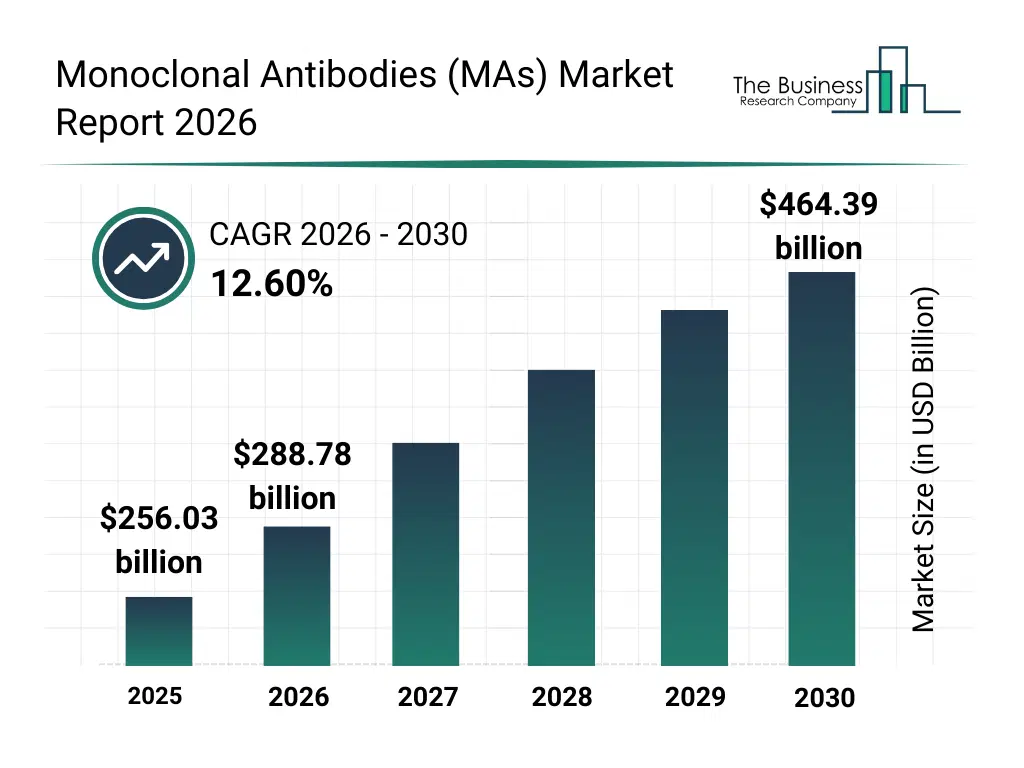
What Is The Monoclonal Antibodies (MAs) Market Size and Share 2026?
The monoclonal antibodies (mas) market size has grown rapidly in recent years. It will grow from $256.03 billion in 2025 to $288.78 billion in 2026 at a compound annual growth rate (CAGR) of 12.8%. The growth in the historic period can be attributed to advances in antibody engineering, rising cancer and autoimmune disease burden, expansion of biologics approvals, improved infusion center infrastructure, increased healthcare spending.What Is The Monoclonal Antibodies (MAs) Market Growth Forecast?
The monoclonal antibodies (mas) market size is expected to see rapid growth in the next few years. It will grow to $464.39 billion in 2030 at a compound annual growth rate (CAGR) of 12.6%. The growth in the forecast period can be attributed to growth in targeted biologics pipelines, increasing use in chronic diseases, expansion of biosimilars, rising immunotherapy adoption, growth of specialty clinics. Major trends in the forecast period include rising demand for biologic-based therapies, increasing use of monoclonal antibodies in oncology, expansion of infusion-based treatment settings, growing adoption of humanized and fully human mabs, increased focus on long-term immunotherapy treatment.
Global Monoclonal Antibodies (MAs) Market Segmentation
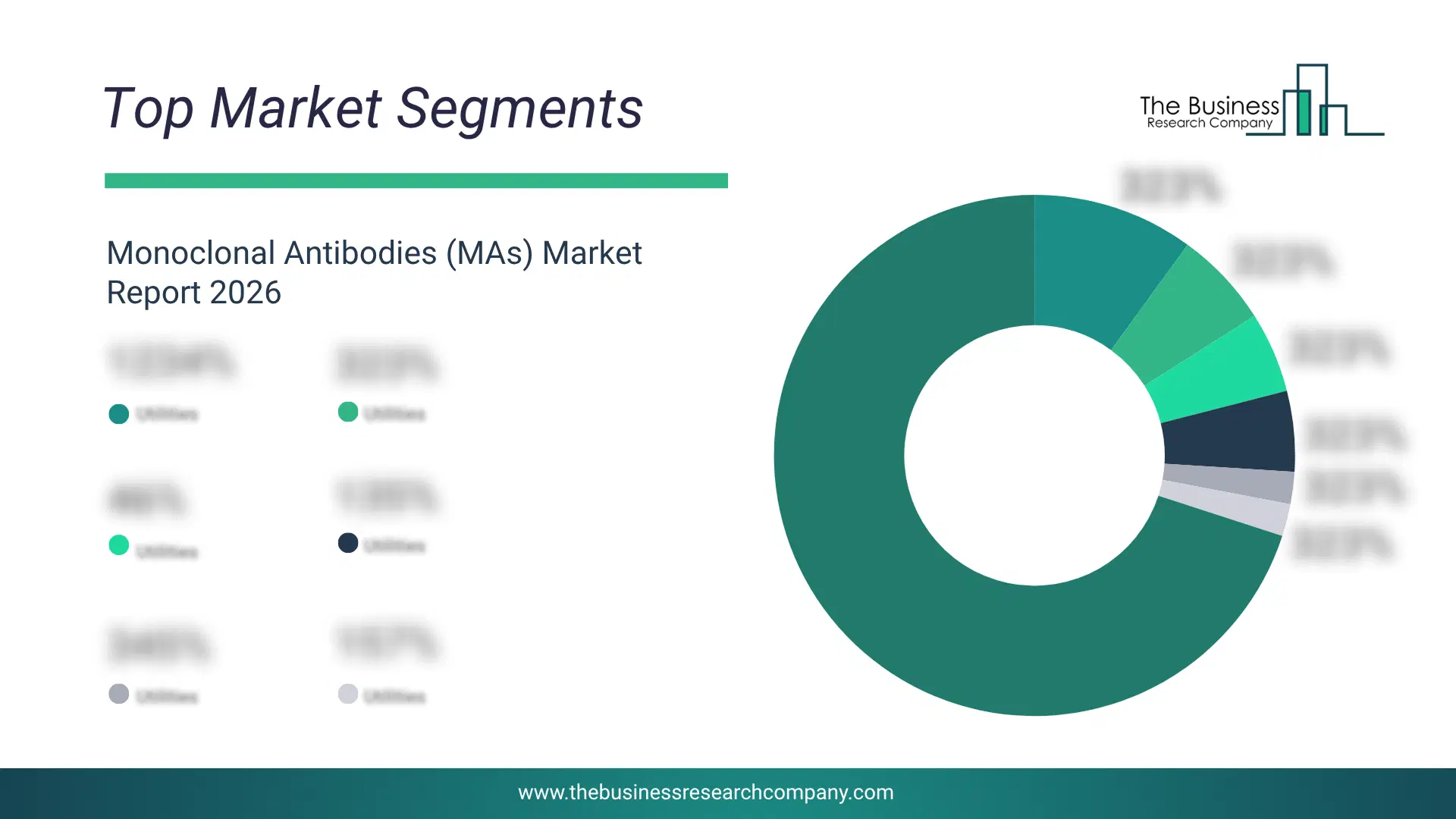
1) By Source: Murine, Chimeric, Humanized, Human 2) By Application: Anti-Cancer, Immunological, Anti-Infective Monoclonal Antibodies (MAs), Neuropharmacological, Cardiovascular And Cerebrovascular, Other Applications 3) By End Users: Hospitals, Private Clinics, Research Institute Subsegments: 1) By Murine: Fully Murine MAbs, Murine-Derived MAbs 2) By Chimeric: Chimeric MAbs With Murine Variable Regions, Chimeric MAbs With Human Constant Regions 3) By Humanized: Humanized MAbs With Minor Murine Components, Fully Humanized MAbs 4) By Human: Fully Human MAbs, Engineered Human MAbsWhat Are The Drivers Of The Monoclonal Antibodies (MAs) Market?
The increasing prevalence of cost-efficient biosimilar monoclonal antibodies is expected to drive the growth of the monoclonal antibody market. Biosimilars are pharmaceuticals that are developed to have similar properties to a biological drug that has already been approved. The rise in adoption is due to growing patient demand for affordable biologic therapies, patent expirations of major branded monoclonal antibodies, and supportive regulatory pathways encouraging biosimilar development and commercialization. The increasing adoption of cost-efficient biosimilar monoclonal antibodies supports the monoclonal antibody by expanding treatment access, reducing healthcare expenditure, and encouraging competitive innovation among pharmaceutical manufacturers. For instance, in February 2025, according to World Health Organization, a Switzerland-based United Nations agency focused on global public health, biosimilars are around 60% cheaper than originator biologic medicines and provide substantial cost savings that can expand access to essential biologic therapies. Therefore, increasing prevalence of cost-efficient biosimilar monoclonal antibodies is driving the growth of the monoclonal antibody market. The increasing prevalence of chronic diseases is expected to propel the growth of the monoclonal antibodies (mAbs) market going forward. Chronic diseases are long-lasting conditions that usually cannot be cured but can be managed with proper medical attention and lifestyle changes. The rise in chronic diseases is due to lifestyle changes associated with economic growth and urbanization, which lead to poor diet, physical inactivity, increased obesity, and related metabolic risks. Monoclonal antibodies (mAbs) have been employed in the treatment of various chronic diseases, particularly those characterized by dysregulated immune responses, excessive inflammation, and specific molecular targets. For instance, in July 2023, according to the Health Foundation, a United Kingdom-based independent health policy research and analysis organization, the number of people living with major illness in England is projected to increase by 37 percent by 2040, which is nine times the growth rate of the working age population aged 20 to 69 years at 4 percent. Therefore, the ongoing rise in the incidence of chronic diseases will persist in propelling the growth of the monoclonal antibodies (mAbs) market.Key Players In The Global Monoclonal Antibodies (MAs) Market
Major companies operating in the monoclonal antibodies (mas) market are Johnson & Johnson, Merck & Co. Inc., AbbVie Inc., Amgen Inc., Novartis International AG, Pfizer Inc., Thermo Fisher Scientific Inc., Eli Lilly and Company, Bristol-Myers Squibb Company, F. Hoffmann-La Roche Ltd., Sanofi S.A., Abbott Laboratories, Daiichi Sankyo Company Ltd., Seattle Genetics Inc., Shanghai Junshi Biosciences Co. Ltd., GenScript Biotech Corporation, Sigma-Aldrich Co. LLC, AbGenomics Inc., ADC Therapeutics SA, Agensys Inc., Alexion Pharmaceuticals Inc., ALMAC Group Ltd., Ambrx Biopharma Inc., Astellas Pharma Inc., Celgene Corporation, Celldex Therapeutics Inc., Baxter International Inc., Fresenius SE & Co. KGaA, Hikma Pharmaceuticals plc, Jiangsu Hengrui Medicine Co. Ltd., Piramal Enterprises Ltd., CD BioSciences Inc., Creative Biolabs Inc., Advanced ChemTech Inc., Tonbo Biosciences Inc., GlaxoSmithKline plc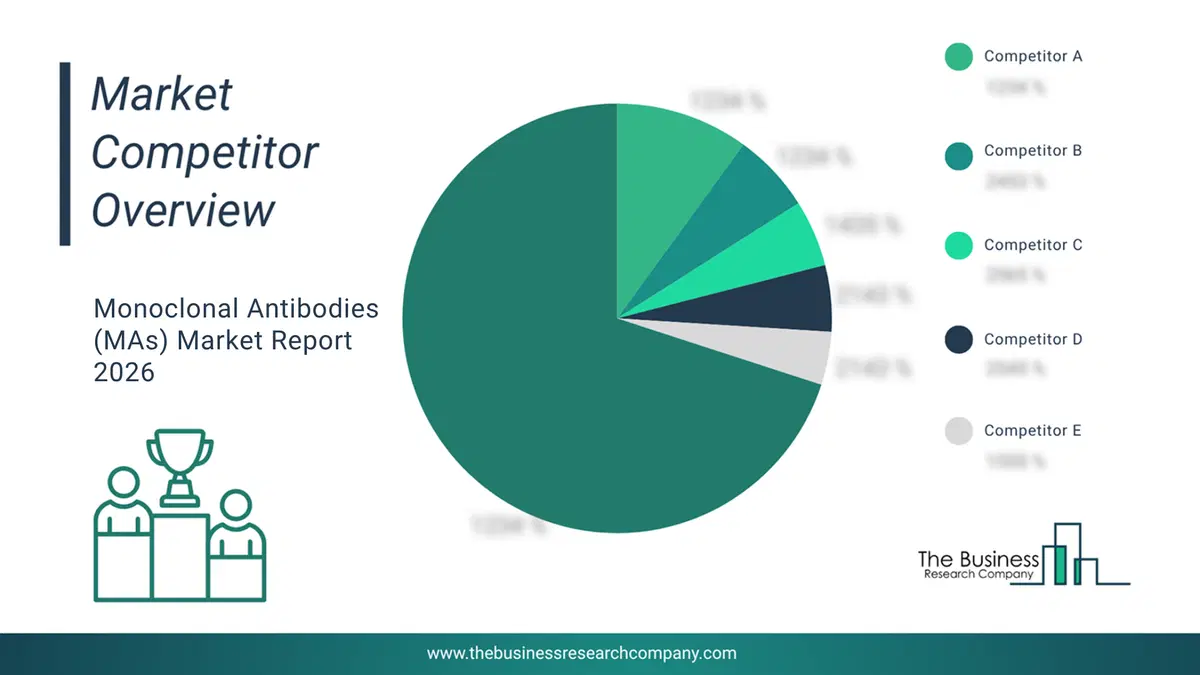
This chart is for illustrative purposes; the full report includes a detailed competitor analysis and comprehensive overview of the top 10 companies in the market.
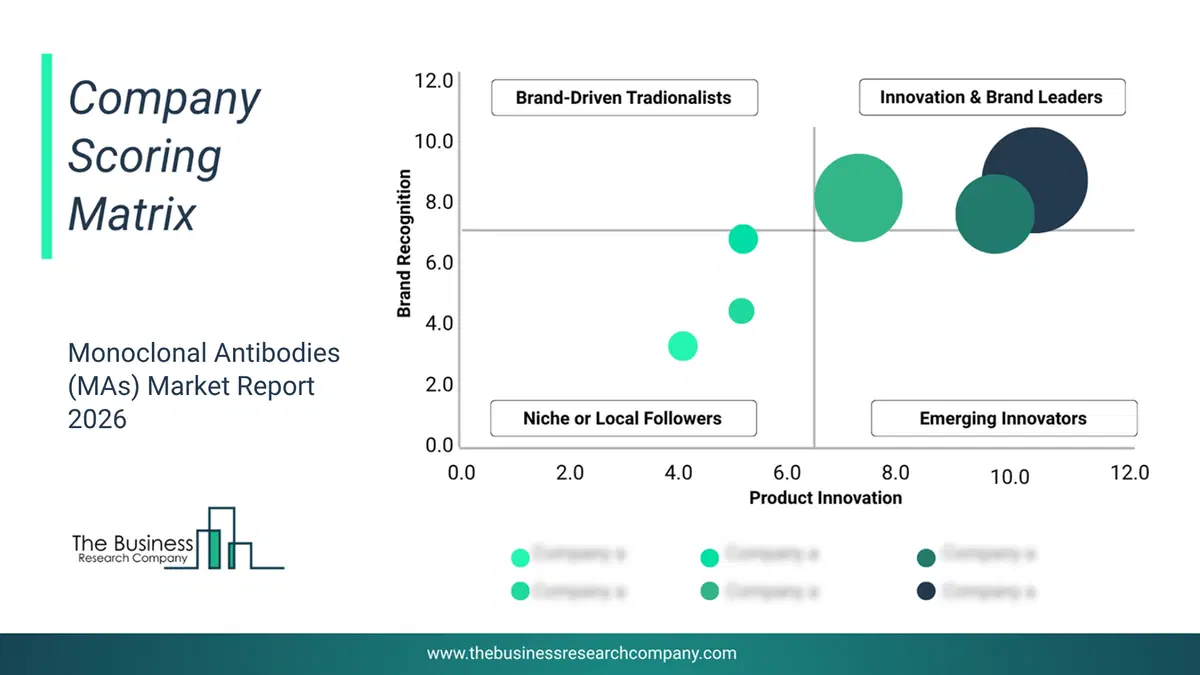
This chart maps companies by product innovation and brand strength, with bubble size indicating relative revenue, helping identify market leaders, challengers, and niche players. This is an illustrative chart; the full report provides a complete and accurate competitive analysis.
Global Monoclonal Antibodies (MAs) Market Trends and Insights
Major companies operating in the monoclonal antibodies market are introducing innovative technologies such as RenMice to gain a competitive edge in the market. RenMice offers strong assistance in the exploration of various antibody-based therapies, including fully human monoclonal antibodies, bispecific antibodies, bispecific antibody-drug conjugates (BsADCs), nanobodies, fully human T-cell receptors (TCRs), and TCR-mimic antibodies. For instance, in September 2023, Biocytogen Pharmaceuticals, a China-based international biotech company that drives the research and development of new drugs with innovative technologies launched the RenMice series, encompassing a selection of independently created fully human antibody mice and TCR mice, all of which possess proprietary intellectual property.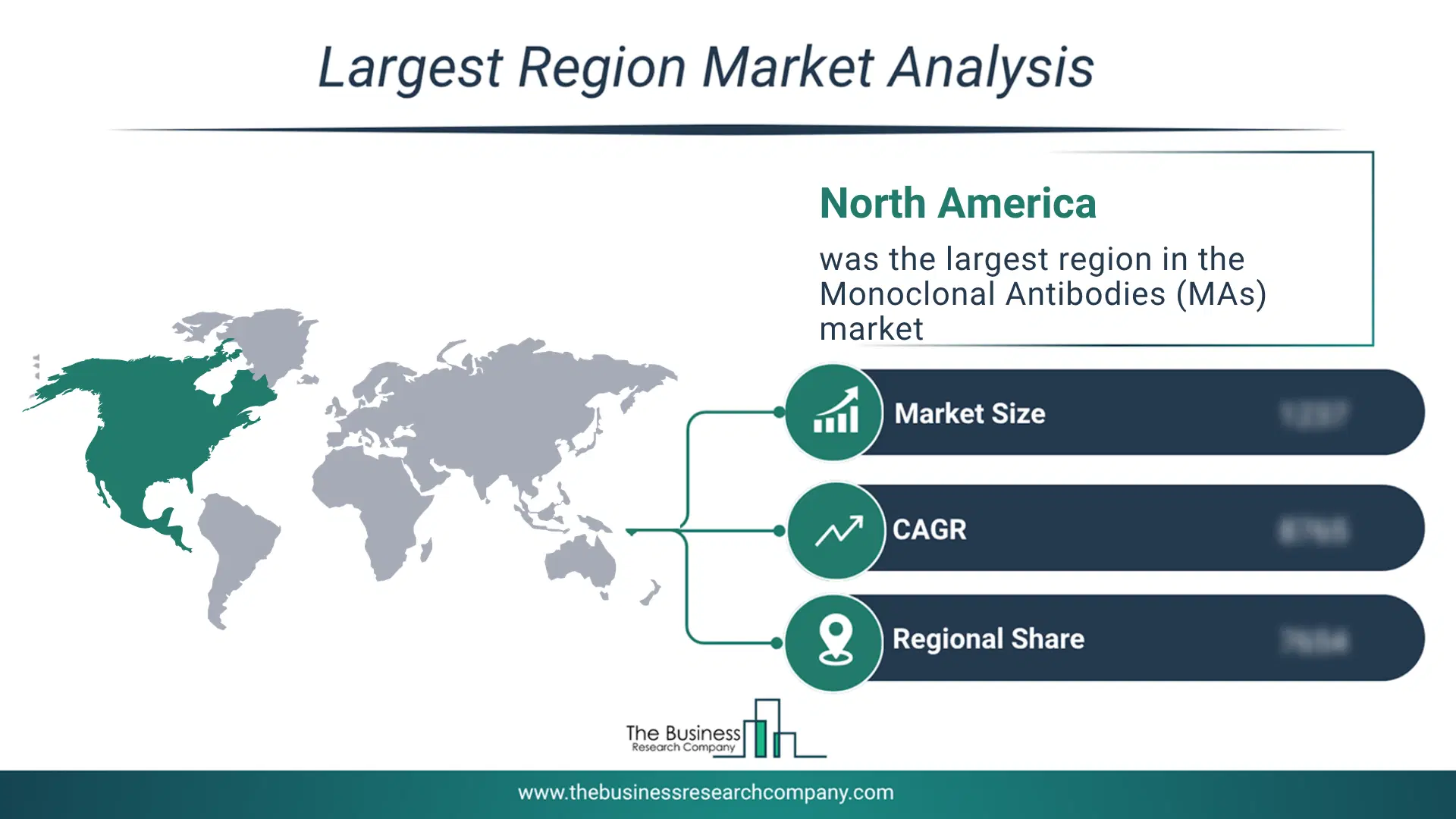
Regional Insights
North America was the largest region in the monoclonal antibodies (MAbS) market in 2025. The regions covered in this market report are Asia-Pacific, South East Asia, Western Europe, Eastern Europe, North America, South America, Middle East, Africa. The countries covered in this market report are Australia, Brazil, China, France, Germany, India, Indonesia, Japan, Taiwan, Russia, South Korea, UK, USA, Canada, Italy, Spain.What Defines the Monoclonal Antibodies (MAs) Market?
The monoclonal antibodies (MABS) market consists of sales of rituximab, cetuximab, and trastuzumab. Values in this market are factory gate values, that is the value of goods sold by the manufacturers or creators of the goods, whether to other entities (including downstream manufacturers, wholesalers, distributors, and retailers) or directly to end customers. The value of goods in this market includes related services sold by the creators of the goods.How is Market Value Defined and Measured?
The market value is defined as the revenues that enterprises gain from the sale of goods and/or services within the specified market and geography through sales, grants, or donations in terms of the currency (in USD unless otherwise specified). The revenues for a specified geography are consumption values that are revenues generated by organizations in the specified geography within the market, irrespective of where they are produced. It does not include revenues from resales along the supply chain, either further along the supply chain or as part of other products.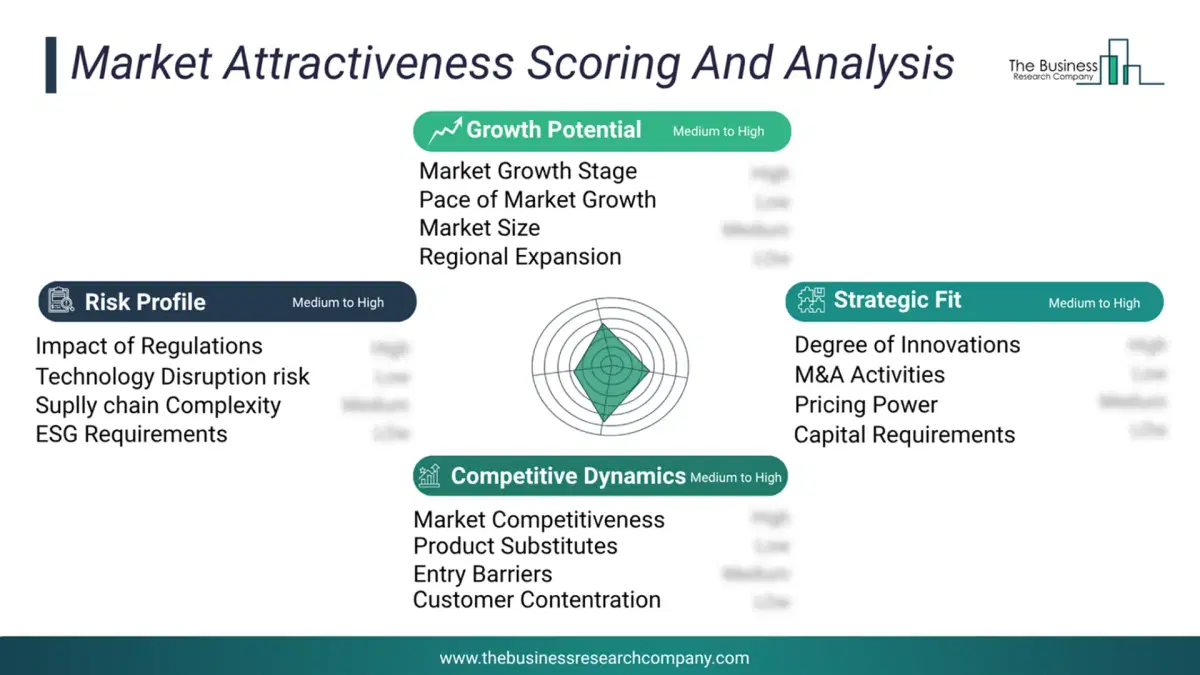
This chart presents market attractiveness based on a quantitative evaluation of growth, competition, strategic alignment, and risk, offering a clear view of opportunity areas for decision-making. This chart is for illustrative purposes; the full report contains the complete analysis.
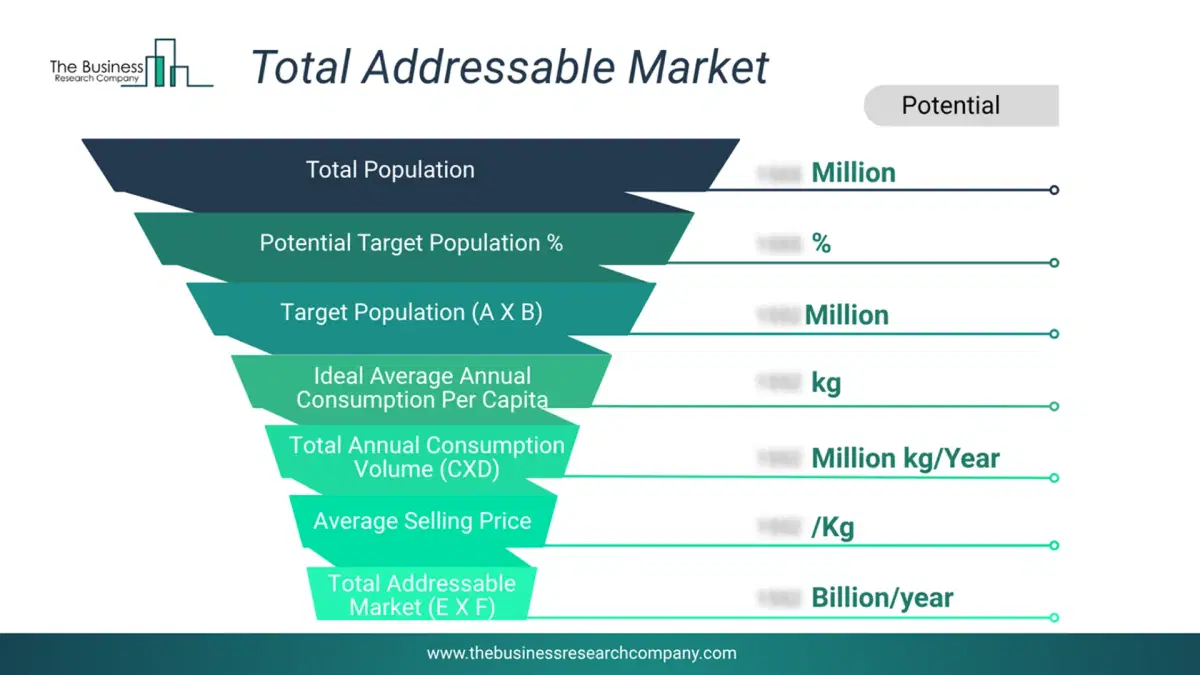
This chart highlights the Total Addressable Market (TAM) by estimating the maximum revenue opportunity using an assumption-driven approach, supporting strategic planning and opportunity sizing across markets. The chart is illustrative; the full report provides a more comprehensive analysis.
What Key Data and Analysis Are Included in the Monoclonal Antibodies (MAs) Market Report 2026?
The monoclonal antibodies (mas) market research report is one of a series of new reports from The Business Research Company that provides market statistics, including industry global market size, regional shares, competitors with the market share, detailed market segments, market trends and opportunities, and any further data you may need to thrive in the monoclonal antibodies (mas) industry. The market research report delivers a complete perspective of everything you need, with an in-depth analysis of the current and future state of the industry.Monoclonal Antibodies (MAs) Market Report Forecast Analysis
| Report Attribute | Details |
|---|---|
| Market Size Value In 2026 | $288.78 billion |
| Revenue Forecast In 2030 | $464.39 billion |
| Growth Rate | CAGR of 12.8% from 2026 to 2030 |
| Base Year For Estimation | 2025 |
| Actual Estimates/Historical Data | 2020-2025 |
| Forecast Period | 2026 - 2030 |
| Market Representation | Revenue in USD Billion and CAGR from 2026 to 2030 |
| Segments Covered | Source, Application, End Users |
| Regional Scope | Asia-Pacific, Western Europe, Eastern Europe, North America, South America, Middle East, Africa |
| Country Scope | The countries covered in the report are Australia, Brazil, China, France, Germany, India, Indonesia, Japan, Taiwan, Russia, South Korea, UK, USA, Canada, Italy, Spain. |
| Key Companies Profiled | Johnson & Johnson, Merck & Co. Inc., AbbVie Inc., Amgen Inc., Novartis International AG, Pfizer Inc., Thermo Fisher Scientific Inc., Eli Lilly and Company, Bristol-Myers Squibb Company, F. Hoffmann-La Roche Ltd., Sanofi S.A., Abbott Laboratories, Daiichi Sankyo Company Ltd., Seattle Genetics Inc., Shanghai Junshi Biosciences Co. Ltd., GenScript Biotech Corporation, Sigma-Aldrich Co. LLC, AbGenomics Inc., ADC Therapeutics SA, Agensys Inc., Alexion Pharmaceuticals Inc., ALMAC Group Ltd., Ambrx Biopharma Inc., Astellas Pharma Inc., Celgene Corporation, Celldex Therapeutics Inc., Baxter International Inc., Fresenius SE & Co. KGaA, Hikma Pharmaceuticals plc, Jiangsu Hengrui Medicine Co. Ltd., Piramal Enterprises Ltd., CD BioSciences Inc., Creative Biolabs Inc., Advanced ChemTech Inc., Tonbo Biosciences Inc., GlaxoSmithKline plc |
| Customization Scope | Request for Customization |
| Pricing And Purchase Options | Explore Purchase Options |