
Motor Vehicle Parts Market Report 2026
Global Outlook – By Type (Motor Vehicle Body, Stamped Metal And Other Parts, Motor Vehicle Engine, Power Train And Parts, Motor Vehicle Electrical & Electronic Equipment, Steering Suspension And Interiors ), By Application (Passenger Vehicle, Commercial Vehicle ), By End Use (OEM, Aftermarket) – Market Size, Trends, Strategies, and Forecast to 2030
Motor Vehicle Parts Market Overview
• Motor Vehicle Parts market size has reached to $2871.86 billion in 2025 • Expected to grow to $3961.19 billion in 2030 at a compound annual growth rate (CAGR) of 6.8% • Growth Driver: Booming Automobile Sales Fueling Growth In The Motor Vehicle Parts Market • Market Trend: Automotive Aftermarket Innovation In Starters, Alternators, Turbochargers, And HVAC Components • Asia-Pacific was the largest region in 2025 and Western Europe is the fastest growing region.Market Gains By 2030 – Top Opportunities By Segment
Market Gain identifies the most promising market opportunities by highlighting the segments or products expected to generate the highest incremental revenue growth over the next five years.
What Is Covered Under Motor Vehicle Parts Market?
A motor vehicle part is any component or accessory crucial to the operation or improvement of a vehicle. This can include items like engines, brakes, transmissions, and various mechanical or electrical elements, all made to ensure a vehicle runs effectively and safely. The main types of motor vehicle parts are motor vehicle bodies, stamped metal & other parts, motor vehicle engines, power train and parts, motor vehicle electrical and electronic equipment, steering suspension and interiors. The motor vehicle body refers to the parts of the motor vehicle that help in certain functions they perform. The various applications include passenger vehicles and commercial vehicles. These are used in the OEM and aftermarket.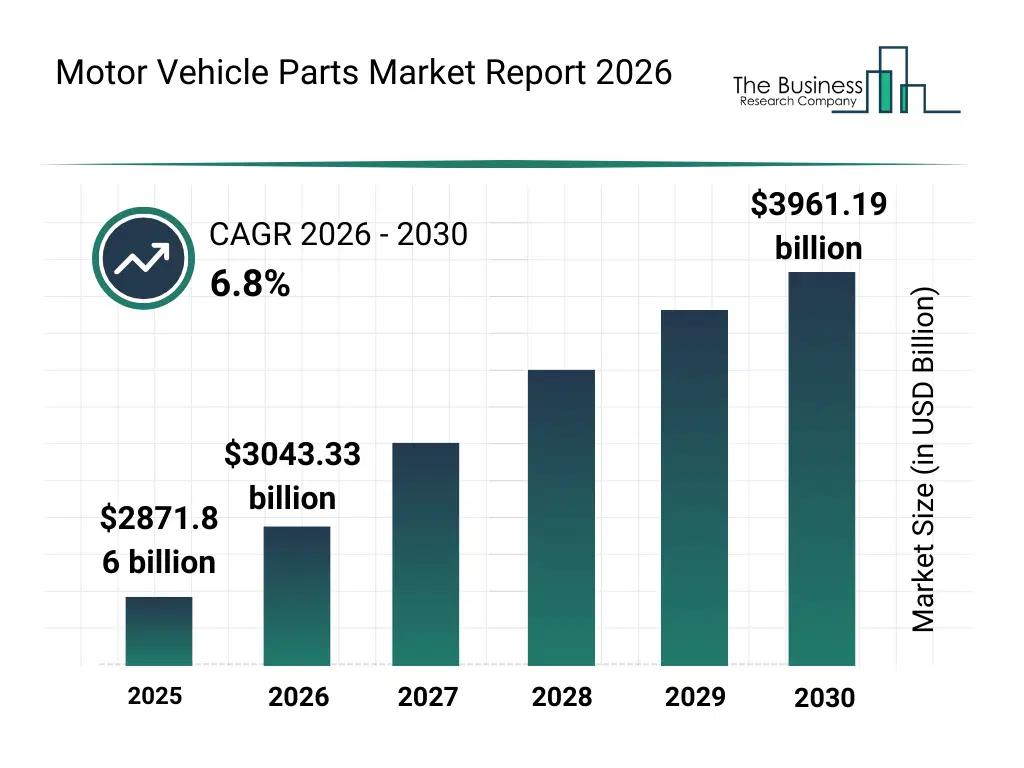
What Is The Motor Vehicle Parts Market Size and Share 2026?
The motor vehicle parts market size has grown strongly in recent years. It will grow from $2871.86 billion in 2025 to $3043.33 billion in 2026 at a compound annual growth rate (CAGR) of 6.0%. The growth in the historic period can be attributed to growth of global vehicle ownership, expansion of aftermarket services, demand for replacement parts, vehicle lifecycle extension, industrial automotive manufacturing.What Is The Motor Vehicle Parts Market Growth Forecast?
The motor vehicle parts market size is expected to see strong growth in the next few years. It will grow to $3961.19 billion in 2030 at a compound annual growth rate (CAGR) of 6.8%. The growth in the forecast period can be attributed to electric vehicle penetration, digitization of vehicle systems, demand for smart components, global vehicle parc growth, aftermarket digital platforms. Major trends in the forecast period include increasing demand for modular vehicle components, rising adoption of advanced automotive electronics, growing focus on lightweight structural parts, expansion of aftermarket parts distribution, higher emphasis on quality and durability.
Global Motor Vehicle Parts Market Segmentation
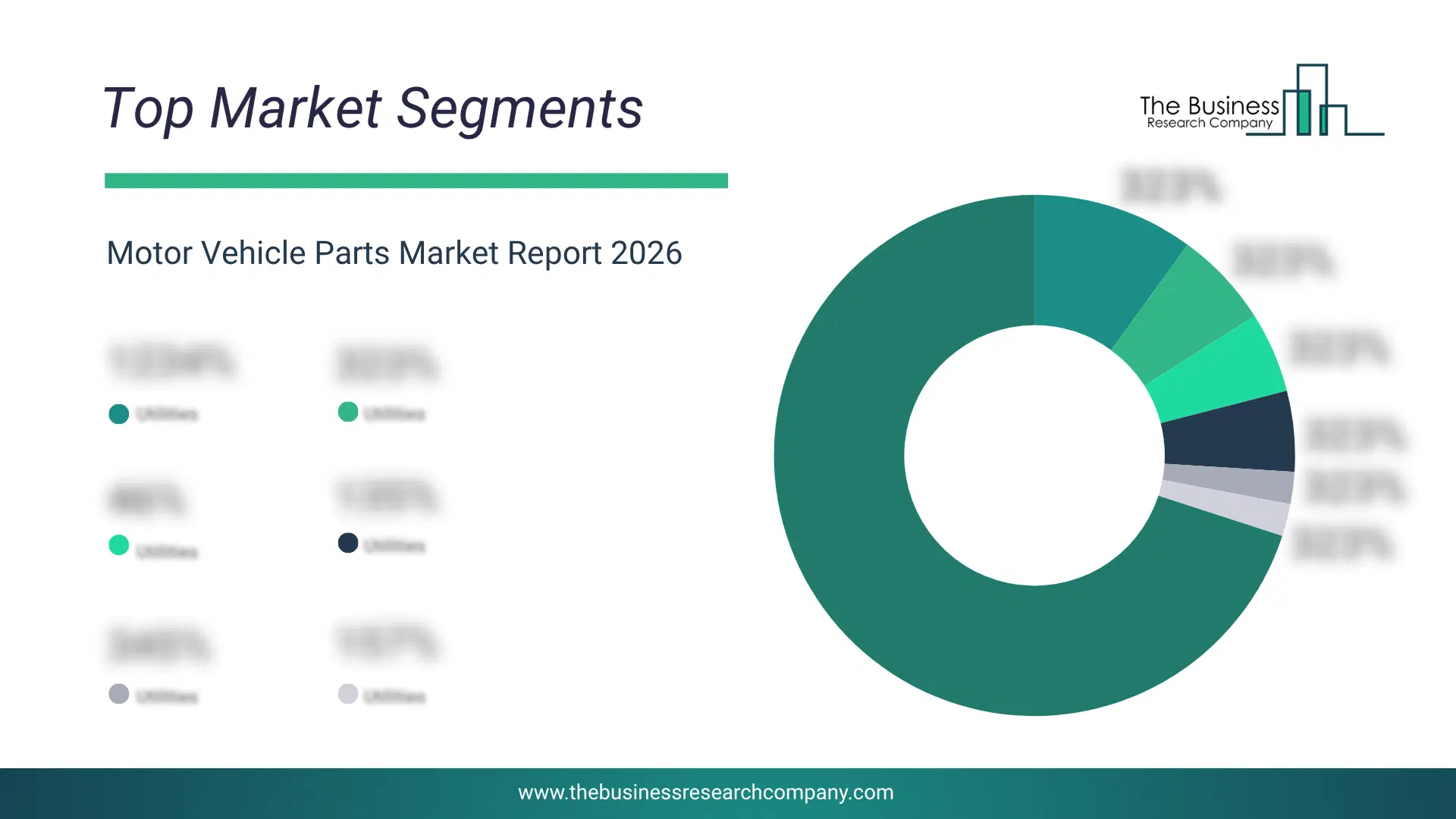
1) By Type: Motor Vehicle Body, Stamped Metal And Other Parts, Motor Vehicle Engine, Power Train And Parts, Motor Vehicle Electrical & Electronic Equipment, Steering Suspension And Interiors 2) By Application: Passenger Vehicle, Commercial Vehicle 3) By End Use: OEM, Aftermarket Subsegments: 1) By Motor Vehicle Body: Body Panels, Chassis, Bumpers, Doors And Windows 2) By Stamped Metal And Other Parts: Stamped Metal Components, Brackets And Supports, Structural Frames, Custom Fabricated Parts 3) By Motor Vehicle Engine: Engine Blocks, Cylinder Heads, Crankshafts, Camshafts 4) By Power Train And Parts: Transmissions, Differentials, Drive Shafts, Axles 5) By Motor Vehicle Electrical And Electronic Equipment: Alternators, Starters, Sensors, Wiring Harnesses 6) By Steering Suspension And Interiors: Steering Systems, Suspension Components, Interior Trim Parts, Seating SystemsThe top segments in the motor vehicle parts market will be: • Motor Vehicle Body, Stamped Metal & Other Parts will reach $1936 Billion by 2030. • Motor Vehicle Engine, Power Train & Parts will reach $1226 Billion by 2030. • Motor Vehicle Electrical & Electronic Equipment, Steering Suspension, & Interiors will reach $829 Billion by 2030.What Is The Driver Of The Motor Vehicle Parts Market?
The booming automobile sales are expected to drive the are expected to propel the growth of the motor vehicle parts market in the coming years. Automobile sales are the number of automobiles and light-duty vehicles purchased. The phrase refers to the retail selling of both new and secondhand vehicles through an authorized dealer contract with a carmaker or its sales division. The demand for motor vehicle parts increases, when more vehicles are manufactured and sold. For instance, in May 2023, according to the Federal Chamber of Automotive Industries, an Australia-based business group that covers both importers and manufacturers of motorcycles, light vehicles, and passenger automobiles, Australia's automotive sector provided 82,137 automobiles in April 2023, a 1.3% prominence over the identical period in 2022. Therefore, the booming automobile sales are driving the motor vehicle parts industry.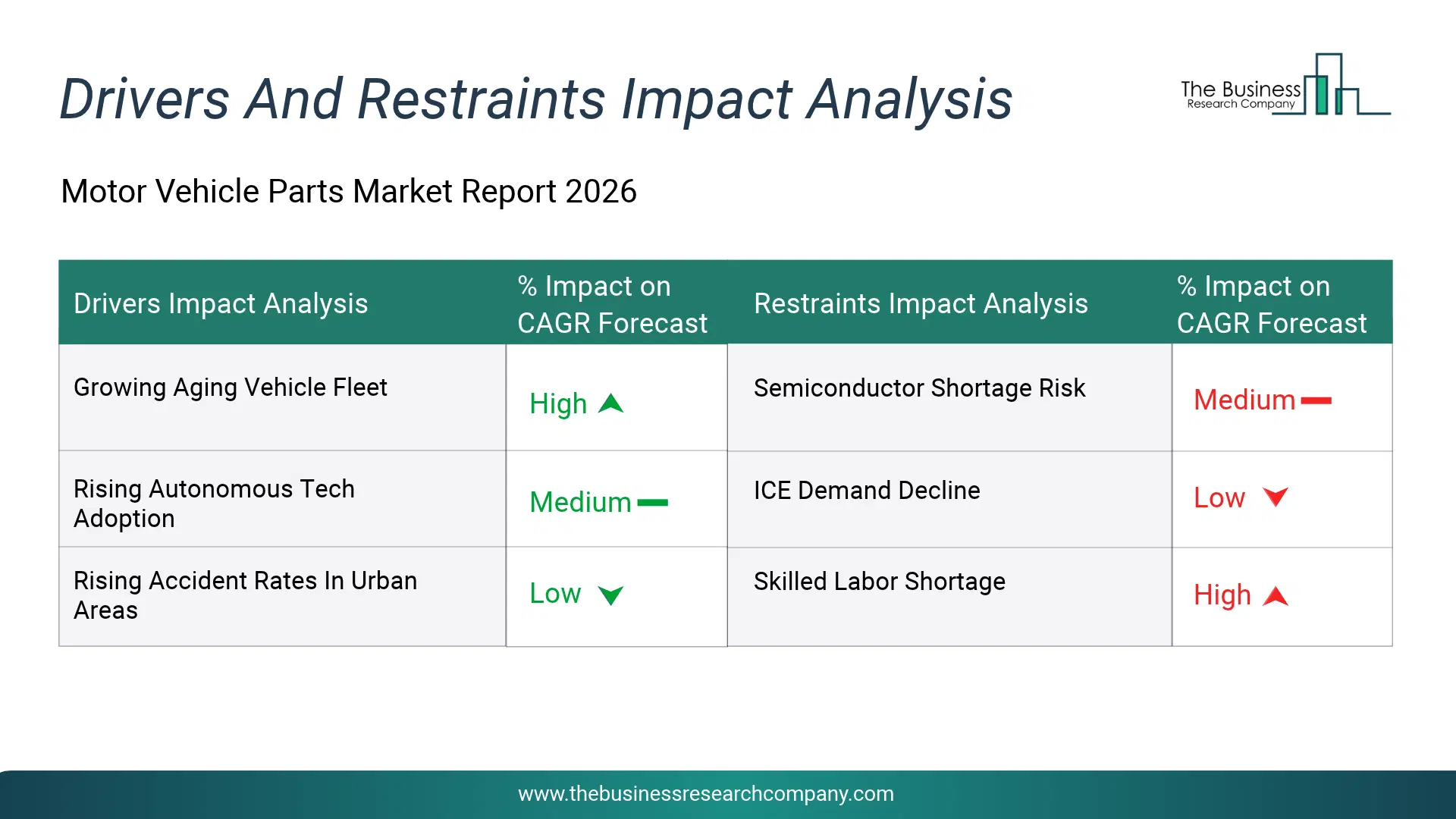
Infographic Chart Showing Key Market Drivers Analysis And Restraints For Motor Vehicle Parts Market
The chart presents an impact analysis of key drivers and restraints, quantifying their relative influence on the market's growth rate and helping assess the balance between growth enablers and limiting factors. This chart offers a high-level perspective; the full report contains more detailed insights.
How Will The Drivers Impact Growth In The Global Motor Vehicle Parts Market?
• Growing Aging Vehicle Fleet (High) – During the forecast period, the growing aging vehicle fleet is expected to become a key growth driver for the motor vehicle parts market by 2030. Growing aging vehicle fleet is driving the growth of the motor vehicle parts market by changing the size and composition of consumers and fleet operators, increasing overall requirements for vehicles and related components. A larger and more diverse base of consumers and fleet operators shaped by aging vehicle fleet increases overall consumption levels. This demographic shift also supports the introduction of new formats and offerings tailored to evolving needs. As this trend continues, vehicle manufacturers and parts suppliers operating within the motor vehicle parts market are likely to see sustained benefits. • Rising Autonomous Tech Adoption (Medium) – During the forecast period, the rising autonomous tech adoption is expected to emerge as a major factor driving the expansion of the motor vehicle parts market by 2030. Rising autonomous tech adoption is driving the growth of the motor vehicle parts market by creating favorable conditions that support vehicle manufacturers and parts suppliers in serving consumers and fleet operators. This factor, linked to autonomous tech adoption, is influencing how consumers and fleet operators evaluate and select vehicles and related components, prompting vehicle manufacturers and parts suppliers to respond accordingly. This shift is expected to have a lasting effect on demand patterns within the automotive sector. Over the forecast period, this trend is expected to remain an important factor supporting demand across the automotive sector. • Rising Accident Rates In Urban Areas (Low) – During the forecast period, the rising accident rates in urban areas are expected to act as a key growth catalyst for the motor vehicle parts market by 2030. Rising accident rates in urban areas are driving the growth of the motor vehicle parts market by increasing demand for vehicles and related components among consumers and fleet operators. This factor, linked to accident rates in urban areas, is influencing how consumers and fleet operators evaluate and select vehicles and related components, prompting vehicle manufacturers and parts suppliers to respond accordingly. This shift is expected to have a lasting effect on demand patterns within the automotive sector. As this trend continues, vehicle manufacturers and parts suppliers operating within the motor vehicle parts market are likely to see sustained benefits.How Will The Restraints Impact Growth In The Global Motor Vehicle Parts Market?
• Semiconductor Shortage Risk (High) – During the forecast period, the semiconductor shortage risk is restraining the growth of the motor vehicle parts market by creating operational and financial challenges for vehicle manufacturers and parts suppliers. This factor adds a layer of operational complexity for vehicle manufacturers and parts suppliers that can affect efficiency and profitability. Consumers and fleet operators may also adjust behavior in response to conditions linked to this challenge. Vehicle manufacturers and parts suppliers operating within the motor vehicle parts market will need to continue monitoring this factor closely. Consequently, semiconductor shortage risk can increase costs and constrain the growth of the motor vehicle parts market. • ICE Demand Decline (Medium) – During the forecast period, the ice demand decline is restraining the growth of the motor vehicle parts market by adding pressure on vehicle manufacturers and parts suppliers and consumers and fleet operators. This factor adds a layer of operational complexity for vehicle manufacturers and parts suppliers that can affect efficiency and profitability. Consumers and fleet operators may also adjust behavior in response to conditions linked to this challenge. This dynamic is expected to remain a relevant consideration for vehicle manufacturers and parts suppliers and consumers and fleet operators throughout the forecast period. Consequently, ice demand decline can increase costs and constrain the growth of the motor vehicle parts market. • Skilled Labor Shortage (Low) – During the forecast period, the skilled labor shortage is restraining the growth of the motor vehicle parts market by constraining operational capacity for vehicle manufacturers and parts suppliers. This factor is prompting vehicle manufacturers and parts suppliers to raise wages and invest in training, adding to operating costs. Persistent shortages can also limit the pace at which vehicle manufacturers and parts suppliers can scale operations. Over the forecast period, this factor is expected to remain an important consideration for vehicle manufacturers and parts suppliers operating in the automotive sector. Consequently, skilled labor shortage can increase costs and constrain the growth of the motor vehicle parts market.Key Players In The Global Motor Vehicle Parts Market
Major companies operating in the motor vehicle parts market report include Robert Bosch GmbH, Denso Corp, General Motors Co., Aisin Seiki Co ltd, Hyundai Mobis, Shanghai Automotive Industry Corporation, Tenneco, MAHLE GmbH, Ford Motor Company, Benteler South Africa, Mercedes-Benz Manufacturing Hungary, Dongfeng Motor Co. Ltd, Volkswagen, Martinrea International Inc., Continental AG, Magna International Inc, Nissan, Toyota Motor Corp, Honda Motor Co., Ltd., American Axle and Manufacturing Holdings, Bharat Forge, Mitsubishi Motor Corporation, Geely Automobile Holdings Limited, NIO Inc., NTN Corp., Marelli Holdings Co., Ltd., Fiat Chrysler Automobiles NV, Sumitomo, Mando, Linamar Corporation, XPeng Inc., Audi Hungaria Zrt, Renault, Jaguar Land Rover, Beijing Automotive Industry Company.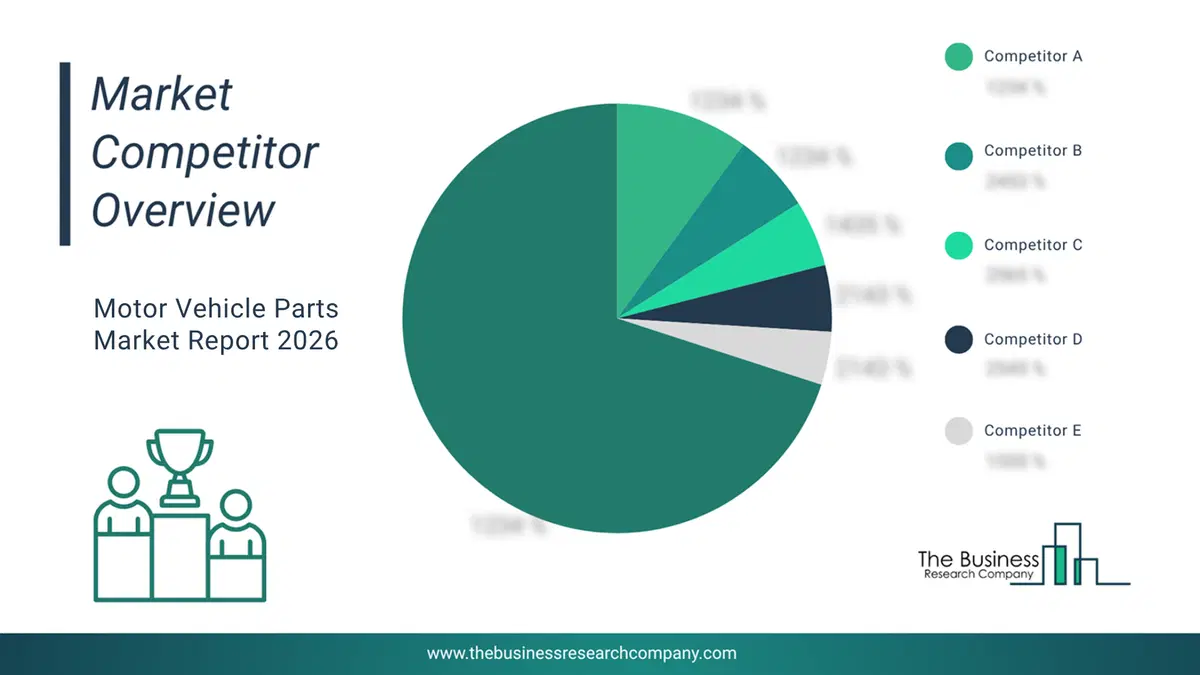
This chart is for illustrative purposes; the full report includes a detailed competitor analysis and comprehensive overview of the top 10 companies in the market.
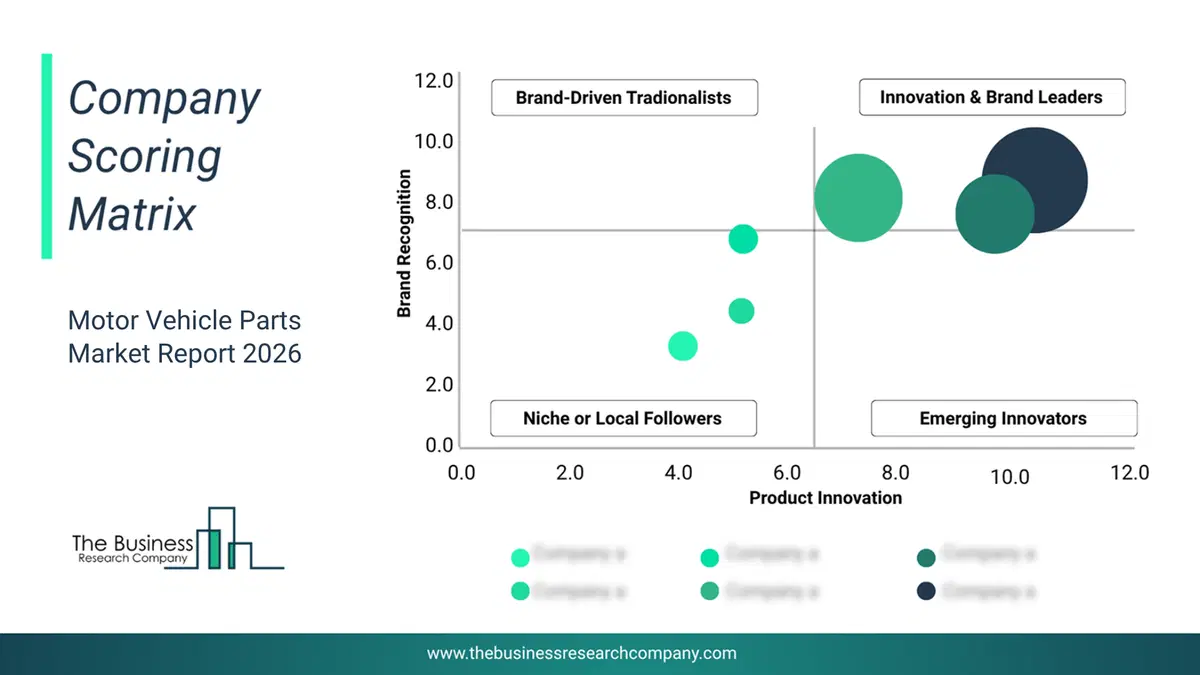
This chart maps companies by product innovation and brand strength, with bubble size indicating relative revenue, helping identify market leaders, challengers, and niche players. This is an illustrative chart; the full report provides a complete and accurate competitive analysis.
Global Motor Vehicle Parts Market Trends and Insights
Major companies operating in the motor vehicle parts market are focusing on developing expanded aftermarket product offerings such as original equipment (OE)-quality aftermarket components to enhance vehicle reliability and ensure efficient maintenance and replacement. OE-quality aftermarket components are replacement parts engineered to meet original-equipment specifications for fit, performance and durability, enabling reliable operation and restoration of key vehicle systems. For instance, in July 2025, DRiV Incorporated, a US-based automotive aftermarket specialist, launched three OE-quality aftermarket product lines under its FP DIESEL and Wagner brands, including FP DIESEL starters and alternators, FP DIESEL turbochargers and Wagner HVAC compressors designed for trucks, buses and passenger vehicles, featuring components built and tested to OE standards for durability, power delivery and installation fitment across major commercial and passenger platforms. These newly expanded product lines strengthen parts coverage in Asia Pacific, support faster and more reliable maintenance for independent repairers and fleet operators, and provide cost-effective replacement options to maintain or restore vehicle performance and extend service life.What Are Latest Mergers And Acquisitions In The Motor Vehicle Parts Market?
In August 2023, Ramkrishna Forgings Limited, an India-based manufacturing company, acquired JMT Auto Limited for US $15 million (₹ 125 crore). With this acquisition, Ramkrishna Forgings aimed to strengthen and diversify its auto-ancillaries business by adding high-precision forgings and transmission and axle-component manufacturing capabilities, thereby expanding its product portfolio and customer base in the heavy and commercial vehicle segments. JMT Auto Limited is an India-based auto-components manufacturing company that specializes in producing high-precision gearbox, axle, engine, and transmission components such as gears, shafts, and housings for medium and heavy commercial vehicles, tractors, and diesel-engine applications.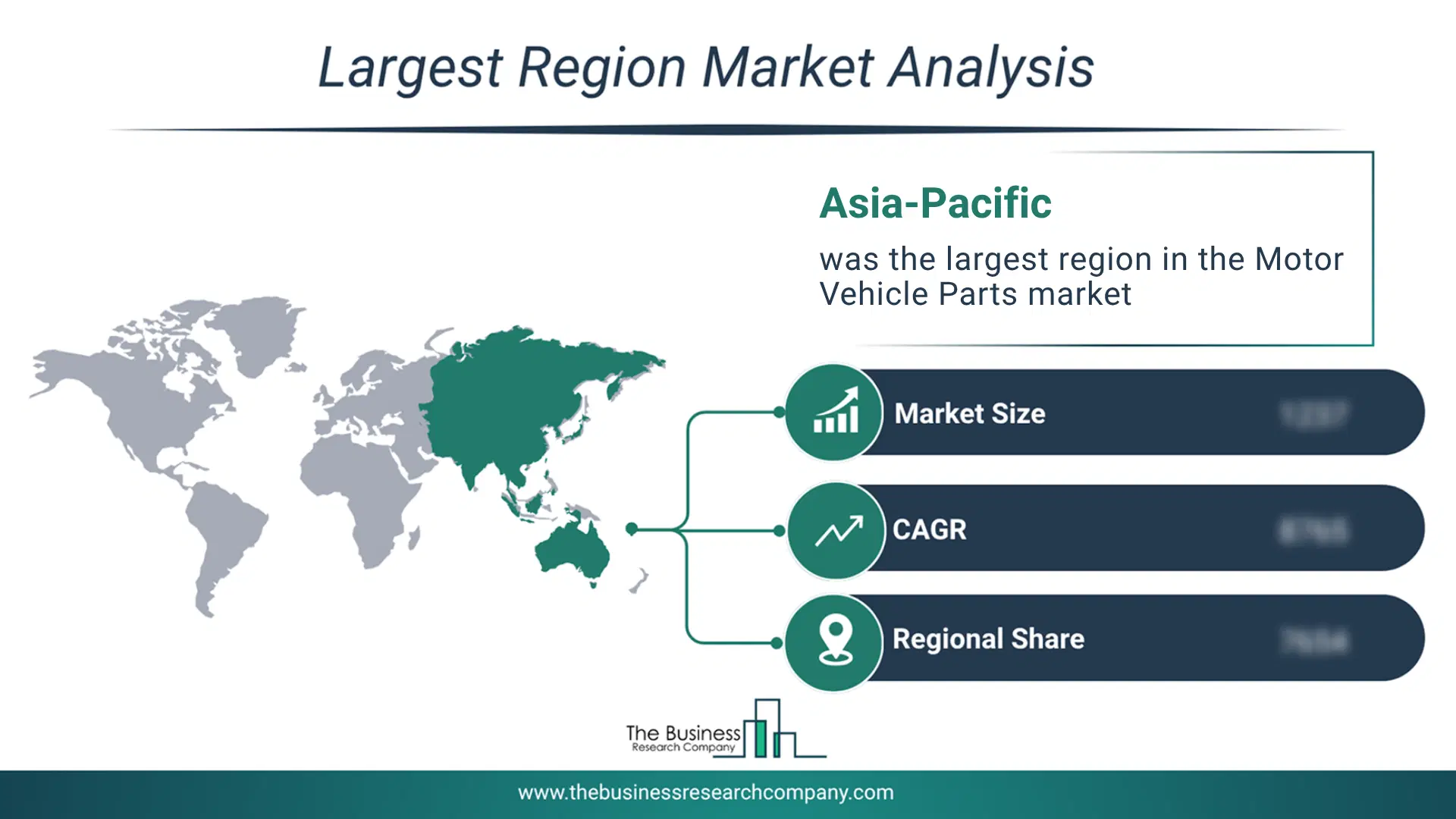
Regional Outlook
Asia-Pacific was the largest region in the motor vehicle parts market in 2025. Western Europe was the second largest market in motor vehicle parts market. The regions covered in this market report include Asia-Pacific, South East Asia, Western Europe, Eastern Europe, North America, South America, Middle East, Africa. The countries covered in this market report include China, India, Japan, Australia, Indonesia, South Korea, Bangladesh, Thailand, Vietnam, Malaysia, Singapore, Philippines, Hong Kong, Taiwan, New Zealand, UK, Germany, France, Italy, Spain, Austria, Belgium, Denmark, Finland, Ireland, Netherlands, Norway, Portugal, Sweden, Switzerland, Russia, Czech Republic, Poland, Romania, Ukraine, USA, Canada, Mexico, Brazil, Chile, Argentina, Colombia, Peru, Saudi Arabia, Israel, Iran, Turkey, UAE, Egypt, Nigeria, South Africa.What Defines the Motor Vehicle Parts Market?
The motor vehicle part market consists of sales of motor vehicle seating, motor vehicle metal stampings, motor vehicle gasoline engines and engine parts, and interior trim. Values in this market are ‘factory gate’ values, that is the value of goods sold by the manufacturers or creators of the goods, whether to other entities (including downstream manufacturers, wholesalers, distributors and retailers) or directly to end customers. The value of goods in this market includes related services sold by the creators of the goods.How is Market Value Defined and Measured?
The market value is defined as the revenues that enterprises gain from the sale of goods and/or services within the specified market and geography through sales, grants, or donations in terms of the currency (in USD unless otherwise specified). The revenues for a specified geography are consumption values that are revenues generated by organizations in the specified geography within the market, irrespective of where they are produced. It does not include revenues from resales along the supply chain, either further along the supply chain or as part of other products.
This chart presents market attractiveness based on a quantitative evaluation of growth, competition, strategic alignment, and risk, offering a clear view of opportunity areas for decision-making. This chart is for illustrative purposes; the full report contains the complete analysis.
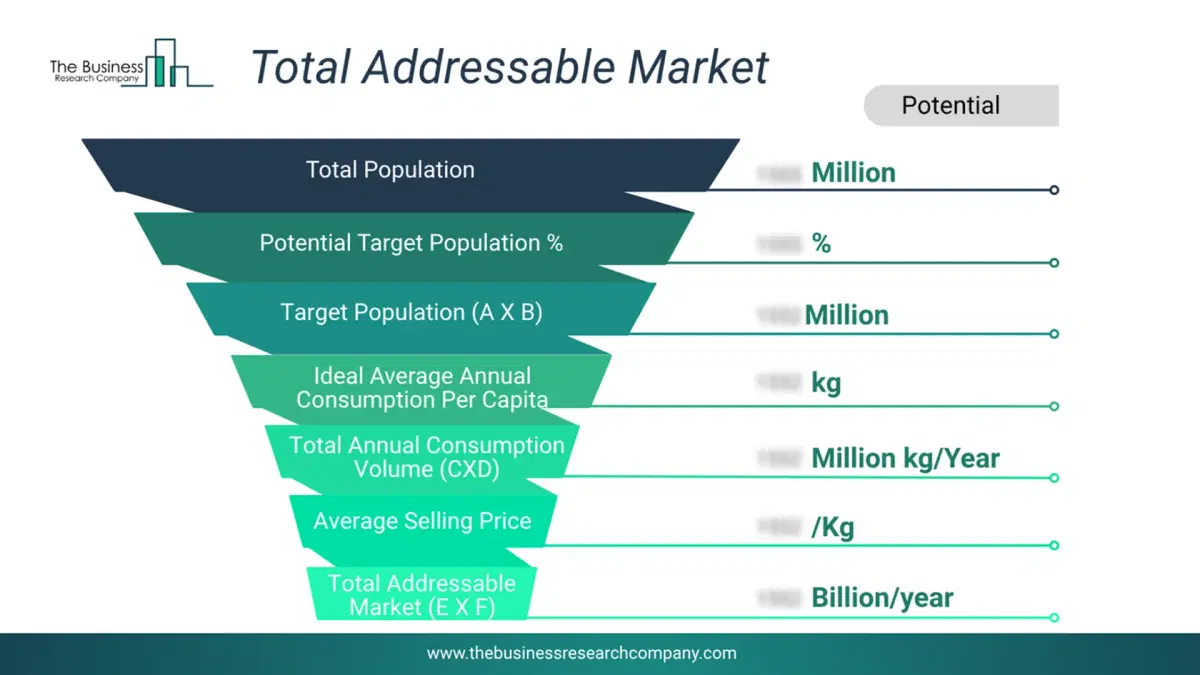
This chart highlights the Total Addressable Market (TAM) by estimating the maximum revenue opportunity using an assumption-driven approach, supporting strategic planning and opportunity sizing across markets. The chart is illustrative; the full report provides a more comprehensive analysis.
What Key Data and Analysis Are Included in the Motor Vehicle Parts Market Report 2026?
The motor vehicle parts market research report is one of a series of new reports from The Business Research Company that provides market statistics, including industry global market size, regional shares, competitors with the market share, detailed market segments, market trends and opportunities, and any further data you may need to thrive in the motor vehicle parts industry. The market research report delivers a complete perspective of everything you need, with an in-depth analysis of the current and future state of the industry.Motor Vehicle Parts Market Report Forecast Analysis
| Report Attribute | Details |
|---|---|
| Market Size Value In 2026 | $3043.33 billion |
| Revenue Forecast In 2035 | $3961.19 billion |
| Growth Rate | CAGR of 6.0% from 2026 to 2035 |
| Base Year For Estimation | 2025 |
| Actual Estimates/Historical Data | 2020-2025 |
| Forecast Period | 2026 - 2030 - 2035 |
| Market Representation | Revenue in USD Billion and CAGR from 2026 to 2035 |
| Segments Covered | Type, Application, End Use |
| Regional Scope | Asia-Pacific, Western Europe, Eastern Europe, North America, South America, Middle East, Africa |
| Country Scope | The countries covered in the report are Australia, Brazil, China, France, Germany, India, ... |
| Key Companies Profiled | Robert Bosch GmbH, Denso Corp, General Motors Co., Aisin Seiki Co ltd, Hyundai Mobis, Shanghai Automotive Industry Corporation, Tenneco, MAHLE GmbH, Ford Motor Company, Benteler South Africa, Mercedes-Benz Manufacturing Hungary, Dongfeng Motor Co. Ltd, Volkswagen, Martinrea International Inc., Continental AG, Magna International Inc, Nissan, Toyota Motor Corp, Honda Motor Co., Ltd., American Axle and Manufacturing Holdings, Bharat Forge, Mitsubishi Motor Corporation, Geely Automobile Holdings Limited, NIO Inc., NTN Corp., Marelli Holdings Co., Ltd., Fiat Chrysler Automobiles NV, Sumitomo, Mando, Linamar Corporation, XPeng Inc., Audi Hungaria Zrt, Renault, Jaguar Land Rover, Beijing Automotive Industry Company. |
| Customization Scope | Request for Customization |
| Pricing And Purchase Options | Explore Purchase Options |