
Perishable Goods Sea Transportation Market Report 2026
Global Outlook – By Type (Domestic Transportation; Outbound Transportation), By Order Type (Export; Import), By Application (Meat Chicken, Fish And Shellfish; Vegetables And Fruits; Bread Candy And Snacks; Dairy Products And Frozen Desserts; Other Applications) – Market Size, Trends, Strategies, and Forecast to 2030
Perishable Goods Sea Transportation Market Overview
• Perishable Goods Sea Transportation market size has reached to $2.2 billion in 2025 • Expected to grow to $3.27 billion in 2030 at a compound annual growth rate (CAGR) of 8.1% • Growth Driver: Perishable Goods Sea Transportation Market Surges With Global Demand For Processed Foods • Market Trend: Pioneering Freight Movement Technology In The Perishable Goods Sea Transportation Market • North America was the largest region in 2025 and Asia-Pacific is the fastest growing region.What Is Covered Under Perishable Goods Sea Transportation Market?
Perishable goods sea transportation refers to the transportation of temperature-sensitive goods by sea in refrigerated ships outfitted with proper air circulation systems and temperature-controlled intermodal cargo containers. The two major types of sea transportation for perishable goods are domestic transportation and outbound transportation. Domestic transportation refers to the transportation of perishable goods within the national borders of a country. By order type, perishable goods transportation is divided into export and import orders. These services are used to transport various perishable goods, such as meat, chicken, fish, shellfish, vegetables and fruits, bread, candy, and snacks, dairy products, frozen desserts, and other goods.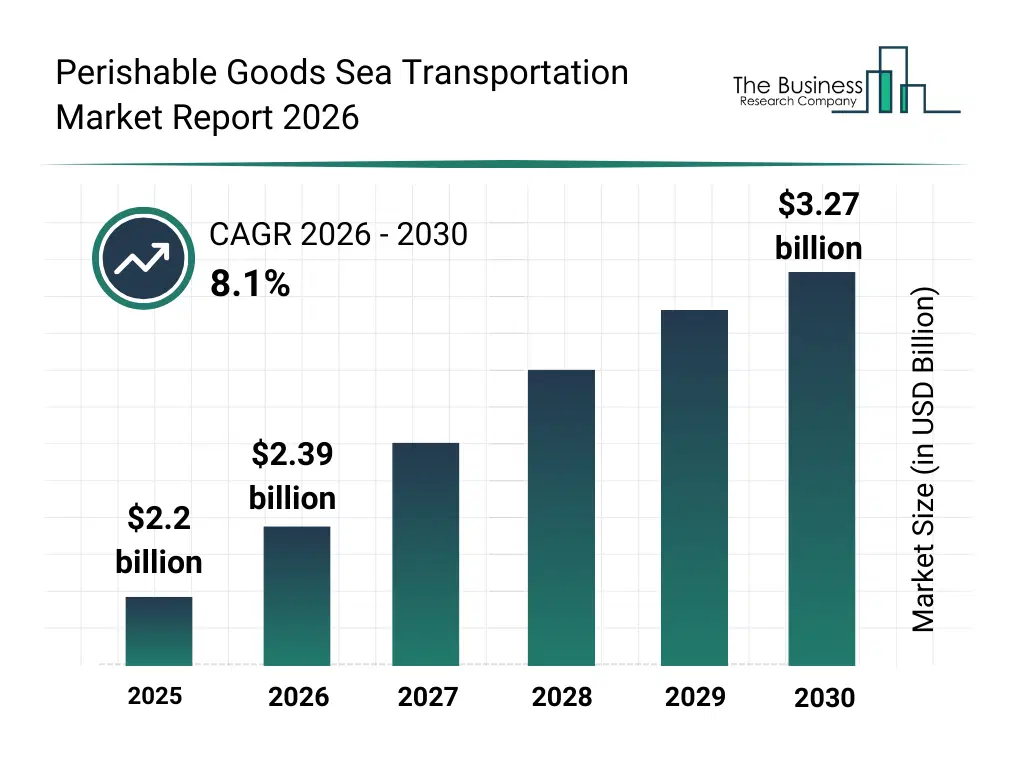
What Is The Perishable Goods Sea Transportation Market Size and Share 2026?
The perishable goods sea transportation market size has grown strongly in recent years. It will grow from $2.2 billion in 2025 to $2.39 billion in 2026 at a compound annual growth rate (CAGR) of 8.5%. The growth in the historic period can be attributed to expansion of global food trade, increasing seafood export activities, growth in refrigerated container availability, rising demand for long-distance perishables transport, development of port cold chain infrastructure.What Is The Perishable Goods Sea Transportation Market Growth Forecast?
The perishable goods sea transportation market size is expected to see strong growth in the next few years. It will grow to $3.27 billion in 2030 at a compound annual growth rate (CAGR) of 8.1%. The growth in the forecast period can be attributed to increasing investments in smart shipping technologies, rising demand for traceable cold chain logistics, expansion of pharmaceutical sea transport, growing focus on reducing spoilage losses, increasing adoption of energy-efficient reefer vessels. Major trends in the forecast period include increasing adoption of refrigerated container shipping, rising demand for temperature-monitored sea transport, growing integration of smart reefer containers, expansion of global cold chain trade routes, enhanced focus on cargo quality preservation.
Global Perishable Goods Sea Transportation Market Segmentation
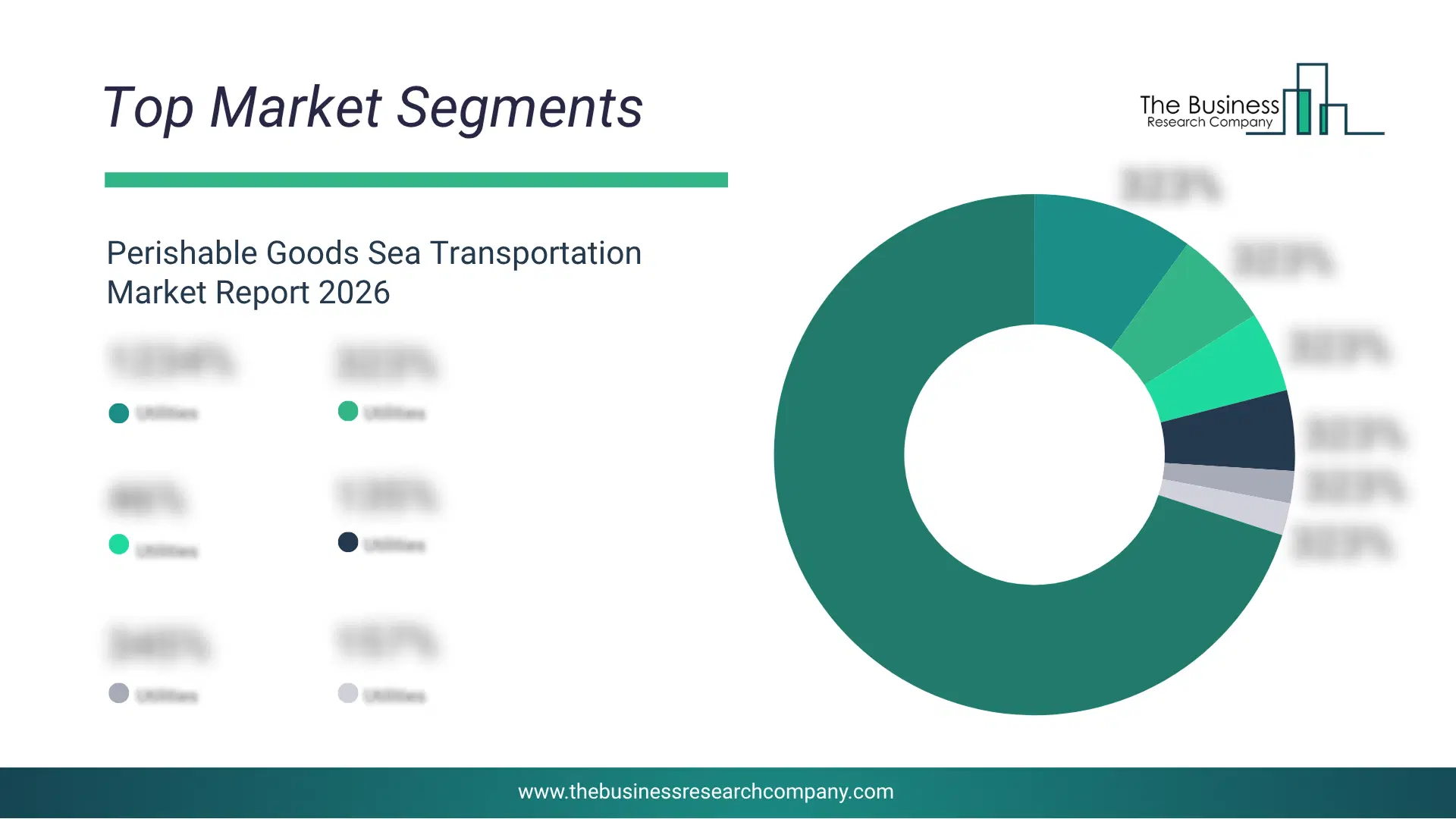
1) By Type: Domestic Transportation, Outbound Transportation 2) By Order Type: Export, Import 3) By Application: Meat Chicken, Fish And Shellfish, Vegetables And Fruits, Bread Candy And Snacks, Dairy Products And Frozen Desserts, Other Applications Subsegments: 1) By Domestic Transportation: Inter-Island Transport, Coastal Transport 2) By Outbound Transportation: International Shipping, Cross-Border TransportWhat Is The Driver Of The Perishable Goods Sea Transportation Market?
The rising demand for processed food across the globe is expected to propel the growth of the perishable goods sea transportation market forward. Processed foods refer to any foods that have been altered in some way during preparation from their natural states, such as being washed, heated, pasteurized, canned, cooked, frozen, dried, dehydrated, mixed, baked, or packaged. Perishable goods sea transportation is used to transport processed food in refrigerated ships that are fully equipped with air circulation systems to ensure the freshness of the food. For instance, in 2024, according to US Foreign Agricultural Service, a US-based government agency, US exports of processed food products were valued at US $39.4 billion. Therefore, the rising demand for processed food across the globe is driving the growth of the perishable goods sea transportation industry forward.Key Players In The Global Perishable Goods Sea Transportation Market
Major companies operating in the perishable goods sea transportation market are A P Moller Maersk A S, CMA CGM Group, Mediterranean Shipping Company S A, Hapag‑Lloyd AG, COSCO Shipping Co. Ltd., ZIM Integrated Shipping Services Ltd., Ocean Network Express, Evergreen Marine Corporation, Hyundai Merchant Marine HMM, Yang Ming Marine Transport Corporation, Pacific International Lines, Seatrade Reefer Chartering NV, Green Reefers ASA, Cool Carriers, Siem Shipping, Nippon Yusen Kabushiki Kaisha NYK Line, Mitsui O S K Lines Ltd., Orient Overseas Container Line, Star Reefers, United Reefers, Baltic Reefers, Blue Star Line, OT Africa Line, Royal Mail Steam Packet Company, Wan Hai Lines Ltd.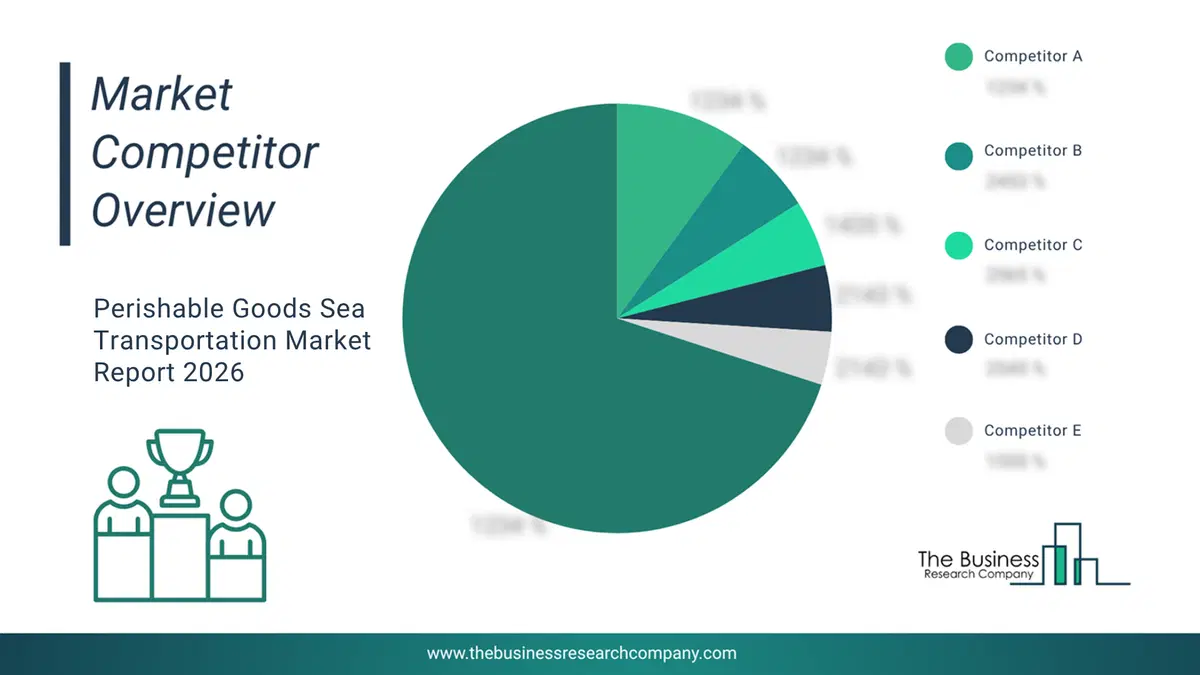
This chart is for illustrative purposes; the full report includes a detailed competitor analysis and comprehensive overview of the top 10 companies in the market.
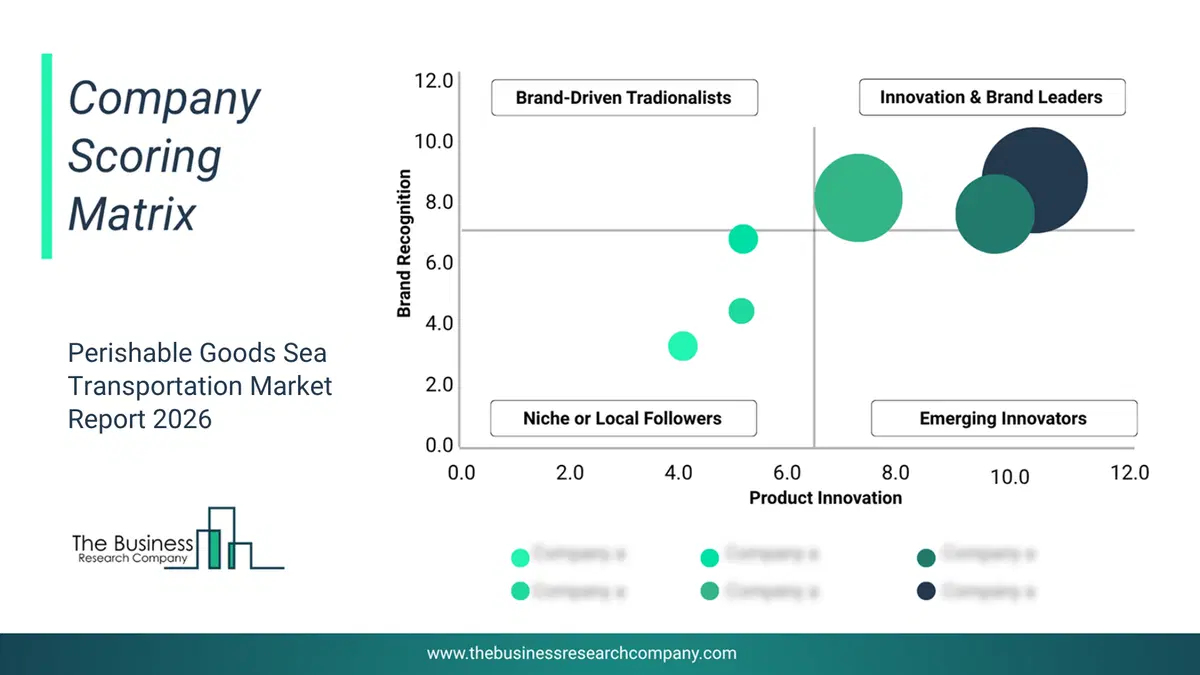
This chart maps companies by product innovation and brand strength, with bubble size indicating relative revenue, helping identify market leaders, challengers, and niche players. This is an illustrative chart; the full report provides a complete and accurate competitive analysis.
Global Perishable Goods Sea Transportation Market Trends and Insights
Major companies operating in the perishable goods sea transportation market are developing advanced technologies such as freight movement technology to meet larger customer bases, more sales, and increase revenue. Freight movement technology refers to the application of advanced technological solutions and systems to enhance the efficiency, visibility, and management of the transportation of goods and cargo across the supply chain. For instance, in March 2023, ArcBest Corporation, a US-based transport company, launched Vaux, an advanced combination of hardware and software designed to revolutionize and modernize the processes of loading, unloading, and transferring freight. Distinguished by its unique features, Vaux facilitates the rapid unloading of an entire trailer in less than five minutes, providing comprehensive visibility into freight movement across warehouse facilities, on the dock, and during road transport. The Vaux Freight Movement System, comprising the Vaux MP and MP Coupler, allows freight handling operators to achieve swift loading and unloading of full trailers. Seamlessly integrating into warehouse operations, this technology is powered by the Vaux OS a proprietary software suite encompassing warehouse orchestration, operator fulfillment, and MP Tracker, ensuring extreme efficiencies and seamless coordination in warehouse operations.What Are Latest Mergers And Acquisitions In The Perishable Goods Sea Transportation Market?
In July 2023, Seafrigo, a France-based logistics company specializing in temperature-controlled supply chain solutions, acquired Perishable Movements Limited (PML) for an undisclosed amount. Through these acquisitions, Seafrigo aims to enhance its service offerings, expand its geographic presence, improve operational efficiency, and strengthen its position in the temperature-controlled logistics sector. Perishable Movements Limited (PML) is a UK-based logistics and transportation company that specializes in the handling and movement of perishable goods.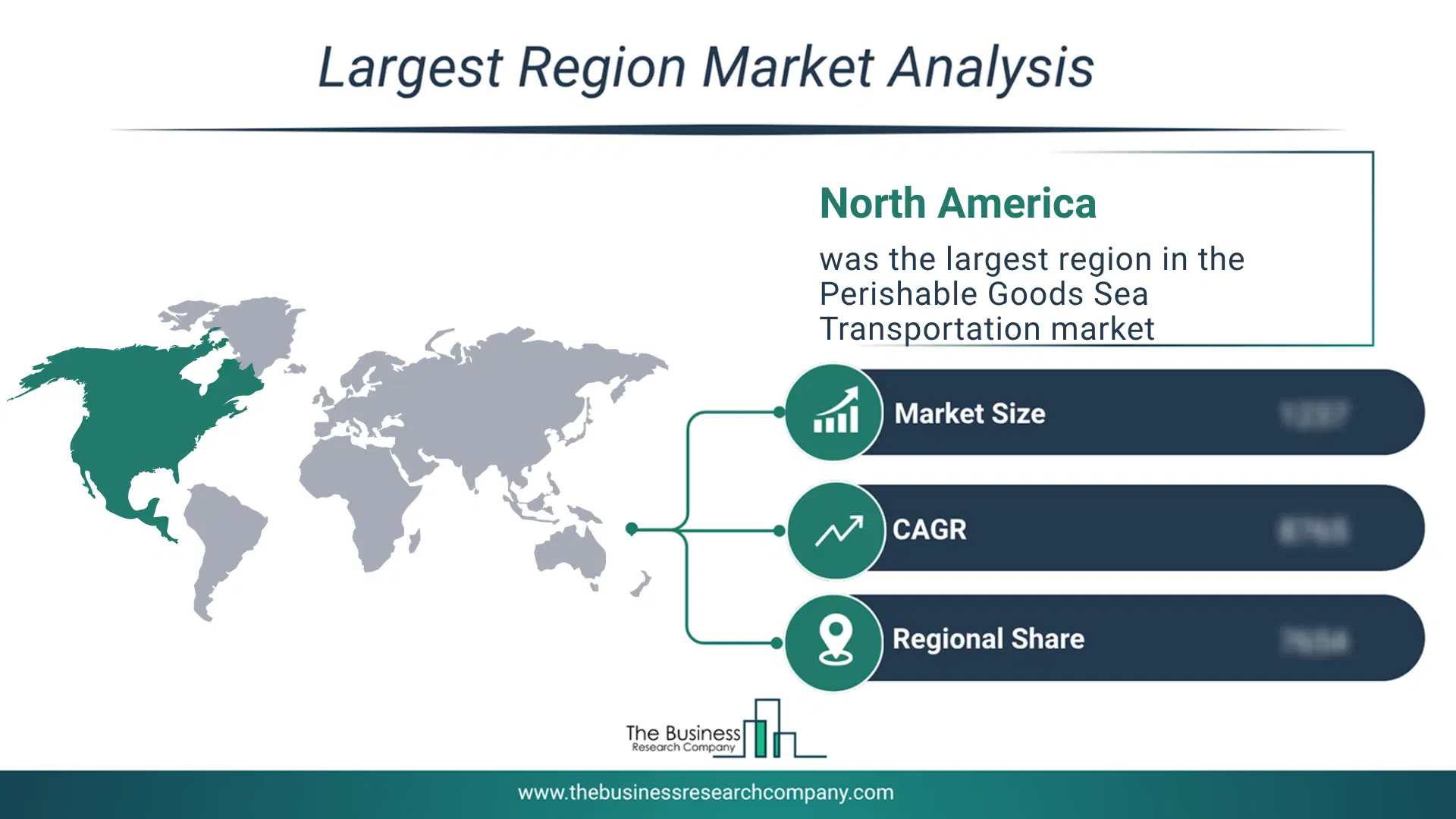
Regional Outlook
North America was the largest region in the perishable goods sea transportation market in 2025. Asia-Pacific is expected to be the fastest-growing region in the perishable goods sea transportation market report during the forecast period. The regions covered in this market report are Asia-Pacific, South East Asia, Western Europe, Eastern Europe, North America, South America, Middle East, Africa. The countries covered in this market report are Australia; Brazil; China; France; Germany; India; Indonesia; Japan; Taiwan; Russia; South Korea; UK; USA; Canada; Italy; Spain.What Defines the Perishable Goods Sea Transportation Market?
The perishable goods sea transportation market includes revenues earned by entities by transporting products such as dairy products, and raw meats with various transportation options including a dry van, and refrigerated freight. The market value includes the value of related goods sold by the service provider or included within the service offering. Only goods and services traded between entities or sold to end consumers are included.How is Market Value Defined and Measured?
The market value is defined as the revenues that enterprises gain from the sale of goods and/or services within the specified market and geography through sales, grants, or donations in terms of the currency (in USD unless otherwise specified). The revenues for a specified geography are consumption values that are revenues generated by organizations in the specified geography within the market, irrespective of where they are produced. It does not include revenues from resales along the supply chain, either further along the supply chain or as part of other products.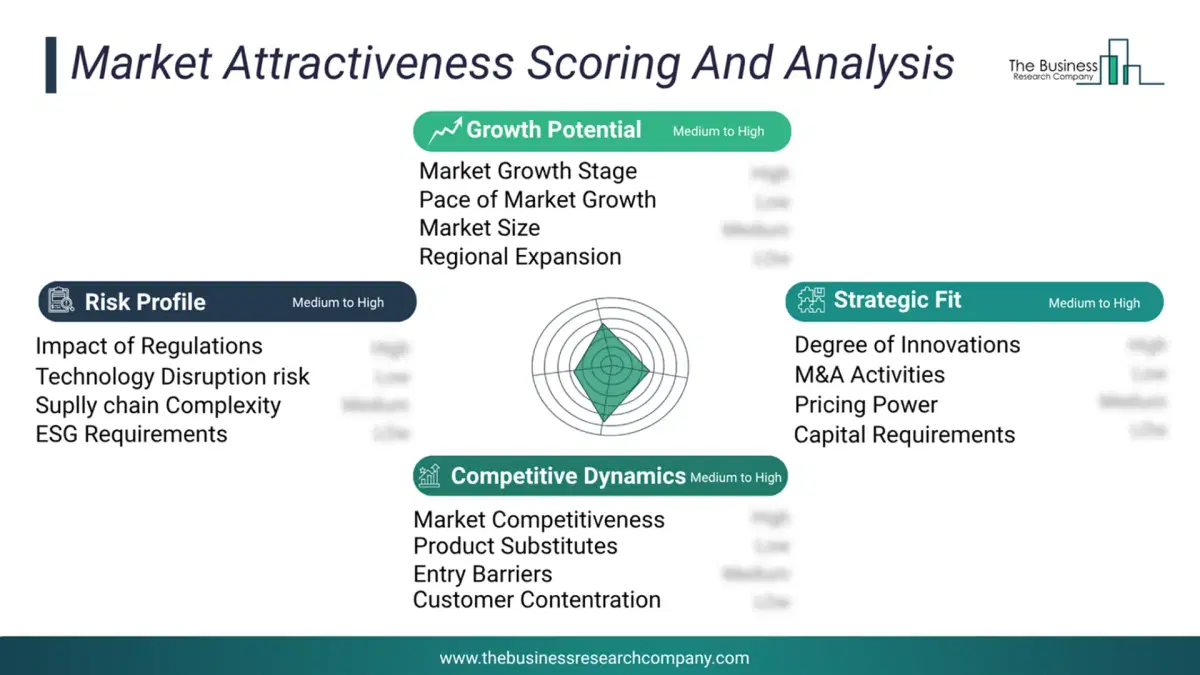
This chart presents market attractiveness based on a quantitative evaluation of growth, competition, strategic alignment, and risk, offering a clear view of opportunity areas for decision-making. This chart is for illustrative purposes; the full report contains the complete analysis.
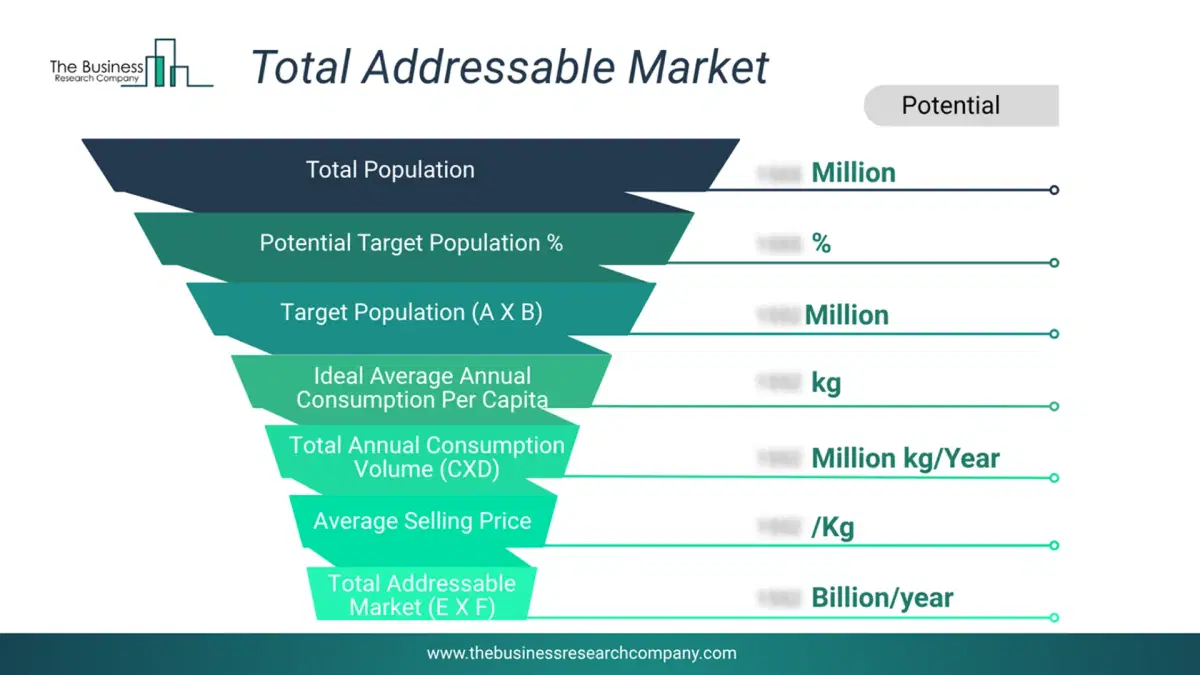
This chart highlights the Total Addressable Market (TAM) by estimating the maximum revenue opportunity using an assumption-driven approach, supporting strategic planning and opportunity sizing across markets. The chart is illustrative; the full report provides a more comprehensive analysis.
What Key Data and Analysis Are Included in the Perishable Goods Sea Transportation Market Report 2026?
The perishable goods sea transportation market research report is one of a series of new reports from The Business Research Company that provides market statistics, including Market Report 2026?global market size, regional shares, competitors with the market share, detailed market segments, market trends and opportunities, and any further data you may need to thrive in the perishable goods sea transportation Market Report 2026? The market research report delivers a complete perspective of everything you need, with an in-depth analysis of the current and future state of the Market Report 2026?Perishable Goods Sea Transportation Market Report Forecast Analysis
| Report Attribute | Details |
|---|---|
| Market Size Value In 2026 | $2.39 billion |
| Revenue Forecast In 2030 | $3.27 billion |
| Growth Rate | CAGR of 8.5% from 2026 to 2030 |
| Base Year For Estimation | 2025 |
| Actual Estimates/Historical Data | 2020-2025 |
| Forecast Period | 2026 - 2030 - 2030 |
| Market Representation | Revenue in USD Billion and CAGR from 2026 to 2030 |
| Segments Covered | Type, Order Type, Application |
| Regional Scope | Asia-Pacific, Western Europe, Eastern Europe, North America, South America, Middle East, Africa |
| Country Scope | The countries covered in the report are Australia, Brazil, China, France, Germany, India, Indonesia, Japan, Taiwan, Russia, South Korea, UK, USA, Canada, Italy, Spain. |
| Key Companies Profiled | A P Moller Maersk A S, CMA CGM Group, Mediterranean Shipping Company S A, Hapag‑Lloyd AG, COSCO Shipping Co. Ltd., ZIM Integrated Shipping Services Ltd., Ocean Network Express, Evergreen Marine Corporation, Hyundai Merchant Marine HMM, Yang Ming Marine Transport Corporation, Pacific International Lines, Seatrade Reefer Chartering NV, Green Reefers ASA, Cool Carriers, Siem Shipping, Nippon Yusen Kabushiki Kaisha NYK Line, Mitsui O S K Lines Ltd., Orient Overseas Container Line, Star Reefers, United Reefers, Baltic Reefers, Blue Star Line, OT Africa Line, Royal Mail Steam Packet Company, Wan Hai Lines Ltd. |
| Customization Scope | Request for Customization |
| Pricing And Purchase Options | Explore Purchase Options |