
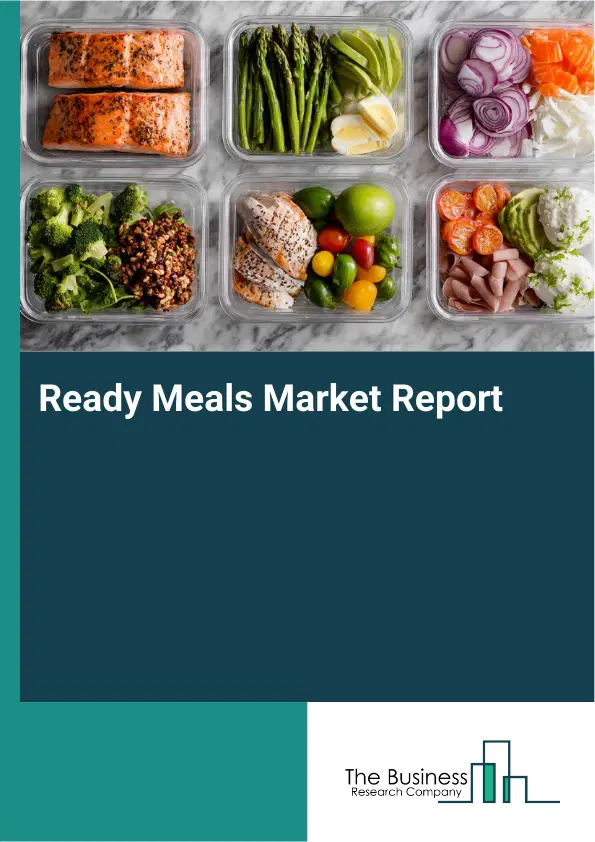
Ready Meals Market Report 2026
Global Outlook – By Product (Frozen, Chilled, Canned), By Distribution Channel (Supermarket Or Hypermarket, Convenience Store, Online), By End-User (Households, Foodservice And HoReCa, Corporate And Institutional Catering, Travel And Transportation Catering) – Market Size, Trends, Strategies, and Forecast to 2030
Ready Meals Market Overview
• Ready Meals market size has reached to $200.68 billion in 2025 • Expected to grow to $333.24 billion in 2030 at a compound annual growth rate (CAGR) of 10.8% • Growth Driver: The Role Of Extended Shelf Life In Fostering Growth Within The Ready Meals Market • Market Trend: Innovative Meal Solutions Simplify Healthy Eating At Home • Western Europe was the largest region in 2025 and Asia-Pacific is the fastest growing region.Market Gains By 2030 – Top Opportunities By Segment
Market Gain identifies the most promising market opportunities by highlighting the segments or products expected to generate the highest incremental revenue growth over the next five years.
What Is Covered Under Ready Meals Market?
The ready meals are convenient, inexpensive, fast, and pre-portioned. The ready meals are complete meals that only require heating before eating. They are ready to eat and already cooked or prepared. They are priced at a lower price and hence are cheap and convenient to use. The main components of the ready meals global market are frozen, chilled, canned, and dried products. A frozen food product that has been factory processed to the point that it is ready for use as a food and may or may not require further heating before consumption is referred to as frozen food. Ready meals are available on various distribution channels such as supermarkets/hypermarkets, convenience stores, and online.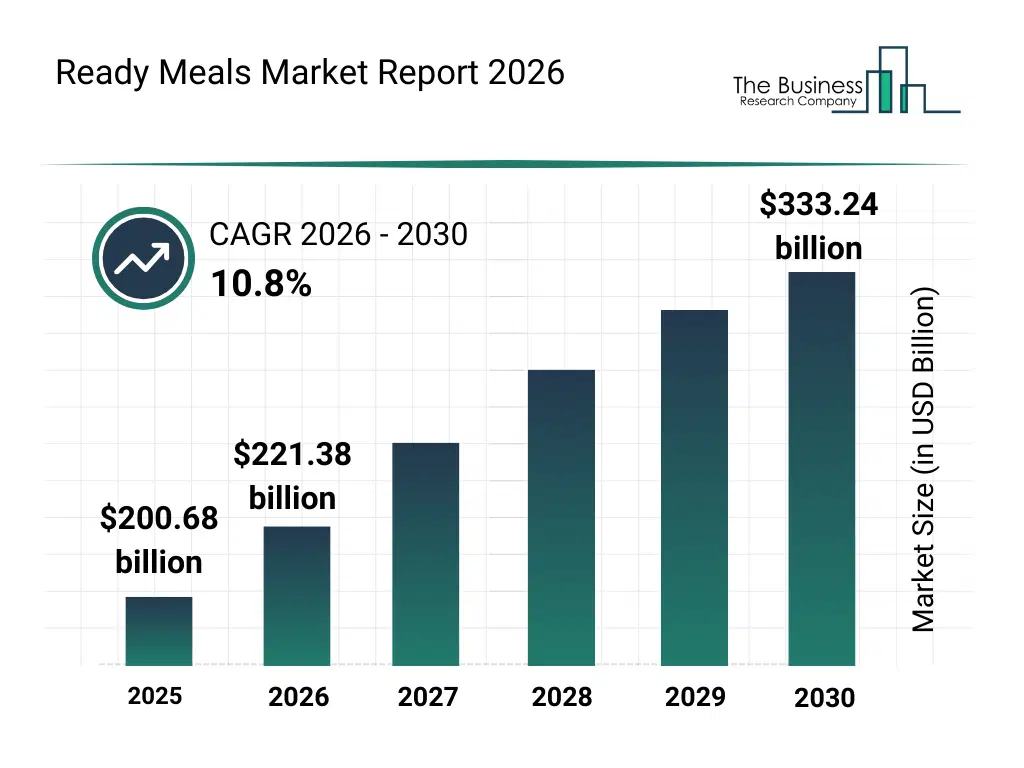
What Is The Ready Meals Market Size and Share 2026?
The ready meals market size has grown rapidly in recent years. It will grow from $200.68 billion in 2025 to $221.38 billion in 2026 at a compound annual growth rate (CAGR) of 10.3%. The growth in the historic period can be attributed to urbanization-driven lifestyle changes, growth of working population, increased demand for time-saving food solutions, expansion of cold chain infrastructure, rising penetration of supermarkets and hypermarkets.What Is The Ready Meals Market Growth Forecast?
The ready meals market size is expected to see rapid growth in the next few years. It will grow to $333.24 billion in 2030 at a compound annual growth rate (CAGR) of 10.8%. The growth in the forecast period can be attributed to increasing demand for clean-label ready meals, growth of online food retail channels, rising focus on nutrition-balanced meals, innovation in packaging technologies, expansion of premium ready meal categories. Major trends in the forecast period include increasing demand for convenient ready-to-eat meals, rising preference for healthier ready meal options, growing adoption of frozen and chilled meals, expansion of portion-controlled meal formats, enhanced focus on shelf-life optimization.
Global Ready Meals Market Segmentation
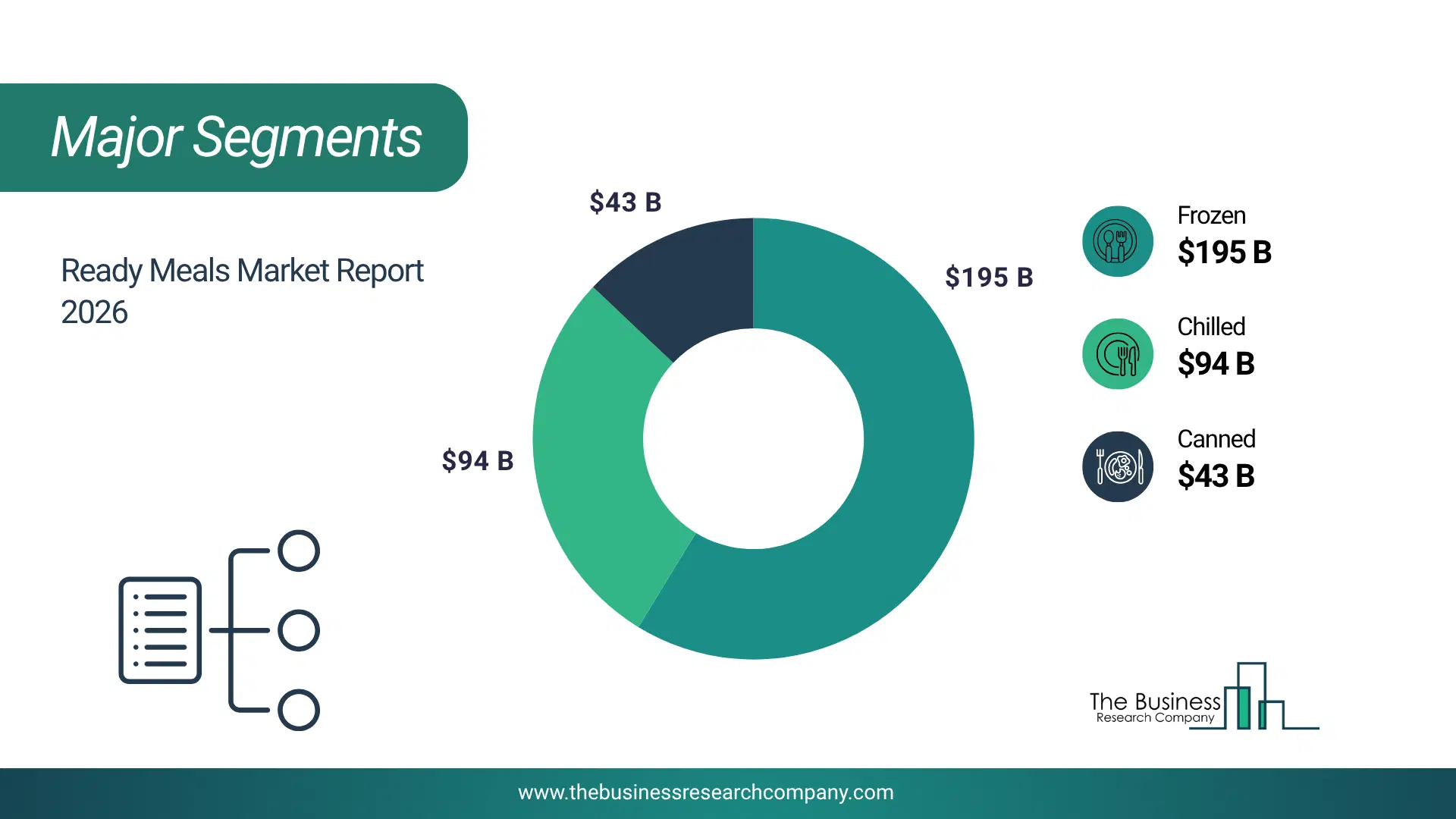
1) By Product: Frozen, Chilled, Canned 2) By Distribution Channel: Supermarket Or Hypermarket, Convenience Store, Online 3) By End-User: Households, Foodservice And HoReCa, Corporate And Institutional Catering, Travel And Transportation Catering Subsegments: 1) By Frozen: Organic Frozen Complete Meals, Organic Frozen Single-Serve Meals, Organic Frozen Family-Size Meals 2) By Chilled: Chilled Pasta Dishes, Chilled Rice Meals, Chilled Ethnic And Regional Meals 3) By Canned: Organic Canned Meat-Based Meals, Canned Stews, Canned Pasta The top segments in the ready meals market will be: • Frozen will reach $195 Billion by 2030. • Chilled will reach $94 Billion by 2030. • Canned will reach $43 Billion by 2030.What Is The Driver Of The Ready Meals Market?
The growing awareness of food products with extended shelf lives is significantly contributing to the growth of the ready meals market. The shelf life of a product is described as the amount of time it may be safely consumed while retaining its desired features such as sensory, functional, chemical, and microbiological properties. People are on the lookout for food with a long shelf life such as ready meals as they are convenient, inexpensive, fast, and pre-portioned with extended shelf lives. For instance, in April 2023, according to World Technology Ingredients, Inc., a US-based manufacturing company of food ingredients, food shelf-life extension can reduce around 50% of consumer food waste. Every year, roughly 2.8 trillion pounds of food are discarded globally, with the United States alone wasting 80 billion. Therefore, the growing awareness of food products with extended shelf lives is driving the growth of the ready meals industry.
Infographic Chart Showing Key Market Drivers Analysis And Restraints For Ready Meals Market
The chart presents an impact analysis of key drivers and restraints, quantifying their relative influence on the market's growth rate and helping assess the balance between growth enablers and limiting factors. This chart offers a high-level perspective; the full report contains more detailed insights.
How Will The Drivers Impact Growth In The Global Ready Meals Market?
• Increasing Demand For Convenience And Time-Saving Food Solutions (Medium) – During the forecast period, the increasing demand for convenience and time-saving food solutions is expected to emerge as a major factor driving the expansion of the ready meals market by 2030. changing lifestyles, busy work schedules, longer commuting times, and the growing number of dual-income households and single-person families are encouraging consumers to choose meal options that require minimal preparation. ready meals provide quick, portion-controlled, and hassle-free dining solutions while becoming increasingly accessible through online grocery platforms and food retail channels. • Expansion Of Retail Distribution Networks And Cold Chain Infrastructure (Medium) – During the forecast period, the expansion of retail distribution networks and cold chain infrastructure is expected to emerge as a major factor driving the expansion of the ready meals market by 2030. rapid growth in supermarkets, hypermarkets, convenience stores, and e-commerce grocery platforms, combined with investments in refrigerated transportation, cold storage facilities, and advanced packaging technologies, is improving product availability, freshness, and shelf life. these developments are enabling manufacturers to expand product portfolios and reach consumers across both developed and emerging markets. • Continuous Product Innovation And Rising Demand For Healthier Ready Meals (Medium) – During the forecast period, the continuous product innovation and rising demand for healthier ready meals are expected to act as a key growth catalyst for the ready meals market by 2030. manufacturers are introducing clean-label products, plant-based recipes, organic ingredients, high-protein formulations, and premium international cuisines to meet evolving consumer preferences. improvements in taste, nutrition, sustainable packaging, and ingredient transparency are strengthening consumer confidence and encouraging repeat purchases across diverse demographic groups.How Will The Restraints Impact Growth In The Global Ready Meals Market?
• Growing Consumer Preference For Fresh, Homemade, And Minimally Processed Foods (Medium) – During the forecast period, growing Consumer Preference For Fresh, Homemade, And Minimally Processed Foods remains one of the most significant restraints for the Ready Meals market. Consumers are becoming increasingly aware of the health implications associated with highly processed foods, including excessive sodium, preservatives, artificial flavors, and unhealthy fats. This has encouraged many consumers to prepare meals at home using fresh ingredients or purchase freshly prepared food from restaurants and meal delivery services. Health-conscious individuals increasingly prioritize natural ingredients, clean-label products, and balanced nutrition, which can reduce demand for conventional ready meals. Negative perceptions regarding processed foods continue to challenge manufacturers, forcing them to invest in healthier formulations and ingredient transparency to maintain consumer confidence and market competitiveness. • High Dependence On Cold Chain Logistics And Refrigerated Storage Infrastructure (Medium) – During the forecast period, high Dependence On Cold Chain Logistics And Refrigerated Storage Infrastructure significantly increases operational complexity and overall supply chain costs for ready meal manufacturers. Frozen and chilled products require continuous temperature-controlled transportation, warehousing, retail storage, and home refrigeration to preserve quality, freshness, and food safety. Any interruption in the cold chain can result in spoilage, food safety concerns, product recalls, and substantial financial losses. These infrastructure requirements increase production and distribution costs while limiting market expansion in developing economies where refrigeration facilities and logistics networks remain underdeveloped. Rising electricity costs and investments required for refrigerated transportation further increase operational expenses, making it challenging for manufacturers to maintain competitive pricing. • Fluctuating Raw Material, Packaging, And Energy Costs (Medium) – During the forecast period, fluctuating Raw Material, Packaging, And Energy Costs continue to place significant pressure on the profitability of ready meal manufacturers. Prices of essential ingredients such as meat, poultry, seafood, vegetables, grains, dairy products, edible oils, and seasonings frequently fluctuate due to climate conditions, geopolitical events, supply chain disruptions, and agricultural production variability. At the same time, rising costs of plastic trays, aluminum containers, paperboard packaging, transportation fuel, labor, and electricity further increase manufacturing expenses. Since the ready meals market is highly competitive and price-sensitive, manufacturers often struggle to fully transfer these higher costs to consumers without affecting sales volumes. This creates pressure on profit margins and limits investment in product innovation and geographic expansion.Key Players In The Global Ready Meals Market
Major companies operating in the ready meals market are Nestlé S.A., Unilever PLC, Conagra Brands Inc., General Mills Inc., Kraft Heinz Company, Campbell Soup Company, Ajinomoto Co. Inc., Dr. Oetker GmbH, Fleury Michon S.A., Nomad Foods Limited, Bakkavor Group plc, Greencore Group plc, Amy’s Kitchen Inc., Hormel Foods Corporation, BRF S.A., McCain Foods Limited, Iglo Foods Group Limited, Iceland Foods Ltd., Tata Consumer Products Limited, ITC Limited, MTR Foods Private Limited, CJ CheilJedang Corporation, Maruha Nichiro Corporation, Lantmännen Unibake Group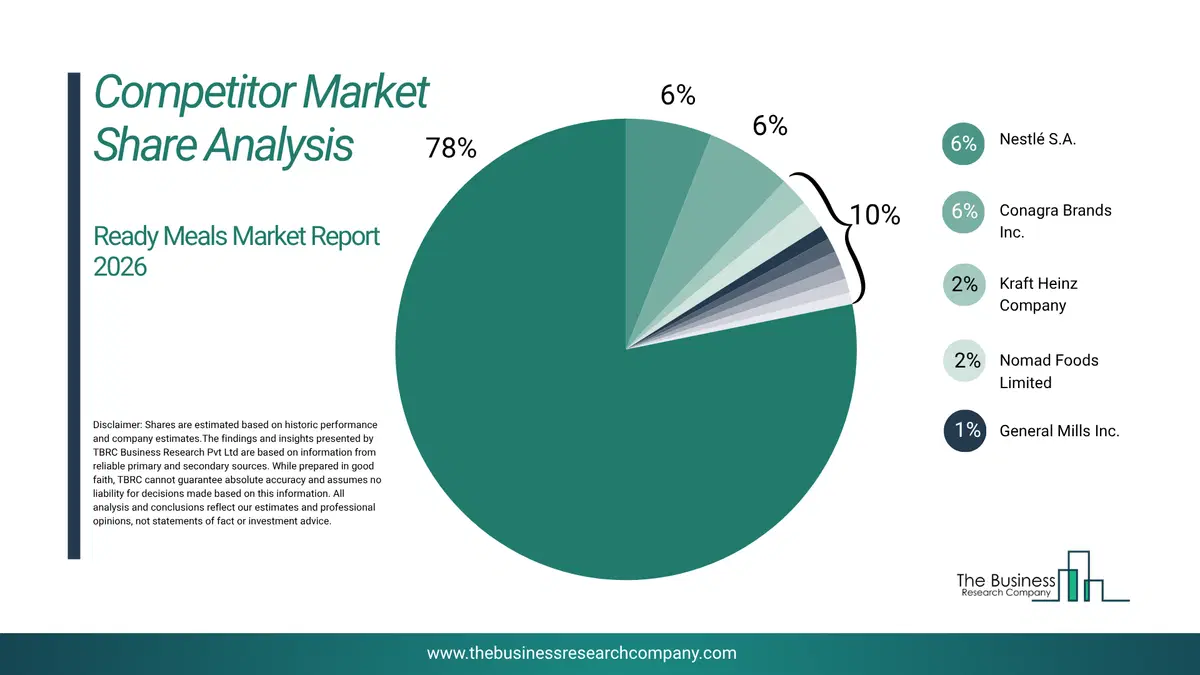
This chart is for illustrative purposes; the full report includes a detailed competitor analysis and comprehensive overview of the top 10 companies in the market.
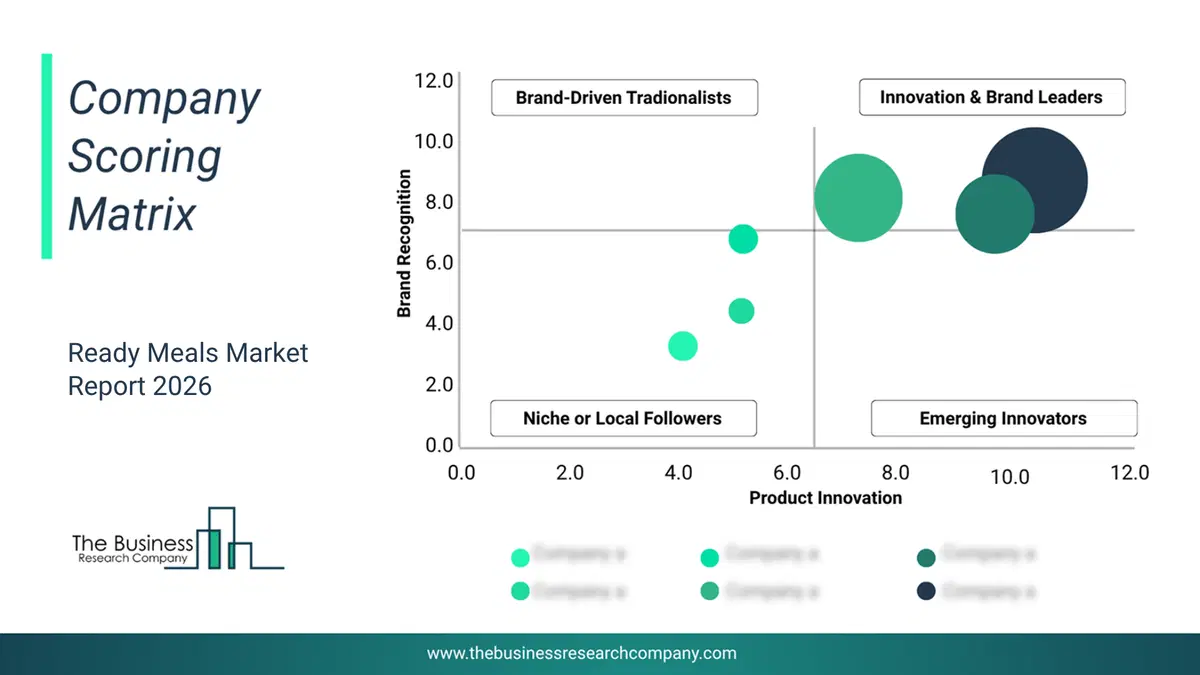
This chart maps companies by product innovation and brand strength, with bubble size indicating relative revenue, helping identify market leaders, challengers, and niche players. This is an illustrative chart; the full report provides a complete and accurate competitive analysis.
Global Ready Meals Market Trends and Insights
Major companies operating in the ready-meals market are focusing on developing innovative products such as chef-crafted ready-to-eat meals to provide greater convenience, freshness, and high-quality nutrition for time-pressed consumers. Chef-crafted ready-to-eat meals are pre-prepared dishes designed by professional chefs to offer high-quality flavors and balanced nutrition, requiring only quick reheating and helping consumers by providing convenient, restaurant-style meals without the time or effort of cooking. For instance, in December 2023, Blue Apron, a US based meal kit and meal delivery company, launched its Prepared & Ready meals line, offering chef-crafted, nutritionist approved, non-frozen meals that can be reheated in minutes, with a rotating menu of over 16 options, including balanced dishes with protein, grains, vegetables, or rice bowls. It works as a convenient substitute for traditional cooking, saving consumers considerable time while still delivering quality ingredients and balanced nutrition.What Are Latest Mergers And Acquisitions In The Ready Meals Market?
In August 2023, LIVEKINDLY Collective (LKC), a US-based plant-based food brand, acquired Alpha Foods for an undisclosed amount. Through the acquisition, LIVEKINDLY Collective extended its distribution in the United States and entered the ready-to-eat breakfast and burrito snacking categories. With over 200,000 distribution points in 40+ countries, expanding its footprint in the United States would greatly increase LKC's market standing and allow it to be the first major worldwide plant-based organization to carry on dominating within the category. Alpha Foods is a US-based manufacturing company of ready-to-eat breakfasts.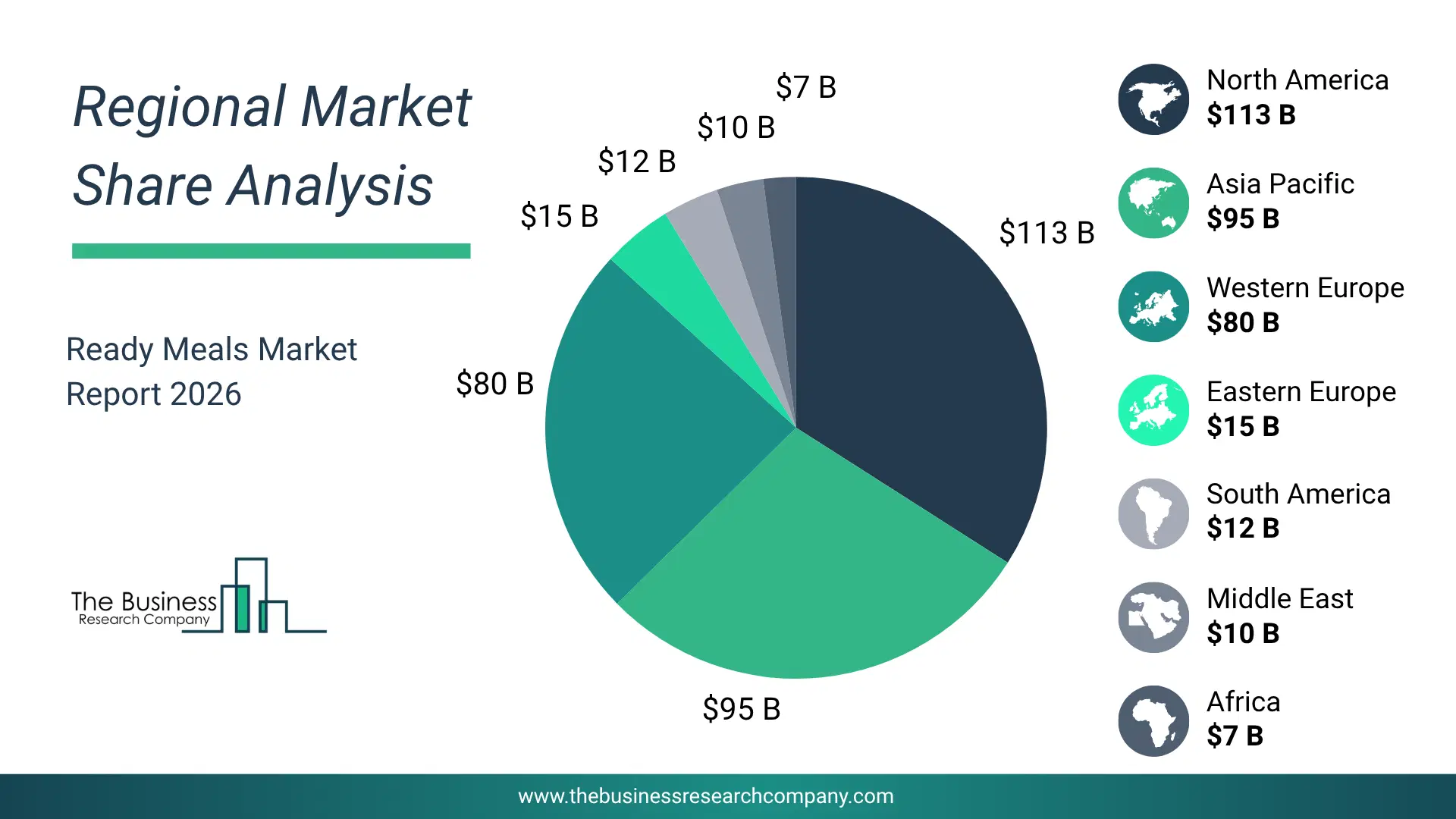
Regional Outlook
Western Europe was the largest region in the ready meals market in 2025. Asia-Pacific is expected to be the fastest-growing region in the ready meals market share during the forecast period. The regions covered in this market report are Asia-Pacific, South East Asia, Western Europe, Eastern Europe, North America, South America, Middle East and Africa. The countries covered in this market report are Australia, Brazil, China, France, Germany, India, Indonesia, Japan, Taiwan, Russia, South Korea, UK, USA, Italy, Spain, CanadaWhat Defines the Ready Meals Market?
The ready meals market consists of sales of pre-cleaned, pre-cooked foods. Values in this market are ‘factory gate’ values, that is the value of goods sold by the manufacturers or creators of the goods, whether to other entities (including downstream manufacturers, wholesalers, distributors and retailers) or directly to end customers. The value of goods in this market includes related services sold by the creators of the goods.How is Market Value Defined and Measured?
The market value is defined as the revenues that enterprises gain from the sale of goods and/or services within the specified market and geography through sales, grants, or donations in terms of the currency (in USD unless otherwise specified). The revenues for a specified geography are consumption values that are revenues generated by organizations in the specified geography within the market, irrespective of where they are produced. It does not include revenues from resales along the supply chain, either further along the supply chain or as part of other products.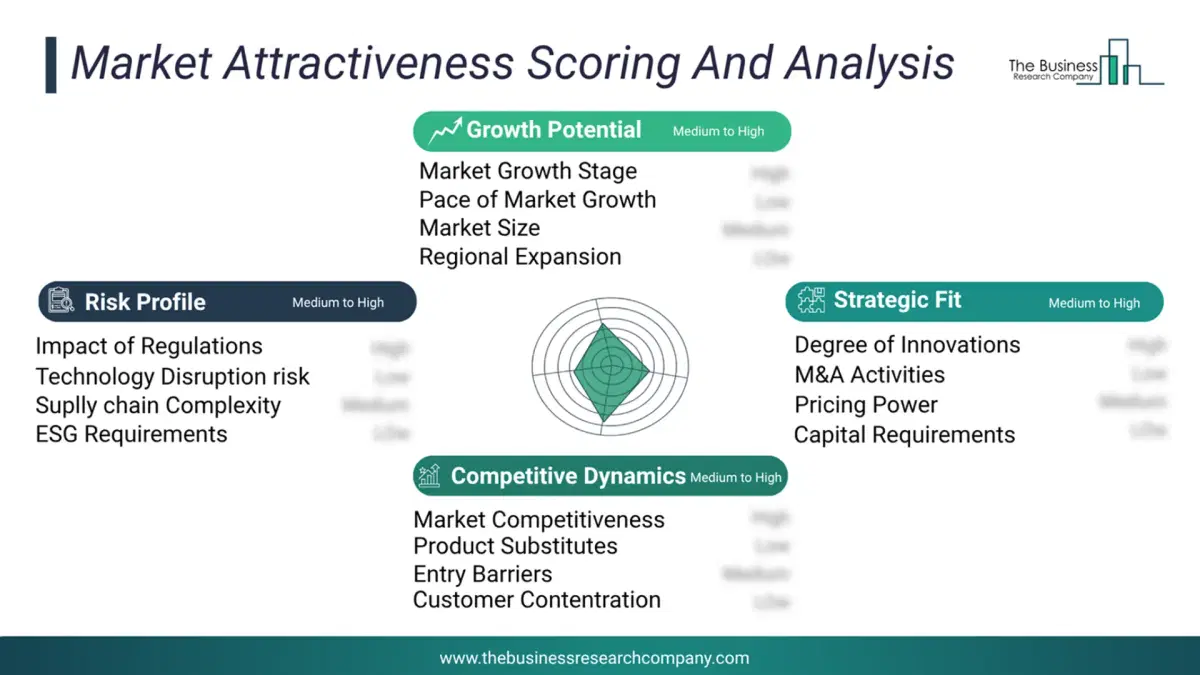
This chart presents market attractiveness based on a quantitative evaluation of growth, competition, strategic alignment, and risk, offering a clear view of opportunity areas for decision-making. This chart is for illustrative purposes; the full report contains the complete analysis.
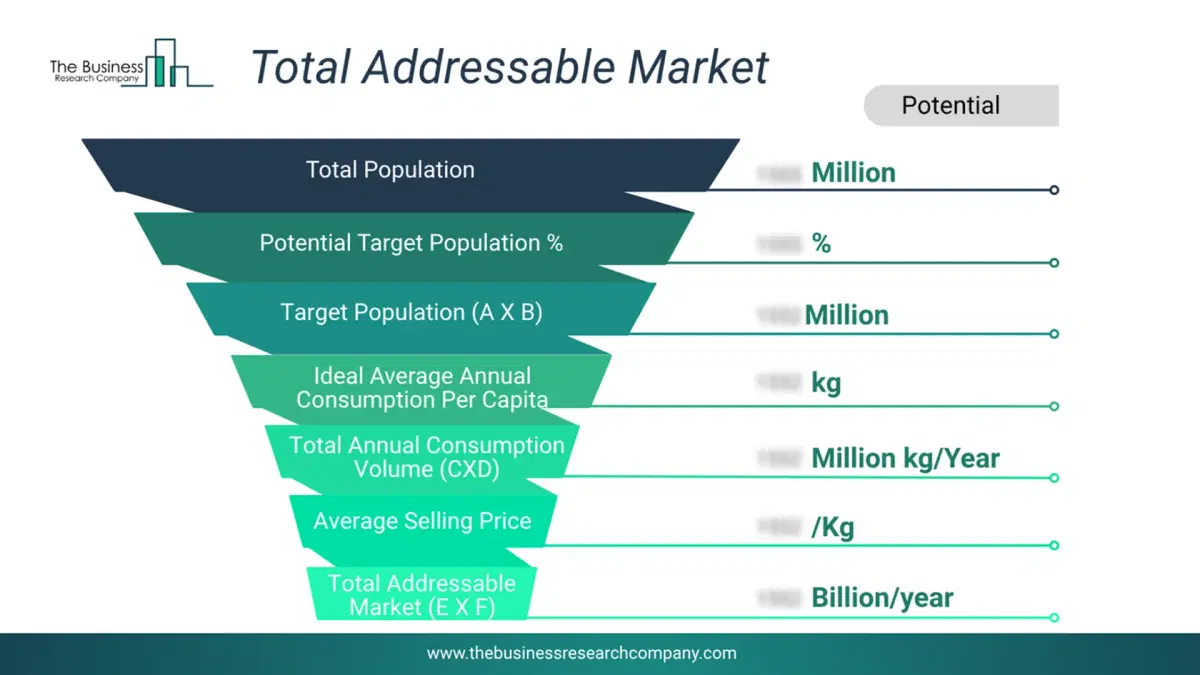
This chart highlights the Total Addressable Market (TAM) by estimating the maximum revenue opportunity using an assumption-driven approach, supporting strategic planning and opportunity sizing across markets. The chart is illustrative; the full report provides a more comprehensive analysis.
What Key Data and Analysis Are Included in the Ready Meals Market Report 2026?
The ready meals market research report is one of a series of new reports from The Business Research Company that provides market statistics, including industry global market size, regional shares, competitors with the market share, detailed market segments, market trends and opportunities, and any further data you may need to thrive in the ready meals industry. The market research report delivers a complete perspective of everything you need, with an in-depth analysis of the current and future state of the industry.Ready Meals Market Report Forecast Analysis
| Report Attribute | Details |
|---|---|
| Market Size Value In 2026 | $221.38 billion |
| Revenue Forecast In 2030 | $333.24 billion |
| Growth Rate | CAGR of 10.8% from 2026 to 2030 |
| Base Year For Estimation | 2025 |
| Actual Estimates/Historical Data | 2020-2025 |
| Forecast Period | 2026 - 2030 |
| Market Representation | Revenue in USD Billion and CAGR from 2026 to 2030 |
| Segments Covered | Product, Distribution Channel, End-User |
| Regional Scope | Asia-Pacific, Western Europe, Eastern Europe, North America, South America, Middle East, Africa |
| Country Scope | The countries covered in the report are Australia, Brazil, China, France, Germany, India, Indonesia, Japan, Taiwan, Russia, South Korea, UK, USA, Canada, Italy, Spain. |
| Key Companies Profiled | Nestlé S.A., Unilever PLC, Conagra Brands Inc., General Mills Inc., Kraft Heinz Company, Campbell Soup Company, Ajinomoto Co. Inc., Dr. Oetker GmbH, Fleury Michon S.A., Nomad Foods Limited, Bakkavor Group plc, Greencore Group plc, Amy’s Kitchen Inc., Hormel Foods Corporation, BRF S.A., McCain Foods Limited, Iglo Foods Group Limited, Iceland Foods Ltd., Tata Consumer Products Limited, ITC Limited, MTR Foods Private Limited, CJ CheilJedang Corporation, Maruha Nichiro Corporation, Lantmännen Unibake Group |
| Customization Scope | Request for Customization |
| Pricing And Purchase Options | Explore Purchase Options |