
Regulatory Compliance Management Software Market Report 2026
Global Outlook – By Offerings (Solutions, Services), By Deployment Type (On-Premises, Cloud), By Organization Size (Small And Medium Enterprises, Large Enterprises), By End Users (Information And Communications Technology, Construction And Engineering, Mining, Retail, Healthcare, Transportation And Logistics, General Manufacturing, Banking, Financial Services, And Insurance, Media And Entertainment, Other End-Users) – Market Size, Trends, Strategies, and Forecast to 2030
Regulatory Compliance Management Software Market Overview
• Regulatory Compliance Management Software market size has reached to $12.41 billion in 2025 • Expected to grow to $19.8 billion in 2030 at a compound annual growth rate (CAGR) of 9.5% • Growth Driver: Safeguarding Against Data Breaches With Regulatory Compliance Management Software • Market Trend: Innovative Solutions For Regulatory Challenges AI In Compliance Management • North America was the largest region in 2025.Market Gains By 2030 – Top Opportunities By Segment
Market Gain identifies the most promising market opportunities by highlighting the segments or products expected to generate the highest incremental revenue growth over the next five years.
What Is Covered Under Regulatory Compliance Management Software Market?
Regulatory compliance management software is a specialized type of software designed to help organizations for efficiently managing regulatory requirements, industry standards, and internal policies. This software accelerates compliance operations by providing a variety of functions, such as tracking regulatory changes, organizing documents, automating audits, and facilitating reporting. It acts as a consolidated platform for monitoring and maintaining compliance initiatives efficiently. The main offerings of a regulatory compliance management software are solutions and services. The solutions segment encompasses software products designed to automate, streamline, and manage compliance processes within organizations. The deployment types include on-premises, cloud in organizations such as small and medium enterprises, and large enterprises, and end users include information and communications technology, construction and engineering, mining, retail, healthcare, transportation and logistics, general manufacturing, banking, financial services, and insurance, media and entertainment, and others.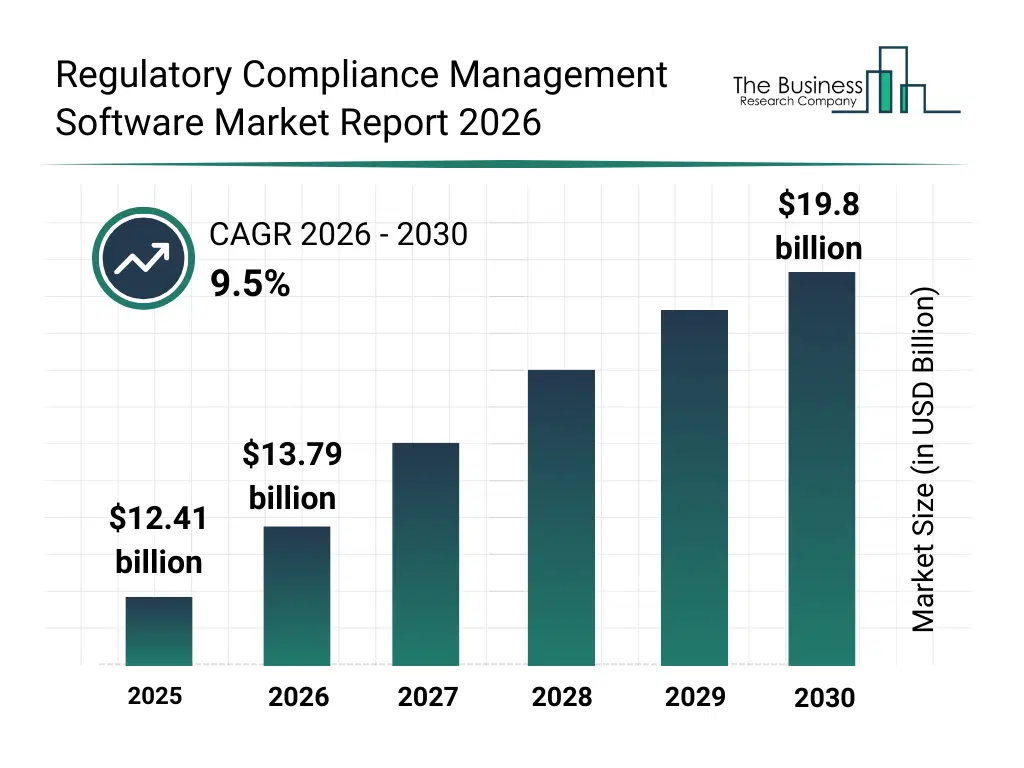
What Is The Regulatory Compliance Management Software Market Size and Share 2026?
The regulatory compliance management software market size has grown rapidly in recent years. It will grow from $12.41 billion in 2025 to $13.79 billion in 2026 at a compound annual growth rate (CAGR) of 11.2%. The growth in the historic period can be attributed to increasing regulatory complexity across industries, rising compliance enforcement requirements, growing volume of regulatory documentation, expansion of enterprise governance frameworks, early adoption of compliance automation tools.What Is The Regulatory Compliance Management Software Market Growth Forecast?
The regulatory compliance management software market size is expected to see strong growth in the next few years. It will grow to $19.8 billion in 2030 at a compound annual growth rate (CAGR) of 9.5%. The growth in the forecast period can be attributed to increasing demand for real-time compliance intelligence, rising adoption of AI-driven risk analytics, expansion of cloud-native compliance solutions, growing focus on cross-border regulatory alignment, continued investment in enterprise compliance digitization. Major trends in the forecast period include increasing adoption of cloud-based compliance platforms, rising integration of automated audit workflows, growing use of real-time regulatory monitoring tools, expansion of data-driven risk assessment capabilities, enhanced focus on centralized compliance reporting.

Global Regulatory Compliance Management Software Market Segmentation
1) By Offerings: Solutions, Services 2) By Deployment Type: On-Premises, Cloud 3) By Organization Size: Small And Medium Enterprises, Large Enterprises 4) By End Users: Information And Communications Technology, Construction And Engineering, Mining, Retail, Healthcare, Transportation And Logistics, General Manufacturing, Banking, Financial Services, And Insurance, Media And Entertainment, Other End-Users Subsegments: 1) By Solutions: Compliance Monitoring Solutions, Risk Management Solutions, Audit Management Solutions, Policy Management Solutions 2) By Services: Consulting Services, Implementation Services, Support And Maintenance Services The top segments in the regulatory compliance management software market will be: • Solutions will reach $13.1 billion by 2030. • Services will reach $5.87 billion by 2030.What Is The Driver Of The Regulatory Compliance Management Software Market?
The growing risk of data breaches is expected to propel the growth of the regulatory compliance management software market going forward. Data breaches are malicious attempts to disrupt or gain unauthorized access to computer systems or networks. The risk of data breaches includes the pursuit of monetary gain, insufficient cybersecurity skills, and a shortage of cybersecurity expertise. Regulatory compliance management software assists organizations in mitigating the growing risk of cyber-attacks by ensuring regulatory compliance, effectively managing risks, enforcing security policies, facilitating incident response, and incorporating cybersecurity awareness among employees. For instance, in February 2023, according to the Australian Cyber Security Centre, an Australia-based cyber security agency, the cybercrime reports received in 2022 were 76,000, up from 13% from the previous year. Furthermore, in April 2024, according to Parachute Technology, a US-based IT solutions company, in the first half of 2023, government agencies experienced 49 cyber incidents, marking an 11% increase compared to 2022. Therefore, the growing risk of cyberattacks drives the growth of the regulatory compliance management software industry.
Infographic Chart Showing Key Market Drivers Analysis And Restraints For Regulatory Compliance Management Software Market
The chart presents an impact analysis of key drivers and restraints, quantifying their relative influence on the market's growth rate and helping assess the balance between growth enablers and limiting factors. This chart offers a high-level perspective; the full report contains more detailed insights.
How Will The Drivers Impact Growth In The Global Regulatory Compliance Management Software Market?
• Increasing Regulatory Complexity (High) – During the forecast period, the increasing regulatory complexity is expected to become a key growth driver for the regulatory compliance management software market by 2030. Organizations across industries are facing a growing number of regulations related to data privacy, financial reporting, environmental standards, and industry -specific compliance requirements. This complexity is driving the adoption of advanced software solutions that can automate compliance tracking, ensure accuracy in reporting, and reduce the risk of non -compliance penalties. Companies are increasingly investing in platforms that provide real -time updates on regulatory changes and enable proactive compliance management. • Risk Mitigation Needs (High) – During the forecast period, the rising need for risk mitigation is expected to emerge as a major factor driving the expansion of the regulatory compliance management software market by 2030. Organizations are prioritizing risk management strategies to safeguard against financial losses, reputational damage, and legal penalties arising from non-compliance. Compliance software solutions help enterprises identify, assess, and mitigate risks through automated workflows, audit trails, and predictive analytics. The growing emphasis on enterprise risk management and governance frameworks is accelerating the adoption of integrated compliance solutions. • Digital Transformation Initiatives (Medium) – During the forecast period, the growing digital transformation initiatives are expected to act as a key growth catalyst for the regulatory compliance management software market by 2030. Enterprises are increasingly digitizing their operations, leading to higher demand for scalable, cloud-based compliance solutions that can integrate with existing it systems. Automation, artificial intelligence, and data analytics are enabling organizations to streamline compliance processes, improve efficiency, and reduce operational costs. Additionally, digital transformation is driving the need for real-time data visibility and reporting capabilities.How Will The Restraints Impact Growth In The Global Regulatory Compliance Management Software Market?
• High Implementation Costs (Medium) – During the forecast period, the the adoption of regulatory compliance management software often involves substantial upfront investment, which can act as a major barrier for many organizations. Companies must allocate financial resources for software licensing, system configuration, customization, and integration with existing enterprise systems. In addition, organizations frequently incur expenses related to employee training, system upgrades, and ongoing technical support. For enterprises operating with limited budgets, particularly small and medium-sized businesses, these costs can outweigh the perceived benefits of implementing automated compliance solutions. The financial burden associated with deploying and maintaining compliance management platforms may delay or discourage adoption. Furthermore, organizations may continue relying on manual compliance processes to avoid large capital expenditures. As a result, high implementation costs restrict broader deployment of regulatory compliance management software across various sectors. • Complex Integration of Legacy Systems (High) – During the forecast period, the many organizations operate with legacy it infrastructure that was not originally designed to integrate with modern compliance management platforms. Integrating regulatory compliance management software with existing enterprise systems such as document management platforms, enterprise resource planning systems, and risk management tools can be technically challenging. Compatibility issues may arise due to outdated software architectures, fragmented data systems, and lack of standardized interfaces. These integration difficulties can extend deployment timelines and increase operational complexity for organizations implementing compliance software. Companies may also require additional middleware solutions or system upgrades to achieve seamless integration. The complexity of aligning new compliance software with legacy systems can discourage organizations from adopting such platforms. Consequently, integration challenges associated with older it environments act as a restraint for the regulatory compliance management software market. • Data Security Concerns (High) – During the forecast period, the regulatory compliance management software stores and processes sensitive organizational data, including audit reports, regulatory documents, internal policies, and risk assessments. As organizations increasingly adopt cloud-based compliance platforms, concerns regarding data protection, unauthorized access, and cybersecurity threats become more significant. Any breach of compliance data could lead to legal consequences, financial losses, and reputational damage for organizations. Companies operating in highly regulated sectors such as banking, healthcare, and government services must maintain strict data confidentiality and adhere to stringent security standards. If organizations perceive that compliance software solutions cannot adequately safeguard sensitive information, they may hesitate to adopt such platforms. These security concerns can slow down the implementation of digital compliance systems. Therefore, data security risks remain a critical restraint limiting the growth of the regulatory compliance management software market.Key Players In The Global Regulatory Compliance Management Software Market
Major companies operating in the regulatory compliance management software market are Microsoft Corporation, International Business Machines Corporation, PricewaterhouseCoopers LLP, Oracle Corporation, SAP SE, Deloitte Touche Tohmatsu Limited, Thomson Reuters Corporation, Wolters Kluwer NV, Qualys Inc., Appian Corporation, Diligent Corporation, NAVEX Global Inc., MetricStream Inc., Galvanize Inc., Intelex Technologies Inc., Verse Solutions, Sparta Systems Inc., MasterControl Inc., Resolver Inc., BMI SYSTEM, Convercent Inc., AssurX Inc., BWise, ProcessGene Ltd., LogicManager Inc., Reciprocity Inc., Quantivate LLC
This chart is for illustrative purposes; the full report includes a detailed competitor analysis and comprehensive overview of the top 10 companies in the market.

This chart maps companies by product innovation and brand strength, with bubble size indicating relative revenue, helping identify market leaders, challengers, and niche players. This is an illustrative chart; the full report provides a complete and accurate competitive analysis.
Global Regulatory Compliance Management Software Market Trends and Insights
Major companies operating in the regulatory compliance management software market integrate regulatory technology (RegTech) ecosystems with AI-powered regulatory change management (RCM) to stay ahead of regulatory changes, reduce compliance risks, and ensure ongoing adherence to evolving regulatory requirements. An AI-powered regulatory change management (RCM) solution leverages artificial intelligence algorithms to automatically monitor, analyze, and interpret regulatory updates from various sources, such as government agencies, industry publications, and legal databases. For instance, in April 2024, Wolters Kluwer N.V., a Netherlands-based software company, launched OneSumX Reg Manager, an AI-powered solution to help community banks and credit unions in the United States improve their efforts to manage regulatory changes. It provides comprehensive workflow capability to monitor, track, establish, and show compliance with key state and federal regulations. The platform offers automated, structured regulatory content feeds, AI-enabled source libraries and updates, and the ability to map and monitor regulatory changes to minimize compliance risks.What Are Latest Mergers And Acquisitions In The Regulatory Compliance Management Software Market?
In February 2024, Archer, a US-based provider of a fully integrated risk management solution, acquired Compliance.AI for an undisclosed amount. The acquisition seeks to boost Archer's AI-driven regulatory compliance and risk management features, offering real-time updates, predictive insights, and greater accuracy. This integration solidifies Archer's leadership in the cognitive GRC sector, improving efficiency and flexibility for its clients. Compliance.AI is a US-based technology company that provides regulatory compliance software solutions.
Regional Insights
North America was the largest region in the regulatory compliance management software market in 2025. The regions covered in this market report are Asia-Pacific, South East Asia, Western Europe, Eastern Europe, North America, South America, Middle East, Africa. The countries covered in this market report are Australia, Brazil, China, France, Germany, India, Indonesia, Japan, Taiwan, Russia, South Korea, UK, USA, Canada, Italy, Spain.What Defines the Regulatory Compliance Management Software Market?
The regulatory compliance management software market consists of revenues earned by entities providing services such as regulatory monitoring, risk assessment, and audit management services. The market value includes the value of related goods sold by the service provider or included within the service offering. The regulatory compliance management software market also includes sales of compliance management systems, vendor risk management software, and procedure management software. Values in this market are ‘factory gate’ values, that is the value of goods sold by the manufacturers or creators of the goods, whether to other entities (including downstream manufacturers, wholesalers, distributors and retailers) or directly to end customers. The value of goods in this market includes related services sold by the creators of the goods.How is Market Value Defined and Measured?
The market value is defined as the revenues that enterprises gain from the sale of goods and/or services within the specified market and geography through sales, grants, or donations in terms of the currency (in USD unless otherwise specified). The revenues for a specified geography are consumption values that are revenues generated by organizations in the specified geography within the market, irrespective of where they are produced. It does not include revenues from resales along the supply chain, either further along the supply chain or as part of other products.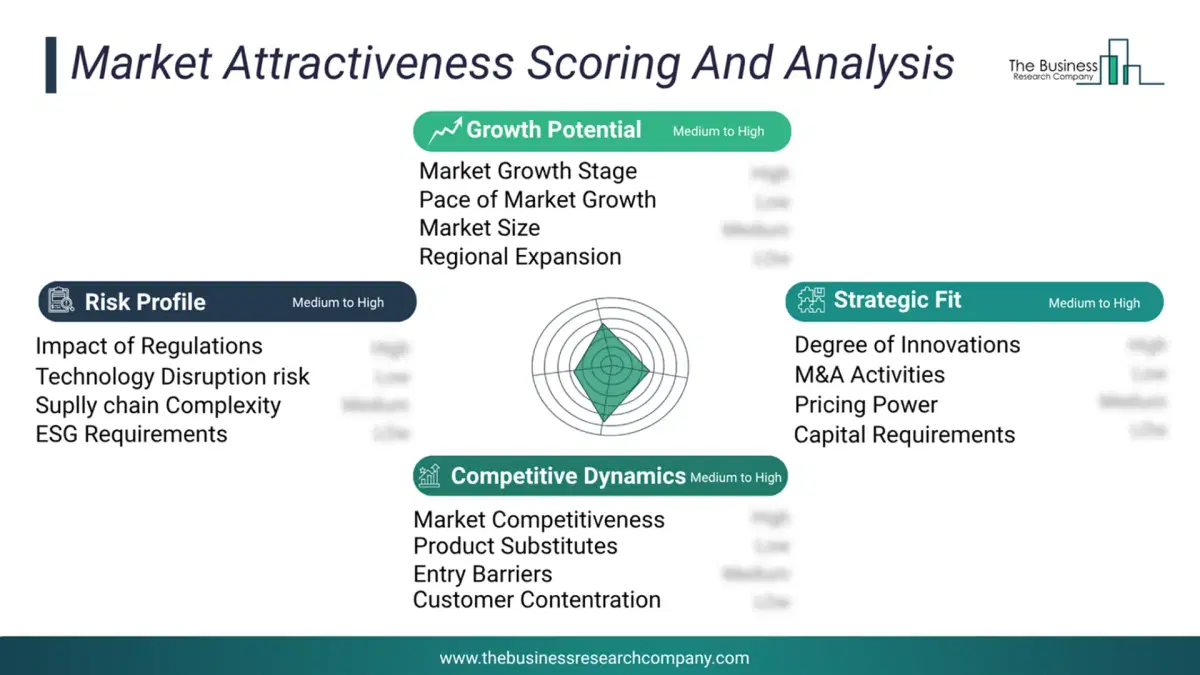
This chart presents market attractiveness based on a quantitative evaluation of growth, competition, strategic alignment, and risk, offering a clear view of opportunity areas for decision-making. This chart is for illustrative purposes; the full report contains the complete analysis.
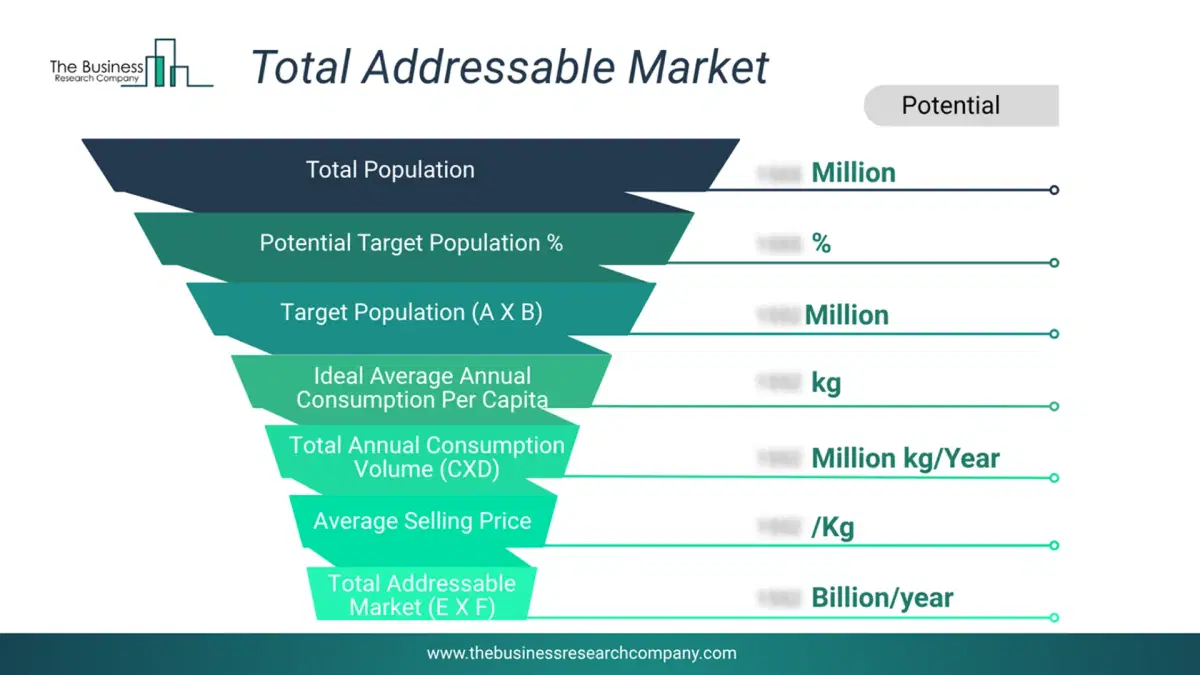
This chart highlights the Total Addressable Market (TAM) by estimating the maximum revenue opportunity using an assumption-driven approach, supporting strategic planning and opportunity sizing across markets. The chart is illustrative; the full report provides a more comprehensive analysis.
What Key Data and Analysis Are Included in the Regulatory Compliance Management Software Market Report 2026?
The regulatory compliance management software market research report is one of a series of new reports from The Business Research Company that provides market statistics, including industry global market size, regional shares, competitors with the market share, detailed market segments, market trends and opportunities, and any further data you may need to thrive in the regulatory compliance management software industry. The market research report delivers a complete perspective of everything you need, with an in-depth analysis of the current and future state of the industry.Regulatory Compliance Management Software Market Report Forecast Analysis
| Report Attribute | Details |
|---|---|
| Market Size Value In 2026 | $13.79 billion |
| Revenue Forecast In 2030 | $19.8 billion |
| Growth Rate | CAGR of 9.5% from 2026 to 2030 |
| Base Year For Estimation | 2025 |
| Actual Estimates/Historical Data | 2020-2025 |
| Forecast Period | 2026 - 2030 |
| Market Representation | Revenue in USD Billion and CAGR from 2026 to 2030 |
| Segments Covered | Offerings, Deployment Type, Organization Size, End Users |
| Regional Scope | Asia-Pacific, Western Europe, Eastern Europe, North America, South America, Middle East, Africa |
| Country Scope | The countries covered in the report are Australia, Brazil, China, France, Germany, India, ... |
| Key Companies Profiled | Microsoft Corporation, International Business Machines Corporation, PricewaterhouseCoopers LLP, Oracle Corporation, SAP SE, Deloitte Touche Tohmatsu Limited, Thomson Reuters Corporation, Wolters Kluwer NV, Qualys Inc., Appian Corporation, Diligent Corporation, NAVEX Global Inc., MetricStream Inc., Galvanize Inc., Intelex Technologies Inc., Verse Solutions, Sparta Systems Inc., MasterControl Inc., Resolver Inc., BMI SYSTEM, Convercent Inc., AssurX Inc., BWise, ProcessGene Ltd., LogicManager Inc., Reciprocity Inc., Quantivate LLC |
| Customization Scope | Request for Customization |
| Pricing And Purchase Options | Explore Purchase Options |