
Rhizobium Bacteria Fertilizers Market Report 2026
Global Outlook – By Type (Rhizobium Inoculants, Bradyrhizobium Inoculants, Mesorhizobium Inoculants, Sinorhizobium (Ensifer) Inoculants, Crop-Specific Rhizobium Strains, Multi-Strain Rhizobium Formulations), By Crop (Leguminous Pulses, Leguminous Oilseeds, Forage Legumes, Green Manure Legumes, Other Leguminous Crops), By Technology (Carrier Enriched Biofertilizers, Liquid Biofertilizers), By Application (Seed Inoculation, Soil Application, Root Dip Application, Furrow Application At Sowing, Other Applications) – Market Size, Trends, Strategies, and Forecast to 2030
Rhizobium Bacteria Fertilizers Market Overview
• Rhizobium Bacteria Fertilizers market size has reached to $2.3 billion in 2025 • Expected to grow to $3.67 billion in 2030 at a compound annual growth rate (CAGR) of 9.8% • Growth Driver: The Surge In Organic Product Demand Propels The Rhizobium Bacteria Fertilizers Market • Market Trend: Advancements In Rhizobium Bacteria Fertilizers Syngenta Introduces Osmo Protector Technology For Enhanced Crop Yields • Asia-Pacific was the largest region and fastest growing region.What Is Covered Under Rhizobium Bacteria Fertilizers Market?
Rhizobium bacteria fertilizers refer to a type of biofertilizer made up of Acetobacter bacteria, which may colonize plant roots and fix atmospheric nitrogen. Rhizobium is known to form colonies on the surface of the roots, promoting biological nitrogen fixation and supplying nitrogen to leguminous crops. As a result, this process is thought to be important for increasing yield and soil fertility. The main types of rhizobium bacteria fertilizers are nitrogen-fixing, phosphate-solubilizing, potash-mobilizing, and others. Nitrogen-fixing refers to the method by which atmospheric N2 is changed into any nitrogen compound with a non-zero oxidation state. They are applicable for cereals and grains, pulses and oilseeds, fruits and vegetables, and others. They are using various technologies, such as carrier-enriched biofertilizers and liquid biofertilizers, and are used for various applications, such as seed treatments, soil treatments, and others.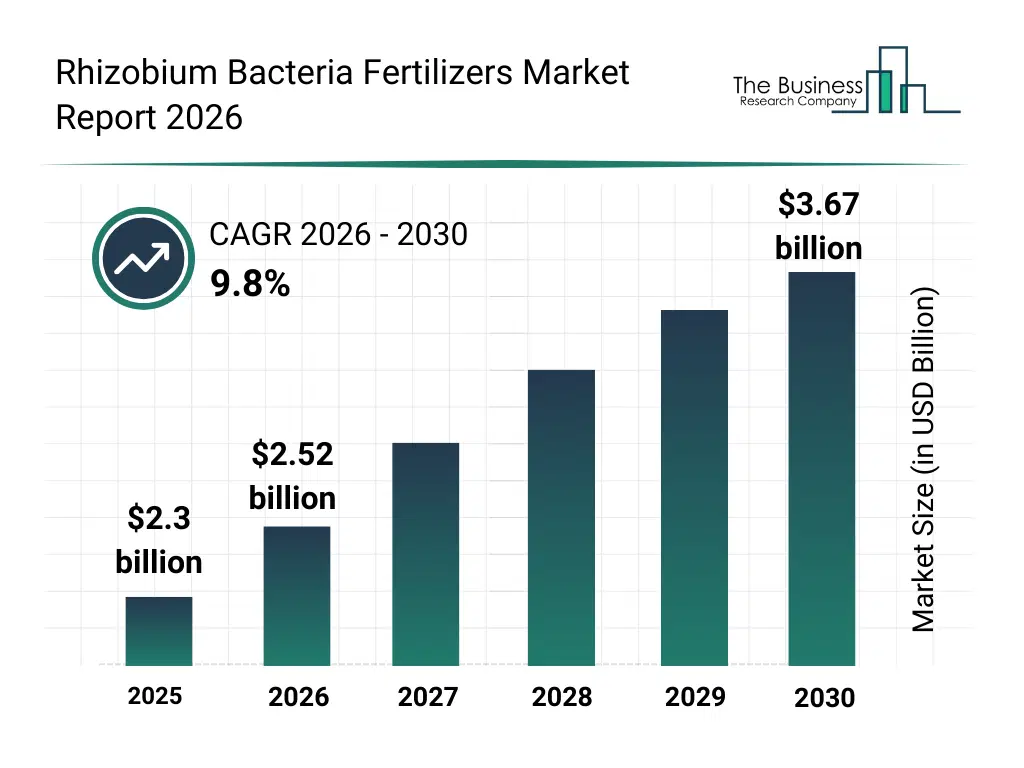
What Is The Rhizobium Bacteria Fertilizers Market Size and Share 2026?
The rhizobium bacteria fertilizers market size has grown strongly in recent years. It will grow from $2.3 billion in 2025 to $2.52 billion in 2026 at a compound annual growth rate (CAGR) of 9.6%. The growth in the historic period can be attributed to increasing use of biofertilizers in pulse cultivation, growing awareness of soil fertility management, expansion of organic farming practices, rising cost of synthetic nitrogen fertilizers, availability of carrier-based biofertilizers.What Is The Rhizobium Bacteria Fertilizers Market Growth Forecast?
The rhizobium bacteria fertilizers market size is expected to see strong growth in the next few years. It will grow to $3.67 billion in 2030 at a compound annual growth rate (CAGR) of 9.8%. The growth in the forecast period can be attributed to increasing adoption of sustainable agriculture practices, rising demand for residue-free crop inputs, expansion of bio-based fertilizer policies, growing focus on carbon-neutral farming, increasing investments in microbial formulation technologies. Major trends in the forecast period include increasing adoption of biological nitrogen fixation solutions, rising demand for crop-specific biofertilizer formulations, growing use of liquid biofertilizers, expansion of sustainable soil health practices, enhanced focus on yield improvement in leguminous crops.
Global Rhizobium Bacteria Fertilizers Market Segmentation
1) By Type: Rhizobium Inoculants, Bradyrhizobium Inoculants, Mesorhizobium Inoculants, Sinorhizobium (Ensifer) Inoculants, Crop-Specific Rhizobium Strains, Multi-Strain Rhizobium Formulations 2) By Crop: Leguminous Pulses, Leguminous Oilseeds, Forage Legumes, Green Manure Legumes, Other Leguminous Crops 3) By Technology: Carrier Enriched Biofertilizers, Liquid Biofertilizers 4) By Application: Seed Inoculation, Soil Application, Root Dip Application, Furrow Application At Sowing, Other Applications Subsegments: 1) By Rhizobium Inoculants: Rhizobium leguminosarum, Rhizobium trifolii, Rhizobium phaseoli 2) By Bradyrhizobium Inoculants: Bradyrhizobium japonicum, Bradyrhizobium elkanii, Bradyrhizobium diazoefficiens 3) By Mesorhizobium Inoculants: Mesorhizobium ciceri, Mesorhizobium loti, Mesorhizobium mediterraneum 4) By Sinorhizobium (Ensifer) Inoculants: Ensifer meliloti, Ensifer fredii, Ensifer medicae 5) By Crop-Specific Rhizobium Strains: Soybean-Specific Strains, Chickpea-Specific Strains, Pea-Specific Strains, Lentil-Specific Strains, Groundnut-Specific Strains 6) By Multi-Strain Rhizobium Formulations: Dual-Strain Rhizobium Blends, Multi-Species Rhizobium Consortia, Broad-Spectrum Legume InoculantsWhat Is The Driver Of The Rhizobium Bacteria Fertilizers Market?
An increase in demand for organic products is expected to propel the growth of the rhizobium bacteria fertilizers market going forward. Organic products refer to products made from organic farming or agricultural materials. The increasing demand for organic products will benefit the rhizobium bacteria fertilizer. Rhizobium bacteria could reduce the need for artificial fertilizers by fixing atmospheric nitrogen, which is needed for crop production. Using biofertilizers such as rhizobium bacteria fertilizers can assist in fulfilling the nutritious food need of the world's growing population. For instance, in May 2023, according to the Organic Trade Association, a US-based organic industry, in 2022 total organic sales, including organic non-food products, reached a milestone of $60 billion. By 2023, this figure had surged to a record $67.6 billion, indicating a significant increase in the organic sector's market value. Therefore, an increase in demand for organic products is driving the growth of rhizobium bacteria fertilizers.Key Players In The Global Rhizobium Bacteria Fertilizers Market
Major companies operating in the rhizobium bacteria fertilizers market are Novozymes A/S, BASF SE, Chr. Hansen Holding A/S, Rizobacter Argentina S.A., Lallemand Plant Care, Isagro S.p.A., ABiTEP GmbH, Andermatt Biocontrol AG, UPL Limited, MBI International LLC, Legume Technology Ltd, Kan Biosys Pvt Ltd, IPL Biologicals, Camson Biotech, Biostadt Agro, T. Stanes & Company Ltd, National Fertilizers Limited, Gujarat State Fertilizers & Chemicals Ltd, Madras Fertilizers Limited, Soygro (Pty) Ltd, Rashtriya Chemicals & Fertilizers Ltd, Permafrost Bio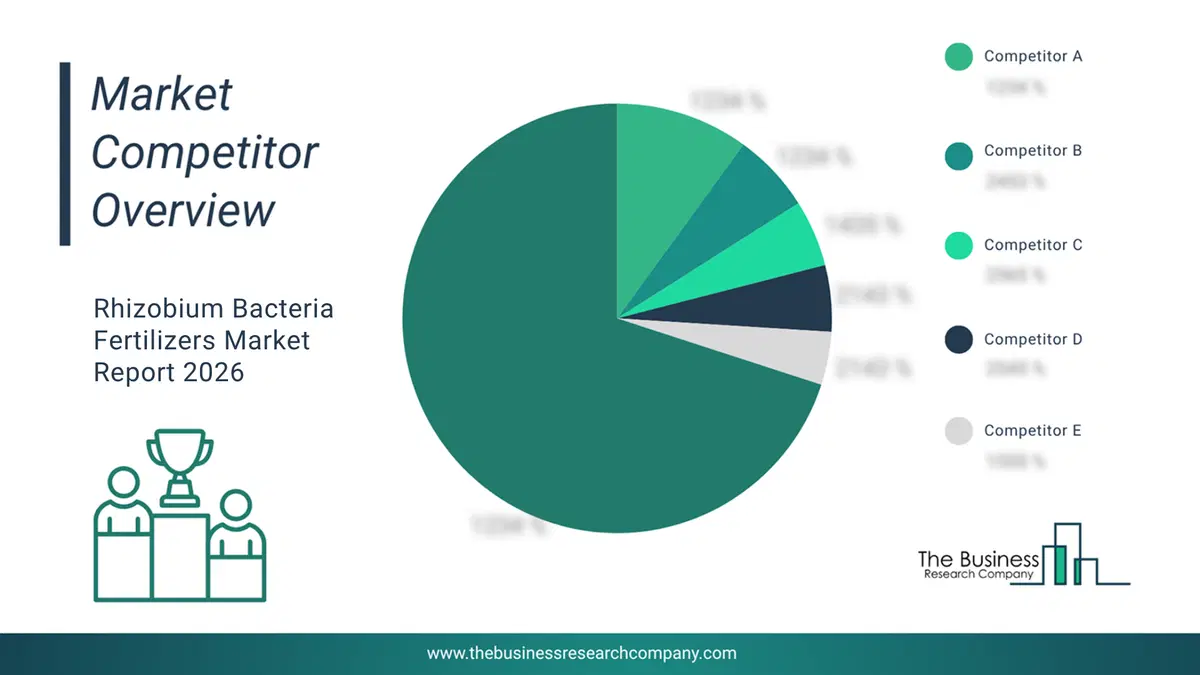
This chart is for illustrative purposes; the full report includes a detailed competitor analysis and comprehensive overview of the top 10 companies in the market.
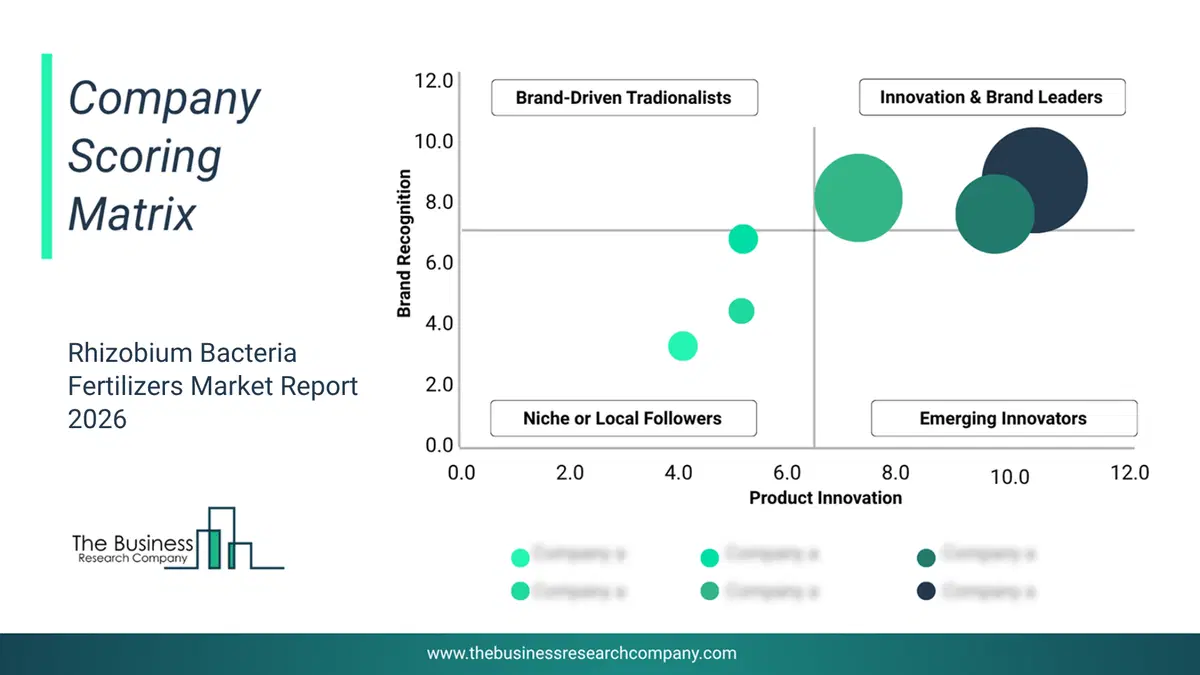
This chart maps companies by product innovation and brand strength, with bubble size indicating relative revenue, helping identify market leaders, challengers, and niche players. This is an illustrative chart; the full report provides a complete and accurate competitive analysis.
Global Rhizobium Bacteria Fertilizers Market Trends and Insights
Major companies operating in the rhizobium bacteria fertilizers market are focusing on developing technologically advanced solutions such as osmo protector technology to enhance the survival and efficacy of rhizobium bacteria under stress conditions such as drought and salinity, ensuring better nitrogen fixation and crop yields. Osmoprotector technology helps rhizobium bacteria fertilizers by increasing their resilience to environmental stresses such as drought, thereby improving their ability to fix nitrogen and support plant growth. For instance, in September 2024, Syngenta, a Switzerland-based agricultural technology company, launched atuva inoculants for pulse and soybean crops, featuring seed and soil-applied rhizobia bacteria that enhance nodulation and nitrogen fixation. The lineup includes granular and liquid options with osmoprotector technology (OPT) for extended seed survival and stress protection, offering efficient application. This addition strengthens Syngenta's position in the rhizobium bacteria fertilizer market by providing advanced solutions for growers.What Are Latest Mergers And Acquisitions In The Rhizobium Bacteria Fertilizers Market?
In May 2023, Biobest N.V a Belgium-based biotechnology and agriculture company that specializes in sustainable crop management, including biological control and pollination, acquired Bioworks Corporation for an undisclosed amount. Through this acquisition, Biobest aims to expand the biopesticide portfolio to meet growers' demand for effective pest control and reduce reliance on synthetic pesticides. This strategic move leverages BioWorks' established products and distribution networks. Retaining BioWorks' leadership ensures continuity and innovation, positioning the company as a comprehensive provider of biological control solutions in agriculture. Bioworks Corporation is a US-based biotechnology company that specializing in innovative biological products for sustainable agriculture, including rhizobium bacteria fertilizers.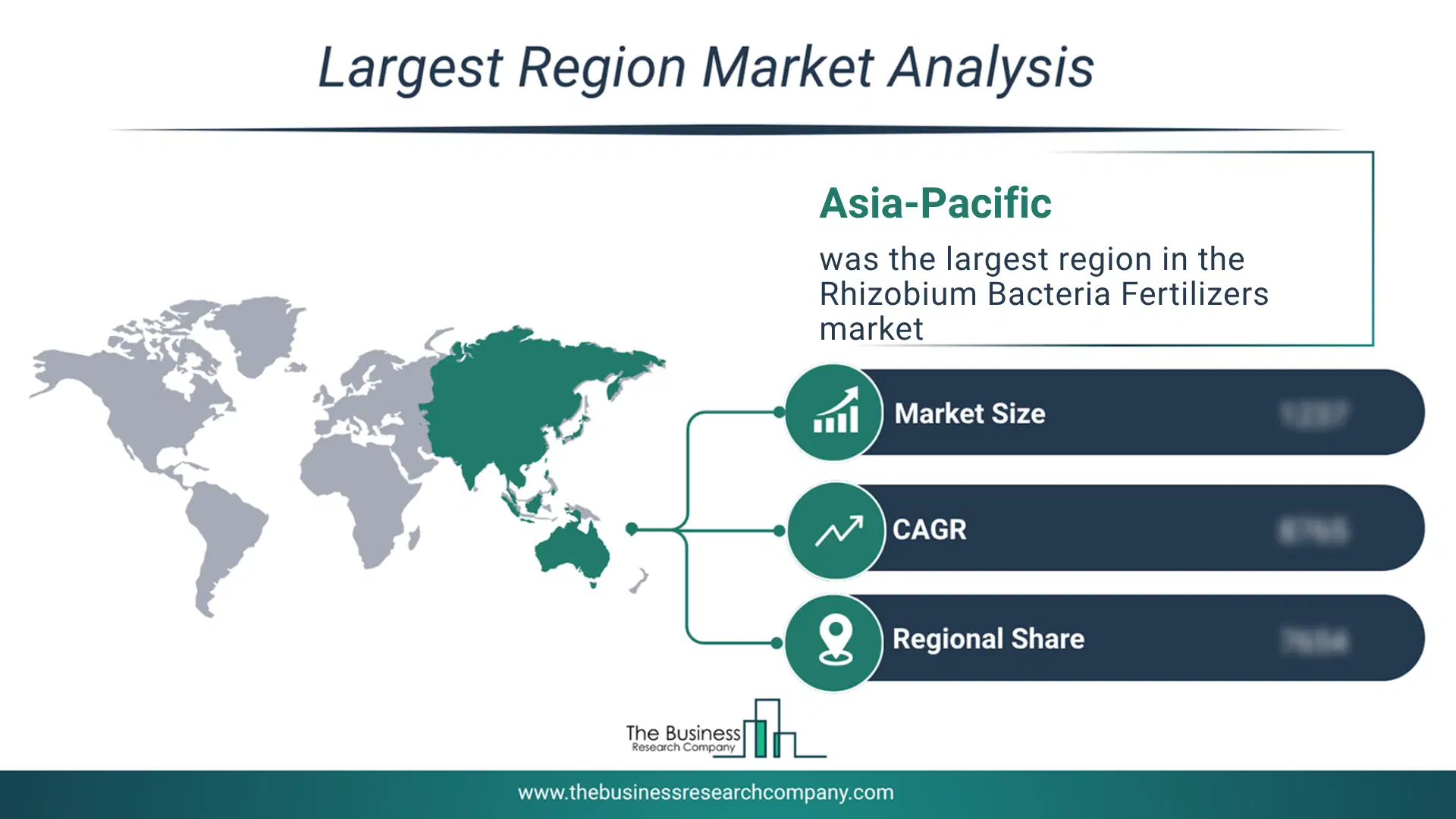
Regional Insights
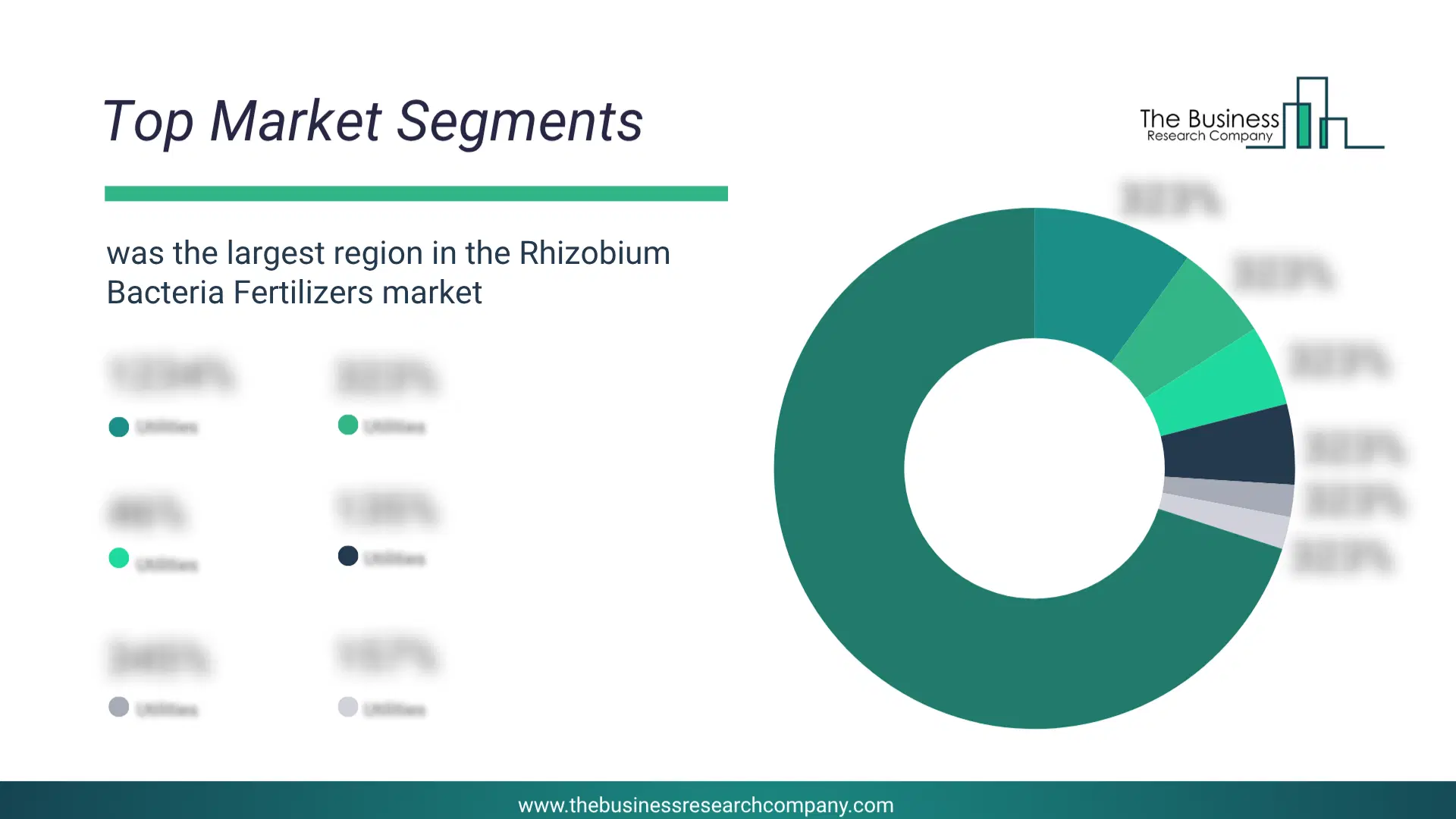
Asia-Pacific was the largest region in the rhizobium bacteria fertilizers market in 2025. The regions covered in this market report are Asia-Pacific, South East Asia, Western Europe, Eastern Europe, North America, South America, Middle East, Africa The countries covered in this market report are Australia, Brazil, China, France, Germany, India, Indonesia, Japan, Taiwan, Russia, South Korea, UK, USA, Canada, Italy, SpainWhat Defines the Rhizobium Bacteria Fertilizers Market?
The rhizobium bacteria fertilizers market consists of sales of rhizobium bacteria fertilizers such as inoculants, bio-fertilizers, and nutrient supplements. Values in this market are ‘factory gate’ values, that is the value of goods sold by the manufacturers or creators of the goods, whether to other entities (including downstream manufacturers, wholesalers, distributors, and retailers) or directly to end customers. The value of goods in this market includes related services sold by the creators of the goods.How is Market Value Defined and Measured?
The market value is defined as the revenues that enterprises gain from the sale of goods and/or services within the specified market and geography through sales, grants, or donations in terms of the currency (in USD unless otherwise specified). The revenues for a specified geography are consumption values that are revenues generated by organizations in the specified geography within the market, irrespective of where they are produced. It does not include revenues from resales along the supply chain, either further along the supply chain or as part of other products.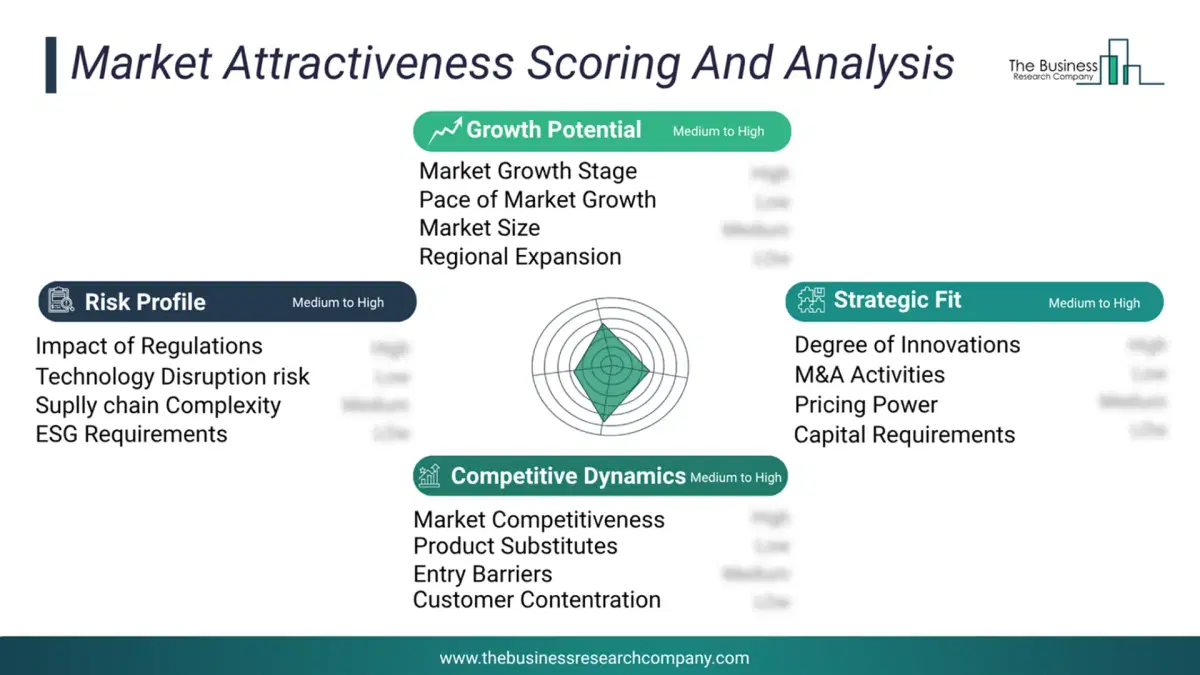
This chart presents market attractiveness based on a quantitative evaluation of growth, competition, strategic alignment, and risk, offering a clear view of opportunity areas for decision-making. This chart is for illustrative purposes; the full report contains the complete analysis.
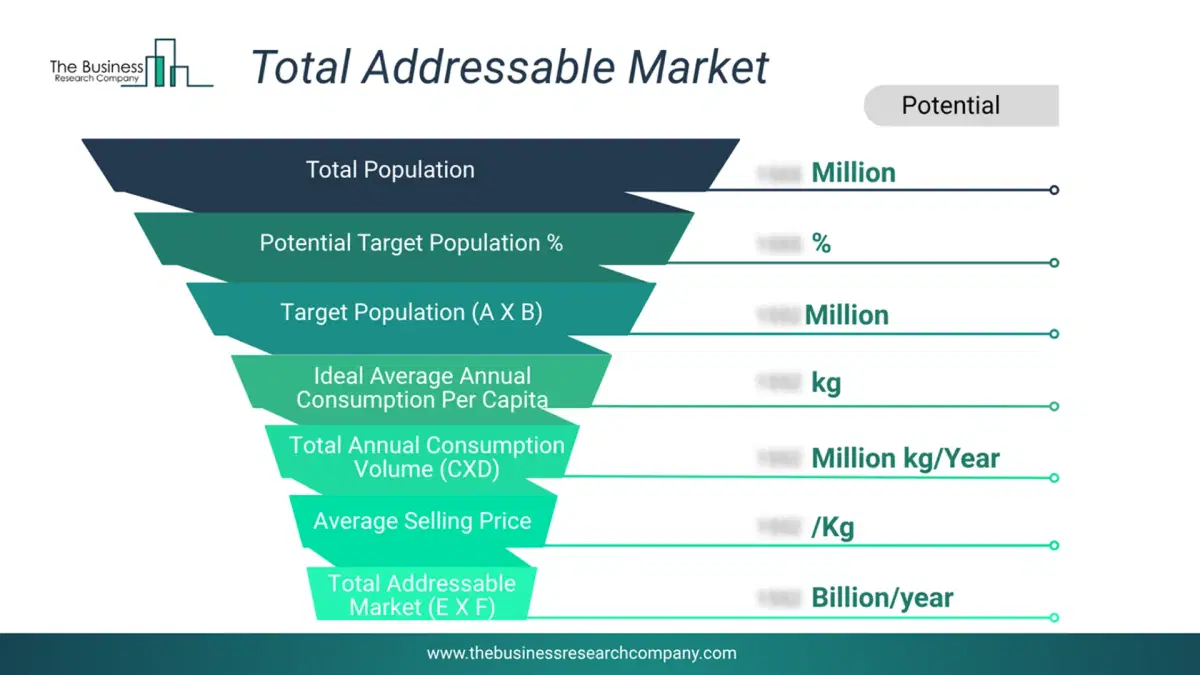
This chart highlights the Total Addressable Market (TAM) by estimating the maximum revenue opportunity using an assumption-driven approach, supporting strategic planning and opportunity sizing across markets. The chart is illustrative; the full report provides a more comprehensive analysis.
What Key Data and Analysis Are Included in the Rhizobium Bacteria Fertilizers Market Report 2026?
The rhizobium bacteria fertilizers market research report is one of a series of new reports from The Business Research Company that provides market statistics, including industry global market size, regional shares, competitors with the market share, detailed market segments, market trends and opportunities, and any further data you may need to thrive in the rhizobium bacteria fertilizers industry. The market research report delivers a complete perspective of everything you need, with an in-depth analysis of the current and future state of the industry.Rhizobium Bacteria Fertilizers Market Report Forecast Analysis
| Report Attribute | Details |
|---|---|
| Market Size Value In 2026 | $2.52 billion |
| Revenue Forecast In 2030 | $3.67 billion |
| Growth Rate | CAGR of 9.6% from 2026 to 2030 |
| Base Year For Estimation | 2025 |
| Actual Estimates/Historical Data | 2020-2025 |
| Forecast Period | 2026 - 2030 |
| Market Representation | Revenue in USD Billion and CAGR from 2026 to 2030 |
| Segments Covered | Type, Crop, Technology, Application |
| Regional Scope | Asia-Pacific, Western Europe, Eastern Europe, North America, South America, Middle East, Africa |
| Country Scope | The countries covered in this market report are Australia, Brazil, China, France, Germany, India, Indonesia, Japan, Taiwan, Russia, South Korea, UK, USA, Canada, Italy, Spain |
| Key Companies Profiled | Novozymes A/S, BASF SE, Chr. Hansen Holding A/S, Rizobacter Argentina S.A., Lallemand Plant Care, Isagro S.p.A., ABiTEP GmbH, Andermatt Biocontrol AG, UPL Limited, MBI International LLC, Legume Technology Ltd, Kan Biosys Pvt Ltd, IPL Biologicals, Camson Biotech, Biostadt Agro, T. Stanes & Company Ltd, National Fertilizers Limited, Gujarat State Fertilizers & Chemicals Ltd, Madras Fertilizers Limited, Soygro (Pty) Ltd, Rashtriya Chemicals & Fertilizers Ltd, Permafrost Bio |
| Customization Scope | Request for Customization |
| Pricing And Purchase Options | Explore Purchase Options |