

Shared Vehicles Market Report 2026
Global Outlook – By Service (Car Rental, Bike Sharing, Car Sharing), By Vehicle Type (Passenger Cars, Micro Mobility), By Propulsion (Electric Vehicles, IC Engine Vehicles) – Market Size, Trends, Strategies, and Forecast to 2030
Shared Vehicles Market Overview
• Shared Vehicles market size has reached to $182.63 billion in 2025 • Expected to grow to $364.76 billion in 2030 at a compound annual growth rate (CAGR) of 14.8% • Growth Driver: Shared Vehicles Market Surges Amid Global Shift Toward Urban Living • Market Trend: Vay's Innovative Teledriving Car-Share Service Revolutionizes Urban Mobility • Asia-Pacific was the largest region in 2025 and Europe is the fastest growing region.Market Gains By 2030 – Top Opportunities By Segment
Market Gain identifies the most promising market opportunities by highlighting the segments or products expected to generate the highest incremental revenue growth over the next five years.
What Is Covered Under Shared Vehicles Market?
Shared vehicles are vehicles that commuters use to get around without owning them individually. Compared to only using public transit, shared automobiles provide more flexibility and the comfort of a private vehicle. These systems are appealing because they have the ability to minimize a user's commuting expenditures, lessen the need for parking spaces in a community, improve general air quality, and make other modes of transportation, such as rail transit, easier to reach, and encourage their use. The main services offered in shared vehicles are car rental, bike sharing, and car sharing. Car rental services are a popular alternative for people who do not always require a car but may require one for a few days to a month that allows people to take road trips to neighbor tourist attractions as well as carry out regular tasks like shopping, office commuting, and exploring the nooks and crannies of the area. The major types of vehicles used are passenger cars, LCVs (light commercial vehicles), and micro-mobility with different propulsions such as electric vehicles and IC engine vehicles.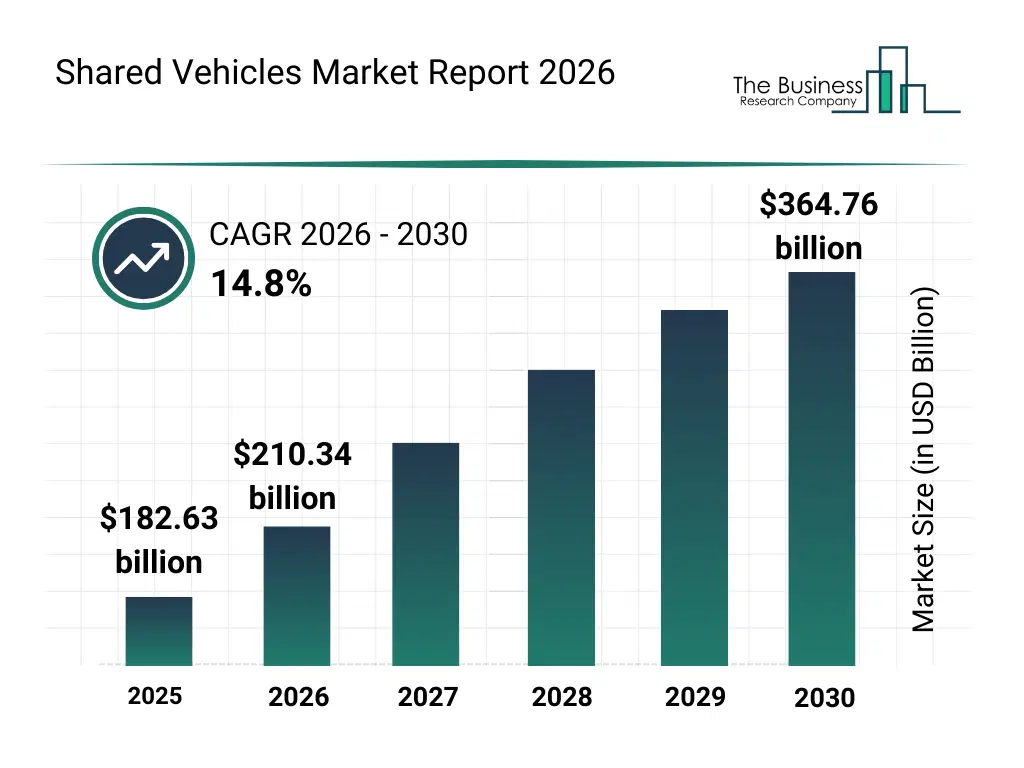
What Is The Shared Vehicles Market Size and Share 2026?
The shared vehicles market size has grown rapidly in recent years. It will grow from $182.63 billion in 2025 to $210.34 billion in 2026 at a compound annual growth rate (CAGR) of 15.2%. The growth in the historic period can be attributed to rising urban mobility challenges, increasing cost burden of vehicle ownership, growth of app based transportation services, rising awareness of mobility sharing benefits, increasing commuter shift toward shared transportation.What Is The Shared Vehicles Market Growth Forecast?
The shared vehicles market size is expected to see rapid growth in the next few years. It will grow to $364.76 billion in 2030 at a compound annual growth rate (CAGR) of 14.8%. The growth in the forecast period can be attributed to increasing demand for flexible mobility, rising integration with urban transit infrastructure, growing acceptance of shared commuting culture, increasing expansion of organized shared mobility platforms, rising focus on sustainable transportation use. Major trends in the forecast period include growing popularity of vehicle sharing as mobility solution, increasing preference for cost efficient travel options, rising use of shared mobility for daily commuting, increasing adoption of flexible transportation choices, growing role of shared vehicles in reducing urban congestion.
Global Shared Vehicles Market Segmentation
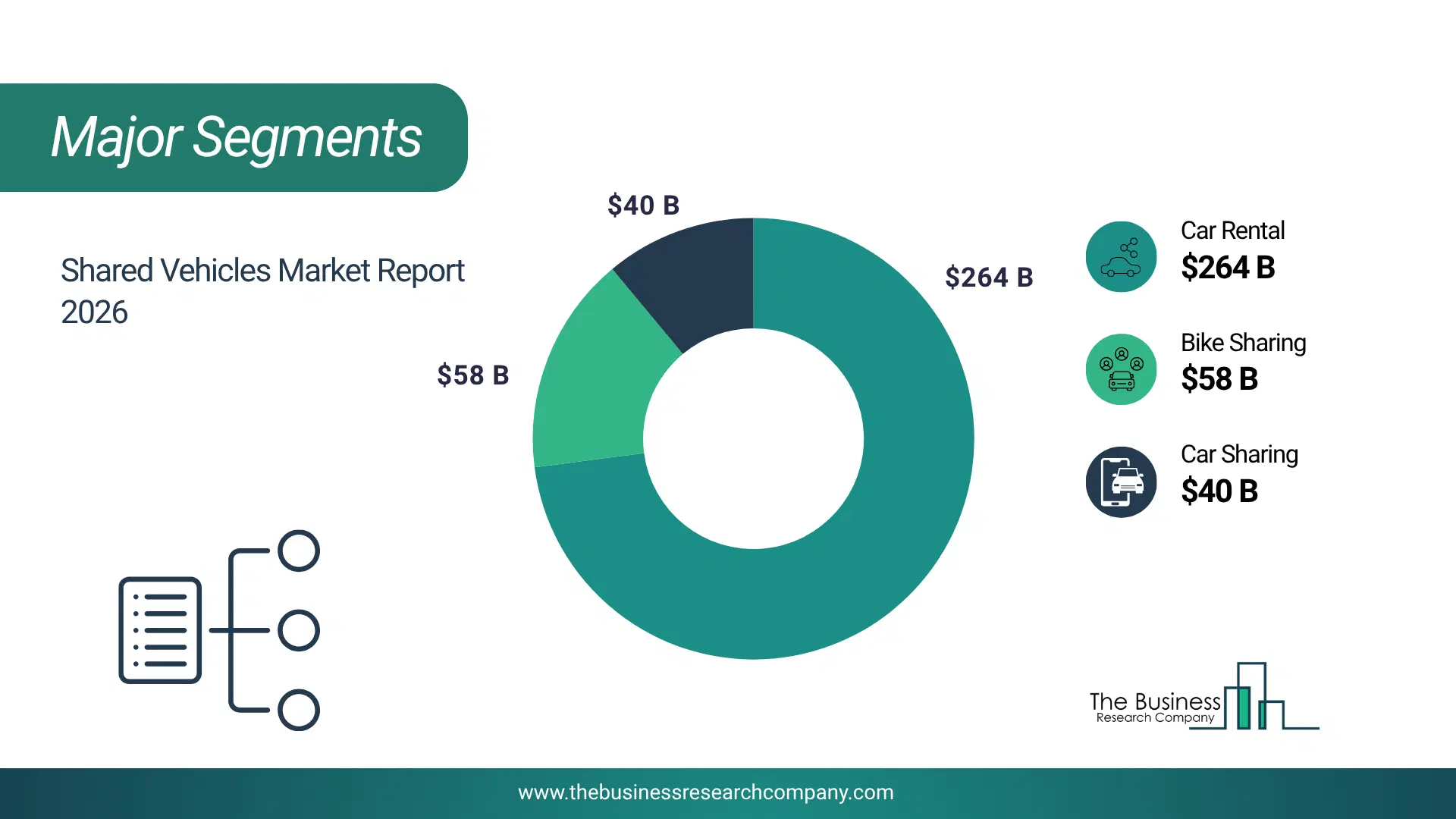
1) By Service: Car Rental, Bike Sharing, Car Sharing 2) By Vehicle Type: Passenger Cars, Micro Mobility 3) By Propulsion: Electric Vehicles, IC Engine Vehicles Subsegments: 1) By Car Rental: Traditional Car Rental Services, Peer-To-Peer Car Rental Platforms 2) By Bike Sharing: Docked Bike Sharing, Dockless Bike Sharing 3) By Car Sharing: Round-Trip Car Sharing, One-way Car Sharing The top segments in the shared vehicles market will be: • Car Rental will reach $264 Billion by 2030. • Bike Sharing will reach $58 Billion by 2030. • Car Sharing will reach $40 Billion by 2030.What Is The Driver Of The Shared Vehicles Market?
Increasing urbanization is expected to propel the growth of the shared vehicles market going forward. Urbanization refers to the process of increasing the proportion of a population that resides in urban areas, leading to the growth and expansion of cities and towns. Urbanization boosts shared vehicles as it aligns with urban challenges, fostering an environment where shared mobility solutions thrive. For instance, in April 2024, according to the World Economic Forum, a Switzerland-based non-governmental organization, currently, over 4.3 billion people, or 55% of the global population, reside in urban areas, a figure projected to increase to 80% by 2050., emphasizing the ongoing global shift toward urban living. Therefore, increasing urbanization is driving the growth of the shared vehicles industry.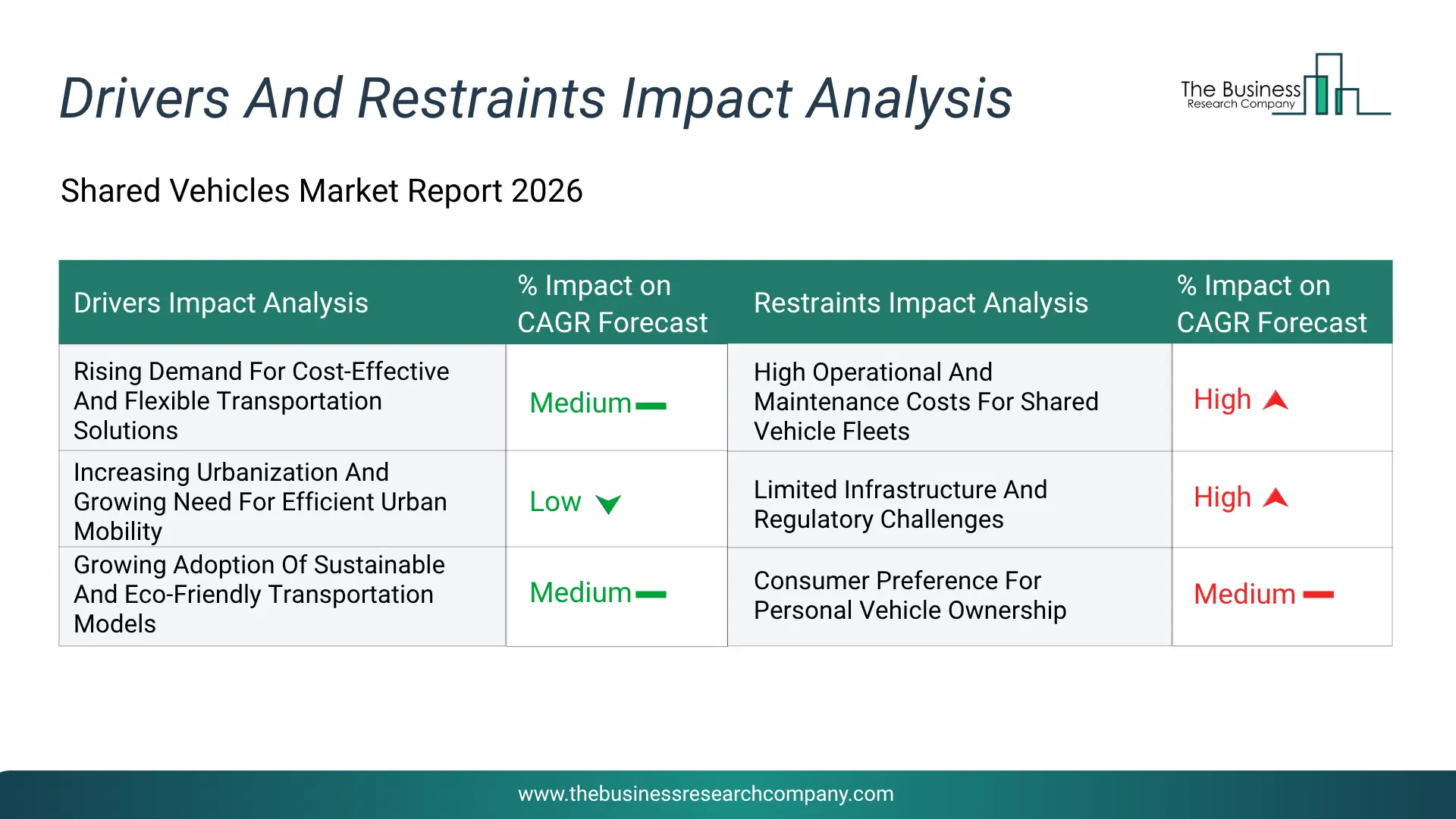
Infographic Chart Showing Key Market Drivers Analysis And Restraints For Shared Vehicles Market
The chart presents an impact analysis of key drivers and restraints, quantifying their relative influence on the market's growth rate and helping assess the balance between growth enablers and limiting factors. This chart offers a high-level perspective; the full report contains more detailed insights.
How Will The Drivers Impact Growth In The Global Shared Vehicles Market?
• Rising Demand For Cost-Effective And Flexible Transportation Solutions (Medium) – During the forecast period, the rising demand for cost-effective and flexible transportation solutions is expected to emerge as a major factor driving the expansion of the shared vehicles market by 2030. consumers are increasingly shifting from vehicle ownership to on-demand mobility services to avoid expenses related to vehicle purchases, maintenance, insurance, fuel, and parking. shared mobility platforms provide convenient app-based access to cars, bikes, and other transportation options with flexible usage models, making them highly attractive for urban commuters, students, and budget-conscious travelers. • Increasing Urbanization And Growing Need For Efficient Urban Mobility (Low) – During the forecast period, the increasing urbanization and the growing need for efficient urban mobility are expected to emerge as a major factor driving the expansion of the shared vehicles market by 2030. rapid growth in metropolitan populations is increasing pressure on transportation infrastructure, encouraging the adoption of shared mobility services that improve last-mile connectivity and reduce traffic congestion. integration with public transit systems, smart city initiatives, and digital mobility platforms is further enhancing the accessibility and efficiency of shared transportation services. • Growing Adoption Of Sustainable And Eco-Friendly Transportation Models (Medium) – During the forecast period, the growing adoption of sustainable and eco-friendly transportation models is expected to act as a key growth catalyst for the shared vehicles market by 2030. governments and mobility providers are promoting low-emission transportation by expanding shared electric vehicle fleets and encouraging higher vehicle utilization rates to reduce carbon emissions and fuel consumption. increasing environmental awareness, supportive regulatory policies, and investments in electric mobility infrastructure are further strengthening the role of shared transportation within sustainable urban mobility strategies.How Will The Restraints Impact Growth In The Global Shared Vehicles Market?
• High Operational And Maintenance Costs For Shared Vehicle Fleets (Medium) – During the forecast period, high Operational And Maintenance Costs For Shared Vehicle Fleets act as a significant barrier to the growth of the Shared Vehicles Market because service providers require continuous investment in vehicle acquisition, fleet management, maintenance, insurance, technology platforms, and operational support. Unlike privately owned vehicles, shared fleets experience higher utilization rates, resulting in faster depreciation, frequent servicing requirements, and increased repair expenses. Operators must also invest in vehicle tracking systems, digital applications, charging infrastructure for electric fleets, and customer support services to maintain service quality. These expenses can reduce profit margins, particularly in highly competitive markets where companies are required to offer affordable pricing to attract customers. Smaller operators may face additional challenges in scaling their fleets due to high capital requirements. • Limited Infrastructure And Regulatory Challenges (Low) – During the forecast period, limited Infrastructure And Regulatory Challenges negatively impact the Shared Vehicles Market by restricting expansion in regions where supporting transportation infrastructure is insufficient. Successful shared mobility operations require dedicated parking spaces, charging stations, digital payment systems, cycling lanes, and efficient urban transportation planning. In many developing economies, the lack of adequate infrastructure limits fleet deployment and reduces service reliability. Additionally, regulatory differences between cities and countries create operational complexities related to licensing requirements, vehicle safety standards, insurance policies, and data-sharing regulations. Unclear or changing government policies can increase compliance costs and create uncertainty for mobility providers, slowing investments and limiting the widespread adoption of shared vehicle services. • Consumer Preference For Personal Vehicle Ownership (Medium) – During the forecast period, consumer Preference For Personal Vehicle Ownership continues to limit the growth potential of shared vehicles because many consumers still consider private vehicle ownership a symbol of convenience, independence, and reliability. Personal vehicles provide immediate availability, privacy, customization options, and freedom from concerns related to vehicle availability during peak demand periods. Some potential users also hesitate to adopt shared mobility due to concerns regarding vehicle cleanliness, safety, maintenance quality, and dependence on smartphone-based booking platforms. In suburban and rural areas where public transportation options are limited, personal vehicles remain essential for daily commuting. As a result, changing consumer behavior and encouraging long-term acceptance of shared mobility remain key challenges for market participants.Key Players In The Global Shared Vehicles Market
Major companies operating in the shared vehicles market report are Enterprise Holdings Inc, Avis Budget Group Inc, The Hertz Corporation, Europcar Mobility Group SA, Sixt SE, Turo Inc, Getaround Inc, Communauto Inc, GoGet Carshare Inc, Zoomcar India Private Limited, Car Next Door Pty Ltd, Hourcar Inc, Modo Cooperative, Mobility Carsharing LLC, Cambio Mobilitätsservice GmbH, GreenGo Travel Ltd, Lime, Bird Global Inc, nextbike GmbH, CityBike Wien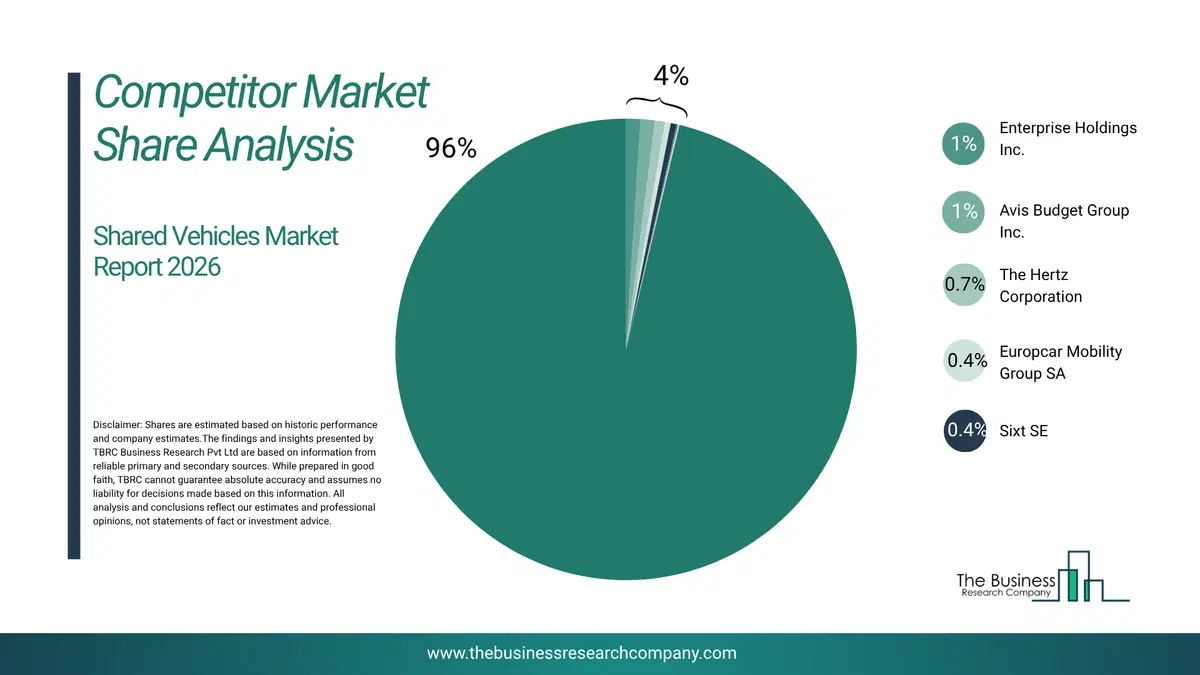
This chart is for illustrative purposes; the full report includes a detailed competitor analysis and comprehensive overview of the top 10 companies in the market.
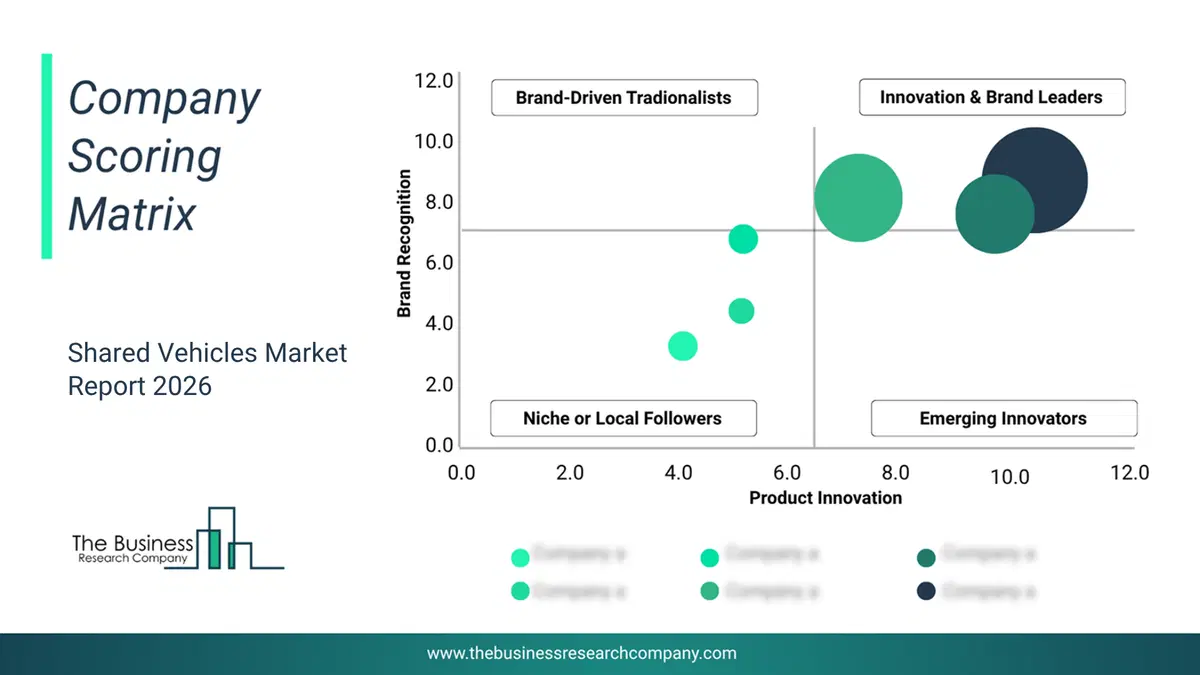
This chart maps companies by product innovation and brand strength, with bubble size indicating relative revenue, helping identify market leaders, challengers, and niche players. This is an illustrative chart; the full report provides a complete and accurate competitive analysis.
Global Shared Vehicles Market Trends and Insights
Major companies operating in the shared vehicles market are focusing on developing technologically advanced solutions, such as car-share services, to address several critical industry demands. A car-share service is a program that allows individuals to rent vehicles for short periods, typically by the hour or day, as an alternative to car ownership. For instance, in January 2024, Vay, a Germany-based technology company, launched an innovative teledriving car-share service in Las Vegas, enabling users to summon remotely operated electric vehicles. This service allows trained drivers to control the cars from a distance, enhancing convenience by eliminating the need for users to walk to a vehicle or find parking. Priced competitively at $0.30 per minute while driving, Vay aims to disrupt traditional ride-hailing models. Vay is also exploring partnerships in logistics and public transportation to further leverage its teledriving capabilities.What Are Latest Mergers And Acquisitions In The Shared Vehicles Market?
In May 2023, Getaround Inc a US-based peer-to-peer car-sharing company, acquired the assets of HyreCar, for an undisclosed amount. Through this acquisition, Getaround expands its shared-vehicle supply, strengthens its presence in gig-economy mobility, and integrates HyreCar’s rental infrastructure to broaden its reach across the shared-vehicles ecosystem. HyreCar Inc is a US-based company that provide shared vehicles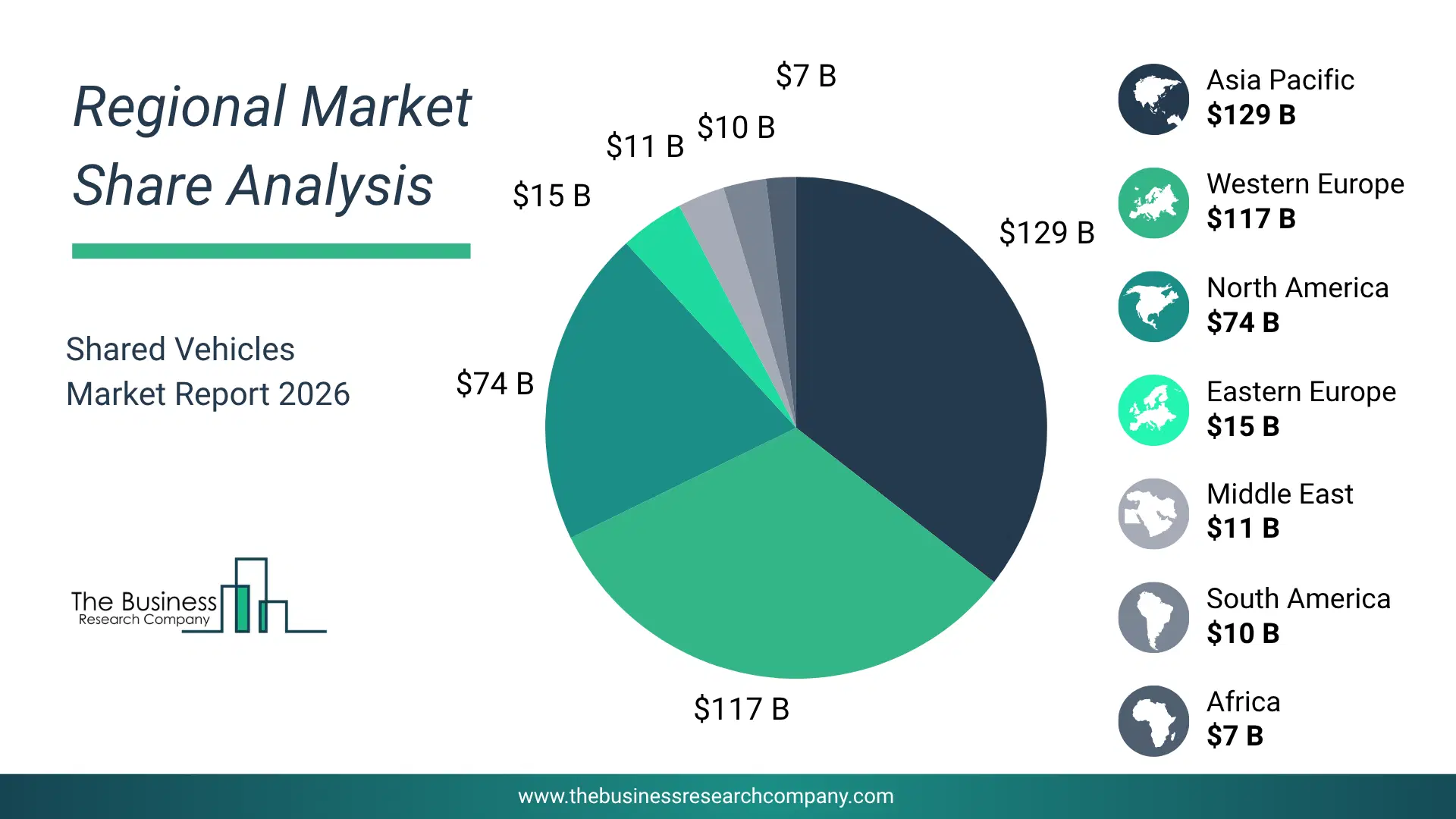
Regional Outlook
Asia-Pacific was the largest region in the shared vehicles market in 2025. Europe is expected to be the fastest-growing region in the global shared vehicles market during the forecast period. The regions covered in this market report are Asia-Pacific, South East Asia, Western Europe, Eastern Europe, North America, South America, Middle East, Africa. The countries covered in this market report are Australia, Brazil, China, France, Germany, India, Indonesia, Japan, Taiwan, Russia, South Korea, UK, USA, Canada, Italy, SpainWhat Defines the Shared Vehicles Market?
The shared vehicle market includes revenues earned by entities by providing services such as free-floating, peer-to-peer (PTP), and ride-hailing car-sharing services. The market value includes the value of related goods sold by the service provider or included within the service offering. Only goods and services traded between entities or sold to end consumers are included.How is Market Value Defined and Measured?
The market value is defined as the revenues that enterprises gain from the sale of goods and/or services within the specified market and geography through sales, grants, or donations in terms of the currency (in USD unless otherwise specified). The revenues for a specified geography are consumption values that are revenues generated by organizations in the specified geography within the market, irrespective of where they are produced. It does not include revenues from resales along the supply chain, either further along the supply chain or as part of other products.
This chart presents market attractiveness based on a quantitative evaluation of growth, competition, strategic alignment, and risk, offering a clear view of opportunity areas for decision-making. This chart is for illustrative purposes; the full report contains the complete analysis.
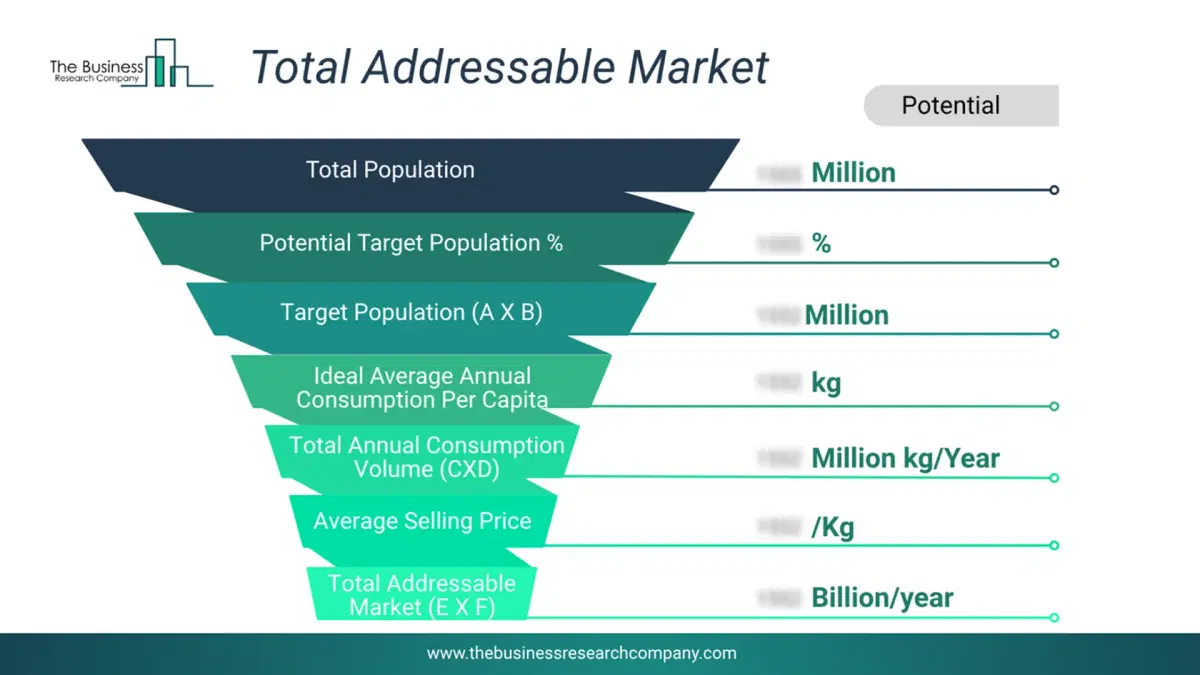
This chart highlights the Total Addressable Market (TAM) by estimating the maximum revenue opportunity using an assumption-driven approach, supporting strategic planning and opportunity sizing across markets. The chart is illustrative; the full report provides a more comprehensive analysis.
What Key Data and Analysis Are Included in the Shared Vehicles Market Report 2026?
The shared vehicles market research report is one of a series of new reports from The Business Research Company that provides market statistics, including industry global market size, regional shares, competitors with the market share, detailed market segments, market trends and opportunities, and any further data you may need to thrive in the shared vehicles industry. The market research report delivers a complete perspective of everything you need, with an in-depth analysis of the current and future state of the industry.Shared Vehicles Market Report Forecast Analysis
| Report Attribute | Details |
|---|---|
| Market Size Value In 2026 | $210.34 billion |
| Revenue Forecast In 2030 | $364.76 billion |
| Growth Rate | CAGR of 14.8% from 2026 to 2030 |
| Base Year For Estimation | 2025 |
| Actual Estimates/Historical Data | 2020-2025 |
| Forecast Period | 2026 - 2030 |
| Market Representation | Revenue in USD Billion and CAGR from 2026 to 2030 |
| Segments Covered | Service, Vehicle Type, Propulsion |
| Regional Scope | Asia-Pacific, Western Europe, Eastern Europe, North America, South America, Middle East, Africa |
| Country Scope | The countries covered in the report are Australia, Brazil, China, France, Germany, India, Indonesia, Japan, Taiwan, Russia, South Korea, UK, USA, Canada, Italy, Spain. |
| Key Companies Profiled | Enterprise Holdings Inc, Avis Budget Group Inc, The Hertz Corporation, Europcar Mobility Group SA, Sixt SE, Turo Inc, Getaround Inc, Communauto Inc, GoGet Carshare Inc, Zoomcar India Private Limited, Car Next Door Pty Ltd, Hourcar Inc, Modo Cooperative, Mobility Carsharing LLC, Cambio Mobilitätsservice GmbH, GreenGo Travel Ltd, Lime, Bird Global Inc, nextbike GmbH, CityBike Wien |
| Customization Scope | Request for Customization |
| Pricing And Purchase Options | Explore Purchase Options |