

System Integrator Market Report 2026
Global Outlook – By Service Outlook (Hardware Integration Service, Software Integration Service, Consulting Service), By Technology (Human-Machine Interface (HMI), Supervisory Control And Data Acquisition (SCADA), Manufacturing Execution System (MES), Functional Safety System, Machine Vision Industrial, Robotics Industrial PC, Industrial Internet Of Things (IIoT), Machine Condition Monitoring, Plant Asset Management), By End User (IT And Telecom, BFSI, Healthcare, Retail, Manufacturing, Energy And Utility, Other End-Users) – Market Size, Trends, Strategies, and Forecast to 2030
System Integrator Market Overview
• System Integrator market size has reached to $40.48 billion in 2025 • Expected to grow to $61.49 billion in 2030 at a compound annual growth rate (CAGR) of 8.7% • Growth Driver: Rapid Surge In Industrial Robot Adoption Is A Catalyst For System Integrator Market Growth • Market Trend: Entities Join Forces To Drive Innovation In Embedded Systems And Manufacturing Automation • North America was the largest region in 2025 and Asia-Pacific is the fastest growing region.Market Gains By 2030 – Top Opportunities By Segment
Market Gain identifies the most promising market opportunities by highlighting the segments or products expected to generate the highest incremental revenue growth over the next five years.
What Is Covered Under System Integrator Market?
A system integrator refers to the combination of hardware, software, networking, and storage solutions from many suppliers to create computer systems for clients. A systems integrator can help a corporation align cheaper, preset components and commercial off-the-shelf software to fulfil essential business goals, as opposed to more expensive, bespoke solutions that may involve original programming or the manufacture of unique components. The main system integrator service outlook includes hardware integration service, software integration service and consulting service. Hardware integration service refer to the process of linking hardware and software. Hardware integration is the combination of hardware, software, sensors, and connections. The different system integrator technologies include human-machine interface (HMI), supervisory control and data acquisition (SCADA), manufacturing execution system (MES), Functional safety system, machine vision industrial, robotics industrial pc, industrial internet of things (IIoT), machine condition monitoring and plant asset management. The end users of system integrator include IT and telecom, BFSI, healthcare, retail, manufacturing, energy and utility and other end-users.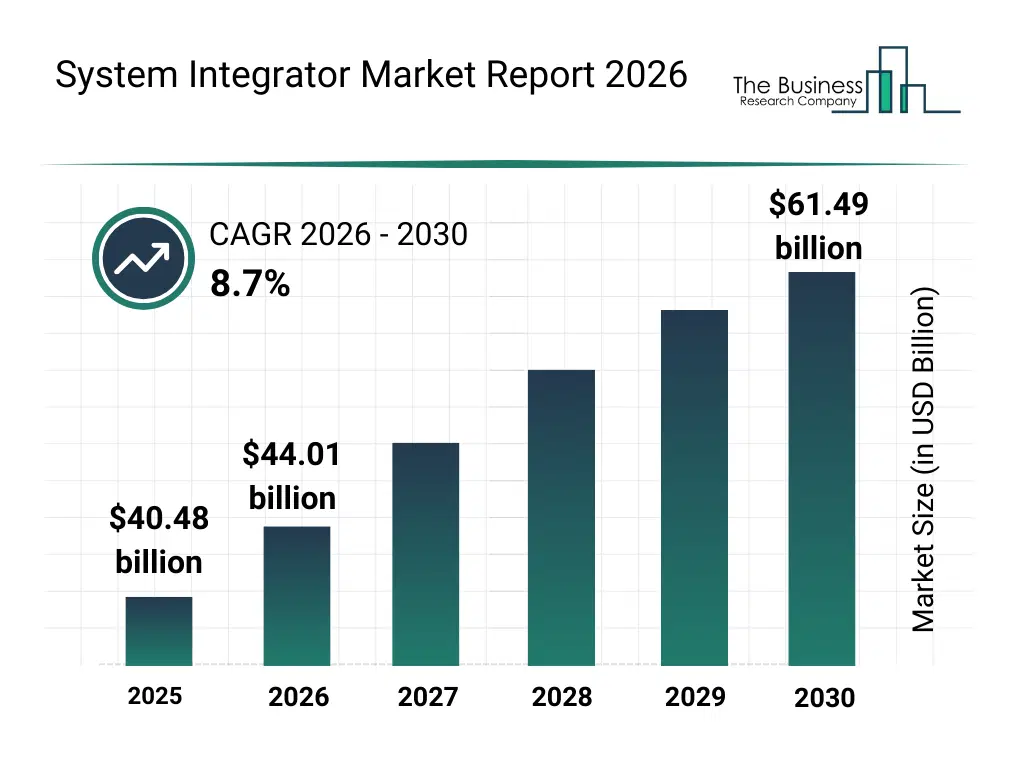
What Is The System Integrator Market Size and Share 2026?
The system integrator market size has grown strongly in recent years. It will grow from $40.48 billion in 2025 to $44.01 billion in 2026 at a compound annual growth rate (CAGR) of 8.7%. The growth in the historic period can be attributed to increasing demand for integrated IT solutions, rising adoption of industrial automation, growing requirement for data interoperability, increasing focus on operational efficiency, rising deployment of SCADA and MES systems.What Is The System Integrator Market Growth Forecast?
The system integrator market size is expected to see strong growth in the next few years. It will grow to $61.49 billion in 2030 at a compound annual growth rate (CAGR) of 8.7%. The growth in the forecast period can be attributed to rising adoption of IIoT and smart manufacturing solutions, increasing deployment of AI-powered integration platforms, growing demand for cloud-based integration services, increasing focus on cybersecurity in system integration, rising need for consulting services for digital transformation. Major trends in the forecast period include end-to-end hardware and software integration, customized api and data integration services, industrial automation and optimization solutions, real-time monitoring and asset management, risk assessment and change management services.
Global System Integrator Market Segmentation
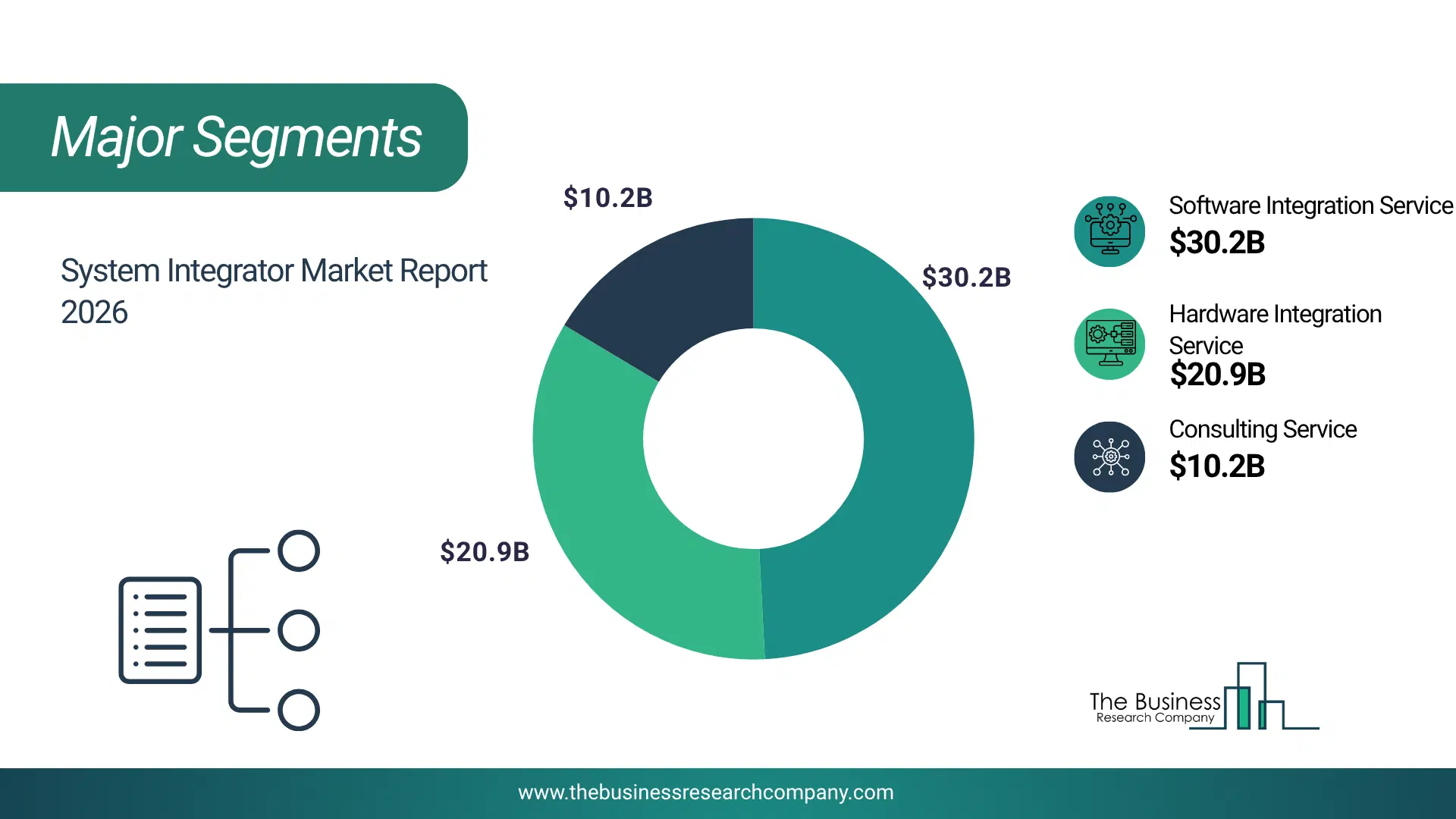
1) By Service Outlook: Hardware Integration Service, Software Integration Service, Consulting Service 2) By Technology: Human-Machine Interface (HMI), Supervisory Control And Data Acquisition (SCADA), Manufacturing Execution System (MES), Functional Safety System, Machine Vision Industrial, Robotics Industrial PC, Industrial Internet Of Things (IIoT), Machine Condition Monitoring, Plant Asset Management 3) By End User: IT And Telecom, BFSI, Healthcare, Retail, Manufacturing, Energy And Utility, Other End-Users Subsegments: 1) By Hardware Integration Service: System Design And Development, Installation And Configuration, Maintenance And Support 2) By Software Integration Service: Application Integration, Data Integration, API Integration 3) By Consulting Service: Strategy And Planning, Risk Assessment And Management, Change Management The top segments in the system integrator market will be: • Software Integration Service will reach $30.16 billion by 2030. • Hardware Integration Service will reach $20.8 billion by 2030. • Consulting Service will reach $10.11 billion by 2030.What Is The Driver Of The System Integrator Market?
The increasing use of industrial robots for manufacturing is expected to propel the growth of the system integrator market. An industrial robot is a device that is designed to automate work manufacturing operations, which are required by a constantly moving assembly line. They are installed in fixed positions within an industrial facility. A robotic systems integrator analyzes manufacturing needs, provides custom solutions, and design, and then supports the robotic system. Additionally, the demand for automation solutions has also favored the demand for industrial robots in manufacturing. For instance, in April 2024, according to the International Federation of Robotics, a Germany-based professional non-profit organization to promote, strengthen, and protect the robotics industry worldwide, the use of industrial robots in U.S. manufacturing surged significantly in 2023, with installations rising by 12% to reach 44,303 units, up from 40,000 units in 2022. Therefore, an increase in the adoption of industrial robots will drive the system integrator industry.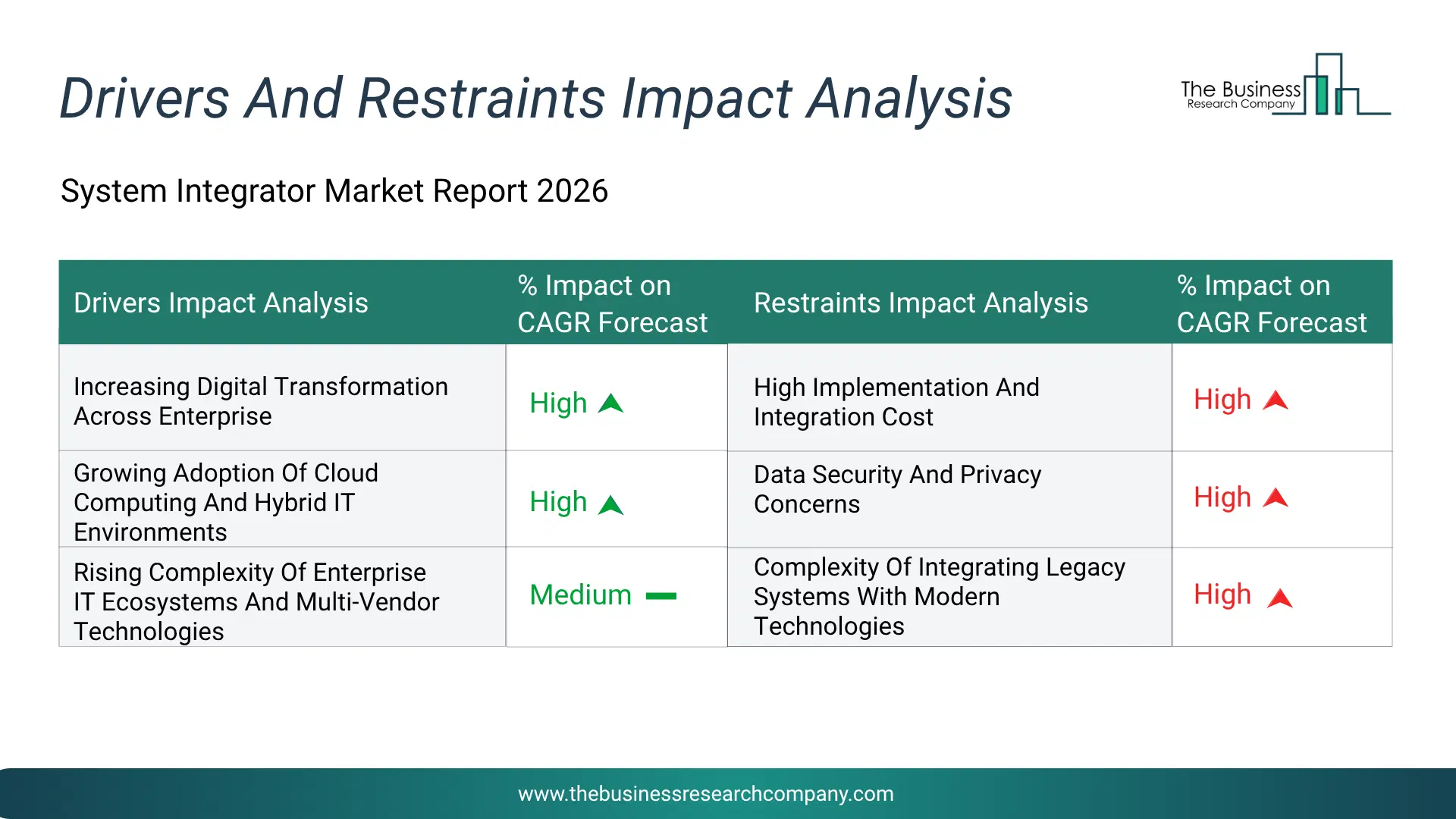
Infographic Chart Showing Key Market Drivers Analysis And Restraints For System Integrator Market
The chart presents an impact analysis of key drivers and restraints, quantifying their relative influence on the market's growth rate and helping assess the balance between growth enablers and limiting factors. This chart offers a high-level perspective; the full report contains more detailed insights.
How Will The Drivers Impact Growth In The Global System Integrator Market?
• Increasing Digital Transformation Across Enterprise (High) – During the forecast period, the increasing digital transformation across enterprise is expected to become a key growth driver for the system integrator market by 2030. Organizations are increasingly adopting digital technologies such as cloud computing, artificial intelligence, and advanced analytics to enhance operational efficiency and customer experience. This shift is driving demand for system integrators to seamlessly connect legacy systems with modern digital platforms. Enterprises are investing in integration services to ensure scalability, flexibility, and real -time data accessibility across business functions. This growing emphasis on digital transformation is reinforcing sustained market expansion. • Growing Adoption Of Cloud Computing And Hybrid IT Environments (High) – During the forecast period, the growing adoption of cloud computing and hybrid it environments is expected to emerge as a major factor driving the expansion of the system integrator market by 2030. Organizations are increasingly deploying hybrid infrastructures that combine on-premises systems with public and private cloud environments. This transition creates significant integration challenges, driving demand for specialized system integration services to ensure seamless connectivity, data migration, and workload management. Additionally, enterprises require integrated security and compliance frameworks across distributed environments. • Rising Complexity Of Enterprise IT Ecosystems And Multi-Vendor Technologies (Medium) – During the forecast period, the rising complexity of enterprise it ecosystems and multi-vendor technologies is expected to act as a key growth catalyst for the system integrator market by 2030. Organizations are increasingly adopting best-of-breed solutions from multiple vendors, resulting in complex it environments that require seamless integration. System integrators play a critical role in ensuring interoperability, minimizing system conflicts, and optimizing overall performance. Additionally, the need for centralized monitoring and unified management platforms is driving demand for advanced integration services. As enterprise ecosystems continue to evolve, integration complexity is expected to increase.How Will The Restraints Impact Growth In The Global System Integrator Market?
• High Implementation And Integration Cost (High) – During the forecast period, the the high implementation and integration cost is a major restraint for the system integrator market as organizations must invest significantly in infrastructure, software platforms, and skilled professionals. System integration projects often involve connecting multiple enterprise applications, networking systems, and storage platforms, which increases overall project expenses. In addition, customization, testing, and deployment require specialized expertise that further raises operational costs. Small and medium-sized enterprises may find it difficult to allocate sufficient budgets for such complex integration projects. As a result, the high cost associated with system integration limits adoption and restrains market growth. • Data Security And Privacy Concerns (High) – During the forecast period, the data security and privacy concerns act as an important restraint for the system integrator market as integration processes involve the transfer and consolidation of large volumes of sensitive business data. When multiple systems and platforms are interconnected, the risk of cyberattacks, data breaches, and unauthorized access can increase. Organizations must also comply with strict regulatory requirements related to data protection and privacy. These security challenges can make companies cautious about integrating their systems or adopting new integration platforms. As a result, concerns about data security and regulatory compliance can slow the adoption of system integration solutions. • Complexity Of Integrating Legacy Systems With Modern Technologies (High) – During the forecast period, the the complexity of integrating legacy systems with modern technologies is another major restraint for the system integrator market. Many organizations continue to rely on outdated it systems that were not designed to work with modern cloud platforms, analytics tools, or digital applications. Differences in architecture, data formats, and communication protocols make integration technically challenging. This complexity often increases project timelines, implementation costs, and the risk of operational disruptions. Consequently, the difficulty of integrating legacy infrastructure with modern technologies can limit the growth of the system integrator market.Key Players In The Global System Integrator Market
Major companies operating in the system integrator market are Siemens AG; Accenture plc; International Business Machines Corporation; Schneider Electric SE; Honeywell International Inc; ABB Ltd; Tata Consultancy Services Limited; Capgemini SE; Infosys Limited; Wipro Limited; Emerson Electric Co; Rockwell Automation Inc; Mitsubishi Electric Corporation; Yokogawa Electric Corporation; John Wood Group plc; L&T Technology Services Limited; Hexagon AB; ATS Automation Tooling Systems Inc; INTECH Process Automation Inc; Burrow Global LLC; JR Automation Technologies LLC; MAVERICK Technologies LLC; Barry-Wehmiller Design Group Inc; Prime Controls LP; Avanceon Limited; Tesco Controls Inc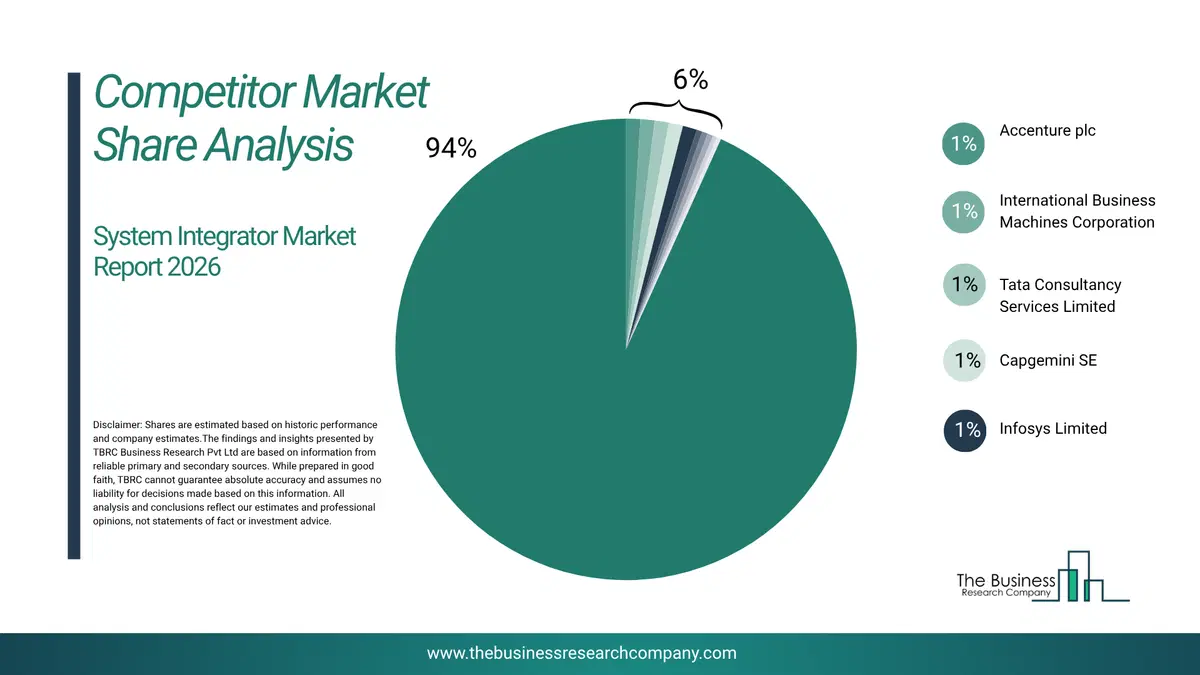
This chart is for illustrative purposes; the full report includes a detailed competitor analysis and comprehensive overview of the top 10 companies in the market.
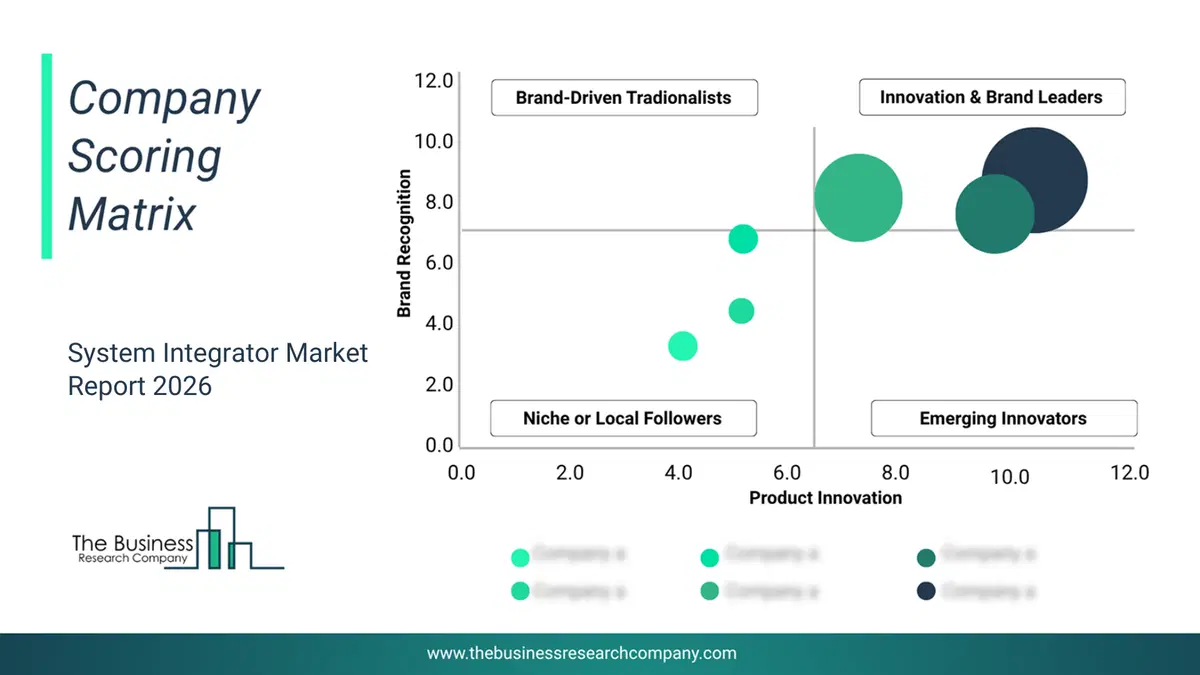
This chart maps companies by product innovation and brand strength, with bubble size indicating relative revenue, helping identify market leaders, challengers, and niche players. This is an illustrative chart; the full report provides a complete and accurate competitive analysis.
Global System Integrator Market Trends and Insights
Major companies operating in the system integrator market are forming partnerships to develop new products and strengthen their positions in the market. Collaborations and partnerships in the system integrator market foster innovation, leverage complementary expertise and accelerate the development and commercialization of advanced therapies by combining resources and capabilities. For instance, in September 2023, Arduino LLC, a US-based open-source hardware and software company, partnered with DMC Inc, a US-based consulting firm. This partnership is to bring open technology to embedded applications and manufacturing automation. By combining their respective product lines and areas of expertise, the two companies hope to develop cutting-edge solutions for a range of sectors. Through this partnership, both businesses can innovate and create innovative products in the fields of manufacturing automation and embedded systems. This partnership is a response to the increasing demand for Arduino PRO hardware and software, and it shows how dedicated both businesses are to offering top-notch engineering and bespoke software solutions for embedded and manufacturing applications.What Are Latest Mergers And Acquisitions In The System Integrator Market?
In October 2023, CGI Inc., a Canada-based information technology consulting company, acquired Momentum Consulting Corp. for an undisclosed amount. Through this acquisition, CGI aims to strengthen its proximity-based business model and expand its footprint in the key U.S. growth market of Miami by integrating Momentum’s expertise in digital transformation, data analytics, and managed services. Momentum Consulting Corp. is a U.S.-based company that operates as a system integrator specializing in integrating complex IT systems, applications, and solutions to support digital transformation and business process modernization for its clients.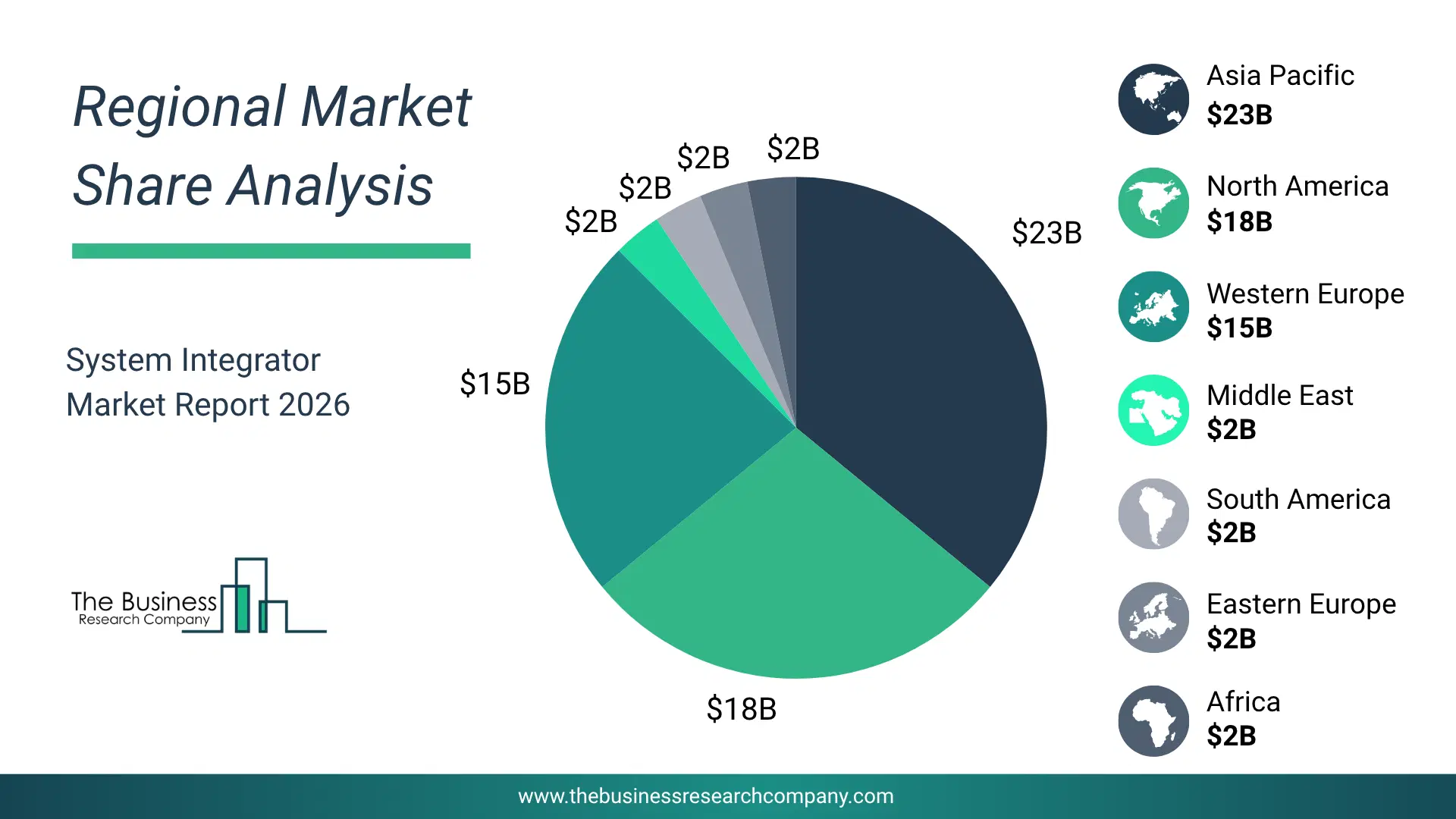
Regional Insights
North America was the largest region in the system integrator market in 2025. Asia-Pacific is expected to be the fastest-growing region in the global system integrator market during the forecast period. The regions covered in this market report are Asia-Pacific, South East Asia, Western Europe, Eastern Europe, North America, South America, Middle East, Africa. The countries covered in this market report are Australia, Brazil, China, France, Germany, India, Indonesia, Japan, Taiwan, Russia, South Korea, UK, USA, Canada, Italy, SpainWhat Defines the System Integrator Market?
The system integrator market consists of revenues earned by entities by providing system integrators software services such as legacy system integration, enterprise application integration (EAI), third-party system integration, business-to-business integration, integration platform as a service (Ipaas), and hybrid integration platform (HIP). The market value includes the value of related goods sold by the service provider or included within the service offering. Values in this market are ‘factory gate’ values, that is the value of goods sold by the manufacturers or creators of the goods, whether to other entities (including downstream manufacturers, wholesalers, distributors and retailers) or directly to end customers. The value of goods in this market includes related services sold by the creators of the goods.How is Market Value Defined and Measured?
The market value is defined as the revenues that enterprises gain from the sale of goods and/or services within the specified market and geography through sales, grants, or donations in terms of the currency (in USD unless otherwise specified). The revenues for a specified geography are consumption values that are revenues generated by organizations in the specified geography within the market, irrespective of where they are produced. It does not include revenues from resales along the supply chain, either further along the supply chain or as part of other products.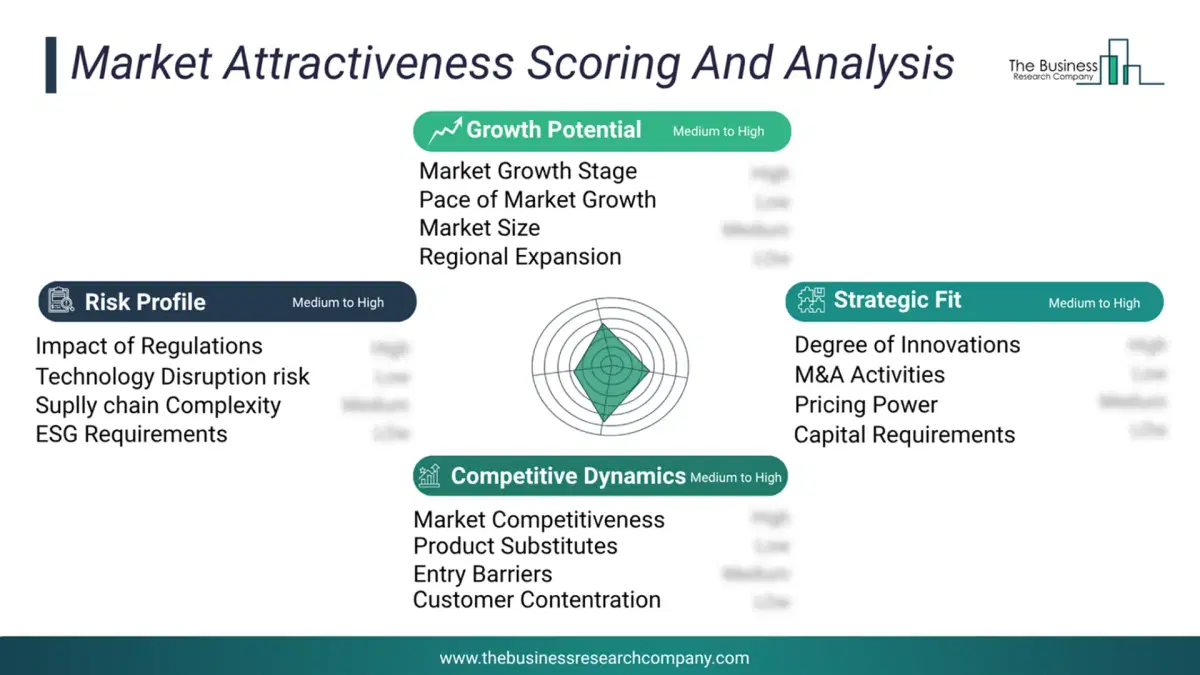
This chart presents market attractiveness based on a quantitative evaluation of growth, competition, strategic alignment, and risk, offering a clear view of opportunity areas for decision-making. This chart is for illustrative purposes; the full report contains the complete analysis.
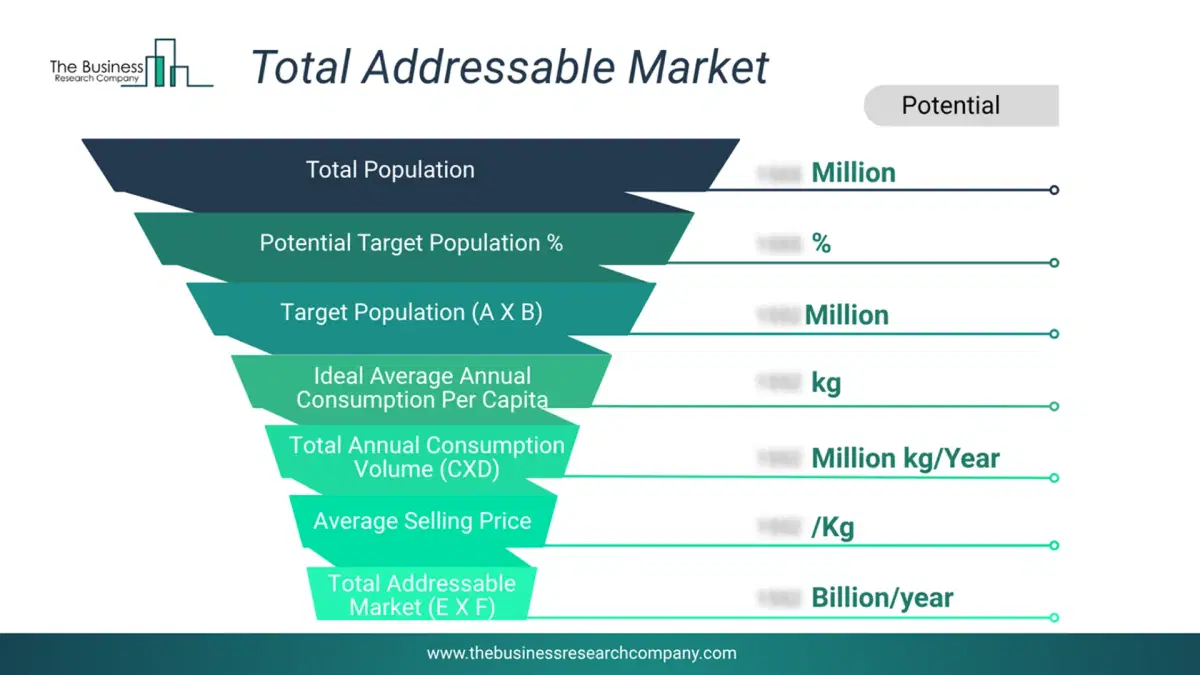
This chart highlights the Total Addressable Market (TAM) by estimating the maximum revenue opportunity using an assumption-driven approach, supporting strategic planning and opportunity sizing across markets. The chart is illustrative; the full report provides a more comprehensive analysis.
What Key Data and Analysis Are Included in the System Integrator Market Report 2026?
The system integrator market research report is one of a series of new reports from The Business Research Company that provides market statistics, including industry global market size, regional shares, competitors with the market share, detailed market segments, market trends and opportunities, and any further data you may need to thrive in the system integrator industry. The market research report delivers a complete perspective of everything you need, with an in-depth analysis of the current and future state of the industry.System Integrator Market Report Forecast Analysis
| Report Attribute | Details |
|---|---|
| Market Size Value In 2026 | $44.01 billion |
| Revenue Forecast In 2030 | $61.49 billion |
| Growth Rate | CAGR of 8.7% from 2026 to 2030 |
| Base Year For Estimation | 2025 |
| Actual Estimates/Historical Data | 2020-2025 |
| Forecast Period | 2026 - 2030 |
| Market Representation | Revenue in USD Billion and CAGR from 2026 to 2030 |
| Segments Covered | Service Outlook, Technology, End User |
| Regional Scope | Asia-Pacific, Western Europe, Eastern Europe, North America, South America, Middle East, Africa |
| Country Scope | The countries covered in the report are Australia, Brazil, China, France, Germany, India, ... |
| Key Companies Profiled | Siemens AG; Accenture plc; International Business Machines Corporation; Schneider Electric SE; Honeywell International Inc; ABB Ltd; Tata Consultancy Services Limited; Capgemini SE; Infosys Limited; Wipro Limited; Emerson Electric Co; Rockwell Automation Inc; Mitsubishi Electric Corporation; Yokogawa Electric Corporation; John Wood Group plc; L&T Technology Services Limited; Hexagon AB; ATS Automation Tooling Systems Inc; INTECH Process Automation Inc; Burrow Global LLC; JR Automation Technologies LLC; MAVERICK Technologies LLC; Barry-Wehmiller Design Group Inc; Prime Controls LP; Avanceon Limited; Tesco Controls Inc |
| Customization Scope | Request for Customization |
| Pricing And Purchase Options | Explore Purchase Options |