
Women Intimate Care Wipes Market Report 2026
Global Outlook – By Product Type (Medicated Wipes, Non-Medicated Wipes), By Material (Cotton, Wool, Other Materials), By Age Group (10 To 25, 26 To 40, 41 To 55, 56 And Above), By Distribution Channel (Online Channels, Offline Channels) – Market Size, Trends, Strategies, and Forecast to 2030
Women Intimate Care Wipes Market Overview
• Women Intimate Care Wipes market size has reached to $5.95 billion in 2025 • Expected to grow to $7.76 billion in 2030 at a compound annual growth rate (CAGR) of 5.3% • Growth Driver: Working Women Demographic Shift Fuels Demand For Intimate Care Wipes Market • Market Trend: Sustainability And Ethics Drive Growth In Women's Intimate Care Market • North America was the largest region in 2025 and Asia-Pacific is the fastest growing region.What Is Covered Under Women Intimate Care Wipes Market?
Women's intimate care wipes are hygiene products designed for cleansing and maintaining the freshness of the intimate area. They are often formulated to be pH-balanced, hypoallergenic, and suitable for sensitive skin. The primary purpose of women's intimate care wipes is to provide convenient and gentle cleansing for the intimate area. These wipes are designed to maintain personal hygiene, especially when access to water and soap is limited. The main types of products containing women intimate care wipes include medicated wipes and non-medical wipes. Medicated wipes are intimate care wipes infused with therapeutic ingredients, such as antibacterial, antifungal, or anti-inflammatory agents, designed to address specific health concerns. Wipes with material types such as cotton, wool, and others are used by different age groups, including 10 to 25, 26 to 40, 41 to 55, and above 56, distributed through channels such as online channels and offline channels.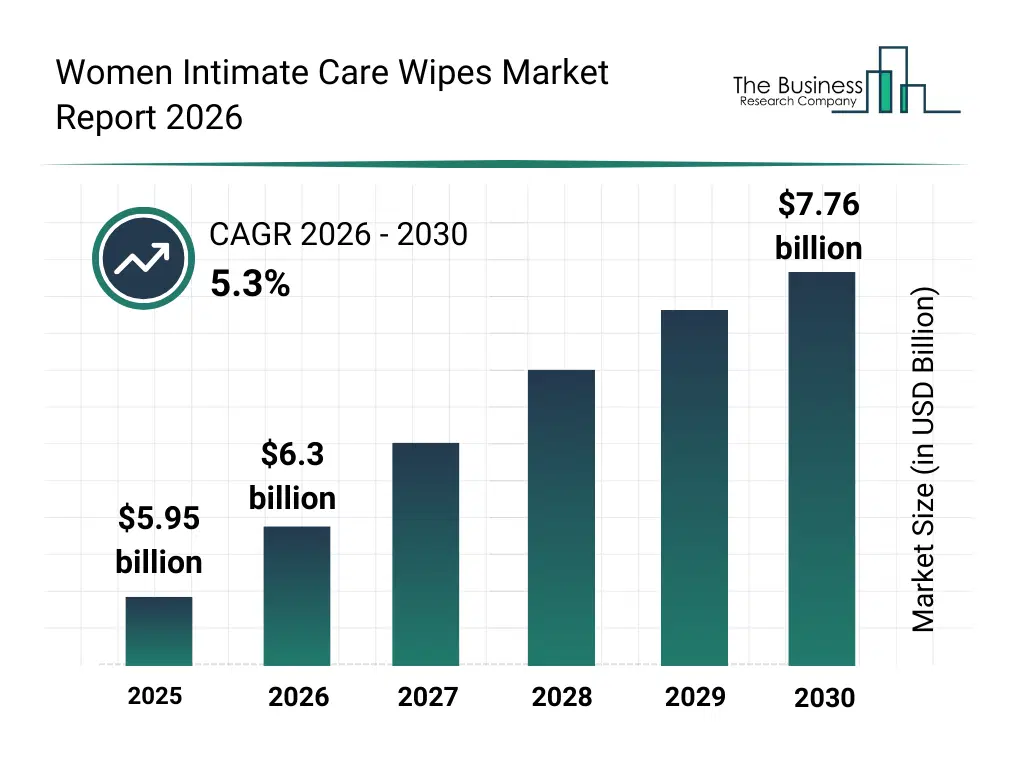
What Is The Women Intimate Care Wipes Market Size and Share 2026?
The women intimate care wipes market size has grown strongly in recent years. It will grow from $5.95 billion in 2025 to $6.3 billion in 2026 at a compound annual growth rate (CAGR) of 5.9%. The growth in the historic period can be attributed to rising awareness of feminine hygiene, increasing availability of personal care products, expansion of urban working women population, growth of retail personal care distribution, acceptance of disposable hygiene products.What Is The Women Intimate Care Wipes Market Growth Forecast?
The women intimate care wipes market size is expected to see strong growth in the next few years. It will grow to $7.76 billion in 2030 at a compound annual growth rate (CAGR) of 5.3%. The growth in the forecast period can be attributed to increasing demand for sustainable intimate care products, rising penetration of online personal care channels, growing focus on microbiome-friendly formulations, expansion of premium feminine hygiene ranges, increasing consumer education on intimate wellness. Major trends in the forecast period include increasing demand for ph-balanced intimate wipes, rising preference for natural and organic formulations, expansion of dermatologically tested products, growing adoption of convenient on-the-go hygiene solutions, enhanced focus on skin-safe and hypoallergenic materials.
Global Women Intimate Care Wipes Market Segmentation
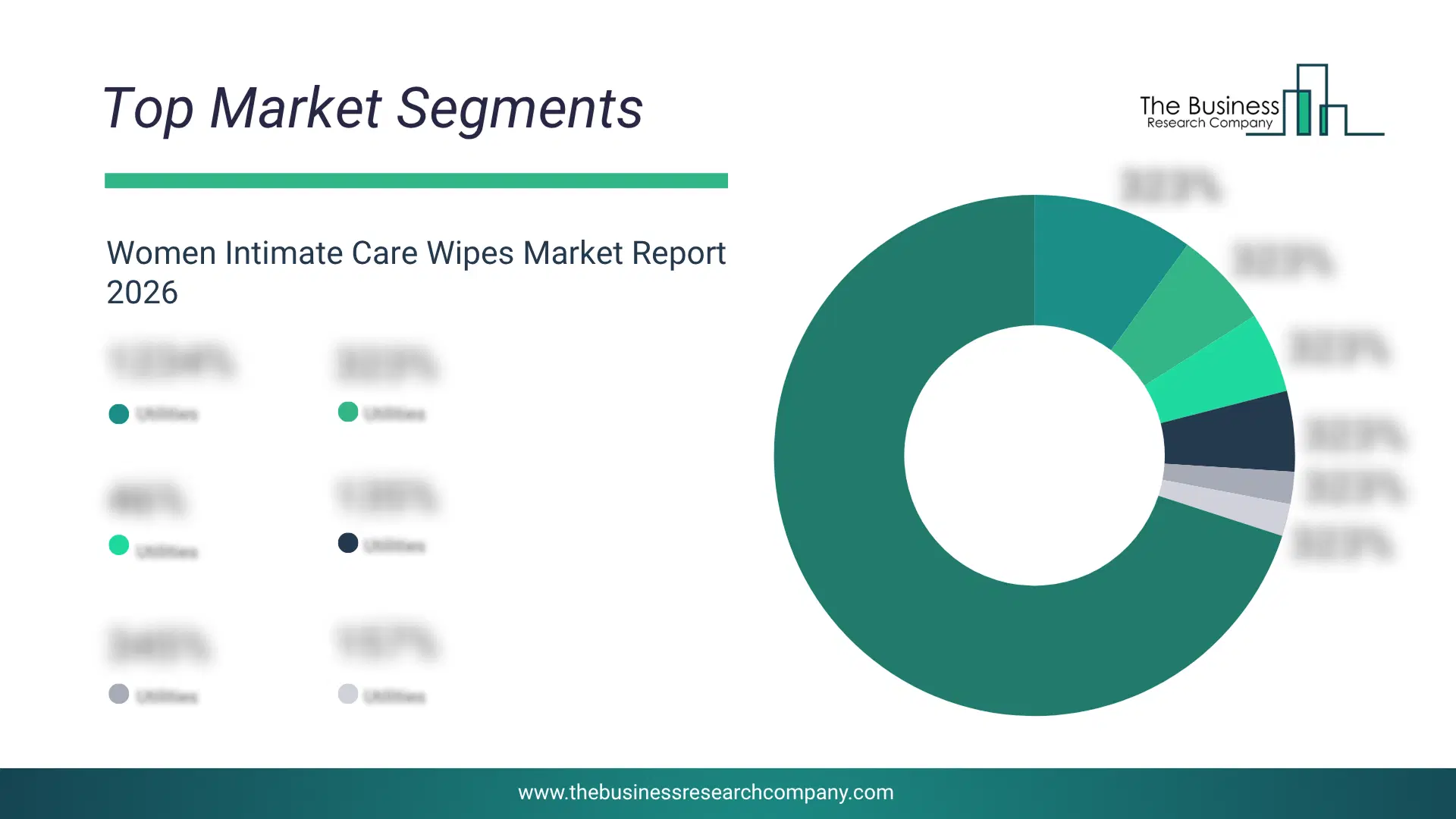
1) By Product Type: Medicated Wipes, Non-Medicated Wipes 2) By Material: Cotton, Wool, Other Materials 3) By Age Group: 10 To 25, 26 To 40, 41 To 55, 56 And Above 4) By Distribution Channel: Online Channels, Offline Channels Subsegments: 1) By Medicated Wipes: Antibacterial Wipes, Anti-Fungal Wipes, Ph-Balanced Medicated Wipes, Wipes With Natural Antiseptic Ingredients (Tea Tree Oil), Wipes With Soothing And Healing Properties (Aloe Vera, Chamomile), Wipes For Irritation Or Infection Relief, Wipes For Post-Surgical Or Post-Procedure Care 2) By Non-Medicated Wipes: Fragrance-Free Wipes, Hypoallergenic Wipes, Organic Or All-Natural Wipes, Refreshing Or Cooling Wipes, Wipes With Moisturizing And Nourishing Properties, Wipes With Essential Oils (Lavender, Rose), Daily Use Cleansing Wipes (For General Hygiene And Freshness)What Is The Driver Of The Women Intimate Care Wipes Market?
An increase in the working women population is expected to propel the growth of the women's intimate care wipes market going forward. The increase in the working women population is driven by higher educational attainment, evolving societal norms, economic necessity, and more significant opportunities for female employment. Intimate care wipes provide working women a convenient and effective solution for maintaining hygiene, freshness, and comfort throughout their busy day. For instance, in February 2024, according to Japan Institute for Labour Policy and Training (JILAF), Japan-based government-affiliated agency in 2023, employment rate for women in Japan increased to 53.6%, a 0.6-point rise. Therefore, an increase in the working women population will drive the development of the women's intimate care wipes marketKey Players In The Global Women Intimate Care Wipes Market
Major companies operating in the women intimate care wipes market are Procter & Gamble Co., Johnson & Johnson, Kimberly-Clark Corporation, Reckitt Benckiser Group PLC, Hindustan Unilever Limited, Unicharm Corporation, Equate, Marico Limited, Prestige Consumer Healthcare Inc., Burt's Bees, Veeda Inc., Guy & O'Neill Inc., Seventh Generation Inc., Rael Inc., Cetaphil, The Honey Pot Company, Cora life, Sliquid LLC, SweetSpot Labs LLC, Good Clean Love LLC, Biokleen, Sustain Natural LLC, vagisil, Natracare, La Fresh Group Inc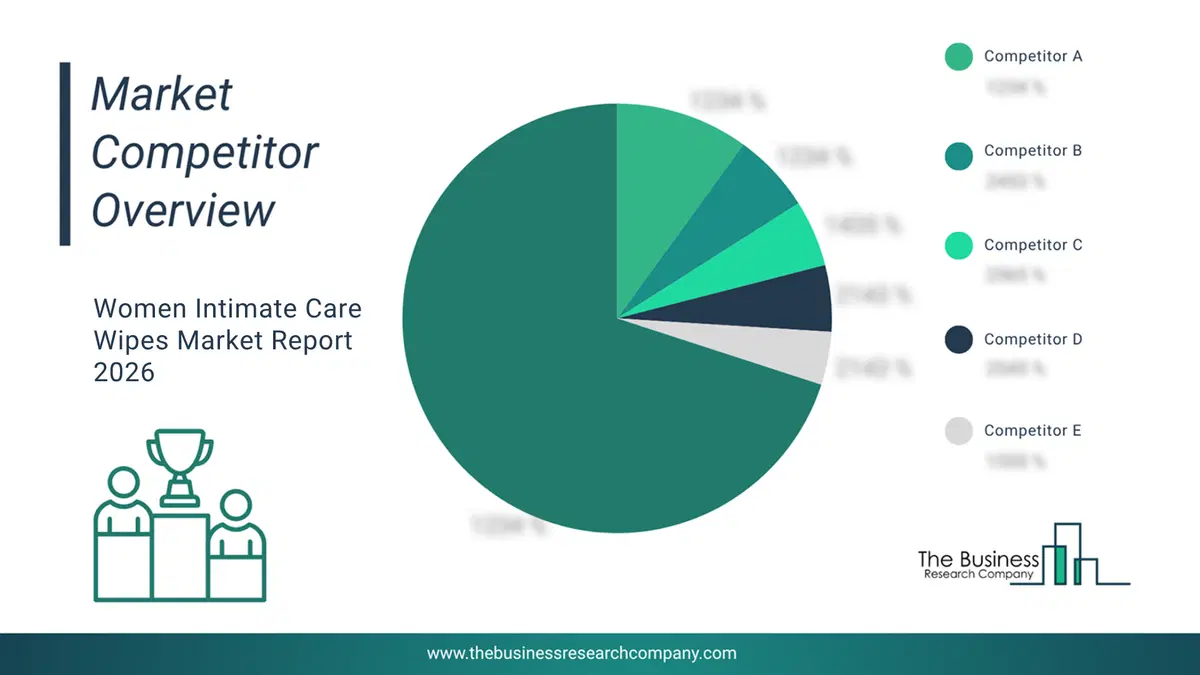
This chart is for illustrative purposes; the full report includes a detailed competitor analysis and comprehensive overview of the top 10 companies in the market.
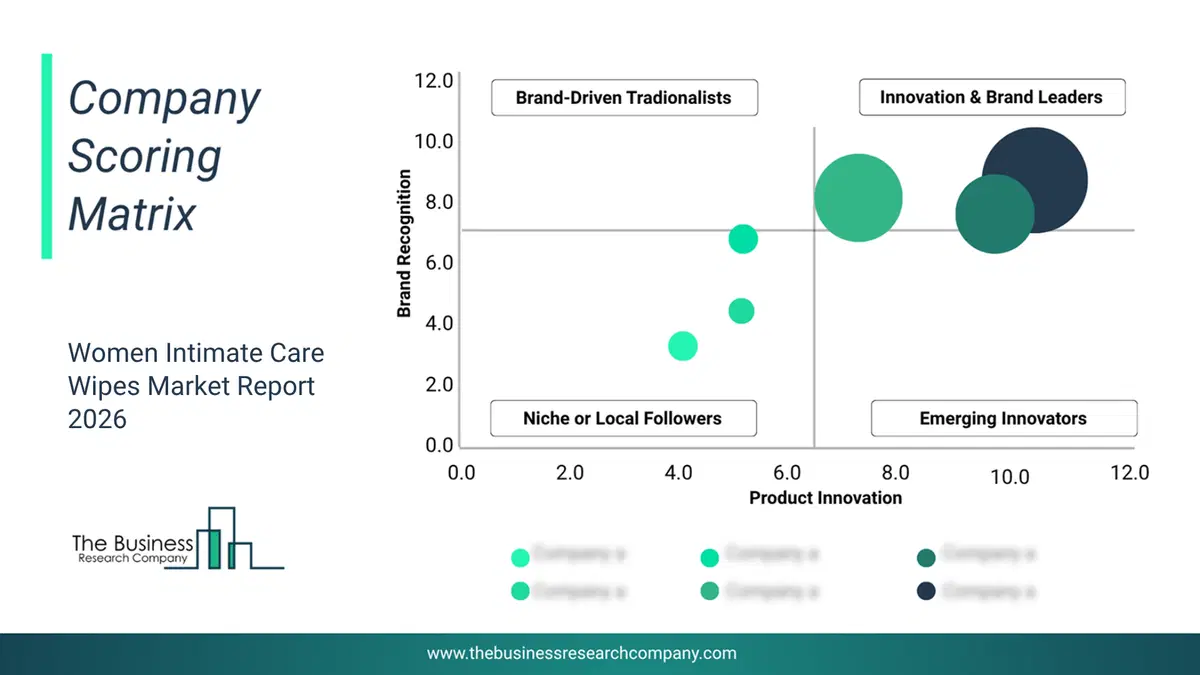
This chart maps companies by product innovation and brand strength, with bubble size indicating relative revenue, helping identify market leaders, challengers, and niche players. This is an illustrative chart; the full report provides a complete and accurate competitive analysis.
Global Women Intimate Care Wipes Market Trends and Insights
Major companies operating in the women's intimate care wipes market are focusing on developing sustainable and easy-to-use formulas, such as vegan and cruelty-free intimate care wipes, to meet the increasing consumer demand for environmentally friendly and ethically produced products. Vegan and cruelty-free intimate care wipes are designed specifically for personal hygiene in sensitive areas. They are formulated without animal-derived ingredients and have not been tested on animals, ensuring ethical and environmentally friendly practices throughout manufacturing. For instance, in July 2023, Victoria’s Secret, a US-based lingerie, clothing, and beauty retailer, launched the Coconut Milk and Rose Intimate Care Collection, featuring gentle and meticulously formulated products for intimate hygiene. This collection distinguishes itself for its efficacy and adherence to ethical standards, with all items being vegan, cruelty-free, and never tested on animals. The intimate wipes, conveniently packaged for on-the-go use, offer a quick refresh, ensuring confidence and freshness throughout the day.What Are Latest Mergers And Acquisitions In The Women Intimate Care Wipes Market?
In January 2024, Compass Diversified Holdings, a US-based publicly traded holding company, acquired The Honey Pot Company for $380 million. This acquisition of Compass Diversified Holdings aims to drive brand growth, expand product offerings, and promote holistic wellness and accessible feminine care through innovative solutions. Honey Pot Company is US-based consumer products company that specializes in feminine care products.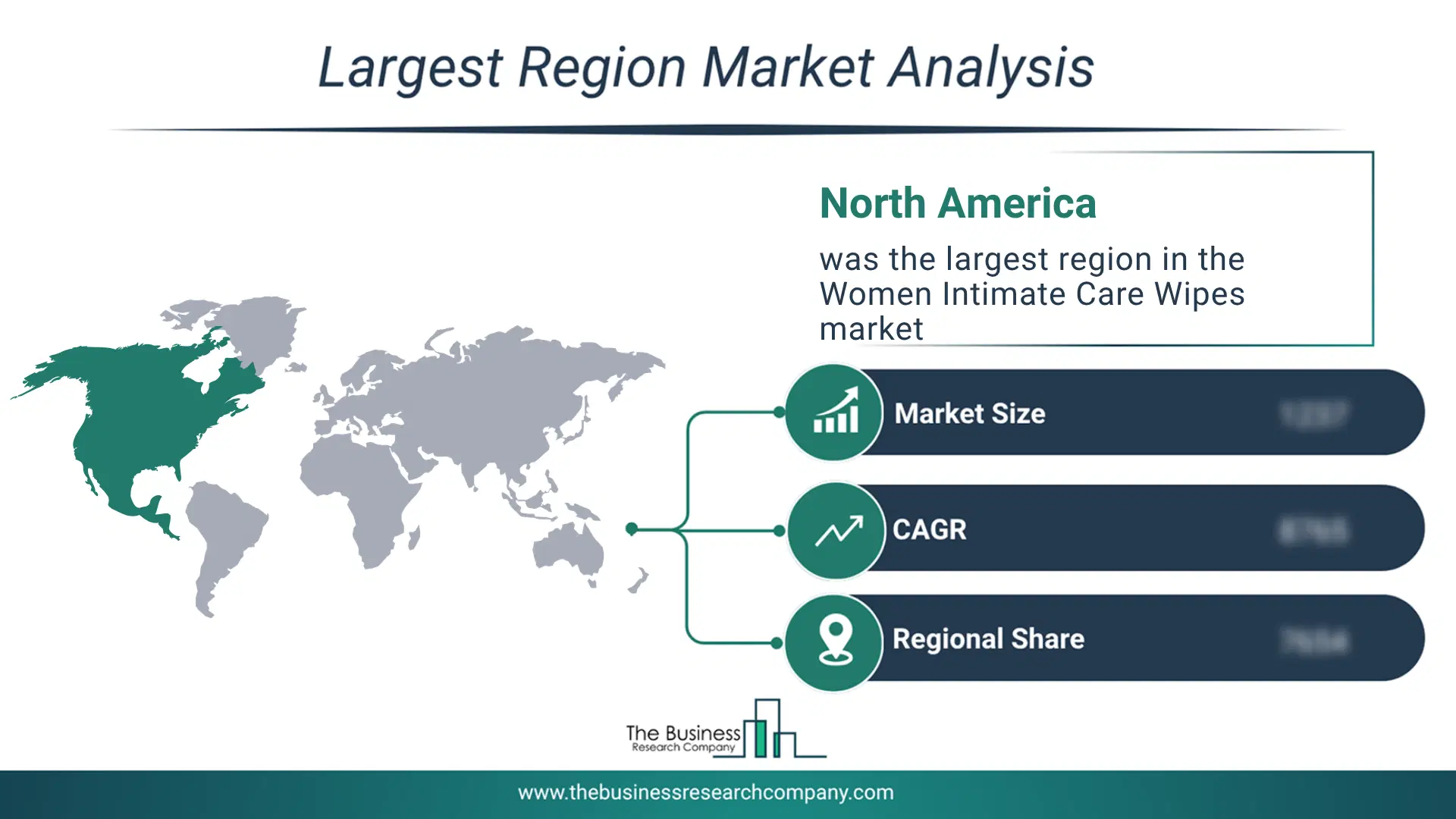
Regional Outlook
North America was the largest region in the women intimate care wipes market in 2025. Asia-Pacific is expected to be the fastest-growing region in the forecast period. The regions covered in this market report are Asia-Pacific, South East Asia, Western Europe, Eastern Europe, North America, South America, Middle East, Africa. The countries covered in this market report are Australia, Brazil, China, France, Germany, India, Indonesia, Japan, Taiwan, Russia, South Korea, UK, USA, Canada, Italy, Spain.What Defines the Women Intimate Care Wipes Market?
The women's intimate care wipes market consists of sales of pH-balanced wipes, sensitive skin wipes, postpartum wipes, and flushable wipes. Values in this market are ‘factory gate’ values, that is, the value of goods sold by the manufacturers or creators of the goods, whether to other entities (including downstream manufacturers, wholesalers, distributors, and retailers) or directly to end customers. The value of goods in this market includes related services sold by the creators of the goods.How is Market Value Defined and Measured?
The market value is defined as the revenues that enterprises gain from the sale of goods and/or services within the specified market and geography through sales, grants, or donations in terms of the currency (in USD unless otherwise specified). The revenues for a specified geography are consumption values that are revenues generated by organizations in the specified geography within the market, irrespective of where they are produced. It does not include revenues from resales along the supply chain, either further along the supply chain or as part of other products.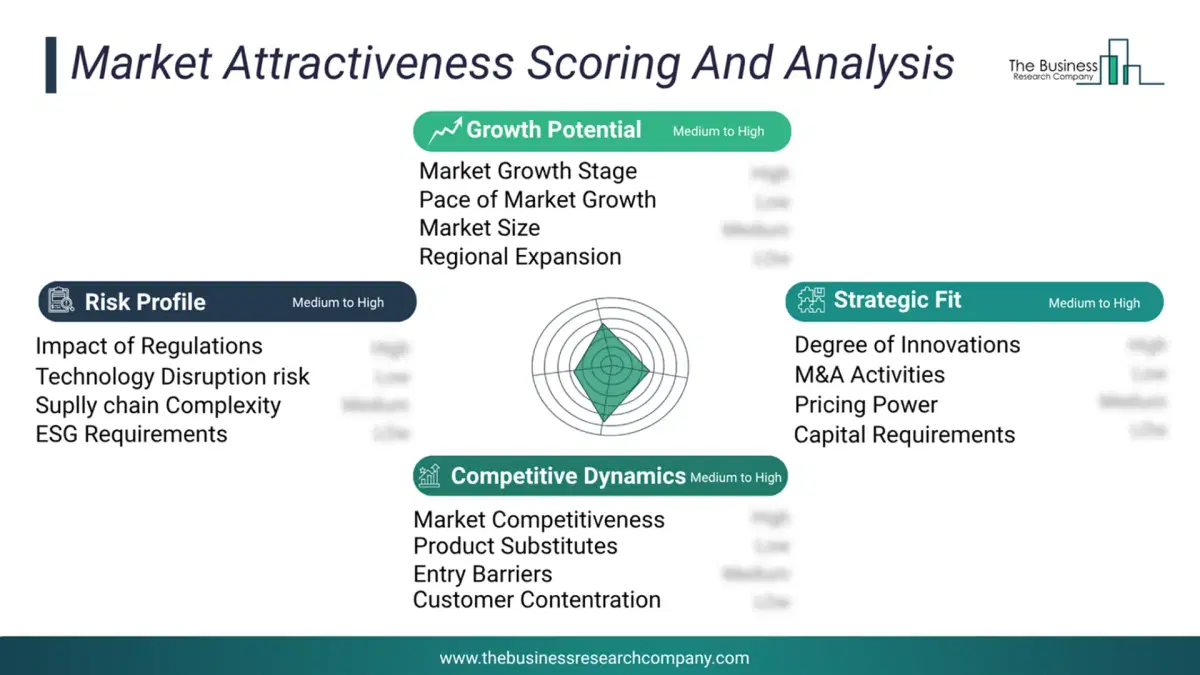
This chart presents market attractiveness based on a quantitative evaluation of growth, competition, strategic alignment, and risk, offering a clear view of opportunity areas for decision-making. This chart is for illustrative purposes; the full report contains the complete analysis.
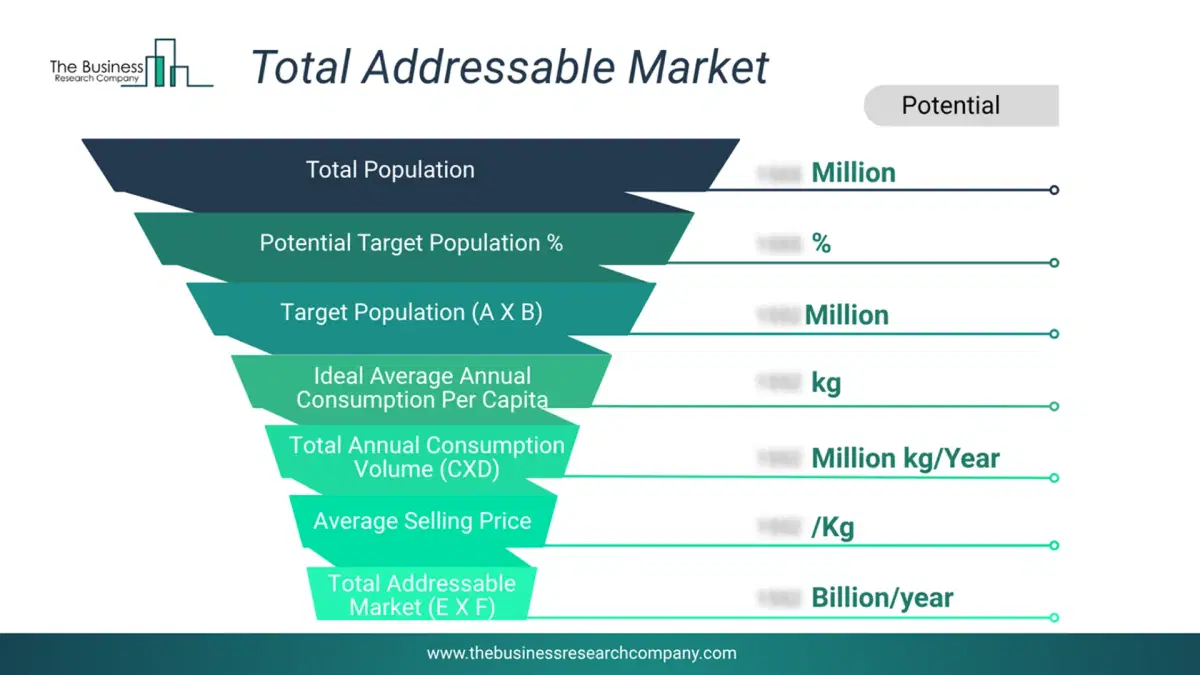
This chart highlights the Total Addressable Market (TAM) by estimating the maximum revenue opportunity using an assumption-driven approach, supporting strategic planning and opportunity sizing across markets. The chart is illustrative; the full report provides a more comprehensive analysis.
What Key Data and Analysis Are Included in the Women Intimate Care Wipes Market Report 2026?
The women intimate care wipes market research report is one of a series of new reports from The Business Research Company that provides market statistics, including Market Report 2026?global market size, regional shares, competitors with the market share, detailed market segments, market trends and opportunities, and any further data you may need to thrive in the women intimate care wipes Market Report 2026? The market research report delivers a complete perspective of everything you need, with an in-depth analysis of the current and future state of the Market Report 2026?Women Intimate Care Wipes Market Report Forecast Analysis
| Report Attribute | Details |
|---|---|
| Market Size Value In 2026 | $6.3 billion |
| Revenue Forecast In 2030 | $7.76 billion |
| Growth Rate | CAGR of 5.9% from 2026 to 2030 |
| Base Year For Estimation | 2025 |
| Actual Estimates/Historical Data | 2020-2025 |
| Forecast Period | 2026 - 2030 |
| Market Representation | Revenue in USD Billion and CAGR from 2026 to 2030 |
| Segments Covered | Product Type, Material, Age Group, Distribution Channel |
| Regional Scope | Asia-Pacific, Western Europe, Eastern Europe, North America, South America, Middle East, Africa |
| Country Scope | The countries covered in the report are Australia, Brazil, China, France, Germany, India, Indonesia, Japan, Taiwan, Russia, South Korea, UK, USA, Canada, Italy, Spain. |
| Key Companies Profiled | Procter & Gamble Co., Johnson & Johnson, Kimberly-Clark Corporation, Reckitt Benckiser Group PLC, Hindustan Unilever Limited, Unicharm Corporation, Equate, Marico Limited, Prestige Consumer Healthcare Inc., Burt's Bees, Veeda Inc., Guy & O'Neill Inc., Seventh Generation Inc., Rael Inc., Cetaphil, The Honey Pot Company, Cora life, Sliquid LLC, SweetSpot Labs LLC, Good Clean Love LLC, Biokleen, Sustain Natural LLC, vagisil, Natracare, La Fresh Group Inc |
| Customization Scope | Request for Customization |
| Pricing And Purchase Options | Explore Purchase Options |