
Construction Equipment Rental Market Report 2026
Global Outlook – By Equipment (Earthmoving, Material Handling, Road Building And Concrete), By Product (Backhoes, Excavators, Loaders, Crawler Dozers, Cranes, Concrete Pumps, Compactors, Transit Mixers, Concrete Mixers), By Application (Residential, Commercial, Industrial) – Market Size, Trends, Strategies, and Forecast to 2030
Construction Equipment Rental Market Overview
• Construction Equipment Rental market size has reached to $109.81 billion in 2025 • Expected to grow to $142.91 billion in 2030 at a compound annual growth rate (CAGR) of 5.4% • Growth Driver: Booming Construction Industry Fuels Growth In Equipment Rental Market • Market Trend: Advancing Equipment Access Through Digital Innovation • North America was the largest region in 2025 and Asia-Pacific is the fastest growing region.Market Gains By 2030 – Top Opportunities By Segment
Market Gain identifies the most promising market opportunities by highlighting the segments or products expected to generate the highest incremental revenue growth over the next five years.
What Is Covered Under Construction Equipment Rental Market?
Construction equipment rental refers to the service of renting out small and large construction equipment required for the execution, completion, and maintenance of construction work. Renting construction equipment saves construction contractors the cost of new equipment, labor costs, maintenance costs, and operational costs. The main construction rental equipment includes earthmoving, material handling, road building, and concrete. Earthmoving construction equipment moves soil and other material on heavy construction sites in preparation for constructing buildings. The different construction equipment rental products include backhoes, excavators, loaders, crawler dozers, cranes, concrete pumps, compactors, transit mixers, and concrete mixers, which are used in residential, commercial, and industrial applications.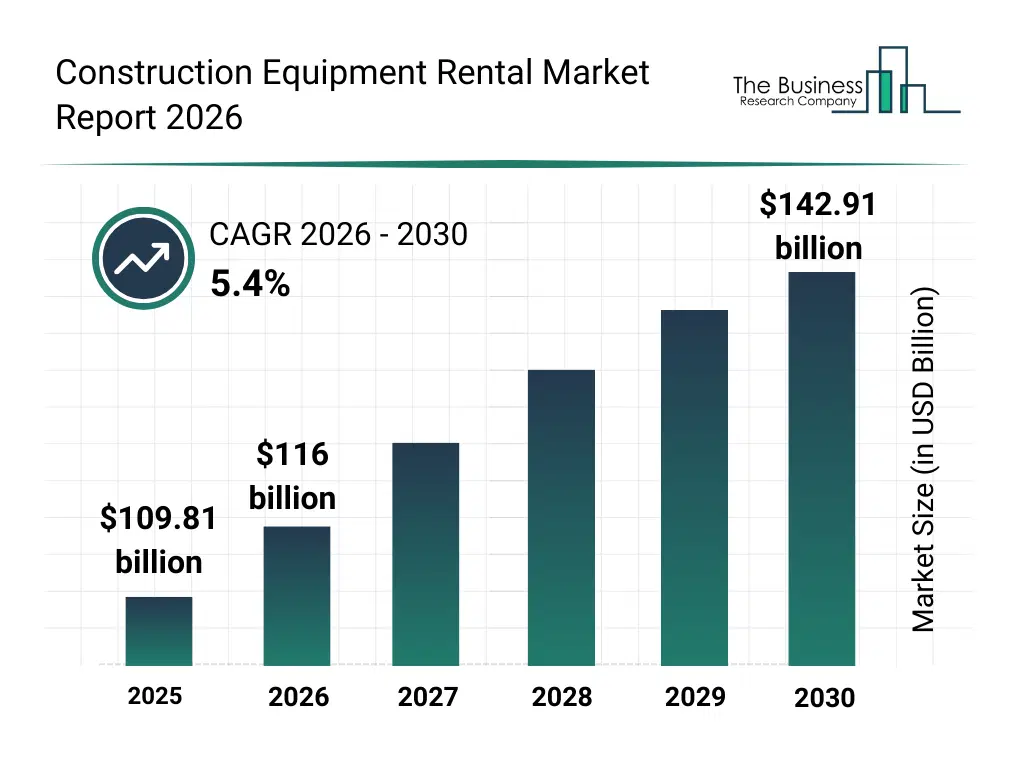
What Is The Construction Equipment Rental Market Size and Share 2026?
The construction equipment rental market size has grown strongly in recent years. It will grow from $109.81 billion in 2025 to $116 billion in 2026 at a compound annual growth rate (CAGR) of 5.6%. The growth in the historic period can be attributed to rising infrastructure development activities, increasing cost burden of equipment ownership, growth of large construction projects, expanding contractor preference for rentals, rising need for flexible equipment availability.What Is The Construction Equipment Rental Market Growth Forecast?
The construction equipment rental market size is expected to see strong growth in the next few years. It will grow to $142.91 billion in 2030 at a compound annual growth rate (CAGR) of 5.4%. The growth in the forecast period can be attributed to growing urban development initiatives, increasing industrial and commercial construction projects, rising focus on reducing capital expenditure, expansion of mega infrastructure investments, strengthening reliance on rental based project execution. Major trends in the forecast period include growing shift toward flexible equipment access models, rising demand for cost efficient construction solutions, increasing adoption of large scale rental fleets, expansion of rental support for infrastructure projects, strengthening focus on operational cost optimization.
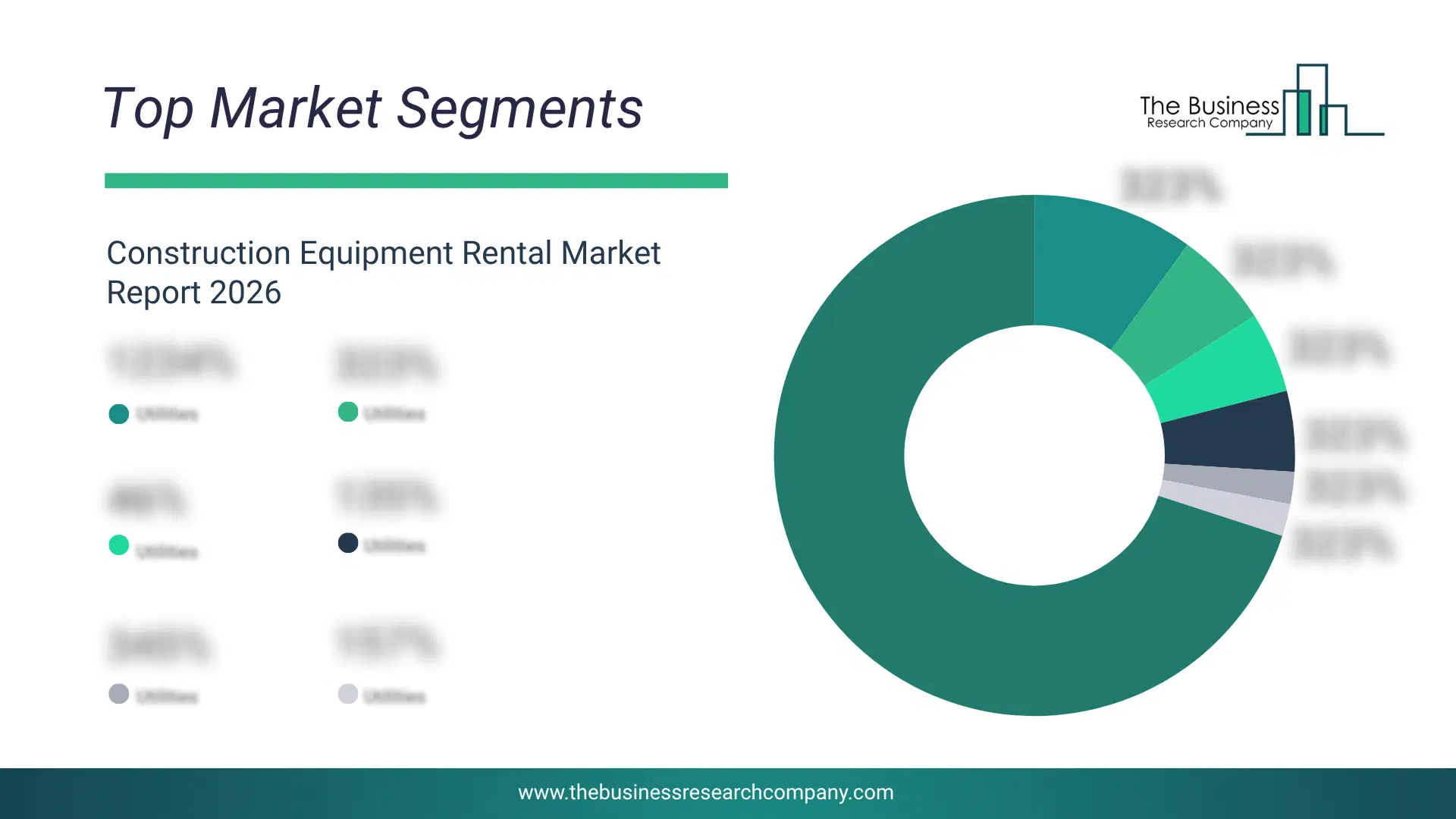
Global Construction Equipment Rental Market Segmentation
1) By Equipment: Earthmoving, Material Handling, Road Building And Concrete 2) By Product: Backhoes, Excavators, Loaders, Crawler Dozers, Cranes, Concrete Pumps, Compactors, Transit Mixers, Concrete Mixers 3) By Application: Residential, Commercial, Industrial Subsegments: 1) By Earthmoving: Excavators, Bulldozers, Backhoe Loaders, Skid Steer Loaders 2) By Material Handling: Forklifts, Telehandlers, Aerial Lifts, Cranes 3) By Road Building And Concrete: Asphalt Pavers, Concrete Mixers, Road Rollers, Concrete Pumps The top segments in the construction equipment rental market will be: • Earthmoving will reach $77.78 Billion by 2030. • Material Handling will reach $38.17 Billion by 2030. • Road Building And Concrete will reach $25.72 Billion by 2030.What Is The Driver Of The Construction Equipment Rental Market?
The increasing construction industry is expected to propel the growth of the construction equipment rental market going forward. Construction activity refers to the rapid expansion of infrastructure development, commercial projects, and residential building that increases the need for cost-efficient equipment access. The construction industry is rising because growing infrastructure investment is driving demand for new buildings, transportation networks, utilities, and urban development projects, creating a surge in construction activity. Construction equipment rental supports the increasing construction industry by providing fast, flexible, and cost-efficient access to a wide range of advanced machinery, enabling contractors to scale operations quickly, reduce capital expenditure, minimize maintenance burdens, and accelerate project timelines to meet rising infrastructure and development demands. For instance, in February 2025, according to US Census Bureau, a US-based government statistical agency, construction spending during December 2024 was estimated at a seasonally adjusted annual rate of $2, 192.2 billion, 4.3 percent above the December 2023 estimate of $2, 101.3 billion. Therefore, the increasing construction industry is driving the construction equipment rental industry.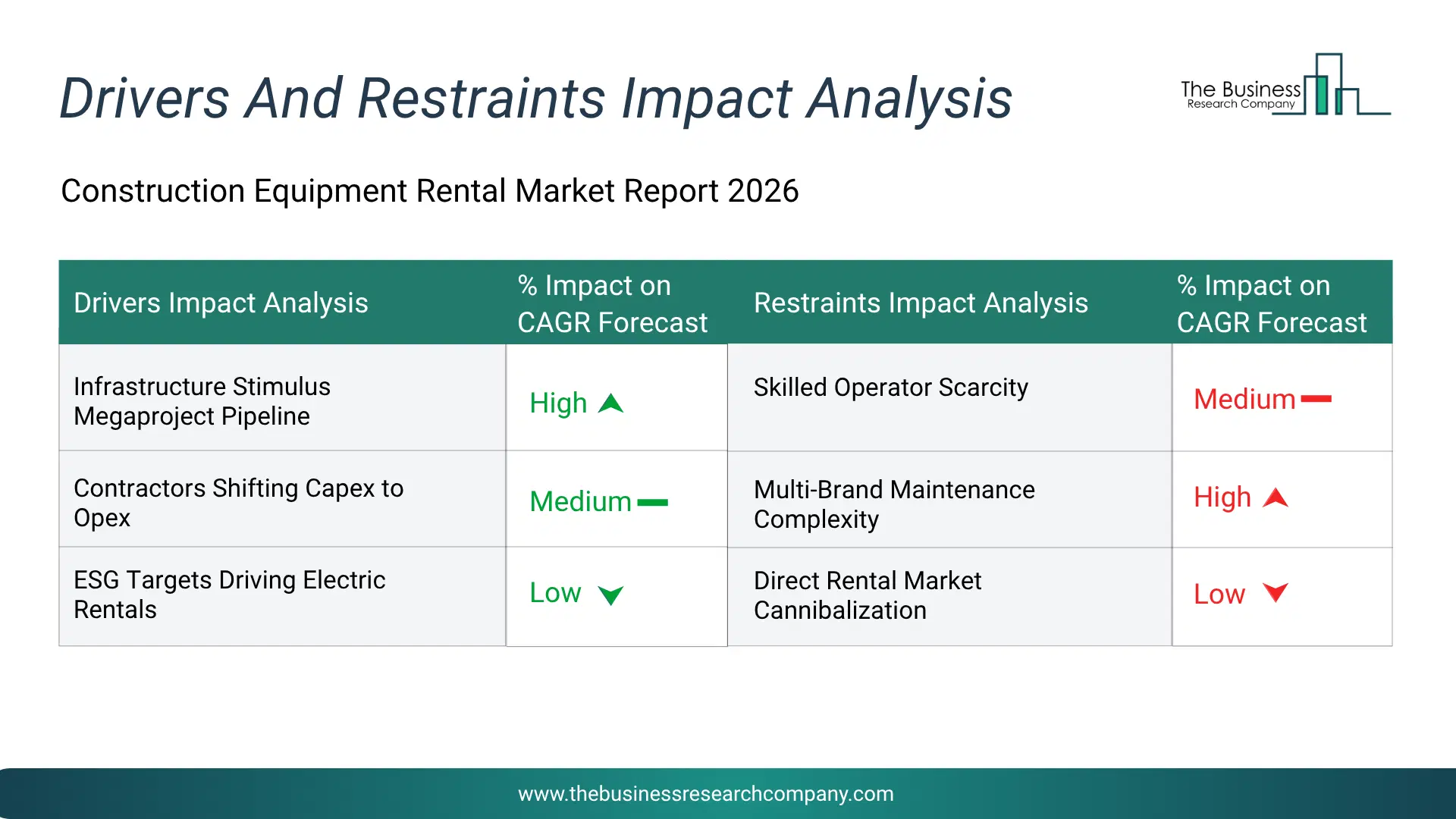
Infographic Chart Showing Key Market Drivers Analysis And Restraints For Construction Equipment Rental Market
The chart presents an impact analysis of key drivers and restraints, quantifying their relative influence on the market's growth rate and helping assess the balance between growth enablers and limiting factors. This chart offers a high-level perspective; the full report contains more detailed insights.
How Will The Drivers Impact Growth In The Global Construction Equipment Rental Market?
• Infrastructure Stimulus Megaproject Pipeline (High) – During the forecast period, the expansion of infrastructure stimulus megaproject pipelines is expected to become a major growth driver for the construction equipment rental market by 2030. Governments across developed and emerging economies are increasing investments in highways, rail corridors, airports, smart cities, energy facilities, and public infrastructure modernization projects. Large-scale construction activities require extensive deployment of heavy equipment for excavation, material transport, grading, and lifting operations, encouraging contractors to rely on rental fleets for operational flexibility and cost optimization. Rental providers are therefore expanding fleet availability and improving equipment accessibility to support growing infrastructure workloads. • Contractors Shifting Capex to Opex (Medium) – During the forecast period, the increasing shift of contractors from capital expenditure to operational expenditure models is expected to emerge as a major factor driving the expansion of the construction equipment rental market by 2030. Construction companies are increasingly preferring rental solutions to avoid large upfront equipment investments, reduce maintenance responsibilities, and improve project-based financial flexibility. Rental models also provide access to technologically advanced machinery without long-term ownership risks, enabling contractors to optimize fleet utilization based on changing project requirements. Rising uncertainty in construction cycles and the need for efficient cash flow management are further strengthening rental adoption across residential, commercial, and industrial projects. • ESG Targets Driving Electric Rentals (Low) – During the forecast period, the growing emphasis on ESG targets and sustainable construction practices is expected to act as a key growth catalyst for the construction equipment rental market by 2030. Construction companies are increasingly adopting electric and low-emission rental equipment to comply with environmental regulations, reduce carbon footprints, and meet green building standards. Rental providers are investing in battery-powered excavators, loaders, and compact equipment to support cleaner jobsite operations and improve energy efficiency. In addition, rising corporate sustainability commitments and stricter urban emission restrictions are accelerating the transition toward environmentally friendly construction fleets.How Will The Restraints Impact Growth In The Global Construction Equipment Rental Market?
• Skilled Operator Scarcity (High) – During the forecast period, the shortage of skilled equipment operators poses a significant restraint on the rental market. Advanced machinery requires trained professionals to operate efficiently and safely, but the availability of such skilled labor is limited. This creates operational bottlenecks and reduces equipment utilization rates. Rental companies may face delays in deployment due to a lack of qualified personnel. Additionally, training new operators involves time and cost, further impacting profitability. In regions with rapid infrastructure growth, this gap becomes even more pronounced. The inability to fully utilize rented equipment reduces customer satisfaction and limits market expansion. Therefore, operator scarcity acts as a critical barrier to growth. • Multi-Brand Maintenance Complexity (Medium) – During the forecast period, the rental companies often manage fleets consisting of multiple brands and equipment types, which leads to maintenance complexity. Each brand has different service requirements, spare parts, and technical specifications, making maintenance operations challenging. This increases downtime and operational costs for rental providers. Technicians must be trained across multiple systems, adding to labor and training expenses. Additionally, sourcing spare parts from different manufacturers can lead to delays. These inefficiencies can impact service quality and customer satisfaction. Over time, high maintenance complexity reduces profitability and scalability. Hence, it acts as a restraint on market efficiency and growth. • Direct Rental Market Cannibalization (Low) – During the forecast period, the emergence of direct rental models by equipment manufacturers and large contractors is creating competitive pressure in the market. OEMs are increasingly offering rental services directly to customers, bypassing traditional rental companies. This leads to market cannibalization and reduced market share for independent rental providers. Additionally, large contractors with in-house fleets may also offer rental services, intensifying competition. Price wars and reduced margins become common in such scenarios. Smaller rental companies struggle to compete with established players offering integrated solutions. This fragmentation weakens overall industry profitability. As a result, direct rental competition acts as a major restraint on market growth.Key Players In The Global Construction Equipment Rental Market
Major companies operating in the construction equipment rental market report are H&E Equipment Services Inc., Maxim Crane Works LLP, Boels Rentals NV, United Rentals Inc., Ashtead Group plc, Loxam Group, Herc Holdings Inc., Kanamoto Co Ltd., Taiyokenki Rental Co. Ltd., Cramo Group, Ramirent PLC, Kiloutou SAS, Speedy Hire plc, Nishio Rent All Co. Ltd., Ahern Rentals Inc., Nikken Corporation, Sunstate Equipment Co. LLC, Neff Rental LLC, BlueLine Rental Holdings Inc., BigRentz Inc., Sunbelt Rentals Inc., Herc Rentals Inc., NES Rentals Holdings Inc., Romco Equipment Co. LLC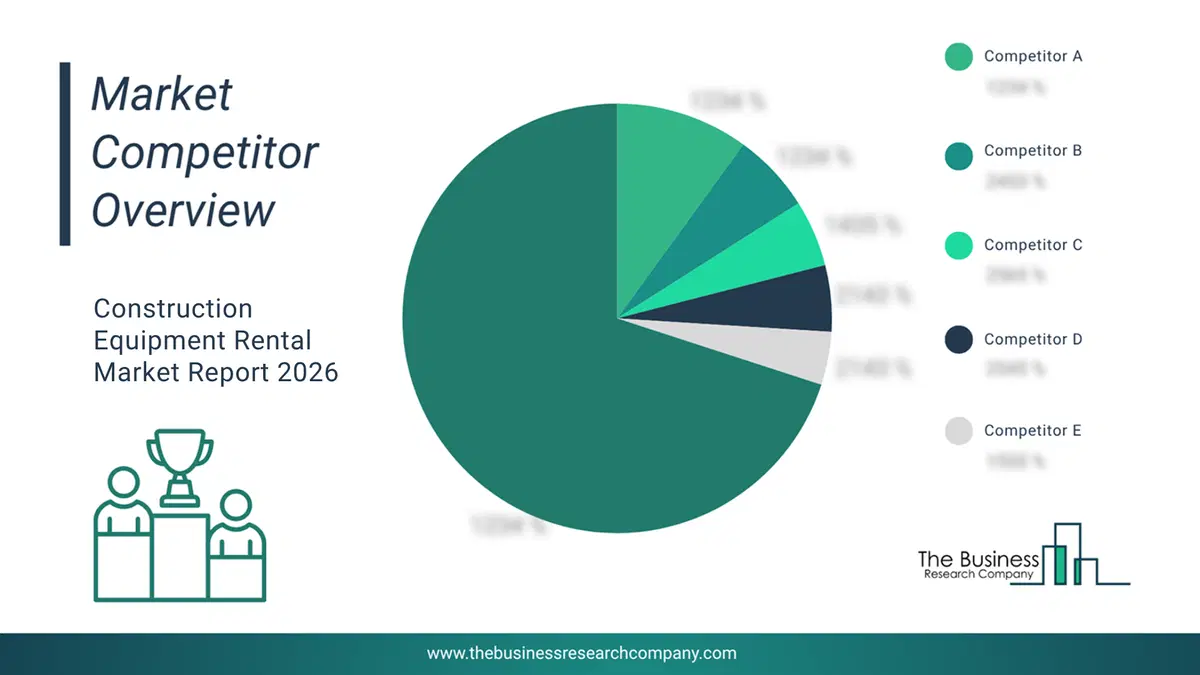
This chart is for illustrative purposes; the full report includes a detailed competitor analysis and comprehensive overview of the top 10 companies in the market.
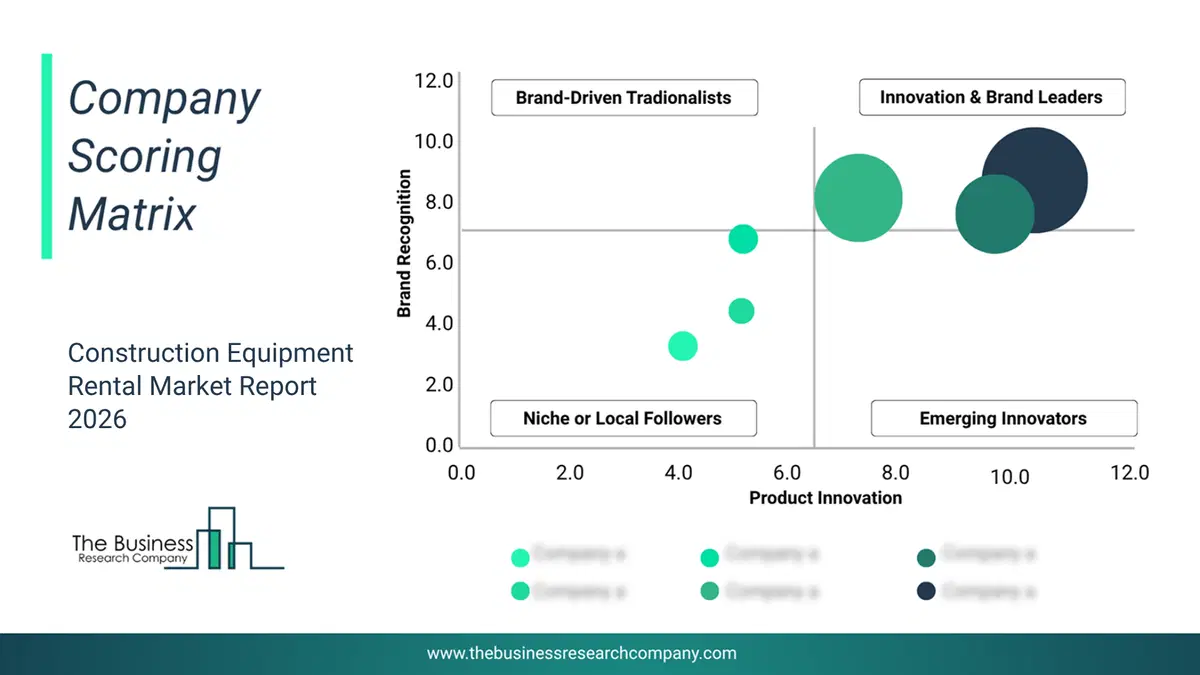
This chart maps companies by product innovation and brand strength, with bubble size indicating relative revenue, helping identify market leaders, challengers, and niche players. This is an illustrative chart; the full report provides a complete and accurate competitive analysis.
Global Construction Equipment Rental Market Trends and Insights
Major companies operating in the construction equipment rental market are focusing on leveraging advanced technology such as machine learning and augmented reality based digital tools to enhance efficiency, decision making and jobsite planning. Machine learning and augmented reality based digital tools are hybrid solutions that use predictive algorithms and real time 3D visual overlays on mobile devices to support rental planning, enabling capabilities such as recommending suitable equipment based on customer order history, jobsite data, seasonality and industry trends and visualising three dimensional models of machines on the jobsite before booking. For instance, in August 2025, United Rentals Inc., a US-based construction equipment rental company, launched Smart Suggestions and Equipment Fit Augmented Reality, a machine learning and augmented reality based digital platform designed to help customers make faster and more confident rental decisions and improve jobsite planning, featuring predictive equipment suggestions that allow users to bypass a full catalogue search and virtual placement of equipment models on the jobsite using a mobile device. Smart Suggestions and Equipment Fit Augmented Reality improve decision making speed, reduce the time required to identify and order the right equipment, and help avoid incorrect equipment selection and layout issues in tight or restricted access areas.What Are Latest Mergers And Acquisitions In The Construction Equipment Rental Market?
In June 2025, Herc Holdings, Inc., a US-based equipment-rental company, acquired H&E Equipment Services for roughly US$ 5.3 billion. With this acquisition Herc aimed to expand its market reach and strengthen its position across top North American rental regions by combining fleets and networks. H&E Equipment Services Inc. is a US-based equipment-rental firm that specializes in providing construction and industrial equipment rental services, including heavy-equipment, aerial-work platforms, cranes, and material-handling gear, to customers in construction and industrial sectors.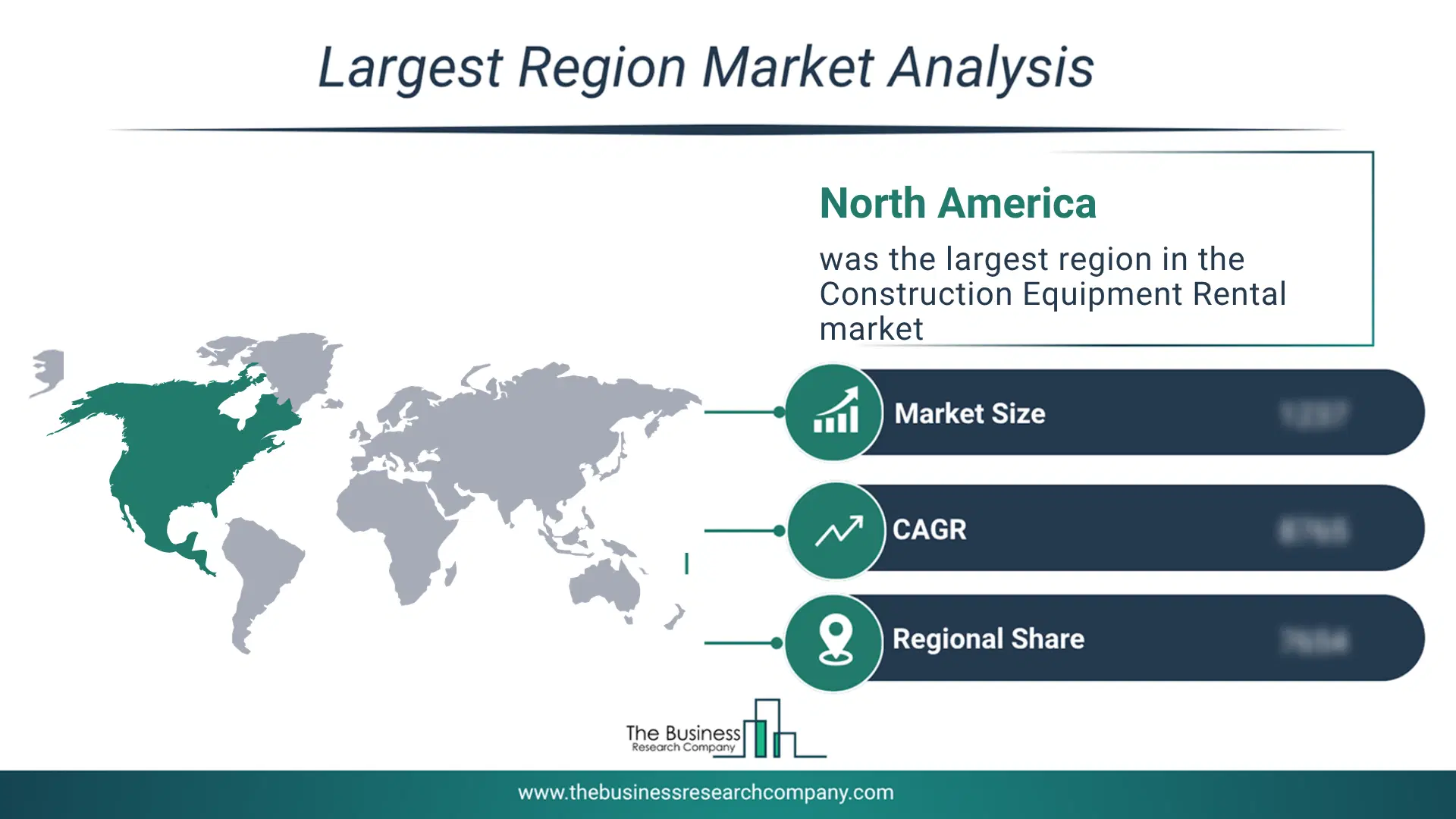
Regional Outlook
North America was the largest region in the construction equipment rental market in 2025.Asia-Pacific is expected to be the fastest-growing region in the forecast period. The regions covered in this market report are Asia-Pacific, South East Asia, Western Europe, Eastern Europe, North America, South America, Middle East, Africa. The countries covered in this market report are Australia, Brazil, China, France, Germany, India, Indonesia, Japan, Taiwan, Russia, South Korea, UK, USA, Canada, Italy, SpainWhat Defines the Construction Equipment Rental Market?
The construction equipment rental market consists of revenues earned by entities that rent out construction-related machinery, equipment, and tools to other contractors and professionals for a flat rate on a daily, weekly, or monthly basis. The market value includes the value of related goods sold by the service provider or included within the service offering. Only goods and services traded between entities or sold to end consumers are included.How is Market Value Defined and Measured?
The market value is defined as the revenues that enterprises gain from the sale of goods and/or services within the specified market and geography through sales, grants, or donations in terms of the currency (in USD unless otherwise specified). The revenues for a specified geography are consumption values that are revenues generated by organizations in the specified geography within the market, irrespective of where they are produced. It does not include revenues from resales along the supply chain, either further along the supply chain or as part of other products.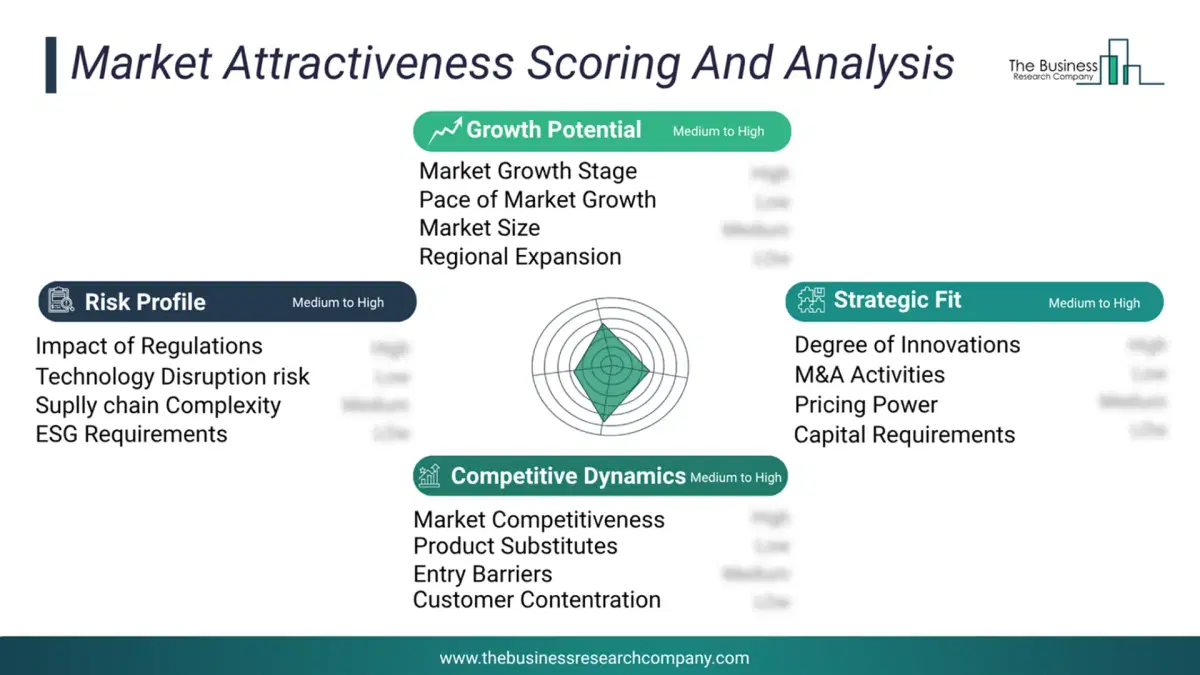
This chart presents market attractiveness based on a quantitative evaluation of growth, competition, strategic alignment, and risk, offering a clear view of opportunity areas for decision-making. This chart is for illustrative purposes; the full report contains the complete analysis.
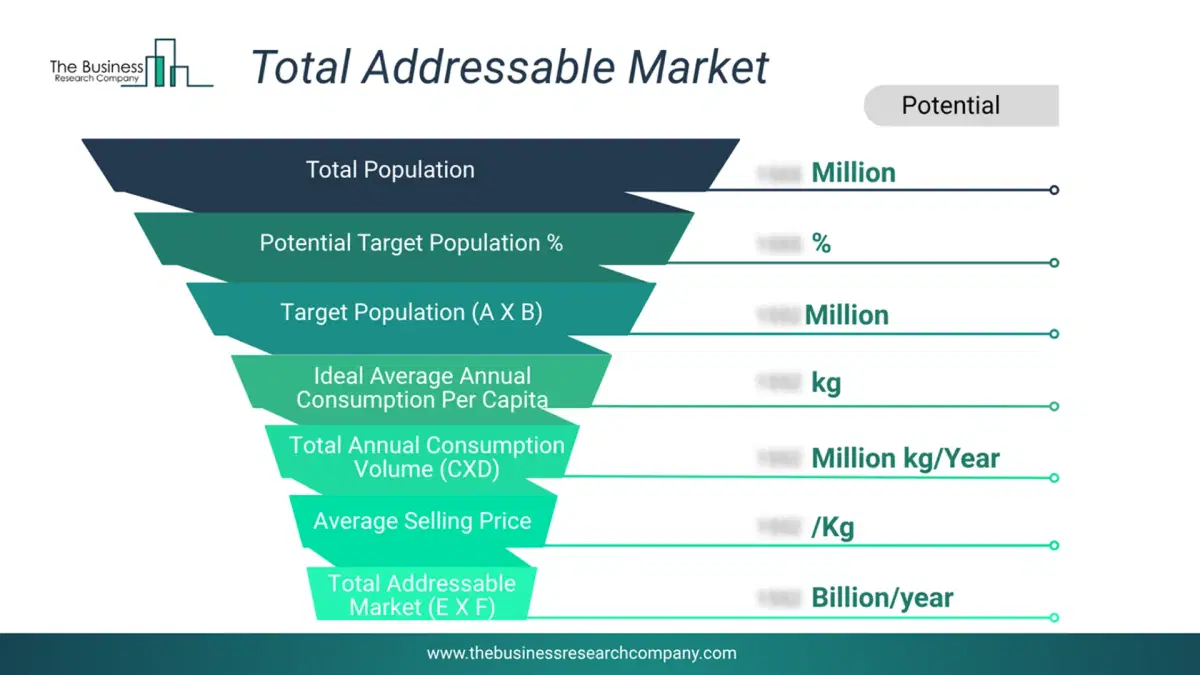
This chart highlights the Total Addressable Market (TAM) by estimating the maximum revenue opportunity using an assumption-driven approach, supporting strategic planning and opportunity sizing across markets. The chart is illustrative; the full report provides a more comprehensive analysis.
What Key Data and Analysis Are Included in the Construction Equipment Rental Market Report 2026?
The construction equipment rental market research report is one of a series of new reports from The Business Research Company that provides market statistics, including industry global market size, regional shares, competitors with the market share, detailed market segments, market trends and opportunities, and any further data you may need to thrive in the construction equipment rental industry. The market research report delivers a complete perspective of everything you need, with an in-depth analysis of the current and future state of the industry.Construction Equipment Rental Market Report Forecast Analysis
| Report Attribute | Details |
|---|---|
| Market Size Value In 2026 | $116 billion |
| Revenue Forecast In 2030 | $142.91 billion |
| Growth Rate | CAGR of 5.6% from 2026 to 2030 |
| Base Year For Estimation | 2025 |
| Actual Estimates/Historical Data | 2020-2025 |
| Forecast Period | 2026 - 2030 |
| Market Representation | Revenue in USD Billion and CAGR from 2026 to 2030 |
| Segments Covered | Equipment, Product, Application |
| Regional Scope | Asia-Pacific, Western Europe, Eastern Europe, North America, South America, Middle East, Africa |
| Country Scope | The countries covered in the report are Australia, Brazil, China, France, Germany, India, Indonesia, Japan, Taiwan, Russia, South Korea, UK, USA, Canada, Italy, Spain. |
| Key Companies Profiled | H&E Equipment Services Inc., Maxim Crane Works LLP, Boels Rentals NV, United Rentals Inc., Ashtead Group plc, Loxam Group, Herc Holdings Inc., Kanamoto Co Ltd., Taiyokenki Rental Co. Ltd., Cramo Group, Ramirent PLC, Kiloutou SAS, Speedy Hire plc, Nishio Rent All Co. Ltd., Ahern Rentals Inc., Nikken Corporation, Sunstate Equipment Co. LLC, Neff Rental LLC, BlueLine Rental Holdings Inc., BigRentz Inc., Sunbelt Rentals Inc., Herc Rentals Inc., NES Rentals Holdings Inc., Romco Equipment Co. LLC |
| Customization Scope | Request for Customization |
| Pricing And Purchase Options | Explore Purchase Options |