
Drip Irrigation Market Report 2026
Global Outlook – By Dripper (Inline Emitters, Online Emitters), By Component (Filters, Drip Pipes, Emitters, Valves, Pressure Gauge, Fittings, Other Components), By Crop (Field Crops, Fruit and Nuts, Vegetable Crops, Other Crops), By Application (Surface Application, Subsurface Application) – Market Size, Trends, Strategies, and Forecast to 2030
Drip Irrigation Market Overview
• Drip Irrigation market size has reached to $8.05 billion in 2025 • Expected to grow to $13.61 billion in 2030 at a compound annual growth rate (CAGR) of 11% • Growth Driver: Growing Demand For Agricultural Products Fuels Drip Irrigation Market Expansion • Market Trend: A Revolutionary Anti-Clogging Drip Irrigation System For Enhanced Agricultural Efficiency • Asia-Pacific was the largest region in 2025.Market Gains By 2030 – Top Opportunities By Segment
Market Gain identifies the most promising market opportunities by highlighting the segments or products expected to generate the highest incremental revenue growth over the next five years.
What Is Covered Under Drip Irrigation Market?
Drip irrigation refers to a particular sort of micro-irrigation system that involves planting emitter-equipped tubing next to the plants. Additionally, it is known as trickling irrigation. The types of drippers in drip irrigation are inline emitters and online emitters. Inline emitters refer to a crucial component of the dripping laterals and are developing ducts that are smooth and bump-free. The component involved are filters, drip pipes, emitters, valves, pressure gauges, fittings, and other components that are used for various crops such as field crops, fruit and nuts, vegetable crops, and others for surface application, and subsurface application.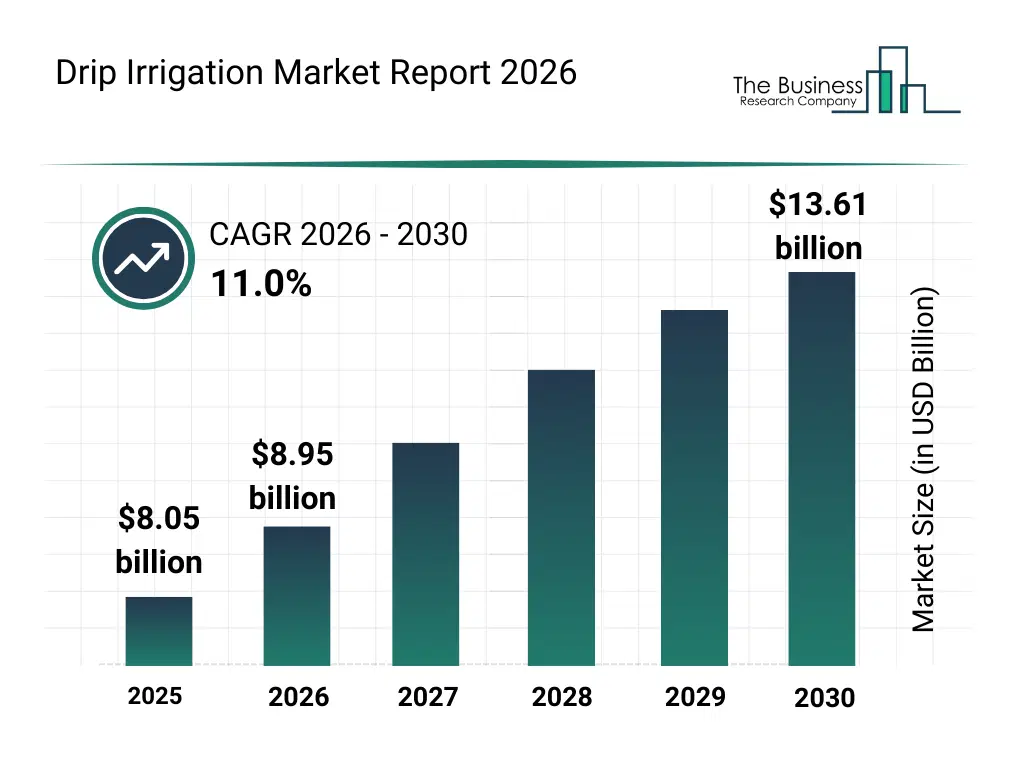
What Is The Drip Irrigation Market Size and Share 2026?
The drip irrigation market size has grown rapidly in recent years. It will grow from $8.05 billion in 2025 to $8.95 billion in 2026 at a compound annual growth rate (CAGR) of 11.2%. The growth in the historic period can be attributed to increasing agricultural water scarcity, growth in high-value crop cultivation, rising adoption of micro-irrigation practices, availability of affordable drip components, expansion of government irrigation programs.What Is The Drip Irrigation Market Growth Forecast?
The drip irrigation market size is expected to see rapid growth in the next few years. It will grow to $13.61 billion in 2030 at a compound annual growth rate (CAGR) of 11.0%. The growth in the forecast period can be attributed to increasing investments in smart agriculture technologies, rising demand for sustainable farming practices, expansion of commercial horticulture, growing focus on climate-resilient irrigation, increased adoption of automation in irrigation. Major trends in the forecast period include increasing adoption of precision drip irrigation systems, rising use of pressure-compensating emitters, growing integration of smart irrigation controls, expansion of subsurface drip applications, enhanced focus on water conservation.
Global Drip Irrigation Market Segmentation
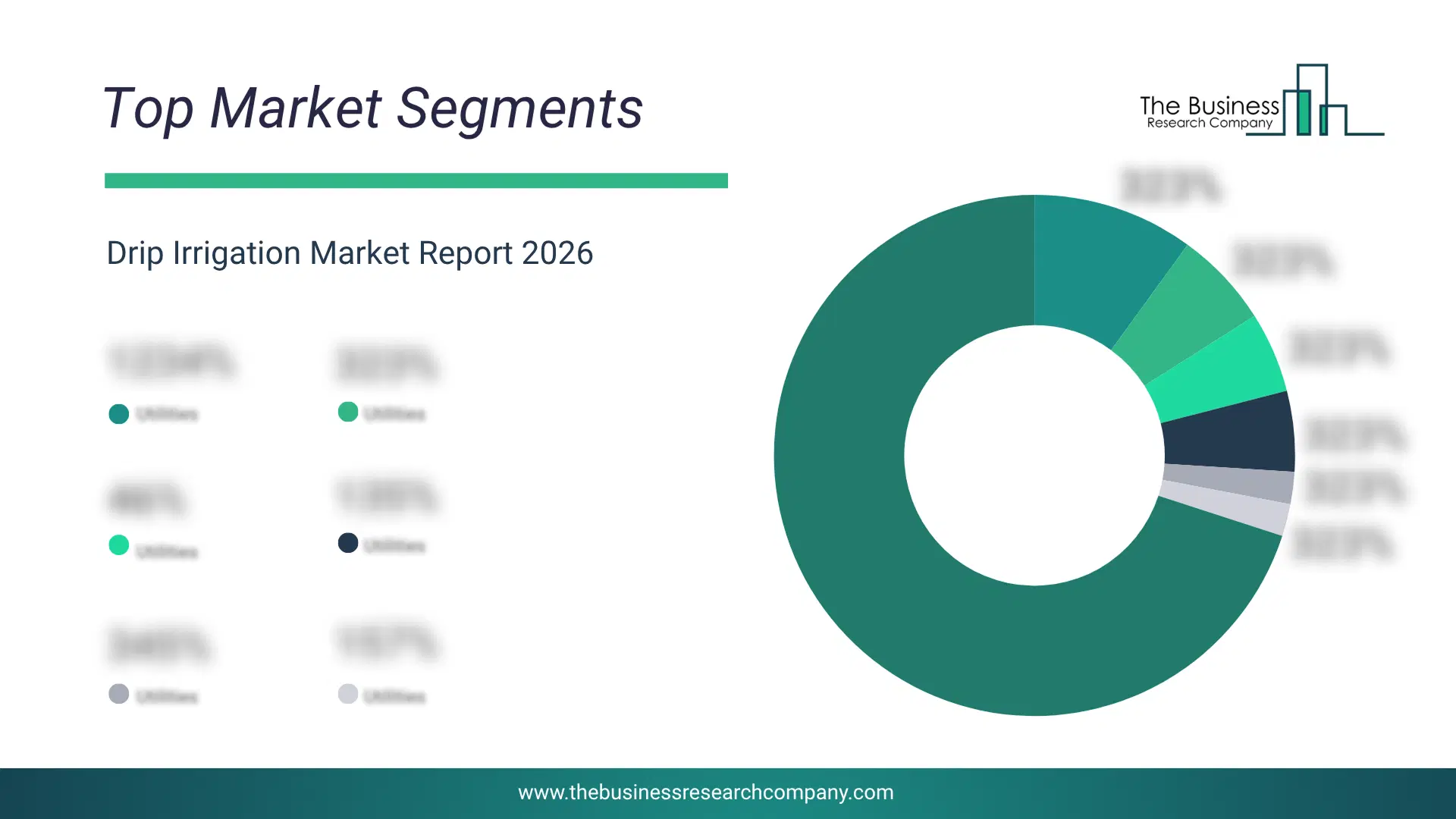
1) By Dripper: Inline Emitters, Online Emitters 2) By Component: Filters, Drip Pipes, Emitters, Valves, Pressure Gauge, Fittings, Other Components 3) By Crop: Field Crops, Fruit and Nuts, Vegetable Crops, Other Crops 4) By Application: Surface Application, Subsurface Application Subsegments: 1) By Inline Emitters: Pressure Compensating Inline Emitters, Non-Pressure Compensating Inline Emitters 2) By Online Emitters: Pressure Compensating Online Emitters, Non-Pressure Compensating Online Emitters The top segments in the drip irrigation market will be: • Inline Emitters will reach $10 Billion by 2030. • Online Emitters will reach $4 Billion by 2030.What Is The Driver Of The Drip Irrigation Market?
Increasing demand for agricultural products is expected to propel the growth of the drip irrigation market going forward. Agricultural products refer to any raw or processed agricultural product, including those made from cattle or any agricultural commodity. Drip irrigation is used to deliver water and nutrients directly to the plant's root zone to increase crop yields through improved water and fertility management to meet the demand for agricultural products. For instance, in April 2025, according to the U.S. Department of Agriculture (USDA), a US-based organization, U.S. agricultural exports rose by $1.8 billion, or 1 percent, compared to 2023, marking the third-highest level ever recorded. Therefore, increasing demand for agricultural products is driving the growth of the drip irrigation industry.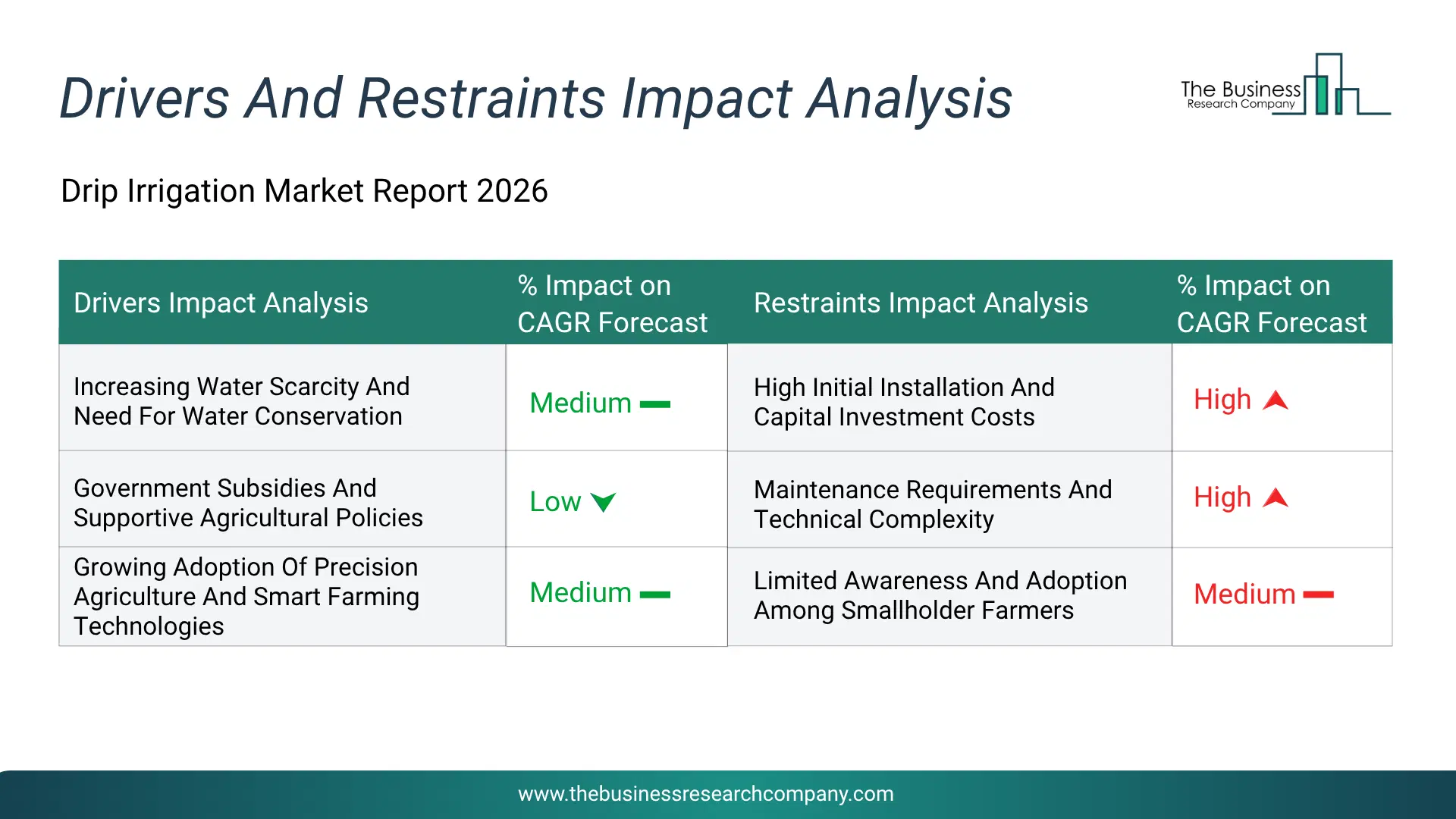
Infographic Chart Showing Key Market Drivers Analysis And Restraints For Drip Irrigation Market
The chart presents an impact analysis of key drivers and restraints, quantifying their relative influence on the market's growth rate and helping assess the balance between growth enablers and limiting factors. This chart offers a high-level perspective; the full report contains more detailed insights.
How Will The Drivers Impact Growth In The Global Drip Irrigation Market?
• Increasing Water Scarcity And Need For Water Conservation (Medium) – During the forecast period, the increasing water scarcity and need for water conservation are expected to emerge as a major factor driving the expansion of the drip irrigation market by 2030. rising drought conditions, declining groundwater reserves, and changing climate patterns are encouraging farmers to adopt irrigation systems that deliver water directly to crop root zones with minimal losses. drip irrigation improves irrigation efficiency, supports effective fertigation, enhances crop productivity, and reduces overall water consumption, making it a preferred solution for sustainable agriculture. • Government Subsidies And Supportive Agricultural Policies (Low) – During the forecast period, the government subsidies and supportive agricultural policies are expected to emerge as a major factor driving the expansion of the drip irrigation market by 2030. financial incentives, low-interest loans, tax benefits, and micro-irrigation promotion programs are reducing the upfront investment required for farmers to install modern irrigation systems. in addition, government initiatives promoting climate-resilient farming, food security, and efficient resource utilization are encouraging wider adoption of drip irrigation technologies across agricultural regions. • Growing Adoption Of Precision Agriculture And Smart Farming Technologies (Medium) – During the forecast period, the growing adoption of precision agriculture and smart farming technologies is expected to act as a key growth catalyst for the drip irrigation market by 2030. integration with IoT sensors, automated irrigation controllers, GPS-based field mapping, weather monitoring systems, and soil moisture sensors enables highly precise water and nutrient application based on real-time crop requirements. these capabilities improve operational efficiency, reduce input costs, and enhance crop quality while supporting environmentally sustainable farming practices.How Will The Restraints Impact Growth In The Global Drip Irrigation Market?
• High Initial Installation And Capital Investment Costs (Medium) – During the forecast period, high Initial Installation And Capital Investment Costs continue to be one of the most significant restraints limiting widespread adoption of drip irrigation systems. Establishing a complete drip irrigation network requires considerable investment in components such as drip lines, emitters, filtration units, pumps, pressure regulators, control valves, connectors, fertigation equipment, and automated monitoring systems. The total installation cost becomes even higher for large agricultural fields or orchards requiring customized system designs. Although drip irrigation provides long-term savings through reduced water consumption, improved fertilizer efficiency, and higher crop productivity, the substantial upfront expenditure discourages many farmers, particularly those with limited financial resources. Smallholder farmers in developing economies often face challenges in obtaining affordable financing or agricultural credit, delaying investment decisions despite recognizing the long-term benefits. Consequently, the high capital requirement remains a major barrier preventing faster market penetration across price-sensitive agricultural regions. • Maintenance Requirements And Technical Complexity (Low) – During the forecast period, maintenance Requirements And Technical Complexity present an ongoing challenge for farmers adopting drip irrigation systems. To maintain efficient operation, drip irrigation networks require regular inspection, filter cleaning, flushing of pipelines, pressure regulation, emitter maintenance, and periodic replacement of damaged components. Emitters are particularly susceptible to clogging caused by suspended particles, mineral deposits, algae, bacteria, or fertilizer residues, which can reduce irrigation uniformity and negatively impact crop growth if left untreated. Additionally, successful system management requires technical knowledge regarding irrigation scheduling, fertigation practices, pressure balancing, and equipment calibration. Many small-scale farmers lack access to adequate technical training, extension services, or maintenance support, increasing the likelihood of operational issues and reduced system efficiency. The additional maintenance responsibilities and technical expertise required can discourage adoption, particularly in rural regions with limited agricultural advisory services and infrastructure. • Limited Awareness And Adoption Among Smallholder Farmers (Medium) – During the forecast period, limited Awareness And Adoption Among Smallholder Farmers continues to restrict the growth potential of the drip irrigation market, especially in developing countries where traditional irrigation methods remain dominant. Many farmers are unfamiliar with the operational advantages of drip irrigation, including water conservation, improved fertilizer utilization, higher crop yields, and long-term cost savings. Misconceptions regarding installation complexity, maintenance requirements, and system affordability often discourage investment, even when government subsidies are available. Furthermore, inadequate agricultural extension programs, limited demonstration projects, insufficient technical training, and restricted access to reliable information reduce confidence in adopting advanced irrigation technologies. In several rural regions, fragmented landholdings and low levels of mechanization further slow modernization efforts. Unless awareness campaigns, farmer education initiatives, and technical support networks are strengthened, the adoption rate among smallholder farmers is expected to remain slower than the overall market potential, thereby restraining broader market expansion.Key Players In The Global Drip Irrigation Market
Major companies operating in the drip irrigation market are The Toro Company, Valmont Industries Inc., Netafim Limited, Jain Irrigation Systems Ltd., Rain Bird Corporation, Rivulis Irrigation Ltd., Naandan Jain Irrigation Ltd., Eurodrip S.A., Irritec S.p.A., DripWorks Inc., Chinadrip Irrigation Equipment Co. Ltd., Elgo Irrigation Ltd., Antelco Pty. Ltd., Microjet Irrigation Systems, EPC Industries Limited, Sistema Azud S.A., Shanghai Huawei Water Saving Irrigation Corp., Metzer Group, KSNM DRIP, Raindrip Inc., Anupam Agri Industries Ltd.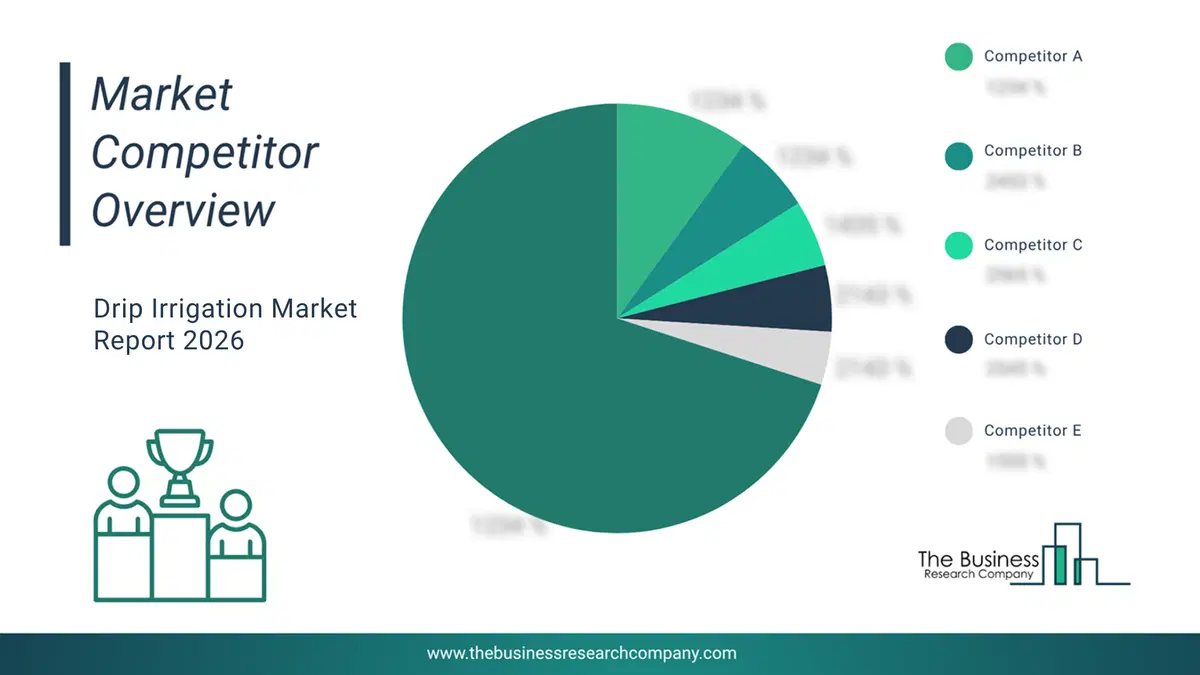
This chart is for illustrative purposes; the full report includes a detailed competitor analysis and comprehensive overview of the top 10 companies in the market.
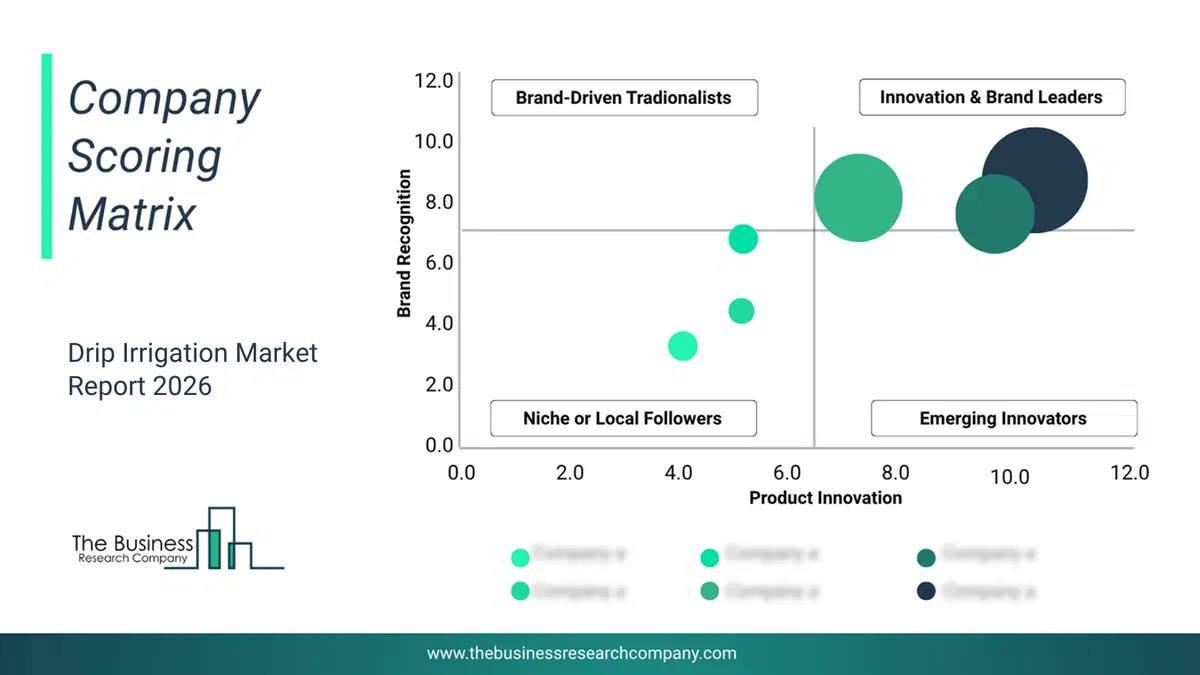
This chart maps companies by product innovation and brand strength, with bubble size indicating relative revenue, helping identify market leaders, challengers, and niche players. This is an illustrative chart; the full report provides a complete and accurate competitive analysis.
Global Drip Irrigation Market Trends and Insights
Major companies operating in the drip irrigation market are focused on operating advanced technology, such as advanced anti-clogging technology, to sustain their position in the market. Advanced Anti-Clogging Technology refers to innovative mechanisms and designs implemented in drip irrigation systems to prevent the buildup of debris, sediment, and organic matter in the emitters and tubing.Advanced Anti-Clogging Technology is used in drip irrigation systems to prevent blockages, ensuring consistent water flow and reducing the need for frequent maintenance. For instance, in October 2023, Netafim, an India-based technology company, launched Toofan. This is a cutting-edge anti-clogging drip irrigation system designed to enhance agricultural efficiency across the country. This innovative technology aims to transform farming practices by providing optimal water and nutrient delivery while reducing operational costs for farmers. The TurbuNext technology integrated into Toofan features a unique labyrinth design that effectively moves debris out of the dripper, preventing clogging.What Are Latest Mergers And Acquisitions In The Drip Irrigation Market?
In January 2023, CropX Technologies, a US-based technology company, acquired Tule Technologies for an undisclosed amount. The acquisition is expected to help CropX Technologies expand its market presence in California and enhance its solutions for specialty crops and drip irrigation. Tule Technologies is a US-based precision irrigation company that specializes in providing irrigation solutions.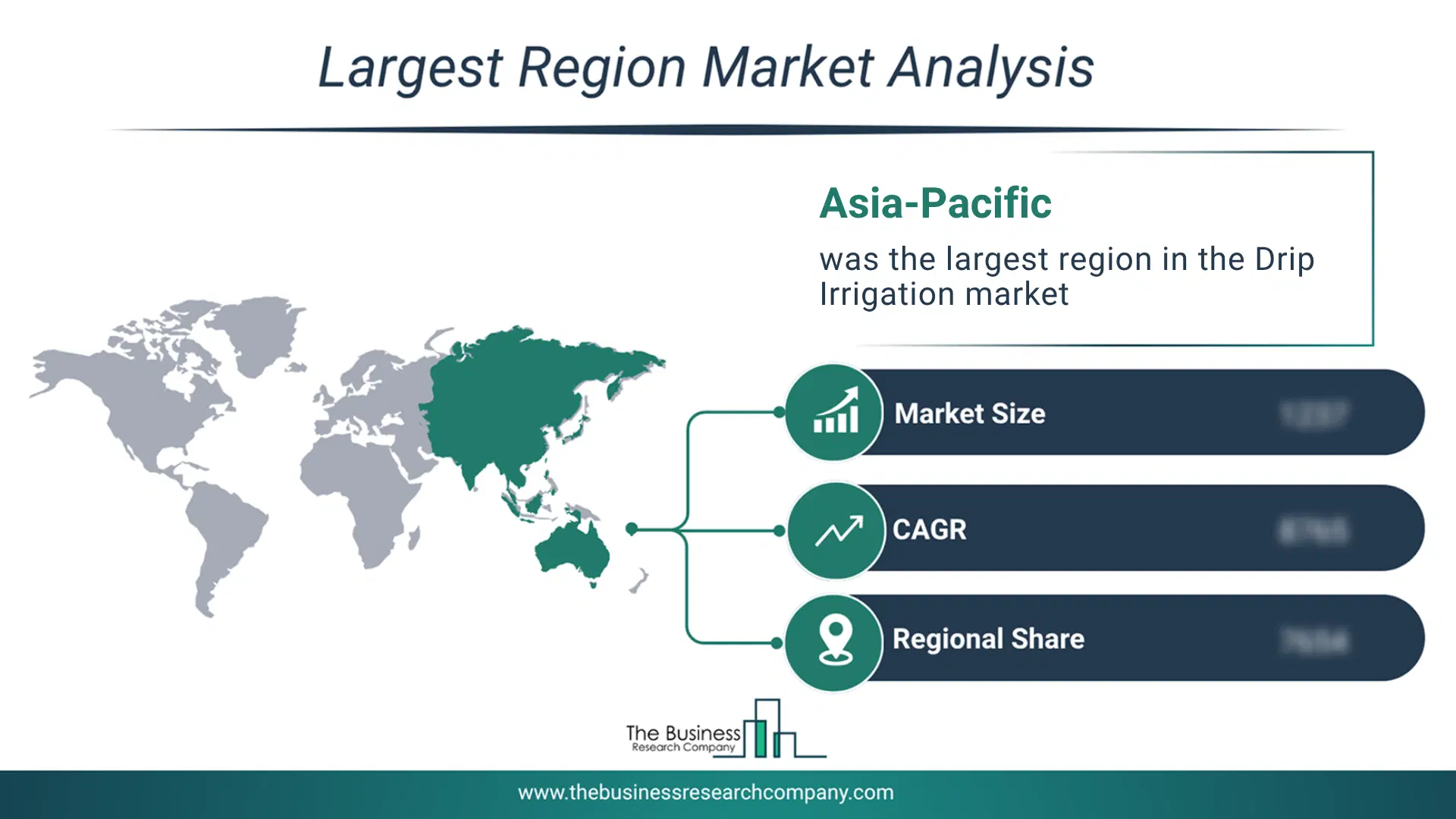
Regional Outlook
Asia-Pacific was the largest region in the drip irrigation market share in 2025. The regions covered in this market report are Asia-Pacific, South East Asia, Western Europe, Eastern Europe, North America, South America, Middle East, Africa The countries covered in this market report are Australia, Brazil, China, France, Germany, India, Indonesia, Japan, Taiwan, Russia, South Korea, UK, USA, Canada, Italy, Spain.What Defines the Drip Irrigation Market?
The drip irrigation market consist of sales of mainline, sub mains, lateral, drippers, filter systems and small fittings and accessories used in drip irrigation method. Values in this market are ‘factory gate’ values, that is the value of goods sold by the manufacturers or creators of the goods, whether to other entities (including downstream manufacturers, wholesalers, distributors and retailers) or directly to end customers. The value of goods in this market includes related services sold by the creators of the goods.How is Market Value Defined and Measured?
The market value is defined as the revenues that enterprises gain from the sale of goods and/or services within the specified market and geography through sales, grants, or donations in terms of the currency (in USD unless otherwise specified). The revenues for a specified geography are consumption values that are revenues generated by organizations in the specified geography within the market, irrespective of where they are produced. It does not include revenues from resales along the supply chain, either further along the supply chain or as part of other products.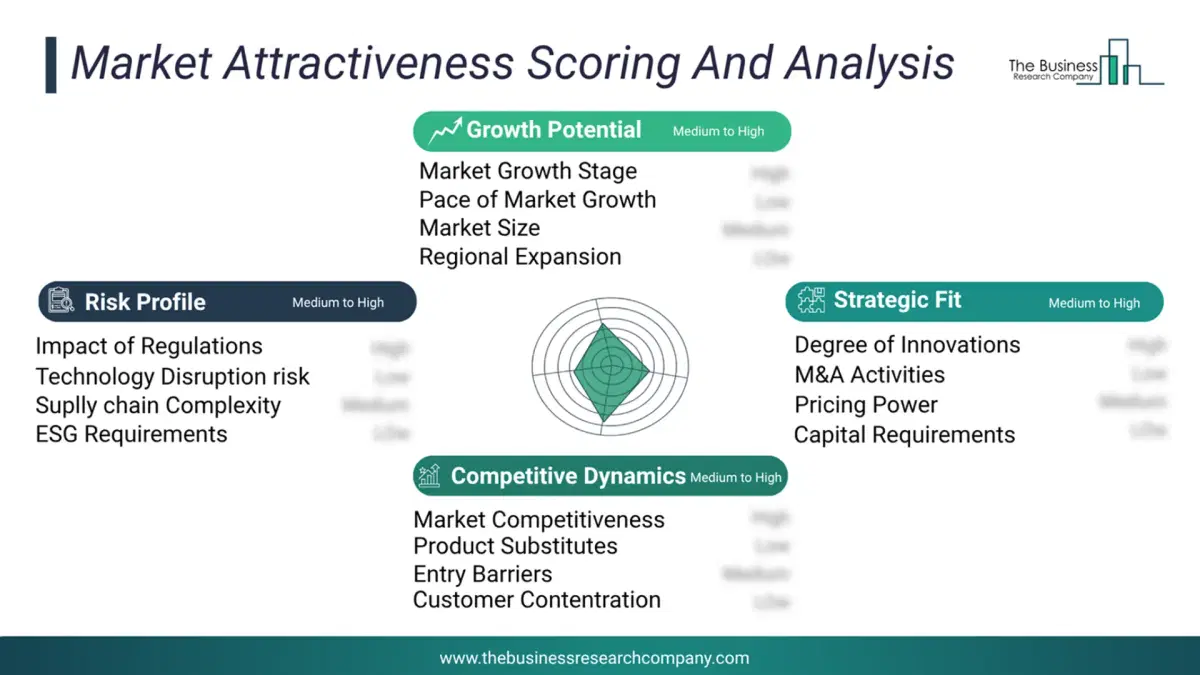
This chart presents market attractiveness based on a quantitative evaluation of growth, competition, strategic alignment, and risk, offering a clear view of opportunity areas for decision-making. This chart is for illustrative purposes; the full report contains the complete analysis.
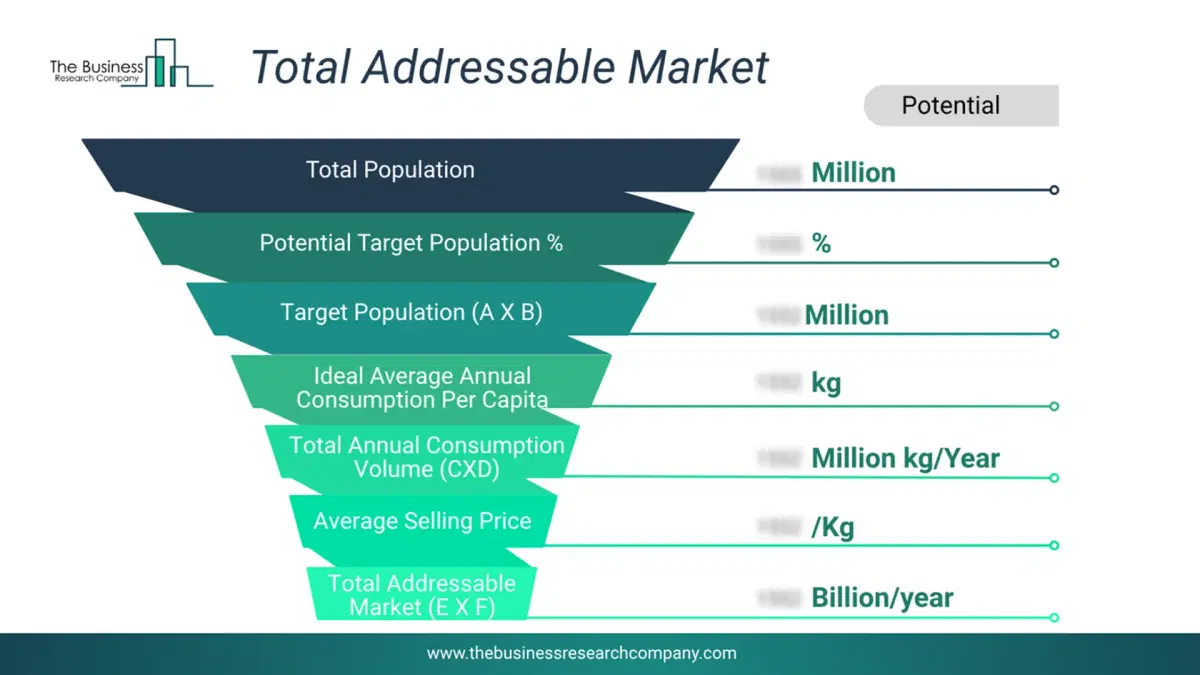
This chart highlights the Total Addressable Market (TAM) by estimating the maximum revenue opportunity using an assumption-driven approach, supporting strategic planning and opportunity sizing across markets. The chart is illustrative; the full report provides a more comprehensive analysis.
What Key Data and Analysis Are Included in the Drip Irrigation Market Report 2026?
The drip irrigation market research report is one of a series of new reports from The Business Research Company that provides market statistics, including industry global market size, regional shares, competitors with the market share, detailed market segments, market trends and opportunities, and any further data you may need to thrive in the drip irrigation industry. The market research report delivers a complete perspective of everything you need, with an in-depth analysis of the current and future state of the industry.Drip Irrigation Market Report Forecast Analysis
| Report Attribute | Details |
|---|---|
| Market Size Value In 2026 | $8.95 billion |
| Revenue Forecast In 2030 | $13.61 billion |
| Growth Rate | CAGR of 11% from 2026 to 2030 |
| Base Year For Estimation | 2025 |
| Actual Estimates/Historical Data | 2020-2025 |
| Forecast Period | 2026 - 2030 |
| Market Representation | Revenue in USD Billion and CAGR from 2026 to 2030 |
| Segments Covered | Dripper, Component, Crop, Application |
| Regional Scope | Asia-Pacific, Western Europe, Eastern Europe, North America, South America, Middle East, Africa |
| Country Scope | The countries covered in the report are Australia, Brazil, China, France, Germany, India, Indonesia, Japan, Taiwan, Russia, South Korea, UK, USA, Canada, Italy, Spain. |
| Key Companies Profiled | The Toro Company, Valmont Industries Inc., Netafim Limited, Jain Irrigation Systems Ltd., Rain Bird Corporation, Rivulis Irrigation Ltd., Naandan Jain Irrigation Ltd., Eurodrip S.A., Irritec S.p.A., DripWorks Inc., Chinadrip Irrigation Equipment Co. Ltd., Elgo Irrigation Ltd., Antelco Pty. Ltd., Microjet Irrigation Systems, EPC Industries Limited, Sistema Azud S.A., Shanghai Huawei Water Saving Irrigation Corp., Metzer Group, KSNM DRIP, Raindrip Inc., Anupam Agri Industries Ltd. |
| Customization Scope | Request for Customization |
| Pricing And Purchase Options | Explore Purchase Options |