
Generative AI In Design Market Report 2026
Global Outlook – By Deployment (On-Premise, Cloud), By Application (Product Design, Graphic Design, Interior Design, Fashion Design, Architecture), By End-Users (Large Enterprises, Small And Medium-Sized Enterprises (SMEs), Individual Users) – Market Size, Trends, Strategies, and Forecast to 2030
Generative AI In Design Market Overview
• Generative AI In Design market size has reached to $1.11 billion in 2025 • Expected to grow to $4.54 billion in 2030 at a compound annual growth rate (CAGR) of 31.4% • Growth Driver: The Growth Of Generative AI In Design Fueled By Rising Adoption Of AI Applications • Market Trend: Advancements in Generative AI Capabilities by Key Players • North America was the largest region in 2025 and Asia-Pacific is the fastest growing region.Market Gains By 2030 – Top Opportunities By Segment
Market Gain identifies the most promising market opportunities by highlighting the segments or products expected to generate the highest incremental revenue growth over the next five years.
What Is Covered Under Generative AI In Design Market?
Generative AI in design refers to the use of artificial intelligence (AI) algorithms to automatically generate and iterate design solutions based on predefined objectives, restrictions, and parameters. Generative AI in design aims to enhance human creativity and streamline the design process by utilizing computational power to explore enormous design spaces, produce novel alternatives, and optimize design solutions. The main types of deployment modes of generative AI in design include on-premise and cloud. On-premise generative AI in design refers to software solutions that are installed and run on the company's own servers and infrastructure rather than hosted on a third-party cloud platform. The several applications of generative AI in design are product design, graphic design, interior design, fashion design, and architecture, which are used by various end-users such as large enterprises, small and medium-sized enterprises (SMEs), and individual users.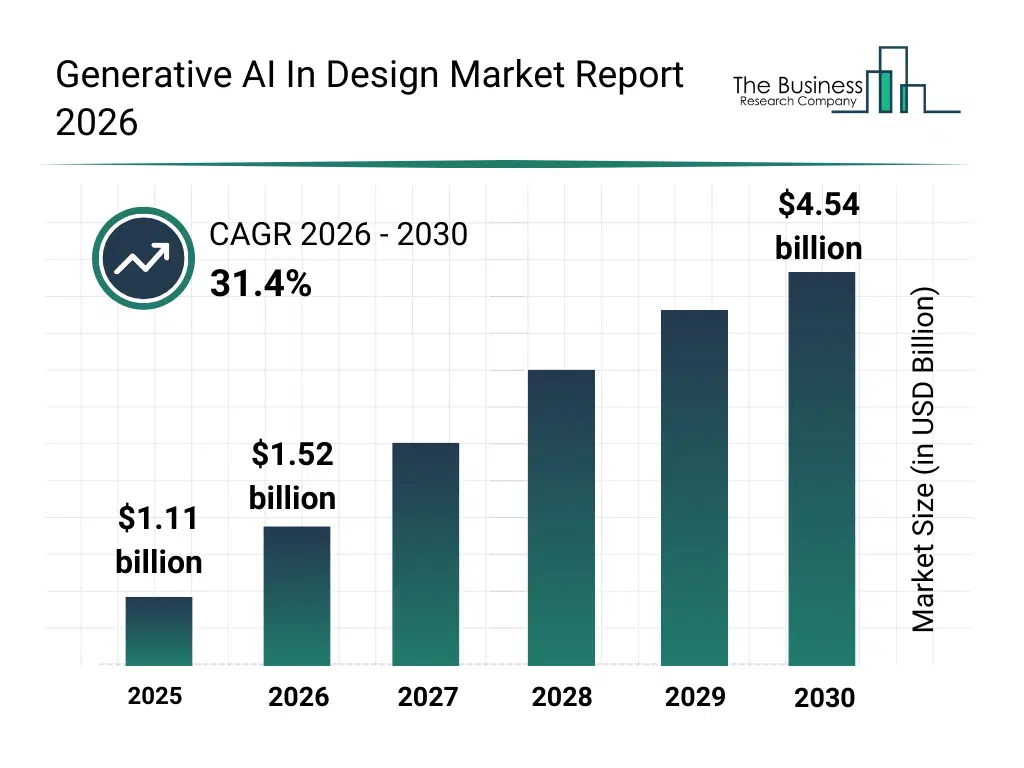
What Is The Generative AI In Design Market Size and Share 2026?
The generative AI in design market size has grown exponentially in recent years. It will grow from $1.11 billion in 2025 to $1.52 billion in 2026 at a compound annual growth rate (CAGR) of 37.5%. The growth in the historic period can be attributed to rise of cad software, early adoption of graphic design AI tools, increasing demand for rapid prototyping, growth of architectural visualization, expansion of fashion and interior design software.What Is The Generative AI In Design Market Growth Forecast?
The generative AI in design market size is expected to see exponential growth in the next few years. It will grow to $4.54 billion in 2030 at a compound annual growth rate (CAGR) of 31.4%. The growth in the forecast period can be attributed to integration of generative AI in product lifecycle management, demand for cloud-based design collaboration, adoption of ai-driven customization in fashion and interiors, growth of immersive ar/vr design experiences, increasing use of AI for sustainable and optimized design solutions. Major trends in the forecast period include ai-powered design automation, generative design optimization, real-time collaborative design tools, automated style and theme generation, parametric and adaptive design solutions.
Global Generative AI In Design Market Segmentation
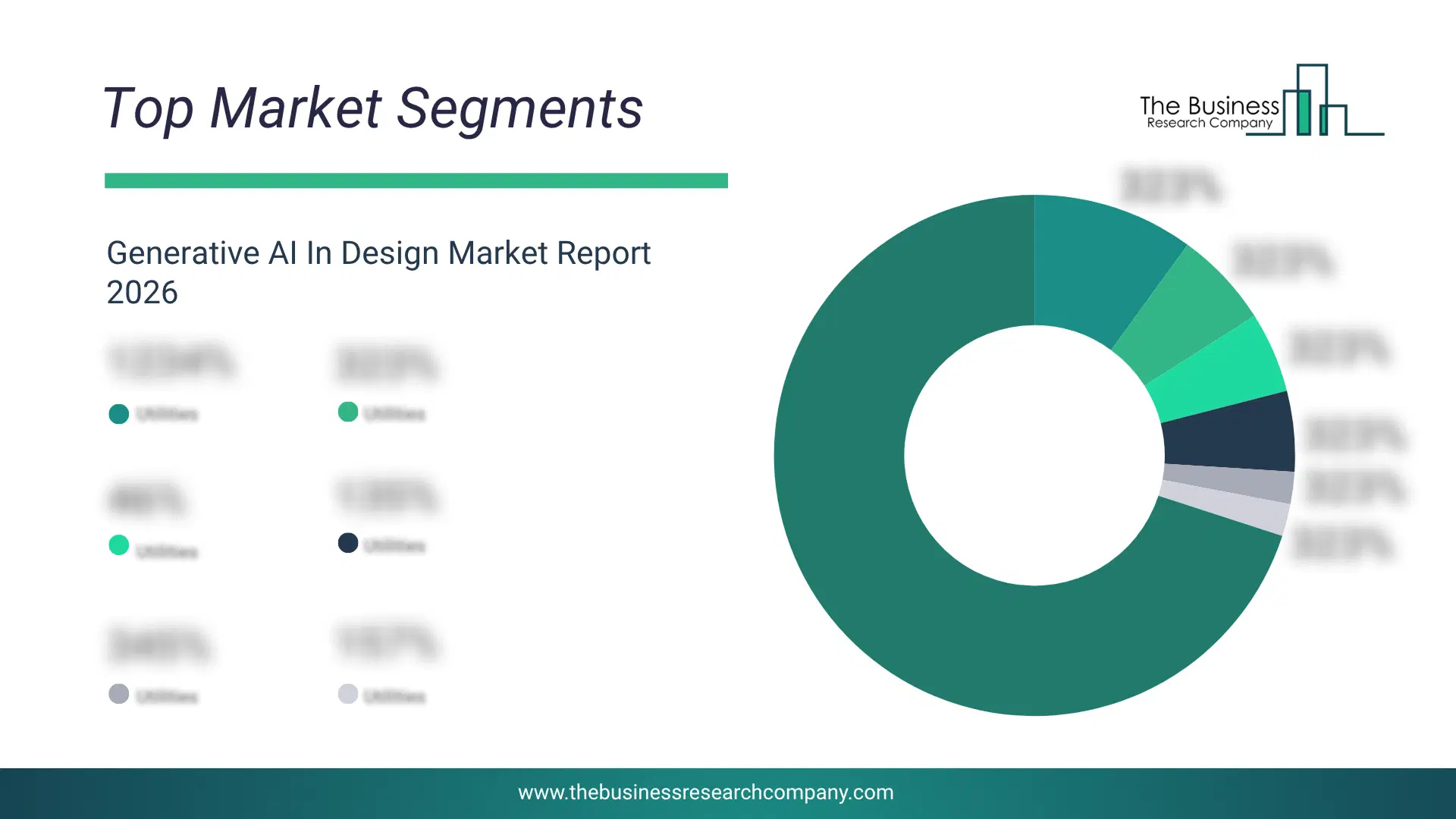
1) By Deployment: On-Premise, Cloud 2) By Application: Product Design, Graphic Design, Interior Design, Fashion Design, Architecture 3) By End-Users: Large Enterprises, Small And Medium-Sized Enterprises (SMEs), Individual Users Subsegments: 1) By On-Premise: Self-Hosted Design Solutions, On-Premise AI Design Software, Secure, Localized Design Processing 2) By Cloud: Saas-Based Design Platforms, Cloud-Hosted Generative AI Tools, Scalable Cloud Infrastructure For Design The top segments in the generative artificial intelligence (ai) in design market will be: • Cloud will reach $4.02 Billion by 2030. • On-Premise will reach $0.56 Billion by 2030.What Is The Driver Of The Generative AI In Design Market?
The rising adoption of AI applications is expected to propel the growth of generative AI in design market going forward. Artificial intelligence refers to the ability of a computer or computer-controlled robot to execute tasks that are often connected to human intellectual processes. The adoption of AI applications is rising due to the increasing complexity of tasks coupled with advancements in AI technology. Generative AI in design leverages AI algorithms to autonomously produce novel designs, streamlining creative processes and fostering innovation in various industries such as architecture, fashion, and product design. These applications enable rapid prototyping, customization, and exploration of vast design possibilities, revolutionizing traditional design workflows. For instance, in November 2023, according to a report published by the United States Census Bureau, a US-based governing agency, the adoption of artificial intelligence by the construction sector was 1.2%, and it was expected to increase to 2% in the next 6 months. Therefore, the rising adoption of AI applications is driving the growth of the generative AI in design industry.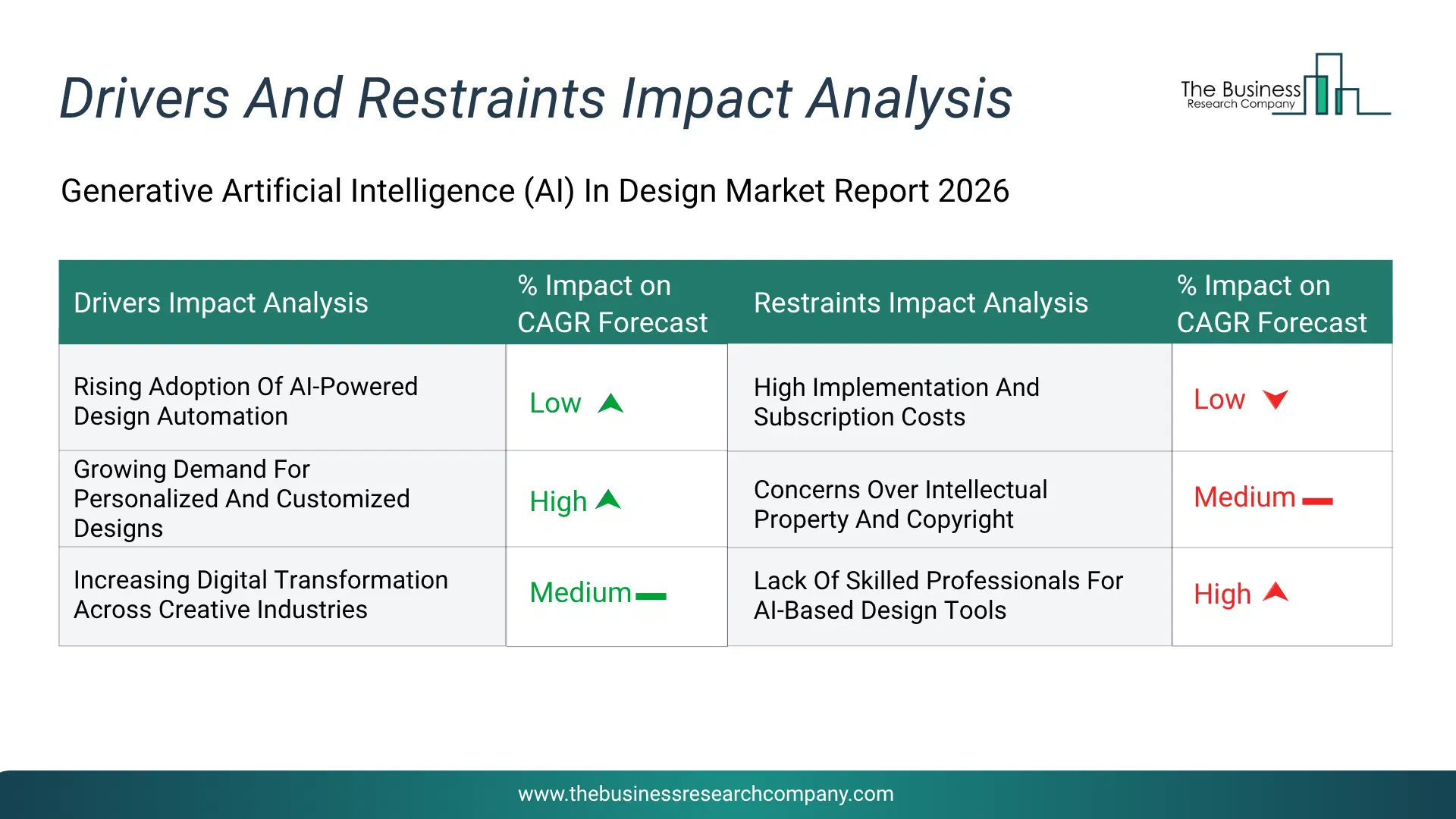
Infographic Chart Showing Key Market Drivers Analysis And Restraints For Generative Ai In Design Market
The chart presents an impact analysis of key drivers and restraints, quantifying their relative influence on the market's growth rate and helping assess the balance between growth enablers and limiting factors. This chart offers a high-level perspective; the full report contains more detailed insights.
How Will The Drivers Impact Growth In The Global Generative Artificial Intelligence (AI) In Design Market?
• Rising Adoption Of AI-Powered Design Automation (Low) – During the forecast period, the rising adoption of ai-powered design automation is expected to become a key growth driver for the generative artificial intelligence (AI) in design market by 2030. Rising adoption of AI-powered design automation acts as a major driver for the generative AI in design market because businesses want to reduce design time while improving creativity and efficiency. Generative AI helps designers quickly create multiple design options, optimize layouts, and automate repetitive tasks without compromising quality. This allows companies to shorten product development cycles and reduce overall design costs. • Growing Demand For Personalized And Customized Designs (High) – During the forecast period, the growing demand for personalized and customized designs is expected to emerge as a major factor driving the expansion of the generative artificial intelligence (AI) in design market by 2030. Growing demand for personalized and customized designs acts as a major driver for the generative AI in design market because customers increasingly expect products and digital experiences that match their individual preferences. Generative AI enables designers to create customized product designs, graphics, fashion items, and architectural concepts at a much faster pace. This improves customer satisfaction while reducing manual design effort. • Increasing Digital Transformation Across Creative Industries (Medium) – During the forecast period, the increasing digital transformation across creative industries is expected to act as a key growth catalyst for the generative artificial intelligence (AI) in design market by 2030. Increasing digital transformation across creative industries acts as a major driver for the generative AI in design market because organizations are adopting advanced digital tools to improve design workflows and collaboration. Industries such as manufacturing, architecture, fashion, media, and interior design are integrating AI into their design processes to improve accuracy and speed. Cloud-based platforms also make these technologies easier to access for businesses of all sizes. This ongoing digital transformation encourages wider adoption of generative AI solutions across the global design industry.How Will The Restraints Impact Growth In The Global Generative Artificial Intelligence (AI) In Design Market?
• High Implementation And Subscription Costs (Low) – During the forecast period, the high implementation and subscription costs act as a major restraint for the generative AI in design market because advanced AI design platforms often require expensive software licenses, cloud subscriptions, and computing resources. Many small and medium-sized businesses find it difficult to justify these ongoing expenses, especially when design budgets are limited. Additional costs for employee training and system integration further increase the financial burden. As a result, cost concerns slow the adoption of generative AI design solutions across many organizations. • Concerns Over Intellectual Property And Copyright (High) – During the forecast period, the concerns over intellectual property and copyright act as a major restraint for the generative AI in design market because AI-generated designs may unintentionally resemble copyrighted content or use training data with unclear ownership. Businesses and designers remain cautious about legal risks related to commercial use of AI-generated outputs. Uncertainty around ownership rights and licensing creates hesitation in adopting these tools for critical design projects. This limits wider acceptance of generative AI across creative industries. • Lack Of Skilled Professionals For AI-Based Design Tools (Medium) – During the forecast period, the lack of skilled professionals for AI-based design tools acts as a restraint for the Generative Artificial Intelligence (AI) In Design market because organizations require employees with expertise in artificial intelligence, design workflows, and prompt-based creative processes to effectively utilize these technologies. Many designers and creative teams lack sufficient technical knowledge to integrate AI tools into existing processes. The shortage of trained professionals increases the need for additional training and workforce development investments. Organizations may experience slower adoption when employees are unable to fully utilize AI capabilities. These skill gaps reduce the expected productivity benefits and limit widespread implementation of generative AI design solutions.Key Players In The Global Generative AI In Design Market
Major companies operating in the generative AI in design market are Alphabet Inc.; Microsoft Corporation; NVIDIA Corporation; Adobe Inc.; Dassault Systèmes SE; Autodesk Inc.; Trimble Inc.; Ansys Inc.; PTC Inc.; Bentley Systems Incorporated; Anthropic AI; Altair Engineering Inc.; DeepMind Technologies Limited; OpenAI Inc.; Jasper Technologies Inc.; Hugging Face Inc.; Chaos Group; Vectorworks Inc.; Onshape Inc.; Stability AI LLC; Midjourney Inc.
This chart is for illustrative purposes; the full report includes a detailed competitor analysis and comprehensive overview of the top 10 companies in the market.
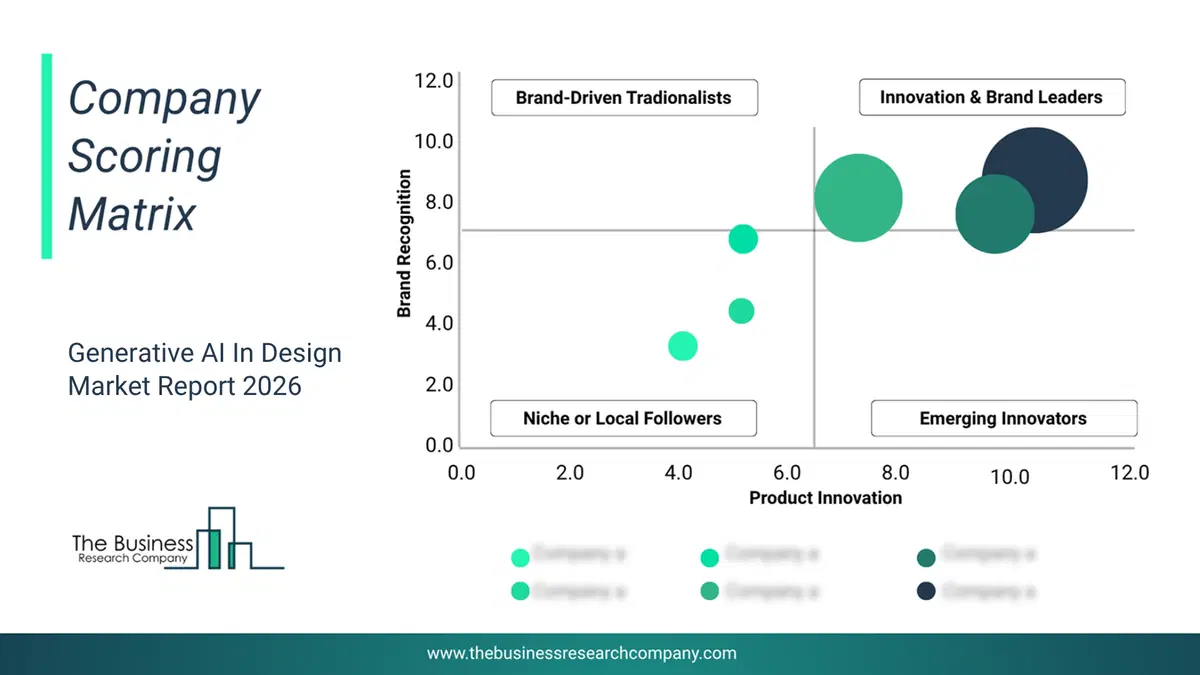
This chart maps companies by product innovation and brand strength, with bubble size indicating relative revenue, helping identify market leaders, challengers, and niche players. This is an illustrative chart; the full report provides a complete and accurate competitive analysis.
Global Generative AI In Design Market Trends and Insights
Major companies operating in the generative AI in design market are focused on developing and upgrading their generative AI capabilities with advanced technological functionalities such as auto-clustering, Python, and R coding capabilities, and more, to boost their revenues in the market. These generative AI enables designers to leverage sophisticated data analysis, machine learning, and statistical techniques to create innovative and optimized design solutions tailored to specific user requirements and design objectives. For instance, in November 2023, Altair Engineering Inc., a US-based information technology company, upgraded its data analytics and AI platform, Altair RapidMiner, to deliver powerful next-generation generative AI capabilities. Updates include several features such as auto-clustering, expanded SAS, Python, and R coding capabilities, and more, aiming to elevate the platform’s capabilities. It features an updated array of data visualization components, fresh layout templates and utilities, and enhanced style options, simplifying the process of creating, sharing, and utilizing dashboards. These enhancements reduce setup time for designers, allowing them to concentrate on crafting and implementing more visually appealing and user-friendly dashboards.What Are Latest Mergers And Acquisitions In The Generative AI In Design Market?
In August 2023, OpenAI Inc., a US-based artificial intelligence research company, acquired Global Illumination Inc. for an undisclosed amount. The acquisition is expected to help OpenAI enhance its core products, including ChatGPT, and explore emerging areas like AI-generated media, entertainment, and culture. Global Illumination Inc. is a US-based provider of generative AI in design.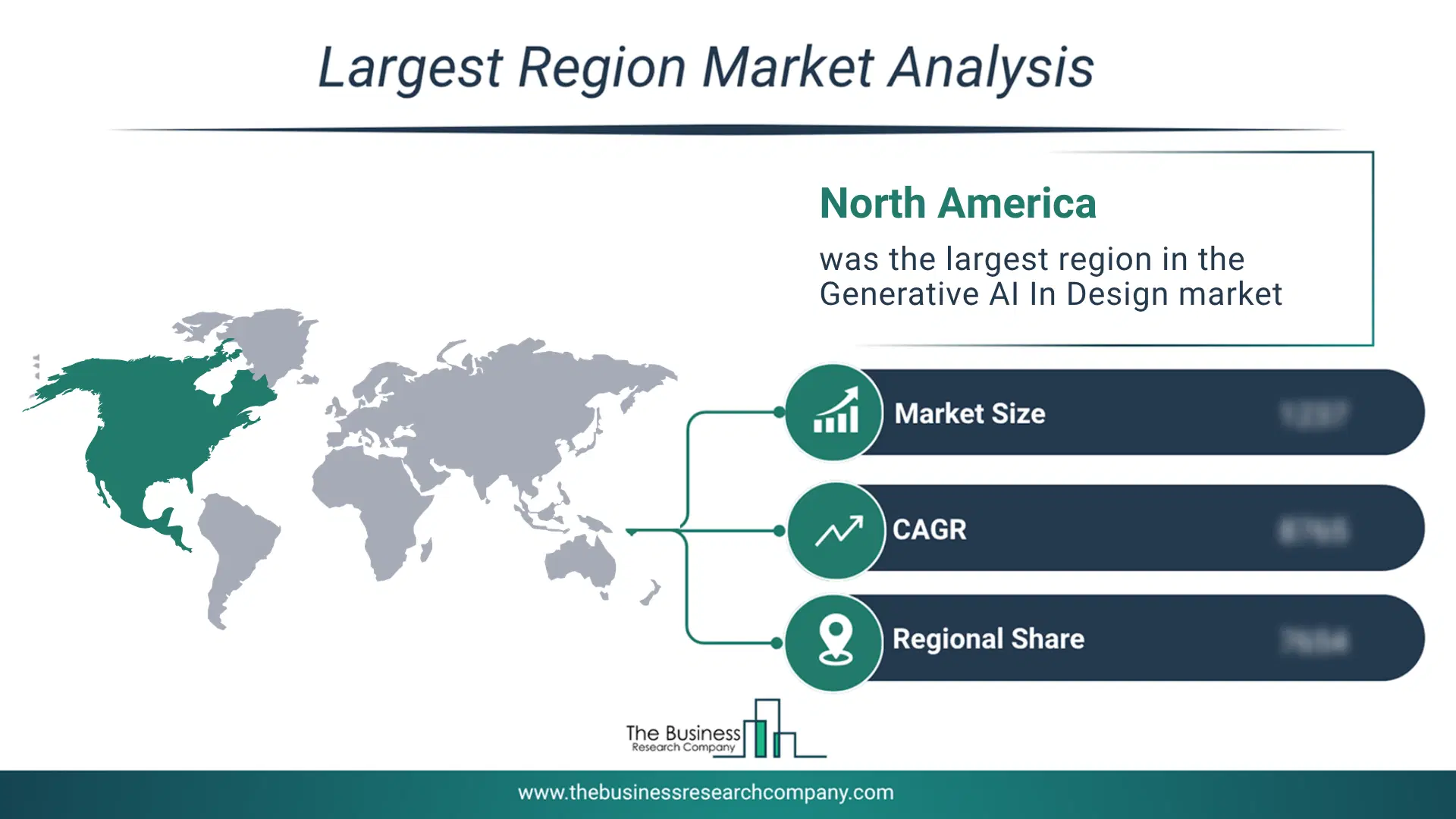
Regional Insights
North America was the largest region in the generative AI in design market in 2025. Asia-Pacific is expected to be the fastest-growing region in the forecast period. The regions covered in this market report are Asia-Pacific, South East Asia, Western Europe, Eastern Europe, North America, South America, Middle East, Africa. The countries covered in this market report are Australia, Brazil, China, France, Germany, India, Indonesia, Japan, Taiwan, Russia, South Korea, UK, USA, Canada, Italy, SpainWhat Defines the Generative AI In Design Market?
The generative AI in design market includes revenues earned by entities by providing services such as automated design testing and validation, generative art and creativity, design optimization for additive manufacturing, design variation exploration, and parametric modeling. The market value includes the value of related goods sold by the service provider or included within the service offering. Only goods and services traded between entities or sold to end consumers are included.How is Market Value Defined and Measured?
The market value is defined as the revenues that enterprises gain from the sale of goods and/or services within the specified market and geography through sales, grants, or donations in terms of the currency (in USD unless otherwise specified). The revenues for a specified geography are consumption values that are revenues generated by organizations in the specified geography within the market, irrespective of where they are produced. It does not include revenues from resales along the supply chain, either further along the supply chain or as part of other products.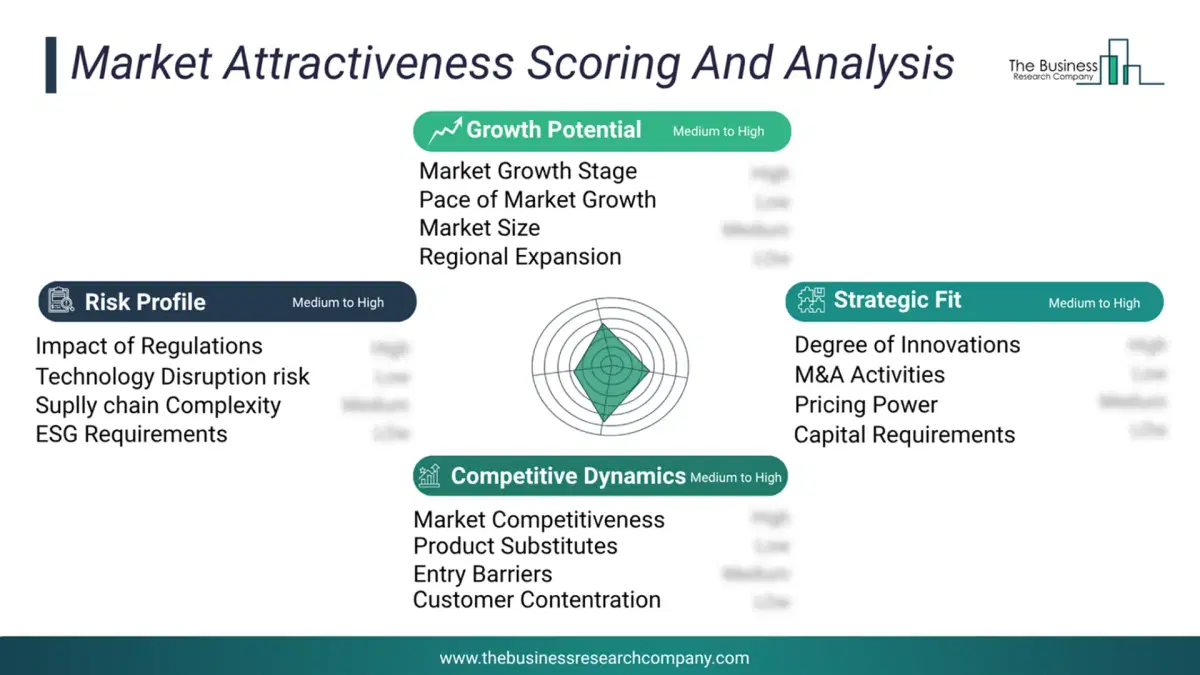
This chart presents market attractiveness based on a quantitative evaluation of growth, competition, strategic alignment, and risk, offering a clear view of opportunity areas for decision-making. This chart is for illustrative purposes; the full report contains the complete analysis.
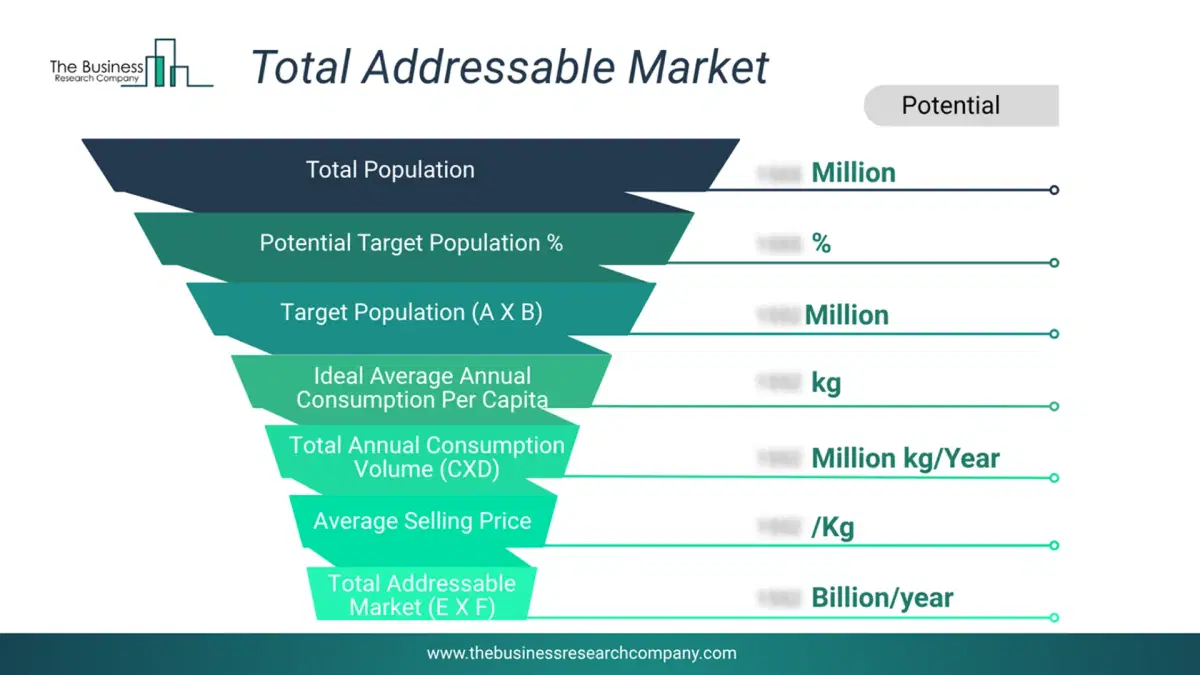
This chart highlights the Total Addressable Market (TAM) by estimating the maximum revenue opportunity using an assumption-driven approach, supporting strategic planning and opportunity sizing across markets. The chart is illustrative; the full report provides a more comprehensive analysis.
What Key Data and Analysis Are Included in the Generative AI In Design Market Report 2026?
The generative ai in design market research report is one of a series of new reports from The Business Research Company that provides market statistics, including industry global market size, regional shares, competitors with the market share, detailed market segments, market trends and opportunities, and any further data you may need to thrive in the generative ai in design industry. The market research report delivers a complete perspective of everything you need, with an in-depth analysis of the current and future state of the industry.Generative AI In Design Market Report Forecast Analysis
| Report Attribute | Details |
|---|---|
| Market Size Value In 2026 | $1.52 billion |
| Revenue Forecast In 2030 | $4.54 billion |
| Growth Rate | CAGR of 37.5% from 2026 to 2030 |
| Base Year For Estimation | 2025 |
| Actual Estimates/Historical Data | 2020-2025 |
| Forecast Period | 2026 - 2030 |
| Market Representation | Revenue in USD Billion and CAGR from 2026 to 2030 |
| Segments Covered | Deployment, Application, End-Users |
| Regional Scope | Asia-Pacific, Western Europe, Eastern Europe, North America, South America, Middle East, Africa |
| Country Scope | The countries covered in the report are Australia, Brazil, China, France, Germany, India, ... |
| Key Companies Profiled | Alphabet Inc.; Microsoft Corporation; NVIDIA Corporation; Adobe Inc.; Dassault Systèmes SE; Autodesk Inc.; Trimble Inc.; Ansys Inc.; PTC Inc.; Bentley Systems Incorporated; Anthropic AI; Altair Engineering Inc.; DeepMind Technologies Limited; OpenAI Inc.; Jasper Technologies Inc.; Hugging Face Inc.; Chaos Group; Vectorworks Inc.; Onshape Inc.; Stability AI LLC; Midjourney Inc. |
| Customization Scope | Request for Customization |
| Pricing And Purchase Options | Explore Purchase Options |