

Metaverse In Healthcare Market Report 2026
Global Outlook – By Component (Software, Hardware), By Technology (Augmented Reality(AR), Virtual Reality(VR), Artificial Intelligence(AI), Mixed Reality(MR)), By Device (VR Headsets, AR Devices, Mixed Reality Platforms), By End-User (Medical Training And Education Modules, Diagnosis, Treatment, Designing ORs, Surgical Training, Remote Monitoring, Other End-Users) – Market Size, Trends, Strategies, and Forecast to 2030
Metaverse In Healthcare Market Overview
• Metaverse In Healthcare market size has reached to $17.92 billion in 2025 • Expected to grow to $79.9 billion in 2030 at a compound annual growth rate (CAGR) of 34.7% • Growth Driver: Rising Chronic Disease Burden Fuels Demand For Metaverse-Powered Healthcare Solutions • Market Trend: Integration Of Personalized Virtual Features In Healthcare Metaverse For Enhanced Patient Engagement • North America was the largest region in 2025 and Asia-Pacific is the fastest growing region.Market Gains By 2030 – Top Opportunities By Segment
Market Gain identifies the most promising market opportunities by highlighting the segments or products expected to generate the highest incremental revenue growth over the next five years.
What Is Covered Under Metaverse In Healthcare Market?
The metaverse in the healthcare market refers to the use of emerging technologies such as virtual and augmented reality to facilitate research and development capabilities pertaining to drug manufacturing processes, bring about technology improvements in the realm of mental health, and assist healthcare facilities in overcoming geographical limits. They can also promote scans and tests that can be performed in a facility local to the patient, with the data being sent to a specialist anywhere in the world. The main components of a metaverse in healthcare are software and hardware. The software market refers to applications, scripts, and programs that run on a device that is intended for use by practitioners in an outpatient scenario and are qualified to assist medical practices in obtaining meaningful use certification. The various technologies are augmented reality (AR), virtual reality (VR), artificial intelligence (AI), and mixed reality (MR). The various devices include VR headsets, AR devices, and mixed reality platforms. These are used by various end-users such as medical training and education modules, diagnosis, treatment, designing ors, surgical training, remote monitoring and others.
What Is The Metaverse In Healthcare Market Size and Share 2026?
The metaverse in healthcare market size has grown exponentially in recent years. It will grow from $17.92 billion in 2025 to $24.26 billion in 2026 at a compound annual growth rate (CAGR) of 35.3%. The growth in the historic period can be attributed to growing investments in digital health innovation, adoption of simulation-based medical education, expansion of telehealth services, early deployment of vr therapy solutions, increased availability of immersive hardware.What Is The Metaverse In Healthcare Market Growth Forecast?
The metaverse in healthcare market size is expected to see exponential growth in the next few years. It will grow to $79.9 billion in 2030 at a compound annual growth rate (CAGR) of 34.7%. The growth in the forecast period can be attributed to increasing acceptance of virtual care delivery, rising integration of AI with immersive platforms, expansion of remote surgical support, growing investment in metaverse healthcare ecosystems, increasing focus on patient-centric digital experiences. Major trends in the forecast period include increasing adoption of virtual medical training platforms, rising use of ar-assisted surgical planning, growing deployment of vr-based mental health therapies, expansion of remote diagnostics and collaboration tools, enhanced integration of digital twins in healthcare.

Global Metaverse In Healthcare Market Segmentation
1) By Component: Software, Hardware 2) By Technology: Augmented Reality(AR), Virtual Reality(VR), Artificial Intelligence(AI), Mixed Reality(MR) 3) By Device: VR Headsets, AR Devices, Mixed Reality Platforms 4) By End-User: Medical Training And Education Modules, Diagnosis, Treatment, Designing ORs, Surgical Training, Remote Monitoring, Other End-Users Subsegments: 1) By Software: Virtual Reality (VR) Applications, Augmented Reality (AR) Applications, Simulation Software, Collaboration Tools 2) By Hardware: VR Headsets, AR Glasses, Haptic Devices, Motion Sensors, Workstations The top segments in the metaverse in healthcare market will be: • Software will reach $56 Billion by 2030. • Hardware will reach $23 Billion by 2030.What Is The Driver Of The Metaverse In Healthcare Market?
The increasing prevalence of chronic diseases is expected to propel the growth of the metaverse in healthcare market going forward. Chronic diseases are defined as problems that last for a year or longer and necessitate continuing medical care, restricting everyday activities, or both. Heart disease, cancer, obesity, and diabetes are a few examples. In chronic disease management, the metaverse plays an important role by offering immersive tools for patient education and engagement, facilitating personalized interventions, and remote monitoring to enhance adherence to treatment plans and improve overall health outcomes. For instance, in January 2023, according to the National Center for Biotechnology Information (NCBI), a US-based National Library of Medicine, it is projected that by the year 2050, the number of individuals aged 50 years and older who have at least one chronic illness will surge by 99.5%, rising from 71.522 million in 2020 to 142.66 million. Therefore, the increasing prevalence of chronic diseases drives the growth of the metaverse in healthcare industry.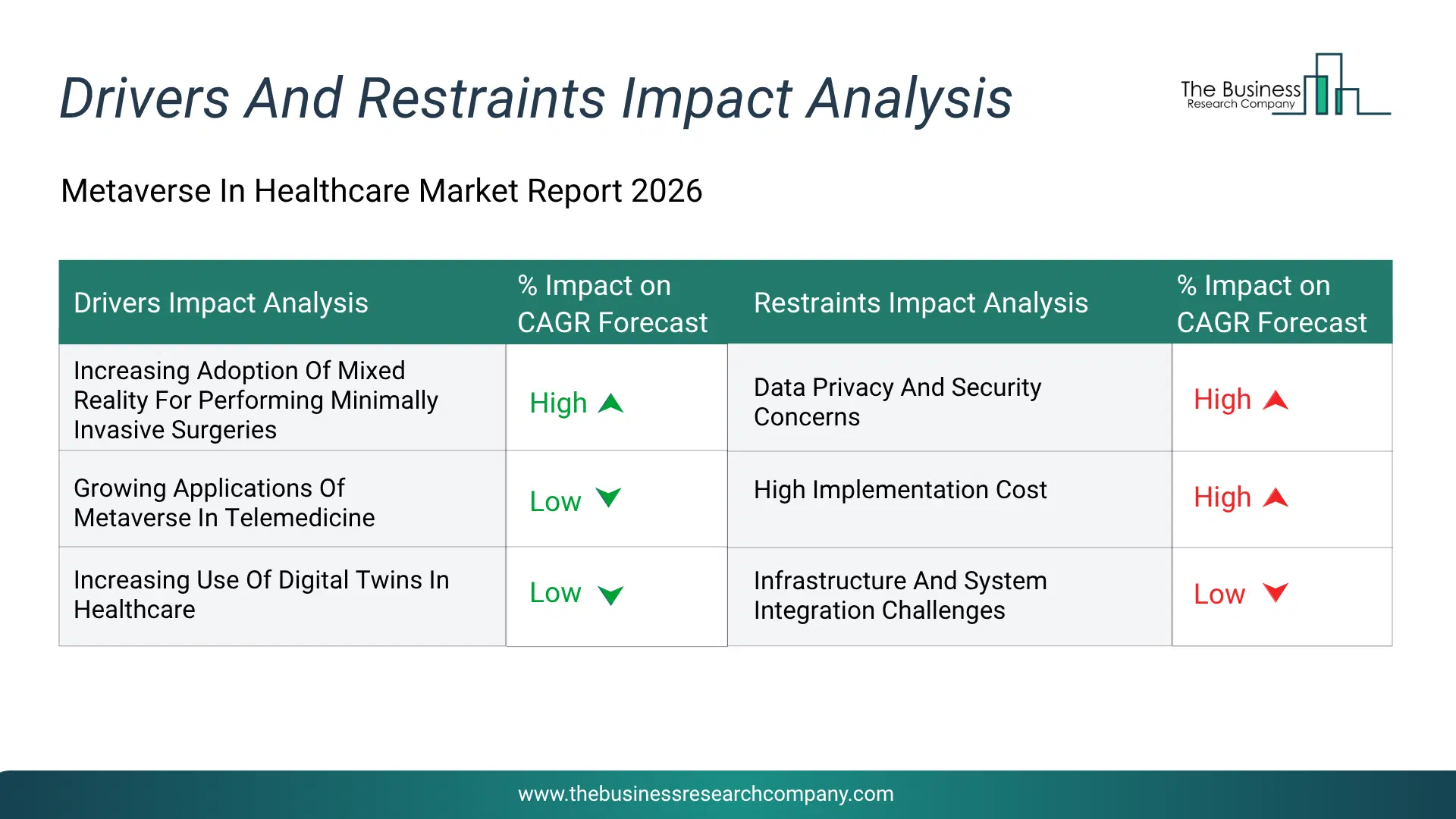
Infographic Chart Showing Key Market Drivers Analysis And Restraints For Metaverse In Healthcare Market
The chart presents an impact analysis of key drivers and restraints, quantifying their relative influence on the market's growth rate and helping assess the balance between growth enablers and limiting factors. This chart offers a high-level perspective; the full report contains more detailed insights.
How Will The Drivers Impact Growth In The Global Metaverse In Healthcare Market?
• Increasing Adoption Of Mixed Reality For Performing Minimally Invasive Surgeries (High) – During the forecast period, the increasing adoption of mixed reality for performing minimally invasive surgeries is expected to become a key growth driver for the metaverse in healthcare market by 2030. Increasing adoption of mixed reality for performing minimally invasive surgeries is driving the metaverse in healthcare market by enabling surgeons to visualize complex anatomical structures through immersive 3D environments before and during procedures. Mixed reality enhances surgical precision, reduces the likelihood of medical errors, and shortens recovery times for patients. It also improves collaboration among healthcare professionals by allowing remote experts to assist in real time. Hospitals are increasingly investing in these technologies to improve clinical outcomes and operational efficiency. As confidence in immersive surgical technologies grows, demand for metaverse-based healthcare solutions continues to expand. • Growing Applications Of Metaverse In Telemedicine (Low) – During the forecast period, the growing applications of metaverse in telemedicine is expected to emerge as a major factor driving the expansion of the metaverse in healthcare market by 2030. Growing applications of metaverse in telemedicine are accelerating market growth by enabling immersive virtual consultations, remote diagnostics, and collaborative treatment planning regardless of geographical location. Patients can interact with healthcare providers in realistic digital environments, improving engagement and accessibility to specialized care. The technology also supports remote rehabilitation, chronic disease management, and mental health therapy through interactive experiences. Healthcare providers benefit from greater efficiency while reducing travel and infrastructure costs. • Increasing Use Of Digital Twins In Healthcare (Low) – During the forecast period, the increasing use of digital twins in healthcare is expected to act as a key growth catalyst for the metaverse in healthcare market by 2030. Increasing use of digital twins in healthcare is fuelling the market by allowing virtual replicas of patients, organs, and medical systems to support diagnosis, treatment planning, and drug development. Digital twins enable healthcare professionals to simulate medical procedures and predict treatment outcomes before actual intervention. Pharmaceutical companies also use these models to improve clinical research and accelerate product development. This technology reduces risks, enhances personalized medicine, and optimizes healthcare decision-making. Growing investments in AI and simulation technologies are further strengthening the adoption of digital twins within the healthcare metaverse.How Will The Restraints Impact Growth In The Global Metaverse In Healthcare Market?
• Data Privacy And Security Concerns (High) – During the forecast period, the data privacy and security concerns remain a major restraint because metaverse platforms process vast amounts of sensitive patient information across interconnected digital environments. Healthcare organizations must protect medical records, biometric data, and real-time communications from cyber threats and unauthorized access. Any security breach can result in regulatory penalties, financial losses, and declining patient trust. Meeting strict compliance requirements significantly increases implementation complexity and costs. These concerns slow investment decisions and limit widespread adoption of metaverse healthcare solutions. • High Implementation Cost (Low) – During the forecast period, the high implementation cost restrains market growth because deploying metaverse solutions requires significant investments in advanced hardware, software platforms, cloud infrastructure, high-speed connectivity, and workforce training. Many hospitals and smaller healthcare providers face budget constraints that delay technology adoption. Ongoing maintenance, system upgrades, and cybersecurity expenses further increase the total cost of ownership. Organizations often require clear returns on investment before committing to large-scale deployments. As a result, adoption remains slower in cost-sensitive healthcare markets. • Infrastructure And System Integration Challenges (Low) – During the forecast period, the infrastructure and system integration challenges limit market expansion because metaverse platforms must seamlessly connect with existing hospital information systems, electronic health records, imaging platforms, and connected medical devices. Many healthcare facilities still operate on legacy IT systems that are not designed for immersive digital environments. Inadequate network capacity and interoperability issues can reduce platform performance and user experience. These technical barriers increase deployment time and implementation risks for healthcare providers. Consequently, infrastructure limitations continue to restrain the broader adoption of metaverse technologies in healthcare.Key Players In The Global Metaverse In Healthcare Market
Major companies operating in the metaverse in healthcare market are Brainlab AG; BioFlight VR; Siemens Healthineers; Meta Platforms Inc.; Novarad Corporation; Nvidia Corporation; Microsoft Corporation; GE Healthcare; Global Healthcare Academy; 3D Systems Corp.; Vuzix; Magic Leap; zSpace Inc.; VirtaMed; Virtually Better; EchoPixel Inc.; InfiVR; Augmedics; Immersive Touch; Medical Realities Ltd.; ARBREA LABS; Veyond Metaverse; GameChange VR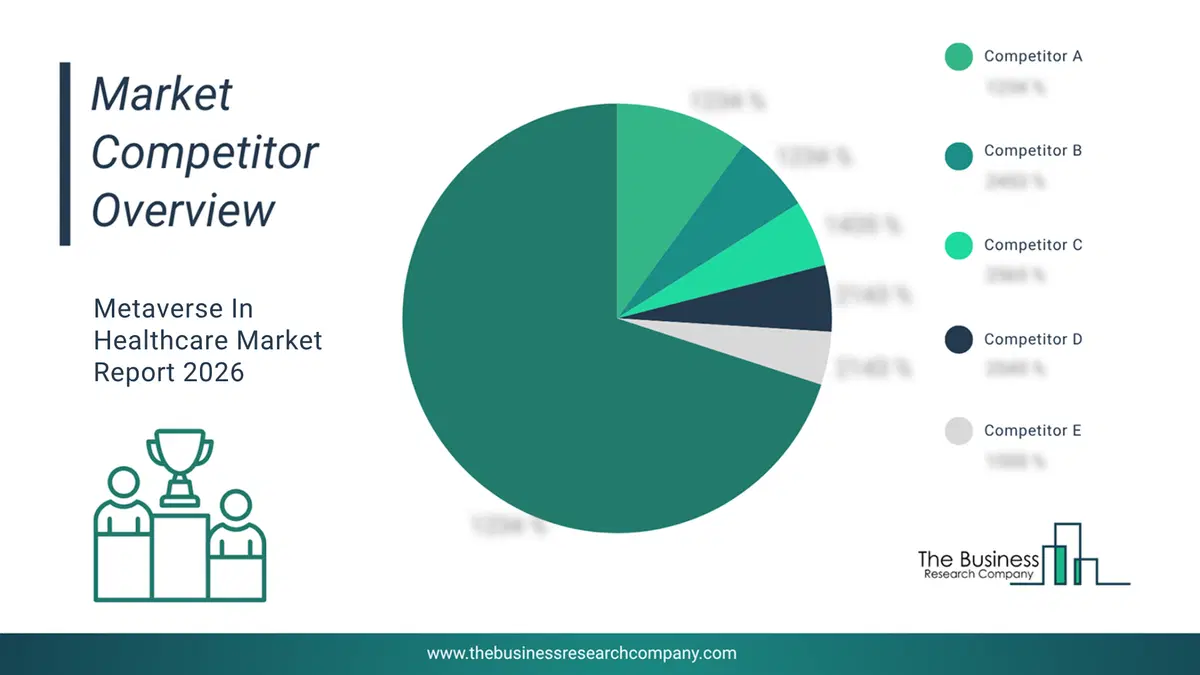
This chart is for illustrative purposes; the full report includes a detailed competitor analysis and comprehensive overview of the top 10 companies in the market.
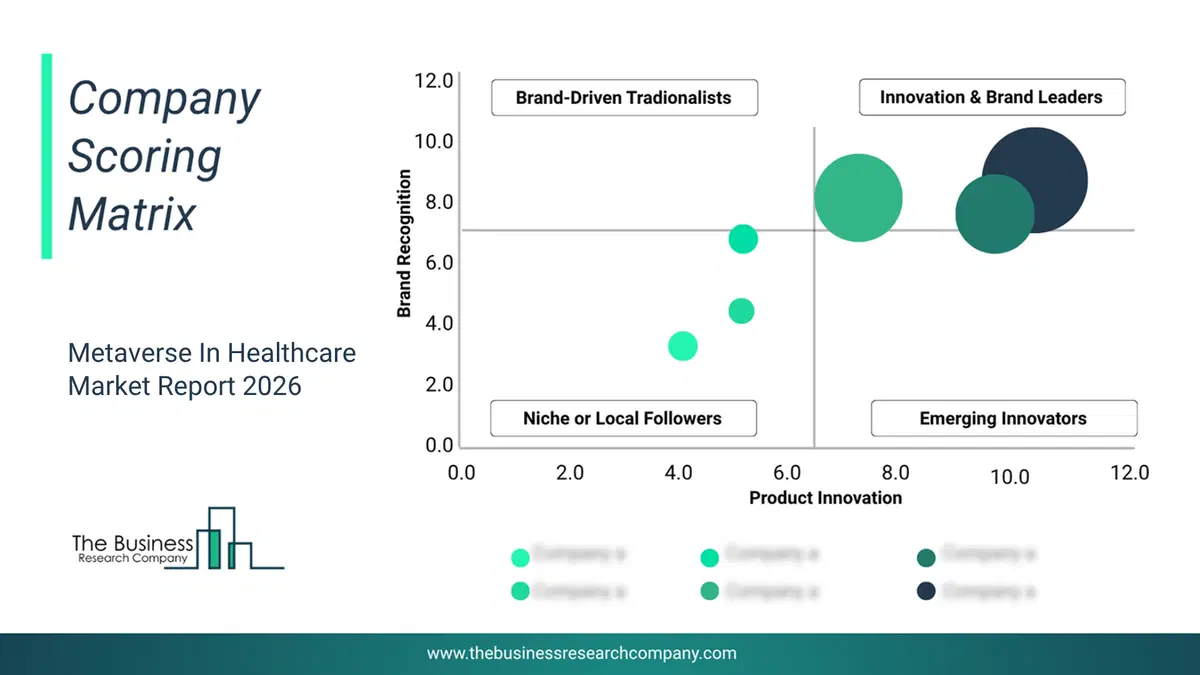
This chart maps companies by product innovation and brand strength, with bubble size indicating relative revenue, helping identify market leaders, challengers, and niche players. This is an illustrative chart; the full report provides a complete and accurate competitive analysis.
Global Metaverse In Healthcare Market Trends and Insights
Major companies operating in the metaverse in healthcare market are increasing their focus on introducing personalized virtual features to gain a competitive edge in the market. Personalized virtual features refer to customized and individualized elements within a virtual environment or digital platform. For instance, in February 2023, Indegene, an India-based life sciences commercialization company, launched Metaverse capabilities aimed at helping life sciences companies create immersive healthcare experiences using metaverse technology. These capabilities are designed to offer personalized, scalable, and omnichannel experiences for patients and physicians, allowing them to interact with healthcare professionals (HCPs) in virtual medical congresses, attend virtual educational lectures, and connect with others in virtual patient hubs.What Are Latest Mergers And Acquisitions In The Metaverse In Healthcare Market?
In April 2023, XRHealth, a US-based virtual and augmented reality company, merged with Amelia Virtual Care to form XR therapeutics platform. Following the merger, the newly formed entity is set to emerge as a major XR therapeutic provider, offering solutions that target both physical and mental health conditions. This collaboration is expected to drive strong revenue growth in the near future and establish the company as a frontrunner in the XR/VR therapy market. Amelia Virtual Care is a Spain-based company specializing in metaverse in healthcare.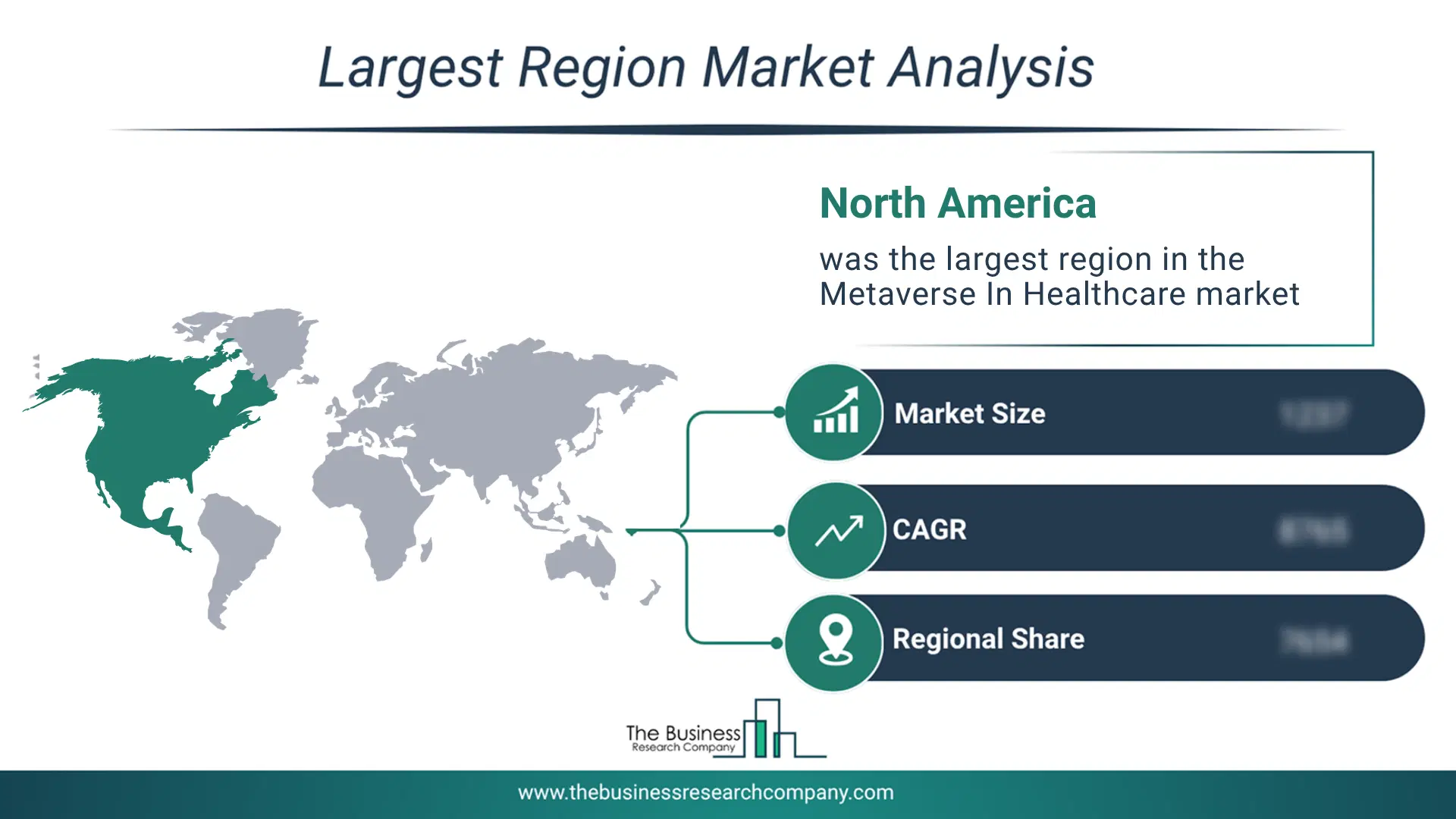
Regional Insights
North America was the largest region in the metaverse in healthcare market in 2025. Asia-Pacific is expected to be the fastest-growing region in the metaverse in healthcare market during the forecast period. The regions covered in this market report are Asia-Pacific, South East Asia, Western Europe, Eastern Europe, North America, South America, Middle East, Africa. The countries covered in this market report are Australia, Brazil, China, France, Germany, India, Indonesia, Japan, Taiwan, Russia, South Korea, UK, USA, Canada, Italy, SpainWhat Defines the Metaverse In Healthcare Market?
The metaverse in the healthcare market consists of revenues earned by entities by using metaverse technologies such as edge computing, extended reality (XR), and intelligent cloud. The market value includes the value of related goods sold by the service provider or included within the service offering. The metaverse in the healthcare market also includes sales of hardware devices such as COPD monitors. Values in this market are ‘factory gate’ values, that is the value of goods sold by the manufacturers or creators of the goods, whether to other entities (including downstream manufacturers, wholesalers, distributors, and retailers) or directly to end customers. The value of goods in this market includes related services sold by the creators of the goods.How is Market Value Defined and Measured?
The market value is defined as the revenues that enterprises gain from the sale of goods and/or services within the specified market and geography through sales, grants, or donations in terms of the currency (in USD unless otherwise specified). The revenues for a specified geography are consumption values that are revenues generated by organizations in the specified geography within the market, irrespective of where they are produced. It does not include revenues from resales along the supply chain, either further along the supply chain or as part of other products.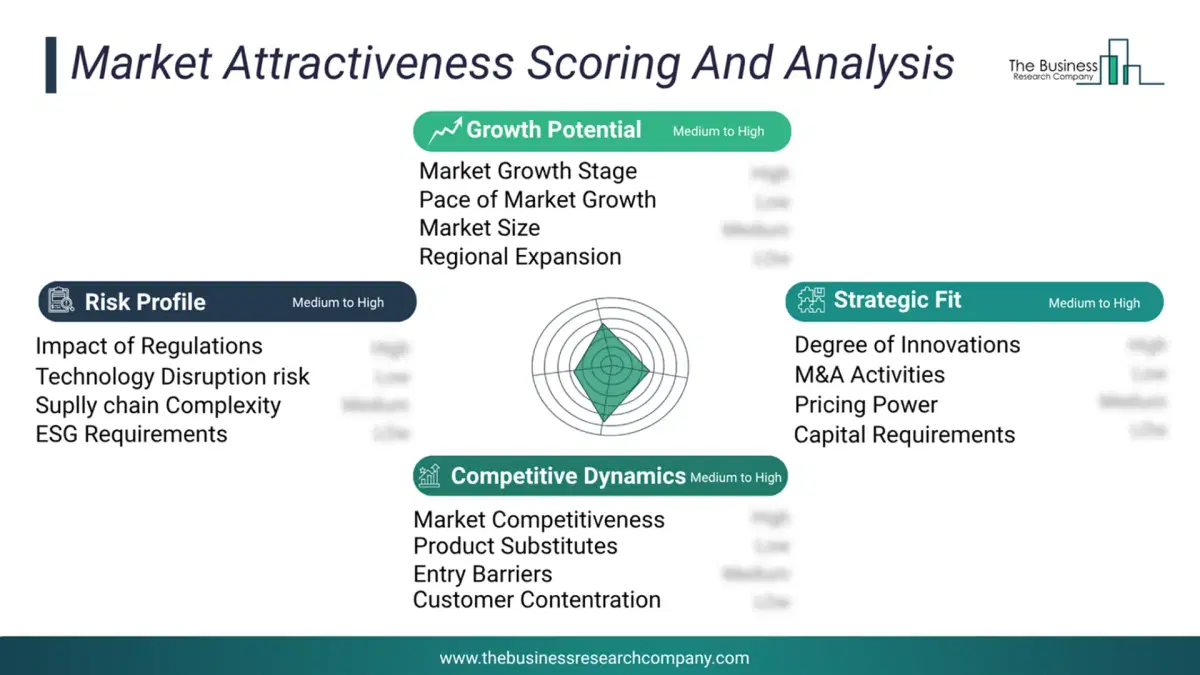
This chart presents market attractiveness based on a quantitative evaluation of growth, competition, strategic alignment, and risk, offering a clear view of opportunity areas for decision-making. This chart is for illustrative purposes; the full report contains the complete analysis.
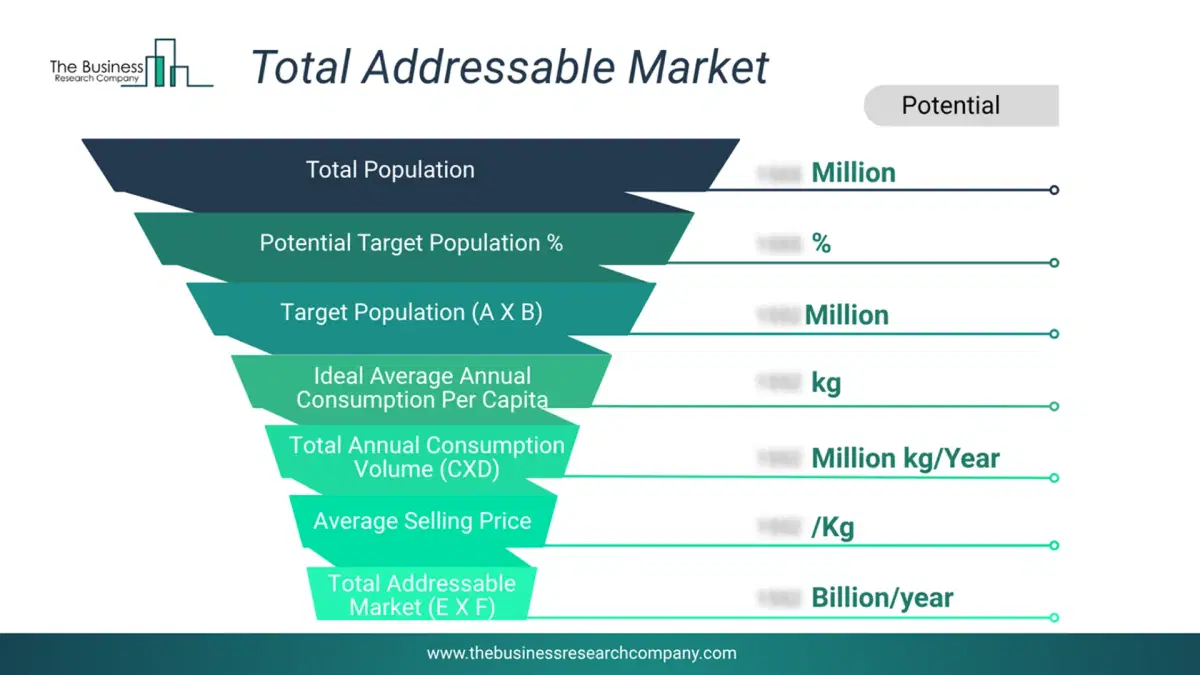
This chart highlights the Total Addressable Market (TAM) by estimating the maximum revenue opportunity using an assumption-driven approach, supporting strategic planning and opportunity sizing across markets. The chart is illustrative; the full report provides a more comprehensive analysis.
What Key Data and Analysis Are Included in the Metaverse In Healthcare Market Report 2026?
The metaverse in healthcare market research report is one of a series of new reports from The Business Research Company that provides market statistics, including industry global market size, regional shares, competitors with the market share, detailed market segments, market trends and opportunities, and any further data you may need to thrive in the metaverse in healthcare industry. The market research report delivers a complete perspective of everything you need, with an in-depth analysis of the current and future state of the industry.Metaverse In Healthcare Market Report Forecast Analysis
| Report Attribute | Details |
|---|---|
| Market Size Value In 2026 | $24.26 billion |
| Revenue Forecast In 2030 | $79.9 billion |
| Growth Rate | CAGR of 34.7% from 2026 to 2030 |
| Base Year For Estimation | 2025 |
| Actual Estimates/Historical Data | 2020-2025 |
| Forecast Period | 2026 - 2030 |
| Market Representation | Revenue in USD Billion and CAGR from 2026 to 2030 |
| Segments Covered | Component, Technology, Device, End-User |
| Regional Scope | Asia-Pacific, Western Europe, Eastern Europe, North America, South America, Middle East, Africa |
| Country Scope | The countries covered in the report are Australia, Brazil, China, France, Germany, India, Indonesia, Japan, Taiwan, Russia, South Korea, UK, USA, Canada, Italy, Spain. |
| Key Companies Profiled | Brainlab AG; BioFlight VR; Siemens Healthineers; Meta Platforms Inc.; Novarad Corporation; Nvidia Corporation; Microsoft Corporation; GE Healthcare; Global Healthcare Academy; 3D Systems Corp.; Vuzix; Magic Leap; zSpace Inc.; VirtaMed; Virtually Better; EchoPixel Inc.; InfiVR; Augmedics; Immersive Touch; Medical Realities Ltd.; ARBREA LABS; Veyond Metaverse; GameChange VR |
| Customization Scope | Request for Customization |
| Pricing And Purchase Options | Explore Purchase Options |