

Music Recording Market Report 2026
Global Outlook – By Type (Record Production, Music Publishers, Record Distribution, Sound Recording Studios), By Application (Mechanical, Performance, Synchronization, Digital, Other Applications), By End-User (Individual, Commercial), By Genre (Rock, Hip hop, Pop, Jazz, Other Genres) – Market Size, Trends, Strategies, and Forecast to 2030
Music Recording Market Overview
• Music Recording market size has reached to $65.14 billion in 2025 • Expected to grow to $89.12 billion in 2030 at a compound annual growth rate (CAGR) of 6.6% • Growth Driver: The Rising Music Industry Growth Fueling The Growth Of The Music Recording Market Due To Increasing Recorded Music Revenues • Market Trend: Innovative Creative Space In Jakarta Transforms How Artists Collaborate And Produce • Asia-Pacific was the largest region in 2025 and Western Europe is the fastest growing region.Market Gains By 2030 – Top Opportunities By Segment
Market Gain identifies the most promising market opportunities by highlighting the segments or products expected to generate the highest incremental revenue growth over the next five years.
What Is Covered Under Music Recording Market?
A music recording is a physical record of a musical performance that may be replayed or reproduced. It is used to create audio tracks for distribution in formats like CDs, streaming, or digital downloads, enabling artists to share their music with audiences. The main types of music recording are record production, music publishers, record distribution, and sound recording studios. A music publisher is a sort of publishing company that focuses on the distribution of music. The different genres include rock, hip hop, pop, jazz, others and are used in several applications such as mechanical, performance, synchronization, digital, others. the various end-users include individuals, and commercial.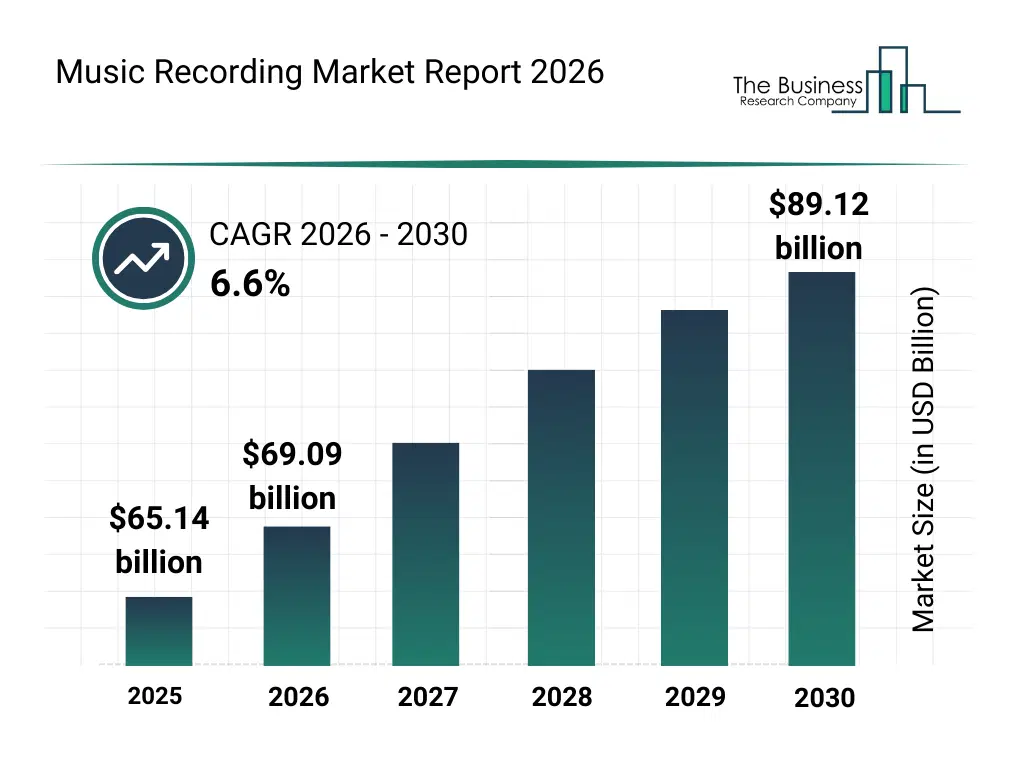
What Is The Music Recording Market Size and Share 2026?
The music recording market size has grown strongly in recent years. It will grow from $65.14 billion in 2025 to $69.09 billion in 2026 at a compound annual growth rate (CAGR) of 6.1%. The growth in the historic period can be attributed to vinyl resurgence, growth of cds in early 2000s, emergence of digital downloads, expansion of recording studios, rise of commercial music licensing.What Is The Music Recording Market Growth Forecast?
The music recording market size is expected to see strong growth in the next few years. It will grow to $89.12 billion in 2030 at a compound annual growth rate (CAGR) of 6.6%. The growth in the forecast period can be attributed to increasing streaming subscriptions, ai-driven music production tools, global expansion of online music platforms, rising demand for immersive audio experiences, adoption of cloud-based recording services. Major trends in the forecast period include growth of independent music production, rise of streaming platforms and digital distribution, increasing popularity of home studios, adoption of ai in music composition and mixing, demand for high-quality audio formats.
Global Music Recording Market Segmentation
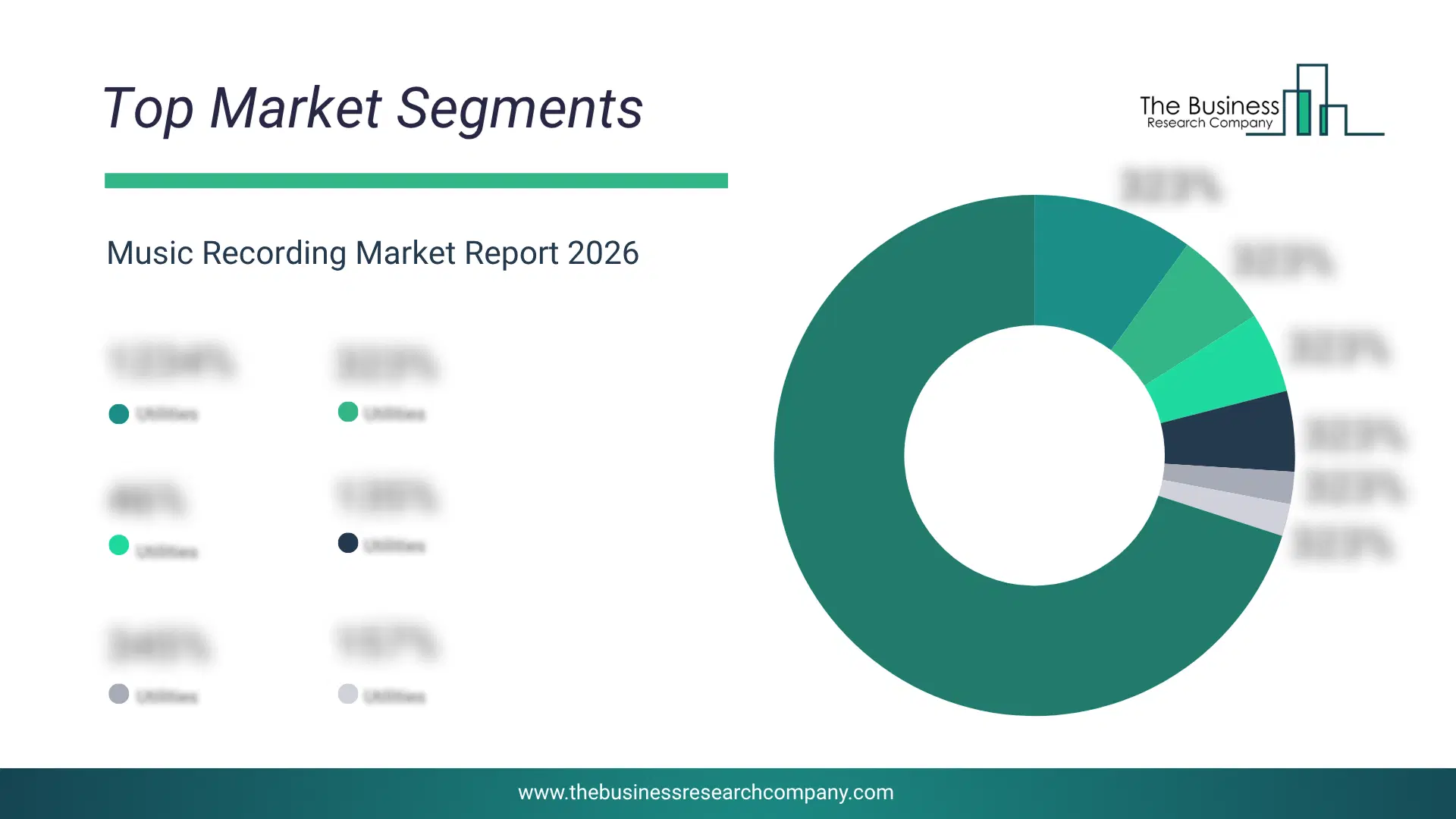
1) By Type: Record Production, Music Publishers, Record Distribution, Sound Recording Studios 2) By Application: Mechanical, Performance, Synchronization, Digital, Other Applications 3) By End-User: Individual, Commercial 4) By Genre: Rock, Hip hop, Pop, Jazz, Other Genres Subsegments: 1) By Record Production: Studio Recording, Live Recording, Mixing and Mastering Services 2) By Music Publishers: Songwriting and Composition, Licensing and Rights Management, Music Catalog Administration 3) By Record Distribution: Physical Distribution (CDs, Vinyl), Digital Distribution (Streaming Services, Downloads), Retail and Online Sales 4) By Sound Recording Studios: Professional Recording Studios, Project Studios, Mobile Recording UnitsThe top segments in the music recording market will be: • Music Publishers will reach $48 Billion by 2030. • Record Distribution will reach $21 Billion by 2030. • Record Production will reach $12 Billion by 2030. • Sound Recording Studios will reach $9 Billion by 2030.What Is The Driver Of The Music Recording Market?
The rising music industry growth is expected to propel the growth of the music recording market in the coming years. The music industry encompasses all businesses and groups that produce, record, distribute, promote, and monetize music, including record labels, artists, distributors, and digital platforms. Music recording is a key component of this industry, enabling captured sound to be produced, polished, and distributed through physical and digital formats for listener consumption, as well as for musical instruction and performance. The expansion of recorded music revenues reflects stronger consumer engagement with music content, encouraging further investment in recording technologies and systems. For instance, in March 2024, according to the Recording Industry Association of America (RIAA), a US-based trade association, total recorded music revenues in the United States grew 8% in 2023 to a record high of $17.1 billion, driven primarily by continued growth in streaming and other formats. Therefore, rising music industry growth is driving the growth of the music recording industry.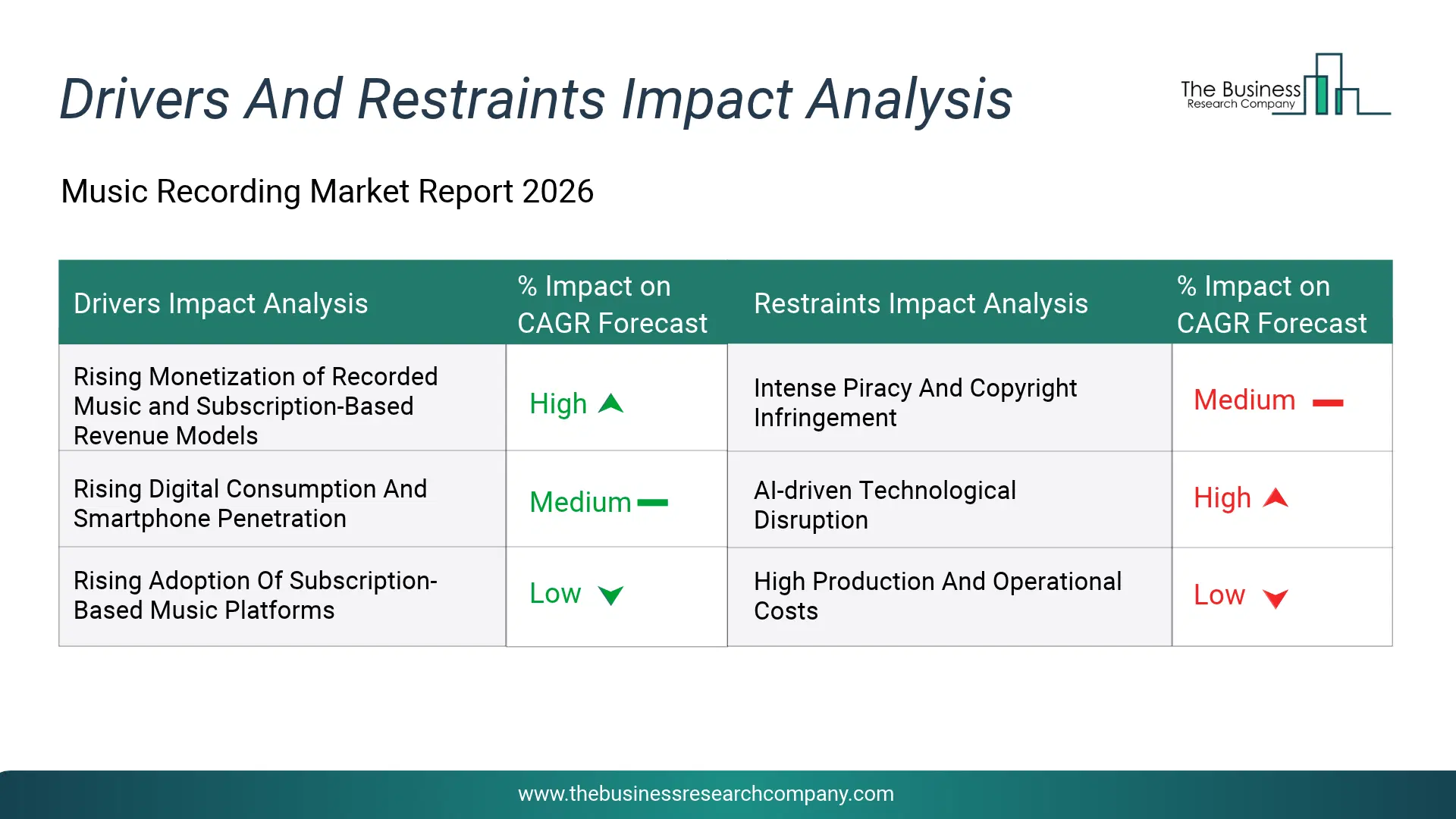
Infographic Chart Showing Key Market Drivers Analysis And Restraints For Music Recording Market
The chart presents an impact analysis of key drivers and restraints, quantifying their relative influence on the market's growth rate and helping assess the balance between growth enablers and limiting factors. This chart offers a high-level perspective; the full report contains more detailed insights.
How Will The Drivers Impact Growth In The Global Music Recording Market?
• Rising Monetization of Recorded Music and Subscription-Based Revenue Models (High) – During the forecast period, the rising monetization of recorded music and subscription-based revenue models is expected to become a key growth driver for the music recording market by 2030. Rising monetization of recorded music and subscription-based revenue models is driving the growth of the music recording market by strengthening the case for entertainment content among audiences and consumers. This factor is influencing how audiences and consumers evaluate and select entertainment content, prompting content producers to respond accordingly. This shift is expected to have a lasting effect on demand patterns within the entertainment sector. This dynamic is expected to remain relevant to content producers and audiences and consumers throughout the forecast period. • Rising Digital Consumption And Smartphone Penetration (Medium) – During the forecast period, the rising digital consumption and smartphone penetration is expected to emerge as a major factor driving the expansion of the music recording market by 2030. Rising digital consumption and smartphone penetration is driving the growth of the music recording market by helping content producers improve how entertainment content are developed, delivered, and supported. Content producers that invest early in digital consumption and smartphone penetration are better positioned to respond to changing requirements from audiences and consumers. This trend is also lowering barriers for smaller content producers to compete with established players. This dynamic is expected to remain relevant to content producers and audiences and consumers throughout the forecast period. • Rising Adoption Of Subscription-Based Music Platforms (Low) – During the forecast period, the rising adoption of subscription-based music platforms is expected to act as a key growth catalyst for the music recording market by 2030. Rising adoption of subscription-based music platforms is driving the growth of the music recording market by creating favorable conditions that support content producers in serving audiences and consumers. This factor, linked to adoption of subscription-based music platforms, is influencing how audiences and consumers evaluate and select entertainment content, prompting content producers to respond accordingly. This shift is expected to have a lasting effect on demand patterns within the entertainment sector. Over the forecast period, this trend is expected to remain an important factor supporting demand across the entertainment sector.How Will The Restraints Impact Growth In The Global Music Recording Market?
• Intense Piracy And Copyright Infringement (High) – During the forecast period, the intense piracy and copyright infringement is restraining the growth of the music recording market by complicating conditions for content producers. Addressing challenges tied to this challenge requires content producers to reassess operations, pricing, or strategy. This dynamic can weigh on overall performance across the entertainment sector. This dynamic is expected to remain a relevant consideration for content producers and audiences and consumers throughout the forecast period. Consequently, intense piracy and copyright infringement can increase costs and constrain the growth of the music recording market. • AI-driven Technological Disruption (Medium) – During the forecast period, the ai-driven technological disruption is restraining the growth of the music recording market by disrupting established supply arrangements for content producers. This factor increases the risk of production interruptions for content producers that depend on timely input delivery. Content producers may need to diversify sourcing or hold additional inventory to manage this exposure. Over the forecast period, this factor is expected to remain an important consideration for content producers operating in the entertainment sector. Consequently, ai-driven technological disruption is increasing operating challenges and restraining the growth of the music recording market. • High Production And Operational Costs (Low) – During the forecast period, the high production and operational costs are restraining the growth of the music recording market by creating operational and financial challenges for content producers. Addressing challenges tied to production and operational costs requires content producers to reassess operations, pricing, or strategy. This dynamic can weigh on overall performance across the entertainment sector. This dynamic is expected to remain a relevant consideration for content producers and audiences and consumers throughout the forecast period. Consequently, high production and operational costs are increasing operating challenges and restraining the growth of the music recording market.Key Players In The Global Music Recording Market
Major companies operating in the music recording market are Sony Corp., Capitol Studios, Bertelsmann SE & Co. KGaA, Universal Music Group, Warner Music, Quad Studios, EastWest Studios, BMG Rights Management GmbH, GMM Grammy Public Company Limited, Abbey Road Studios, Metropolis Studios, Henson Recording Studios, Avex Inc., Emperor Entertainment Group, Electric Lady Studios, Blackbird Studio, Sunset Sound Recorders, Ocean Way Recording, United Recording Studios, Record Plant, Associated Independent Recording, Real World Studios, Sonic Ranch, Studios 301, The Village Studios, Epic Records, Virgin Records, RAK Studios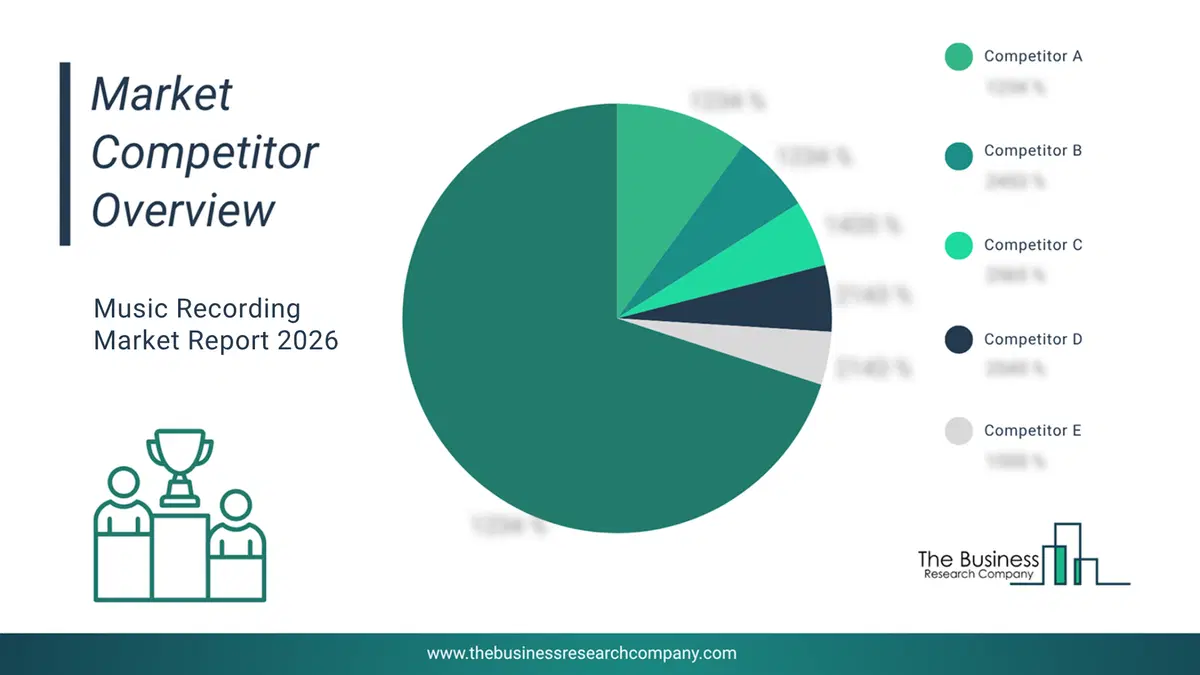
This chart is for illustrative purposes; the full report includes a detailed competitor analysis and comprehensive overview of the top 10 companies in the market.
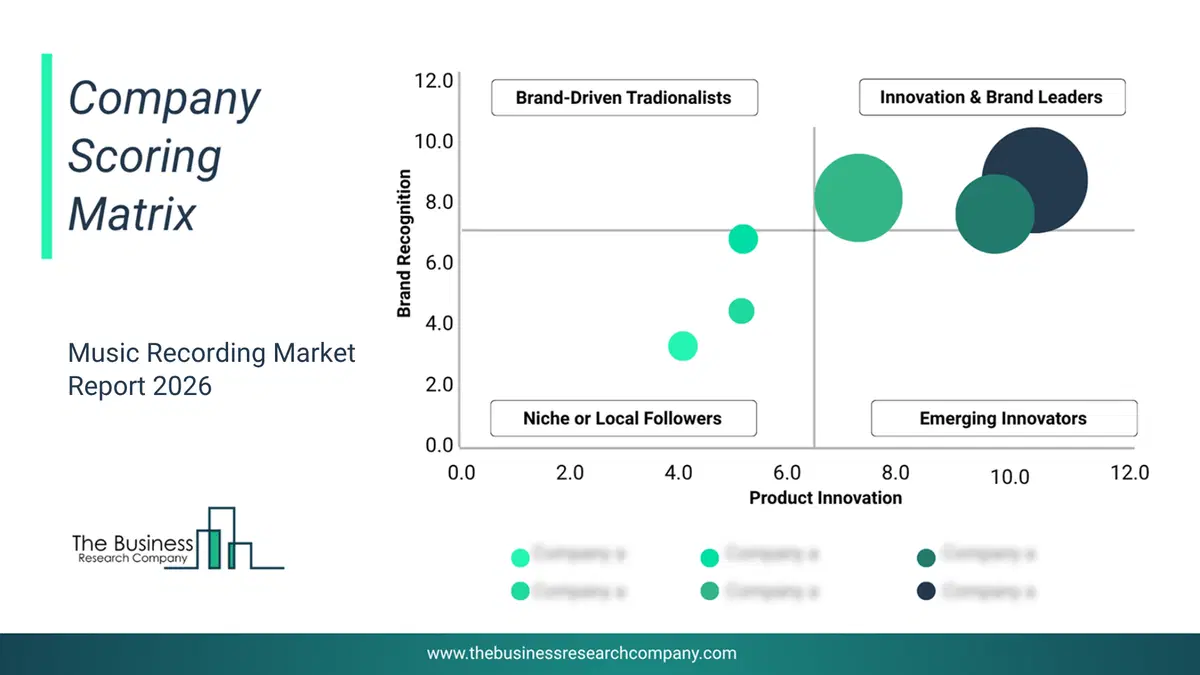
This chart maps companies by product innovation and brand strength, with bubble size indicating relative revenue, helping identify market leaders, challengers, and niche players. This is an illustrative chart; the full report provides a complete and accurate competitive analysis.
Global Music Recording Market Trends and Insights
Major companies operating in the music recording market are focusing on developing innovative solutions such as collaborative creative hubs to enhance production quality and empower artists globally. A collaborative creative hub is a shared space where artists, producers, and creators come together to work, innovate, and produce music or multimedia content collectively. For instance, in March 2024, Sony Music Entertainment Inc., a US-based music company, launched a recording studio in Southeast Asia, located in Jakarta, as a high-tech creative collaboration space. The studio is equipped with advanced audio technology, including immersive sound formats like Dolby Atmos, to support artists in producing world-class music and multimedia content. It also serves as a versatile hub for live performances, content creation, and interactive sessions, fostering collaboration among regional and international creators.What Are Latest Mergers And Acquisitions In The Music Recording Market?
In October 2024, Warner Music Group, a US-based music and entertainment company, acquired Cloud 9 Recordings for an undisclosed amount. With this acquisition, Warner Music Group expanded its footprint in the Benelux music market and strengthened its recorded music catalog and artist roster by integrating one of the Netherlands’ leading independent labels into its global network. Cloud 9 Recordings B.V. is a Netherlands-based independent record label that specializes in developing and promoting Dutch and international artists across mainstream and contemporary music genres, with a strong track record of chart hits and a versatile artist roster.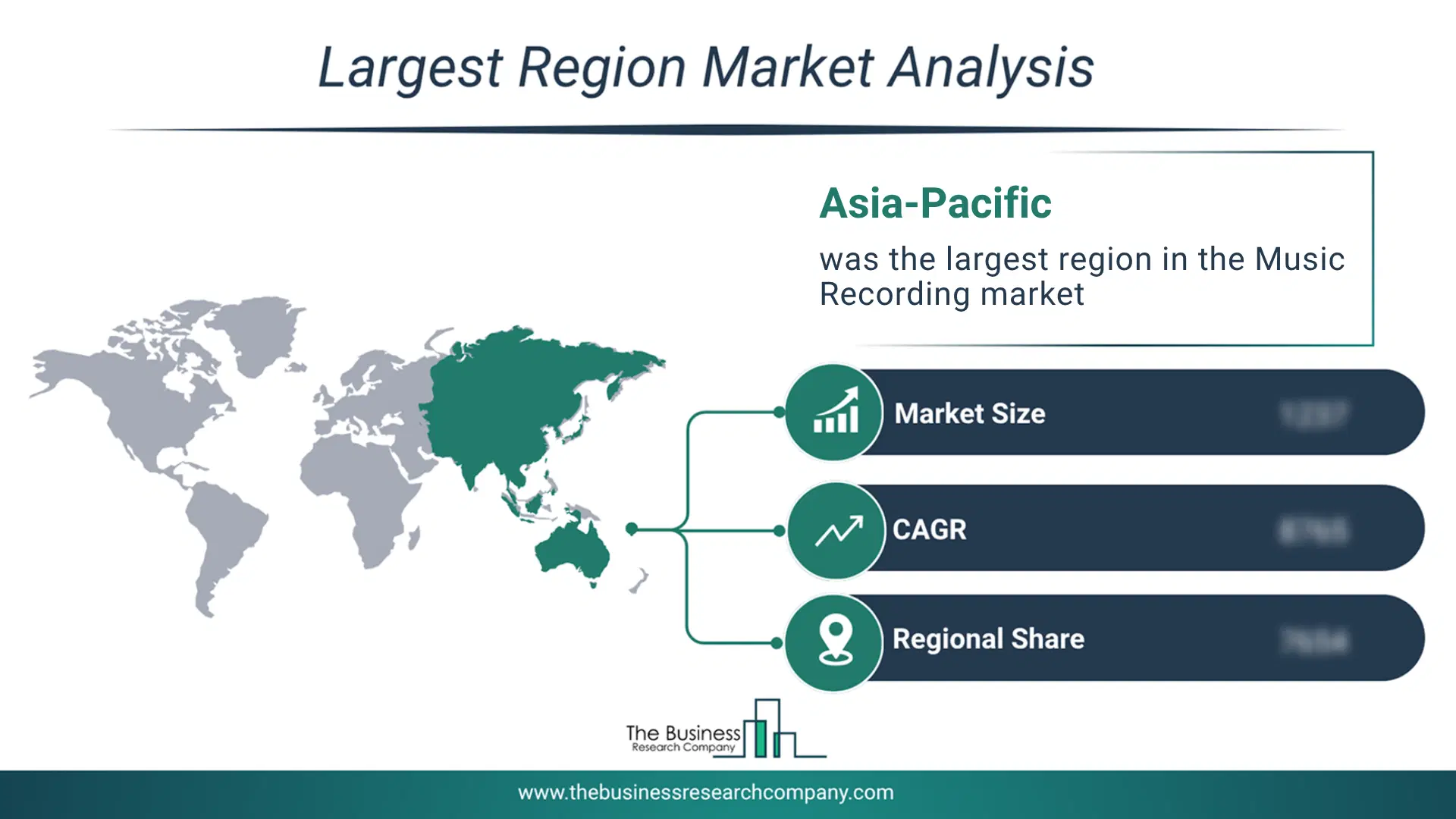
Regional Outlook
Asia-Pacific was the largest region in the music recording market in 2025. Western Europe is expected to be the fastest growing region in the forecast period. The regions covered in this market report are Asia-Pacific, South East Asia, Western Europe, Eastern Europe, North America, South America, Middle East, Africa. The countries covered in this market report are China, India, Japan, Australia, Indonesia, South Korea, Bangladesh, Thailand, Vietnam, Malaysia, Singapore, Philippines, Hong Kong, Taiwan, New Zealand, UK, Germany, France, Italy, Spain, Austria, Belgium, Denmark, Finland, Ireland, Netherlands, Norway, Portugal, Sweden, Switzerland, Russia, Czech Republic, Poland, Romania, Ukraine, USA, Canada, Mexico, Brazil, Chile, Argentina, Colombia, Peru, Saudi Arabia, Israel, Iran, Turkey, UAE, Egypt, Nigeria, South Africa.What Defines the Music Recording Market?
The music recording market includes revenues earned from the production and distribution of musical recordings, from publishing music, or from providing sound recording. Music recording is the electrical, mechanical, electronic, or digital inscription and playback of sound waves such as voice, song, instrumental music, and sound effects. The market value includes the value of related goods sold by the service provider or included within the service offering. Only goods and services traded between entities or sold to end consumers are included.How is Market Value Defined and Measured?
The market value is defined as the revenues that enterprises gain from the sale of goods and/or services within the specified market and geography through sales, grants, or donations in terms of the currency (in USD unless otherwise specified). The revenues for a specified geography are consumption values that are revenues generated by organizations in the specified geography within the market, irrespective of where they are produced. It does not include revenues from resales along the supply chain, either further along the supply chain or as part of other products.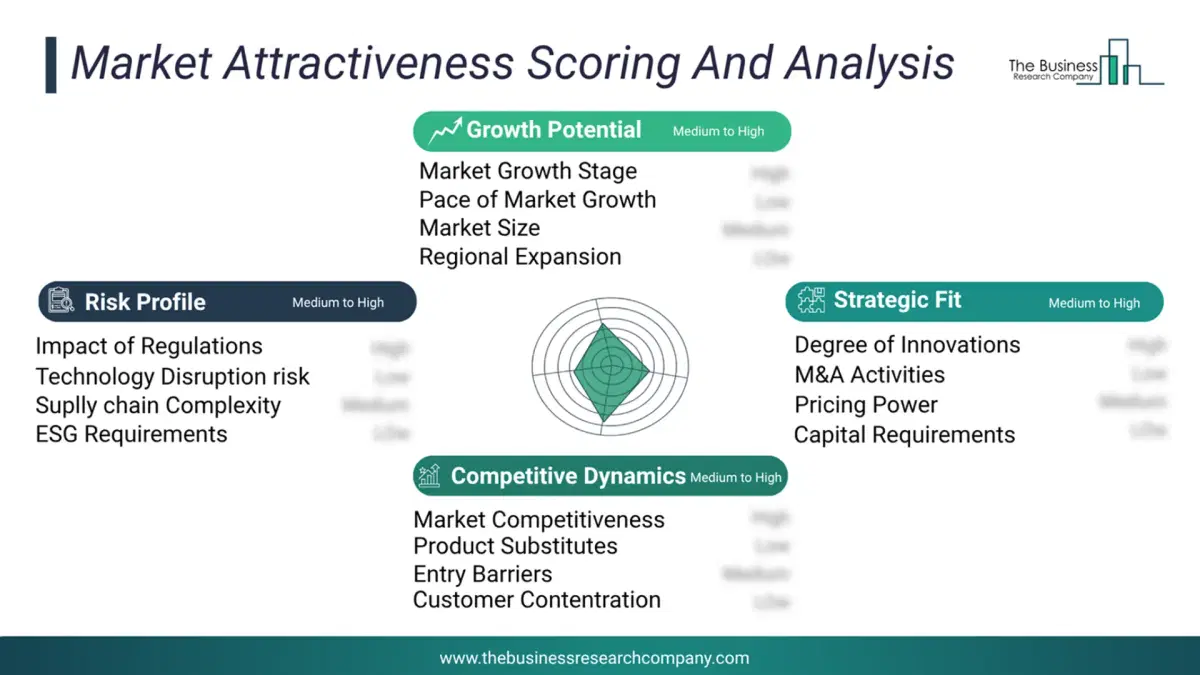
This chart presents market attractiveness based on a quantitative evaluation of growth, competition, strategic alignment, and risk, offering a clear view of opportunity areas for decision-making. This chart is for illustrative purposes; the full report contains the complete analysis.
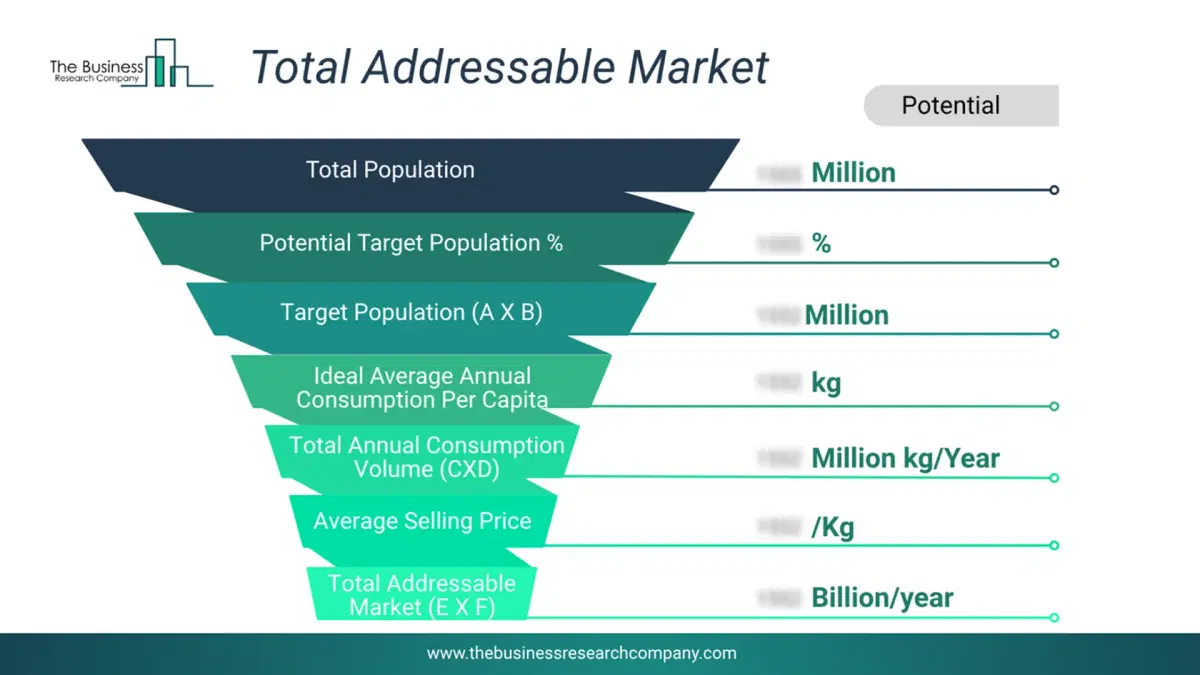
This chart highlights the Total Addressable Market (TAM) by estimating the maximum revenue opportunity using an assumption-driven approach, supporting strategic planning and opportunity sizing across markets. The chart is illustrative; the full report provides a more comprehensive analysis.
What Key Data and Analysis Are Included in the Music Recording Market Report 2026?
The music recording market research report is one of a series of new reports from The Business Research Company that provides market statistics, including industry global market size, regional shares, competitors with the market share, detailed market segments, market trends and opportunities, and any further data you may need to thrive in the music recording industry. The market research report delivers a complete perspective of everything you need, with an in-depth analysis of the current and future state of the industry.Music Recording Market Report Forecast Analysis
| Report Attribute | Details |
|---|---|
| Market Size Value In 2026 | $69.09 billion |
| Revenue Forecast In 2035 | $89.12 billion |
| Growth Rate | CAGR of 6.6% from 2026 to 2035 |
| Base Year For Estimation | 2025 |
| Actual Estimates/Historical Data | 2020-2025 |
| Forecast Period | 2026 - 2030 - 2035 |
| Market Representation | Revenue in USD Billion and CAGR from 2026 to 2035 |
| Segments Covered | Type, Application, End-User, Genre |
| Regional Scope | Asia-Pacific, Western Europe, Eastern Europe, North America, South America, Middle East, Africa |
| Country Scope | The countries covered in the report are Australia, Brazil, China, France, Germany, India, ... |
| Key Companies Profiled | Sony Corp., Capitol Studios, Bertelsmann SE & Co. KGaA, Universal Music Group, Warner Music, Quad Studios, EastWest Studios, BMG Rights Management GmbH, GMM Grammy Public Company Limited, Abbey Road Studios, Metropolis Studios, Henson Recording Studios, Avex Inc., Emperor Entertainment Group, Electric Lady Studios, Blackbird Studio, Sunset Sound Recorders, Ocean Way Recording, United Recording Studios, Record Plant, Associated Independent Recording, Real World Studios, Sonic Ranch, Studios 301, The Village Studios, Epic Records, Virgin Records, RAK Studios |
| Customization Scope | Request for Customization |
| Pricing And Purchase Options | Explore Purchase Options |