

Online Gaming Market Report 2026
Global Outlook – By Type (Action, Adventure, Arcade, Sports, Puzzle, Other Type), By Player Engagement (Social Gamers, Serious Gamers, Core Gamers), By Age group (Less Than 10 Years, 11-24 Years, 25-44 Years, 45 Years And Older), By Platform (Mobile Phone, Personal Computer (PCs), Consoles, Other Platforms) – Market Size, Trends, Strategies, and Forecast to 2030
Online Gaming Market Overview
• Online Gaming market size has reached to $108.89 billion in 2025 • Expected to grow to $172.14 billion in 2030 at a compound annual growth rate (CAGR) of 9.5% • Growth Driver: Mobile Device Boom Propels Online Gaming Market Growth • Market Trend: Krafton Inc. Expands Its Global Reach With The Launch Of Road To Valor Empires • Asia-Pacific was the largest region and fastest growing region.Market Gains By 2030 – Top Opportunities By Segment
Market Gain identifies the most promising market opportunities by highlighting the segments or products expected to generate the highest incremental revenue growth over the next five years.
What Is Covered Under Online Gaming Market?
Online gaming refers to video games that are played over the internet, either on a computer, console, or mobile device. This form of gaming allows individuals to connect and interact with each other in a virtual environment, engaging in competitive or cooperative gameplay. The main types of online gaming are action, adventure, arcade, sports, puzzles, and others. Action games refer to a broad genre of video games characterized by fast-paced gameplay, dynamic challenges, and a focus on player reflexes and hand-eye coordination. It can be played by various gamer types, including social gamers, serious gamers, and core gamers, and it is used by various age groups, including less than 10 years, 11–24 years, 25–44 years, and 45 years and older. These are played on various platforms such as mobile phones, personal computers (PCs), consoles, and others.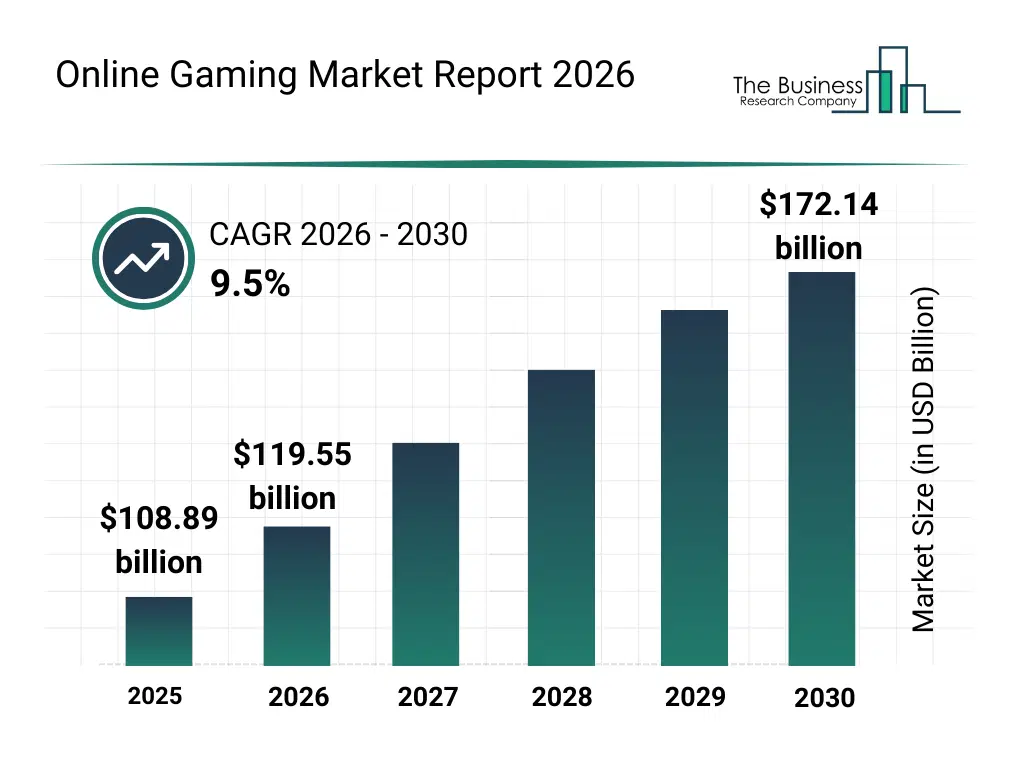
What Is The Online Gaming Market Size and Share 2026?
The online gaming market size has grown strongly in recent years. It will grow from $108.89 billion in 2025 to $119.55 billion in 2026 at a compound annual growth rate (CAGR) of 9.8%. The growth in the historic period can be attributed to rise of online multiplayer games, proliferation of gaming consoles and PCs, expansion of broadband internet, mobile device adoption for gaming, popularity of casual and social gaming.What Is The Online Gaming Market Growth Forecast?
The online gaming market size is expected to see strong growth in the next few years. It will grow to $172.14 billion in 2030 at a compound annual growth rate (CAGR) of 9.5%. The growth in the forecast period can be attributed to growth of vr/ar gaming, cloud gaming adoption, integration of AI for gameplay optimization, rise of esports and competitive gaming, in-game analytics and monetization innovations. Major trends in the forecast period include cloud-based multiplayer gaming, vr/ar gaming experiences, mobile gaming platforms, social and competitive gaming features, in-game analytics and monetization tools.
Global Online Gaming Market Segmentation
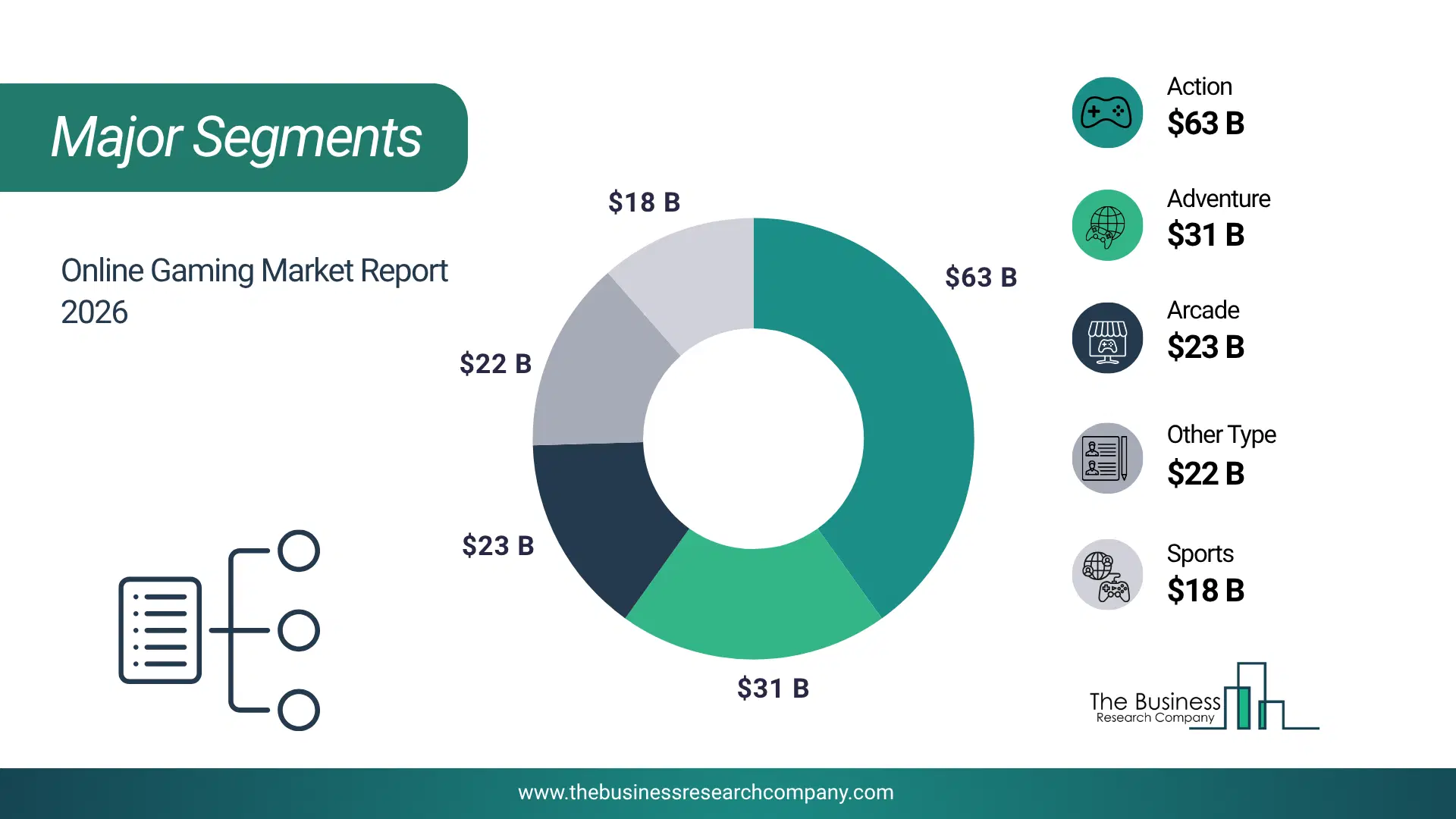
1) By Type: Action, Adventure, Arcade, Sports, Puzzle, Other Type 2) By Player Engagement: Social Gamers, Serious Gamers, Core Gamers 3) By Age group: Less Than 10 Years, 11-24 Years, 25-44 Years, 45 Years And Older 4) By Platform: Mobile Phone, Personal Computer (PCs), Consoles, Other Platforms Subsegments: 1) By Action: Shooter Games, Fighting Games, Platformers 2) By Adventure: Narrative-Driven Games, Exploration Games 3) By Arcade: Classic Arcade Games, Casual Games 4) By Sports: Simulation Sports, Racing Games 5) By Puzzle: Match-3 Games, Logic Puzzles 6) By Other Type: Role-Playing Games (RPG), Strategy Games, Multiplayer Online Battle Arena (MOBA) The top segments in the online gaming market will be: • Action will reach $63.05 Billion by 2030. • Adventure will reach $30.72 Billion by 2030. • Arcade will reach $22.8 Billion by 2030. • Other Type will reach $21.86 Billion by 2030. • Sports will reach $17.95 Billion by 2030.What Is The Driver Of The Online Gaming Market?
The Rising usage of mobile devices is expected to propel the growth of the online gaming market going forward. Mobile devices refer to portable electronic gadgets such as smartphones and tablets that enable wireless communication and computing. The usage of mobile devices is increasing due to enhanced connectivity, affordability, and the shift towards mobile-first digital experiences. The online gaming market supports this trend by offering games optimized for mobile devices, leveraging the convenience, portability, and always-on access provided by smartphones and tablets. For instance, in February 2023, according to the GSM Association (GSMA), a UK-based industry organization that represents the interests of mobile network operators and companies, smartphone penetration in sub-Saharan Africa is projected to rise significantly, reaching 87% by 2030, up from 51% in 2022. Therefore, the rising usage of mobile devices is driving the growth of the online gaming industry.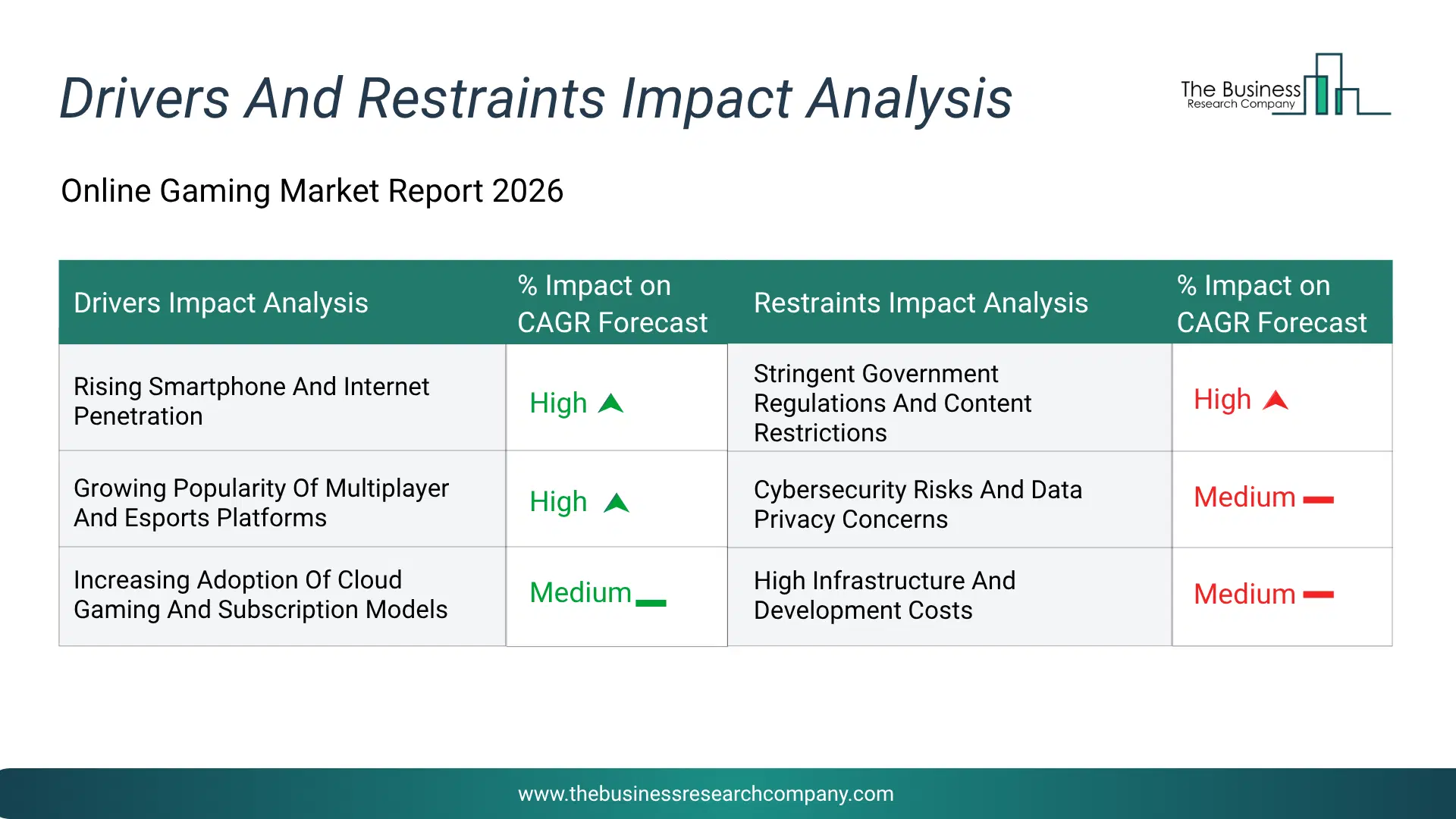
Infographic Chart Showing Key Market Drivers Analysis And Restraints For Online Gaming Market
The chart presents an impact analysis of key drivers and restraints, quantifying their relative influence on the market's growth rate and helping assess the balance between growth enablers and limiting factors. This chart offers a high-level perspective; the full report contains more detailed insights.
How Will The Drivers Impact Growth In The Global Online Gaming Market?
• Rising Smartphone And Internet Penetration (High) – During the forecast period, the rising smartphone and internet penetration is expected to become a key growth driver for the online gaming market by 2030. The rapid increase in smartphone adoption combined with expanding high-speed internet connectivity is a fundamental driver of the online gaming market. Affordable mobile devices and widespread access to 4G/5G networks have made gaming accessible to a broader global audience, especially in emerging economies. This directly supports the market definition, as more users engage with online platforms that offer matchmaking, hosting, and communication services. Increased connectivity enhances real-time multiplayer experiences, boosting user engagement and in-game spending. As a result, the overall ecosystem including gaming services, accessories, and platforms experiences sustained growth. • Growing Popularity Of Multiplayer And Esports Platforms (High) – During the forecast period, the growing popularity of multiplayer and esports platforms is expected to emerge as a major factor driving the expansion of the online gaming market by 2030. The rising demand for multiplayer gaming and esports competitions is significantly driving the online gaming market. Online gaming platforms enable users to interact, compete, and collaborate globally, aligning with services such as tournaments, streaming, and real-time communication outlined in the market definition. Esports events and competitive gaming ecosystems attract massive audiences and sponsorship investments, creating new revenue streams. This trend increases user retention and monetization through subscriptions, in-game purchases, and advertising. Consequently, it strengthens the service-based revenue model and expands the commercial scale of the market. • Increasing Adoption Of Cloud Gaming And Subscription Models (Medium) – During the forecast period, the increasing adoption of cloud gaming and subscription models is expected to act as a key growth catalyst for the online gaming market by 2030. The shift toward cloud gaming and subscription-based services is transforming how users’ access and consume games, thereby accelerating market growth. Cloud gaming eliminates the need for high-end hardware by enabling streaming of games over the internet, directly supporting services like hosting and content delivery. Subscription models provide users with access to a library of games, increasing recurring revenue for service providers. This lowers entry barriers for consumers and broadens the user base, especially among casual gamers. As a result, both service revenues and associated hardware ecosystems benefit, reinforcing the overall market expansion.How Will The Restraints Impact Growth In The Global Online Gaming Market?
• Stringent Government Regulations And Content Restrictions (High) – During the forecast period, the government regulations related to online gaming, including restrictions on content, monetization practices, and user data handling, act as a major restraint for the market. Many countries impose limits on game types, playtime, or in-game purchases (such as loot boxes), which directly affects revenue streams from services like tournaments, hosting, and virtual goods. Compliance with varying regional laws increases operational complexity and costs for service providers. These regulatory barriers can delay game launches and reduce user engagement, thereby slowing overall market expansion. • Cybersecurity Risks And Data Privacy Concerns (High) – During the forecast period, the online gaming platforms are highly vulnerable to cybersecurity threats such as hacking, account theft, and data breaches, which can undermine user trust. Since the market heavily depends on services like matchmaking, communication, and cloud-based hosting, any security lapse can disrupt operations and lead to financial losses. Concerns around personal data misuse discourage users from engaging deeply or making in-game purchases. Additionally, companies must invest heavily in security infrastructure, increasing operational costs. These factors collectively hinder sustained growth and user retention in the market. • High Infrastructure And Development Costs (Medium) – During the forecast period, developing and maintaining high-quality online games and platforms requires substantial investment in servers, cloud infrastructure, and continuous content updates. Advanced features such as real-time multiplayer, VR integration, and streaming demand strong backend capabilities, increasing capital expenditure. Smaller developers may struggle to compete due to these high entry barriers, limiting innovation and diversity in the market. Moreover, ongoing maintenance and scalability requirements add to operational costs. This financial burden can restrict market growth, particularly for new entrants and emerging regions.Key Players In The Global Online Gaming Market
Major companies operating in the online gaming market are Microsoft Corporation; Sony Corporation; Tencent Holdings Limited; Nintendo Co. Ltd.; NetEase Inc.; Valve Corporation; BandAI Namco Entertainment Inc.; Activision Blizzard Inc.; Epic Games Inc.; Electronic Arts Inc.; Take-Two Interactive Software Inc.; Zynga Inc.; Nexon Co. Ltd.; Square Enix Holdings Co. Ltd.; Ubisoft Entertainment SA; Konami Holdings Corporation; NCSoft Corporation; Riot Games Inc.; Unity Technologies SF; GungHo Online Entertainment Inc.; Capcom Co. Ltd.; Supercell Oy; GREE Inc.; Gameloft SE; CD Projekt S.A.; Miniclip SA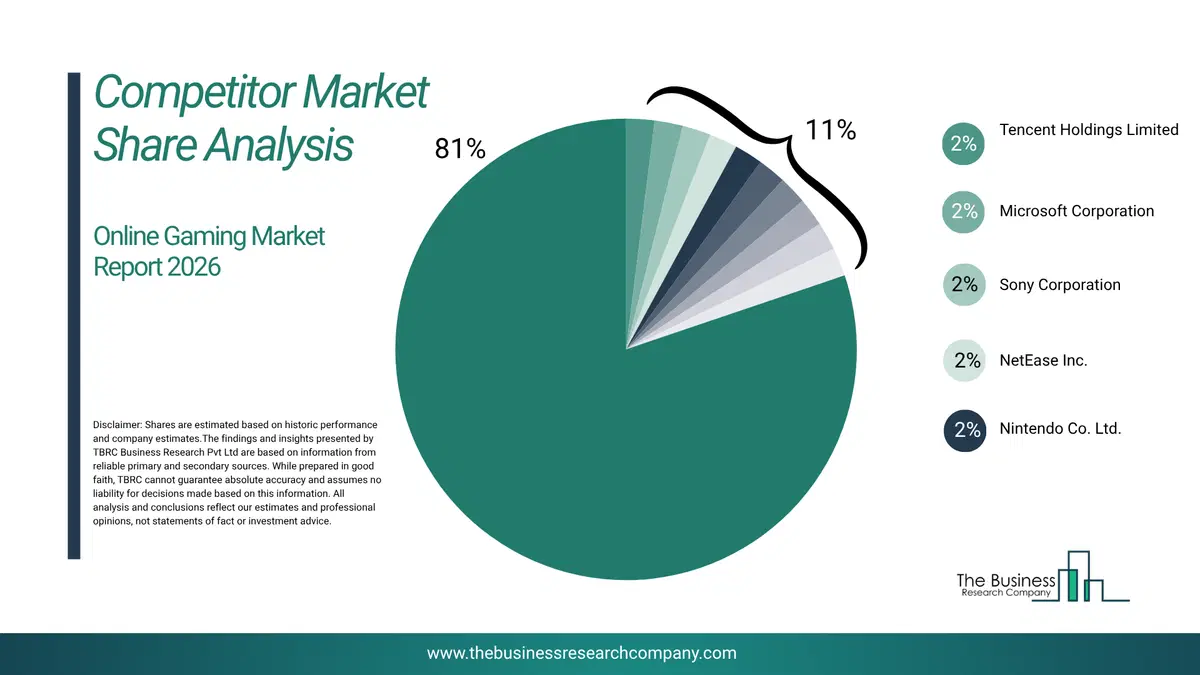
This chart is for illustrative purposes; the full report includes a detailed competitor analysis and comprehensive overview of the top 10 companies in the market.
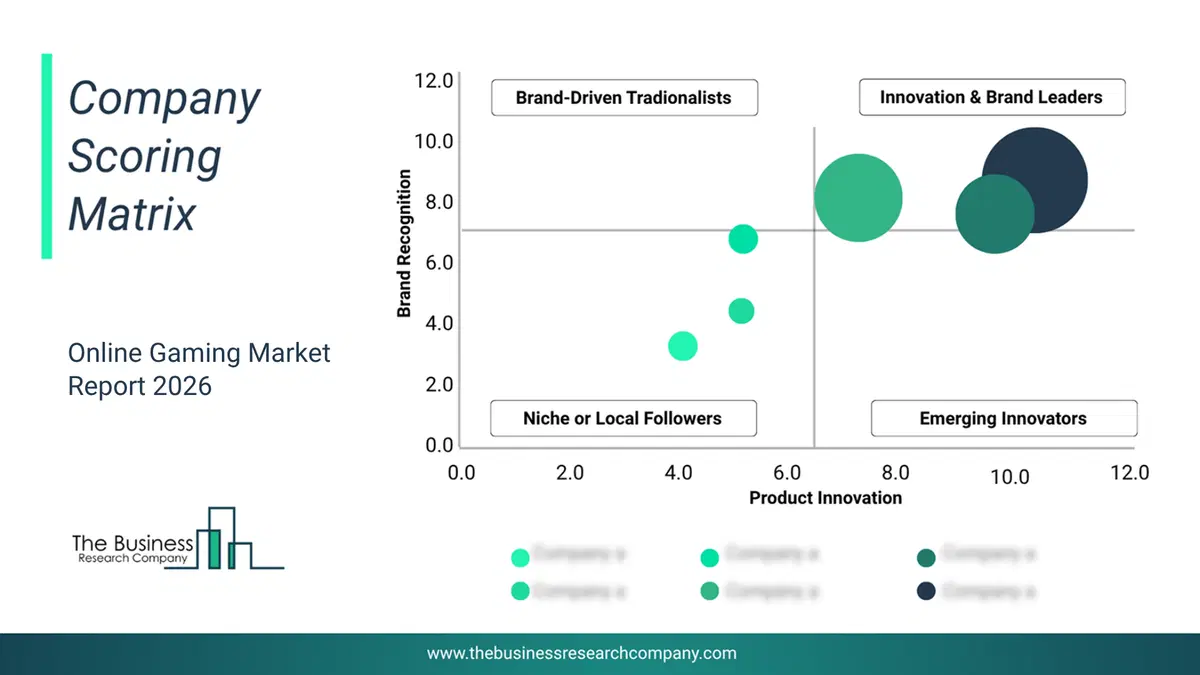
This chart maps companies by product innovation and brand strength, with bubble size indicating relative revenue, helping identify market leaders, challengers, and niche players. This is an illustrative chart; the full report provides a complete and accurate competitive analysis.
Global Online Gaming Market Trends and Insights
Major companies operating in the online gaming market are concentrating on developing innovative titles, such as PvP strategy online games, to attract players, remain competitive, and address the evolving demands of modern gamers. PvP strategy online games are a genre of video games in which players directly compete against one another in real-time strategic battles, prioritizing human-versus-human gameplay rather than computer-controlled opponents. For instance, in August 2023, Krafton Inc., a South Korea-based video game publisher and holding company, launched Road to Valor: Empires in India, an online mobile game designed around real-time PvP strategic combat. The game enables players to compete globally while commanding mythical gods, beasts, and heroes, and features a blend of ancient and mythical themes that allow users to build customized strategies and assemble their own mythical armies. With its realistic graphics, global matchmaking, and large-scale battle mechanics, the game offers immersive competitive experiences that appeal to strategy-focused gamers and strengthen Krafton’s presence in the online gaming market.What Are Latest Mergers And Acquisitions In The Online Gaming Market?
In February 2024, OneVerse, a US-based gaming-tech company, acquired Spartan Poker for an undisclosed amount. Through this acquisition, OneVerse aims to shape the future of online gaming by enhancing its innovation capabilities and delivering unparalleled gaming experiences to users in India and worldwide. Spartan Poker is an India-based online gaming hub providing a world-class platform for poker enthusiasts.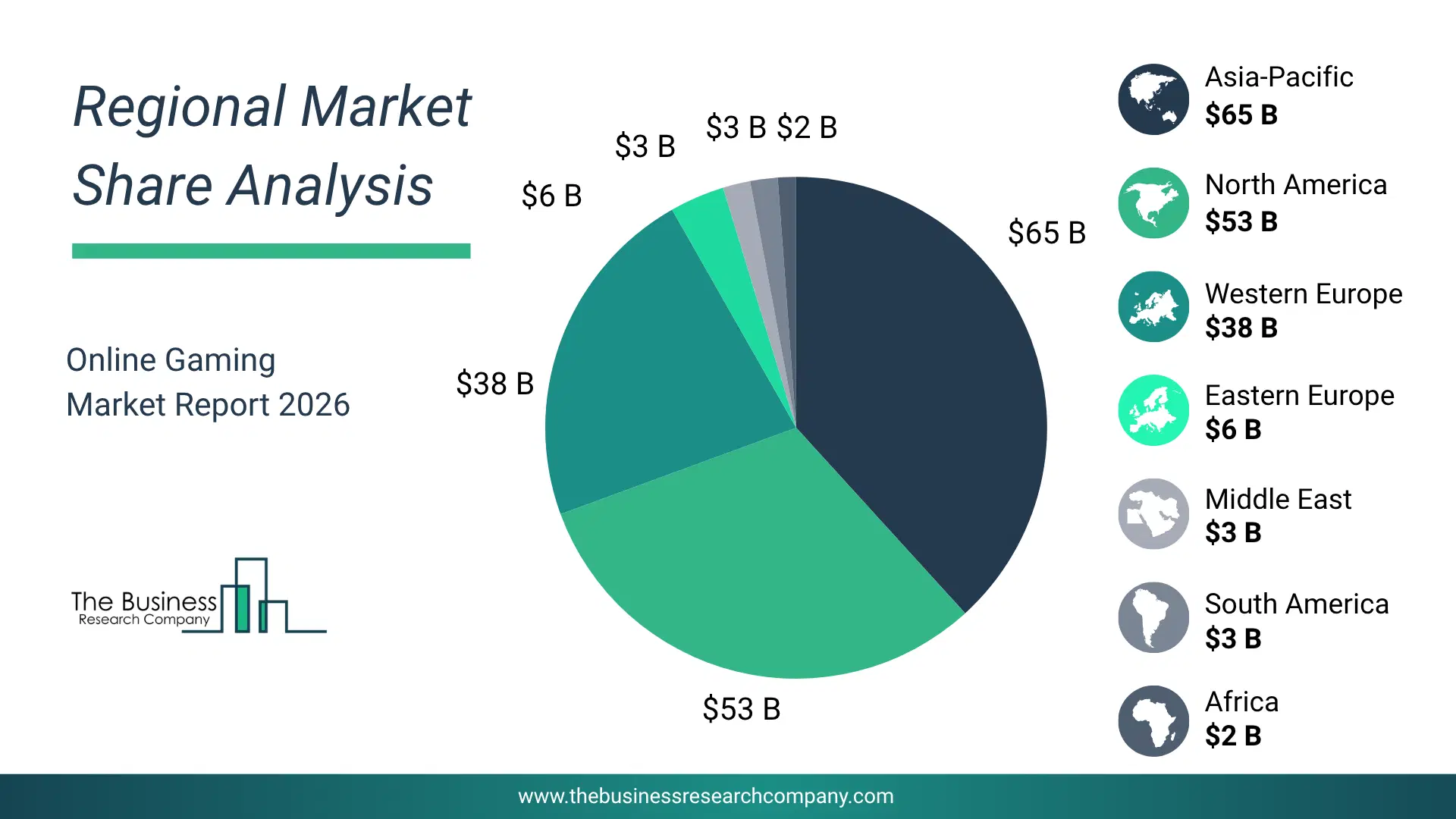
Regional Insights
Asia-Pacific was the largest region in the online gaming market in 2025. Asia-Pacific is expected to be the fastest-growing region in the forecast period. The regions covered in this market report are Asia-Pacific, South East Asia, Western Europe, Eastern Europe, North America, South America, Middle East, Africa. The countries covered in this market report are Australia, Brazil, China, France, Germany, India, Indonesia, Japan, Taiwan, Russia, South Korea, UK, USA, Canada, Italy, SpainWhat Defines the Online Gaming Market?
The online gaming market consists of revenues earned by entities by providing services such as matchmaking services, game hosting, chat and communication, tournaments and events, streaming and broadcasting, and customer support. The market value includes the value of related goods sold by the service provider or included within the service offering. The online gaming market also includes sales of gaming consoles, gaming peripherals, gaming accessories, virtual reality (VR) headsets, and game development tools. Values in this market are ‘factory gate’ values, that is the value of goods sold by the manufacturers or creators of the goods, whether to other entities (including downstream manufacturers, wholesalers, distributors, and retailers) or directly to end customers. The value of goods in this market includes related services sold by the creators of the goods.How is Market Value Defined and Measured?
The market value is defined as the revenues that enterprises gain from the sale of goods and/or services within the specified market and geography through sales, grants, or donations in terms of the currency (in USD unless otherwise specified). The revenues for a specified geography are consumption values that are revenues generated by organizations in the specified geography within the market, irrespective of where they are produced. It does not include revenues from resales along the supply chain, either further along the supply chain or as part of other products.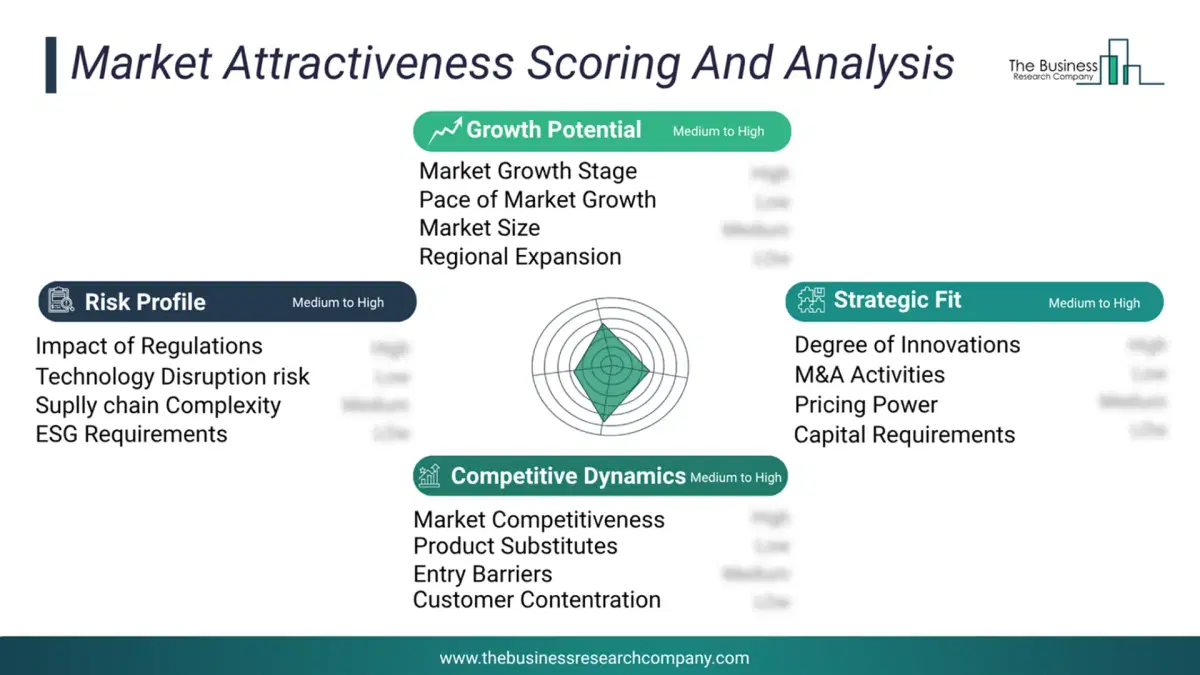
This chart presents market attractiveness based on a quantitative evaluation of growth, competition, strategic alignment, and risk, offering a clear view of opportunity areas for decision-making. This chart is for illustrative purposes; the full report contains the complete analysis.
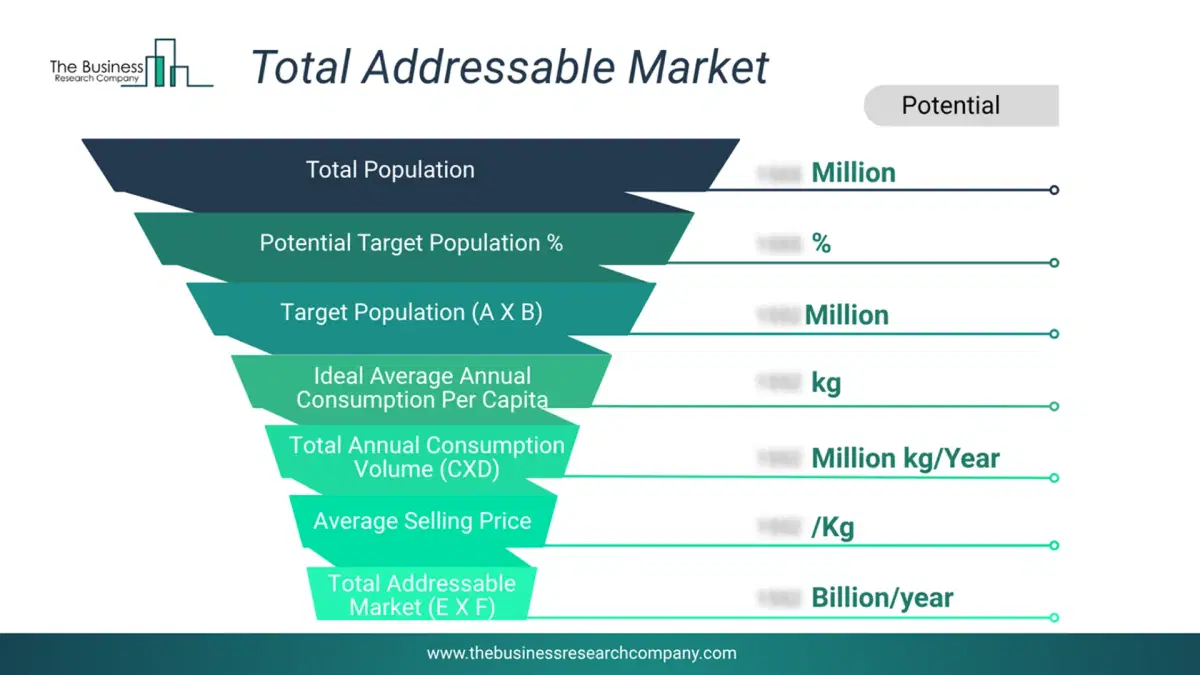
This chart highlights the Total Addressable Market (TAM) by estimating the maximum revenue opportunity using an assumption-driven approach, supporting strategic planning and opportunity sizing across markets. The chart is illustrative; the full report provides a more comprehensive analysis.
What Key Data and Analysis Are Included in the Online Gaming Market Report 2026?
The online gaming market research report is one of a series of new reports from The Business Research Company that provides market statistics, including industry global market size, regional shares, competitors with the market share, detailed market segments, market trends and opportunities, and any further data you may need to thrive in the online gaming industry. The market research report delivers a complete perspective of everything you need, with an in-depth analysis of the current and future state of the industry.Online Gaming Market Report Forecast Analysis
| Report Attribute | Details |
|---|---|
| Market Size Value In 2026 | $119.55 billion |
| Revenue Forecast In 2030 | $172.14 billion |
| Growth Rate | CAGR of 9.8% from 2026 to 2030 |
| Base Year For Estimation | 2025 |
| Actual Estimates/Historical Data | 2020-2025 |
| Forecast Period | 2026 - 2030 |
| Market Representation | Revenue in USD Billion and CAGR from 2026 to 2030 |
| Segments Covered | Type, Player Engagement, Age group, Platform |
| Regional Scope | Asia-Pacific, Western Europe, Eastern Europe, North America, South America, Middle East, Africa |
| Country Scope | The countries covered in the report are Australia, Brazil, China, France, Germany, India, Indonesia, Japan, Taiwan, Russia, South Korea, UK, USA, Canada, Italy, Spain. |
| Key Companies Profiled | Microsoft Corporation; Sony Corporation; Tencent Holdings Limited; Nintendo Co. Ltd.; NetEase Inc.; Valve Corporation; BandAI Namco Entertainment Inc.; Activision Blizzard Inc.; Epic Games Inc.; Electronic Arts Inc.; Take-Two Interactive Software Inc.; Zynga Inc.; Nexon Co. Ltd.; Square Enix Holdings Co. Ltd.; Ubisoft Entertainment SA; Konami Holdings Corporation; NCSoft Corporation; Riot Games Inc.; Unity Technologies SF; GungHo Online Entertainment Inc.; Capcom Co. Ltd.; Supercell Oy; GREE Inc.; Gameloft SE; CD Projekt S.A.; Miniclip SA |
| Customization Scope | Request for Customization |
| Pricing And Purchase Options | Explore Purchase Options |