
Synthetic Gypsum Market Report 2026
Global Outlook – By Type (Citrogypsum, Fluorogypsum, Phosphogypsum, Titanogypsum), By Application (Cement, Plaster, Drywall, Soil Amendments, Glass Manufacturing), By Industry (Construction Industry, Agriculture Industry) – Market Size, Trends, Strategies, and Forecast to 2030
Synthetic Gypsum Market Overview
• Synthetic Gypsum market size has reached to $1.76 billion in 2025 • Expected to grow to $2.47 billion in 2030 at a compound annual growth rate (CAGR) of 7% • Growth Driver: Rising Home Remodeling Trends Boost Demand for Synthetic Gypsum • Market Trend: Strategic Investments Enhance Production Capabilities For Synthetic Gypsum And Calcium Chloride • North America was the largest region in 2025 and Asia-Pacific is the fastest growing region.Market Gains By 2030 – Top Opportunities By Segment
Market Gain identifies the most promising market opportunities by highlighting the segments or products expected to generate the highest incremental revenue growth over the next five years.
What Is Covered Under Synthetic Gypsum Market?
Synthetic gypsum refers to a man-made material that is produced as a byproduct of industrial processes, primarily from the desulfurization of flue gases in power plants (also known as flue gas desulfurization or FGD). It has a chemical composition similar to natural gypsum (calcium sulfate dihydrate) and is used in many of the same applications, such as in the production of drywall, cement, and as a soil amendment in agriculture. The main types of synthetic gypsum are Citrogypsum, Fluorogypsum, Phosphogypsum, and Titanogypsum. Citrogypsum is obtained as a by-product in citric acid manufacturing. Fluorogypsum is a by-product of hydrofluoric acid manufacturing. Phosphogypsum is a by-product of phosphoric acid manufacturing. Titanogypsum is a by-product of titanium dioxide acid manufacturing. These synthetic gypsum types are mainly used in the chemical and agriculture industries.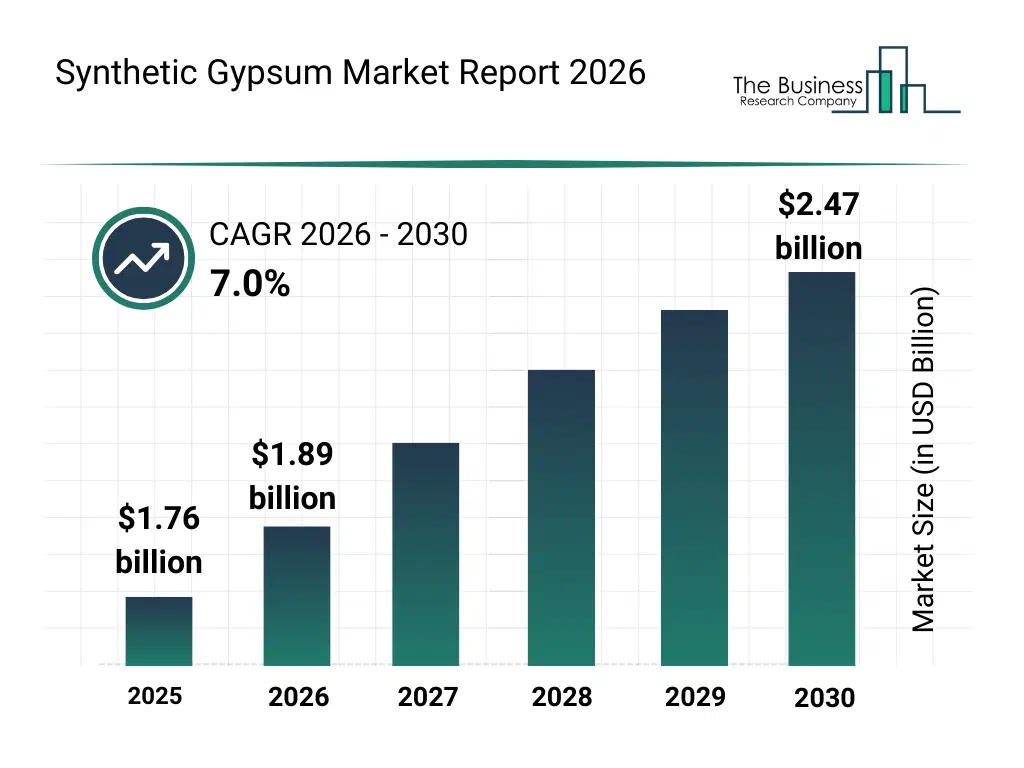
What Is The Synthetic Gypsum Market Size and Share 2026?
The synthetic gypsum market size has grown strongly in recent years. It will grow from $1.76 billion in 2025 to $1.89 billion in 2026 at a compound annual growth rate (CAGR) of 7.4%. The growth in the historic period can be attributed to expansion of coal-fired power generation byproducts, growth of construction material demand, increasing use of gypsum in cement, rising agricultural soil amendment applications, availability of synthetic gypsum supplies.What Is The Synthetic Gypsum Market Growth Forecast?
The synthetic gypsum market size is expected to see strong growth in the next few years. It will grow to $2.47 billion in 2030 at a compound annual growth rate (CAGR) of 7.0%. The growth in the forecast period can be attributed to increasing demand for sustainable construction materials, rising adoption of circular industrial byproducts, expansion of eco-friendly soil conditioners, growing regulatory support for waste reuse, increasing investments in green building materials. Major trends in the forecast period include increasing use of fgd gypsum in construction, rising adoption in cement and drywall production, growing application in soil conditioning, expansion of industrial byproduct utilization, enhanced focus on waste-to-resource practices.
Global Synthetic Gypsum Market Segmentation
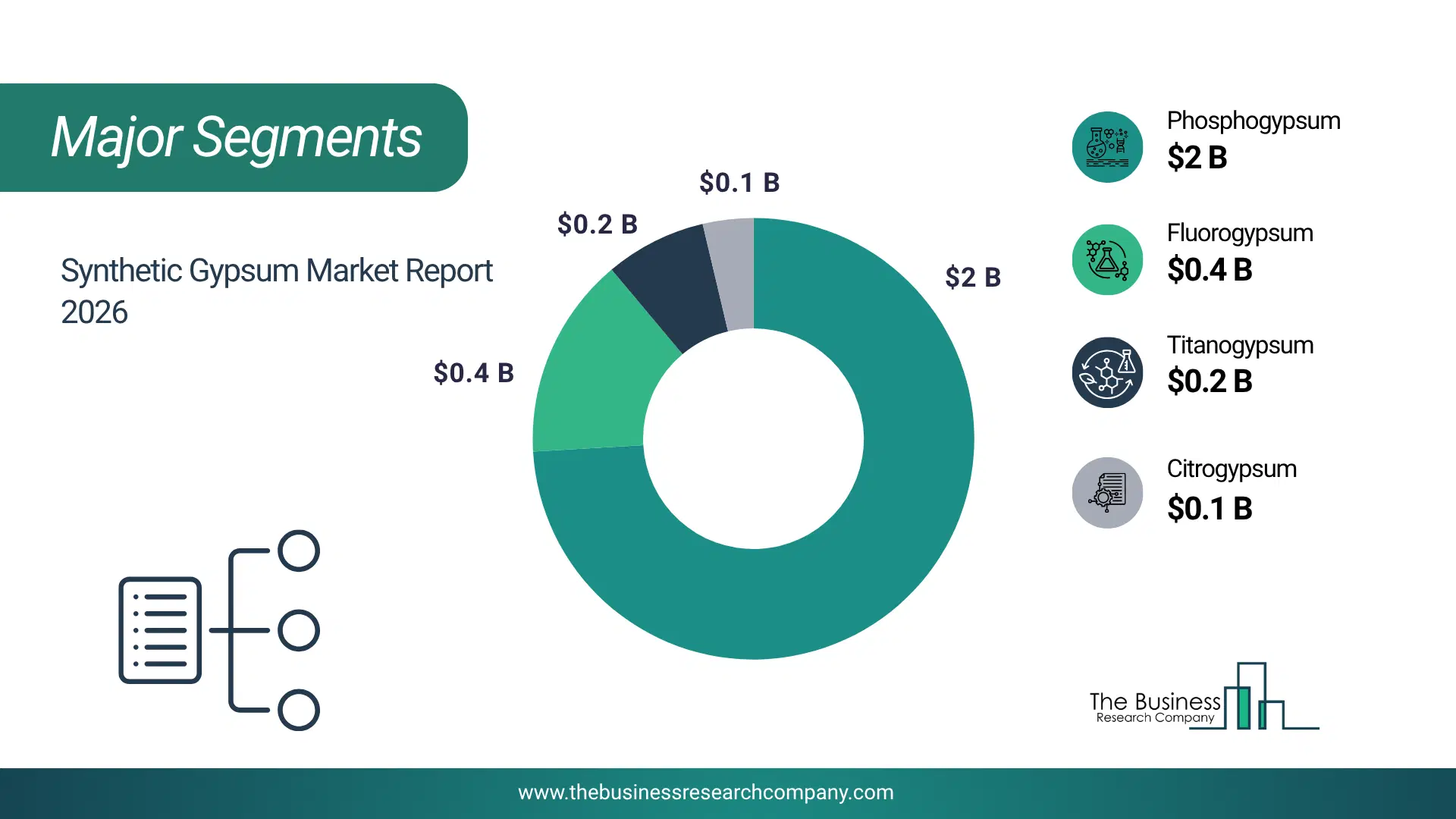
1) By Type: Citrogypsum, Fluorogypsum, Phosphogypsum, Titanogypsum 2) By Application: Cement, Plaster, Drywall, Soil Amendments, Glass Manufacturing 3) By Industry: Construction Industry, Agriculture Industry Subsegments: 1) By Citrogypsum: Agricultural Applications, Construction Applications 2) By Fluorogypsum: Cement And Concrete Production, Soil Conditioning, Industrial Applications 3) By Phosphogypsum: Fertilizer Production, Construction Materials, Environmental Remediation 4) By Titanogypsum: Cement Additives, Environmental Applications The top segments in the synthetic gypsum market will be: • Phosphogypsum will reach $2 Billion by 2030. • Fluorogypsum will reach $0.42 Billion by 2030. • Titanogypsum will reach $0.23 Billion by 2030. • Citrogypsum will reach $0.15 Billion by 2030.What Is The Driver Of The Synthetic Gypsum Market?
An increasing inclination toward home remodeling and renovations is expected to propel the growth of the synthetic gypsum market. Home remodeling and renovations involve updating or improving residential spaces to enhance functionality, aesthetics, and value. Home remodeling is driven by homeowners’ desire for personalized spaces and the rising real estate prices, which make renovating a more cost-effective alternative to moving. Synthetic gypsum is used in decoration for creating architectural moldings, ceiling designs, wall panels, and ornamental features due to its moldability and smooth finish. For instance, in January 2023, according to the Joint Center for Housing Studies of Harvard University, a US-based research center and think tank, national spending on remodeling and repairs for owner-occupied homes was projected to reach $485 billion in 2023, marking a 2.6% increase from the previous year, 2022. Therefore, increasing inclination toward home remodeling and renovations fuels the synthetic gypsum industry.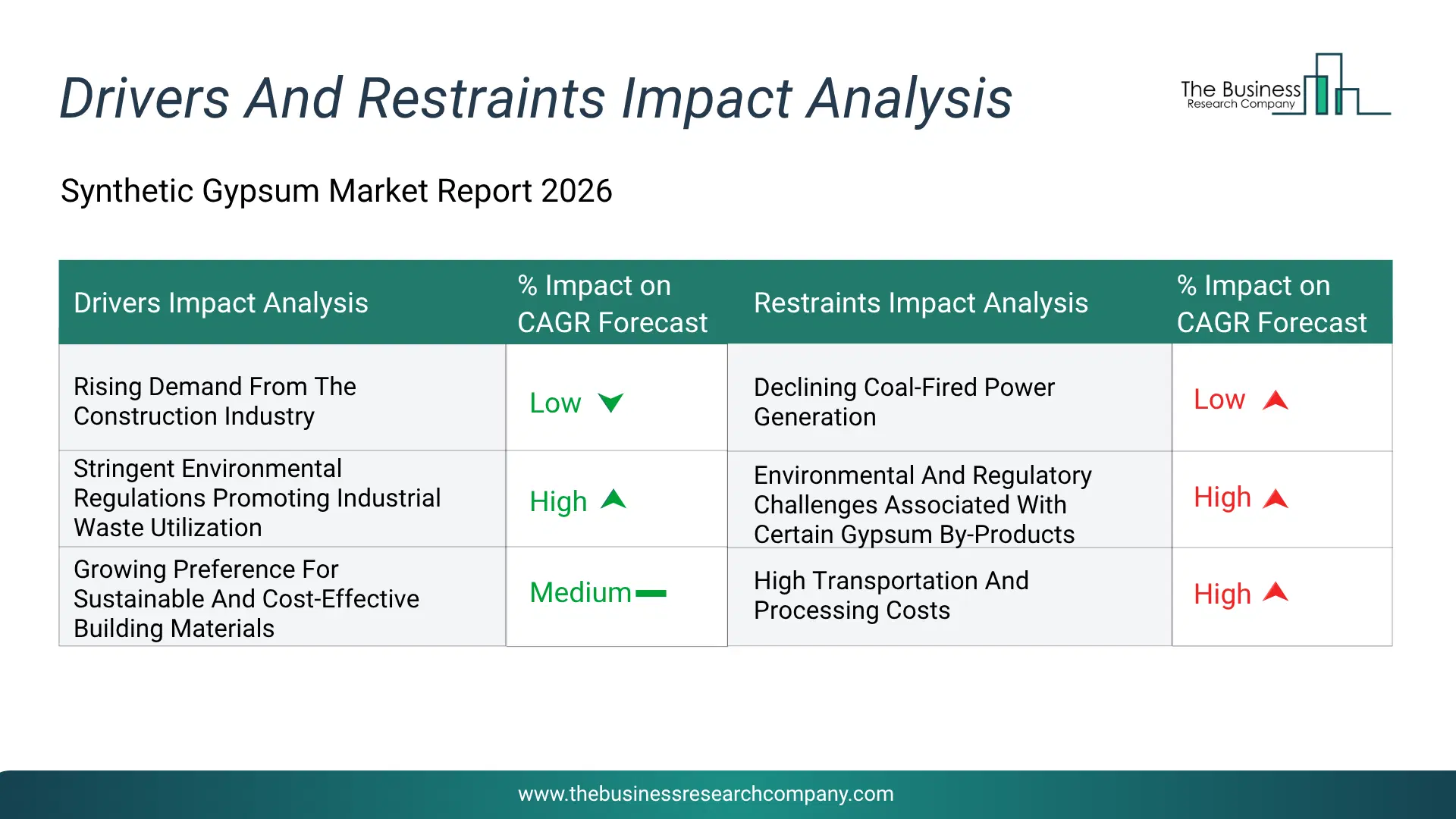
Infographic Chart Showing Key Market Drivers Analysis And Restraints For Synthetic Gypsum Market
The chart presents an impact analysis of key drivers and restraints, quantifying their relative influence on the market's growth rate and helping assess the balance between growth enablers and limiting factors. This chart offers a high-level perspective; the full report contains more detailed insights.
How Will The Drivers Impact Growth In The Global Synthetic Gypsum Market?
• Rising Demand From The Construction Industry (Low) – During the forecast period, the rising demand from the construction industry is expected to emerge as a major factor driving the expansion of the synthetic gypsum market by 2030. expanding residential, commercial, and infrastructure projects are increasing the consumption of gypsum boards, drywall, cement, plaster, and ceiling materials where synthetic gypsum serves as a high-quality raw material. its consistent purity, dependable availability, and compatibility with sustainable construction practices make it a preferred alternative to natural gypsum for manufacturers worldwide. • Stringent Environmental Regulations Promoting Industrial Waste Utilization (High) – During the forecast period, the stringent environmental regulations promoting industrial waste utilization are expected to emerge as a major factor driving the expansion of the synthetic gypsum market by 2030. regulations encouraging sulfur dioxide emission control and circular economy initiatives are increasing the production and utilization of synthetic gypsum generated from flue gas desulfurization systems and other industrial processes. the growing replacement of natural gypsum with recycled alternatives is helping industries improve resource efficiency while reducing waste disposal and environmental impact. • Growing Preference For Sustainable And Cost-Effective Building Materials (Medium) – During the forecast period, the growing preference for sustainable and cost-effective building materials is expected to act as a key growth catalyst for the synthetic gypsum market by 2030. manufacturers and construction companies are increasingly incorporating recycled materials to improve production efficiency, reduce carbon emissions, conserve natural resources, and meet green building certification requirements. the material's uniform composition and high purity further enhance product quality while supporting sustainable construction objectives.How Will The Restraints Impact Growth In The Global Synthetic Gypsum Market?
• Declining Coal-Fired Power Generation (Low) – During the forecast period, declining Coal-Fired Power Generation is a major restraint because flue gas desulfurization (FGD) gypsum, the largest source of synthetic gypsum globally, is produced mainly by coal-fired power plants. As countries accelerate the transition toward renewable energy sources such as solar, wind, hydroelectric, and natural gas, the number of operational coal-fired plants is gradually decreasing. This directly reduces the production of FGD gypsum, creating supply challenges for industries that depend on this material. Manufacturers may face higher procurement costs, supply chain disruptions, and increased dependence on alternative synthetic gypsum sources or natural gypsum. Although demand from construction remains strong, declining availability of FGD gypsum could limit market expansion over the long term, particularly in developed regions pursuing aggressive decarbonization targets. • Environmental And Regulatory Challenges Associated With Certain Gypsum By-Products (High) – During the forecast period, environmental And Regulatory Challenges Associated With Certain Gypsum By-Products continue to hinder market growth because some forms of synthetic gypsum, particularly phosphogypsum, may contain trace amounts of naturally occurring radioactive materials, heavy metals, fluorides, or other impurities depending on the manufacturing process. Regulatory agencies in several countries impose strict guidelines governing the storage, transportation, treatment, and end-use applications of these materials to minimize environmental and public health risks. Compliance with these regulations often requires additional purification technologies, environmental monitoring, and certification procedures, increasing operational costs for manufacturers. In some regions, regulatory restrictions also limit the use of specific synthetic gypsum products in residential construction, reducing their commercial adoption and slowing overall market growth. • High Transportation And Processing Costs (Medium) – During the forecast period, high Transportation And Processing Costs present a significant challenge because synthetic gypsum is a bulky, heavy material that often contains considerable moisture immediately after production. Before it can be utilized in cement plants, wallboard manufacturing, or agricultural applications, it typically requires drying, purification, grinding, and quality testing, all of which increase production expenses. Furthermore, transportation costs are substantial due to the material's weight and relatively low value per ton, making long-distance shipping economically less attractive. In regions where synthetic gypsum production facilities are located far from construction or cement manufacturing hubs, logistics costs can significantly reduce profitability and competitiveness compared to locally available natural gypsum. These economic factors remain a key barrier to wider market penetration.Key Players In The Global Synthetic Gypsum Market
Major companies operating in the synthetic gypsum market are Boral Limited, Knauf Gips KG, Compagnie de Saint-Gobain SA, USG Corporation, National Gypsum Company, Etex NV, Eagle Materials Inc., LafargeHolcim Ltd., Georgia-Pacific LLC, American Gypsum Company, Continental Building Products Inc., PABCO Building Products LLC, Yoshino Gypsum Co. Ltd., Votorantim Cimentos, Heidelberg Materials AG, CRH plc, James Hardie Industries plc, Taiheiyo Cement Corporation, CNBM (China National Building Material Group), SCG (Siam Cement Group), Sumitomo Osaka Cement Co., Ltd.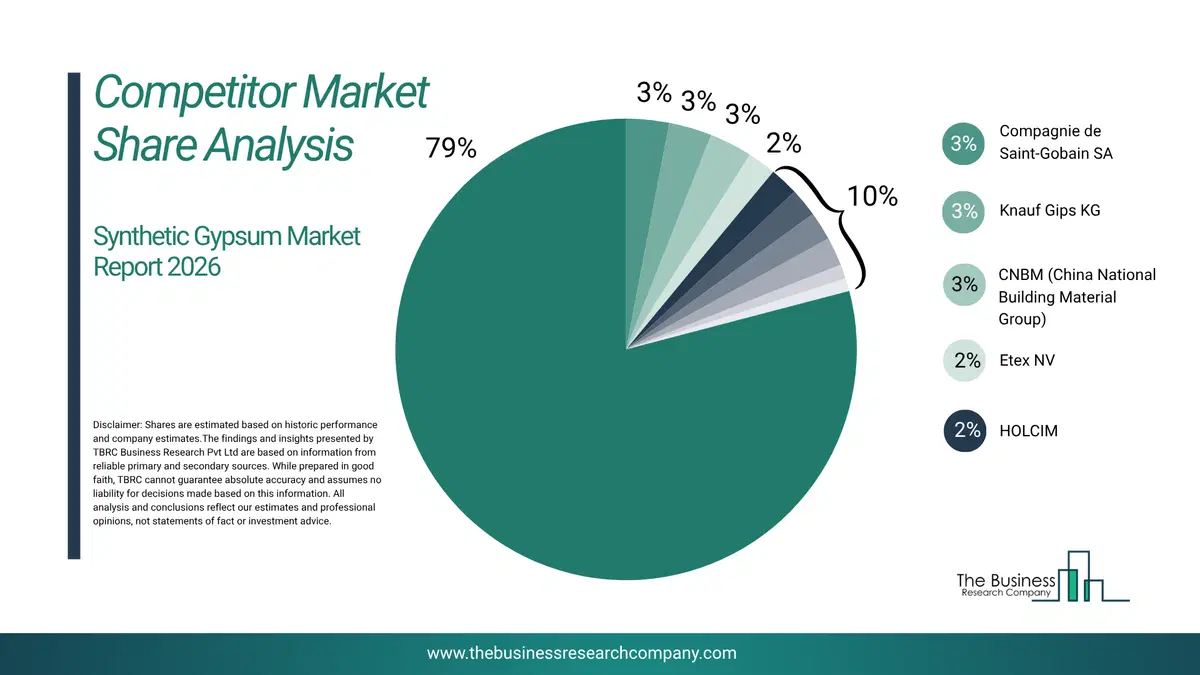
This chart is for illustrative purposes; the full report includes a detailed competitor analysis and comprehensive overview of the top 10 companies in the market.
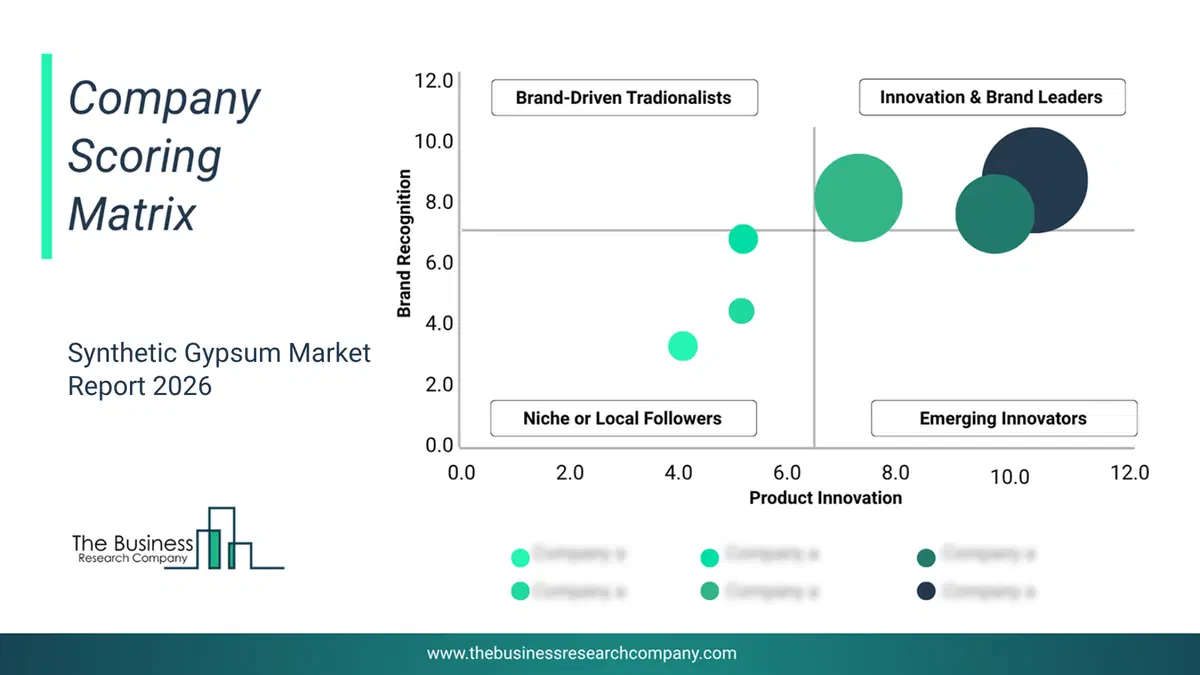
This chart maps companies by product innovation and brand strength, with bubble size indicating relative revenue, helping identify market leaders, challengers, and niche players. This is an illustrative chart; the full report provides a complete and accurate competitive analysis.
Global Synthetic Gypsum Market Trends and Insights
Major companies operating in the synthetic gypsum market are focusing on expanding their manufacturing and operational capabilities to meet the rising demand driven by construction and remodeling activities. Synthetic gypsum, a byproduct of flue-gas desulfurization and industrial processes, is widely used in producing drywall, plaster, and cement, offering environmentally friendly alternatives to natural gypsum. For instance, May 2024, EuroChem, a Switzerland-based producer of fertilizers and other chemical products, launched Phase III of Kazakhstan chemical complex project, a plastic packaging solution. The Phase III of the Kazakhstan chemical complex project by EuroChem will produce synthetic gypsum and calcium chloride as byproducts. These byproducts will subsequently be utilized in construction materials and as reagents for the road construction, coal, and hydrocarbon sectors.What Are Latest Mergers And Acquisitions In The Synthetic Gypsum Market?
In July 2023, Charah Solutions, Inc -US-based a is a leading provider of environmental and maintenance services to the power generation industry, focusing on the management of coal ash and other byproducts to acquire Capital Partners (SER) for unclosed amount. The acquisition of Charah Solutions, Inc. by SER Capital Partners is intended to strengthen Charah's role in providing sustainable environmental services, such as coal ash management and remediation. Aligned with SER's focus on sustainability-driven investments, this move supports Charah in expanding its offerings and advancing its mission to deliver innovative environmental solutions within the power generation sector.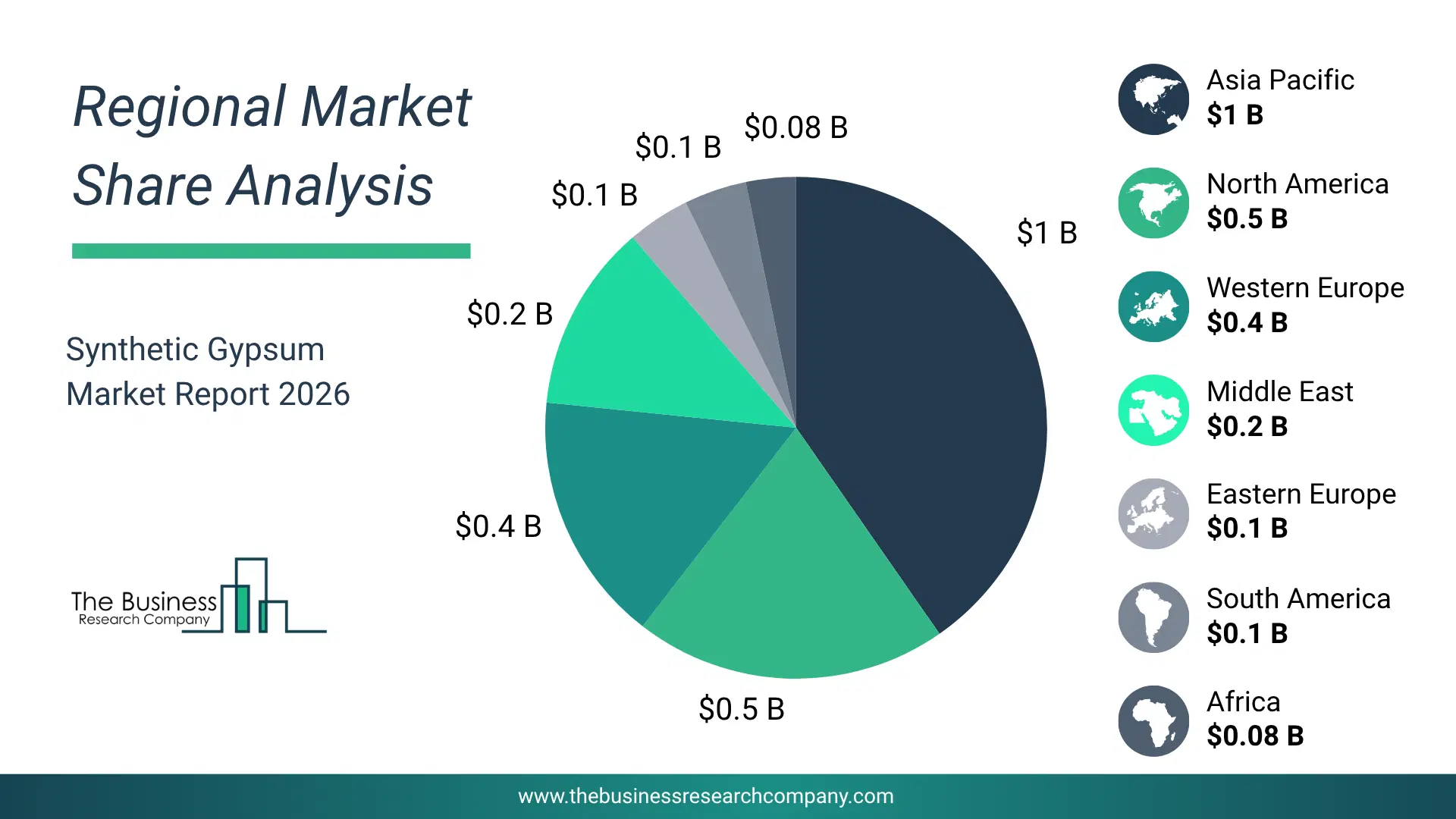
Regional Insights
North America was the largest region in the synthetic gypsum market in 2025. Asia-Pacific is expected to be the fastest-growing region in the forecast period. The regions covered in this market report are Asia-Pacific, South East Asia, Western Europe, Eastern Europe, North America, South America, Middle East, Africa The countries covered in this market report are Australia, Brazil, China, France, Germany, India, Indonesia, Japan, Taiwan, Russia, South Korea, UK, USA, Canada, Italy, SpainWhat Defines the Synthetic Gypsum Market?
The synthetic gypsum market consists of sales of marine gypsum and titan gypsum. Values in this market are ‘factory gate’ values, that is, the value of goods sold by the manufacturers or creators of the goods, whether to other entities (including downstream manufacturers, wholesalers, distributors, and retailers) or directly to end customers. The value of goods in this market includes related services sold by the creators of the goods.How is Market Value Defined and Measured?
The market value is defined as the revenues that enterprises gain from the sale of goods and/or services within the specified market and geography through sales, grants, or donations in terms of the currency (in USD unless otherwise specified). The revenues for a specified geography are consumption values that are revenues generated by organizations in the specified geography within the market, irrespective of where they are produced. It does not include revenues from resales along the supply chain, either further along the supply chain or as part of other products.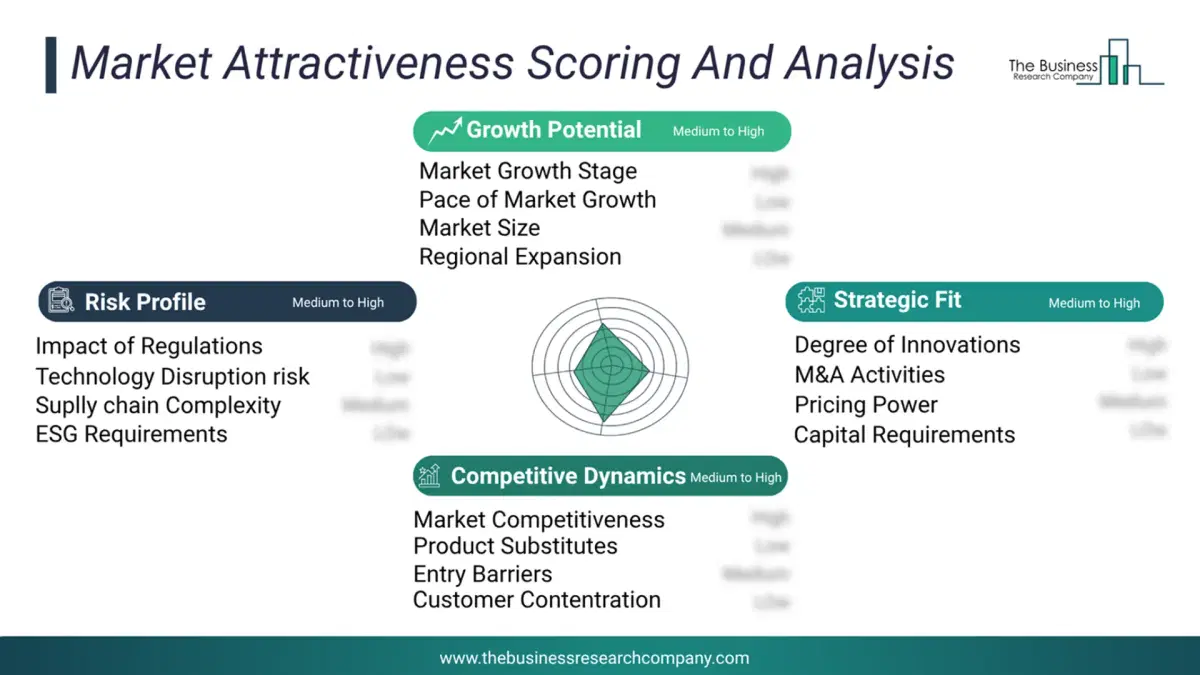
This chart presents market attractiveness based on a quantitative evaluation of growth, competition, strategic alignment, and risk, offering a clear view of opportunity areas for decision-making. This chart is for illustrative purposes; the full report contains the complete analysis.
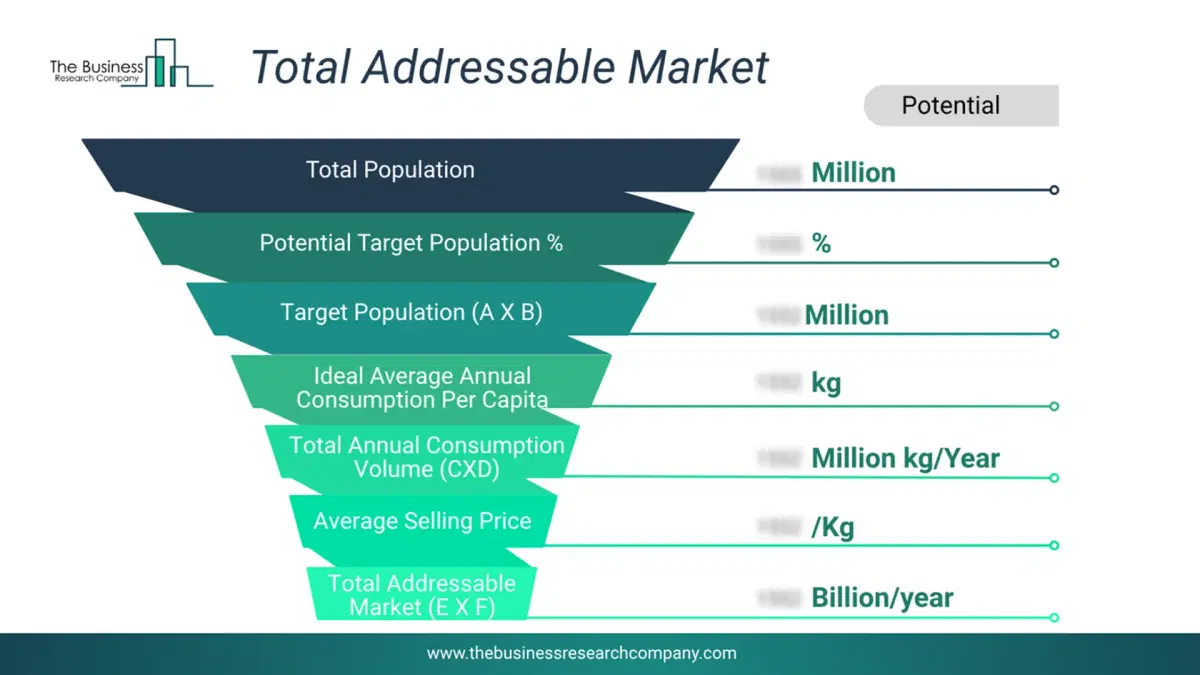
This chart highlights the Total Addressable Market (TAM) by estimating the maximum revenue opportunity using an assumption-driven approach, supporting strategic planning and opportunity sizing across markets. The chart is illustrative; the full report provides a more comprehensive analysis.
What Key Data and Analysis Are Included in the Synthetic Gypsum Market Report 2026?
The synthetic gypsum market research report is one of a series of new reports from The Business Research Company that provides market statistics, including industry global market size, regional shares, competitors with the market share, detailed market segments, market trends and opportunities, and any further data you may need to thrive in the synthetic gypsum industry. The market research report delivers a complete perspective of everything you need, with an in-depth analysis of the current and future state of the industry.Synthetic Gypsum Market Report Forecast Analysis
| Report Attribute | Details |
|---|---|
| Market Size Value In 2026 | $1.89 billion |
| Revenue Forecast In 2030 | $2.47 billion |
| Growth Rate | CAGR of 7% from 2026 to 2030 |
| Base Year For Estimation | 2025 |
| Actual Estimates/Historical Data | 2020-2025 |
| Forecast Period | 2026 - 2030 |
| Market Representation | Revenue in USD Billion and CAGR from 2026 to 2030 |
| Segments Covered | Type, Application, Industry |
| Regional Scope | Asia-Pacific, Western Europe, Eastern Europe, North America, South America, Middle East, Africa |
| Country Scope | The countries covered in the report are Australia, Brazil, China, France, Germany, India, Indonesia, Japan, Taiwan, Russia, South Korea, UK, USA, Canada, Italy, Spain. |
| Key Companies Profiled | Boral Limited, Knauf Gips KG, Compagnie de Saint-Gobain SA, USG Corporation, National Gypsum Company, Etex NV, Eagle Materials Inc., LafargeHolcim Ltd., Georgia-Pacific LLC, American Gypsum Company, Continental Building Products Inc., PABCO Building Products LLC, Yoshino Gypsum Co. Ltd., Votorantim Cimentos, Heidelberg Materials AG, CRH plc, James Hardie Industries plc, Taiheiyo Cement Corporation, CNBM (China National Building Material Group), SCG (Siam Cement Group), Sumitomo Osaka Cement Co., Ltd. |
| Customization Scope | Request for Customization |
| Pricing And Purchase Options | Explore Purchase Options |