
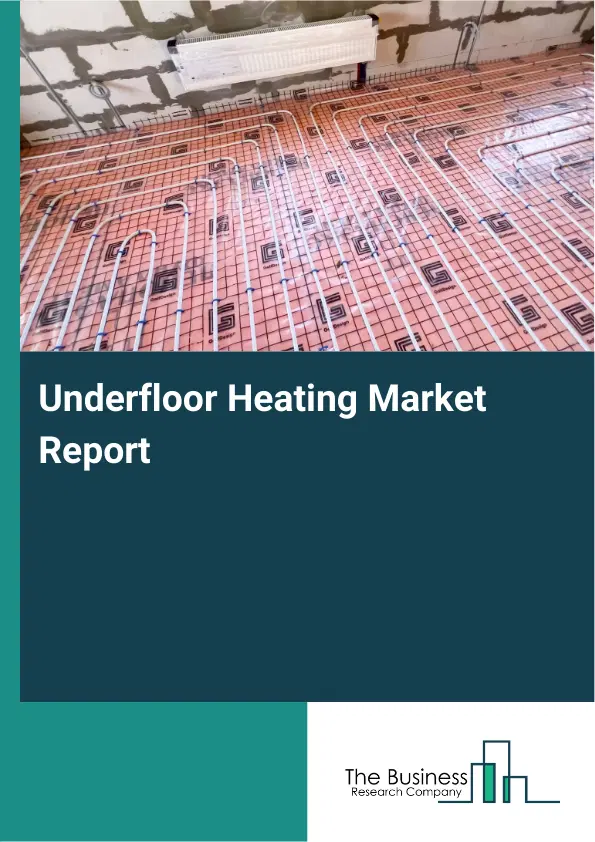
Underfloor Heating Market Report 2026
Global Outlook – By Type (Hydronic Underfloor Heating, Electric Underfloor Heating), By Installation (New installations, Retrofit installations), By Application (Residential, Commercial, Institutional) – Market Size, Trends, Strategies, and Forecast to 2030
Underfloor Heating Market Overview
• Underfloor Heating market size has reached to $5.47 billion in 2025 • Expected to grow to $7.3 billion in 2030 at a compound annual growth rate (CAGR) of 6% • Growth Driver: Government Support Fuels Growth In The Underfloor Heating Solutions Market • Market Trend: Innovations In Electric Underfloor Heating For Efficient And Even Home Comfort • Western Europe was the largest region and fastest growing region.Market Gains By 2030 – Top Opportunities By Segment
Market Gain identifies the most promising market opportunities by highlighting the segments or products expected to generate the highest incremental revenue growth over the next five years.
What Is Covered Under Underfloor Heating Market?
The underfloor heating are systems that are used to warm the floor or act as a primary heat source. Underfloor heating works by distributing a lower temperature of warm water through a circuit of pipes under the finished floor. Intelligent thermostats then monitor and control the heat to maintain a consistent temperature throughout the property or individual zones. The main types of underfloor heating are hydronic underfloor heating and electric underfloor heating. A hydronic underfloor heating system consists of a network of pipes running beneath the floor with hot water heated by a boiler flowing through the pipes to heat the substrate and, as a result, the room. Heating cables are used for the comfortable radiant heating of new or refurbished commercial buildings. The installations are of two types: new installations and retrofit installations. Underfloor heating is used in residential, commercial, institutional, and industrial areas.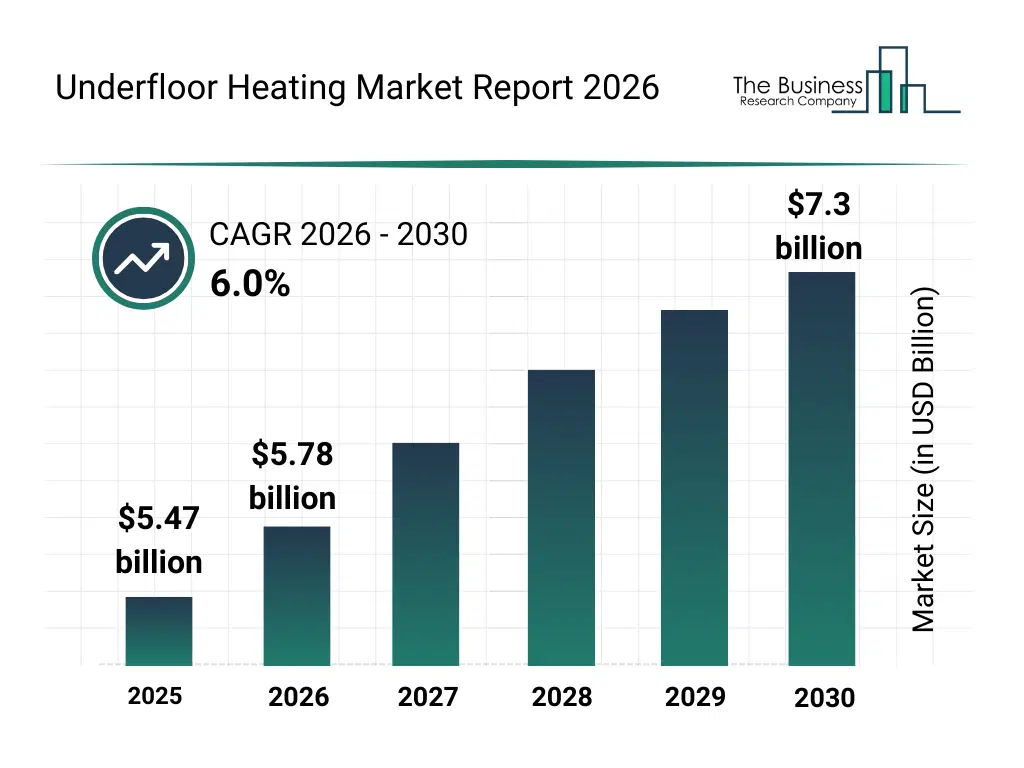
What Is The Underfloor Heating Market Size and Share 2026?
The underfloor heating market size has grown strongly in recent years. It will grow from $5.47 billion in 2025 to $5.78 billion in 2026 at a compound annual growth rate (CAGR) of 5.7%. The growth in the historic period can be attributed to growing use of traditional heating systems, reliance on imported heating components, expansion in residential and commercial construction, rising awareness of indoor comfort solutions, availability of low-cost electric heating products.What Is The Underfloor Heating Market Growth Forecast?
The underfloor heating market size is expected to see strong growth in the next few years. It will grow to $7.3 billion in 2030 at a compound annual growth rate (CAGR) of 6.0%. The growth in the forecast period can be attributed to increasing adoption of energy-efficient heating, rising integration of smart thermostats and IoT systems, growth in retrofit heating installations, advancements in heating cable and piping materials, increasing regulatory focus on sustainable building technologies. Major trends in the forecast period include increasing demand for energy-efficient heating solutions, rising adoption of thermostat-controlled heating systems, growth in retrofit underfloor heating installations, expansion of low-temperature heating technologies, increasing use of advanced piping and heating cable materials.
Global Underfloor Heating Market Segmentation
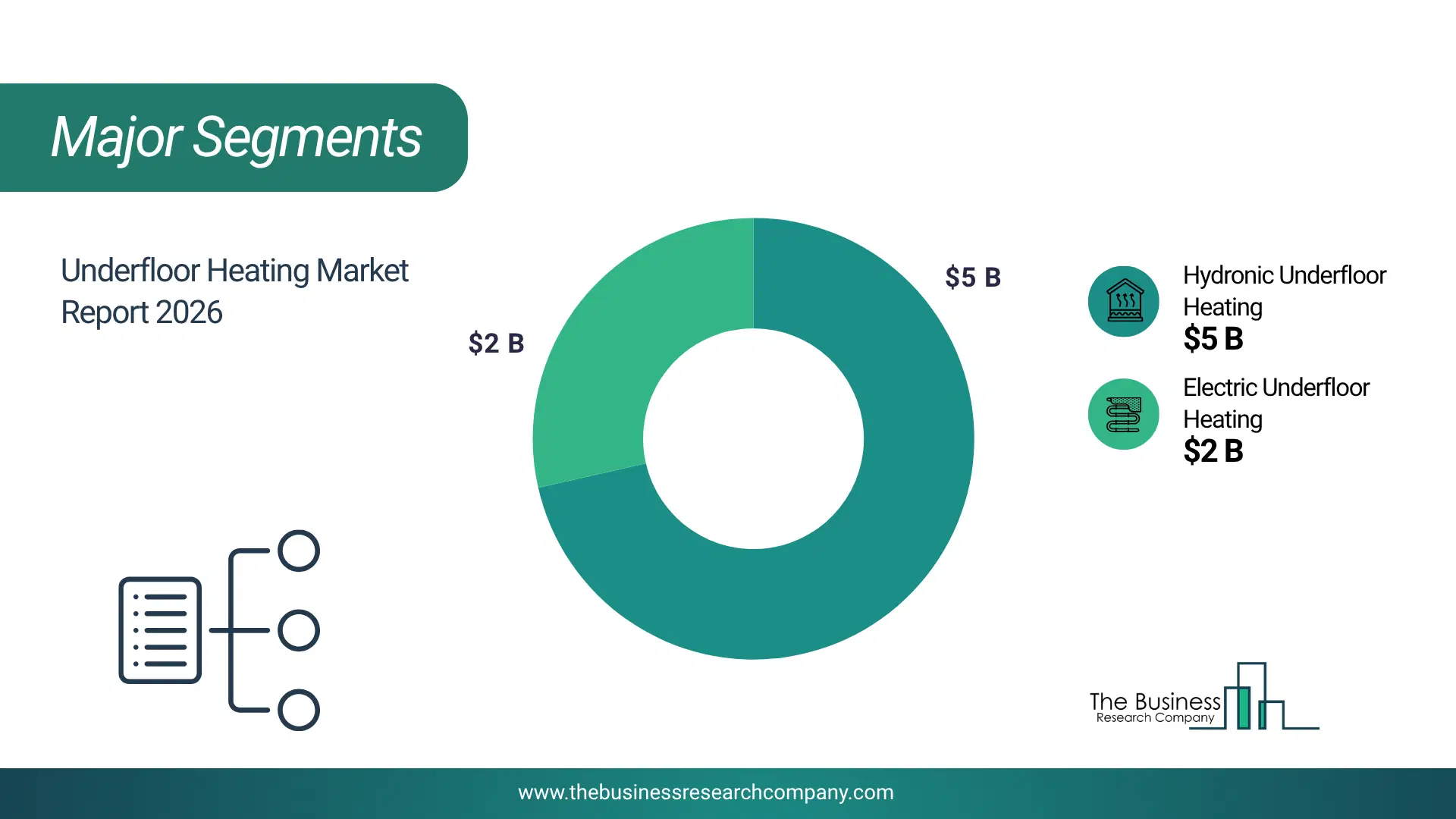
1) By Type: Hydronic Underfloor Heating, Electric Underfloor Heating 2) By Installation: New installations, Retrofit installations 3) By Application: Residential, Commercial, Institutional Subsegments: 1) By Hydronic Underfloor Heating: Warm Water Systems, Boiler-Based Systems 2) By Electric Underfloor Heating: Electric Heating Mats, Electric Heating Cables The top segments in the underfloor heating market will be: • Hydronic Underfloor Heating will reach $5 Billion by 2030. • Electric Underfloor Heating will reach $2 Billion by 2030.What Is The Driver Of The Underfloor Heating Market?
Strong government support and incentives toward the adoption of underfloor heating solutions are driving the market. Government institutions across the globe are providing grants and incentives for the upgrade of existing heating systems and the adoption of renewable-source based heating systems. For instance, in October 2024, according to a report published by the Cabinet Office, a UK-based ministerial department, the largest provider of formula grant funding is the Department for Education (DfE), which allocated $73.1 billion in formula grants during the 2022 to 2023 financial year. Following the DfE, the next significant formula grant schemes include the Home Office’s $5.1 billion Police Main Grant and the Department of Health and Social Care’s $3.4 billion Public Health Ring-fenced Grant for 2022 to 2023. These initiatives or grant schemes by governments are expected to boost the underfloor heating solutions market during the forecast period.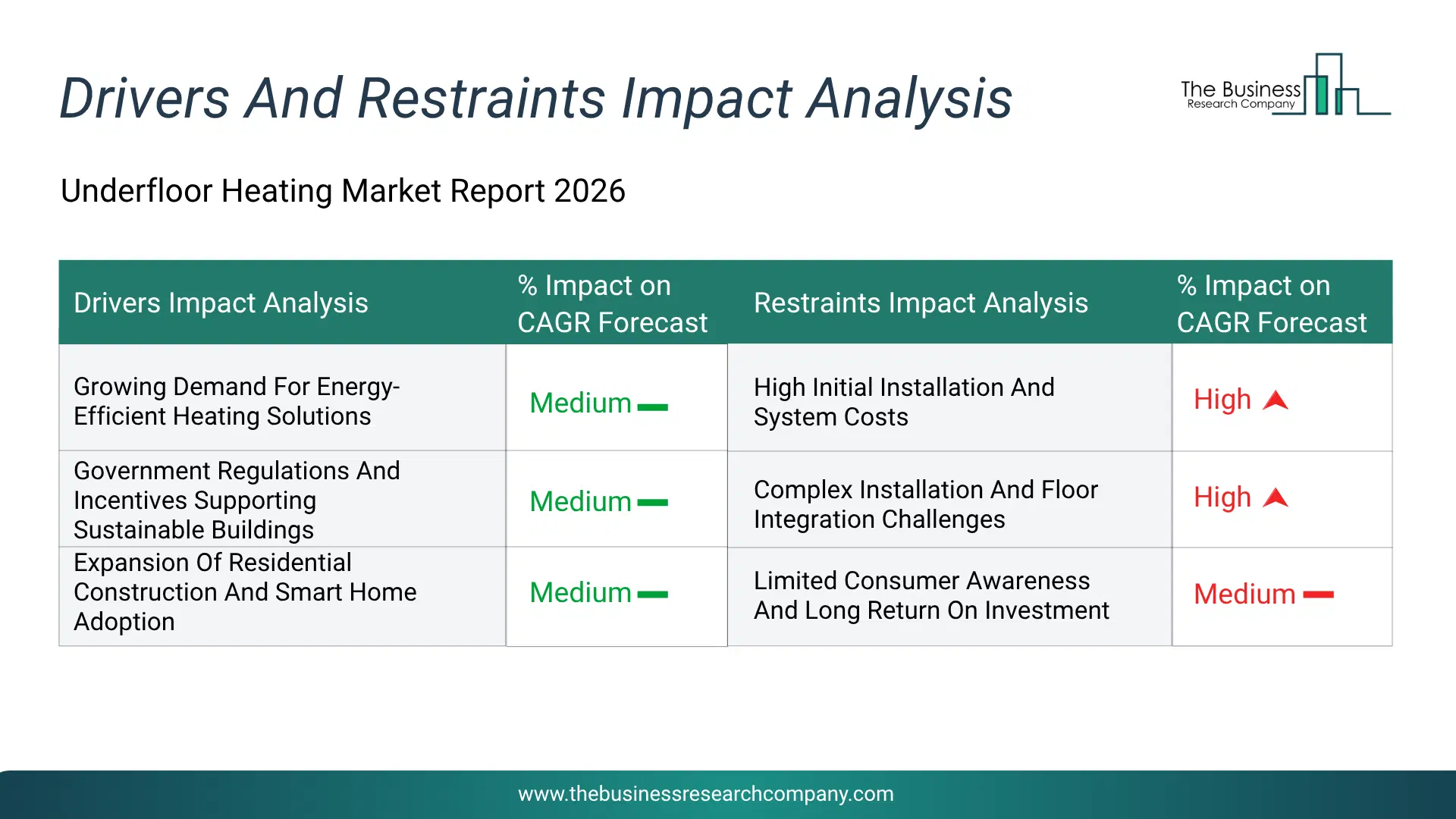
Infographic Chart Showing Key Market Drivers Analysis And Restraints For Underfloor Heating Market
The chart presents an impact analysis of key drivers and restraints, quantifying their relative influence on the market's growth rate and helping assess the balance between growth enablers and limiting factors. This chart offers a high-level perspective; the full report contains more detailed insights.
How Will The Drivers Impact Growth In The Global Underfloor Heating Market?
• Growing Demand For Energy-Efficient Heating Solutions (Medium) – During the forecast period, the growing demand for energy-efficient heating solutions is expected to emerge as a major factor driving the expansion of the underfloor heating market by 2030. underfloor heating systems distribute heat evenly at lower operating temperatures than conventional heating methods, improving thermal comfort while reducing overall energy consumption. their compatibility with renewable energy technologies, including heat pumps and solar thermal systems, further enhances building efficiency and supports long-term reductions in operating costs. • Government Regulations And Incentives Supporting Sustainable Buildings (Medium) – During the forecast period, the government regulations and incentives supporting sustainable buildings are expected to emerge as a major factor driving the expansion of the underfloor heating market by 2030. stricter building energy standards, carbon reduction targets, and green building certification programs are encouraging developers to install low-temperature heating systems that improve environmental performance. financial incentives, tax benefits, and subsidies for energy-efficient heating technologies are also accelerating the deployment of underfloor heating across residential and commercial construction projects. • Expansion Of Residential Construction And Smart Home Adoption (Medium) – During the forecast period, the expansion of residential construction and smart home adoption is expected to act as a key growth catalyst for the underfloor heating market by 2030. rising housing development, urbanization, and consumer preference for modern living spaces are increasing demand for heating systems that maximize comfort while preserving interior aesthetics. in addition, seamless integration with smart thermostats, home automation platforms, and mobile applications enables intelligent temperature control and improved energy management, further supporting product adoption.How Will The Restraints Impact Growth In The Global Underfloor Heating Market?
• High Initial Installation And System Costs (Medium) – During the forecast period, high Initial Installation And System Costs remain one of the most significant restraints limiting the widespread adoption of underfloor heating systems. Hydronic systems require extensive piping networks, insulation materials, manifolds, pumps, and professional installation, making the initial investment considerably higher than traditional radiator-based heating systems. Even electric underfloor heating, although comparatively less expensive, can still involve substantial flooring preparation and electrical modifications depending on the building structure. Retrofit installations are particularly costly because existing flooring often needs to be removed and replaced, increasing labor and material expenses. While underfloor heating delivers considerable energy savings over its operational life, many residential consumers and small commercial property owners are discouraged by the large upfront capital requirement, especially in developing economies where budget constraints remain a major purchasing factor. • Complex Installation And Floor Integration Challenges (Medium) – During the forecast period, complex Installation And Floor Integration Challenges continue to hinder market expansion, particularly in existing buildings undergoing renovation. Hydronic underfloor heating systems require careful planning during construction, including proper insulation, pipe layout, floor thickness calculations, and compatibility with various flooring materials. In retrofit projects, installers often need to modify floor levels, doors, and subfloor structures, increasing installation complexity, project duration, and overall costs. Certain flooring materials may also require special considerations to ensure efficient heat transfer and prevent performance losses. These technical challenges often make conventional radiator systems a simpler and more economical alternative for many consumers, thereby limiting the adoption of underfloor heating in older residential and commercial buildings. • Limited Consumer Awareness And Long Return On Investment (Medium) – During the forecast period, limited Consumer Awareness And Long Return On Investment continue to slow market growth, particularly across emerging economies where underfloor heating is still considered a premium technology. Many consumers remain unfamiliar with the advantages of radiant floor heating, including improved thermal comfort, uniform heat distribution, lower maintenance requirements, and long-term energy savings. As a result, purchasing decisions are often based solely on installation costs rather than lifecycle cost benefits. Furthermore, although energy savings accumulate over time, the return on investment may take several years depending on building size, climate conditions, and energy prices. This extended payback period discourages many homeowners and small businesses from investing in underfloor heating systems, especially where traditional heating systems are readily available at significantly lower upfront costs. Increasing education, demonstration projects, and government awareness programs will be essential to overcoming this market restraint during the forecast period.Key Players In The Global Underfloor Heating Market
Major companies operating in the underfloor heating market are Robert Bosch GmbH, Siemens AG, Mitsubishi Electric Corporation, Schneider Electric SE, Honeywell International Inc., SALUS North America Inc., Rehau Ltd., Emerson Electric Co, Danfoss Group, Nexans S.A., Resideo Technologies Inc., Pentair plc, nVent Electric Plc, Raychem Corporation, Uponor Corporation Amuheat, Wavin N.V., Polypipe Group plc, ESI Heating and Cooling, Warmup Inc., Schlüter-Systems Ltd., Hurlcon Hydronic Heating, Flexel International Ltd., Warmtech Pty Ltd., ThermoSoft International Corporation, Ebeco AB, Heat Mat Ltd., Heatmiser UK Ltd., Gaia Climate Solutions Ltd., Amuheat, H2O Heating Pty Ltd., WarmlyYours.com Inc., Speedheat US LLC, Devex Systems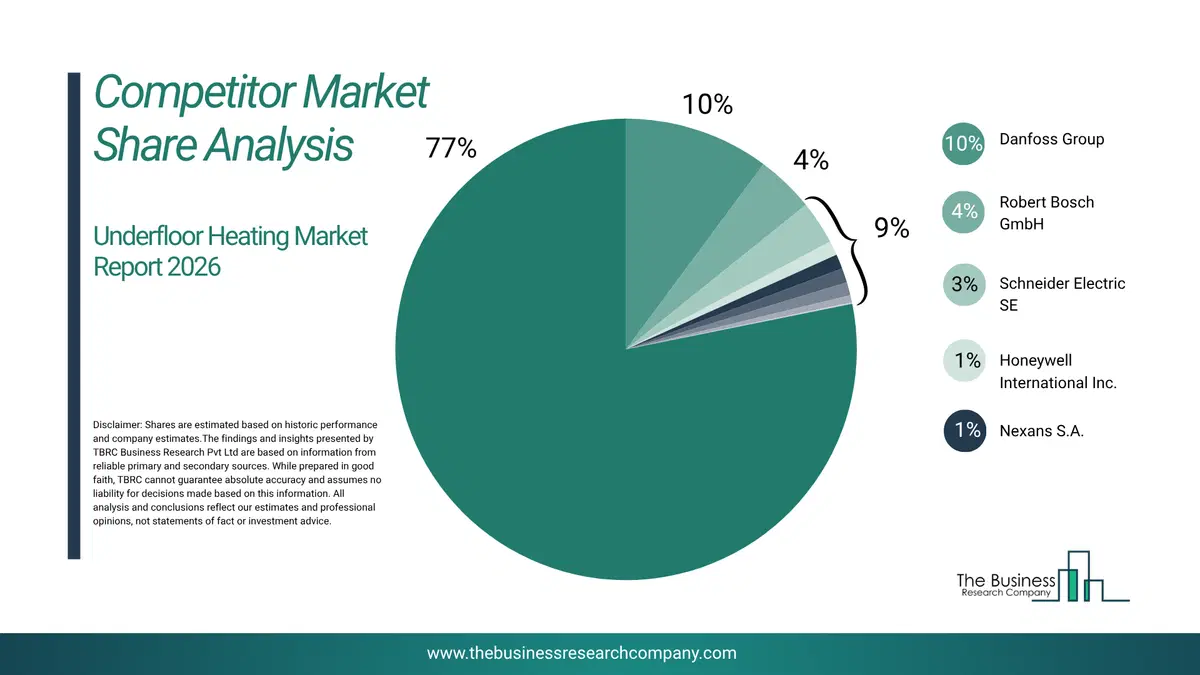
This chart is for illustrative purposes; the full report includes a detailed competitor analysis and comprehensive overview of the top 10 companies in the market.
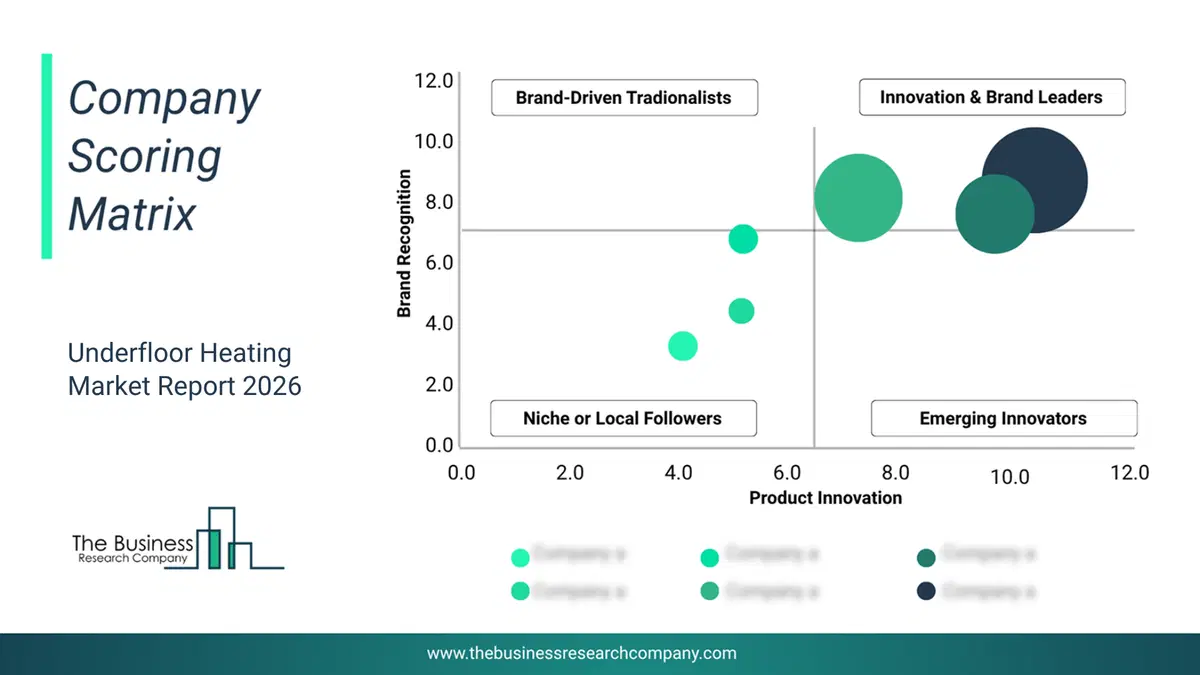
This chart maps companies by product innovation and brand strength, with bubble size indicating relative revenue, helping identify market leaders, challengers, and niche players. This is an illustrative chart; the full report provides a complete and accurate competitive analysis.
Global Underfloor Heating Market Trends and Insights
Major companies operating in the underfloor heating market are focusing on developing innovative solutions, such as advanced electric underfloor heating systems, to enhance energy efficiency and provide uniform, comfortable heating. Advanced electric underfloor heating systems are thin, flexible heating mats or cables installed beneath floor surfaces that provide uniform, energy-efficient warmth, helping reduce energy costs and eliminate the need for bulky radiators while enhancing overall comfort. For instance, in October 2024, Ambiente Heating Ltd., a UK-based heating solutions company, launched the JoFloor 28 underfloor heating system. The JoFloor 28 features ultra-thin heating mats suitable for tile, laminate, and engineered wood floors, providing rapid heat-up times, precise temperature control, and low maintenance requirements. Its easy installation and compatibility with smart thermostats make it ideal for both new constructions and renovations, combining efficiency with modern convenience.What Are Latest Mergers And Acquisitions In The Underfloor Heating Market?
In October 2024, Purmo Group, a Finland-based company, provides a range of heating and cooling solutions, acquired Unitherm Heating Systems Ltd for an undisclosed amount. This acquisition aims to enhance Purmo Group's solution-selling strategy and expand its presence in the United Kingdom and Ireland, where Unitherm has established a solid market presence. By integrating Unitherm's expertise, Purmo Group can expand its product offerings, including advanced heating and cooling solutions like underfloor heating systems. Unitherm Heating Systems Ltd, a Ireland-based company, specializes in the design, supply, commissioning, and servicing of integrated heating solutions, particularly focusing on air-to-water heat pumps, ventilation system solutions, underfloor heating systems, and a range of aluminium and steel radiators.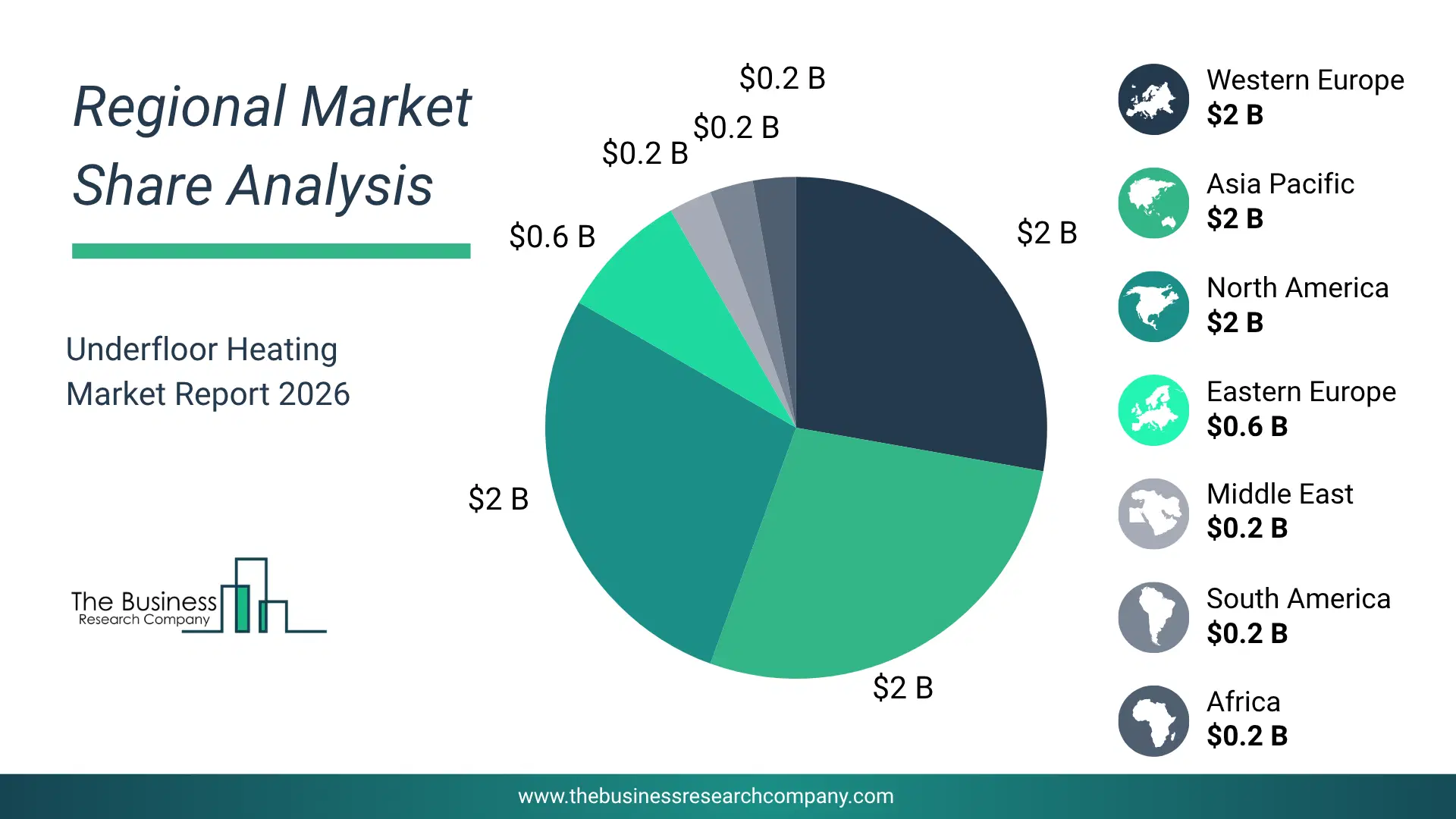
Regional Insights
Western Europe was the largest region in the underfloor heating market share in 2025. North America is expected to be the fastest-growing region in the forecast period. The regions covered in this market report are Asia-Pacific, South East Asia, Western Europe, Eastern Europe, North America, South America, Middle East, Africa. The countries covered in this market report are Australia, Brazil, China, France, Germany, India, Indonesia, Japan, Taiwan, Russia, South Korea, UK, USA, Canada, Italy, Spain.What Defines the Underfloor Heating Market?
The underfloor heating market consists of sales of different types of underfloor heating systems include hydronic underfloor heating, electric underfloor heating, heating cables, and heating mats. Values in this market are ‘factory gate’ values, that is the value of goods sold by the manufacturers or creators of the goods, whether to other entities (including downstream manufacturers, wholesalers, distributors and retailers) or directly to end customers. The value of goods in this market includes related services sold by the creators of the goods.How is Market Value Defined and Measured?
The market value is defined as the revenues that enterprises gain from the sale of goods and/or services within the specified market and geography through sales, grants, or donations in terms of the currency (in USD unless otherwise specified). The revenues for a specified geography are consumption values that are revenues generated by organizations in the specified geography within the market, irrespective of where they are produced. It does not include revenues from resales along the supply chain, either further along the supply chain or as part of other products.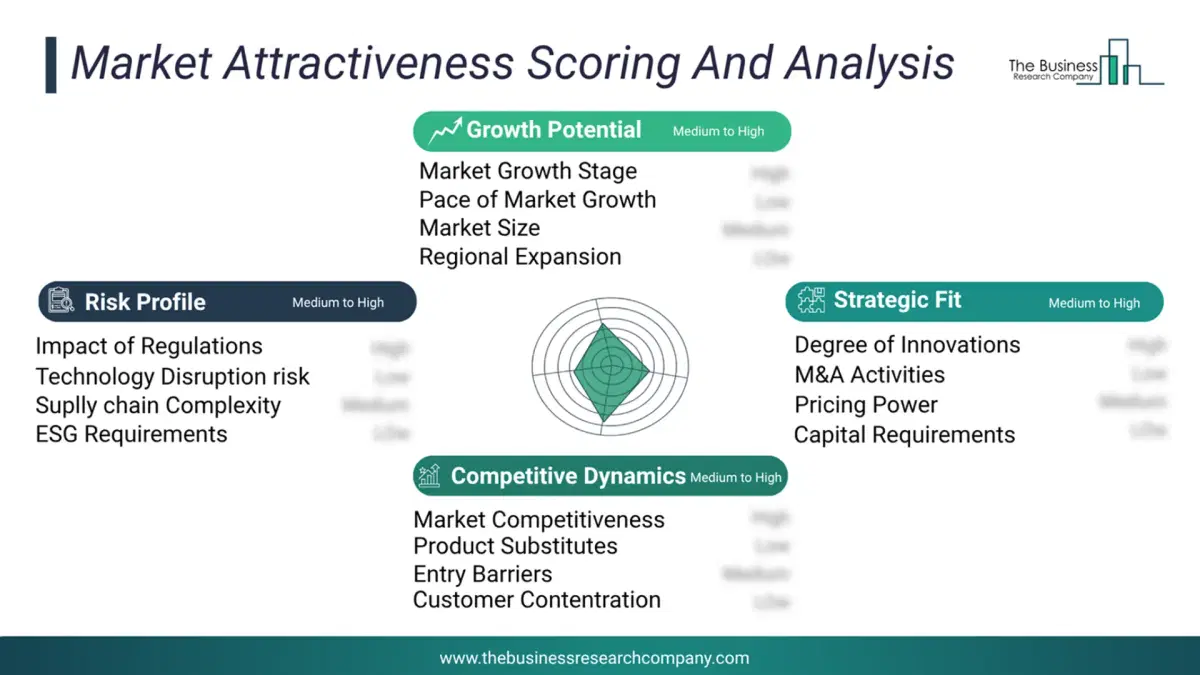
This chart presents market attractiveness based on a quantitative evaluation of growth, competition, strategic alignment, and risk, offering a clear view of opportunity areas for decision-making. This chart is for illustrative purposes; the full report contains the complete analysis.
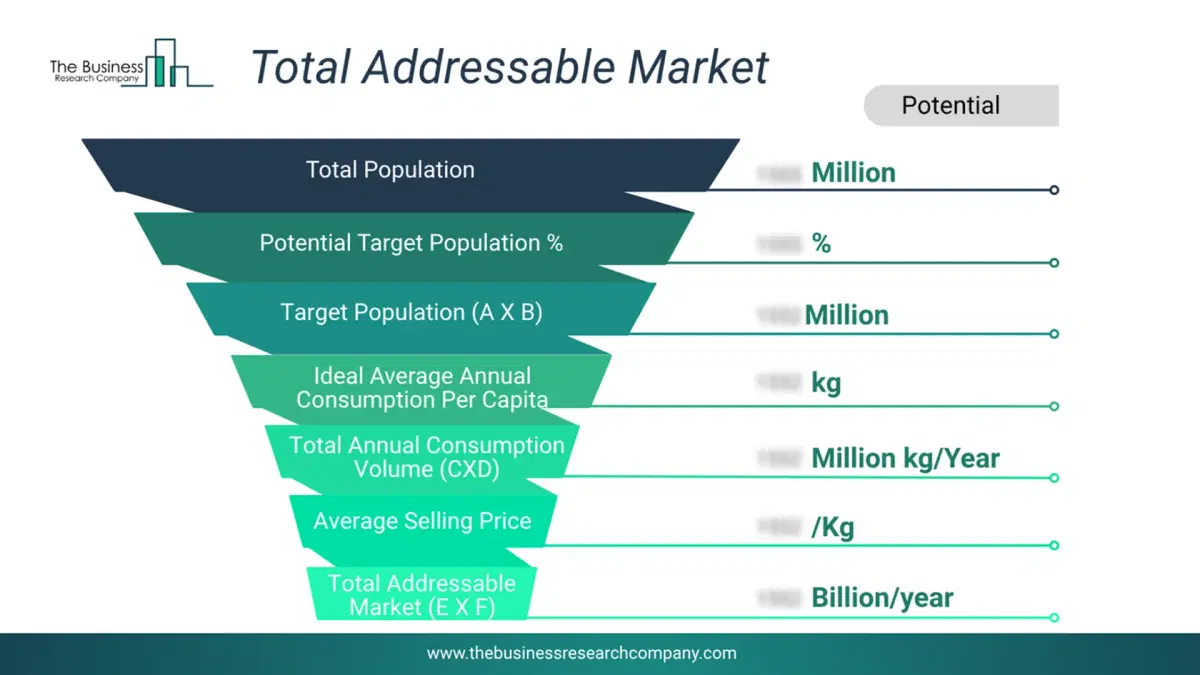
This chart highlights the Total Addressable Market (TAM) by estimating the maximum revenue opportunity using an assumption-driven approach, supporting strategic planning and opportunity sizing across markets. The chart is illustrative; the full report provides a more comprehensive analysis.
What Key Data and Analysis Are Included in theUnderfloor Heating Market Report 2026?
The underfloor heating market research report is one of a series of new reports from The Business Research Company that provides market statistics, including industry global market size, regional shares, competitors with the market share, detailed market segments, market trends and opportunities, and any further data you may need to thrive in the underfloor heating industry. The market research report delivers a complete perspective of everything you need, with an in-depth analysis of the current and future state of the industry.Underfloor Heating Market Report Forecast Analysis
| Report Attribute | Details |
|---|---|
| Market Size Value In 2026 | $5.78 billion |
| Revenue Forecast In 2030 | $7.3 billion |
| Growth Rate | CAGR of 6% from 2026 to 2030 |
| Base Year For Estimation | 2025 |
| Actual Estimates/Historical Data | 2020-2025 |
| Forecast Period | 2026 - 2030 |
| Market Representation | Revenue in USD Billion and CAGR from 2026 to 2030 |
| Segments Covered | Type, Installation, Application |
| Regional Scope | Asia-Pacific, Western Europe, Eastern Europe, North America, South America, Middle East, Africa |
| Country Scope | The countries covered in the report are Australia, Brazil, China, France, Germany, India, Indonesia, Japan, Taiwan, Russia, South Korea, UK, USA, Canada, Italy, Spain. |
| Key Companies Profiled | Robert Bosch GmbH, Siemens AG, Mitsubishi Electric Corporation, Schneider Electric SE, Honeywell International Inc., SALUS North America Inc., Rehau Ltd., Emerson Electric Co, Danfoss Group, Nexans S.A., Resideo Technologies Inc., Pentair plc, nVent Electric Plc, Raychem Corporation, Uponor Corporation Amuheat, Wavin N.V., Polypipe Group plc, ESI Heating and Cooling, Warmup Inc., Schlüter-Systems Ltd., Hurlcon Hydronic Heating, Flexel International Ltd., Warmtech Pty Ltd., ThermoSoft International Corporation, Ebeco AB, Heat Mat Ltd., Heatmiser UK Ltd., Gaia Climate Solutions Ltd., Amuheat, H2O Heating Pty Ltd., WarmlyYours.com Inc., Speedheat US LLC, Devex Systems |
| Customization Scope | Request for Customization |
| Pricing And Purchase Options | Explore Purchase Options |