
Wireless Home Security Camera Market Report 2026
Global Outlook – By Type (PTZ Camera, IP Camera), By Resolution (HD, 2K, 4K), By Distribution Channel (Online, Offline), By Application (Doorbell Camera, Indoor Camera, Outdoor Camera) – Market Size, Trends, Strategies, and Forecast to 2030
Wireless Home Security Camera Market Overview
• Wireless Home Security Camera market size has reached to $9.99 billion in 2025 • Expected to grow to $23.45 billion in 2030 at a compound annual growth rate (CAGR) of 18.5% • Growth Driver: Wireless Home Security Camera Market Surges As Smart Technology Integration Becomes A Priority For Consumers • Market Trend: Innovative Trends In Wireless Home Security Camera Market • North America was the largest region in 2025.Market Gains By 2030 – Top Opportunities By Segment
Market Gain identifies the most promising market opportunities by highlighting the segments or products expected to generate the highest incremental revenue growth over the next five years.
What Is Covered Under Wireless Home Security Camera Market?
Wireless home security camera refers to a camera that captures photos inside or outside of a structure or in a public space to deter or solve crime. These are used to allow users to remote access their home from anywhere. The major types of wireless home security cameras are PTZ cameras and IP cameras. A PTZ camera, also known as a pan-tilt-zoom camera, refers to a camera that allows for zooming and remote direction control (panning and tilting) (increasing and decreasing). Different types of resolutions involved are HD, 2K, and 4K. These are sold through various distribution channels, such as online and offline. They are used in several applications, such as doorbell cameras, indoor cameras, and outdoor cameras.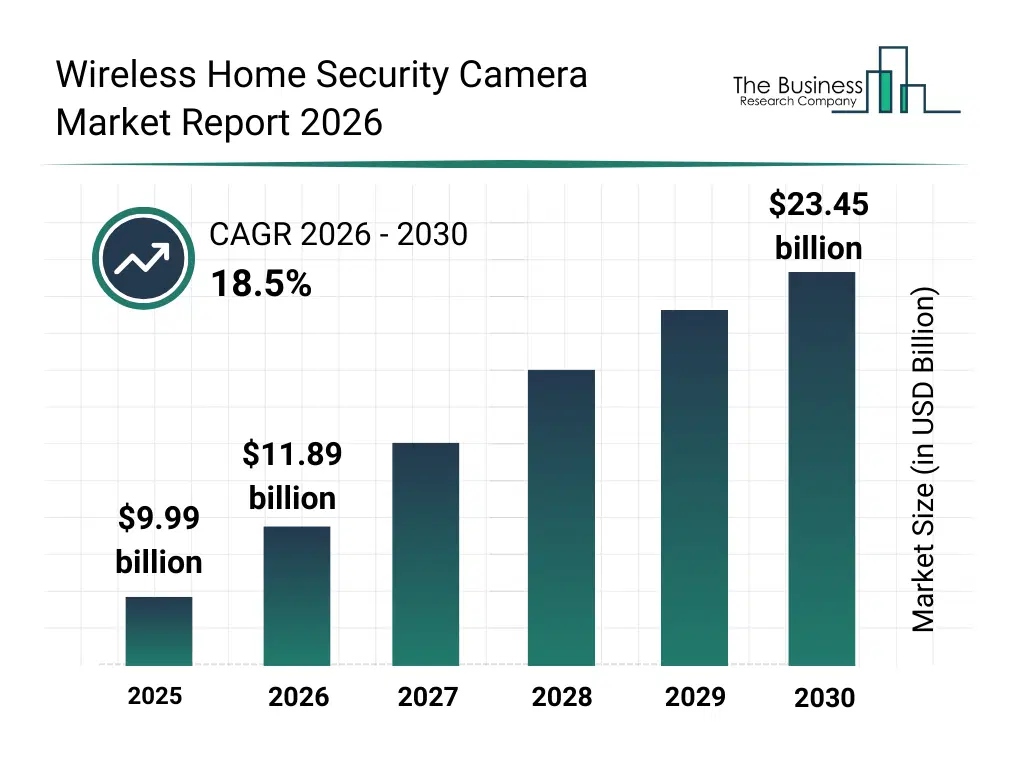
What Is The Wireless Home Security Camera Market Size and Share 2026?
The wireless home security camera market size has grown rapidly in recent years. It will grow from $9.99 billion in 2025 to $11.89 billion in 2026 at a compound annual growth rate (CAGR) of 19.0%. The growth in the historic period can be attributed to rising residential security concerns, increased adoption of smart home devices, growth of internet connectivity, expansion of e commerce distribution channels, affordability of wireless cameras.What Is The Wireless Home Security Camera Market Growth Forecast?
The wireless home security camera market size is expected to see rapid growth in the next few years. It will grow to $23.45 billion in 2030 at a compound annual growth rate (CAGR) of 18.5%. The growth in the forecast period can be attributed to AI enabled video analytics adoption, growing demand for remote property monitoring, expansion of smart city initiatives, increasing urbanization rates, rising consumer awareness of home security. Major trends in the forecast period include remote home monitoring solutions, cloud connected security camera systems, high resolution wireless surveillance cameras, smart motion detection capabilities, mobile app based security access.
Global Wireless Home Security Camera Market Segmentation
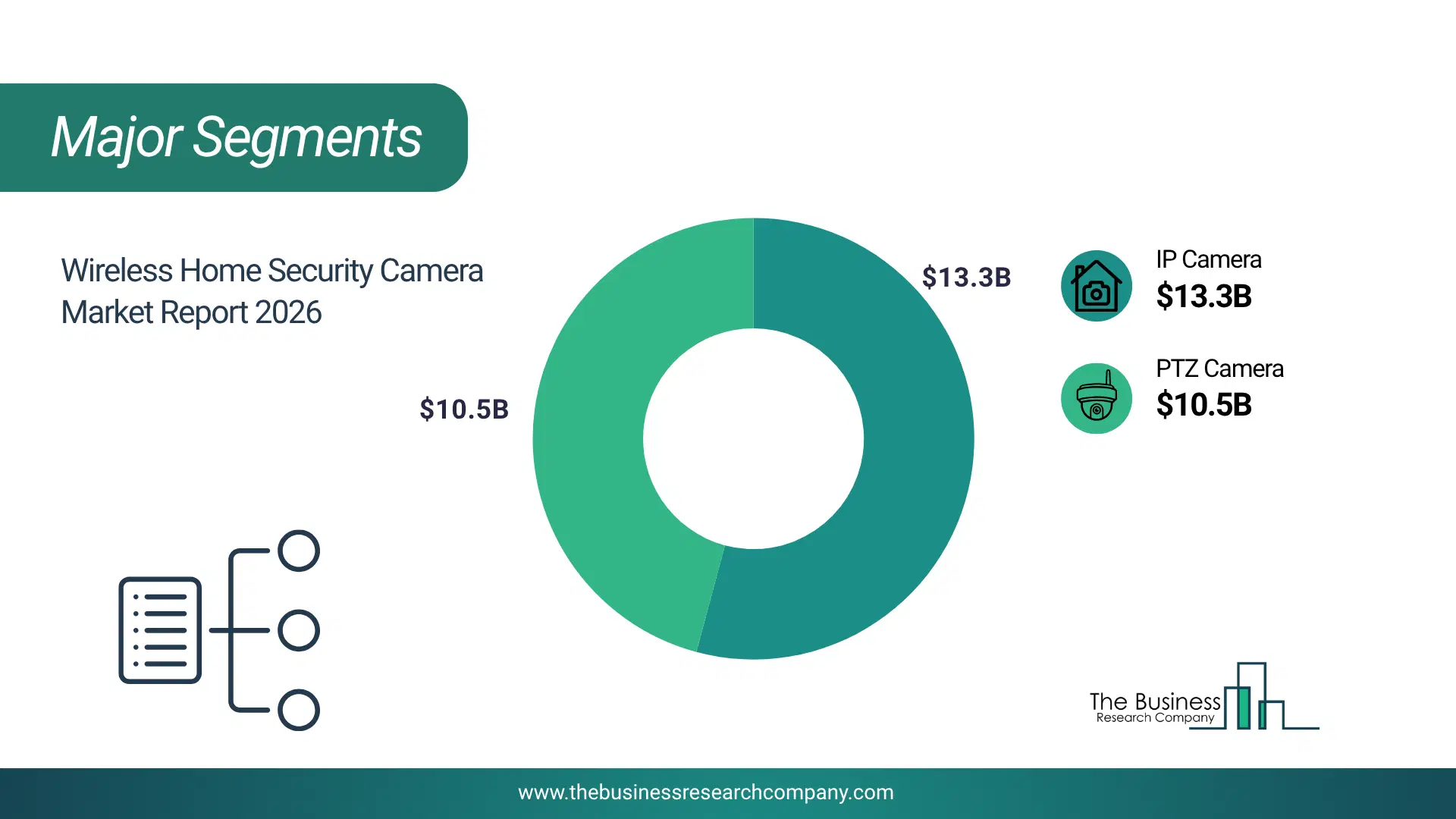
1) By Type: PTZ Camera, IP Camera 2) By Resolution: HD, 2K, 4K 3) By Distribution Channel: Online, Offline 4) By Application: Doorbell Camera, Indoor Camera, Outdoor Camera Subsegments: 1) By PTZ Camera (Pan-Tilt-Zoom Camera): Standard PTZ Cameras, Smart PTZ Cameras 2) By IP Camera (Internet Protocol Camera): Wired IP Cameras, Wireless IP Cameras, Indoor IP Cameras, Outdoor IP Cameras The top segments in the wireless home security camera market will be: • IP Camera will reach $13.26 billion by 2030. • PTZ Camera will reach $10.44 billion by 2030.What Is The Driver Of The Wireless Home Security Camera Market?
The growing demand for home automation is expected to propel the growth of the wireless home security camera market going forward. Home automation refers to an electronic, electrical, or technological solution that makes it possible to automate the majority of home-based duties. House automation security systems enable owners to program, oversee, and manage their home's security configuration remotely or through an in-property dashboard, ensuring both the safety and security of the home and serving as a potential deterrent to criminals. For instance, in January 2023, according to the statistics shared by TechJury, a US-based software company, 53.9% of US houses will be automated through the smart home business by 2023. According to 81% of consumers, they are more likely to buy a new home with smart technology. $19.4 billion will be spent by households on smart security systems. Therefore, the growing demand for home automation is driving the growth of the wireless home security camera industry.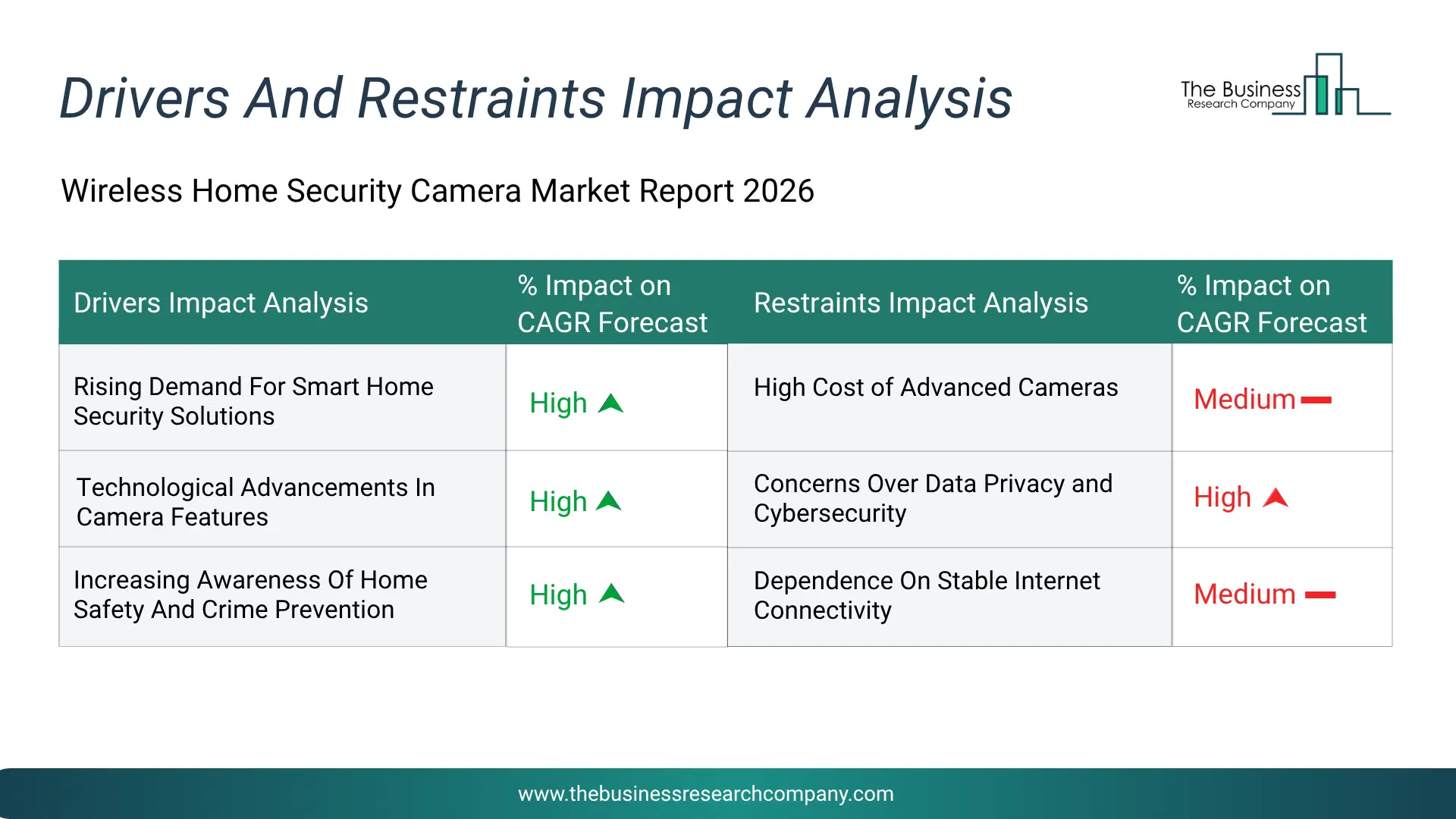
Infographic Chart Showing Key Market Drivers Analysis And Restraints For Wireless Home Security Camera Market
The chart presents an impact analysis of key drivers and restraints, quantifying their relative influence on the market's growth rate and helping assess the balance between growth enablers and limiting factors. This chart offers a high-level perspective; the full report contains more detailed insights.
How Will The Drivers Impact Growth In The Global Wireless Home Security Camera Market?
• Rising Demand For Smart Home Security Solutions (High) – During the forecast period, the rising demand for smart home security solutions is expected to become a key growth driver for the wireless home security camera market by 2030. Consumers are increasingly seeking convenient, real -time monitoring solutions that integrate with home automation systems. Wireless home security cameras offer features such as motion detection, cloud storage, remote smartphone access, and automated alerts, enhancing safety and ease of use. Rising demand for smart, connected security devices is driving growth in the wireless home security camera market. • Technological Advancements In Camera Features (High) – During the forecast period, the technological advancements in camera features are expected to emerge as a major factor driving the expansion of the wireless home security camera market by 2030. Advancements such as high-definition video, night vision, ai-based motion detection, facial recognition, and cloud analytics are enhancing wireless home security camera functionality. Ai and machine learning enable intelligent alerts, reducing false alarms and improving security efficiency. Combined with wireless connectivity for easy installation and remote monitoring, these innovations are driving strong growth in the market. • Increasing Awareness Of Home Safety And Crime Prevention (High) – During the forecast period, the increasing awareness of home safety and crime prevention is expected to act as a key growth catalyst for the wireless home security camera market by 2030. Rising concerns about burglary, property theft, and neighborhood safety are motivating homeowners to invest in wireless home security cameras. Consumers value features such as real-time monitoring, video recording for evidence, and deterrence of criminal activity. Insurance incentives for homes with security systems further encourage adoption, making personal safety and property protection a key driver of market growth.How Will The Restraints Impact Growth In The Global Wireless Home Security Camera Market?
• High Cost of Advanced Cameras (Medium) – During the forecast period, the while basic models are affordable, advanced wireless home security cameras with ai, cloud storage, and 4k resolution come at a high price point. The cost of initial setup, cloud subscription plans, and maintenance can be significant, especially for multi-camera systems in larger homes. High-priced products may limit adoption in price-sensitive markets and reduce accessibility for certain consumer segments. This financial factor acts as a restraint on the market, particularly in emerging economies. • Concerns Over Data Privacy and Cybersecurity (High) – During the forecast period, the wireless home security cameras are vulnerable to hacking, unauthorized access, and data breaches due to their connectivity and cloud-based storage features. Consumers and regulatory authorities are increasingly concerned about the security of personal video data. The need for robust encryption, secure networks, and privacy-compliant solutions increases operational complexity and costs. These privacy and cybersecurity concerns act as a key restraint, potentially slowing adoption among security-conscious consumers. • Dependence On Stable Internet Connectivity (Medium) – During the forecast period, the wireless home security cameras rely heavily on internet connectivity for remote monitoring, cloud storage, and real-time alerts. Network interruptions or poor internet performance can reduce system effectiveness and compromise surveillance capabilities. Consumers may experience service disruptions that affect user satisfaction. This dependency can limit adoption in areas with unreliable internet infrastructure.Key Players In The Global Wireless Home Security Camera Market
Major companies operating in the wireless home security camera market are Arlo Technologies Inc.; SimpliSafe Inc.; CP Plus International Pty. Ltd.; Eufy (Anker Innovations); D-Link Corporation; Guardian Protection Services; Amazon.com Inc.; Amcrest Technologies LLC; Frontpoint Security Solutions LLC; Vivint Inc.; Swann Communications Pty Ltd.; ADT Inc.; Hanwha Techwin Co. Ltd.; K&F Concept Technology Limited; Wyze Labs Inc.; Defender Protection Systems Inc.; Night Owl Security Products LLC; Q-SEE Technology Inc.; Brinks Home Security Inc.; iSmart Alarm Inc.; LiveWatch Security LLC; Skylinkhome Inc.; Ring LLC; Google LLC; Alarm.com LLC; Hangzhou Hikvision Digital Technology Co. Ltd.; Dahua Technology Co. Ltd.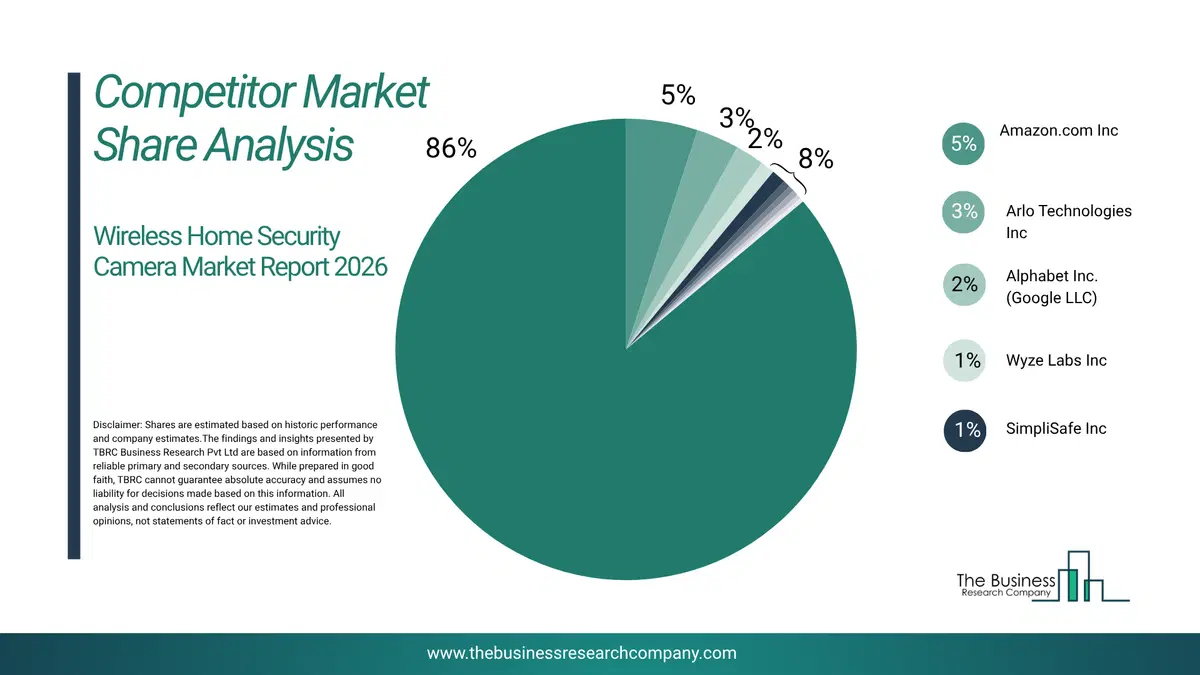
This chart is for illustrative purposes; the full report includes a detailed competitor analysis and comprehensive overview of the top 10 companies in the market.
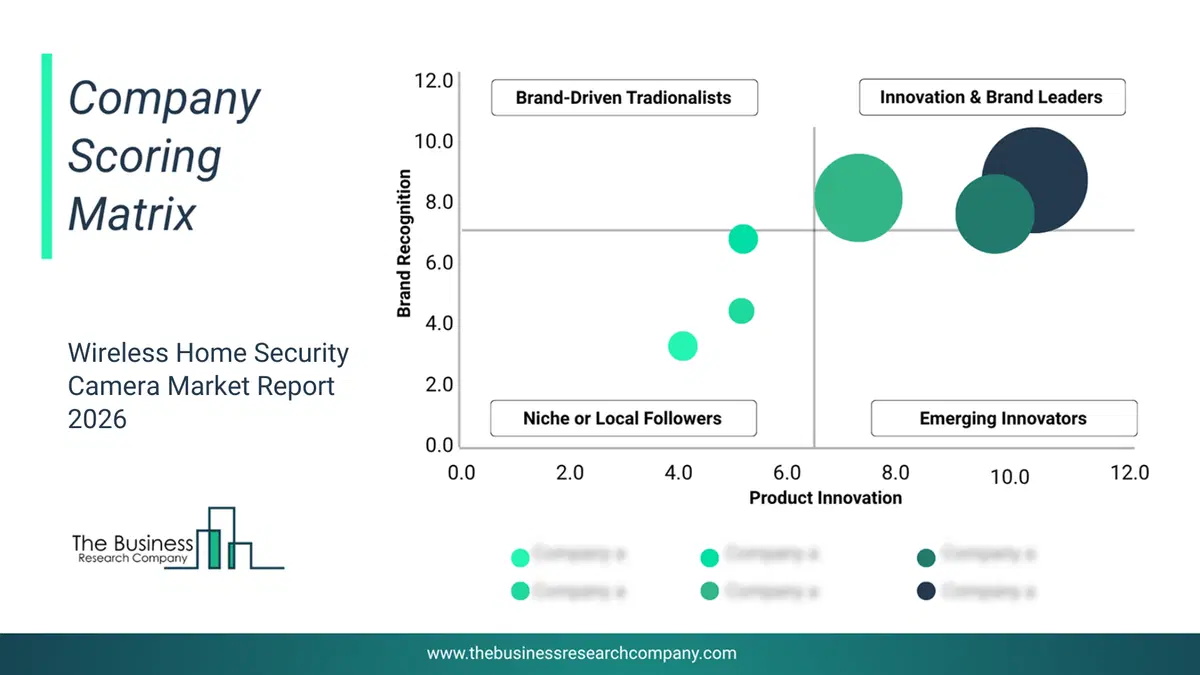
This chart maps companies by product innovation and brand strength, with bubble size indicating relative revenue, helping identify market leaders, challengers, and niche players. This is an illustrative chart; the full report provides a complete and accurate competitive analysis.
Global Wireless Home Security Camera Market Trends and Insights
Major companies operating in the wireless home security camera market are developing innovative products such as bullet cameras to meet larger customer bases, more sales, and increase revenue. A bullet camera is a type of surveillance camera characterized by its cylindrical and elongated shape, resembling a bullet shell or a small cylinder. For instance, in July 2023, Versuni, a Netherlands-based household appliances company, launched Smart Home Security Cameras. The Philips Smart Security Camera series introduces three models, each with distinctive features to enhance home security. The Philips Smart Indoor WiFi Camera (HSP1000) ensures 24/7 control via the app, featuring enhanced day and night vision, motion detection, live view, two-way communication, and an anti-theft alarm system. The Philips Smart 360° WiFi Indoor Security Camera (HSP3500) stands out with its panoramic 360° view, 2K clarity, seamless integration of motion detection, live-view, two-way communication, an anti-theft alarm system, and smart alerts. Lastly, the Philips Smart 360° WiFi Indoor Security Camera (HSP3800) offers a comprehensive 360° view, day and color night vision, motion detection with a spotlight, an anti-theft alarm system, smart alerts, two-way communication, and a weatherproof IP65 Rating for clear vision even in adverse weather conditions. All models share the convenience of easy DIY installation, making them user-friendly solutions for advanced home monitoring.What Are Latest Mergers And Acquisitions In The Wireless Home Security Camera Market?
In April 2024, BearCom, a US-based provider of voice, data, and security solutions, acquired The Surveillance Shop for an undisclosed amount. With this acquisition, BearCom aims to expand its video security and wireless solutions offerings while strengthening its presence in the North American security systems market. The Surveillance Shop is a Canada-based provider of security integration services, including security camera systems, access control, and intrusion alarm solutions.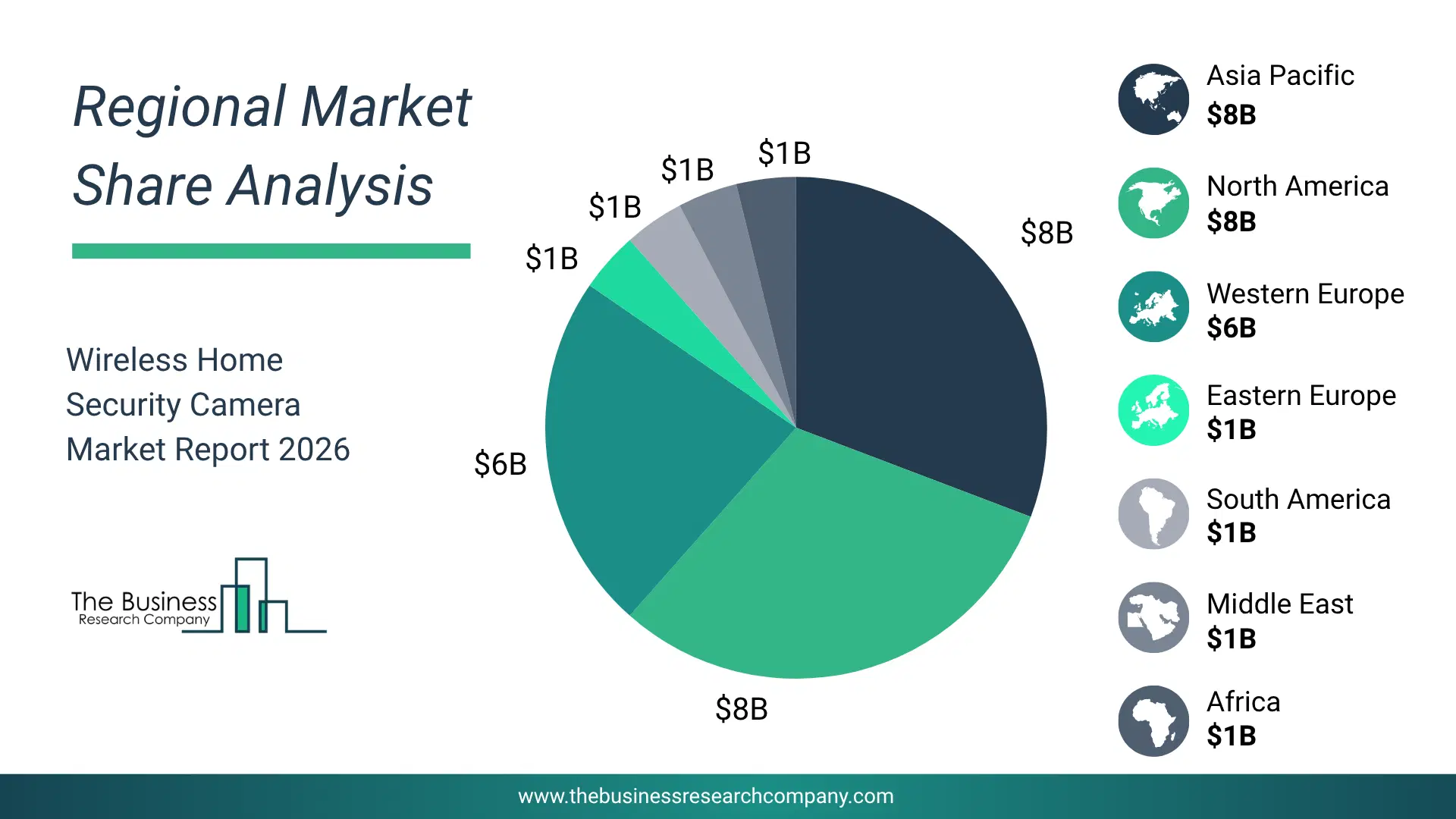
Regional Insights
North America was the largest region in the wireless home security camera market in 2025. The regions covered in this market report are Asia-Pacific, South East Asia, Western Europe, Eastern Europe, North America, South America, Middle East, Africa. The countries covered in this market report are Australia, Brazil, China, France, Germany, India, Indonesia, Japan, Taiwan, Russia, South Korea, UK, USA, Canada, Italy, SpainWhat Defines the Wireless Home Security Camera Market?
The wireless home security camera market consists of sales of wireless home security cameras with built-in storage device and wirelessly connected receiver. Values in this market are ‘factory gate’ values, that is the value of goods sold by the manufacturers or creators of the goods, whether to other entities (including downstream manufacturers, wholesalers, distributors and retailers) or directly to end customers. The value of goods in this market includes related services sold by the creators of the goods.How is Market Value Defined and Measured?
The market value is defined as the revenues that enterprises gain from the sale of goods and/or services within the specified market and geography through sales, grants, or donations in terms of the currency (in USD unless otherwise specified). The revenues for a specified geography are consumption values that are revenues generated by organizations in the specified geography within the market, irrespective of where they are produced. It does not include revenues from resales along the supply chain, either further along the supply chain or as part of other products.
This chart presents market attractiveness based on a quantitative evaluation of growth, competition, strategic alignment, and risk, offering a clear view of opportunity areas for decision-making. This chart is for illustrative purposes; the full report contains the complete analysis.
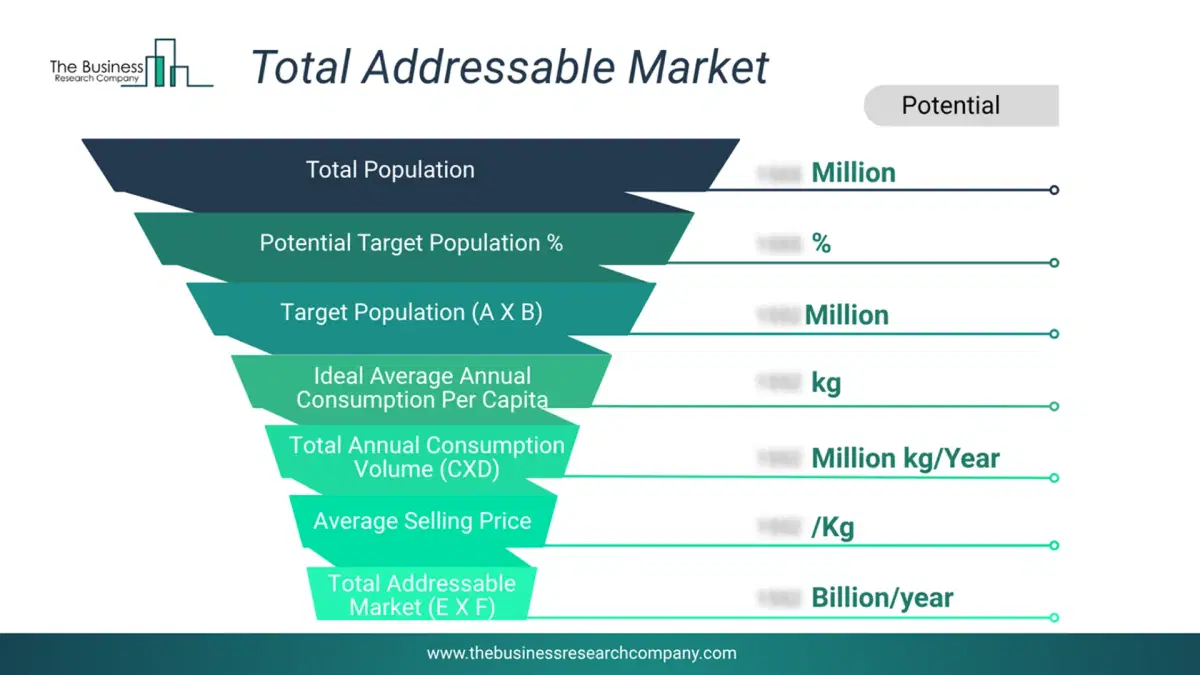
This chart highlights the Total Addressable Market (TAM) by estimating the maximum revenue opportunity using an assumption-driven approach, supporting strategic planning and opportunity sizing across markets. The chart is illustrative; the full report provides a more comprehensive analysis.
What Key Data and Analysis Are Included in the Wireless Home Security Camera Market Report 2026?
The wireless home security camera market research report is one of a series of new reports from The Business Research Company that provides market statistics, including industry global market size, regional shares, competitors with the market share, detailed market segments, market trends and opportunities, and any further data you may need to thrive in the wireless home security camera industry. The market research report delivers a complete perspective of everything you need, with an in-depth analysis of the current and future state of the industry.Wireless Home Security Camera Market Report Forecast Analysis
| Report Attribute | Details |
|---|---|
| Market Size Value In 2026 | $11.89 billion |
| Revenue Forecast In 2030 | $23.45 billion |
| Growth Rate | CAGR of 18.5% from 2026 to 2030 |
| Base Year For Estimation | 2025 |
| Actual Estimates/Historical Data | 2020-2025 |
| Forecast Period | 2026 - 2030 |
| Market Representation | Revenue in USD Billion and CAGR from 2026 to 2030 |
| Segments Covered | Type, Resolution, Distribution Channel, Application |
| Regional Scope | Asia-Pacific, Western Europe, Eastern Europe, North America, South America, Middle East, Africa |
| Country Scope | The countries covered in the report are Australia, Brazil, China, France, Germany, India, ... |
| Key Companies Profiled | Arlo Technologies Inc.; SimpliSafe Inc.; CP Plus International Pty. Ltd.; Eufy (Anker Innovations); D-Link Corporation; Guardian Protection Services; Amazon.com Inc.; Amcrest Technologies LLC; Frontpoint Security Solutions LLC; Vivint Inc.; Swann Communications Pty Ltd.; ADT Inc.; Hanwha Techwin Co. Ltd.; K&F Concept Technology Limited; Wyze Labs Inc.; Defender Protection Systems Inc.; Night Owl Security Products LLC; Q-SEE Technology Inc.; Brinks Home Security Inc.; iSmart Alarm Inc.; LiveWatch Security LLC; Skylinkhome Inc.; Ring LLC; Google LLC; Alarm.com LLC; Hangzhou Hikvision Digital Technology Co. Ltd.; Dahua Technology Co. Ltd. |
| Customization Scope | Request for Customization |
| Pricing And Purchase Options | Explore Purchase Options |