

Wood Manufacturing Market Report 2026
Global Outlook – By Type (Millwork, Veneers, Engineered Wood Products, Wood Containers And Pallets, Other Types), By Application (Domestic, Commercial), By End User (Construction, Furniture, Packaging And Joinery Industries, Other End Users) – Market Size, Trends, Strategies, and Forecast to 2030
Wood Manufacturing Market Overview
• Wood Manufacturing market size has reached to $476.73 billion in 2025 • Expected to grow to $560.68 billion in 2030 at a compound annual growth rate (CAGR) of 3.4% • Growth Driver: Surge In Construction Activities Drives Growth In The Wood Manufacturing Market • Market Trend: Advancements In Hydraulic And Servo Drive Systems Revolutionize Wood Manufacturing Efficiency • Asia-Pacific was the largest region and fastest growing region.Market Gains By 2030 – Top Opportunities By Segment
Market Gain identifies the most promising market opportunities by highlighting the segments or products expected to generate the highest incremental revenue growth over the next five years.
What Is Covered Under Wood Manufacturing Market?
Wood manufacturing refers to the process of converting raw wood materials into finished wood products through various stages of production. It involves the use of machinery, equipment, and skilled labor to transform wood logs, lumber, or other wood materials into a wide range of wood products used for various purposes. The main types of wood manufacturing are millwork, veneers, engineered wood products, wood containers and pallets, manufactured homes, and others. Millwork refers to the manufacturing and installation of wooden products, typically used for finishing or decorative purposes in buildings. It is used for domestic and commercial applications by construction, furniture, packaging, and joinery industries, and others.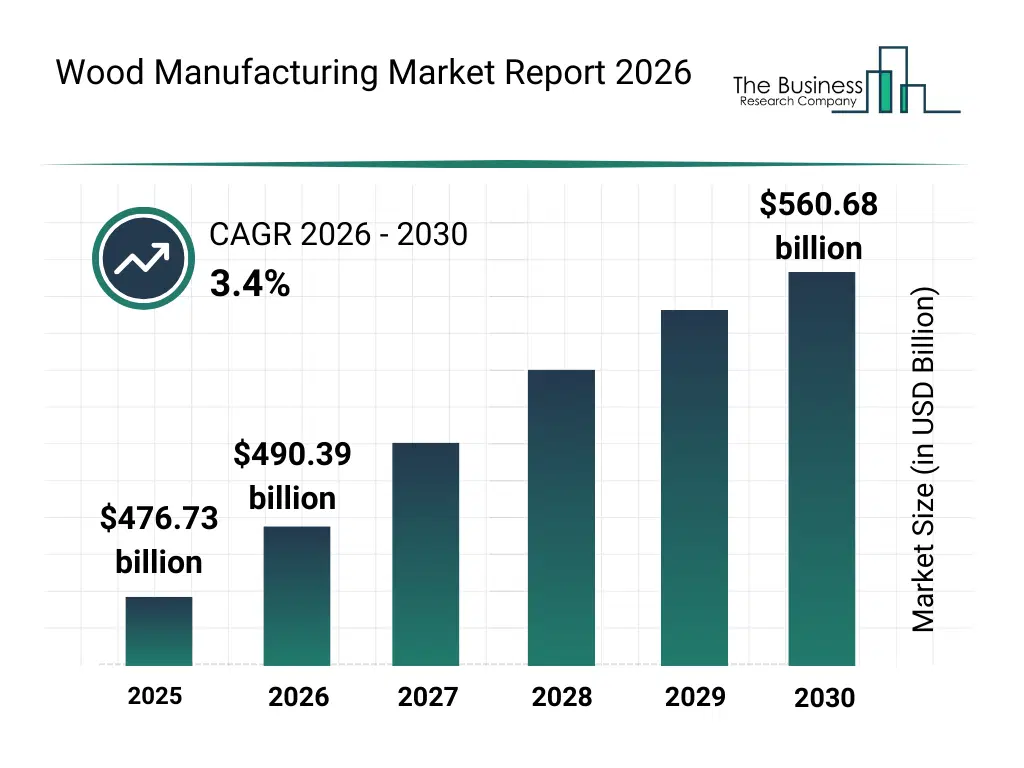
What Is The Wood Manufacturing Market Size and Share 2026?
The wood manufacturing market size has grown steadily in recent years. It will grow from $476.73 billion in 2025 to $490.39 billion in 2026 at a compound annual growth rate (CAGR) of 2.9%. The growth in the historic period can be attributed to expansion of construction sector demand, growth in furniture manufacturing activities, availability of large-scale sawmilling operations, rising use of wood in packaging, increased mechanization of woodworking processes.What Is The Wood Manufacturing Market Growth Forecast?
The wood manufacturing market size is expected to see steady growth in the next few years. It will grow to $560.68 billion in 2030 at a compound annual growth rate (CAGR) of 3.4%. The growth in the forecast period can be attributed to increasing adoption of smart manufacturing systems, rising investments in sustainable wood processing, expansion of modular and prefabricated construction, growing focus on waste reduction and resource efficiency, increasing demand for value-added wood products. Major trends in the forecast period include increasing automation in wood processing operations, rising demand for engineered wood products, expansion of prefabricated wood construction components, growing focus on production efficiency optimization, enhanced adoption of advanced woodworking machinery.
Global Wood Manufacturing Market Segmentation
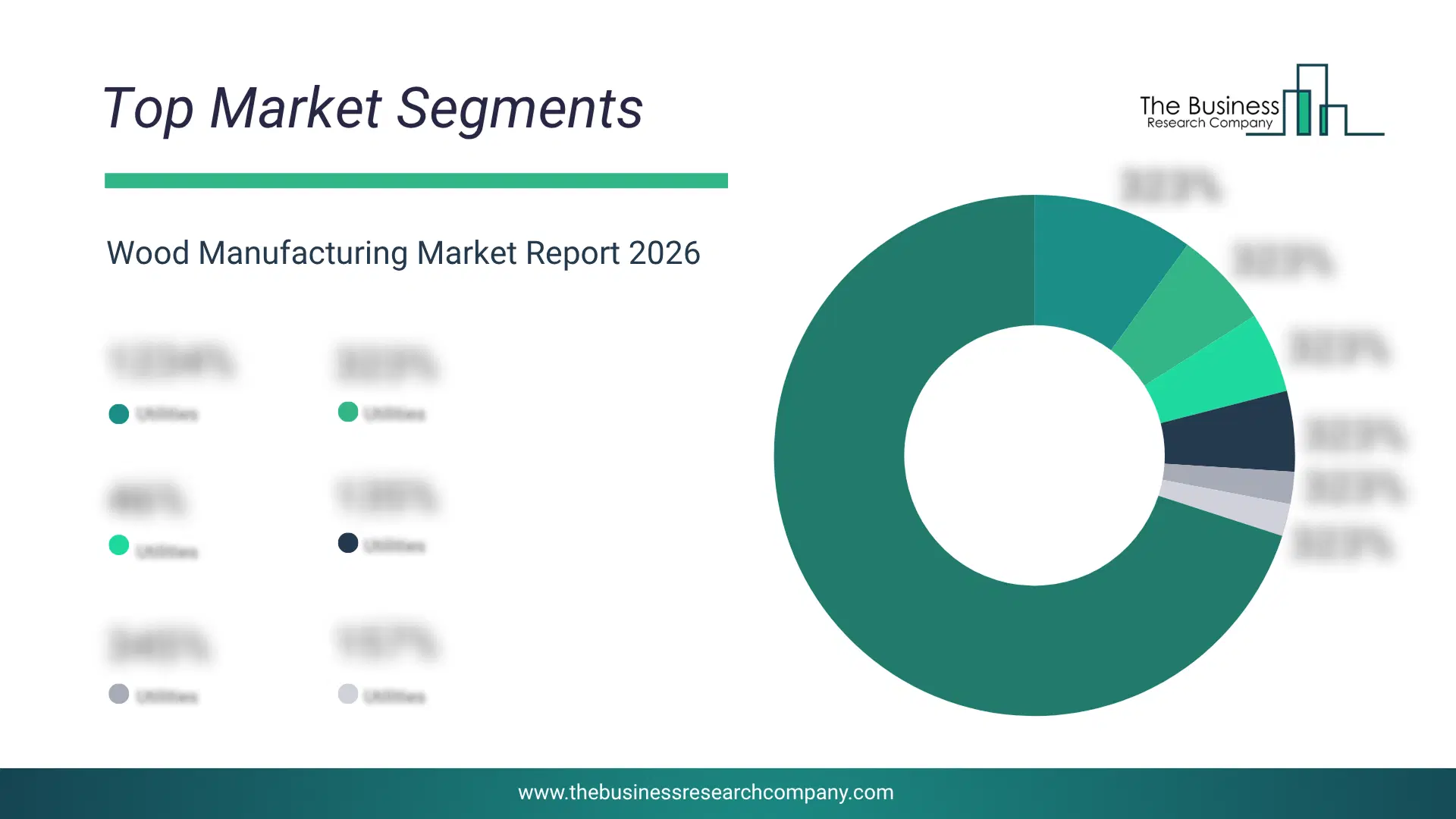
1) By Type: Millwork, Veneers, Engineered Wood Products, Wood Containers And Pallets, Other Types 2) By Application: Domestic, Commercial 3) By End User: Construction, Furniture, Packaging And Joinery Industries, Other End Users Subsegments: 1) By Millwork: Molding And Trim, Doors, Windows, Staircases 2) By Veneers: Natural Veneers, Reconstituted Veneers, Backed Veneers 3) By Engineered Wood Products: Plywood, Oriented Strand Board (OSB), Laminated Veneer Lumber (LVL), Glue-laminated Timber (Glulam) 4) By Wood Containers And Pallets: Shipping Pallets, Crates, Bins, Boxes 5) By Other Types: Wood Flooring, Wood Paneling, Specialty Wood Products The top segments in the wood manufacturing market will be: • Engineered Wood Products will reach $197 Billion by 2030. • Millwork will reach $165 Billion by 2030. • Wood Containers and Pallets will reach $112 Billion by 2030. • Veneers will reach $48 Billion by 2030. • Other Types will reach $34 Billion by 2030.What Is The Driver Of The Wood Manufacturing Market?
Growing construction activities are expected to propel the growth of the wood manufacturing market going forward. Construction activities refer to the various operations and processes involved in the building, renovation, and maintenance of structures, infrastructure, and facilities. The wood manufacturing industry plays a crucial role in the construction sector, providing a wide range of wood products that are essential for building and infrastructure development. For instance, in July 2024, according to the Bureau of National Statistics, a Kazakhstan-based government agency, an estimated in 2023, the total value of construction services was 7, 612.8 billion tenge, reflecting a 15.1% increase compared to 2022. Therefore, growing construction activities are driving the growth of the wood manufacturing industry.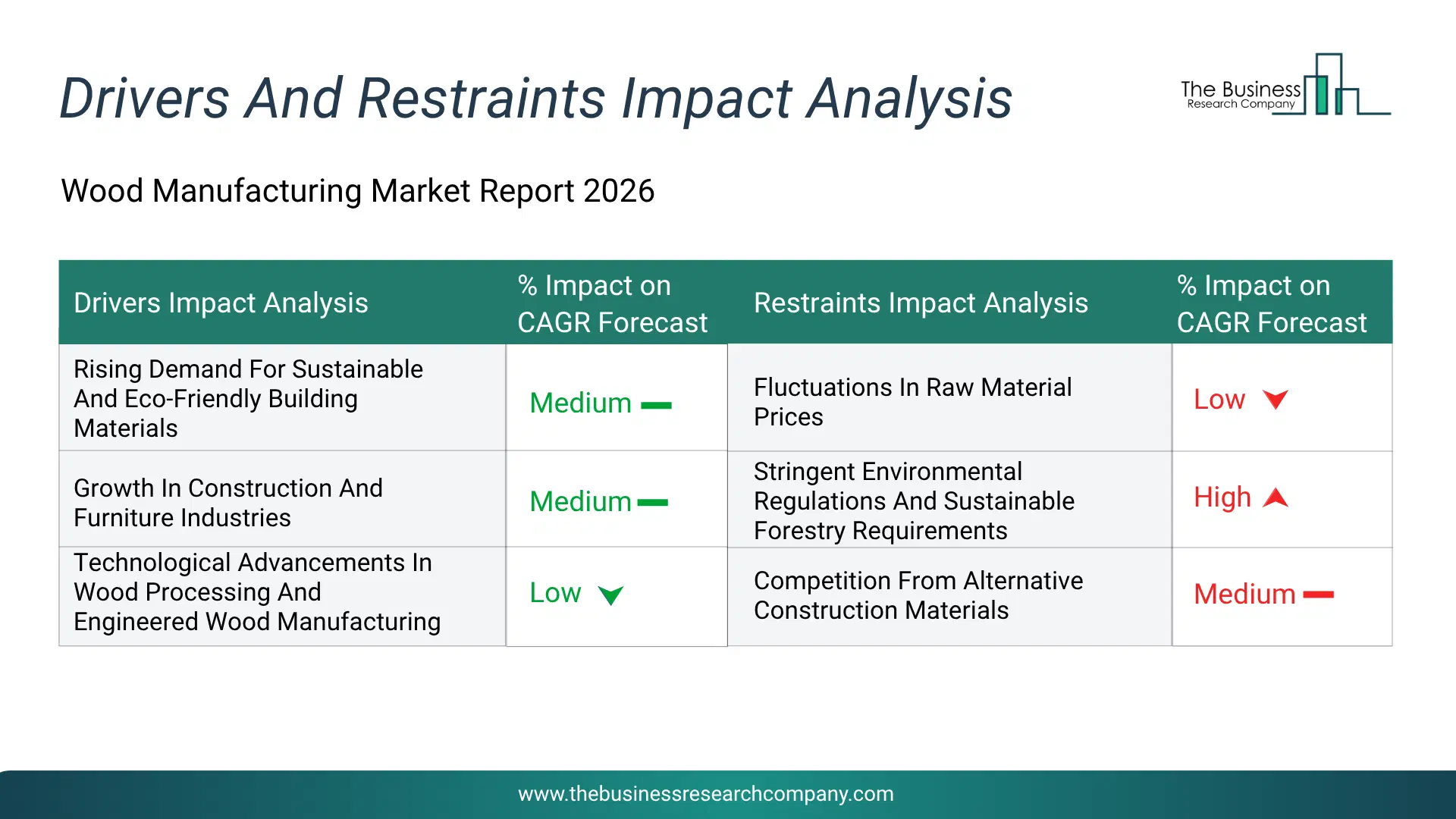
Infographic Chart Showing Key Market Drivers Analysis And Restraints For Wood Manufacturing Market
The chart presents an impact analysis of key drivers and restraints, quantifying their relative influence on the market's growth rate and helping assess the balance between growth enablers and limiting factors. This chart offers a high-level perspective; the full report contains more detailed insights.
How Will The Drivers Impact Growth In The Global Wood Manufacturing Market?
• Rising Demand For Sustainable And Eco-Friendly Building Materials (Medium) – During the forecast period, the rising demand for sustainable and eco-friendly building materials is expected to emerge as a major factor driving the expansion of the wood manufacturing market by 2030. governments, developers, and consumers are increasingly adopting renewable construction materials that support low-carbon building initiatives and green certification standards. growing preference for sustainably sourced timber and engineered wood products in residential and commercial construction is encouraging manufacturers to expand production capacity while investing in advanced processing technologies. • Growth In Construction And Furniture Industries (Medium) – During the forecast period, the growth in construction and furniture industries is expected to emerge as a major factor driving the expansion of the wood manufacturing market by 2030. rapid urban development, increasing residential and commercial construction activities, and expanding furniture production are strengthening demand for flooring, millwork, cabinets, engineered panels, veneers, and structural wood products. rising homeownership, renovation projects, and premium furniture consumption are further supporting higher utilization of manufactured wood products across global markets. • Technological Advancements In Wood Processing And Engineered Wood Manufacturing (Low) – During the forecast period, the technological advancements in wood processing and engineered wood manufacturing are expected to act as a key growth catalyst for the wood manufacturing market by 2030. modern production technologies, including automation, precision machining, AI-assisted quality inspection, and robotic material handling, are improving manufacturing efficiency while reducing waste and production costs. at the same time, innovations in engineered wood materials are expanding wood applications across high-rise construction, modular buildings, bridges, and industrial infrastructure.How Will The Restraints Impact Growth In The Global Wood Manufacturing Market?
• Fluctuations In Raw Material Prices (Medium) – During the forecast period, fluctuations In Raw Material Prices remain one of the most significant challenges for the wood manufacturing industry because timber availability and pricing are heavily influenced by climatic conditions, forest fires, pest infestations, transportation costs, government harvesting regulations, and international trade policies. Supply chain disruptions and changing demand from construction and furniture industries can create sudden increases in log and lumber prices, making production planning more difficult for manufacturers. Rising raw material costs directly affect profit margins, increase product prices, and reduce competitiveness, particularly for small and medium-sized manufacturers operating with limited procurement flexibility. These pricing uncertainties can also delay investments and negatively impact long-term production planning across the industry. • Stringent Environmental Regulations And Sustainable Forestry Requirements (Medium) – During the forecast period, stringent Environmental Regulations And Sustainable Forestry Requirements present considerable challenges for wood manufacturers by increasing compliance costs and limiting the availability of commercially harvestable timber. Governments and environmental organizations have implemented stricter regulations related to deforestation, biodiversity conservation, forest certification, legal timber sourcing, and emissions reduction to protect natural forest resources. Manufacturers are increasingly required to obtain certifications such as FSC and PEFC, maintain traceable supply chains, and comply with sustainable harvesting practices. While these regulations support environmental conservation and responsible forestry, they also increase administrative complexity, certification expenses, procurement costs, and operational timelines, particularly for companies sourcing timber from multiple geographic regions. • Competition From Alternative Construction Materials (Low) – During the forecast period, competition From Alternative Construction Materials continues to limit the expansion of the wood manufacturing market across several end-use industries. Materials such as steel, reinforced concrete, aluminum, plastics, composite panels, and recycled construction materials often offer advantages including higher moisture resistance, greater fire resistance, longer service life, and lower maintenance requirements for specific applications. Continuous technological innovation in these competing materials, along with evolving building codes and engineering standards, has increased their adoption in infrastructure, industrial facilities, and large commercial projects. As a result, wood manufacturers face ongoing pressure to improve product performance, reduce production costs, and demonstrate the environmental and structural benefits of modern engineered wood products to remain competitive in the global market.Key Players In The Global Wood Manufacturing Market
Major companies operating in the wood manufacturing market are Stora Enso Inc., Binderholz Inc., KLH Massivholz GmbH, HASSLACHER Holding GmbH, Lignotrend Inc., Eugen Decker Holzindustrie KG, Schilliger Holz AG, Structurlam Mass Timber Corporation, Moser Woods Products LLC, Holzwerke Bullinger GmbH & Co., SCHNEIDE GmbH, Pfeifer Holz GmbH, Weyerhaeuser Company, Novawood AS, Andersen Corporation, Arauco North America, Boise Cascade Company, Canfor Corporation, Columbia Forest Products Inc., Georgia-Pacific LLC, Hampton Lumber, Huber Engineered Woods LLC, Interfor Corporation, Louisiana-Pacific Corporation, LP Building Solutions, Moelven Industrier ASA, Murphy Company, Norbord Inc., PotlatchDeltic Corporation, Rayonier Advanced Materials Inc., Resolute Forest Products Inc., Roseburg Forest Products, Sierra Pacific Industries, Svenska Cellulosa Aktiebolaget SCA, Timber Products Company, Tolko Industries Ltd., Universal Forest Products Inc., West Fraser Timber Co. Ltd.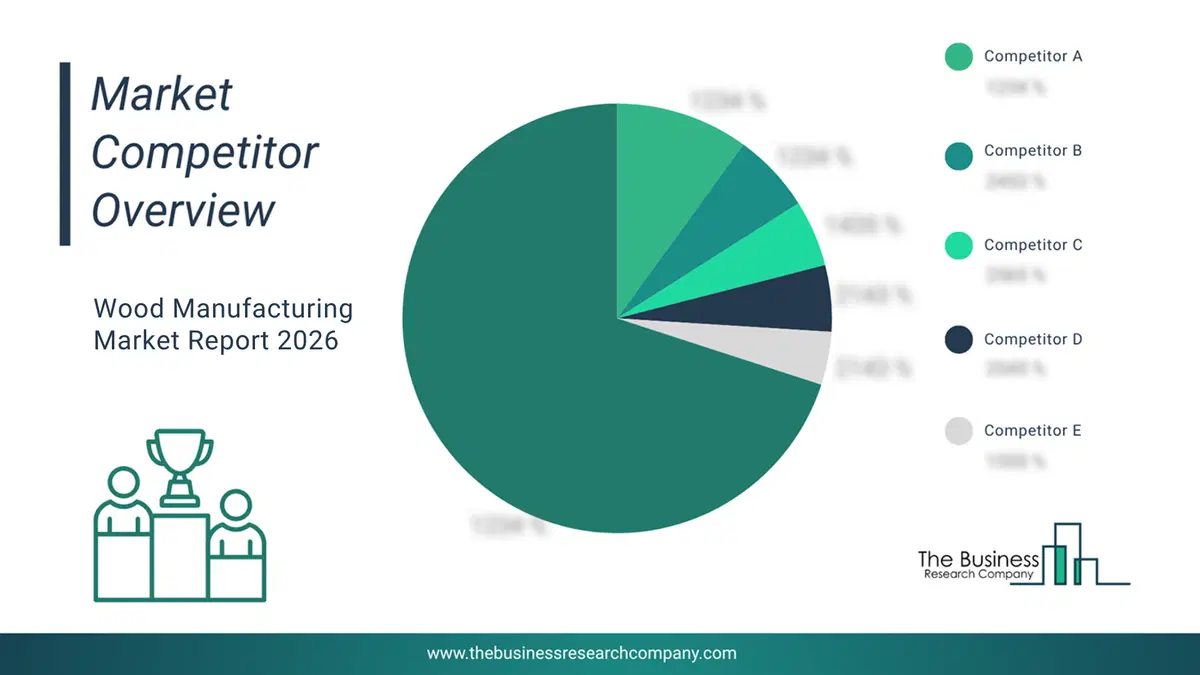
This chart is for illustrative purposes; the full report includes a detailed competitor analysis and comprehensive overview of the top 10 companies in the market.
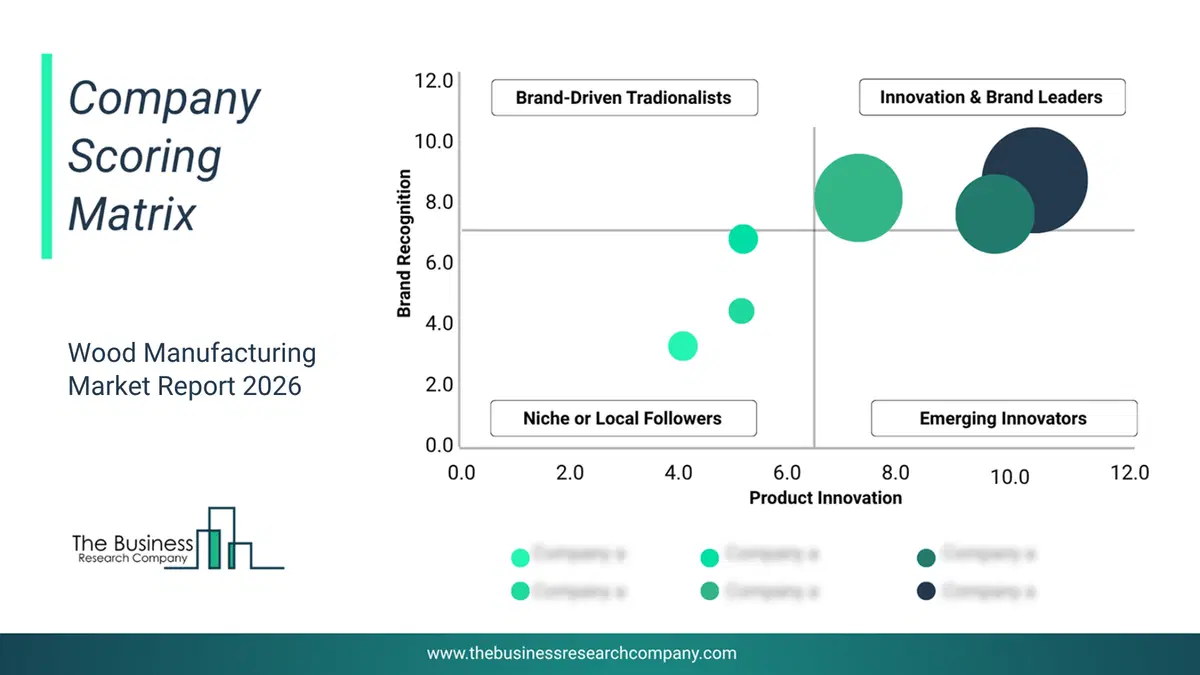
This chart maps companies by product innovation and brand strength, with bubble size indicating relative revenue, helping identify market leaders, challengers, and niche players. This is an illustrative chart; the full report provides a complete and accurate competitive analysis.
Global Wood Manufacturing Market Trends and Insights
Major companies operating in the wood manufacturing market are focusing on developing advanced products with hydraulic and servo drive systems to improve operational efficiency, reduce downtime, and enhance the precision of wood processing. Hydraulic and servo drive systems are beneficial in wood manufacturing as they improve accuracy, boost operational speed, and enhance machinery efficiency, resulting in increased productivity and superior product quality. For instance, in June 2024, Wood-Mizer, a US-based machinery industry company, launched the WM2500 industrial sawmill, a high-production solution for cutting pallet boards, grade lumber, and dimensional lumber. Featuring a powerful 30 HP motor, durable construction, and efficient hydraulic log handling, this sawmill enhances operational effectiveness. Its competitive pricing positions the WM2500 as a significant player in the wood manufacturing market, allowing businesses to maximize production and log yield without sacrificing quality.What Are Latest Mergers And Acquisitions In The Wood Manufacturing Market?
In January 2025, UFP Industries Inc a US-based manufacturing company, acquired C&L Wood Products, Inc. for an undisclosed amount. With this acquisition, UFP Industries aims to expand its product portfolio and strengthen its presence in the North American wood products market. C&L Wood Products Inc. is a US-based manufacturing company that specializes in producing high-quality hardwood and softwood products for residential, commercial, and industrial applications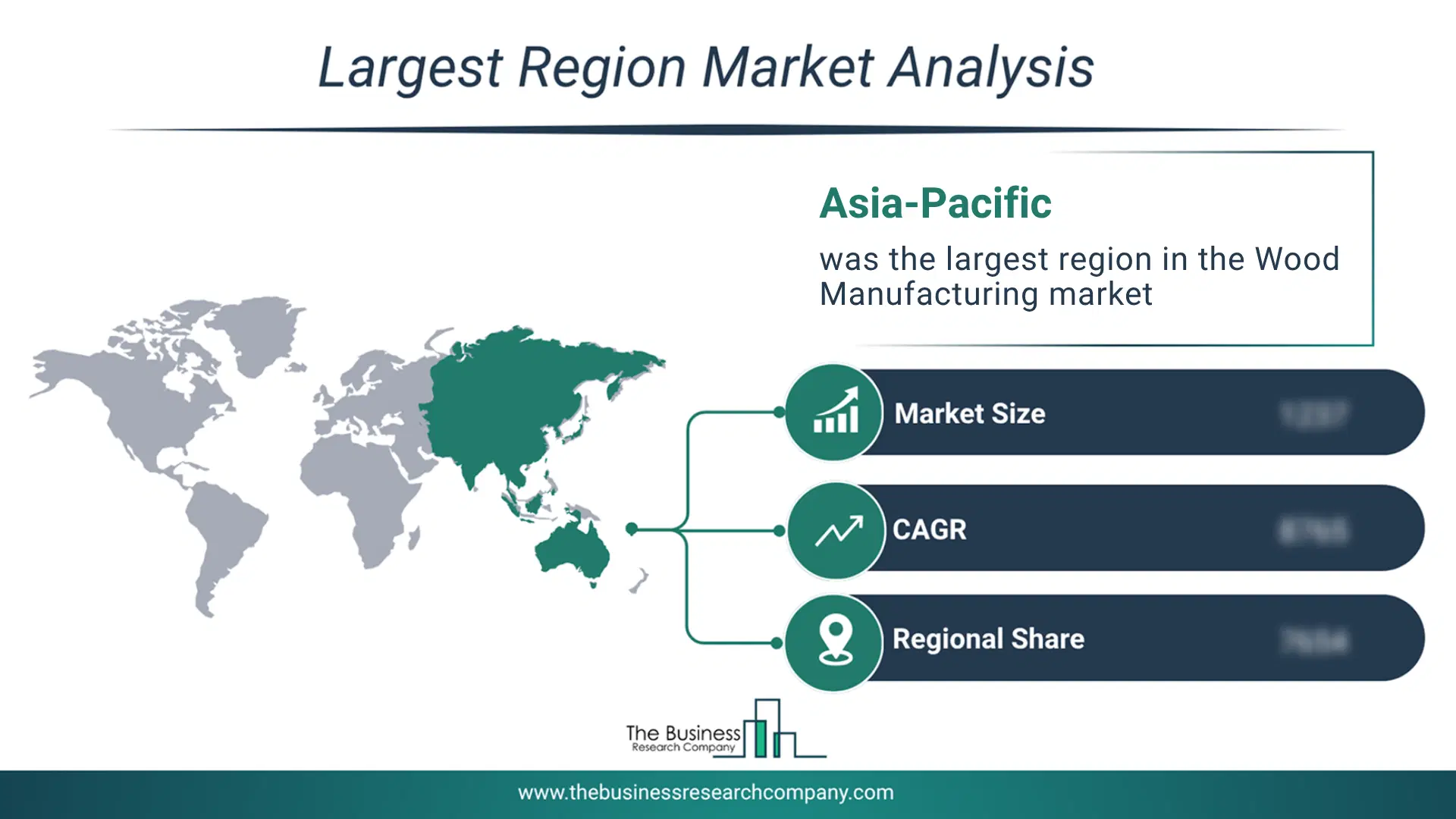
Regional Outlook
Asia-Pacific was the largest region in the wood manufacturing market in 2025.Asia-Pacific is expected to be the fastest-growing region in the global wood manufacturing market report during the forecast period. The regions covered in this market report are Asia-Pacific, South East Asia, Western Europe, Eastern Europe, North America, South America, Middle East, Africa. The countries covered in this market report are Australia, Brazil, China, France, Germany, India, Indonesia, Japan, Taiwan, Russia, South Korea, UK, USA, Canada, Italy, Spain.What Defines the Wood Manufacturing Market?
The wood manufacturing market consists of sales of plywood, sawn wood, and fiberboard. Values in this market are ‘factory gate’ values, that is the value of goods sold by the manufacturers or creators of the goods, whether to other entities (including downstream manufacturers, wholesalers, distributors, and retailers) or directly to end customers. The value of goods in this market includes related services sold by the creators of the goods.How is Market Value Defined and Measured?
The market value is defined as the revenues that enterprises gain from the sale of goods and/or services within the specified market and geography through sales, grants, or donations in terms of the currency (in USD unless otherwise specified). The revenues for a specified geography are consumption values that are revenues generated by organizations in the specified geography within the market, irrespective of where they are produced. It does not include revenues from resales along the supply chain, either further along the supply chain or as part of other products.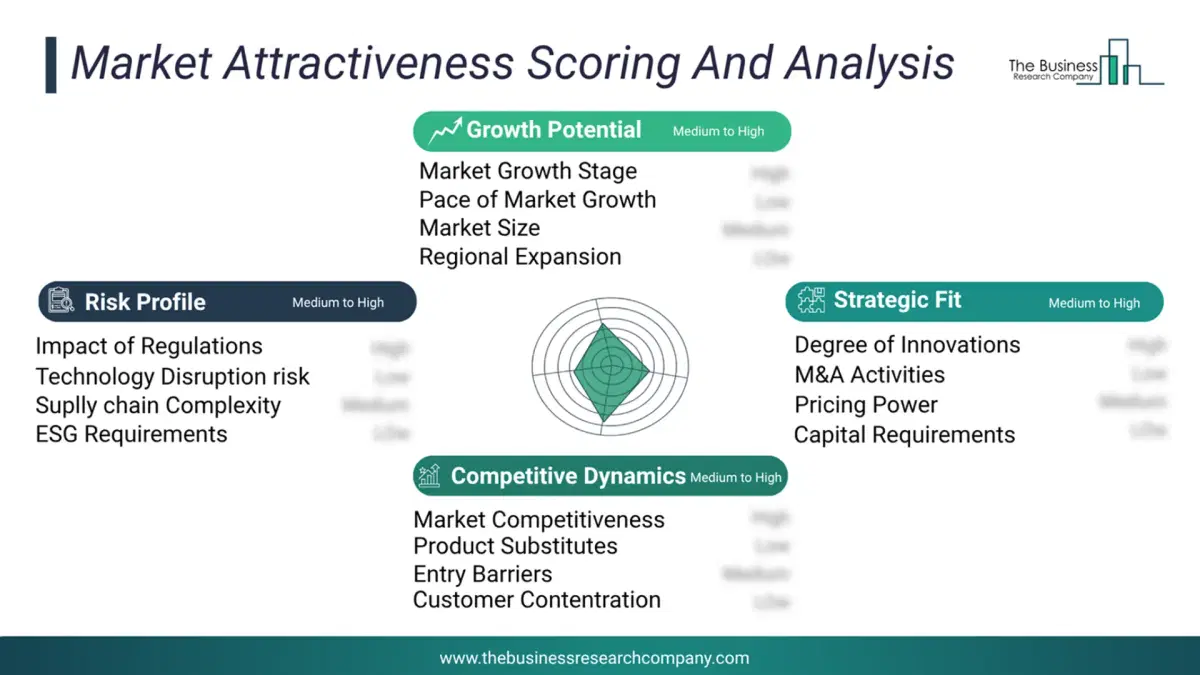
This chart presents market attractiveness based on a quantitative evaluation of growth, competition, strategic alignment, and risk, offering a clear view of opportunity areas for decision-making. This chart is for illustrative purposes; the full report contains the complete analysis.
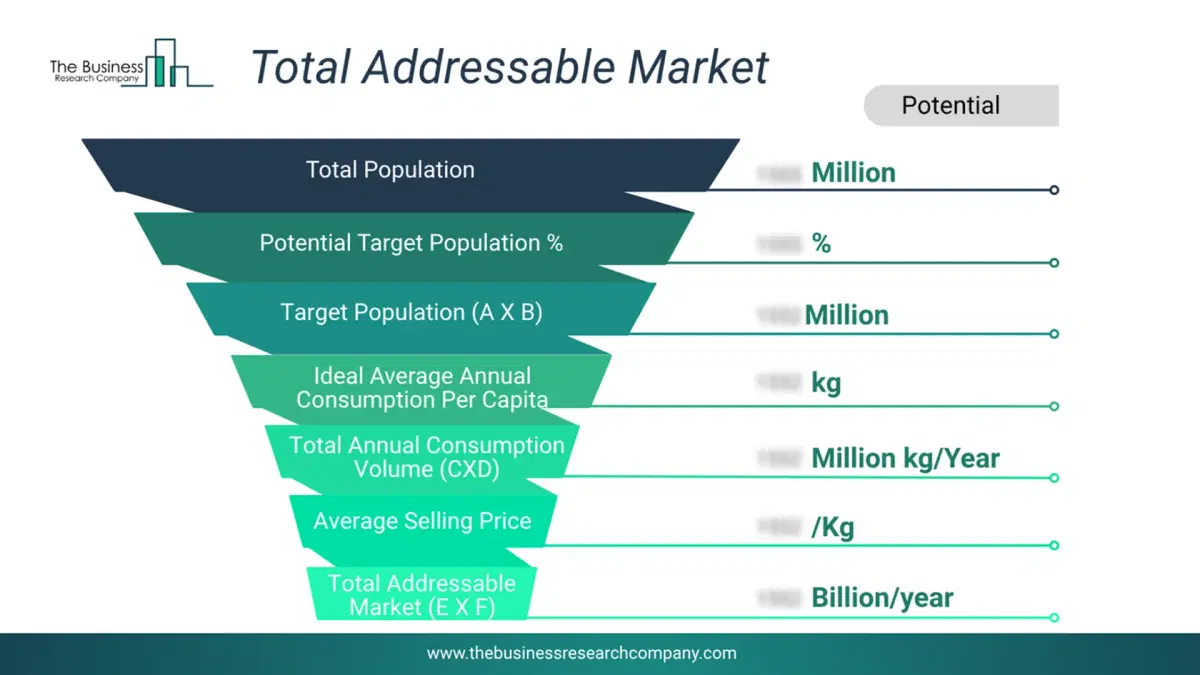
This chart highlights the Total Addressable Market (TAM) by estimating the maximum revenue opportunity using an assumption-driven approach, supporting strategic planning and opportunity sizing across markets. The chart is illustrative; the full report provides a more comprehensive analysis.
What Key Data and Analysis Are Included in the Wood Manufacturing Market Report 2026?
The wood manufacturing market research report is one of a series of new reports from The Business Research Company that provides market statistics, including Market Report 2026?global market size, regional shares, competitors with the market share, detailed market segments, market trends and opportunities, and any further data you may need to thrive in the wood manufacturing Market Report 2026? The market research report delivers a complete perspective of everything you need, with an in-depth analysis of the current and future state of the Market Report 2026?Wood Manufacturing Market Report Forecast Analysis
| Report Attribute | Details |
|---|---|
| Market Size Value In 2026 | $490.39 billion |
| Revenue Forecast In 2030 | $560.68 billion |
| Growth Rate | CAGR of 3.4% from 2026 to 2030 |
| Base Year For Estimation | 2025 |
| Actual Estimates/Historical Data | 2020-2025 |
| Forecast Period | 2026 - 2030 |
| Market Representation | Revenue in USD Billion and CAGR from 2026 to 2030 |
| Segments Covered | Type, Application, End User |
| Regional Scope | Asia-Pacific, Western Europe, Eastern Europe, North America, South America, Middle East, Africa |
| Country Scope | The countries covered in the report are Australia, Brazil, China, France, Germany, India, Indonesia, Japan, Taiwan, Russia, South Korea, UK, USA, Canada, Italy, Spain. |
| Key Companies Profiled | Stora Enso Inc., Binderholz Inc., KLH Massivholz GmbH, HASSLACHER Holding GmbH, Lignotrend Inc., Eugen Decker Holzindustrie KG, Schilliger Holz AG, Structurlam Mass Timber Corporation, Moser Woods Products LLC, Holzwerke Bullinger GmbH & Co., SCHNEIDE GmbH, Pfeifer Holz GmbH, Weyerhaeuser Company, Novawood AS, Andersen Corporation, Arauco North America, Boise Cascade Company, Canfor Corporation, Columbia Forest Products Inc., Georgia-Pacific LLC, Hampton Lumber, Huber Engineered Woods LLC, Interfor Corporation, Louisiana-Pacific Corporation, LP Building Solutions, Moelven Industrier ASA, Murphy Company, Norbord Inc., PotlatchDeltic Corporation, Rayonier Advanced Materials Inc., Resolute Forest Products Inc., Roseburg Forest Products, Sierra Pacific Industries, Svenska Cellulosa Aktiebolaget SCA, Timber Products Company, Tolko Industries Ltd., Universal Forest Products Inc., West Fraser Timber Co. Ltd. |
| Customization Scope | Request for Customization |
| Pricing And Purchase Options | Explore Purchase Options |