

Catheters Market Report 2026
Global Outlook – By Product (Cardiovascular Catheters, Neurovascular Catheters, Urology Catheters, Intravenous Catheters, Specialty Catheters), By Lumen (Single-lumen, Double-lumen, Triple-lumen), By End User (Hospitals & Clinics, Ambulatory Surgical Centers) – Market Size, Trends, Strategies, and Forecast to 2030
Catheters Market Overview
• Catheters market size has reached to $33.8 billion in 2025 • Expected to grow to $56.38 billion in 2030 at a compound annual growth rate (CAGR) of 10.8% • Growth Driver: Rising Prevalence Of Cardiovascular Disorders • Market Trend: Innovative Catheter System With Atraumatic Tracking For Neurovascular Procedures • North America was the largest region in 2025 and Asia-Pacific is the fastest growing region.Market Gains By 2030 – Top Opportunities By Segment
Market Gain identifies the most promising market opportunities by highlighting the segments or products expected to generate the highest incremental revenue growth over the next five years.
What Is Covered Under Catheters Market?
A catheter is a medical device that is used to remove urine or other liquids from the body. The catheters are used for different medical purposes, such as the administration of fluids, medications, or gases, or to drain fluids or urine from the body. The main types of catheters include cardiovascular, neurovascular, urology, intravenous, and specialty catheters. The cardiovascular catheter market consists of sales of catheters by entities (organizations, sole traders, and partnerships) that refer to the catheters that are used for cardiac purposes. Catheters are available in three variations: single-lumen, double-lumen, and triple-lumen; and are used in hospitals, clinics, and ambulatory surgical centers.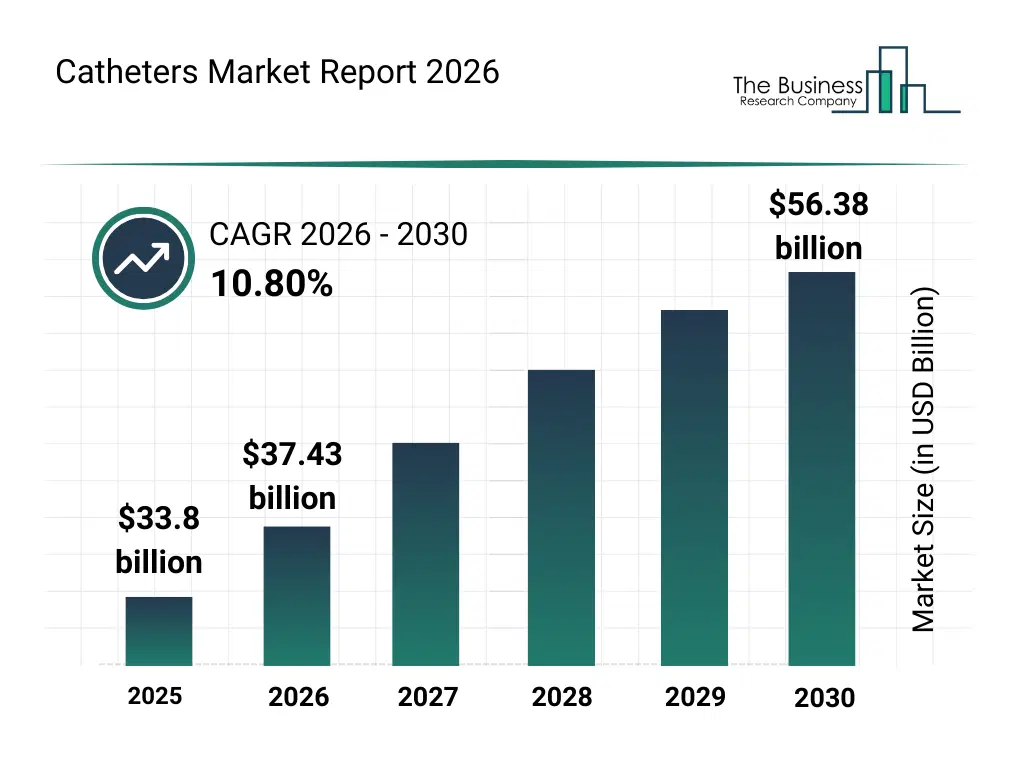
What Is The Catheters Market Size and Share 2026?
The catheters market size has grown rapidly in recent years. It will grow from $33.8 billion in 2025 to $37.43 billion in 2026 at a compound annual growth rate (CAGR) of 10.7%. The growth in the historic period can be attributed to increasing prevalence of chronic diseases, rising hospitalization rates, expansion of cardiovascular and urology procedures, improved access to clinical care, wider availability of disposable medical devices.What Is The Catheters Market Growth Forecast?
The catheters market size is expected to see rapid growth in the next few years. It will grow to $56.38 billion in 2030 at a compound annual growth rate (CAGR) of 10.8%. The growth in the forecast period can be attributed to increasing demand for advanced catheter materials, rising focus on reducing hospital-acquired infections, expansion of outpatient and homecare catheter use, growing adoption of image-guided catheterization, continued innovation in catheter design. Major trends in the forecast period include increasing adoption of antimicrobial coated catheters, rising demand for specialty and multi-lumen catheters, growing use of minimally invasive catheter procedures, expansion of single-use disposable catheters, enhanced focus on patient safety and infection control.
Global Catheters Market Segmentation
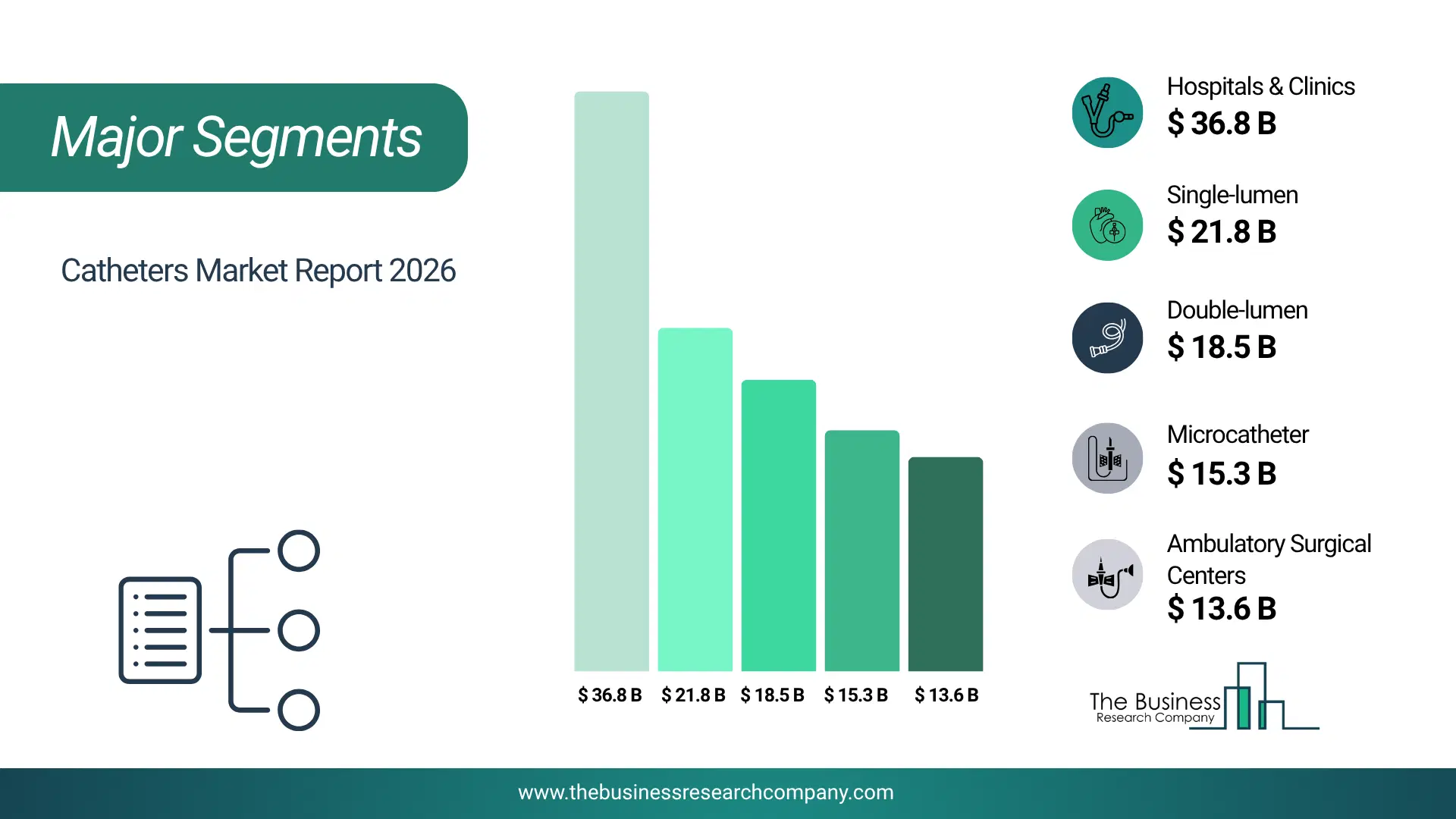
1) By Product: Cardiovascular Catheters, Neurovascular Catheters, Urology Catheters, Intravenous Catheters, Specialty Catheters 2) By Lumen: Single-lumen, Double-lumen, Triple-lumen 3) By End User: Hospitals & Clinics, Ambulatory Surgical Centers Subsegments: 1) By Cardiovascular Catheters: Angiographic Catheters, Balloon Catheters, Electrophysiology Catheters, Stent Delivery Catheters 2) By Neurovascular Catheters: Microcatheters, Guiding Catheters, Balloon Catheters 3) By Urology Catheters: Foley Catheters, Intermittent Catheters, Suprapubic Catheters 4) By Intravenous Catheters: Peripheral IV Catheters, Central Venous Catheters (CVCs), Peripherally Inserted Central Catheters (PICC) 5) By Specialty Catheters: Dialysis Catheters, Temperature Monitoring Catheters, Gastrostomy Catheters The top segments in the catheters market will be: • Hospitals & Clinics will reach $36868.15 Million by 2030. • Single-lumen will reach $21849.26 Million by 2030. • Double-lumen will reach $18498.33 Million by 2030. • Microcatheter will reach $15389.9 Million by 2030. • Ambulatory Surgical Centers will reach $13683.86 Million by 2030.What Is The Driver Of The Catheters Market?
The rising prevalence of cardiovascular disorders is expected to propel the growth of the catheters market going forward. Cardiac catheterization is a process in which a catheter is moved through a blood vessel to the heart for a better diagnosis of health conditions. The increase in the prevalence of cardiovascular diseases and the growing demand for cardiovascular treatment are expected to increase the demand for catheters. For instance, in January 2024, according to the American Heart Association, a US-based non-profit organization, the age-adjusted death rate from cardiovascular disease increased to 233.3 per 100,000 in 2024, up 4.0% from 224.4 per 100,000 in 2023. Therefore, the rising prevalence of cardiovascular disorder drives the catheter industry growth during the forecast period.
Infographic Chart Showing Key Market Drivers Analysis And Restraints For Catheters Market
The chart presents an impact analysis of key drivers and restraints, quantifying their relative influence on the market's growth rate and helping assess the balance between growth enablers and limiting factors. This chart offers a high-level perspective; the full report contains more detailed insights.
How Will The Drivers Impact Growth In The Global Catheters Market?
• Rise in Aging Population (Medium) – During the forecast period, the rise in aging population will become a key driver of growth in the catheters market by 2030. elderly individuals are more prone to chronic conditions such as cardiovascular diseases, urinary disorders, renal failure, and mobility-related complications, which frequently necessitate catheter-based procedures for diagnosis, treatment, and ongoing care. moreover, age-associated loss of bladder control and the rising number of surgical interventions among older adults are further increasing catheter utilization. increasing life expectancy, along with better access to healthcare services and long-term care facilities, is accelerating the uptake of advanced catheter technologies. as a result, manufacturers are experiencing steady demand growth, supporting market expansion across hospital, homecare, and specialty care environments. as a result, rise in aging population is anticipated to contributing to a 1.6% annual growth in the market. • Rising Urological Disorders (Medium) – During the forecast period, the rising urological disorders will emerge as a major factor driving the expansion of the catheters market by 2030. conditions such as urinary incontinence, benign prostatic hyperplasia, kidney stones, and urinary tract obstructions increasingly require catheterization for effective diagnosis, treatment, and patient management. growing awareness of urological health, along with higher diagnosis rates, is driving demand for both intermittent and indwelling catheters. in addition, the expansion of minimally invasive urological procedures and the rising volume of surgeries are boosting catheter utilization. improved access to urology care, particularly in aging and high-risk populations, further supports sustained market growth across hospitals and homecare settings. consequently, the rising urological disorders is projected to contributing to a 1.1% annual growth in the market. • Increasing Demand for Minimally Invasive Procedures (Low) – During the forecast period, the increasing demand for minimally invasive procedures will serve as a key growth catalyst for the catheters market by 2030. minimally invasive techniques are widely adopted due to their advantages, including reduced patient trauma, shorter hospital stays, faster recovery times, and lower overall healthcare costs. catheters play a critical role in these procedures by enabling precise access, navigation, and delivery of therapeutic or diagnostic interventions across cardiovascular, urological, and neurovascular applications. technological advancements in catheter design, such as enhanced flexibility, steerability, and imaging compatibility, are further supporting their clinical adoption. as healthcare providers continue to prioritize efficiency and improved patient outcomes, demand for advanced catheter solutions is expected to rise steadily. therefore, this increasing demand for minimally invasive procedures is projected to supporting to a 0.9% annual growth in the market. • Growing Home Healthcare Services (Low) – During forecast period, the growing home healthcare services is expected to propel the growth of the catheters market. Home-based care is increasingly preferred due to its cost efficiency, convenience, and ability to improve patient comfort and quality of life, particularly for individuals with chronic illnesses, mobility limitations, or long-term catheterization needs. The shift toward outpatient care and early hospital discharge has increased reliance on catheters for urinary management, dialysis, and vascular access in home settings. Moreover, advancements in user-friendly, infection-resistant catheter designs are enabling safe self-administration and caregiver use, thereby driving demand and supporting sustained market expansion across homecare segments. The growing home healthcare services growth contribution during the forecast period in 2025 is 0.5%.How Will The Restraints Impact Growth In The Global Catheters Market?
• Stringent Regulatory Requirements (Medium) – During the forecast period, stringent regulatory requirements are expected to hinder the growth of the catheters market in forecast period. catheter manufacturers must comply with complex and evolving regulatory standards related to product safety, clinical validation, manufacturing quality, and post-market surveillance. obtaining regulatory approvals often involves lengthy review processes, extensive clinical trials, and significant compliance costs, which can delay product launches and increase overall development timelines. smaller manufacturers may face challenges in meeting these regulatory demands, limiting innovation and market entry. additionally, frequent updates to regulations across different regions create compliance uncertainty and operational complexity. collectively, these factors may restrain market expansion and slow the adoption of new catheter technologies. growth affected by stringent regulatory requirements during the forecast period in 2025 is -1.0%. • Reimbursement and Insurance Challenges (Medium) – During the forecast period, reimbursement and insurance challenges is expected to hinder the growth of the catheters market. Limited or inconsistent reimbursement policies for catheter-based procedures and homecare usage can restrict patient access, particularly in cost-sensitive and developing healthcare systems. In some regions, insurers impose strict coverage criteria, caps on usage, or lower reimbursement rates, discouraging healthcare providers from adopting advanced or premium catheter solutions. Delays in reimbursement approvals and complex claims processes further increase the financial burden on hospitals and patients. These challenges may reduce procedure volumes and slow technology adoption, thereby constraining overall market growth despite rising clinical demand. Growth affected by reimbursement and insurance challenges during the forecast period in 2025 is -2.0% • Trade War & Tariffs (Low) – During the forecast period, trade wars and tariffs are expected to restrain the growth of the catheters market during the forecast period by increasing the costs of imported raw materials, medical-grade polymers, precision components, and finished catheter products, thereby limiting affordability and reducing the availability of advanced catheter solutions for healthcare providers and patients. higher import duties and cross-border trade restrictions raise production and procurement expenses, which may be passed on to healthcare providers and patients, limiting affordability. in addition, tariffs on finished catheter products can disrupt global supply chains and delay product availability, particularly in regions dependent on imports. ongoing geopolitical tensions and protectionist policies also create pricing uncertainty and reduce investment confidence, potentially slowing innovation, market expansion, and the adoption of advanced catheter technologies. growth affected by trade war and tariffs across regions during the forecast period in 2025 is -0.3%Key Players In The Global Catheters Market
Major companies operating in the catheters market are Boston Scientific Corporation, Coloplast A/S, ConvaTec Group Plc, Edwards Lifesciences Corporation, Hollister Incorporated, Johnson & Johnson, Medtronic Plc, B. Braun Melsungen AG, Terumo Corporation, Cook Medical Inc., Becton Dickinson and Company, Stryker Corporation, Merit Medical Systems Inc., Abbott Laboratories, Manfred Sauer GmbH, Koninklijke Philips N.V., Teleflex Incorporated, C. R. Bard Inc., Vascular Solutions Inc., Cordis Corporation, Rochester Medical Corporation, Navilyst Medical Inc., AngioDynamics Inc., Cardinal Health Inc., Olympus Corporation, Penumbra Inc., Siemens Healthineers AG, Smiths Medical Inc.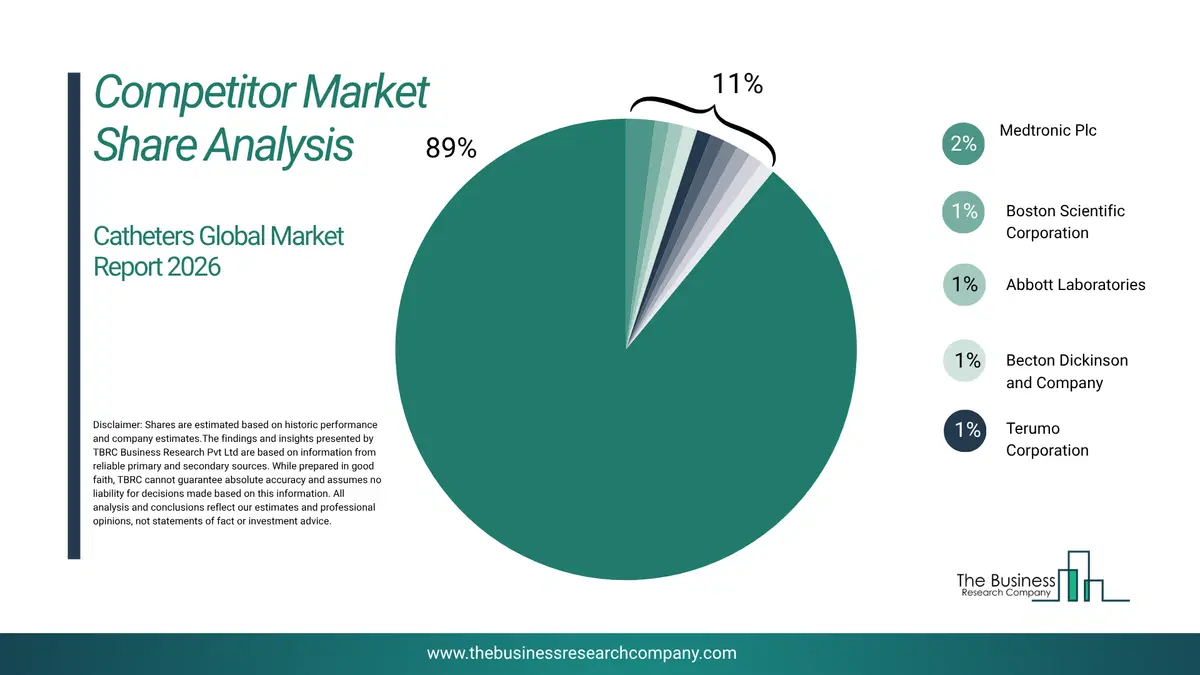
This chart is for illustrative purposes; the full report includes a detailed competitor analysis and comprehensive overview of the top 10 companies in the market.
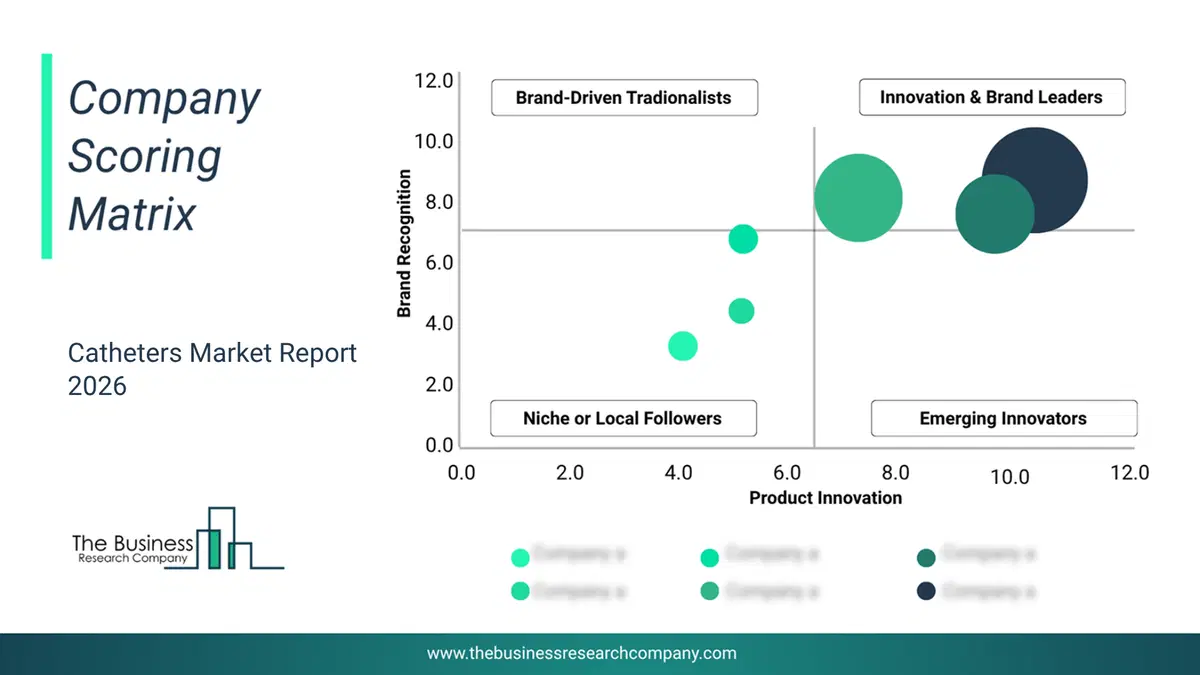
This chart maps companies by product innovation and brand strength, with bubble size indicating relative revenue, helping identify market leaders, challengers, and niche players. This is an illustrative chart; the full report provides a complete and accurate competitive analysis.
Global Catheters Market Trends and Insights
Major companies operating in the catheter market are focusing on developing innovations, such as atraumatic tracking, eliminating the need for a microcatheter during procedures. Atraumatic tracking refers to the method or technique of tracking a biological or physical process in a way that minimizes or eliminates trauma, damage, or adverse effects to the subject being tracked. For instance, in July 2024, Route 92 Medical, Inc., a US-based medical equipment manufacturing company, launched the FreeClimb 88 Catheter System designed for effective navigation through complex neurovascular anatomy. The catheter system offers FDA 510(k) clearance, ensuring safety and efficacy in navigating neurovasculature. Available in 125 cm and 132 cm lengths, it provides flexibility for clinicians. A specialized delivery catheter with a soft, tapered tip reduces the 'ledge effect' and enables smooth passage through critical arteries. Its design enhances clinical procedures by minimizing setup complexity and improving vessel size matching for better flow control.What Are Latest Mergers And Acquisitions In The Catheters Market?
In January 2023, Shockwave Medical, a US-based provider of intravascular lithotripsy (IVL) catheter systems, acquired Neovasc for approximately US$100 million. Through this acquisition, Shockwave Medical aims to strengthen its catheter-based cardiovascular offerings by integrating Neovasc’s Reducer System, a first-of-its-kind catheter-delivered implant for treating refractory angina. Neovasc is a Canada-based medical device company that provides minimally invasive cardiovascular devices delivered via catheter.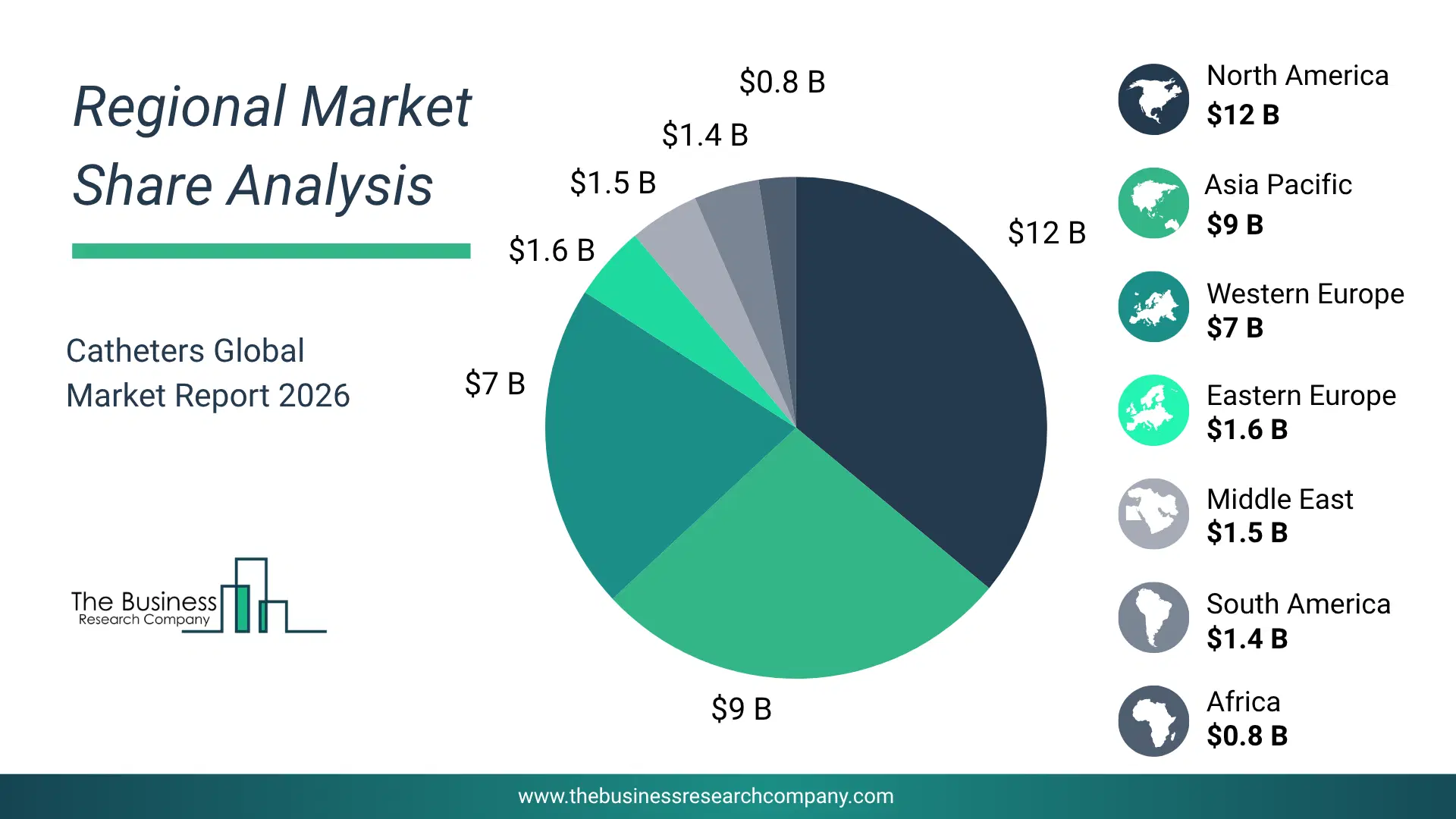
Regional Outlook
North America was the largest region in the catheters market in 2025. Asia-Pacific is expected to be the fastest-growing region in the forecast period. The regions covered in this market report are Asia-Pacific, South East Asia, Western Europe, Eastern Europe, North America, South America, Middle East, Africa. The countries covered in this market report are Australia, Brazil, China, France, Germany, India, Indonesia, Japan, Taiwan, Russia, South Korea, UK, USA, Canada, Italy, SpainWhat Defines the Catheters Market?
The catheter market consists of sales of Indwelling catheter, Condom catheter, Intermittent self-catheter. Values in this market are ‘factory gate’ values, that is the value of goods sold by the manufacturers or creators of the goods, whether to other entities (including downstream manufacturers, wholesalers, distributors and retailers) or directly to end customers. The value of goods in this market includes related services sold by the creators of the goods.How is Market Value Defined and Measured?
The market value is defined as the revenues that enterprises gain from the sale of goods and/or services within the specified market and geography through sales, grants, or donations in terms of the currency (in USD unless otherwise specified). The revenues for a specified geography are consumption values that are revenues generated by organizations in the specified geography within the market, irrespective of where they are produced. It does not include revenues from resales along the supply chain, either further along the supply chain or as part of other products.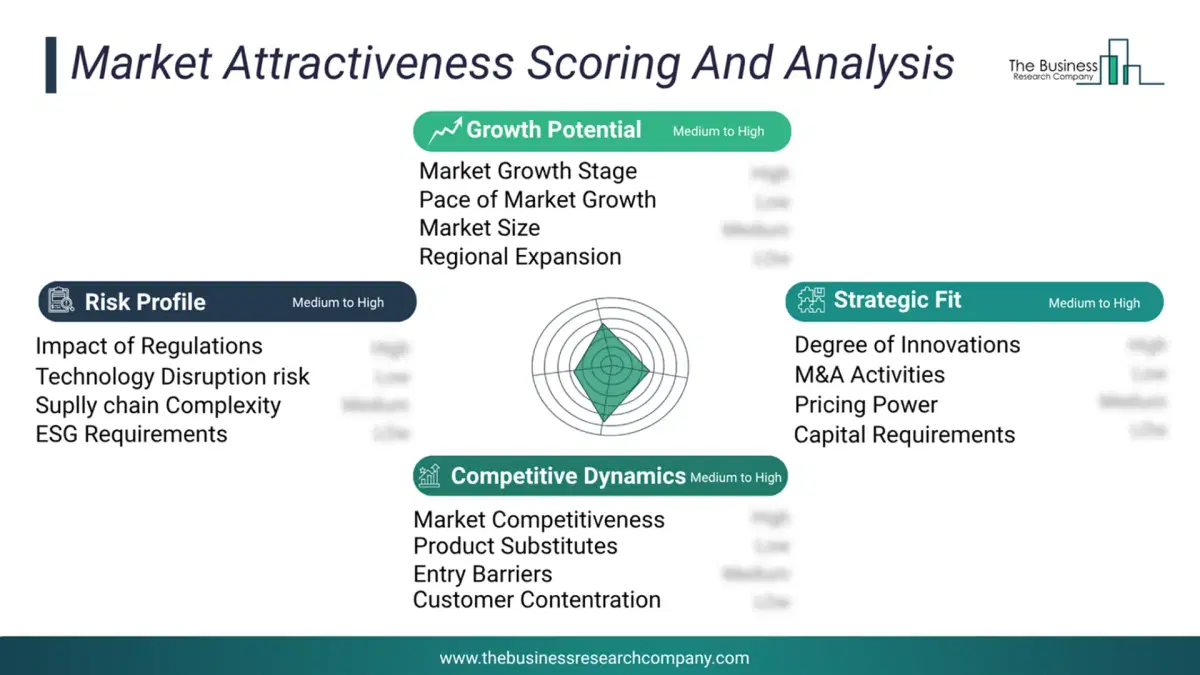
This chart presents market attractiveness based on a quantitative evaluation of growth, competition, strategic alignment, and risk, offering a clear view of opportunity areas for decision-making. This chart is for illustrative purposes; the full report contains the complete analysis.
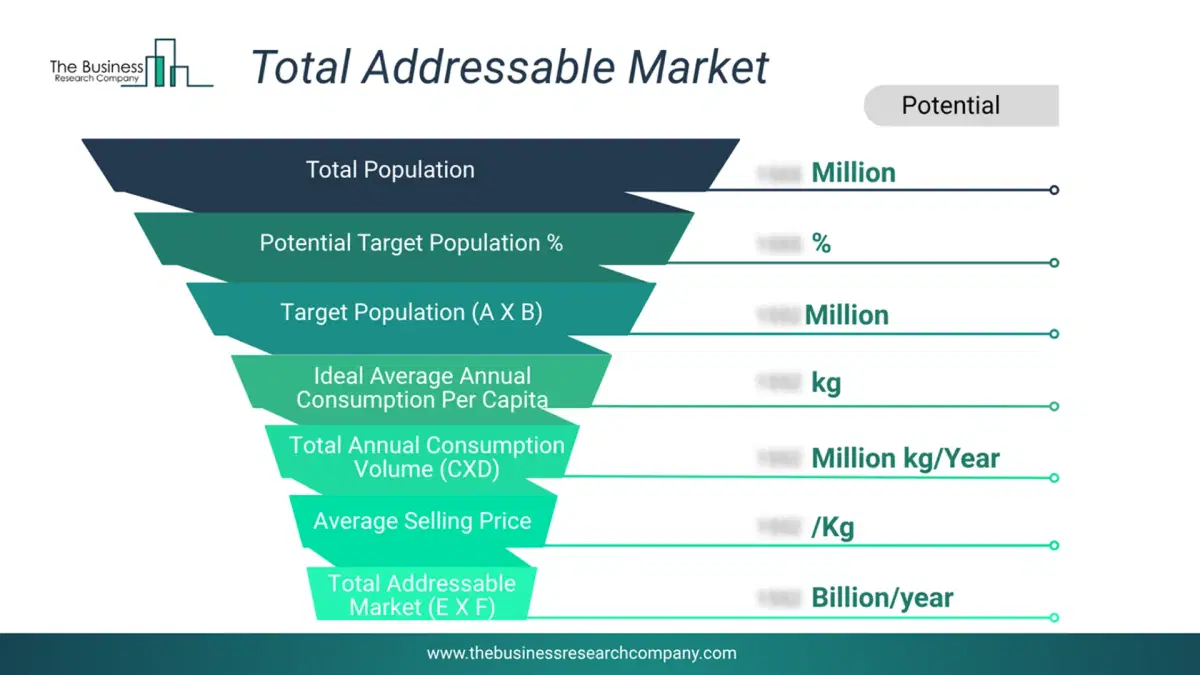
This chart highlights the Total Addressable Market (TAM) by estimating the maximum revenue opportunity using an assumption-driven approach, supporting strategic planning and opportunity sizing across markets. The chart is illustrative; the full report provides a more comprehensive analysis.
What Key Data and Analysis Are Included in the Catheters Market Report 2026?
The catheters market research report is one of a series of new reports from The Business Research Company that provides market statistics, including industry global market size, regional shares, competitors with the market share, detailed market segments, market trends and opportunities, and any further data you may need to thrive in the catheters industry. The market research report delivers a complete perspective of everything you need, with an in-depth analysis of the current and future state of the industry.Catheters Market Report Forecast Analysis
| Report Attribute | Details |
|---|---|
| Market Size Value In 2026 | $37.43 billion |
| Revenue Forecast In 2030 | $56.38 billion |
| Growth Rate | CAGR of 10.7% from 2026 to 2030 |
| Base Year For Estimation | 2025 |
| Actual Estimates/Historical Data | 2020-2025 |
| Forecast Period | 2026 - 2030 - 2035 |
| Market Representation | Revenue in USD Billion and CAGR from 2026 to 2030 |
| Segments Covered | Product, Lumen, End User |
| Regional Scope | Asia-Pacific, Western Europe, Eastern Europe, North America, South America, Middle East, Africa |
| Country Scope | The countries covered in the report are Australia, Brazil, China, France, Germany, India, Indonesia, Japan, Taiwan, Russia, South Korea, UK, USA, Canada, Italy, Spain. |
| Key Companies Profiled | Boston Scientific Corporation, Coloplast A/S, ConvaTec Group Plc, Edwards Lifesciences Corporation, Hollister Incorporated, Johnson & Johnson, Medtronic Plc, B. Braun Melsungen AG, Terumo Corporation, Cook Medical Inc., Becton Dickinson and Company, Stryker Corporation, Merit Medical Systems Inc., Abbott Laboratories, Manfred Sauer GmbH, Koninklijke Philips N.V., Teleflex Incorporated, C. R. Bard Inc., Vascular Solutions Inc., Cordis Corporation, Rochester Medical Corporation, Navilyst Medical Inc., AngioDynamics Inc., Cardinal Health Inc., Olympus Corporation, Penumbra Inc., Siemens Healthineers AG, Smiths Medical Inc. |
| Customization Scope | Request for Customization |
| Pricing And Purchase Options | Explore Purchase Options |