

Construction Software Market Report 2026
Global Outlook – By Type (Project Management, Account Or Financial Management, Quality And Safety, Field Productivity, Other Types), By Deployment Mode (Cloud, On-Premise), By Organization Size (Large Enterprise, Small And Medium Enterprises), By Application (General Contractors, Building Owners, Architects And Engineers, Sub-Contactors, Specialty Contractors) – Market Size, Trends, Strategies, and Forecast to 2030
Construction Software Market Overview
• Construction Software market size has reached to $4.56 billion in 2025 • Expected to grow to $7.77 billion in 2030 at a compound annual growth rate (CAGR) of 11% • Growth Driver: Rising Construction Activities Fuel Growth In Construction Software Market • Market Trend: Key Player Solutions Revolutionizing Building Construction Software Market • North America was the largest region in 2025 and Asia-Pacific is the fastest growing region.Market Gains By 2030 – Top Opportunities By Segment
Market Gain identifies the most promising market opportunities by highlighting the segments or products expected to generate the highest incremental revenue growth over the next five years.
What Is Covered Under Construction Software Market?
Construction software refers to a suite of digital tools and applications designed to facilitate and streamline various aspects of the construction industry, including project management, design, budgeting, scheduling, and communication. This software is used by construction professionals such as project managers, architects, engineers, and contractors to improve efficiency, collaboration, and accuracy in construction projects. The main types of construction software are project management, account or financial management, quality and safety, field productivity, and others. Project management refers to the process of planning, executing, and overseeing a project to achieve specific goals within defined constraints such as time, budget, and resources. The software can be deployed via cloud and on-premises and is utilized by organizations including large enterprises and small and medium enterprises (SMEs). It serves a variety of applications, catering to general contractors, building owners, architects and engineers, subcontractors, and specialty contractors.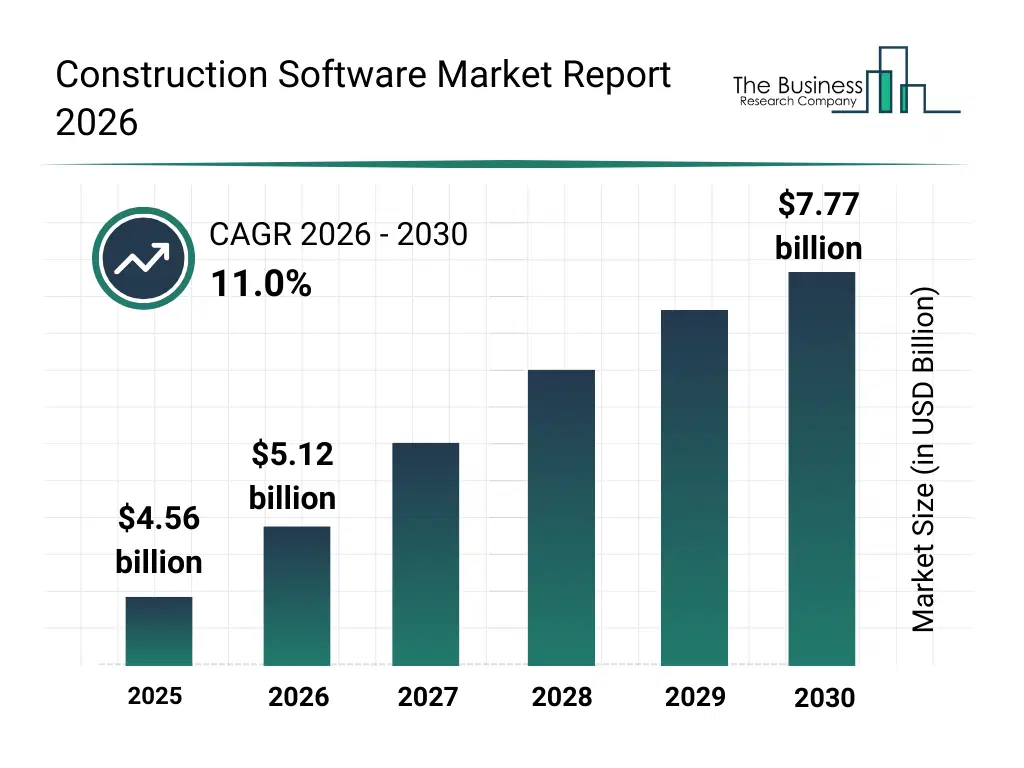
What Is The Construction Software Market Size and Share 2026?
The construction software market size has grown rapidly in recent years. It will grow from $4.56 billion in 2025 to $5.12 billion in 2026 at a compound annual growth rate (CAGR) of 12.4%. The growth in the historic period can be attributed to increasing complexity of construction projects, rising demand for cost and schedule control, expansion of large infrastructure developments, growing adoption of digital documentation, increased focus on construction safety management.What Is The Construction Software Market Growth Forecast?
The construction software market size is expected to see rapid growth in the next few years. It will grow to $7.77 billion in 2030 at a compound annual growth rate (CAGR) of 11.0%. The growth in the forecast period can be attributed to growing investments in smart construction technologies, rising adoption of AI-powered project analytics, expansion of digital twin usage in construction, increasing demand for remote project monitoring, growing focus on sustainability compliance in construction. Major trends in the forecast period include increasing adoption of cloud-based construction platforms, rising use of bim and digital design tools, growing integration of real-time project collaboration software, expansion of mobile field management applications, enhanced focus on data-driven project controls.
Global Construction Software Market Segmentation
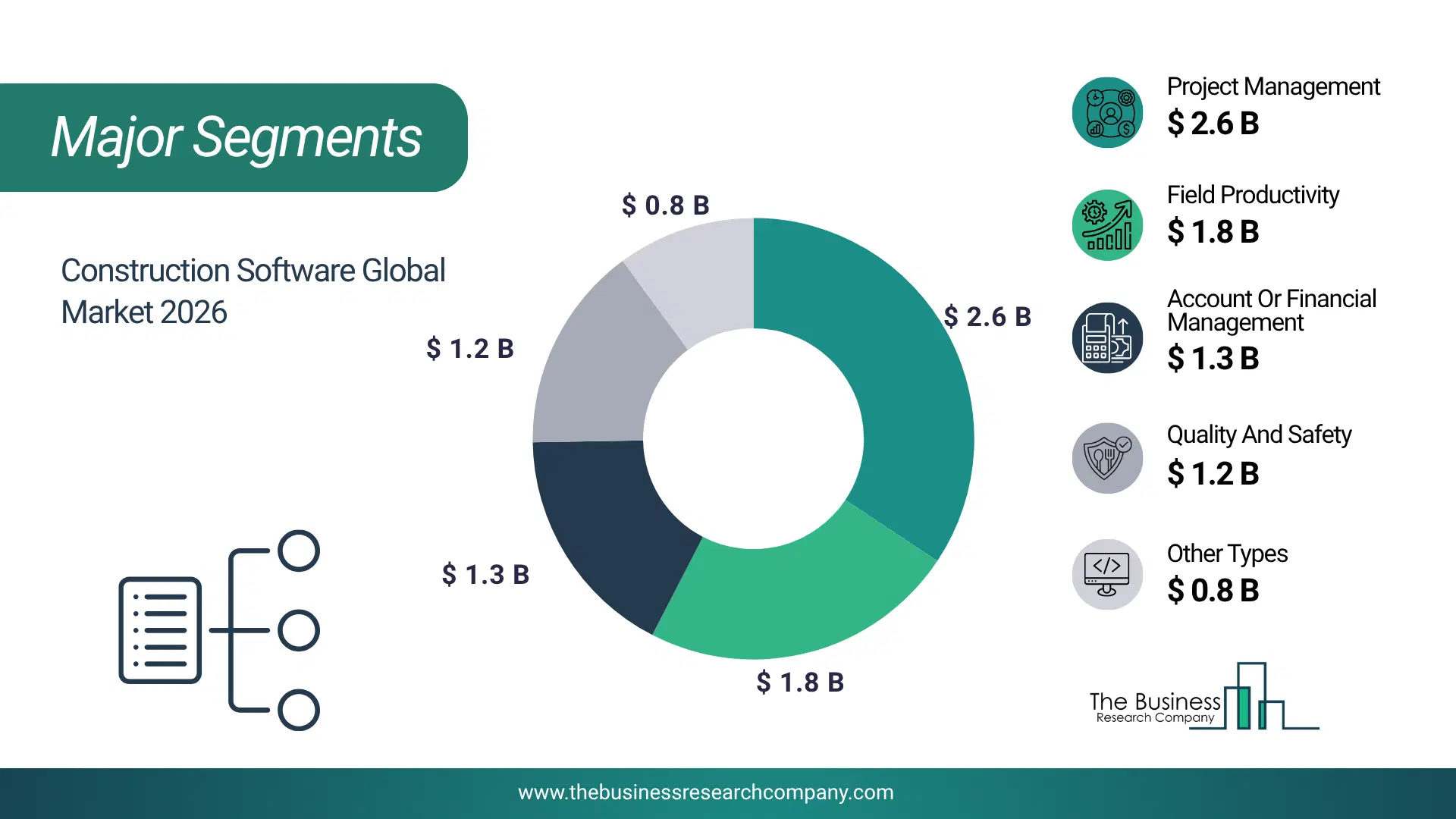
1) By Type: Project Management, Account Or Financial Management, Quality And Safety, Field Productivity, Other Types 2) By Deployment Mode: Cloud, On-Premise 3) By Organization Size: Large Enterprise, Small And Medium Enterprises 4) By Application: General Contractors, Building Owners, Architects And Engineers, Sub-Contactors, Specialty Contractors Subsegments: 1) By Project Management: Scheduling Software, Collaboration Tools, Project Tracking And Reporting 2) By Account Or Financial Management: Budgeting And Forecasting Software, Billing And Invoicing Software, Financial Reporting And Analytics 3) By Quality And Safety: Safety Management Software, Quality Control And Compliance Software 4) By Field Productivity: Mobile Workforce Management Software, Time Tracking And Labor Management Software, Equipment Management Software 5) By Other Types: Estimating And Bidding Software, Building Information Modeling (BIM) Software The top segments in the construction software market will be: • Project Management will reach $2.65 billion by 2030. • Field Productivity will reach $1.83 billion by 2030. • Account Or Financial Management will reach $1.33 billion by 2030. • Quality And Safety will reach $1.2 billion by 2030. • Other Types will reach $0.77 billion by 2030.What Is The Driver Of The Construction Software Market?
The increasing number of construction projects is expected to propel the growth of the construction software market going forward. Construction projects encompass the planning, executing, and managing of building structures or infrastructure developments from conception to completion. The increasing demand for infrastructure development, urbanization, and renovation projects is driving the increase in construction projects globally. Construction firms utilize construction software to streamline project management, enhance communication, improve scheduling, and optimize resource allocation, ultimately increasing efficiency and reducing costs. For instance, in June 2023, according to the quarterly construction inquiry published by the Northern Ireland Statistics and Research Agency, an Ireland-based public authority, from the first quarter of 2022 to the first quarter of 2023, the overall construction industry expanded by 6.5%, with the housing sector of construction increasing by 11.1% and the infrastructure subsector by 3.7%. Therefore, the increasing number of construction projects is driving the growth of the construction software industry.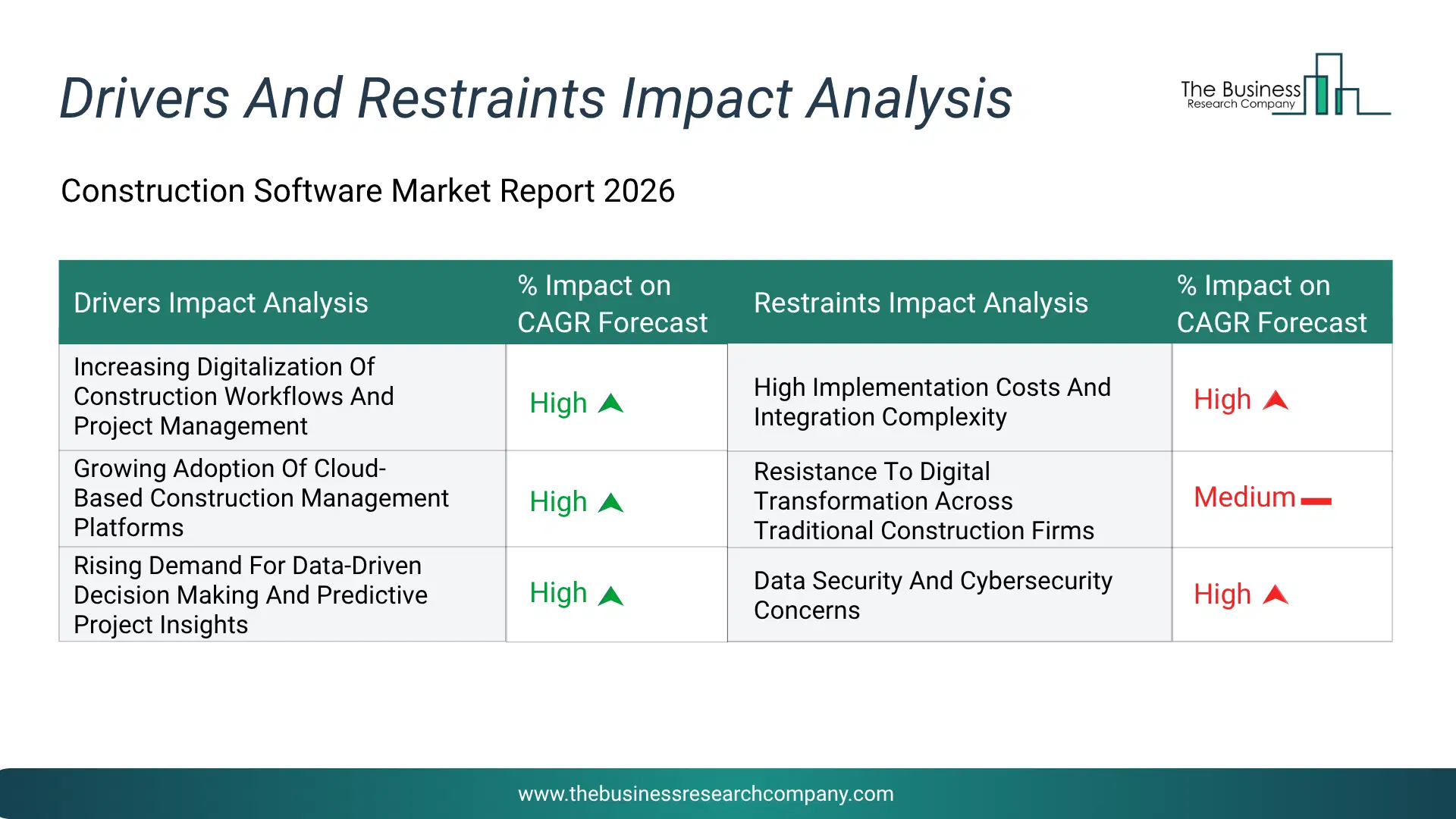
Infographic Chart Showing Key Market Drivers Analysis And Restraints For Construction Software Market
The chart presents an impact analysis of key drivers and restraints, quantifying their relative influence on the market's growth rate and helping assess the balance between growth enablers and limiting factors. This chart offers a high-level perspective; the full report contains more detailed insights.
How Will The Drivers Impact Growth In The Global Construction Software Market?
• Increasing Digitalization Of Construction Workflows And Project Management (High) – During the forecast period, the increasing digitalization of construction workflows and project management is expected to become a key growth driver for the construction software market by 2030. Construction companies are gradually transitioning from manual documentation and fragmented spreadsheets to integrated digital platforms that streamline planning, scheduling, budgeting, and communication across project stakeholders. Digital tools improve transparency, reduce administrative errors, and enable better coordination between architects, engineers, contractors, and subcontractors. As construction projects become more complex and time -sensitive, companies are prioritizing digital platforms to improve productivity and control project costs. This growing shift toward digitized construction processes is strengthening the demand for advanced construction software solutions. • Growing Adoption Of Cloud-Based Construction Management Platforms (High) – During the forecast period, the growing adoption of cloud-based construction management platforms is expected to emerge as a major factor driving the expansion of the construction software market by 2030. Cloud-based systems enable construction teams to access project data in real time, collaborate remotely across multiple job sites, and integrate project updates instantly. These platforms reduce the need for expensive on-premise infrastructure while improving system scalability, data accessibility, and operational flexibility. Contractors and project managers are increasingly relying on cloud-enabled solutions to track project progress, manage documentation, and coordinate workflows more efficiently. • Rising Demand For Data-Driven Decision Making And Predictive Project Insights (High) – During the forecast period, the rising demand for data-driven decision making and predictive project insights is expected to act as a key growth catalyst for the construction software market by 2030. Modern construction software platforms increasingly incorporate analytics, artificial intelligence, and predictive modeling capabilities that enable companies to analyze large volumes of project data and identify potential risks before they escalate. These solutions help construction firms forecast delays, optimize resource allocation, and improve cost management across complex projects. As construction companies focus on improving project outcomes and minimizing operational risks, demand for intelligent software solutions that deliver actionable insights is steadily increasing.How Will The Restraints Impact Growth In The Global Construction Software Market?
• High Implementation Costs And Integration Complexity (High) – During the forecast period, the high implementation costs and integration complexity represent a key restraint for the construction software market. Many construction firms, particularly small and mid-sized contractors, face challenges in adopting advanced digital platforms due to upfront licensing costs, system customization requirements, and employee training needs. Additionally, integrating new software solutions with legacy systems and existing workflows can be time-consuming and technically challenging. These barriers can slow adoption rates and limit the widespread deployment of advanced construction management technologies. • Resistance To Digital Transformation Across Traditional Construction Firms (Medium) – During the forecast period, the resistance to digital transformation remains a significant challenge in the construction industry, which has historically relied on conventional project management practices and paper-based documentation. Many organizations are hesitant to adopt new digital tools due to concerns about workflow disruptions, workforce training requirements, and uncertainty regarding return on investment. This cultural and operational resistance can delay software adoption and reduce the pace of technological integration across construction projects, thereby moderating overall market growth during the forecast period. • Data Security And Cybersecurity Concerns (High) – During the forecast period, the data security and cybersecurity concerns act as a restraint for the construction software market by increasing hesitation among firms to fully adopt cloud-based and connected digital platforms. Construction projects often involve sensitive data such as project designs, financial details, and client information, which makes them vulnerable to cyber threats and unauthorized access. The risk of data breaches and system attacks forces companies to invest in additional security measures, increasing overall costs. These concerns also slow down digital adoption, particularly among firms with limited it infrastructure and cybersecurity expertise.Key Players In The Global Construction Software Market
Major companies operating in the construction software market are Autodesk Inc., Procore Technologies Inc., Trimble Inc., Bentley Systems Inc., Nemetschek Group, Oracle Corporation, SAP SE, Sage Group plc, Jonas Construction Software Inc., Buildertrend Solutions Inc., Computer Methods International Corp., InEight Inc., Heavy Construction Systems Specialists Inc., STACK Construction Technologies Inc., Fieldwire, Bridgit Inc., Plexxis Software Inc., CoConstruct LLC, Corecon Technologies Inc., Esticom Inc., Viewpoint Inc., e-Builder Inc.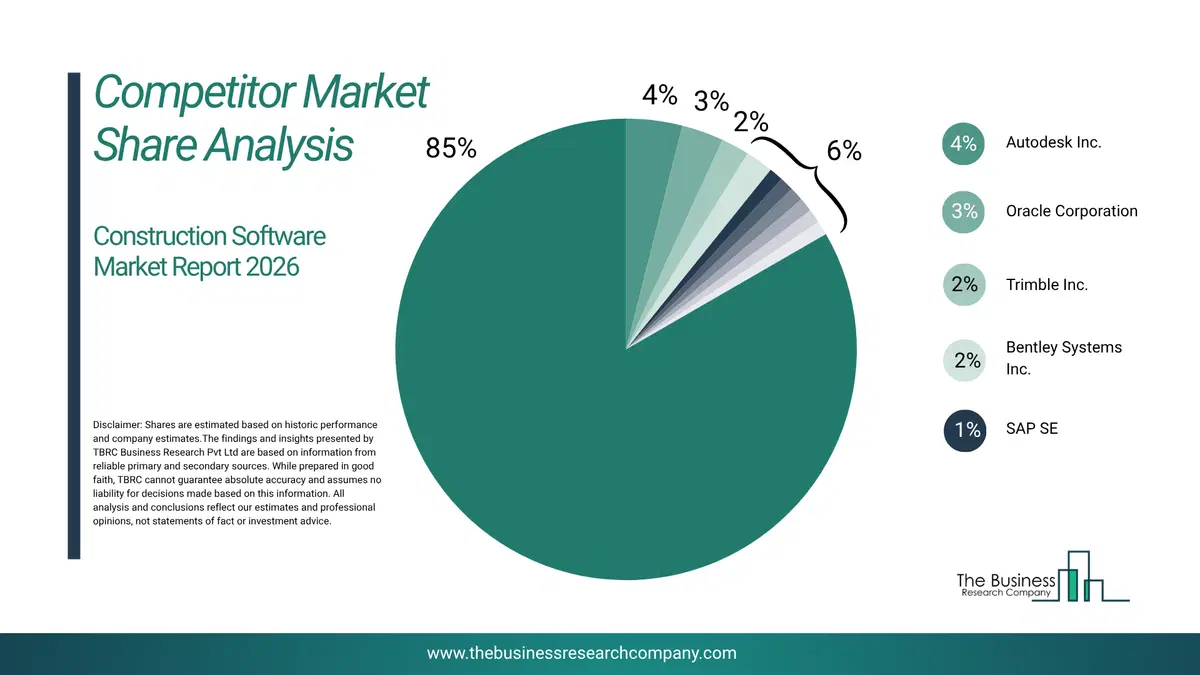
This chart is for illustrative purposes; the full report includes a detailed competitor analysis and comprehensive overview of the top 10 companies in the market.
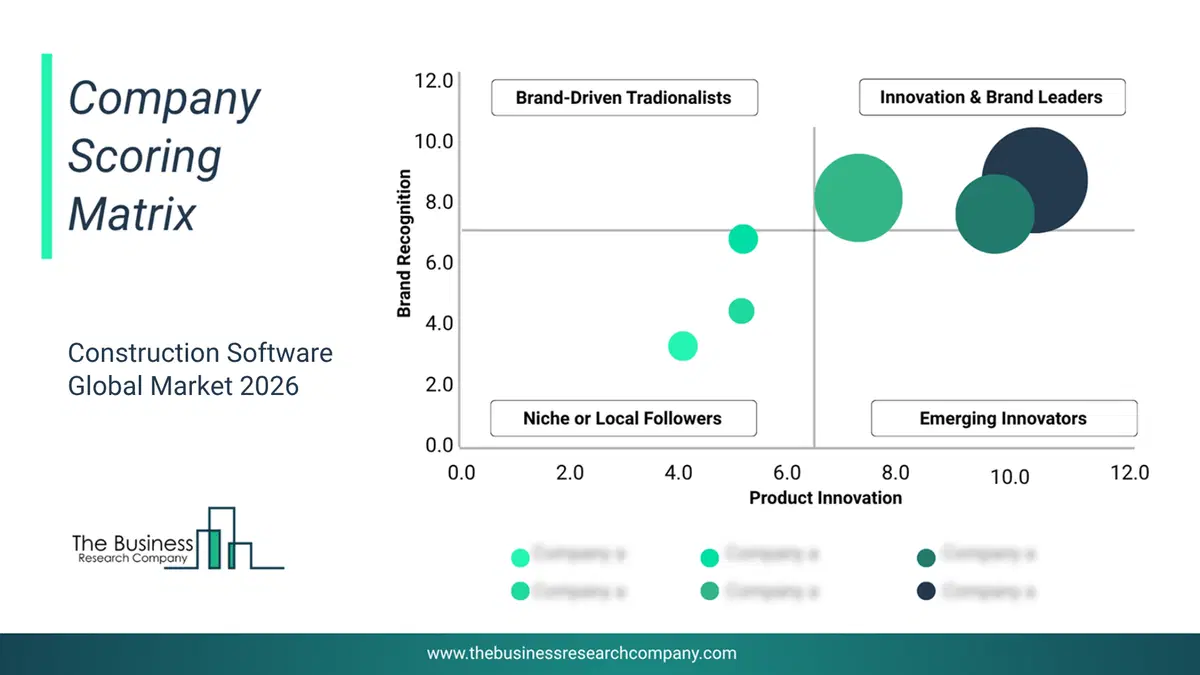
This chart maps companies by product innovation and brand strength, with bubble size indicating relative revenue, helping identify market leaders, challengers, and niche players. This is an illustrative chart; the full report provides a complete and accurate competitive analysis.
Global Construction Software Market Trends and Insights
Major companies operating in the construction software market are focused on developing innovative solutions, such as easy-to-use building construction software, to enhance efficiency and productivity in the construction industry. Easy-to-use building construction software is intuitive interfaces and features for designing, planning, and managing construction projects, streamlining workflows for architects, engineers, and contractors. For instance, in April 2023, Topcon Positioning Systems Inc., a US-based precision positioning technology solution company, launched Digital Layout, an intuitive building construction software designed to help more contractors adopt a digital layout workflow, boosting efficiency, accuracy, and productivity. This software is meticulously designed to provide a distinct advantage in the dynamic field of building construction, serving a wide range of professionals, including general contractors, concrete contractors, MEP contractors, steel erectors, fire suppression companies, and more. It fully supports 2D, 3D, and BIM workflows, operating efficiently on Microsoft Windows and Android systems.What Are Latest Mergers And Acquisitions In The Construction Software Market?
In October 2023, Hilti Corporation, a Switzerland-based provider of construction tools and systems, acquired 4PS Group for an undisclosed amount. With this acquisition, Hilti enhances its software portfolio beyond asset and job site management (Fieldwire). 4PS Group is a Netherlands-based company that provides construction software.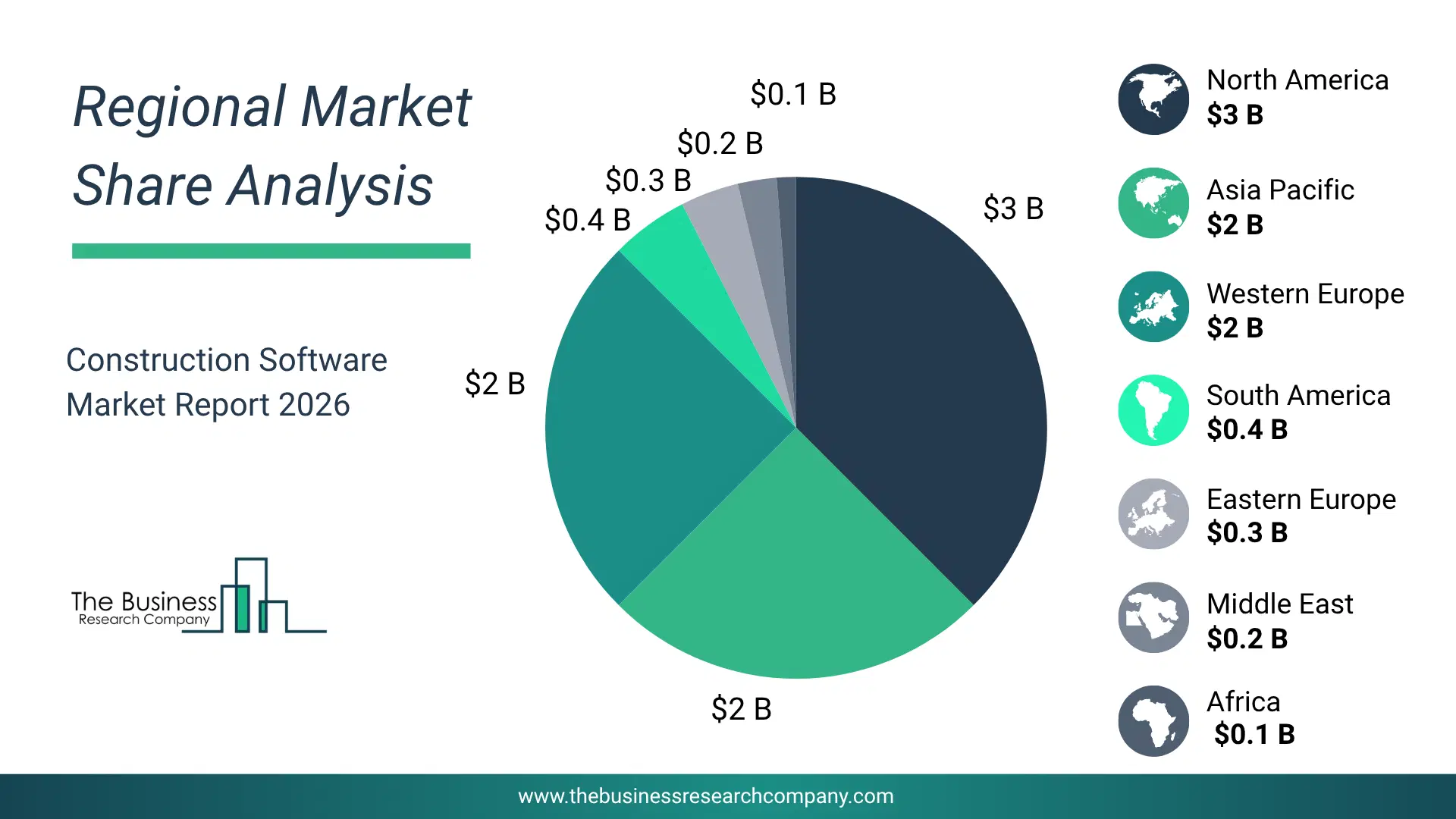
Regional Insights
North America was the largest region in the construction software market in 2025. Asia-Pacific is expected to be the fastest-growing region in the forecast period. The regions covered in this market report are Asia-Pacific, South East Asia, Western Europe, Eastern Europe, North America, South America, Middle East, Africa. The countries covered in this market report are Australia, Brazil, China, France, Germany, India, Indonesia, Japan, Taiwan, Russia, South Korea, UK, USA, Canada, Italy, Spain.What Defines the Construction Software Market?
The construction software market consists of revenues earned by entities providing services such as document management, building information modeling (BIM), and project management. The market value includes the value of related goods sold by the service provider or included within the service offering. The construction software market also includes sales of construction scheduling software, construction document management software, field service management software, safety management software, and asset management software. Values in this market are ‘factory gate’ values, that is, the value of goods sold by the manufacturers or creators of the goods, whether to other entities (including downstream manufacturers, wholesalers, distributors, and retailers) or directly to end customers. The value of goods in this market includes related services sold by the creators of the goods.How is Market Value Defined and Measured?
The market value is defined as the revenues that enterprises gain from the sale of goods and/or services within the specified market and geography through sales, grants, or donations in terms of the currency (in USD unless otherwise specified). The revenues for a specified geography are consumption values that are revenues generated by organizations in the specified geography within the market, irrespective of where they are produced. It does not include revenues from resales along the supply chain, either further along the supply chain or as part of other products.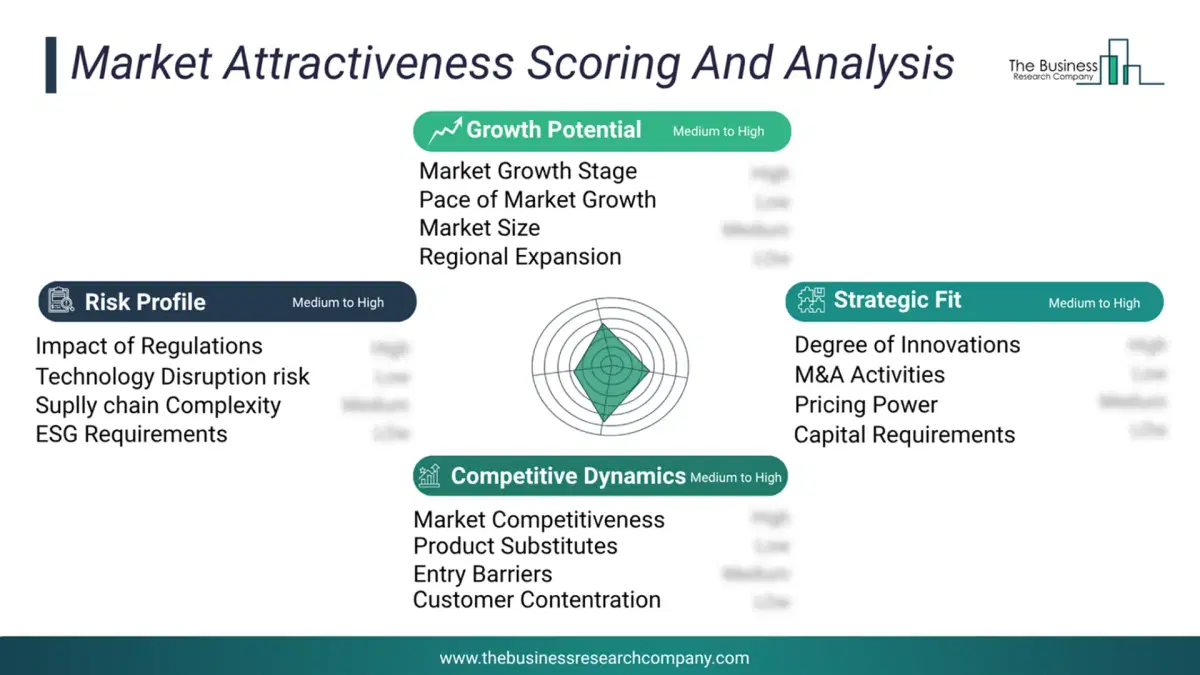
This chart presents market attractiveness based on a quantitative evaluation of growth, competition, strategic alignment, and risk, offering a clear view of opportunity areas for decision-making. This chart is for illustrative purposes; the full report contains the complete analysis.
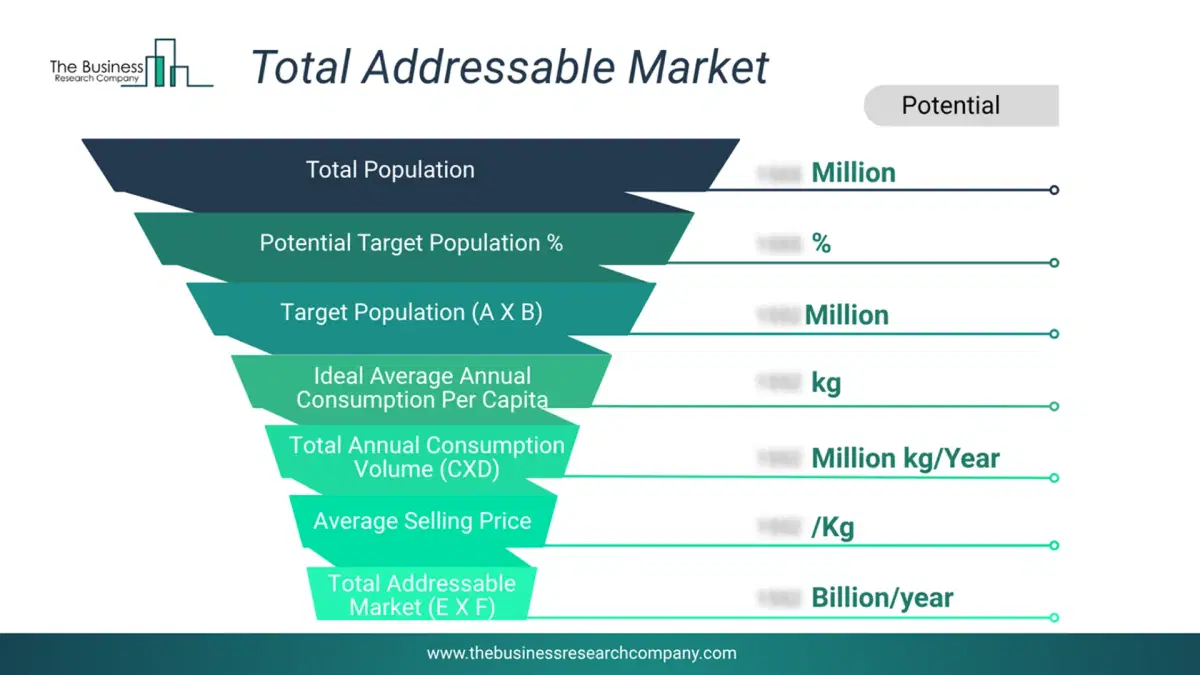
This chart highlights the Total Addressable Market (TAM) by estimating the maximum revenue opportunity using an assumption-driven approach, supporting strategic planning and opportunity sizing across markets. The chart is illustrative; the full report provides a more comprehensive analysis.
What Key Data and Analysis Are Included in the Construction Software Market Report 2026?
The construction software market research report is one of a series of new reports from The Business Research Company that provides market statistics, including industry global market size, regional shares, competitors with the market share, detailed market segments, market trends and opportunities, and any further data you may need to thrive in the construction software industry. The market research report delivers a complete perspective of everything you need, with an in-depth analysis of the current and future state of the industry.Construction Software Market Report Forecast Analysis
| Report Attribute | Details |
|---|---|
| Market Size Value In 2026 | $5.12 billion |
| Revenue Forecast In 2030 | $7.77 billion |
| Growth Rate | CAGR of 12.4% from 2026 to 2030 |
| Base Year For Estimation | 2025 |
| Actual Estimates/Historical Data | 2020-2025 |
| Forecast Period | 2026 - 2030 |
| Market Representation | Revenue in USD Billion and CAGR from 2026 to 2030 |
| Segments Covered | Type, Deployment Mode, Organization Size, Application |
| Regional Scope | Asia-Pacific, Western Europe, Eastern Europe, North America, South America, Middle East, Africa |
| Country Scope | The countries covered in the report are Australia, Brazil, China, France, Germany, India, Indonesia, Japan, Taiwan, Russia, South Korea, UK, USA, Canada, Italy, Spain. |
| Key Companies Profiled | Autodesk Inc., Procore Technologies Inc., Trimble Inc., Bentley Systems Inc., Nemetschek Group, Oracle Corporation, SAP SE, Sage Group plc, Jonas Construction Software Inc., Buildertrend Solutions Inc., Computer Methods International Corp., InEight Inc., Heavy Construction Systems Specialists Inc., STACK Construction Technologies Inc., Fieldwire, Bridgit Inc., Plexxis Software Inc., CoConstruct LLC, Corecon Technologies Inc., Esticom Inc., Viewpoint Inc., e-Builder Inc. |
| Customization Scope | Request for Customization |
| Pricing And Purchase Options | Explore Purchase Options |