
Metalworking Machinery Market Report 2026
Global Outlook – By Machine Type (Machine Tools, Metal Forming Machinery, Metal Cutting Machinery, Finishing And Surface Treatment Machinery, Cutting Tools And Tooling Systems), By Control Type (Conventional (Manual) Machines, Computer Numerical Control (CNC) Machines), By Automation Level (Manual, Semi-Automatic, Fully Automatic), By Application Industry (Automotive, Aerospace And Defense, Industrial Manufacturing, Construction And Heavy Equipment, Electrical And Electronics, Other Application Industries) – Market Size, Trends, Strategies, and Forecast to 2030
Metalworking Machinery Market Overview
• Metalworking Machinery market size has reached to $298.19 billion in 2025 • Expected to grow to $412.39 billion in 2030 at a compound annual growth rate (CAGR) of 6.9% • Growth Driver: The Automotive Industry's Impact On The Growth Of The Metalworking Machinery Market • Market Trend: Focus On Automation And Efficiency In The Metalworking Solutions And Robotics • Asia-Pacific was the largest region in 2025 and Western Europe is the fastest growing region.Market Gains By 2030 – Top Opportunities By Segment
Market Gain identifies the most promising market opportunities by highlighting the segments or products expected to generate the highest incremental revenue growth over the next five years.
What Is Covered Under Metalworking Machinery Market?
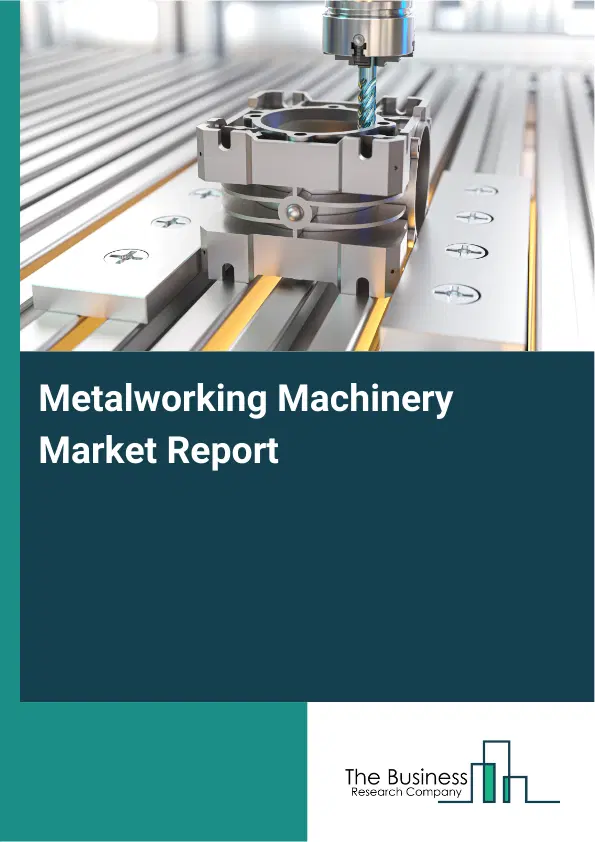
The metal working machinery refers to machines that work by electricity for performing different actions on metals including sanding, knurling, drilling, boring, facing, threading as well as turning. Metalwork is defined as a process of working with metals in order to create individual parts, assemblies, and large structures. The main types of metalworking machinery are special die and tool, die set, jig, and fixture, machine tool, industrial mold, rolling mill, and other metalworking machinery, and cutting tool and machine tool accessory. Industrial mold refers to the molding or shaping of a liquid or raw material. The various capacities include small, medium, and large. These are used in automotive, manufacturing, and other applications.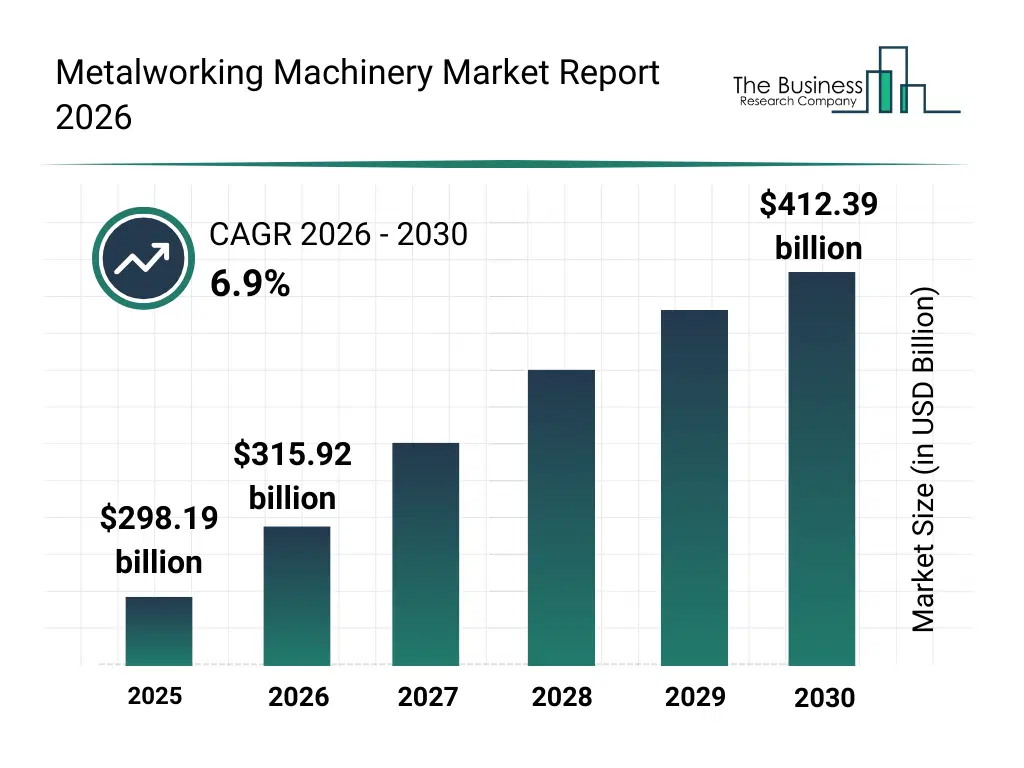
What Is The Metalworking Machinery Market Size and Share 2026?
The metalworking machinery market size has grown strongly in recent years. It will grow from $298.19 billion in 2025 to $315.92 billion in 2026 at a compound annual growth rate (CAGR) of 5.9%. The growth in the historic period can be attributed to industrial manufacturing growth, expansion of automotive production, demand for mass metal component fabrication, availability of conventional machine tools, growth in infrastructure and construction activities.What Is The Metalworking Machinery Market Growth Forecast?
The metalworking machinery market size is expected to see strong growth in the next few years. It will grow to $412.39 billion in 2030 at a compound annual growth rate (CAGR) of 6.9%. The growth in the forecast period can be attributed to smart manufacturing adoption, increasing electric vehicle production, demand for customized metal components, advancements in CNC and automation technologies, rising investment in large scale manufacturing facilities. Major trends in the forecast period include high precision metal forming demand, rising adoption of multi function machine tools, growth in CNC based machining centers, increasing use of advanced cutting tools, demand for high capacity metalworking equipment.Tariff Impact On Metalworking Machinery Market
Tariffs have impacted the metalworking machinery market by increasing costs of imported machine tools, cutting tools, and precision components used across metal fabrication processes. Higher duties on industrial equipment and raw materials such as steel have raised capital expenditure for manufacturers, affecting automotive and manufacturing applications, particularly in Asia Pacific, North America, and Europe. These cost pressures have slowed machinery upgrades for small and medium capacity users while encouraging larger enterprises to localize production and diversify supplier networks. In some regions, tariffs have positively supported domestic machinery manufacturers by improving competitiveness and driving investments in local metalworking equipment production.
Global Metalworking Machinery Market Segmentation
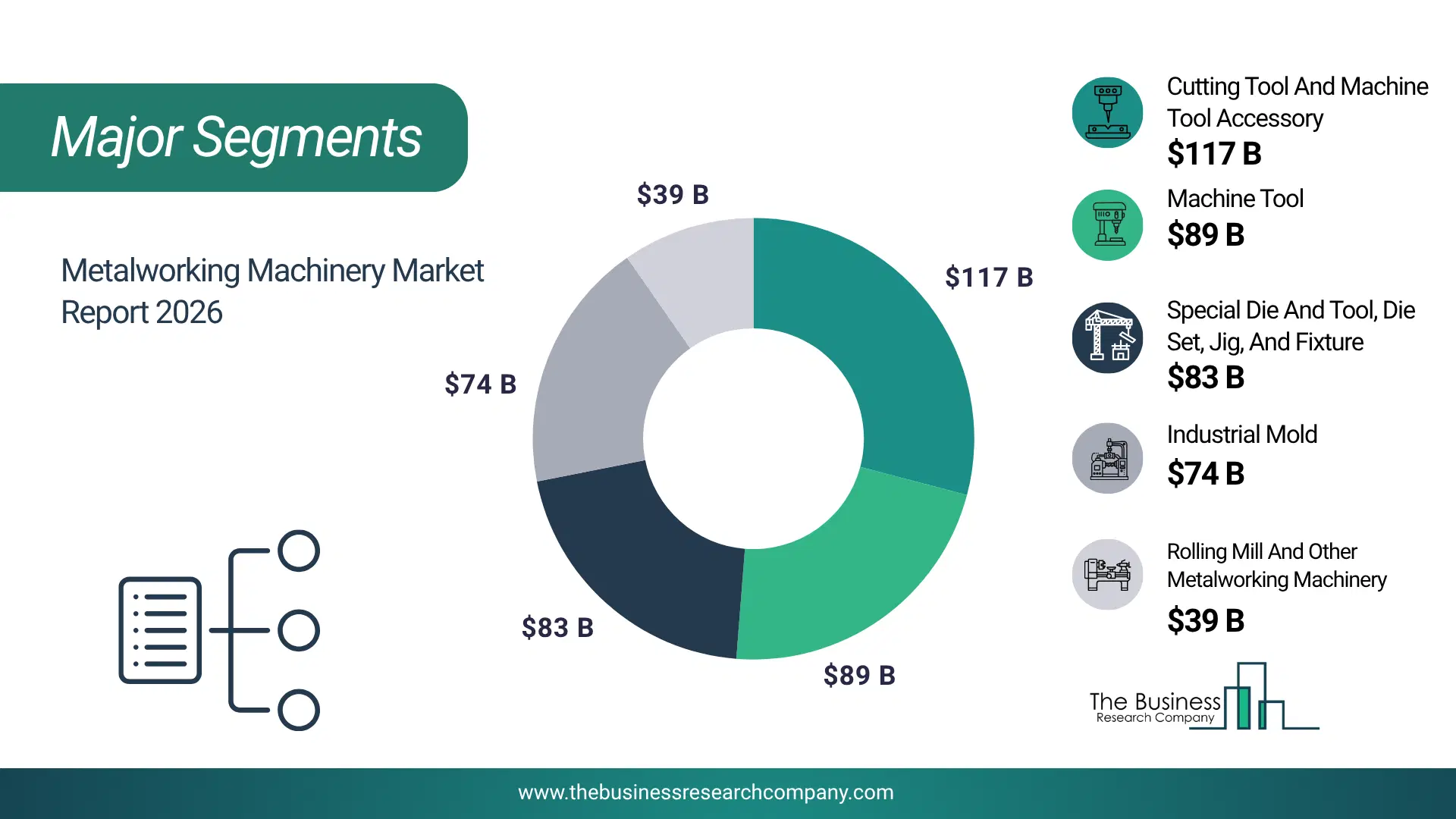
1) By Machine Type: Machine Tools, Metal Forming Machinery, Metal Cutting Machinery, Finishing And Surface Treatment Machinery, Cutting Tools And Tooling Systems 2) By Control Type: Conventional (Manual) Machines, Computer Numerical Control (CNC) Machines 3) By Automation Level: Manual, Semi-Automatic, Fully Automatic 4) By Application Industry: Automotive, Aerospace And Defense, Industrial Manufacturing, Construction And Heavy Equipment, Electrical And Electronics, Other Application Industries Subsegments: 1) By Machine Tools: Lathe Machines, Milling Machines, Drilling And Boring Machines, Grinding Machines, Machining Centers 2) By Metal Forming Machinery: Forging Machines, Rolling Mills, Press Machines, Bending And Stamping Machines 3) By Metal Cutting Machinery: Laser Cutting Machines, Plasma Cutting Machines, Waterjet Cutting Machines, Flame Cutting Machines 4) By Finishing And Surface Treatment Machinery: Honing Machines, Lapping Machines, Polishing And Buffing Machines, Sanding And Deburring Machines 5) By Cutting Tools And Tooling Systems: Cutting Tools, Tool Holders, Dies And Punches, Jigs And FixturesThe top segments in the metalworking machinery market will be: • Cutting Tool And Machine Tool Accessory will reach $117 Billion by 2030. • Machine Tool will reach $89 Billion by 2030. • Special Die And Tool, Die Set, Jig, And Fixture will reach $83 Billion by 2030. • Industrial Mold will reach $74 Billion by 2030. • Rolling Mill And Other Metalworking Machinery will reach $39 Billion by 2030.What Is The Driver Of The Metalworking Machinery Market?
The increasing demand from the automotive industry is expected to propel the growth of the metalworking machinery market going forward. The automotive industry is a major consumer of metalworking machinery, including machine tools, welding equipment, and cutting tools. The demand for metalworking machinery is driven by the need for precision and efficiency in the manufacturing process of automotive components. For instance, in February 2023, according to the China Passenger Car Association, a China-based association that provides Automotive Statistics, Car sales jumped 2.2% in August from the same month a year ago to 1.94 million units. Therefore, the increasing demand from the automotive industry contributed to the growth of the metalworking machinery industry.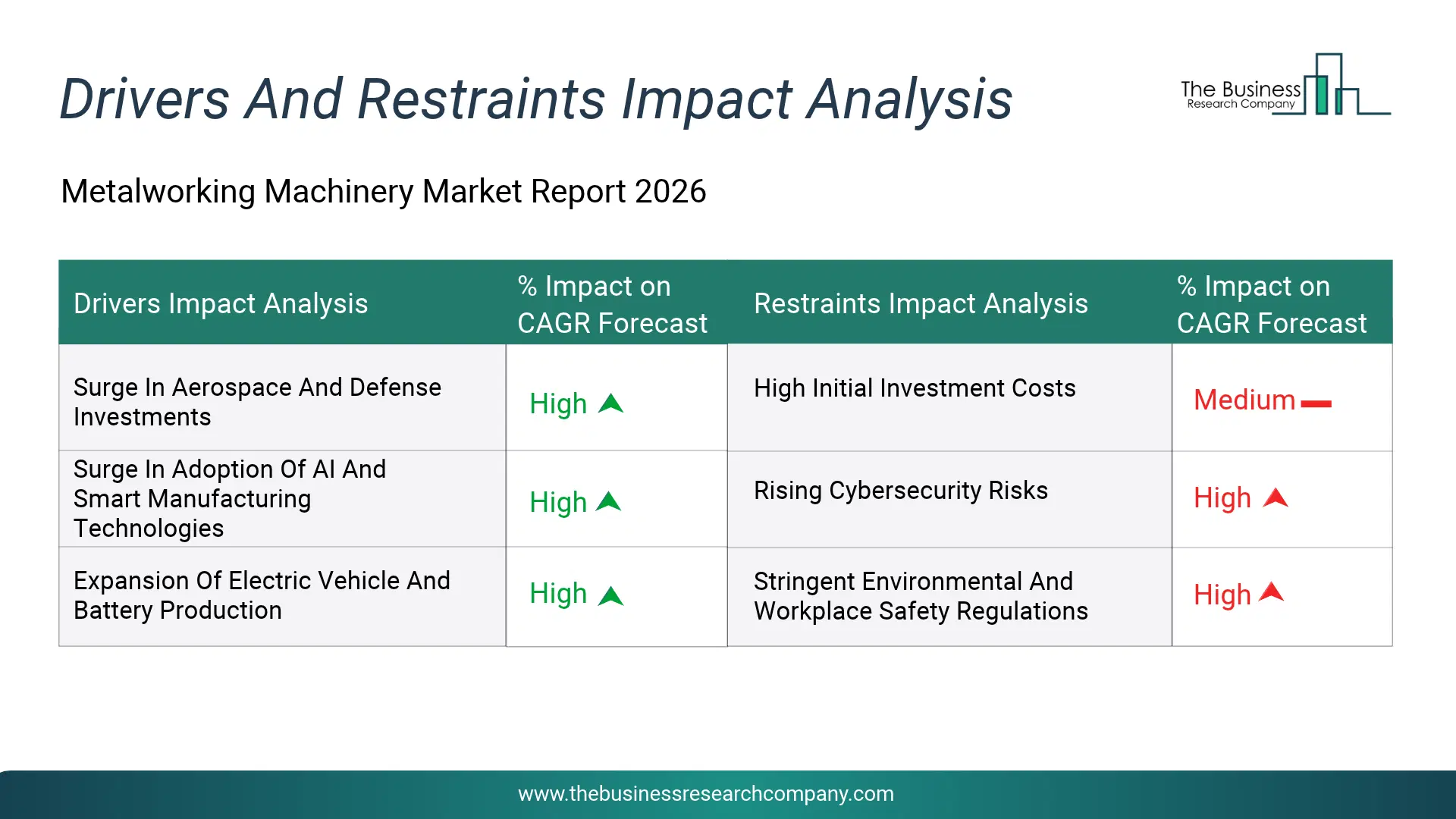
Infographic Chart Showing Key Market Drivers Analysis And Restraints For Metalworking Machinery Market
The chart presents an impact analysis of key drivers and restraints, quantifying their relative influence on the market's growth rate and helping assess the balance between growth enablers and limiting factors. This chart offers a high-level perspective; the full report contains more detailed insights.
How Will The Drivers Impact Growth In The Global Metalworking Machinery Market?
• Surge In Aerospace And Defense Investments (High) – During the forecast period, the surge in aerospace and defense investments is expected to become a key growth driver for the metalworking machinery market by 2030. Surge in aerospace and defense investments is driving the growth of the metalworking machinery market by providing financing, policy support, and project pipelines that increase procurement of engineered materials, industrial components, machinery, and production solutions. This trend encourages manufacturers, construction firms, infrastructure developers, and industrial operators to increase spending and capacity related to manufacturing, assembly, facility operations, and infrastructure development. As this trend continues, suppliers are expected to expand capacity, improve their offerings, and strengthen distribution to support manufacturing, assembly, facility operations, and infrastructure development. • Surge In Adoption Of AI And Smart Manufacturing Technologies (High) – During the forecast period, the surge in adoption of AI and smart manufacturing technologies is expected to emerge as a major factor driving the expansion of the metalworking machinery market by 2030. Surge in adoption of AI and smart manufacturing technologies is driving the growth of the metalworking machinery market by encouraging investment in automation, data analysis, and digitally enabled operations that require engineered materials, industrial components, machinery, and production solutions. This trend encourages manufacturers, construction firms, infrastructure developers, and industrial operators to increase spending and capacity related to manufacturing, assembly, facility operations, and infrastructure development. As this trend continues, suppliers are expected to expand capacity, improve their offerings, and strengthen distribution to support manufacturing, assembly, facility operations, and infrastructure development. • Expansion Of Electric Vehicle And Battery Production (High) – During the forecast period, the expansion of electric vehicle and battery production is expected to act as a key growth catalyst for the metalworking machinery market by 2030. Expansion of electric vehicle and battery production is driving the growth of the metalworking machinery market by raising production volumes and requirements for reliable engineered materials, industrial components, machinery, and production solutions. This trend encourages manufacturers, construction firms, infrastructure developers, and industrial operators to increase spending and capacity related to manufacturing, assembly, facility operations, and infrastructure development. As this trend continues, suppliers are expected to expand capacity, improve their offerings, and strengthen distribution to support manufacturing, assembly, facility operations, and infrastructure development.How Will The Restraints Impact Growth In The Global Metalworking Machinery Market?
• High Initial Investment Costs (High) – During the forecast period, the high initial investment costs are restraining the growth of the metalworking machinery market by limiting project pipelines, procurement budgets, and capacity expansion for engineered materials, industrial components, machinery, and production solutions. Because raw-material procurement, production, quality control, maintenance, and distribution is cost-sensitive, these increases can be difficult to absorb or pass on to customers. As a result, market participants may delay expansion, limit new investment, or increase prices, slowing the adoption and availability of engineered materials, industrial components, machinery, and production solutions. • Rising Cybersecurity Risks (High) – During the forecast period, the rising cybersecurity risks are restraining the growth of the metalworking machinery market by raising disruption risks and security spending requirements for engineered materials, industrial components, machinery, and production solutions. Security incidents or compliance failures can interrupt operations and weaken customer confidence. As a result, market participants may delay expansion, limit new investment, or increase prices, slowing the adoption and availability of engineered materials, industrial components, machinery, and production solutions. • Stringent Environmental And Workplace Safety Regulations (High) – During the forecast period, the stringent environmental and workplace safety regulations are restraining the growth of the metalworking machinery market by lengthening approval cycles and increasing compliance expenses for engineered materials, industrial components, machinery, and production solutions. Providers must allocate more time and capital to meet evolving rules while maintaining raw-material procurement, production, quality control, maintenance, and distribution. As a result, market participants may delay expansion, limit new investment, or increase prices, slowing the adoption and availability of engineered materials, industrial components, machinery, and production solutions.Key Players In The Global Metalworking Machinery Market
Major companies operating in the metalworking machinery market are Sandvik Aktiebolag, TRUMPF Group, Mitsubishi Heavy Industries Limited, Amada Co. Limited, Colfax Corporation, Fanuc Corporation, Okuma Corporation, Kennametal Incorporated, Hardinge Incorporated, DMG Mori Co. Limited, Makino Milling Machine Co. Limited, Yamazaki Mazak Corporation, Doosan Machine Tools Co. Limited, Fives Group, Gleason Corporation, Haas Automation Incorporated, Hurco Companies Incorporated, Mori Seiki Co. Limited, Nakamura-Tome Precision Industry Co. Limited, Okamoto Corporation, Schuler Aktiengesellschaft, Shenyang Machine Tool Co. Limited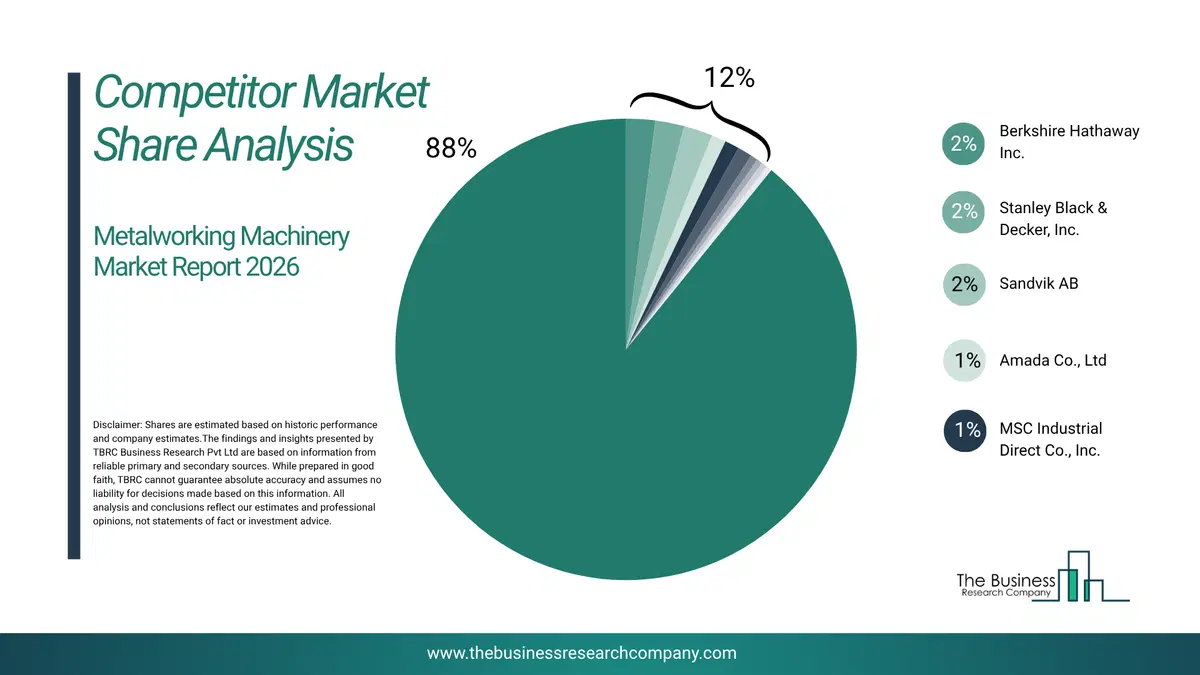
This chart is for illustrative purposes; the full report includes a detailed competitor analysis and comprehensive overview of the top 10 companies in the market.
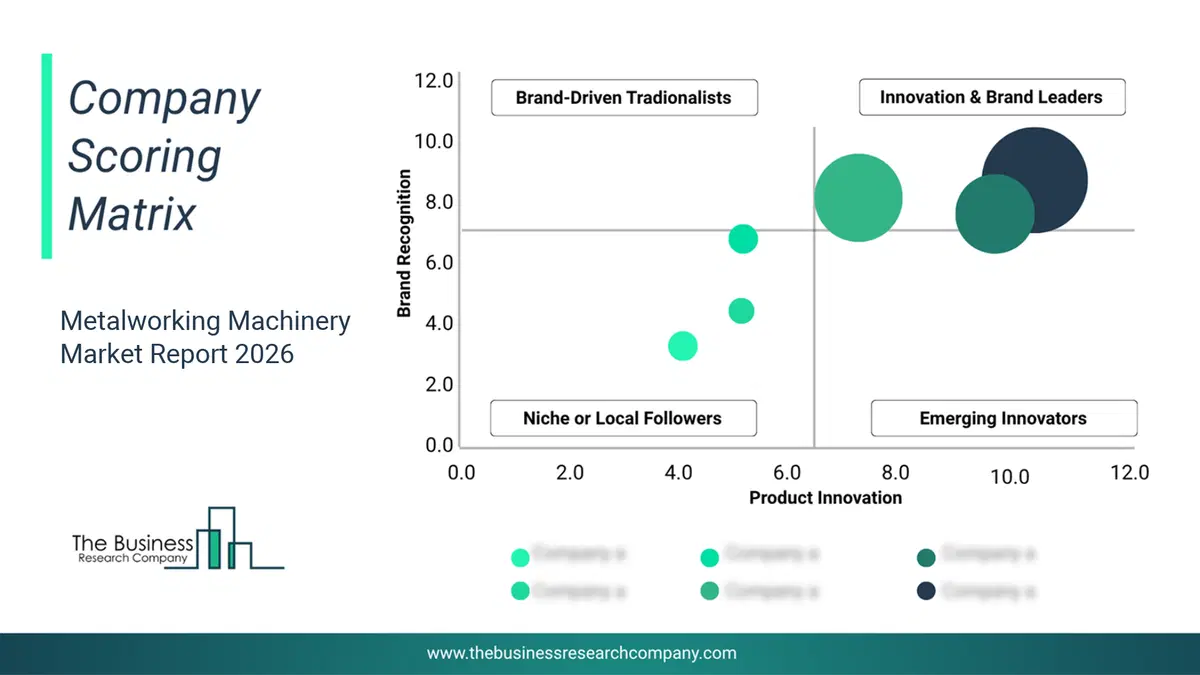
This chart maps companies by product innovation and brand strength, with bubble size indicating relative revenue, helping identify market leaders, challengers, and niche players. This is an illustrative chart; the full report provides a complete and accurate competitive analysis.
Global Metalworking Machinery Market Trends and Insights
Major companies operating in the metalworking machinery market are focusing on developing innovative solutions, such as robotics-based welding systems, to meet the rising demand for automation, enhanced worker safety, and higher manufacturing throughput. For instance, in May 2023, Pro Spot International, a US-based manufacturer of resistance spot-welding equipment, launched the world’s first cobot spot welder. The cobot spot welder integrates Pro Spot’s lightweight i5s resistance spot-welding unit with a collaborative robot to automate welding tasks traditionally performed manually. The system enhances safety by reducing operator exposure to heat and repetitive strain, while its automated precision enables consistent, high-quality welds. Compared with manual spot welding, the cobot system delivers 2–3× higher manufacturing capacity, improves operational efficiency, and supports flexible deployment across metal fabrication, automotive repair, and industrial production environments.What Are Latest Mergers And Acquisitions In The Metalworking Machinery Market?
In September 2025, MC Machinery Systems, a Canada-based provider of advanced manufacturing equipment and automation solutions, acquired Ferro Technique Ltd. for an undisclosed amount. With this acquisition, MC Machinery Systems aims to strengthen its technological capabilities and expand its market presence in precision metal processing solutions. Ferro Technique Ltd. is a UK-based provider of specialized metal fabrication and finishing services for industrial applications.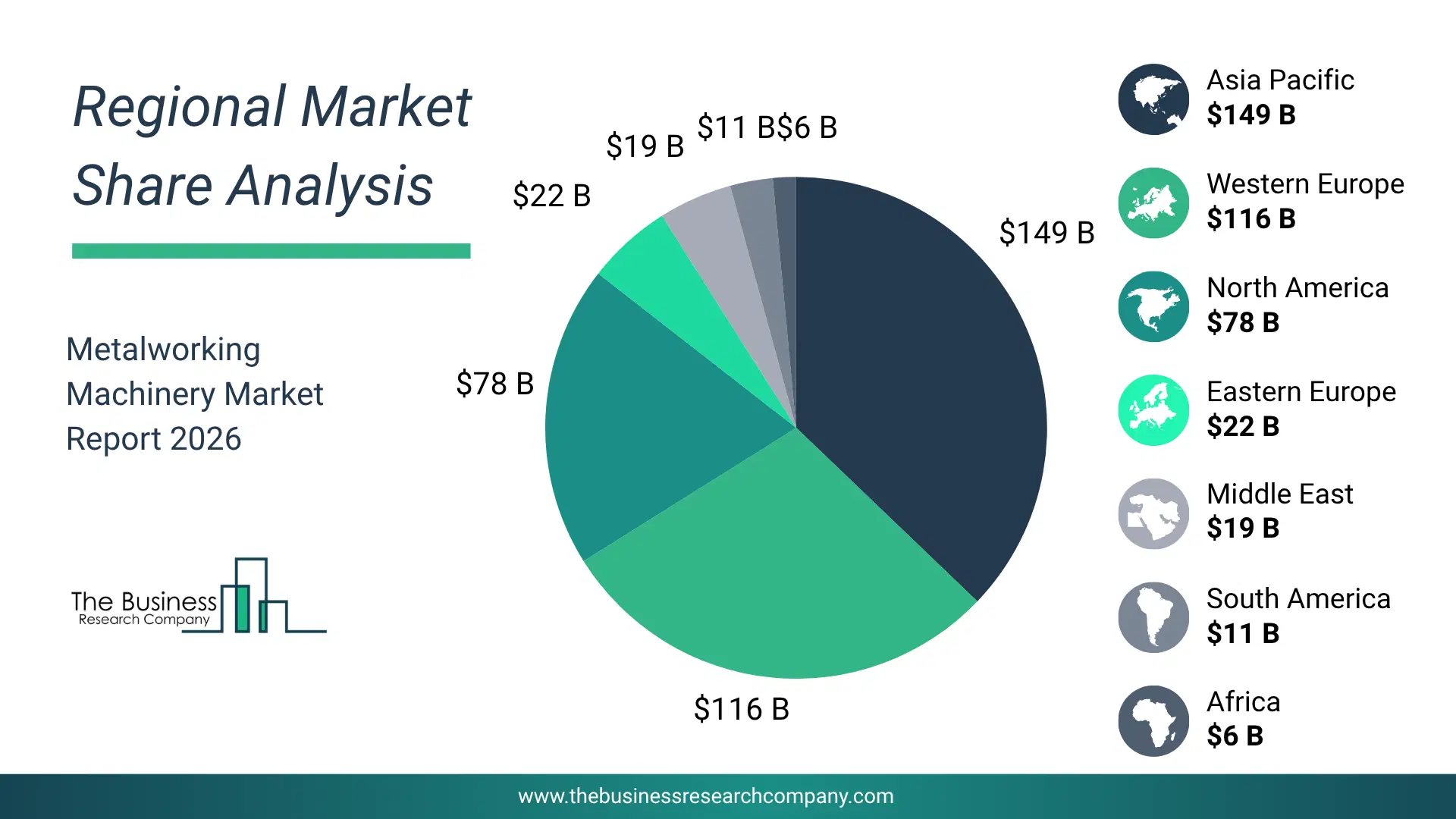
Regional Outlook
Asia-Pacific was the largest region in the metalworking machinery market in 2025. Western Europe was the second largest region in the metalworking machinery market. The regions covered in this market report are Asia-Pacific, South East Asia, Western Europe, Eastern Europe, North America, South America, Middle East, Africa The countries covered in this market report are China, India, Japan, Australia, Indonesia, South Korea, Bangladesh, Thailand, Vietnam, Malaysia, Singapore, Philippines, Hong Kong, Taiwan, New Zealand, UK, Germany, France, Italy, Spain, Austria, Belgium, Denmark, Finland, Ireland, Netherlands, Norway, Portugal, Sweden, Switzerland, Russia, Czech Republic, Poland, Romania, Ukraine, USA, Canada, Mexico, Brazil, Chile, Argentina, Colombia, Peru, Saudi Arabia, Israel, Iran, Turkey, UAE, Egypt, Nigeria, South Africa.What Defines the Metalworking Machinery Market?
The metal working machinery market consists of sales of various kinds of metal working machines available in different forms, including lathes, milling machines, and planers. Values in this market are ‘factory gate’ values, that is the value of goods sold by the manufacturers or creators of the goods, whether to other entities (including downstream manufacturers, wholesalers, distributors and retailers) or directly to end customers. The value of goods in this market includes related services sold by the creators of the goods.How is Market Value Defined and Measured?
The market value is defined as the revenues that enterprises gain from the sale of goods and/or services within the specified market and geography through sales, grants, or donations in terms of the currency (in USD unless otherwise specified). The revenues for a specified geography are consumption values that are revenues generated by organizations in the specified geography within the market, irrespective of where they are produced. It does not include revenues from resales along the supply chain, either further along the supply chain or as part of other products.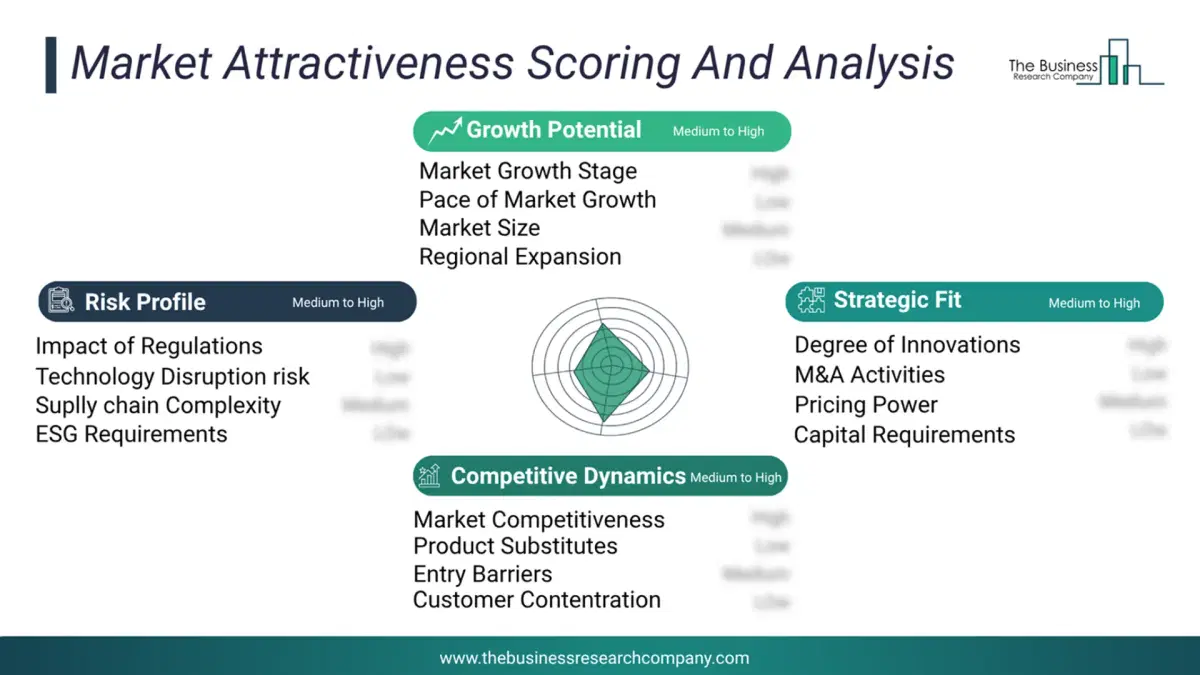
This chart presents market attractiveness based on a quantitative evaluation of growth, competition, strategic alignment, and risk, offering a clear view of opportunity areas for decision-making. This chart is for illustrative purposes; the full report contains the complete analysis.
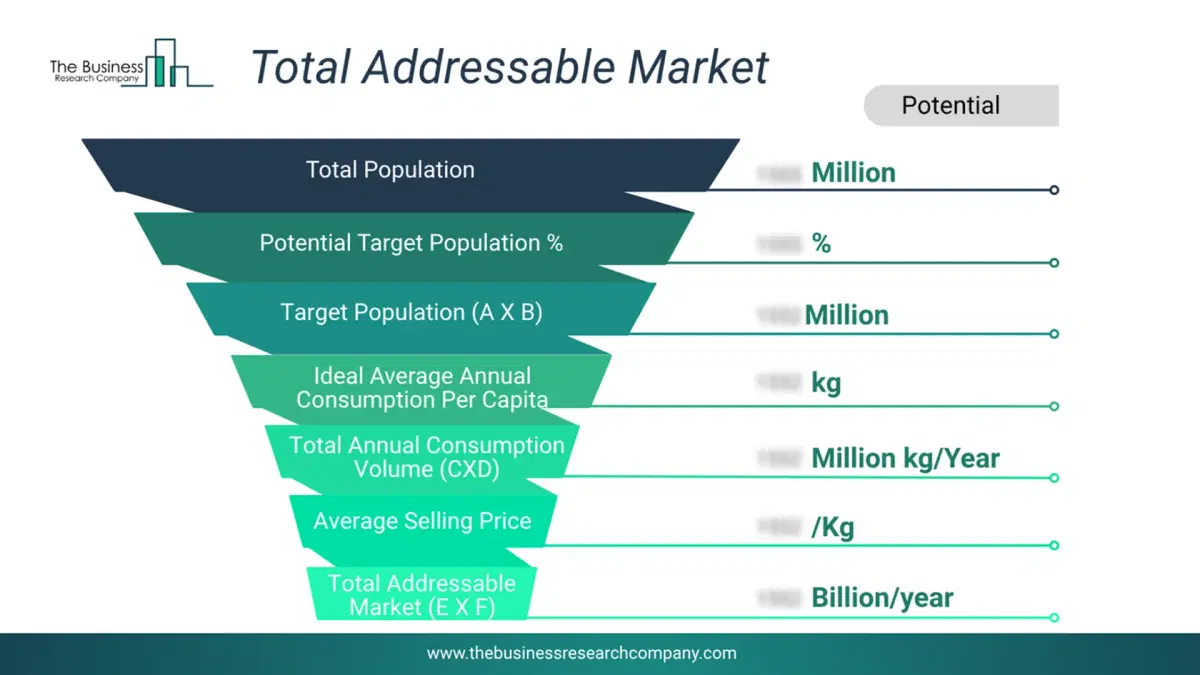
This chart highlights the Total Addressable Market (TAM) by estimating the maximum revenue opportunity using an assumption-driven approach, supporting strategic planning and opportunity sizing across markets. The chart is illustrative; the full report provides a more comprehensive analysis.
What Key Data and Analysis Are Included in the Metalworking Machinery Market Report 2026?
The metalworking machinery market research report is one of a series of new reports from The Business Research Company that provides market statistics, including industry global market size, regional shares, competitors with the market share, detailed market segments, market trends and opportunities, and any further data you may need to thrive in the metalworking machinery industry. The market research report delivers a complete perspective of everything you need, with an in-depth analysis of the current and future state of the industry.Metalworking Machinery Market Report Forecast Analysis
| Report Attribute | Details |
|---|---|
| Market Size Value In 2026 | $315.92 billion |
| Revenue Forecast In 2035 | $412.39 billion |
| Growth Rate | CAGR of 5.9% from 2026 to 2035 |
| Base Year For Estimation | 2025 |
| Actual Estimates/Historical Data | 2020-2025 |
| Forecast Period | 2026 - 2030 - 2035 |
| Market Representation | Revenue in USD Billion and CAGR from 2026 to 2035 |
| Segments Covered | Machine Type, Control Type, Automation Level, Application Industry |
| Regional Scope | Asia-Pacific, Western Europe, Eastern Europe, North America, South America, Middle East, Africa |
| Country Scope | The countries covered in the report are Australia, Brazil, China, France, Germany, India, ... |
| Key Companies Profiled | Sandvik Aktiebolag, TRUMPF Group, Mitsubishi Heavy Industries Limited, Amada Co. Limited, Colfax Corporation, Fanuc Corporation, Okuma Corporation, Kennametal Incorporated, Hardinge Incorporated, DMG Mori Co. Limited, Makino Milling Machine Co. Limited, Yamazaki Mazak Corporation, Doosan Machine Tools Co. Limited, Fives Group, Gleason Corporation, Haas Automation Incorporated, Hurco Companies Incorporated, Mori Seiki Co. Limited, Nakamura-Tome Precision Industry Co. Limited, Okamoto Corporation, Schuler Aktiengesellschaft, Shenyang Machine Tool Co. Limited |
| Customization Scope | Request for Customization |
| Pricing And Purchase Options | Explore Purchase Options |