
Unresectable Hepatocellular Carcinoma Market Report 2026
Global Outlook – By Type (Primary, Secondary, Benign Liver Growth), By Treatment Type (Chemotherapy, Molecularly Targeted Therapy, Immunotherapy, Other Treatments), By End-Users (Hospitals, Specialty Clinics, Cancer Centers) - Market Size, Trends, Strategies, and Forecast to 2030
Unresectable Hepatocellular Carcinoma Market Overview
• Unresectable Hepatocellular Carcinoma market size has reached to $2.01 billion in 2025 • Expected to grow to $3.22 billion in 2030 at a compound annual growth rate (CAGR) of 9.9% • Growth Driver: The Rise In Liver Cancer Driving The Growth Of The Market Due To Increasing Prevalence And Limited Surgical Options • Market Trend: Combination Therapies In Unresectable Hepatocellular Carcinoma Treatment • North America was the largest region in 2025.What Is Covered Under Unresectable Hepatocellular Carcinoma Market?
Unresectable hepatocellular carcinoma refers to an aggressive tumor that typically develops alongside cirrhosis and chronic liver disease. The treatment for unresectable hepatocellular carcinoma is surgical resection, liver transplant, ablation, and embolization. The main unresectable hepatocellular carcinoma types are primary, secondary, and benign liver growth. Primary refers to more important than anything else. As a primary liver cancer, hepatocellular carcinoma is the most prevalent variety. The various treatment types are chemotherapy, molecularly targeted therapy, immunotherapy, and others used in hospitals, specialty clinics, and cancer centers.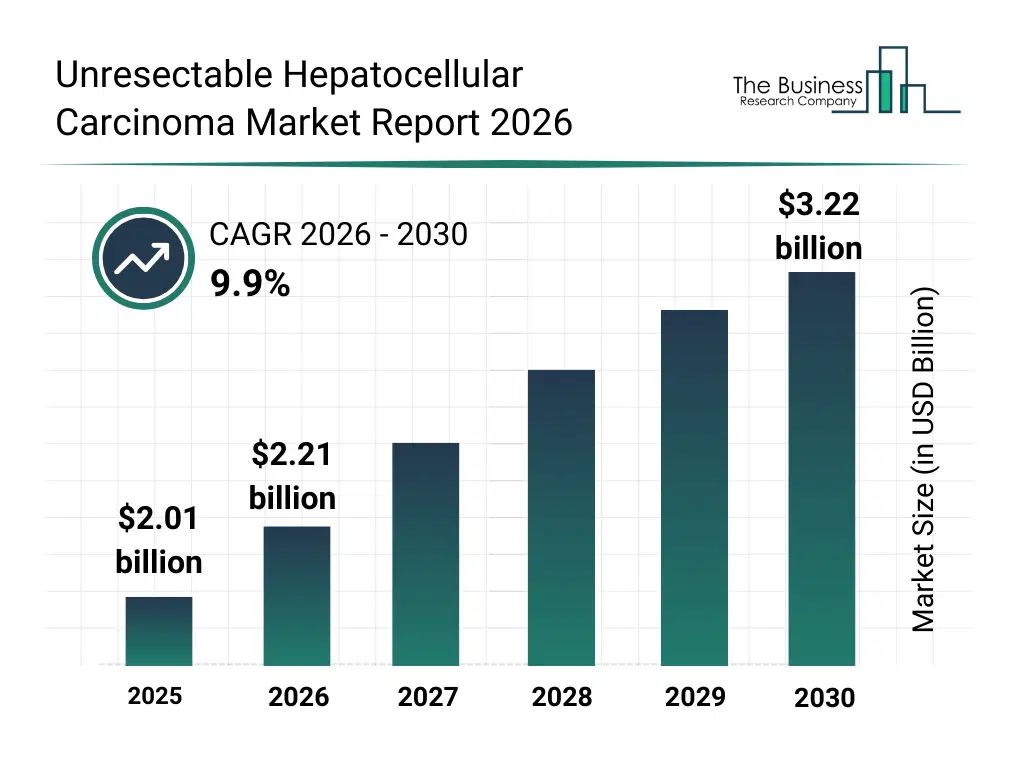
What Is The Unresectable Hepatocellular Carcinoma Market Size and Share 2026?
The unresectable hepatocellular carcinoma market size has grown strongly in recent years. It will grow from $2.01 billion in 2025 to $2.21 billion in 2026 at a compound annual growth rate (CAGR) of 9.9%. The growth in the historic period can be attributed to increasing incidence of chronic liver disease, rising prevalence of cirrhosis-related cancer, expansion of oncology treatment centers, availability of systemic therapy options, improvements in diagnostic capabilities.What Is The Unresectable Hepatocellular Carcinoma Market Growth Forecast?
The unresectable hepatocellular carcinoma market size is expected to see strong growth in the next few years. It will grow to $3.22 billion in 2030 at a compound annual growth rate (CAGR) of 9.9%. The growth in the forecast period can be attributed to increasing development of next-generation immunotherapies, rising focus on biomarker-driven treatment selection, expansion of precision oncology programs, growing investment in liver cancer research, increasing adoption of minimally invasive therapies. Major trends in the forecast period include increasing adoption of immunotherapy-based treatments, rising use of molecularly targeted therapies, growing focus on combination treatment approaches, expansion of personalized oncology care, enhanced use of advanced diagnostic imaging.
Global Unresectable Hepatocellular Carcinoma Market Segmentation
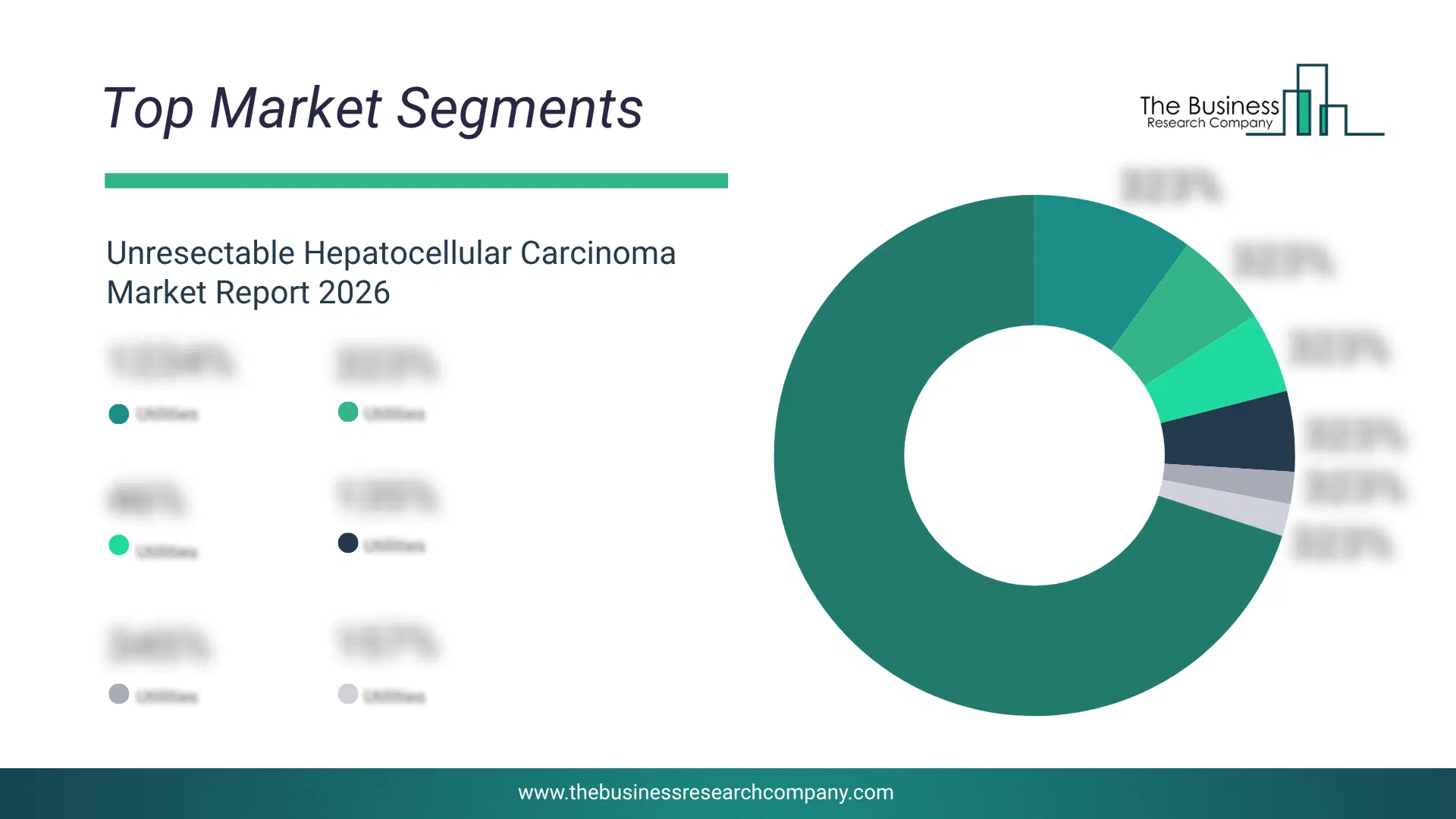
1) By Type: Primary, Secondary, Benign Liver Growth 2) By Treatment Type: Chemotherapy, Molecularly Targeted Therapy, Immunotherapy, Other Treatments 3) By End-Users: Hospitals, Specialty Clinics, Cancer Centers Subsegments: 1) By Primary: Hepatocellular Carcinoma (HCC), Fibrolamellar Carcinoma, Hepatoblastoma 2) By Secondary: Metastatic Liver Cancer, Intrahepatic Cholangiocarcinoma 3) By Benign Liver Growth: Hepatic Adenoma, Focal Nodular Hyperplasia, HemangiomasWhat Are The Drivers Of The Unresectable Hepatocellular Carcinoma Market?
The increasing prevalence of liver cancer is expected to drive the growth of the unresectable hepatocellular carcinoma market going forward. Liver cancer refers to a condition in which healthy liver cells are overtaken by rapidly dividing tumor cells, resulting in malignant growth that disrupts normal liver function. The rise in liver cancer prevalence is driven by increasing metabolic disorders, viral hepatitis infections, alcohol-associated liver disease, and rising obesity-related liver complications. The unresectable hepatocellular carcinoma supports this rise by providing therapeutic options such as systemic therapies, immunotherapies, radiofrequency ablation, and liver-directed procedures for patients who cannot undergo surgical tumor removal. For instance, in May 2025, according to the Cancer Council Victoria, an Australia-based not-for-profit organization, in 2023, a total of 667 individuals in Victoria were diagnosed with liver cancer, comprising 469 males (70.3%) and 198 females (29.7%). The current liver cancer diagnosis rates stand at 11.8 per 100,000 males and 4.4 per 100,000 females. Therefore, the increasing prevalence of liver cancer is driving the growth of the unresectable hepatocellular carcinoma industry. The growing healthcare expenditure is expected to propel the growth of the unresectable hepatocellular carcinoma market going forward. A health expenditure refers to the total amount of money spent on activities promoting, restoring, and maintaining health. Healthcare expenditure is increasing due to advancements in medical technology, as new diagnostic tools, treatments, and innovative therapies often come at higher costs, leading to greater overall spending in healthcare. The Healthcare expenditure plays an important role as unresectable hepatocellular carcinoma progresses and becomes unresectable, treatment options become more complex and expensive. For instance, in December 2024, according to the Centers for Medicare & Medicaid Services, a US-based agency responsible for administering the Medicare and Medicaid programs, in 2023, U.S. health care expenditures increased by 7.5%, climbing to $4.9 trillion, or roughly $14,570 for each individual. Therefore, growing healthcare expenditure would drive the growth of the unresectable hepatocellular carcinoma industry.Key Players In The Global Unresectable Hepatocellular Carcinoma Market
Major companies operating in the unresectable hepatocellular carcinoma market are Pfizer Inc., Johnson & Johnson Private Limited, F Hoffmann-La Roche Ltd., Merck & Co Inc., Bayer AG, Bristol-Myers-Squibb Company, AstraZeneca PLC, Takeda Pharmaceutical Company Limited, Eli Lilly and Company, Amgen Inc., Regeneron Pharmaceuticals Inc., Chugai Pharmaceutical Co Ltd., Eisai Co. Ltd., Ipsen S.A., Jiangsu HengRui Medicine Co. Ltd., Exelixis Inc., BeiGene Ltd., Innovent Biologics Inc., Sirtex Medical Limited, Genentech Inc., CStone Pharmaceuticals, Delcath Systems Inc., Celsion Corporation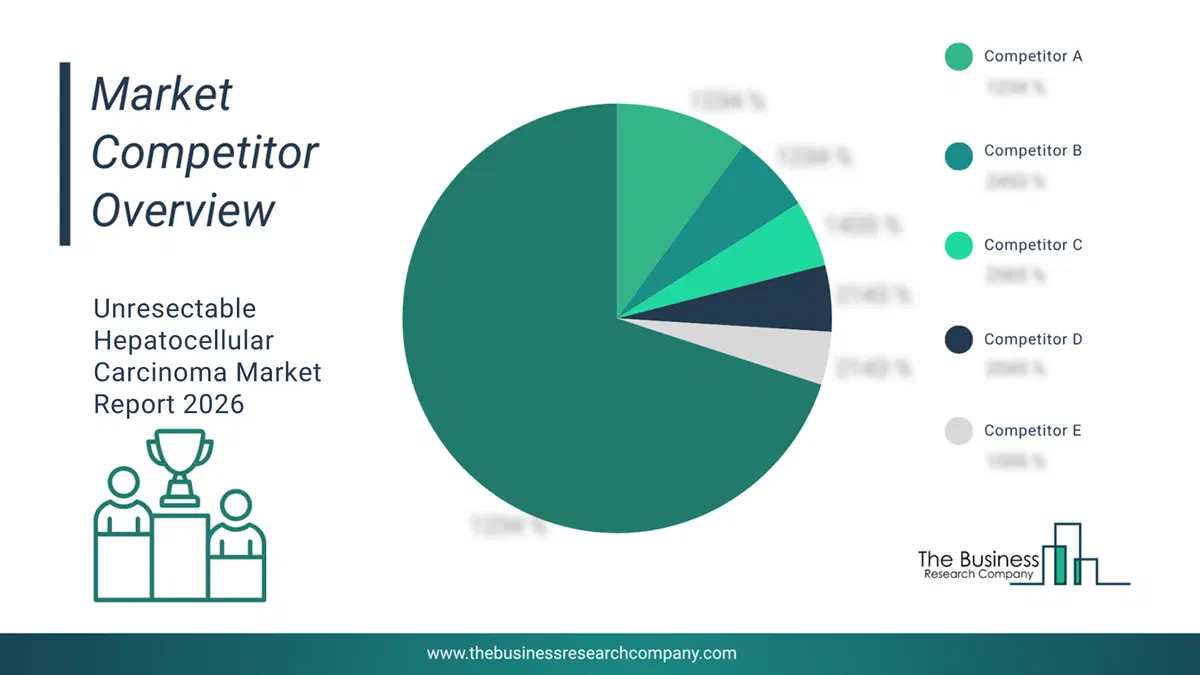
This chart is for illustrative purposes; the full report includes a detailed competitor analysis and comprehensive overview of the top 10 companies in the market.
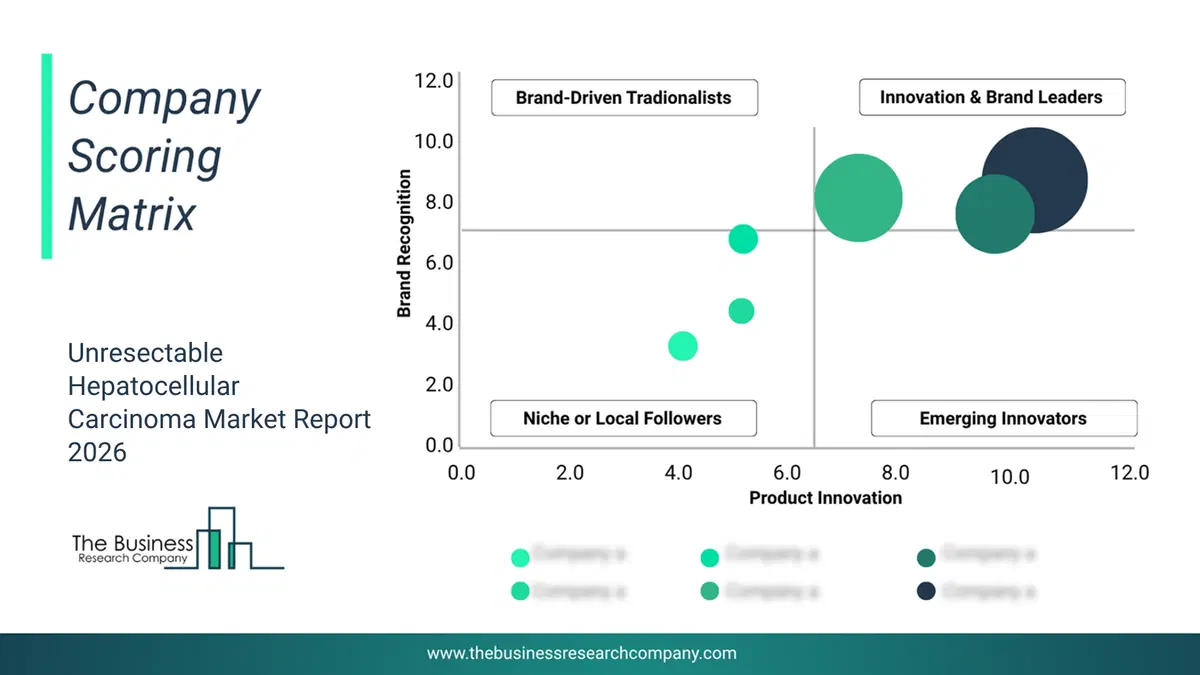
This chart maps companies by product innovation and brand strength, with bubble size indicating relative revenue, helping identify market leaders, challengers, and niche players. This is an illustrative chart; the full report provides a complete and accurate competitive analysis.
Global Unresectable Hepatocellular Carcinoma Market Trends and Insights
Major companies operating in the unresectable hepatocellular carcinoma market are focusing on developing innovative therapies such as combination therapies for unresectable hepatocellular carcinoma conditions. Combination therapies refer to the use of two or more treatments simultaneously to improve efficacy, target multiple disease pathways, or reduce resistance in managing a medical condition. For instance, in March 2023, Ono Pharmaceutical Co. Ltd., a Japan-based pharmaceutical company, launched Opdivo (nivolumab) Intravenous Infusion (Opdivo), a human anti-human PD-1 monoclonal antibody, in combination with Yervoy. Opdivo works by blocking the interaction between PD-1, a protein on T cells (immune cells), and its ligands (PD-L1 and PD-L2) on cancer cells. This interaction normally suppresses the T cells' ability to attack cancer cells. By blocking this interaction, Opdivo helps the T cells recognize and eliminate cancer cells more effectively.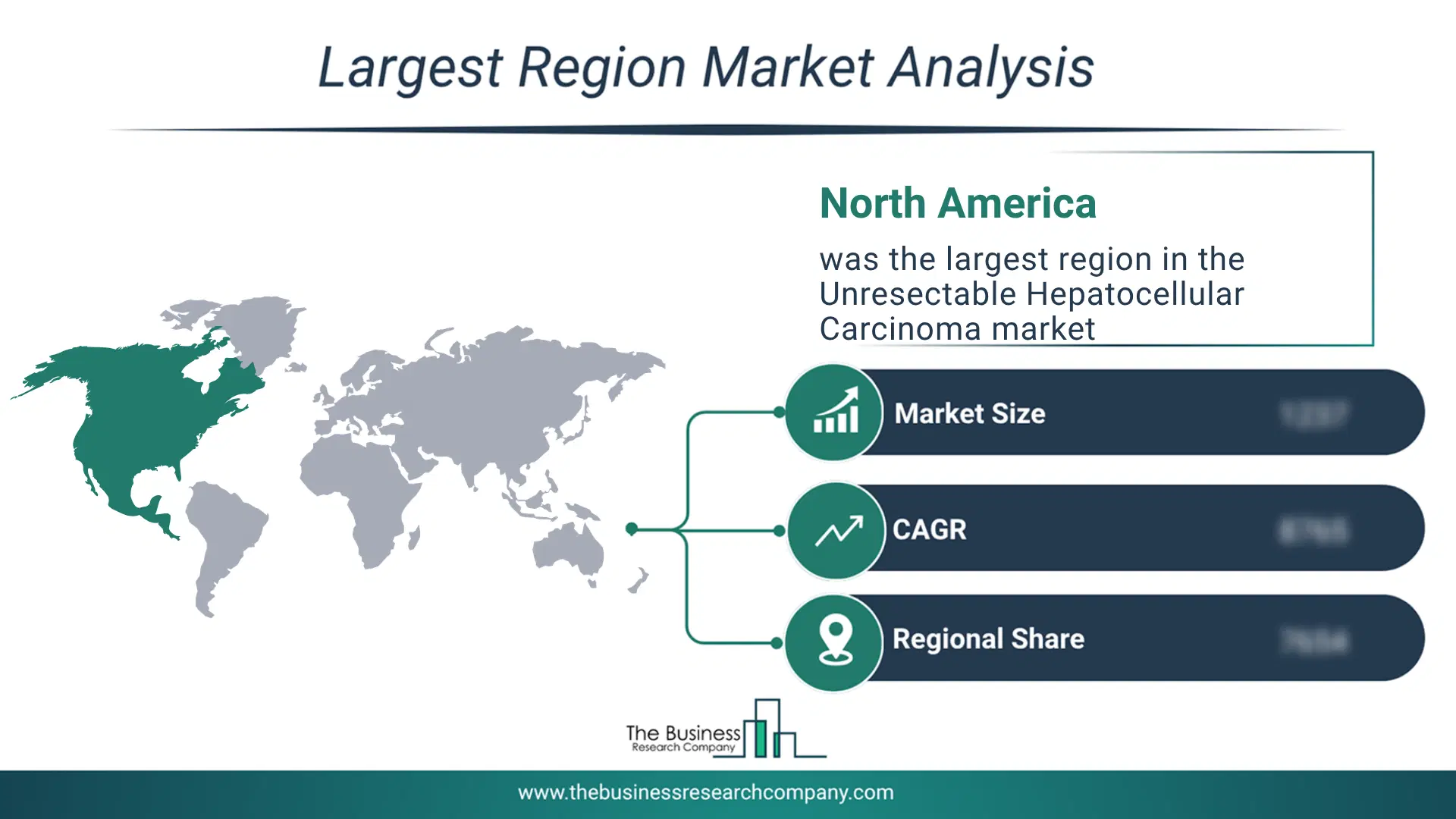
Regional Outlook
North America was the largest region in the unresectable hepatocellular carcinoma market in 2025. The regions covered in this market report are Asia-Pacific, South East Asia, Western Europe, Eastern Europe, North America, South America, Middle East, Africa. The countries covered in this market report are Australia, Brazil, China, France, Germany, India, Indonesia, Japan, Taiwan, Russia, South Korea, UK, USA, Canada, Italy, Spain.What Defines the Unresectable Hepatocellular Carcinoma Market?
The unresectable hepatocellular carcinoma market includes revenues earned by entities by providing first-line agents, surgical resection, and liver transplant. The market value includes the value of related goods sold by the service provider or included within the service offering. Only goods and services traded between entities or sold to end consumers are included.How is Market Value Defined and Measured?
The market value is defined as the revenues that enterprises gain from the sale of goods and/or services within the specified market and geography through sales, grants, or donations in terms of the currency (in USD unless otherwise specified). The revenues for a specified geography are consumption values that are revenues generated by organizations in the specified geography within the market, irrespective of where they are produced. It does not include revenues from resales along the supply chain, either further along the supply chain or as part of other products.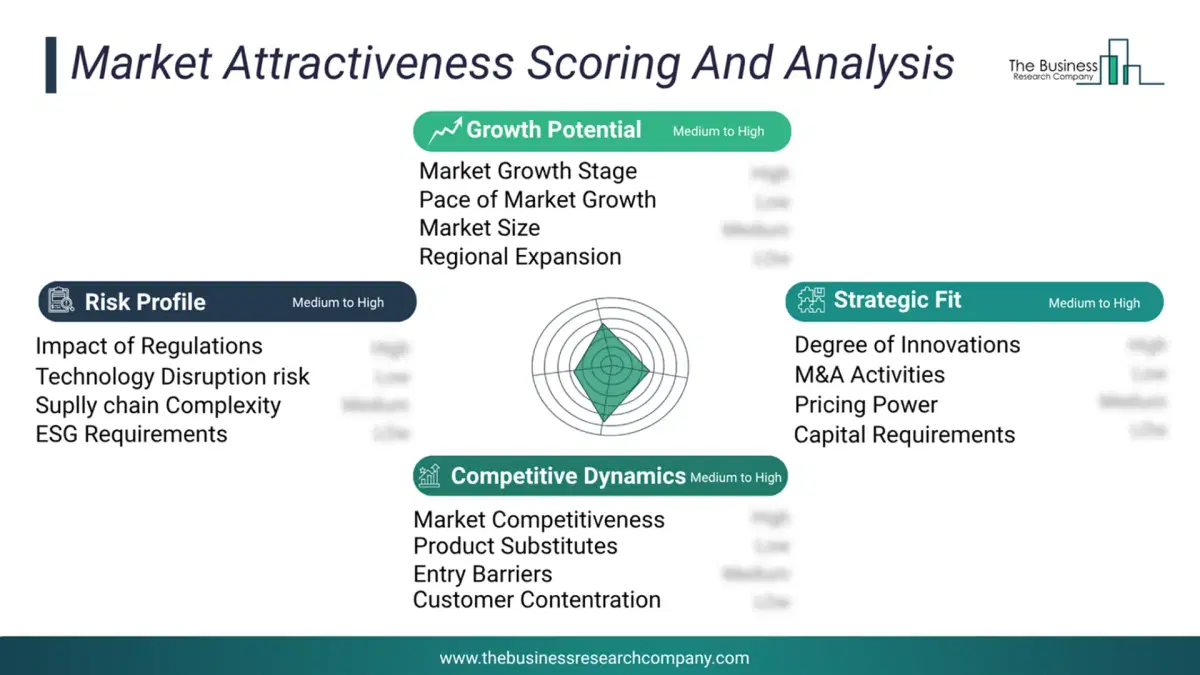
This chart presents market attractiveness based on a quantitative evaluation of growth, competition, strategic alignment, and risk, offering a clear view of opportunity areas for decision-making. This chart is for illustrative purposes; the full report contains the complete analysis.
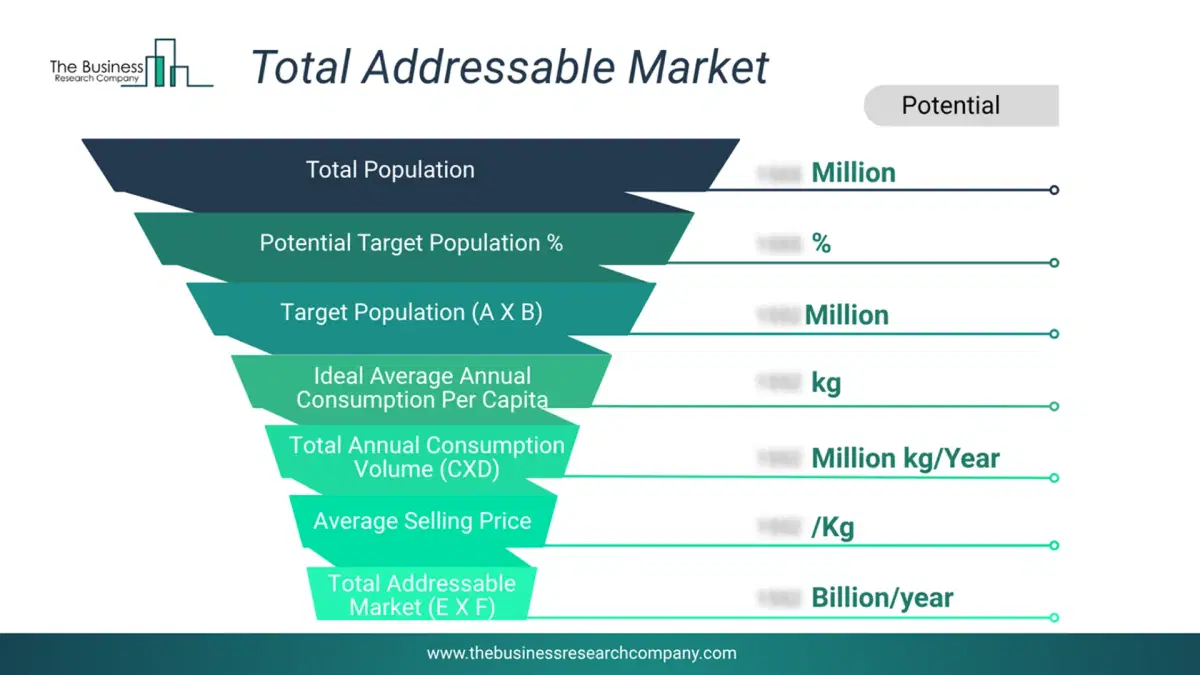
This chart highlights the Total Addressable Market (TAM) by estimating the maximum revenue opportunity using an assumption-driven approach, supporting strategic planning and opportunity sizing across markets. The chart is illustrative; the full report provides a more comprehensive analysis.
What Key Data and Analysis Are Included in the Unresectable Hepatocellular Carcinoma Market Report 2026?
The unresectable hepatocellular carcinoma market research report is one of a series of new reports from The Business Research Company that provides market statistics, including industry global market size, regional shares, competitors with the market share, detailed market segments, market trends and opportunities, and any further data you may need to thrive in the unresectable hepatocellular carcinoma industry. The market research report delivers a complete perspective of everything you need, with an in-depth analysis of the current and future state of the industry.Unresectable Hepatocellular Carcinoma Market Report Forecast Analysis
| Report Attribute | Details |
|---|---|
| Market Size Value In 2026 | $2.21 billion |
| Revenue Forecast In 2030 | $3.22 billion |
| Growth Rate | CAGR of 9.9% from 2026 to 2030 |
| Base Year For Estimation | 2025 |
| Actual Estimates/Historical Data | 2020-2025 |
| Forecast Period | 2026 - 2030 |
| Market Representation | Revenue in USD Billion and CAGR from 2026 to 2030 |
| Segments Covered | Type, Treatment Type, End-Users |
| Regional Scope | Asia-Pacific, Western Europe, Eastern Europe, North America, South America, Middle East, Africa |
| Country Scope | The countries covered in the report are Australia, Brazil, China, France, Germany, India, Indonesia, Japan, Taiwan, Russia, South Korea, UK, USA, Canada, Italy, Spain |
| Key Companies Profiled | Pfizer Inc., Johnson & Johnson Private Limited, F Hoffmann-La Roche Ltd., Merck & Co Inc., Bayer AG, Bristol-Myers-Squibb Company, AstraZeneca PLC, Takeda Pharmaceutical Company Limited, Eli Lilly and Company, Amgen Inc., Regeneron Pharmaceuticals Inc., Chugai Pharmaceutical Co Ltd., Eisai Co. Ltd., Ipsen S.A., Jiangsu HengRui Medicine Co. Ltd., Exelixis Inc., BeiGene Ltd., Innovent Biologics Inc., Sirtex Medical Limited, Genentech Inc., CStone Pharmaceuticals, Delcath Systems Inc., Celsion Corporation |
| Customization Scope | Request for Customization |
| Pricing And Purchase Options | Explore Purchase Options |